


On this page
Short answer: SaaS teams raise CSAT by fixing problems before customers report them, asking for feedback right after every case, giving agents the right tools, tracking more than one metric and adding a human, visual element to support. These five practices work together. Better tools and visual support raise first contact resolution and lower handle time, and both lift satisfaction.
Key takeaways
- Proactive support uses ticket patterns to resolve issues before they reach the queue.
- Survey customers immediately after each case, then act on what the feedback shows.
- A strong stack includes a CRM, smart call routing, self-service content and live video support.
- Track first contact resolution and average handle time alongside CSAT.
- Visual empathy, seeing the customer and their problem, reduces misunderstandings and builds trust.
Why CSAT matters so much in SaaS
SaaS revenue depends on renewals. A customer who has a poor support experience has an easy way out at the next billing cycle.
Most people can remember their worst support experience in detail. You want to be sure your customers never have one with you. CSAT is the most direct signal of whether that is happening.
Three conditions shape support today:
- Expectations keep rising. Customers compare your support to the best experience they have had anywhere.
- Personalization is expected. Customers want to be treated as individuals, with their history known.
- Loyalty is not guaranteed. Customers have options and will switch after repeated poor service.

The 5 SaaS customer support best practices
1. Think proactively
The best support interaction is the one the customer never needed. Anticipate issues and solve them before they are reported.
Use the reporting in your support tool to find patterns in recent complaints and bugs. Those patterns often point to a technical issue you can fix on the back end, or a group of customers you can contact before they call.
Next, build a list of the most common questions. Ask your agents or review call logs. Then answer those questions in self-service content or a chatbot. This lowers queue volume and still gets customers what they need.
2. Get feedback right after every case
You only know customers are satisfied if you ask them. Periodic surveys help, but they miss the moment.
Survey customers immediately after their case closes, while the experience is fresh. Doing this manually is hard to keep consistent. Blitzz sends a customer survey automatically after each call, so the team does not have to remember.
Collecting feedback is half the job. Review negative responses on a set schedule, look for patterns, and change the process that caused them.
3. Invest in the right tools
Supporting customers with the wrong stack is like digging a hole with a spoon. These are the essentials:
| Tool | What it does | CSAT impact |
|---|---|---|
| CRM | Holds contact details, purchase history and past cases in one place | Agents start with context, so customers do not repeat themselves |
| Interactive voice response (IVR) | Triages calls to the right queue | Customers reach an agent who can actually help |
| Self-service resources | Knowledge base or chatbot for simple questions like login issues | Fast answers for easy problems and shorter queues for hard ones |
| Remote video support | Live video with AR guidance and OCR text capture | Agents see the problem and resolve more on the first contact |
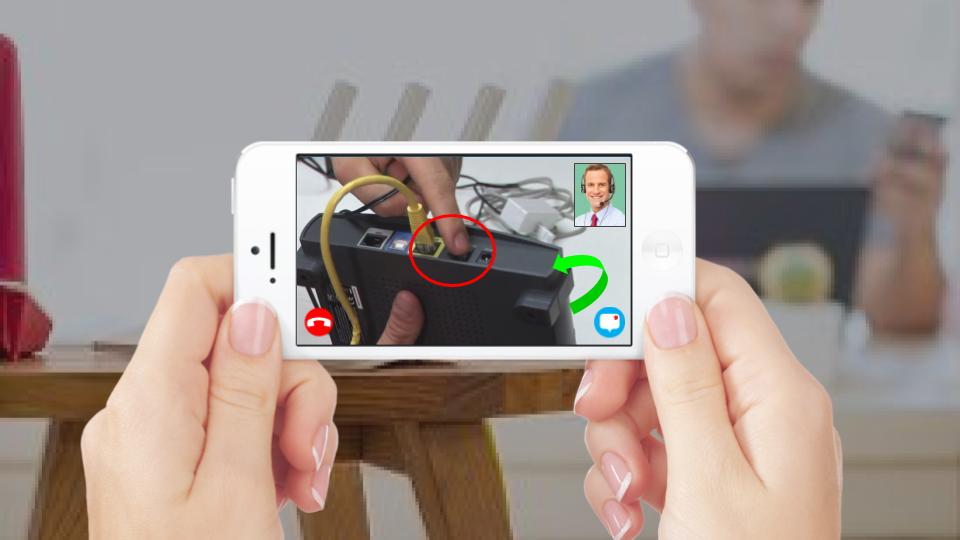
Remote video support is the piece many SaaS teams skip. With Blitzz, the customer opens a text or email link in their mobile browser and shares their camera view, with no app download. The agent can point, mark up the view and use OCR to read serial numbers or labels. It delivers much of the value of an on-site visit without the travel.
Integrations with CRM and contact center platforms such as Salesforce and Genesys mean agents launch video from the case they are already working.
4. Track multiple metrics
CSAT tells you how customers feel. Two operational metrics tell you why.
First contact resolution (FCR)
FCR is the share of issues solved on the first contact. Any case that needs a callback or a site visit is not a first contact resolution.
FCR is hard to raise with audio alone. A live video session lets the agent see the problem from the start, which makes a first-contact fix much more likely.
Average handle time (AHT)
AHT is the time spent on a case, including talk time, hold time and after-call work. AI call summaries in Blitzz cut after-call note-taking, which is part of AHT.
FCR and AHT both feed CSAT. Compare a customer who calls three times, waits on hold each time and still has no answer with one whose issue is solved in a single video call. The second customer is far more satisfied.
5. Incorporate visual empathy
Customers often say support feels impersonal. Many still prefer a live person to a menu or a bot.
Visual empathy means seeing and interacting with another person face to face. It is easier to stay patient with someone you can see than with a voice on the phone. That works in both directions, for the customer and the agent.
Visual empathy also improves first contact resolution. Phone instructions are easy to misunderstand, especially when the customer is unfamiliar with the product. When the agent can see the situation and show the next step on screen, there is far less room for confusion.
How to put these practices in place
- Baseline your metrics. Record current CSAT, FCR and AHT.
- Review the top ticket drivers. Fix root causes and publish self-service answers.
- Automate post-case surveys. Send one after every interaction.
- Add live video for hard cases. Start with issues that usually need a callback or escalation.
- Review monthly. Compare metrics against the baseline and adjust.
Frequently asked questions
What is a good CSAT score for a SaaS company?
Benchmarks vary by segment and survey method. The most useful comparison is your own trend over time, measured the same way after every case.
How does remote video support improve CSAT?
It lets agents see the customer's problem instead of relying on a description. That shortens diagnosis, raises first contact resolution and adds a human connection to the interaction.
Do customers need to install anything to join a video session?
No. With Blitzz, customers join from a text or email link in their mobile browser.
Which metrics should we track alongside CSAT?
Start with first contact resolution and average handle time. Both explain much of the movement in CSAT.
Related reading
- Mastering first contact resolution in customer support
- Average handle time (AHT) in customer support
- The role of empathy in customer service
Ready to raise your CSAT? Start a free trial or book a demo.