
.png?width=120&height=55&name=Blitzz-Logo-right%20white%20eyes%20-%20not%20transparent%20(3).png)
Florida’s building inspection landscape has changed dramatically over the past few years. With the passage of House Bill 667 (HB 667), counties and municipalities across the state were required to modernize how inspections are requested, documented, and performed. One of the most significant outcomes of this legislation has been the rise of Florida virtual inspection software, which enables building officials to conduct inspections remotely using video and digital documentation.
For building departments handling thousands of permits each year, the shift toward digital inspections is not just about convenience—it is increasingly about compliance. Agencies that have not yet implemented a structured virtual inspection system may find themselves falling behind both operationally and legally. Understanding the requirements of HB 667 and the technology that supports it is now an essential part of managing modern inspection workflows.
| 168,000
Inspection requests in Miami in FY 2023-24 |
July 21
HB 667 effective date -24 |
10%
Fee refund penalty for non-compliant agencies |
24
Typical Blitzz Inspect go-live timeline |
1. What Florida HB 667 Actually Requires
HB 667 — formally known as CS/CS/HB 667, Chapter No. 2021-212 — amended Sections 553.79(6) and 553.791(8) of Florida Statutes. The law has three core mandates and one financial penalty provision that every building official needs to understand.
Mandate 1: Electronic Inspection Request Submission
|
✓ HB 667 Compliance Requirement Any county that issues building permits must allow requests for inspections to be submitted electronically to the county building department. |
This is not optional. If your agency still requires contractors to call in or physically submit inspection requests, you are not in compliance. Acceptable electronic submission methods under the statute include:
- Online web form
- Mobile application
- Live video sessions — inspector guides contractor through inspection in real time
- Asynchronous photo/video submissions — contractor uploads geotagged media; inspector reviews and issues results on their own schedule
- Hybrid workflows — agencies can define which inspection types qualify for virtual completion
Mandate 2: Authorization to Perform Virtual Inspections
|
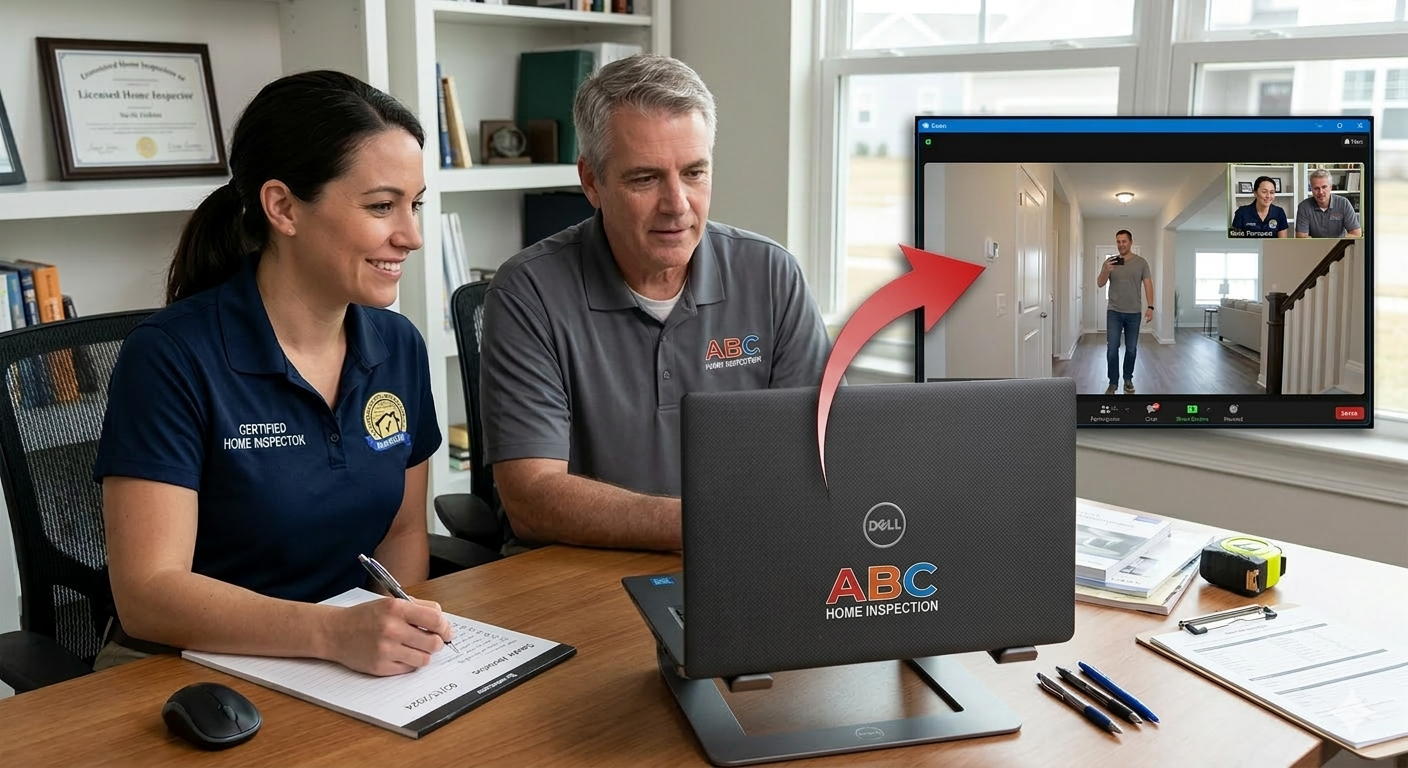
✓ HB 667 Compliance Requirement The law amends the Florida Building Codes Act to authorize enforcement agencies to perform virtual inspections — defined as a form of visual inspection using visual or electronic aids to allow an inspector to perform an inspection without being physically present at the job site. |
This authorization is broad by design. It covers:
- Live video sessions — inspector guides contractor through inspection in real time
- Asynchronous photo/video submissions — contractor uploads geotagged media; inspector reviews and issues results on their own schedule
- Hybrid workflows — agencies can define which inspection types qualify for virtual completion
Important limitation: Virtual inspections do not apply to structural inspections on threshold buildings — defined as buildings with more than three stories, more than 50 feet in height, larger than 5,000 square feet, or with an occupancy limit of 500 or more.
Mandate 3: Acceptable Electronic Submission Methods
|
✓ HB 667 Compliance Requirement Agencies must provide and publicize at least one acceptable method of electronic submission — whether email, an online portal, or a mobile application — so that contractors and permit holders can request inspections without a phone call or in-person visit. |
⚠ Common Compliance GapMany South Florida agencies currently use ad-hoc tools like WhatsApp, FaceTime, or personal email to handle remote inspections. These methods do not create a documented audit trail, do not attach to permit records, and do not satisfy the accountability requirements that accompany the law. They expose agencies to liability. |
The Fee Refund Penalty
HB 667 also introduced a direct financial accountability provision. If an inspection fails and the inspector does not provide a written reason — based on compliance with the Florida Building Code, Florida Fire Prevention Code, or local ordinance — within 5 business days, the agency must refund 10% of the permit and inspection fees to the permit holder.
This provision creates a documentation obligation. Every failed inspection needs a timestamped, code-referenced written reason on file. A platform that auto-generates inspection summaries protects agencies from this liability exposure.
2. Where South Florida Stands Today
HB 667 has been in effect for nearly five years. Adoption across Florida has been uneven — with some counties fully deployed and others still relying on informal workarounds.
|
Agency |
Current Status |
Compliance Risk / Opportunity |
|
City of Miami |
Exploring — Feb 2026 Commission proposal |
Pre-selection window. No vendor locked in. High-urgency opportunity. |
|
Miami-Dade County |
Informal only — WhatsApp, Teams |
No documented platform. Audit trail risk. Open to a compliant solution. |
|
Broward County |
Restrictions repealed Aug 2025 |
Open to private providers. Active vendor evaluation underway. |
|
Tampa |
Deployed Oct 2025 |
VuSpex deployed. Reference market for South Florida agencies. |
|
Pasco County |
Deployed since 2019 |
Early adopter. HB 667 poster child. Benchmark for other FL counties. |
|
Martin, Pinellas, Manatee, Charlotte |
Deployed |
Active virtual inspection programs in place. |
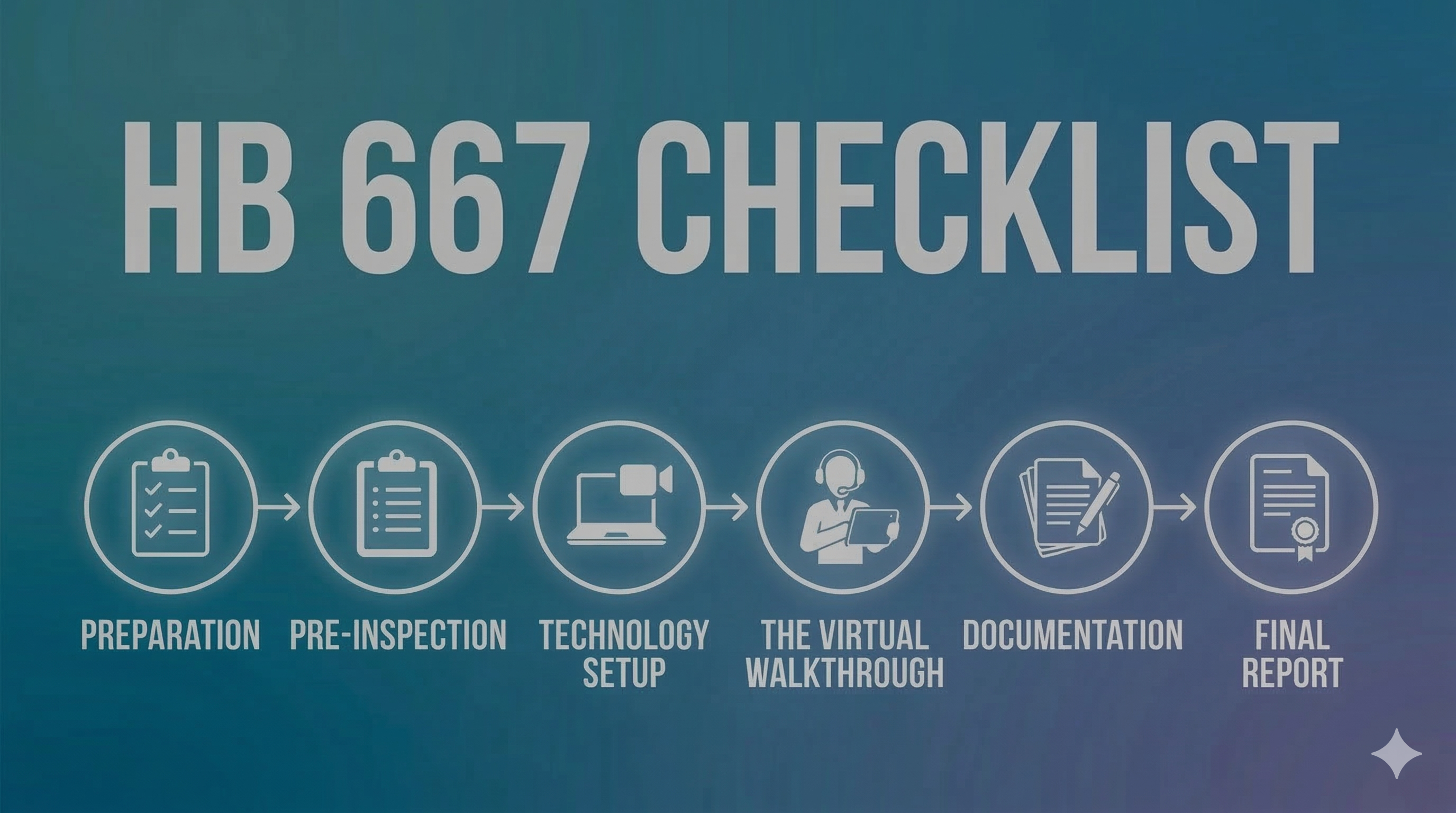
3. The HB 667 Compliance Checklist
Before selecting a virtual inspection platform, every Florida building department should verify that their program meets the following requirements. This checklist is designed for building officials and IT departments evaluating HB 667 readiness.
Electronic Submission
- Agency website allows contractors to submit inspection requests online (email, web form, or mobile app)
- System accepts submissions 24/7 — not just during business hours
- Electronic confirmation is issued to the requestor upon submission
- Submissions are automatically linked to the correct permit record
- Platform integrates with agency's existing land management / permitting system, or operates as a compliant standalone tool
- Virtual inspection type eligibility is configurable by permit type (e.g., HVAC, roofing, electrical — not structural threshold buildings)
Virtual Inspection Capability
- Platform supports live video inspection sessions (inspector + contractor, real time)
- Platform supports asynchronous photo/video submission by contractor with inspector review
- Geotagging or geolocation verification is available to confirm job site
- Offline capability for low-connectivity job sites
- Inspector can annotate, capture screenshots, and generate an inspection record from within the session
Documentation & Audit Trail
- Every inspection session produces a timestamped record with pass/fail result
- Fail reasons are documented in writing, code-referenced, and delivered to permit holder within 5 business days (fee refund protection)
- Inspection records are stored securely in the cloud and accessible for audit
- Records attach automatically to the permit or inspection file in the permitting system
Accessibility & Equity
- Inspection method is accessible from any smartphone — no proprietary hardware required
- Multi-language support available (Spanish is critical for South Florida contractor populations)
- No app download required for contractors (browser-based sessions are preferred)
Permitting System Integration
- Platform integrates with agency's existing land management / permitting system, or operates as a compliant standalone tool
- Virtual inspection type eligibility is configurable by permit type (e.g., HVAC, roofing, electrical — not structural threshold buildings)
4. How Blitzz Inspect Meets Every HB 667 Requirement
Blitzz Inspect is an enterprise-grade remote visual assistance platform purpose-built for government and field service inspections. Here is how Blitzz maps to each HB 667 mandate.
|
HB 667 Requirement |
How Blitzz Inspect Meets It |
|
Allow electronic inspection requests to be submitted electronically |
Blitzz provides a contractor-facing scheduling portal accessible from any device. Requests are logged, time-stamped, and linked to permit records automatically. |
|
Provide acceptable methods of electronic submission (email, web form, mobile app) |
Blitzz supports all three: SMS/email invite links, a web-based portal, and a mobile app. No proprietary hardware required. |
|
Authorize virtual inspections via visual or electronic aids |
Blitzz Inspect supports live HD video sessions, asynchronous geotagged photo/video submissions, and inspector-guided remote walkthroughs. |
|
Do not apply virtual to structural inspections on threshold buildings |
Blitzz inspection type eligibility is fully configurable. Agencies define which permit types are eligible for virtual — structural exclusions are built into the workflow. |
|
Provide written, code-referenced fail reason within 5 business days |
Owlbert AI (Blitzz's AI layer) auto-generates inspection summaries and outcome documentation. Inspectors review and send — a process that takes under 2 minutes, protecting agencies from the 10% fee refund trigger. |
|
Maintain audit trail of inspection outcomes |
Every Blitzz session is recorded, stored in the cloud, and linked to the permit record. Timestamped pass/fail documentation is always accessible for audit. |
|
Integrate with permitting systems |
Blitzz integrates with Salesforce, Zendesk, Dynamics 365, Genesys, and custom REST APIs. It can operate standalone or in parallel with Accela and Tyler-based permitting systems. |
5. Beyond Compliance: Why the Best Departments Choose Blitzz
HB 667 sets the floor, not the ceiling. The agencies that will lead in efficiency and citizen satisfaction over the next five years are choosing platforms that do more than check the statutory box.
AI-Powered Inspection Documentation
Blitzz's Owlbert AI suite automatically generates inspection summaries, tags session highlights, and produces a formatted outcome report after every session. Inspectors stop typing, start deciding. For agencies processing hundreds of inspections per week, this is the single biggest productivity gain available.
One Platform for Inspections, Live Citizen Support, and Screen Sharing
Most agencies that deploy virtual inspections soon discover a second problem: contractors and homeowners also need help navigating the permit portal, uploading documents, or understanding inspection results. Blitzz Concierge (live video support) and Cobrowse (screen sharing) are available on the same platform at no additional infrastructure cost. Three tools. One contract. One vendor.
No App Download for Contractors
VuSpex requires contractors to download the VuSpex GO app. Blitzz Inspect operates via a browser-based invite link sent by SMS or email. The contractor clicks, grants camera access, and the session begins — no app store, no account creation, no friction. In South Florida's diverse contractor population, this matters.
Multi-Language Support
South Florida's construction workforce is multilingual. Blitzz supports real-time Spanish language assistance, reducing miscommunication during virtual inspection sessions and improving first-pass approval rates.
Enterprise Security & Compliance
Blitzz is deployed by enterprise customers with strict data governance requirements, including Telefonica Germany under an EU-US Data Privacy Framework and Standard Contractual Clauses agreement. Government agencies in Florida can deploy Blitzz with confidence that data handling meets security standards well above the statutory minimum.
6. Getting from Zero to Compliant in 24 Hours
Building departments that have not yet implemented a formal virtual inspection program often assume the setup will take months. With Blitzz, a typical government agency can go from contract to live inspections in 24 hours or less.
Blitzz Government Onboarding Timeline
|
Timeline |
Phase |
Activities |
|
Days 1–3 |
Kickoff & Configuration |
Agency onboarding call. Define eligible inspection types. Configure HB 667-compliant submission workflow. Set up permit type eligibility rules. |
|
Days 4–7 |
Integration |
Connect to existing permitting system via REST API (optional). Configure inspection scheduling, time slots, and notification templates. |
|
Days 8–14 |
Pilot Deployment |
Launch pilot with one inspection type (e.g., HVAC or roofing). Conduct 10–20 inspections with live Blitzz support. Collect inspector and contractor feedback. |
|
Days 15–21 |
Training |
Inspector training: live video session workflow, AI summary review, audit trail access. Contractor guidance: how to join a session from an invite link. |
|
Days 22–30 |
Full Go-Live |
Expand to all eligible inspection types. Publish contractor-facing HB 667 virtual inspection guide on agency website. Program is live and compliant. |
Frequently Asked Questions
Is Blitzz Inspect already in use by government agencies?
Yes. Blitzz is deployed by government and enterprise customers for remote visual inspections and field assistance. Reference deployments exist across California under the equivalent AB 1738 remote inspection compliance framework — the same statutory structure as Florida HB 667.
Do we need to replace our Accela or Tyler permitting system?
No. Blitzz Inspect operates as a standalone virtual inspection layer that sits on top of your existing permitting system. Inspectors trigger Blitzz sessions from wherever they currently work — whether that's Accela, Tyler, or a custom portal. Full integration is available but not required to get started.
What inspection types qualify under HB 667?
HB 667 broadly authorizes virtual inspections for most inspection types. The key exclusion is structural inspections on threshold buildings (3+ stories, 50+ feet, 5,000+ sq ft, or 500+ occupancy). Common eligible types include: roofing, window/door replacement, HVAC, electrical service upgrades, water heater replacement, plumbing, siding, and flashing.
How does Blitzz handle the 5-business-day fail reason requirement?
Every Blitzz inspection session concludes with an AI-generated summary that the inspector reviews and approves. Failed inspections automatically prompt a code-reference documentation step before the session can be closed. The completed report is delivered to the permit holder by email and stored in the inspection record — ensuring the 10% fee refund penalty is never triggered.
What does a Blitzz government contract cost?
Blitzz offers flexible government pricing: per-inspection credit-based models, per-user annual licenses, and enterprise flat-fee arrangements. We also offer a 24-hour free pilot program for South Florida building departments currently evaluating virtual inspection solutions. Contact us to discuss the right structure for your agency's volume and budget.
Is Miami-Dade County required to adopt a formal virtual inspection platform?
HB 667 requires counties that issue building permits to allow electronic inspection requests and authorizes virtual inspections. Miami-Dade's current use of consumer apps like WhatsApp does not meet the documentation, audit trail, and structured submission requirements that accompany the law. As building volume grows and scrutiny increases, a formal, compliant platform is not optional — it is a liability
|
Download the Florida Virtual Inspection Compliance Checklist A one-page, printable checklist for building officials evaluating HB 667 readiness and virtual inspection platform selection. |
|
Schedule a 15-Minute Demo Ready to talk? Blitzz is offering 24-hour free pilots for South Florida building departments currently evaluating virtual inspection solutions. Get live in 24 hours, no risk, no long-term commitment required. Contact us or schedule a demo. |
About Blitzz
Blitzz is an enterprise remote visual assistance platform serving government agencies, field service organizations, and enterprise support teams. Our products — Blitzz Inspect (remote inspections), Blitzz Concierge (live video support), and Blitzz Cobrowse (screen sharing) — run on a single platform with shared AI capabilities powered by Owlbert Einstein.
Blitzz is trusted by organizations across the United States and Europe for government-grade compliance, security, and scale. We have supported remote inspection programs compliant with California AB 1738, EU GDPR, and enterprise security frameworks.