
.png?width=120&height=55&name=Blitzz-Logo-right%20white%20eyes%20-%20not%20transparent%20(3).png)

On this page

Choosing the right IrisCX alternative is not just about replacing a video tool. For home builders, property managers, warranty teams, contact centres, and field service organisations, the real question is: which platform can preserve the speed, visual context, AI support, and workflow integration that made IrisCX valuable in the first place?
IrisCX has been known for browser-based visual support, app-free live and self-guided sessions, AI-powered insights, and use cases around product support, installation, maintenance intake, and home warranty workflows. Public descriptions of IrisCX highlight self-help and live video sessions on smartphones with no app required, along with AI, AR, and process automation. IrisCX materials also emphasise self-guided visual defect capture, warranty documentation, and AI-assisted scoring for warrantable versus non-warrantable issues.
That means buyers looking for an IrisCX replacement should evaluate more than basic video calling. The best option should support live video, self-guided intake, AI summaries, CRM or ticketing integrations, enterprise-grade security, and a strong fit for your specific operating model.
Below are 10 strong options to consider in 2026: Blitzz, Streem, Help Lightning, CareAR, and Glance. Each can serve as an alternative to IrisCX, but they fit different teams and workflows.
Evaluation Criteria Used in This Post
-
To keep this comparison balanced, each platform was reviewed using the same criteria:
-
Live and self-guided video capability: Can customers, residents, homeowners, or field teams capture useful visual context without friction?
-
AI features: Does the platform support triage, summaries, agent assist, knowledge retrieval, or automated documentation?
-
Integration depth: Does it connect with CRM, ticketing, contact centre, field service, or workflow systems?
-
Enterprise security and compliance: Can the platform meet the needs of regulated or security-conscious organisations?
-
Vertical fit: Is it strongest for home builders, property management, contact centres, industrial service, or enterprise field service?
-
Pricing transparency and deployment speed: Can buyers understand the investment and get live quickly?
Blitzz
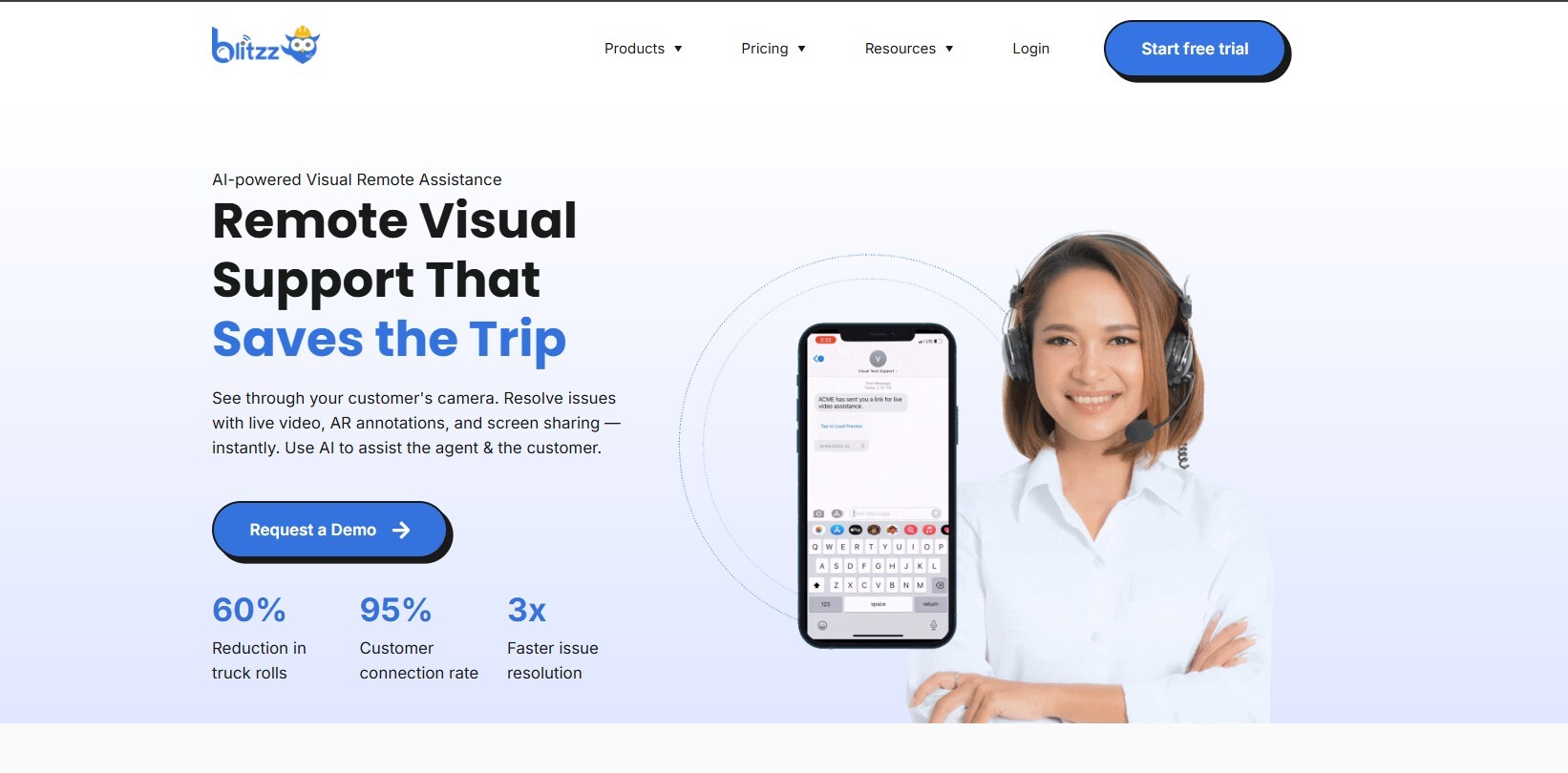
Blitzz is the closest overall match for teams looking for an IrisCX replacement, especially if the original IrisCX use case involved home warranty, inspections, visual troubleshooting, or contact center support. Like IrisCX, Blitzz focuses on helping support teams see what the customer sees. The difference is that Blitzz expands this into a broader remote visual assistance and inspection platform with live video, AR annotations, screen sharing, AI support, and integrations with tools such as Zendesk, Salesforce, and Genesys.
Compared with IrisCX, Blitzz is strongest when the buyer needs both live support and operational workflow depth. IrisCX was closely associated with warranty automation and customer-guided visual intake. Blitzz covers similar visual support needs but also extends into contact centers, field service, inspections, co-browsing, and enterprise remote assistance.
Why it compares well against IrisCX:
- Strong parallel to IrisCX’s app-free visual support experience.
- Better fit for teams needing both live video support and inspection workflows.
- Useful for home builders, property managers, warranty teams, field service teams, and contact centers.
- Stronger integration story for CRM, ticketing, and customer support operations.
- Owlbert AI can support call summaries, documentation, and agent assistance.
Best for:
- Home builder warranty teams.
- Property management maintenance teams.
- Contact centers.
- Building inspection teams.
- Field service and customer support teams.
Main trade-off:
- Enterprise pricing may require a sales conversation, especially for larger deployments or advanced AI/integration needs.
Help Lightning
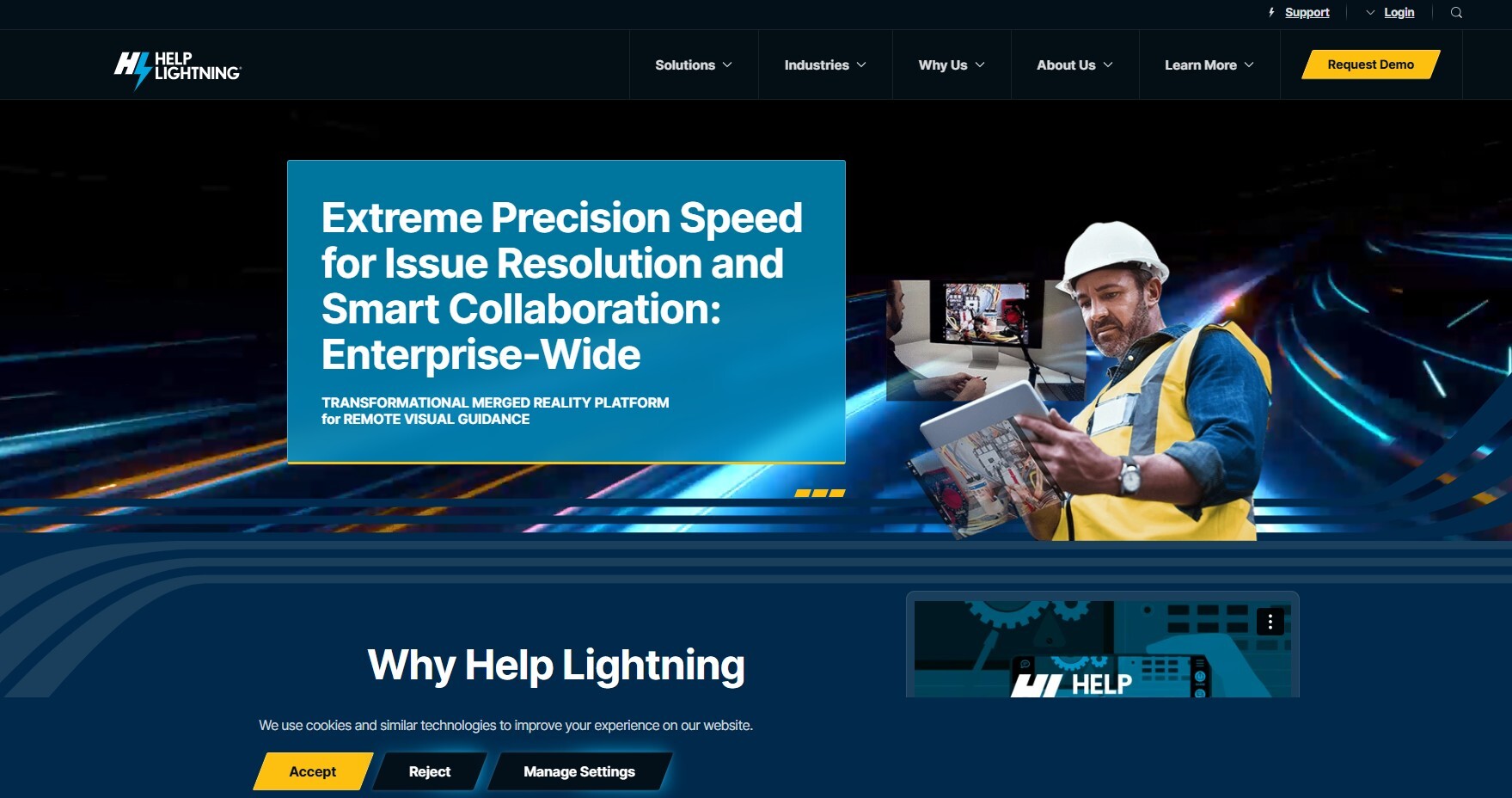
Help Lightning is a remote visual guidance platform known for merged reality and expert-to-technician collaboration. Its platform highlights AR remote expert guidance, AI speed-assist, patented merged reality, AI analytics, and guided self-help procedures.
Compared with IrisCX, Help Lightning is more technician-facing. IrisCX was valuable for customer-facing visual support, homeowner submissions, product setup, and warranty workflows. Help Lightning is stronger when the person receiving help is a technician, installer, engineer, or trained worker who needs remote expert guidance.
Why it compares well against IrisCX:
- Stronger for complex technical guidance.
- Merged reality helps experts visually guide someone in the field.
- Useful when the issue requires hands-on repair or installation support.
- Good for industrial and equipment-heavy environments.
- Supports remote expert collaboration beyond standard video calls.
Best for:
- Industrial service teams.
- Manufacturing support.
- Equipment repair teams.
- Medical device service teams.
- Technician training and field support.
Main trade-off:
- Less naturally aligned with homeowner warranty intake or property management maintenance requests.
CareAR
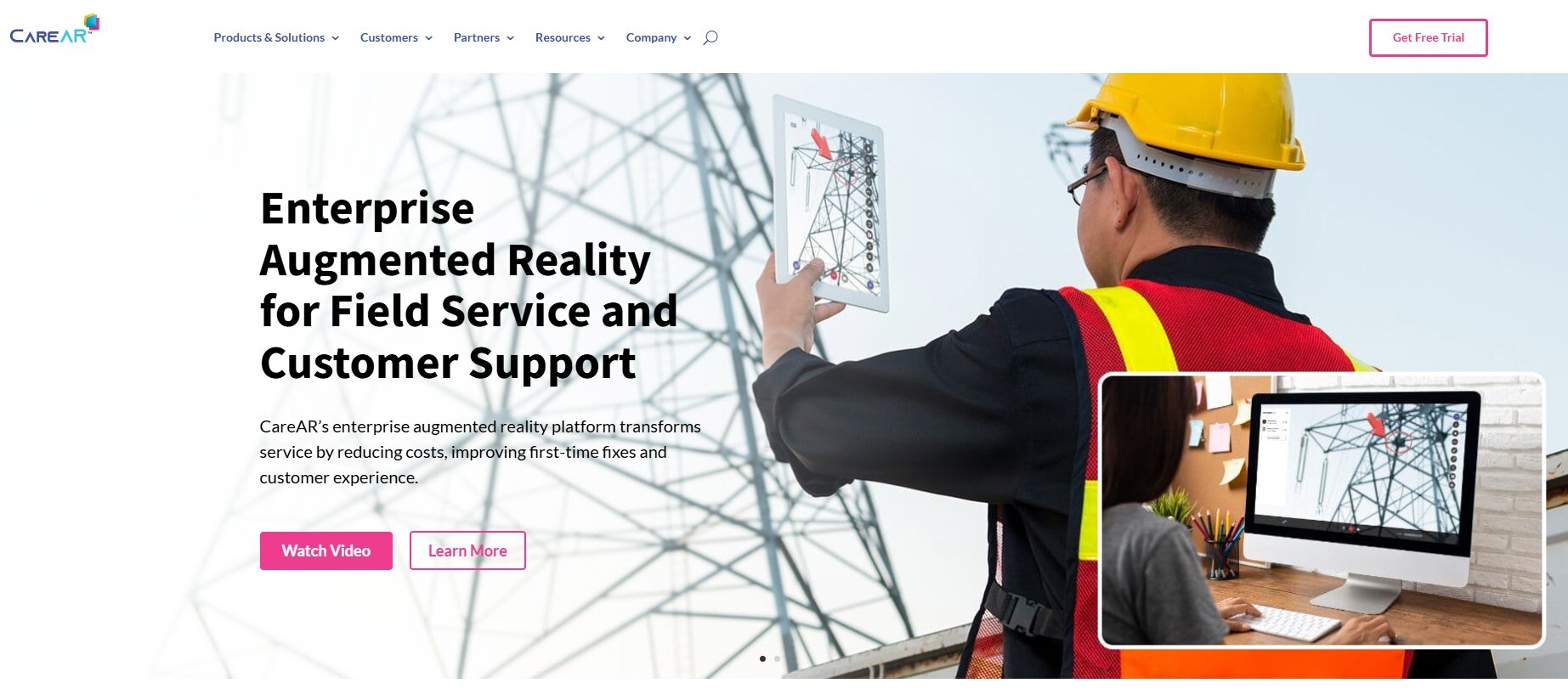
CareAR is an enterprise augmented reality service experience platform. It combines AR-enabled remote support, AI-enabled visual support, digital work instructions, and self-solve workflows. CareAR also positions itself strongly around field service and customer service transformation using AR and AI.
Compared with IrisCX, CareAR is more enterprise workflow-oriented. IrisCX was more directly tied to visual customer support and warranty automation. CareAR is better suited for larger companies with mature service management systems, especially those already using platforms like ServiceNow.
Why it compares well against IrisCX:
- Strong AR support for enterprise service teams.
- Good fit for companies that need guided work instructions.
- Helpful for field workers, service teams, and customer support teams.
- Stronger for structured service management environments.
- Useful when self-solve instructions are part of the support strategy.
Best for:
- Enterprise field service.
- ServiceNow-heavy organizations.
- IT service management.
- Equipment support.
- Large service operations.
Main trade-off:
- Heavier implementation compared with simpler app-free visual support tools.
Glance
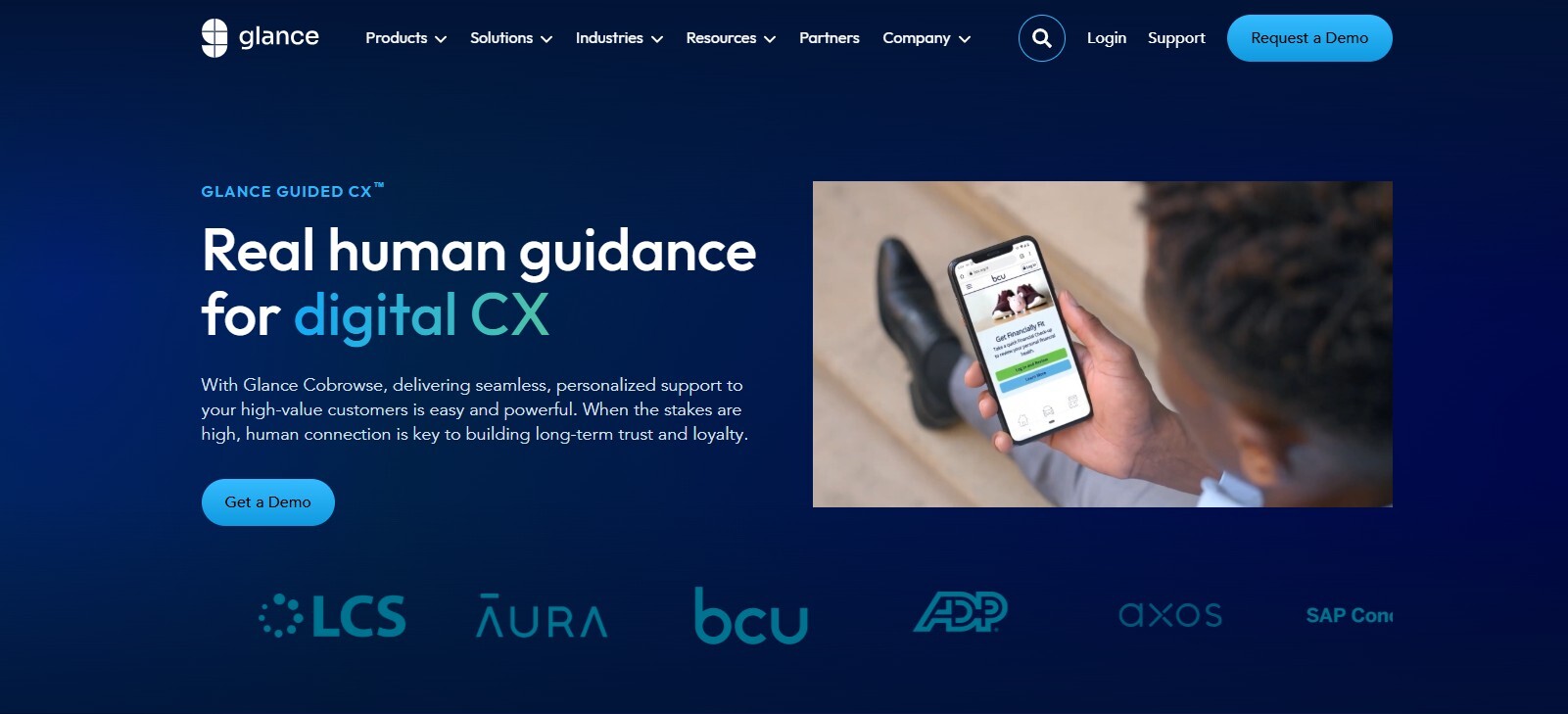
Glance is different from IrisCX because it is more focused on digital guidance than physical-world visual support. It helps customer-facing teams use cobrowsing, screen sharing, video, and guided support inside websites, portals, and mobile apps. AWS Marketplace describes Glance as enabling customer-facing teams to launch cobrowsing, screen sharing, video, and other collaboration tools inside digital experiences.
Compared with IrisCX, Glance is less of a warranty or home inspection platform and more of a digital customer experience platform. If IrisCX helped customers show a physical issue through their phone camera, Glance helps customers navigate digital journeys like online forms, portals, applications, and account workflows.
Why it compares well against IrisCX:
- Stronger for digital support journeys.
- Useful when agents need to guide users through websites or apps.
- Good for screen sharing and cobrowsing.
- Helps reduce friction in complex online customer interactions.
- Fits contact center teams that support digital transactions.
Best for:
- Financial services.
- Insurance.
- Telco.
- Digital onboarding.
- Web portal support.
- Contact centers.
Main trade-off:
- Less specialized for home builder warranty, defect capture, or property inspection workflows.
SightCal
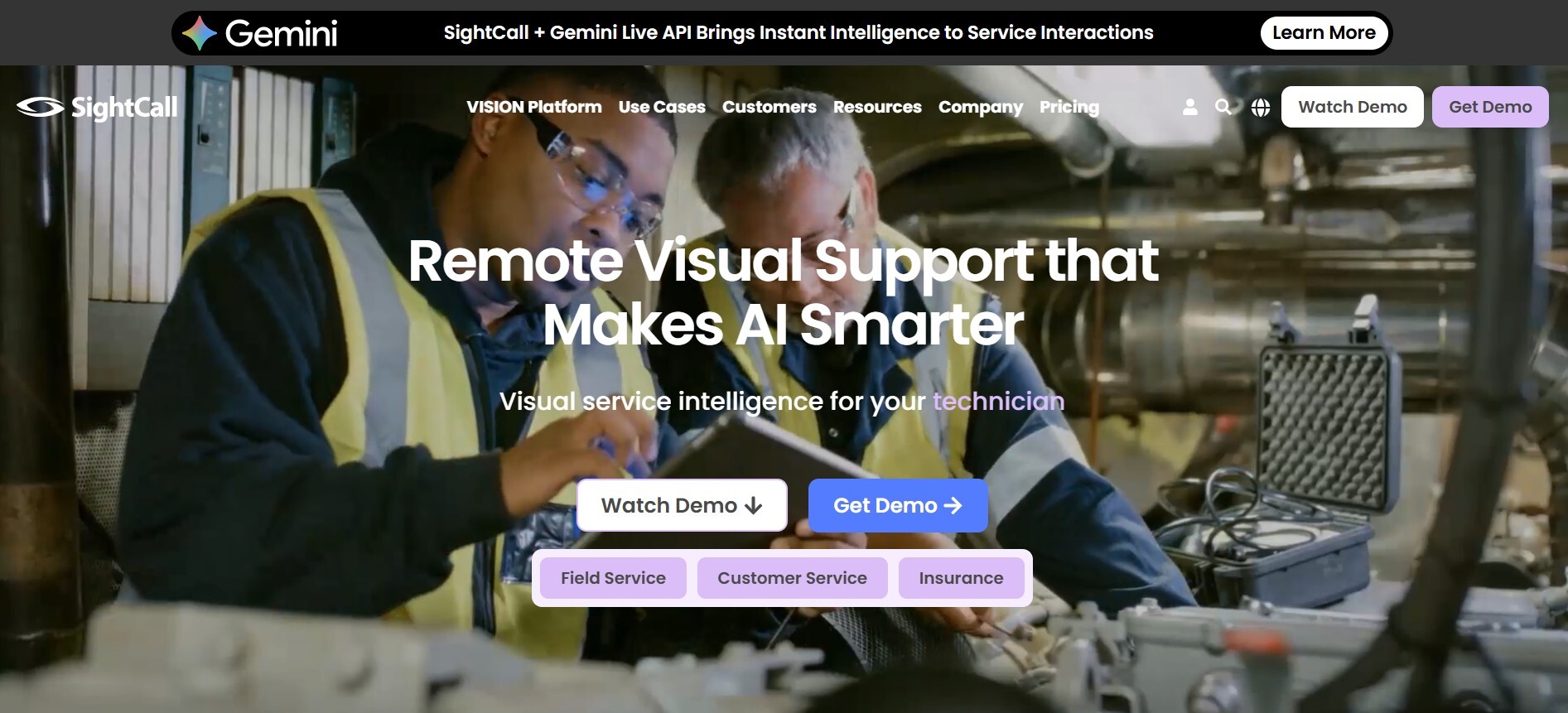
SightCall is a strong enterprise visual assistance platform and a serious IrisCX competitor for larger service organizations. It positions itself around remote video support, AI-driven visual assistance, field service, customer service, insurance, and telehealth. SightCall also highlights AI knowledge capture and visual AI for diagnosing equipment, parts, and issues from live video and images.
Compared with IrisCX, SightCall is broader and more enterprise-oriented. IrisCX had a strong fit for home warranty and visual customer support. SightCall may be a better match for organizations that need visual assistance across several departments, including field service, insurance claims, healthcare support, and customer service.
Why it compares well against IrisCX:
- Strong enterprise visual assistance capabilities.
- Visual AI can help classify equipment, parts, or issues.
- Useful across multiple service departments.
- Good for field service and customer service teams.
- Stronger fit for large organizations with complex support operations.
Best for:
- Enterprise field service.
- Insurance claims.
- Healthcare and telehealth support.
- Customer service teams.
- Multi-location service organizations.
Main trade-off:
- May be more complex than needed for smaller home builder or property management teams.
TechSee
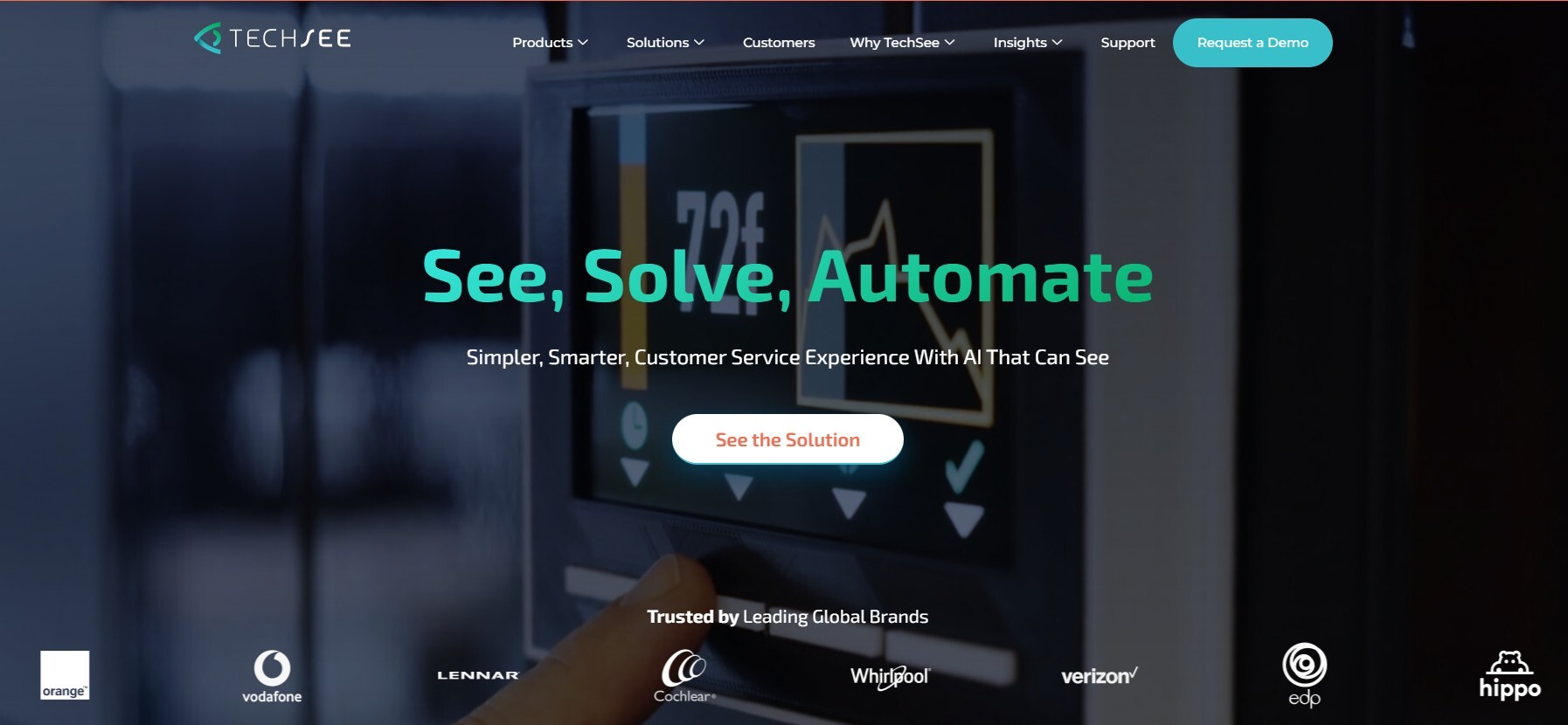
TechSee is a good IrisCX alternative for companies that want AI-powered visual automation. TechSee’s VRAi launch on Salesforce AppExchange emphasized AI-powered vision models for visual self-service flows, product identification, and agent insights. TechSee also describes VRAi as supporting Salesforce Agentforce, Einstein Bot, and Salesforce Flows.
Compared with IrisCX, TechSee is especially strong in visual AI and automation. IrisCX used AI in the customer support and warranty context, including AI-assisted scoring and visual defect context. TechSee is more focused on using visual AI to identify products, troubleshoot visually, and automate support flows.
Why it compares well against IrisCX:
- Strong AI vision capabilities.
- Good for visual self-service.
- Useful for product identification and troubleshooting.
- Relevant for Salesforce-based customer experience teams.
- Stronger when AI automation is a top priority.
Best for:
- Contact centers.
- Product support teams.
- Telecom and electronics support.
- Salesforce-based service teams.
- Companies building visual self-service workflows.
Main trade-off:
- May be less focused on home builder warranty workflows compared with IrisCX or Blitzz.
XMReality
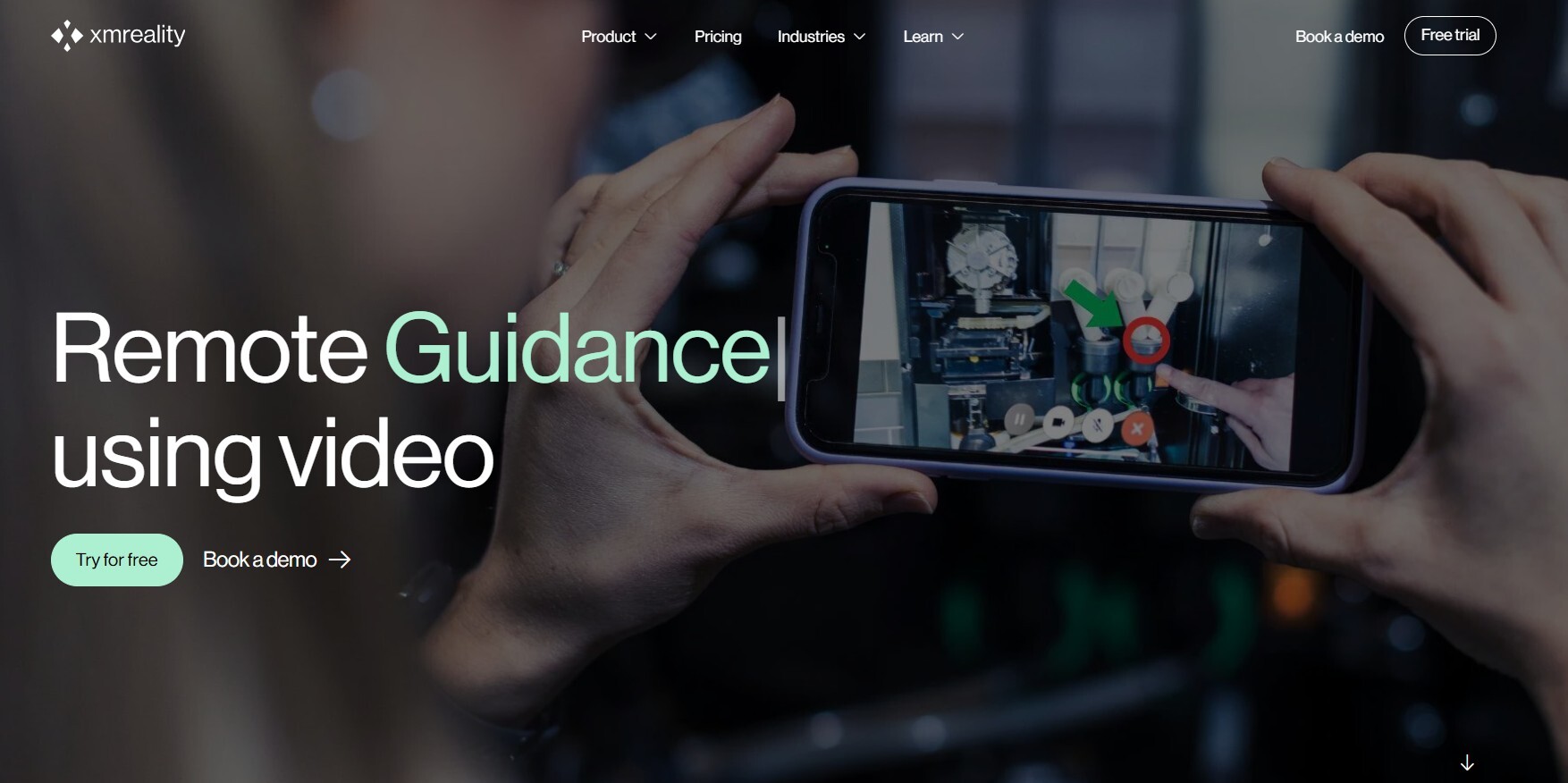
XMReality is an AR remote visual assistance platform focused on remote guidance. It highlights one-click connections, no downloads, support for any device including smart glasses, hands overlay, annotations, and pointers.
Compared with IrisCX, XMReality is stronger for expert guidance, inspections, audits, and training. IrisCX was more customer-support and warranty-intake oriented. XMReality is better when a remote expert needs to visually guide someone through a task, especially in technical, industrial, or training-heavy environments.
Why it compares well against IrisCX:
- Strong AR guidance tools.
- Hands overlay helps remote experts show exactly what to do.
- Good for inspections, audits, and training.
- Supports smart glasses and mobile devices.
- Useful when visual instruction matters more than customer intake.
Best for:
- Industrial support.
- Remote inspections.
- Training.
- Audits.
- Technical field service.
- Smart glasses workflows.
Main trade-off:
- More remote-guidance focused than warranty automation or customer experience focused.
Salesforce Visual Remote Assistant
Salesforce Visual Remote Assistant is a natural IrisCX alternative for companies already committed to Salesforce. Salesforce positions it as real-time visual support for customers and employees, with quick setup and intelligent engagement. Salesforce also publishes pricing at $50 USD per user/month, billed annually, which gives buyers more pricing visibility than many enterprise competitors.
Compared with IrisCX, Salesforce Visual Remote Assistant is less of a standalone visual support platform and more of a Salesforce-native extension. If your service operation already lives in Salesforce Service Cloud or Field Service, this can be a practical choice because visual support stays close to your existing CRM data.
Why it compares well against IrisCX:
- Native fit for Salesforce customers.
- Useful for customer and employee visual support.
- Published pricing improves budget planning.
- Good for teams already using Service Cloud or Field Service.
- Reduces the need for separate workflow integration.
Best for:
- Salesforce Service Cloud users.
- Salesforce Field Service users.
- Enterprise customer support teams.
- Field service teams already using Salesforce.
- Companies wanting CRM-native visual support.
Main trade-off:
- Best fit only if Salesforce is already central to your service operation.
Viewabo
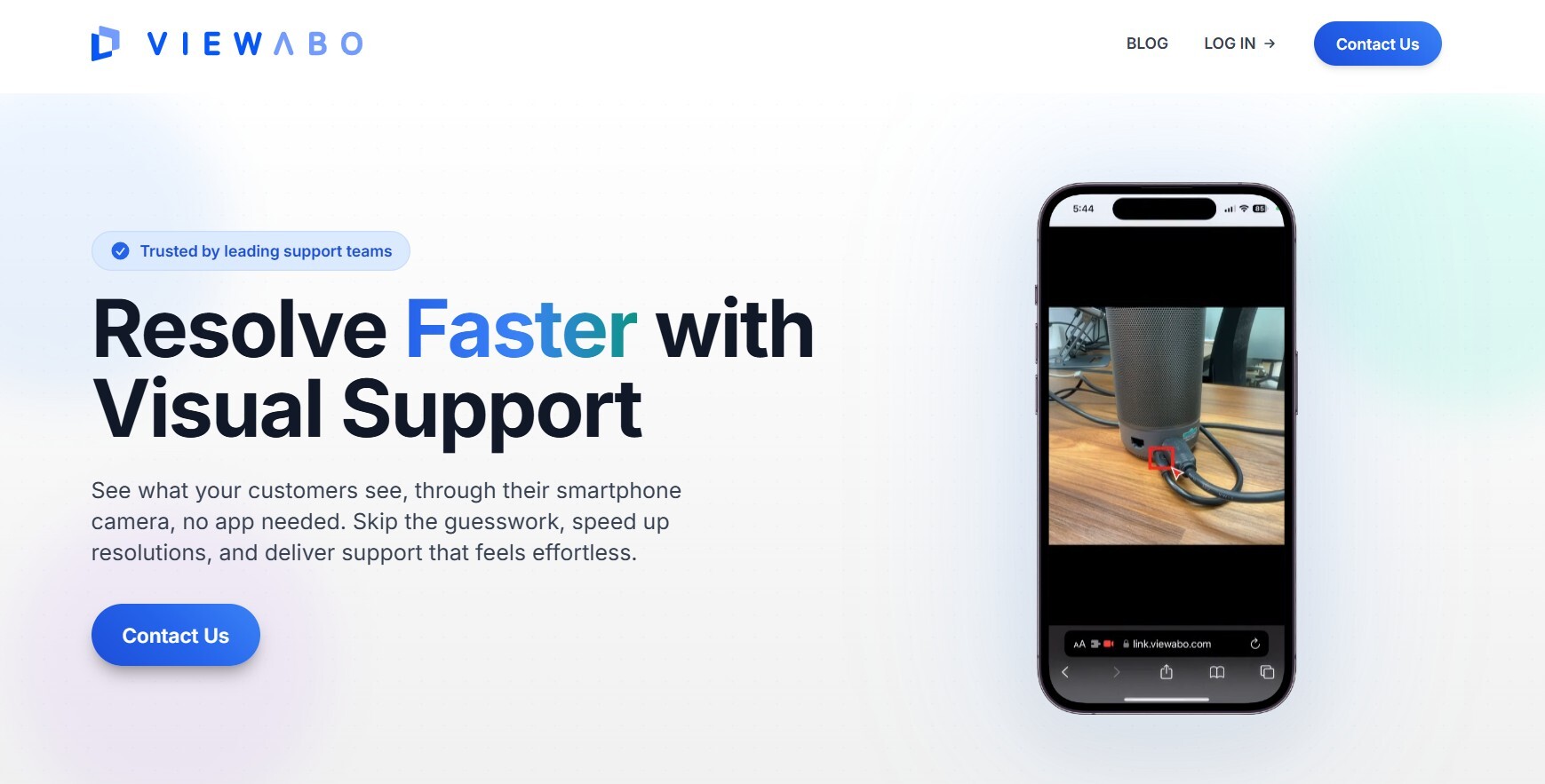
Viewabo is a lightweight IrisCX alternative for teams that mainly need fast visual context from a customer’s smartphone camera. Viewabo’s website says it gives teams instant visual context through the customer’s smartphone camera with “no app, no friction.”
Compared with IrisCX, Viewabo is simpler. IrisCX had a stronger focus on AI, warranty workflows, and visual customer experience automation. Viewabo is better for support teams that do not need a heavy enterprise implementation and mainly want to see the customer’s issue quickly.
Why it compares well against IrisCX:
- Simple app-free customer experience.
- Easy fit for basic troubleshooting.
- Good for support agents who need to see the problem quickly.
- Lower learning curve than larger enterprise platforms.
- Useful when speed matters more than advanced workflow depth.
Best for:
- Small and mid-sized support teams.
- Product troubleshooting.
- Technical support.
- Customer service teams.
- Teams that need quick visual verification.
Main trade-off:
- Less advanced than IrisCX, Blitzz, SightCall, or TechSee for AI, inspection workflows, and deep enterprise integrations.
Side-by-Side Comparison Table
| Vendor | Best fit | AI / AR strength | Integrations | App-free access | Main trade-off |
|---|---|---|---|---|---|
| Blitzz | Warranty, inspections, contact centers, field service | Owlbert AI, summaries, inspections, OCR | Broad CRM, ticketing, field service | Yes | Enterprise pricing requires sales conversation |
| Streem | Home services, contractor support | AR measurement, visual capture | Salesforce/AppExchange presence | Yes | More focused on home service use cases |
| Help Lightning | Industrial service, manufacturing | Merged reality, AI speed-assist | Moderate | Mixed | More technician-facing than homeowner-facing |
| CareAR | Enterprise field service | AR workflows, visual instructions | Deep ServiceNow fit | Mixed | Heavier implementation |
| Glance | Financial services, telco, digital CX | Cobrowse, video, screen sharing | CRM/contact center integrations | Yes | Less focused on physical defect/warranty workflows |
| SightCall | Field service, insurance, customer service | Visual AI, AI knowledge capture, AR | Enterprise service stack | Yes | May be more enterprise-complex |
| TechSee | Contact centers, field service, visual self-service | Visual AI, product recognition, automation | Salesforce/AppExchange, enterprise workflows | Yes | Best when AI visual automation is central |
| XMReality | Inspections, audits, training, industrial support | AR hands overlay, remote guidance | APIs, enterprise workflows | Yes | More remote-guidance focused than CX-platform focused |
| Salesforce VRA | Salesforce Service Cloud / Field Service users | Video support inside Salesforce workflows | Native Salesforce ecosystem | Yes | Best only if Salesforce is already core |
| Viewabo | Simple customer support troubleshooting | Basic visual support, camera sharing | Zendesk/app ecosystem and support workflows | Yes | Lighter feature depth than enterprise platforms |
How to Choose: A Short Decision Framework
If you are coming from IrisCX with home builder, property management, or warranty workflows, prioritize app-free access, self-guided video intake, AI defect summaries, inspection documentation, and integrations with tools like Zendesk, Microsoft Teams, Salesforce, or ServiceNow. The goal is not just to start a video call; the goal is to capture the issue clearly, summarize it accurately, route it correctly, and reduce unnecessary site visits.
If you are a contact center, prioritize CRM integration, agent assist AI, call recording, call summaries, screen sharing, and session history. In this scenario, the best video customer support software is the one that fits inside the agent’s daily workflow and reduces after-call work.
If you are field service heavy, prioritize technician workflows, AR guidance, offline capability, remote expert support, and field service management integrations. Help Lightning, CareAR, Streem, and Blitzz can all be relevant depending on whether the user is a technician, contractor, customer, or inspector.
If your use case is mostly digital support, such as helping customers complete web forms or navigate portals, Glance or Apizee may be worth evaluating. If your use case involves physical issues, warranty evidence, property inspection, or visual defect documentation, Blitzz should be at the top of the shortlist.
Why Blitzz Is the Strongest IrisCX Replacement
Blitzz is the strongest IrisCX alternative for most IrisCX migrators because it maps closely to the workflows that matter: app-free visual support, remote inspections, self-guided documentation, AI-generated summaries, CRM/ticketing integrations, and enterprise security. Blitzz has a wide range of features designed to support your business, especially if you’re handling field service, home inspections, or remote customer support.
Compared with more AR-specific platforms, Blitzz offers a broader operating layer for support, inspection, and customer experience teams. Compared with digital-only engagement tools, it is better suited to physical-world troubleshooting, property issues, equipment problems, and warranty workflows.
The key differentiator is Owlbert AI. IrisCX buyers who valued IrisAI-style defect summaries should look closely at Blitzz because its AI capabilities extend into call summaries, inspection outcomes, session highlights, OCR, and structured documentation. That makes it easier for teams to move from “we saw the problem” to “we documented, routed, and resolved the problem.”
Blitzz also has practical deployment advantages. App-free browser access reduces customer friction. Native and API integrations reduce operational disruption. Products like Blitzz Concierge, Blitzz Inspect, and Blitzz Cobrowse give buyers room to expand without stitching together multiple vendors.
For buyers moving quickly after an IrisCX transition, that combination matters.
FAQ
What was IrisCX best known for?
IrisCX was best known for smart video support, app-free customer sessions, live-guided experiences, self-guided visual intake, AI-powered insights, and warranty or maintenance workflows. Public descriptions also highlight video inspection for home builders, smartphone-based issue capture, and no software installation for customers.
Who are the main competitors in visual customer engagement?
The main competitors include Blitzz, Streem, Help Lightning, CareAR, Glance, Apizee, SightCall, TechSee, and other remote visual assistance or cobrowse platforms. The right choice depends on whether your use case is physical troubleshooting, field service, digital cobrowsing, warranty intake, or enterprise service management.
Which IrisCX alternative is best for home builders?
Blitzz is the strongest option for home builders and warranty teams because it supports app-free visual support, remote inspections, AI summaries, photo documentation, GPS/location capture, OCR, and integrations with CRM and service workflows.
Which alternative offers AI defect summaries similar to IrisAI?
Blitzz is the closest fit because Owlbert AI supports automated summaries, inspection documentation, and structured session outputs. Teams that relied on IrisCX for visual defect capture and AI-assisted warranty documentation should evaluate Blitzz first.
How quickly can I switch from IrisCX to a new platform?
Deployment speed depends on the number of workflows, integrations, security requirements, and user groups involved. A simple app-free video support rollout can happen faster than a deeply integrated CRM, ticketing, or field service deployment.
Related readings:
Make Your Life Easier with Trusted Home Inspection Scheduling Software
Remote Home Inspection: HVAC, Plumbing & Electrical Troubleshooting
How Is Remote Video Inspection Done? A Modern Field Service Guide For Property Managers

Blitzz Team
The Blitzz Team writes about remote video support, virtual inspections and field service. Our guides come from working with home builders, property managers, warranty teams, contact centers and field service organizations that use Blitzz to see and solve issues without a truck roll.

.jpg)