
.png?width=120&height=55&name=Blitzz-Logo-right%20white%20eyes%20-%20not%20transparent%20(3).png)
What Is a Truck Roll?
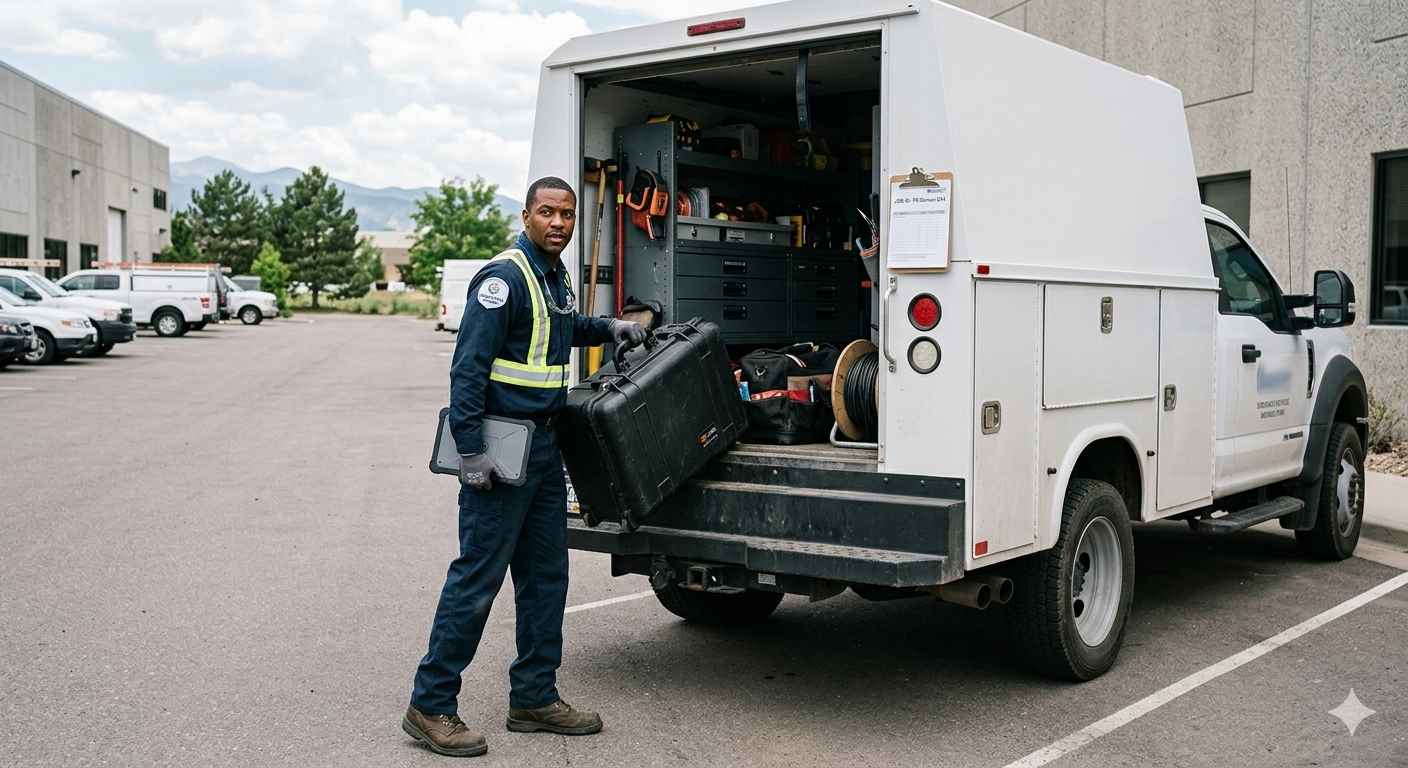
A truck roll is exactly what it sounds like: a technician gets in a vehicle and drives to a customer's location to handle a service call. The term comes from the image of "rolling a truck" out of the depot — and in field service operations, it happens hundreds of thousands of times every day across telecoms, utilities, HVAC, manufacturing, insurance, and beyond.
Truck rolls are the backbone of physical service delivery. When a cable goes down, when industrial equipment malfunctions, when a new installation needs a trained eye — a truck rolls. That's the job.
But not every truck that rolls needs to.
That gap — between the dispatches that are genuinely necessary and the ones that could have been resolved remotely, diagnosed before arrival, or avoided entirely — is where field service organizations quietly lose enormous amounts of money. And where enormous amounts of CO₂ quietly enter the atmosphere.
This guide covers the full picture: what truck rolls cost, what drives avoidable ones, how to measure your exposure, and exactly how remote visual assistance technology like Blitzz can reduce your dispatches — without reducing your service quality.
What Does a Truck Roll Actually Cost?
The number you'll hear most often is somewhere between $200 and $500 per dispatch. That's the widely cited range, and it's accurate as far as it goes — if you only count the obvious stuff: fuel, vehicle wear, and the technician's time in transit.
The problem is, most organizations stop the calculation there. They're underestimating.
Once labor, time, vehicle maintenance, and additional resources are factored in, the Technology & Services Industry Association estimates the actual cost of a single truck roll can run much closer to roughly $1,000.
According to the Technology Services Industry Association, it costs more than $1,100 to roll every truck every day — up from $750 in 2011.
Here's the full cost stack most organizations miss:
Direct Costs
Labor is the biggest line item. This isn't just the hourly wage — it's prep time before the call, transit time (which is rarely billable), the service itself, and any overtime triggered by a late job running long.
Vehicle operating costs include fuel, scheduled maintenance, unscheduled repairs, insurance, and depreciation. Service vehicles driven hard accumulate these costs faster than most fleets expect.
Parts and materials for jobs where components need to be sourced or replaced.
Indirect Costs — the Hidden Multipliers
Scheduling and dispatch overhead. Every truck roll requires someone to triage the call, create a ticket, route a technician, manage availability, and update records. That administrative load is real — and it scales with dispatch volume.
Opportunity cost. Every hour a technician spends on the road is an hour they're not completing other billable work. At $75–$150/hour for a skilled technician, road time is expensive non-production.
Repeat visit costs. When the first visit doesn't resolve the issue — because the wrong technician was dispatched, the parts weren't on the truck, or the diagnosis was off — you pay twice. Sometimes three times.
Customer dissatisfaction costs. Slow response times, repeat visits, and incomplete first-time fixes erode customer trust in ways that show up as churn, escalations, and reputation damage. These don't appear on the truck roll invoice, but they're real.
The Real Number
A single truck roll typically costs between $150 and $500 for standard visits. When you factor in overhead, lost productivity, and other hidden costs, the fully loaded cost can exceed $800–$1,000 per visit.
For a mid-sized field service operation running 500 truck rolls per month, that's potentially $500,000 in monthly expenditure — or $6 million annually — at $1,000 fully loaded per dispatch.
The question isn't whether to reduce truck rolls. It's how many are actually avoidable.
The Avoidable Truck Roll Problem
Not every dispatch is necessary. The field service industry has a well-documented problem with avoidable truck rolls — dispatches that happen because of inadequate remote triage, poor information at the point of dispatch, or a default bias toward sending someone on-site rather than attempting remote resolution first.
Approximately 25% of truck rolls are non-value-add (NVA) or avoidable truck rolls, negatively impacting each service provider's bottom line.
That 25% figure deserves a moment of reflection. For an operation running 2,000 dispatches per month, that's 500 unnecessary truck rolls — each costing anywhere from $200 to $1,000. The annual waste from avoidable dispatches alone can reach into the millions.
The two biggest drivers of avoidable truck rolls:
No-Fault-Found (NFF) Dispatches
NFF dispatches are situations where the problem can be solved quickly, often in less than five minutes — the proverbial "turn it off and back on" scenario. With visual support, NFF dispatches can be almost entirely eliminated by offering a visual support session before ever sending a technician out.
The technician arrives, looks at the equipment, identifies a simple configuration issue or user error, fixes it in five minutes, and drives home. The entire call — including travel time — consumed two to four hours of billable capacity and $200–$1,000 in cost.
With a two-minute video call before dispatch, that resolution happens remotely in five minutes. No truck. No fuel. No cost.
Second and Third Visits
According to one estimate, 25% of all service calls require at least one additional visit to solve a problem. The most common causes of multiple visits are: an unqualified technician was dispatched, the lack of correct tools or parts, or problems related to accessing the service area.
Remote visual triage before dispatch changes this. When a remote expert can see the equipment before sending anyone, they can confirm which technician's skill set is needed, which parts need to be on the truck, and whether site access is even possible — eliminating the most common causes of repeat visits.
The Carbon Cost Nobody's Calculating
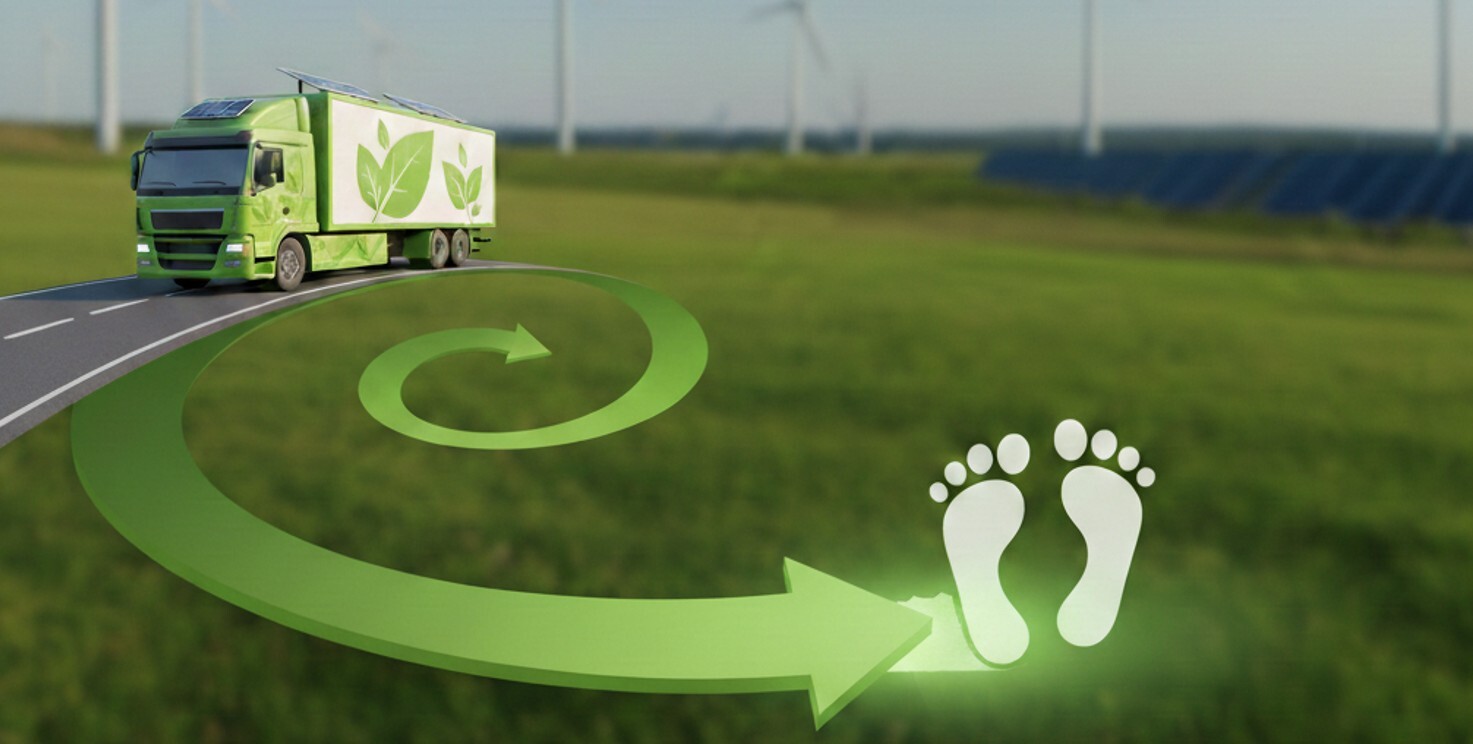
Here's the angle most truck roll articles miss entirely: the environmental cost.
Every truck that rolls burns fuel. Every gallon of diesel or gasoline burned releases approximately 22 pounds of CO₂ into the atmosphere. A typical field service technician driving 100 miles per day produces roughly 90–120 lbs of CO₂ in that shift. Multiply that across a fleet of 50 technicians, running 250 working days a year, and you're looking at over 1,000 metric tons of CO₂ annually — from a single mid-sized operation.
Studies show the average carbon footprint of a truck is 14 times that of a person. Large, heavy vehicles spew more carbon into the air, so each mile they don't have to drive is a little less greenhouse gas in the atmosphere.
The cumulative impact at industry scale is substantial. The trucking sector currently accounts for 5% of global direct CO₂ equivalent emissions, with fossil fuels accounting for approximately 96% of fuel consumption in the industry.
For field service leaders navigating ESG reporting requirements, sustainability commitments, and investor pressure on carbon metrics, this is no longer a soft issue. It's a hard number — and reducing truck rolls is one of the most direct levers available.
The Double Win: Financial and Environmental
This is what makes truck roll reduction uniquely compelling compared to most operational improvement initiatives. Unlike cutting headcount or renegotiating vendor contracts — which save money but create costs elsewhere — reducing avoidable truck rolls delivers a genuine double benefit:
Every unnecessary dispatch prevented saves money AND reduces emissions. No trade-off. No offsetting downside.
Companies using Apizee's solutions have avoided 34,000 unnecessary truck rolls and counting. Not only does that translate to 6.7 million euros saved, it keeps 60 tons of carbon dioxide out of the atmosphere.
Blitzz customers have seen similar results. One large Canadian telecom reduced truck rolls by 30% across their field service operation — a reduction that simultaneously cut operational costs and meaningfully reduced the organization's fleet emissions profile.
8 KPIs Every Field Service Team Should Track
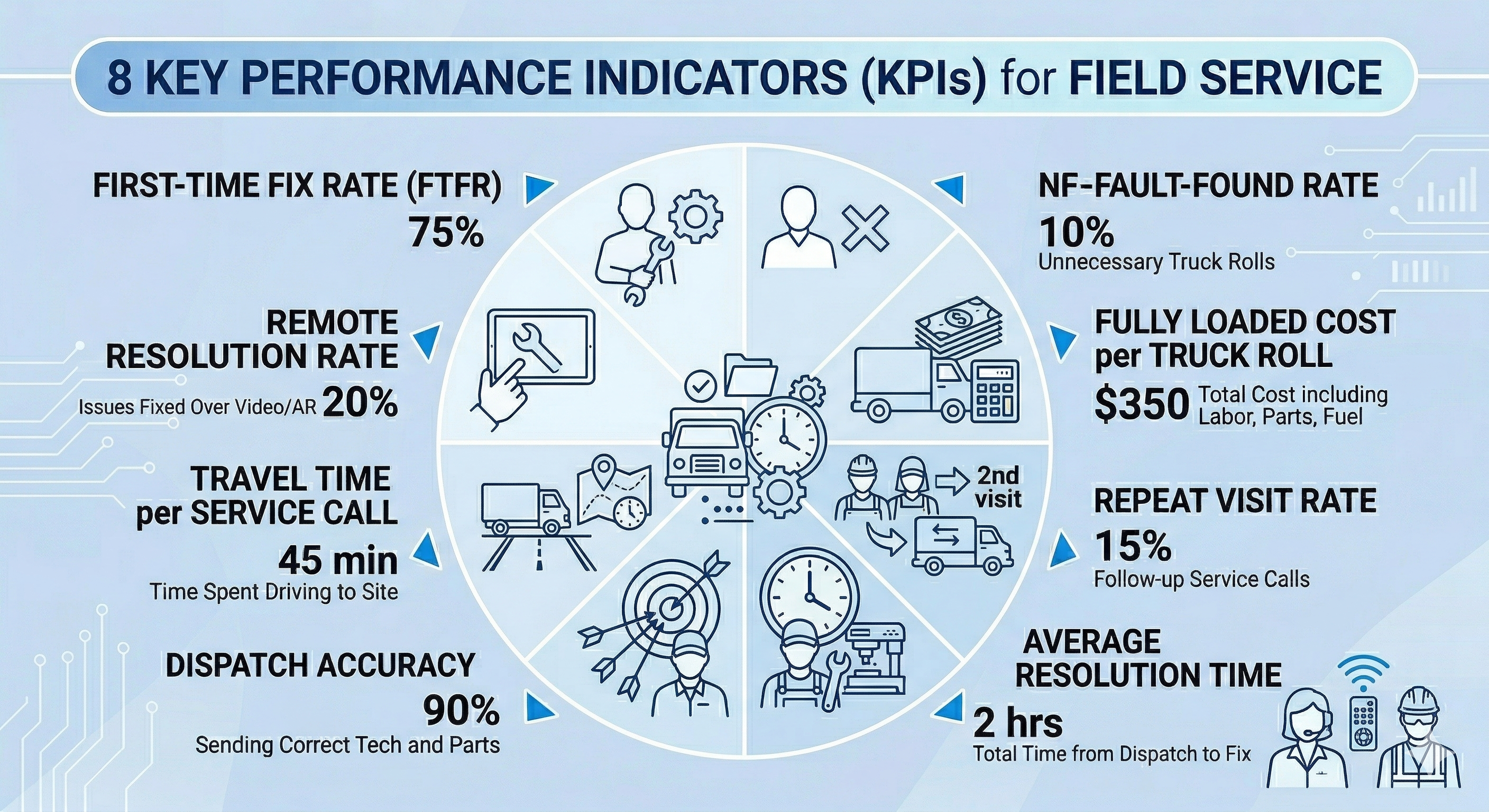
Understanding your truck roll problem requires measuring it. Here are the key metrics that reveal where your operation is leaking money and generating unnecessary emissions:
1. First-Time Fix Rate (FTFR) The percentage of service calls fully resolved on the initial technician visit. Industry benchmarks suggest world-class FTFR sits above 85%. Below 75% is a signal that dispatch quality, technician preparation, or part availability needs attention.
2. No-Fault-Found Rate The percentage of dispatches where the technician arrives and cannot replicate or identify the reported issue. High NFF rates (above 5–10%) typically indicate that remote triage is inadequate before dispatch decisions are made.
3. Fully Loaded Cost per Truck Roll Not just fuel and wages — the complete cost including overhead, scheduling, opportunity cost, and vehicle depreciation. Most organizations running this calculation for the first time find their actual cost is 40–60% higher than their working assumption.
4. Repeat Visit Rate The percentage of service calls requiring more than one on-site visit. Each repeat visit doubles (or triples) the cost of that service call. This metric surfaces problems with technician matching, parts availability, and initial diagnosis quality.
5. Average Resolution Time From the moment a service call is logged to complete resolution. Remote visual triage before dispatch often improves this metric significantly — not just by reducing unnecessary truck rolls, but by giving the dispatched technician a complete picture before they arrive.
6. Dispatch Accuracy The percentage of dispatches where the technician arrives with the correct skill set, tools, and parts for the job. Low dispatch accuracy is a leading indicator of high repeat visit rates.
7. Travel Time per Service Call Average technician time in transit. Route optimization and remote triage both influence this metric. Reducing travel time directly improves technician productivity and reduces per-call fuel costs.
8. Remote Resolution Rate Perhaps the most important metric for organizations implementing remote visual assistance: what percentage of inbound service calls are resolved without dispatching anyone? This is the clearest indicator of how effectively your operation is using remote-first triage. Blitzz customers typically see this number move from near zero to 20–40% within the first quarter of deployment.
How to Reduce Truck Rolls: A Practical Playbook
Reducing truck rolls isn't about cutting corners on service. It's about getting smarter about which dispatches are genuinely necessary — and handling everything else better, faster, and cheaper. Here's how leading field service organizations do it:
1. Implement Remote-First Triage
The single highest-leverage change most organizations can make is creating a formal remote triage step before any dispatch decision is made. Before a ticket becomes a truck roll, a remote expert should attempt to diagnose the issue visually.
With Blitzz, this takes seconds to initiate. The customer or on-site contact receives a link via SMS, email, or WhatsApp. They tap it, their camera activates, and your remote expert can see exactly what they see — no app download, no account creation. From that live view, the expert can often resolve the issue directly, or gather the precise information needed to ensure the right technician with the right parts is dispatched the first time.
2. Arm Dispatchers with Visual Evidence Before the Call
The most common source of avoidable repeat visits is dispatching without adequate information. When a dispatcher sends a technician based on a customer's verbal description alone, there's significant risk of sending the wrong skill set, the wrong parts, or finding the issue is something different entirely.
Visual pre-diagnosis changes this equation. Blitzz's photo capture, session notes, and live video archive give dispatchers real evidence — not a second-hand description — before they make the dispatch decision.
3. Use AR Annotation to Guide On-Site Resolution Remotely
When an issue does require on-site presence, remote experts using Blitzz can still reduce the time and complexity of the visit by guiding the on-site technician in real time using AR annotation. Drawing arrows on the live video feed, placing text labels on specific components, and using the remote pointer tool allows an expert to direct a less experienced technician through complex procedures they wouldn't otherwise be able to handle alone.
This improves first-time fix rates (the technician succeeds on the first visit) and also allows organizations to dispatch lower-cost technicians with confidence — reserving senior specialists for the situations that genuinely require their physical presence.
4. Build Self-Service Pathways for Common Issues
A meaningful percentage of inbound service calls are repeat patterns — the same issues appearing across the same equipment types, with the same resolutions. Documenting these and making them accessible to customers before they call can deflect a substantial volume of truck rolls before they even reach dispatch.
This doesn't replace remote visual support — it complements it. Complex and novel issues still benefit from live expert guidance. But common, simple issues benefit from structured self-service that gets customers to resolution faster than waiting for a technician.
5. Use Session Data to Identify Systemic Problems
Every Blitzz session generates data: resolution type, time-to-resolution, whether a truck roll was avoided, what the presenting issue was, and how it was resolved. Over time, this data reveals patterns — equipment models with high remote-resolution rates, geographies with disproportionate NFF incidents, customer segments that generate repeat calls.
These insights drive systemic improvement. If a particular piece of equipment consistently generates NFF dispatches, the root cause is likely customer confusion about its operation — solvable with better documentation or proactive customer education, not more truck rolls.
6. Optimize Routing and Scheduling for Necessary Dispatches
Not every truck roll is avoidable. When a technician must be dispatched, the goal shifts to making that dispatch as efficient as possible — right technician, right parts, optimized route, accurate arrival window. Route optimization software, dynamic scheduling tools, and solid dispatch protocols reduce the cost and emissions of necessary truck rolls without affecting service quality.
How Blitzz Reduces Truck Rolls: What Actually Happens in Practice
Blitzz is a remote visual assistance platform built specifically for the moments when seeing is everything — and designed from the ground up to eliminate the friction that makes remote resolution hard.
Here's what sets it apart from trying to do this with a regular video call:
No app download for the field contact. This is critical and often underestimated. If your customer or on-site contact has to download and install an app to start a remote session, a meaningful percentage won't do it — especially in time-sensitive or technically intimidating situations. Blitzz is browser-based. One tap on a link. That's it.
AR annotation directly on the live feed. Your remote expert can draw on what they see — circle the component causing the issue, point an arrow at the correct connection, label parts with text. This transforms a video call into an actual guided resolution session.
Remote camera controls. Zoom in remotely. Toggle the flashlight. Freeze the frame to study a detail. Your expert controls the view without having to direct the on-site contact to manually adjust the camera.
Timestamped photo capture and session recording. Every session produces a documented audit trail — photos with timestamps, session notes, full recording. This protects your organization from disputes and gives dispatchers the visual evidence they need before making a dispatch decision on a follow-up call.
CRM and FSM integration. Blitzz connects natively with Salesforce, ServiceNow, and Zendesk. Sessions launch from within the tools your team already uses, and all session data syncs automatically — no manual entry, no workflow interruption.
Proven Results
The proof is in the numbers Blitzz customers have actually reported:
- A major Canadian telecom reduced truck rolls by 30% across their field service operation
- A tank inspection business reduced travel costs by 75% after deploying Blitzz for remote inspection
- A global field service provider improved first-call resolution by 40%, dramatically reducing the repeat dispatches that account for some of the highest-cost, highest-emission truck rolls
Building the Business Case for Truck Roll Reduction
If you're bringing this to leadership, the ROI calculation is straightforward — and the numbers tend to be compelling.
Step 1: Establish your current baseline
Monthly truck rolls × average fully loaded cost per roll = total monthly truck roll expenditure
For a team doing 1,000 dispatches per month at a conservative $400 fully loaded: $400,000/month — $4.8M/year.
Step 2: Estimate your avoidable rate
Industry data suggests 25% of truck rolls are avoidable. That's 250 dispatches per month in our example.
Step 3: Apply a realistic remote resolution rate
Blitzz customers typically achieve 20–35% overall truck roll reduction in their first year. Applying 25% reduction to 1,000 monthly dispatches: 250 avoided truck rolls per month.
Step 4: Calculate the financial impact
250 avoided dispatches × $400 = $100,000 saved per month — $1.2M annually.
Step 5: Calculate the emissions impact
Assuming 50 miles average round trip per avoided dispatch, at the EPA's standard emissions factor for a light commercial vehicle: 250 dispatches × 50 miles × 0.35 kg CO₂/mile ≈ 4.375 metric tons of CO₂ avoided per month — 52.5 metric tons annually.
At scale, these are not rounding errors. They're material numbers — for your P&L and your emissions report.
Truck Roll Reduction and ESG Reporting
For publicly traded companies and large enterprises with ESG disclosure requirements, truck roll reduction is increasingly a measurable, reportable sustainability lever.
Scope 1 emissions — direct emissions from owned or controlled sources — include fuel burned by your fleet. Every truck roll avoided is a direct reduction in Scope 1 emissions. Unlike Scope 3 reductions (which require complex supply chain engagement) or renewable energy purchases (which offset rather than reduce), truck roll reduction is direct, measurable, and attributable to specific operational changes.
Organizations using Blitzz can track avoided dispatches and calculate the associated emissions reduction in real time — providing the kind of granular, auditable data that ESG reporting frameworks increasingly require.
The conversation is shifting. "We reduced truck rolls by 30% this year" is no longer just an operational win announcement. It's a sustainability statement — and it belongs in both your CFO's review and your ESG report.
Frequently Asked Questions About Truck Rolls
What is a truck roll in field service?
A truck roll is the dispatch of a field technician — typically in a service vehicle — to a customer's location or a designated site to install, repair, inspect, or maintain equipment. The term originates from the image of physically rolling a truck out of a service depot. It's used across telecoms, utilities, HVAC, manufacturing, insurance, and any other industry that requires on-site technical service delivery.
How much does a truck roll cost?
Reports often claim that the average cost of a single dispatched truck can run between $250 to $500. In reality, once labor, time, vehicle maintenance, and additional resources are factored in, the Technology & Services Industry Association estimates the actual cost can run much closer to roughly $1,000. The fully loaded cost depends heavily on technician skill level, geographic area, vehicle type, and whether the dispatch results in first-time resolution.
What is a "no fault found" (NFF) truck roll?
A no-fault-found dispatch occurs when a technician is sent on-site and arrives to find either no issue or a trivial issue that could have been resolved remotely in minutes. NFF rates typically indicate that pre-dispatch triage is insufficient. With visual support, NFF dispatches can be almost entirely eliminated by offering a visual support session before ever sending a technician out.
What percentage of truck rolls are avoidable?
Recent reports have found that approximately 25% of truck rolls are non-value-add (NVA) or avoidable truck rolls. In practice, organizations with mature remote visual triage programs report avoiding 25–35% of all dispatches after full deployment.
How does remote visual assistance reduce truck rolls?
Remote visual assistance platforms like Blitzz allow a remote expert to see the customer's or site's physical environment in real time via the on-site contact's smartphone camera. The expert can diagnose the issue, guide the contact through a resolution, and document the session — all without dispatching a technician. When a dispatch is genuinely required, the prior visual session ensures the right technician with the right parts goes the first time, reducing repeat visits.
How do truck rolls contribute to carbon emissions?
Each truck roll that involves driving burns fuel, releasing CO₂. A typical field service vehicle driving 50–100 miles per dispatch emits 20–45 lbs of CO₂. Studies show the average carbon footprint of a truck is 14 times that of a person. For large field service operations, fleet emissions from truck rolls can represent a substantial component of Scope 1 greenhouse gas output — making truck roll reduction a direct ESG lever.
Can you eliminate truck rolls entirely?
No — and you shouldn't try to. Many service situations genuinely require a technician on-site: complex installations, hands-on repairs, situations that require specialized equipment or physical intervention. The goal isn't to eliminate truck rolls — it's to ensure that every truck roll is necessary, and that every avoidable one is handled remotely. Best-in-class operations typically achieve 25–35% truck roll reduction, not 100%.
How do I calculate my truck roll costs?
Track all direct costs (labor, fuel, vehicle, parts) and indirect costs (scheduling overhead, opportunity cost of technician time, costs of repeat visits) over a defined period. Divide by total truck rolls in that period for your average fully loaded cost. Then estimate your avoidable rate (industry average: 25%) and multiply by the average cost to understand your avoidable spend. Most organizations find this calculation produces a number significantly larger than their working assumption.
The Bottom Line: Less Trucks, Better Service, Cleaner Air
The truck roll problem is not a niche operational concern. It sits at the intersection of field service efficiency, customer experience quality, financial performance, and environmental responsibility — and the solutions available in 2026 are better than at any point in history.
Remote visual assistance technology like Blitzz has matured to the point where deployment is fast, adoption is frictionless (no app download for field contacts), and the ROI is predictable. The organizations moving first on remote-first triage are building durable competitive advantages: lower operating costs, higher first-time fix rates, better customer satisfaction scores, and measurable ESG progress.
The trucks that need to roll should roll. The ones that don't — shouldn't.
Ready to find out how many of your truck rolls are avoidable?
Start a free 30-day trial at blitzz.co — your field contacts need no app, no account, and no tech experience to join a session.