
.png?width=120&height=55&name=Blitzz-Logo-right%20white%20eyes%20-%20not%20transparent%20(3).png)
The automotive industry is evolving at lightning speed. Customers expect fast service, minimal downtime, and a seamless experience from dealerships and repair centres. Yet, despite technological advances, many automotive service teams still rely on traditional methods—sending technicians to inspect problems in person, performing manual diagnostics, and scheduling multiple truck rolls.
This is where remote visual assistance for automative is changing the game. By enabling service agents to see vehicle issues in real time, guide on-site technicians, and assist customers remotely, automotive companies can drastically reduce costs, accelerate repairs, and improve customer satisfaction.
What Is Remote Visual Assistance in Automotive?
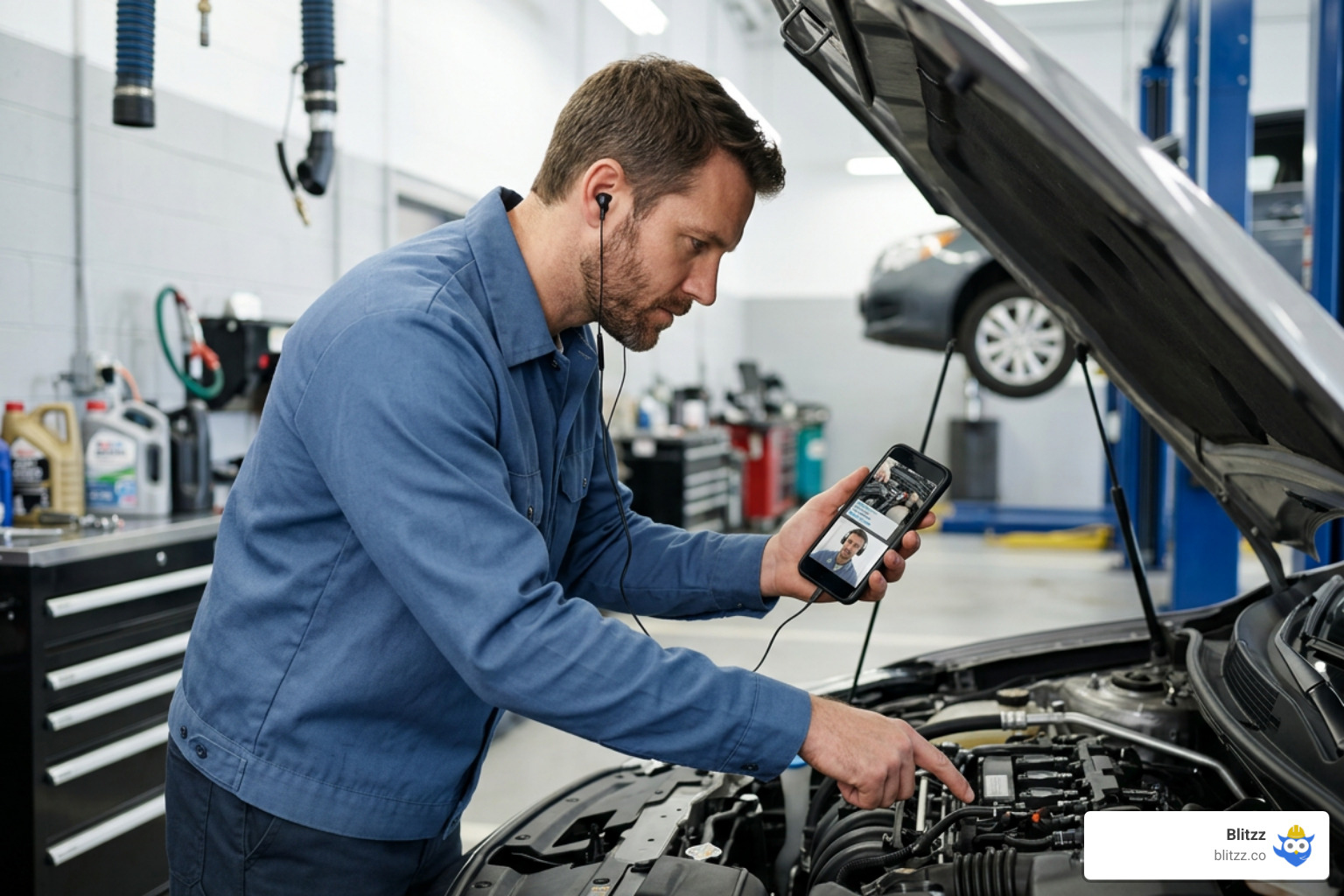
Remote visual assistance is a technology that allows service professionals to see what the customer or technician sees through live video streaming. Using smartphones, tablets, or AR-enabled devices, experts can guide troubleshooting, highlight components, and provide step-by-step instructions without physically being present.
In the automotive context, this means a dealership or repair centre can support service teams in the field, assist customers at home, or troubleshoot vehicles on-site without sending a truck for an in-person visit. The result? Fewer truck rolls, faster repairs, and reduced operational costs.
The Problem With Traditional Automotive Service
Traditional automotive support often relies heavily on physical presence. If a customer experiences an issue with their vehicle, a dealership might:
-
Schedule an appointment.
-
Dispatch a technician for a diagnostic visit.
-
Perform the fix or order parts.
-
Follow up to ensure the repair was successful.
Each step takes time and resources. Multiple truck rolls may be required for complex issues, leading to higher costs, delayed repairs, and frustrated customers.
Even skilled technicians can’t always predict what tools or parts they’ll need until they see the vehicle in person. This is where remote visual assistance provides a smarter, more efficient solution.
How Remote Visual Assistance Reduces Truck Rolls
One of the most significant advantages of remote visual assistance in the automotive industry is the ability to reduce truck rolls. Truck rolls—when a technician is dispatched to a customer’s location—are expensive and time-consuming. According to industry data, the cost of a single truck roll can range from $100 to $300, depending on travel, labor, and logistics.
With remote visual assistance, many issues can be diagnosed and sometimes resolved without a physical visit. For example:
-
A technician can guide a customer or on-site staff through resetting a dashboard error.
-
A service agent can inspect a malfunctioning component through a live camera feed.
-
Dealers can confirm whether a part replacement is necessary before scheduling a truck roll.
By reducing unnecessary visits, automotive companies save money, optimize technician schedules, and improve the overall efficiency of their service operations.
Accelerating Repairs With Real-Time Guidance
Another key benefit of remote visual assistance is faster repair times. Traditional service workflows can involve multiple back-and-forths, but with live visual guidance, problems are addressed in real time. Mobile video calling not only speed repair times but allows repair technicans to talk to clients in real-time.
Consider these scenarios:
-
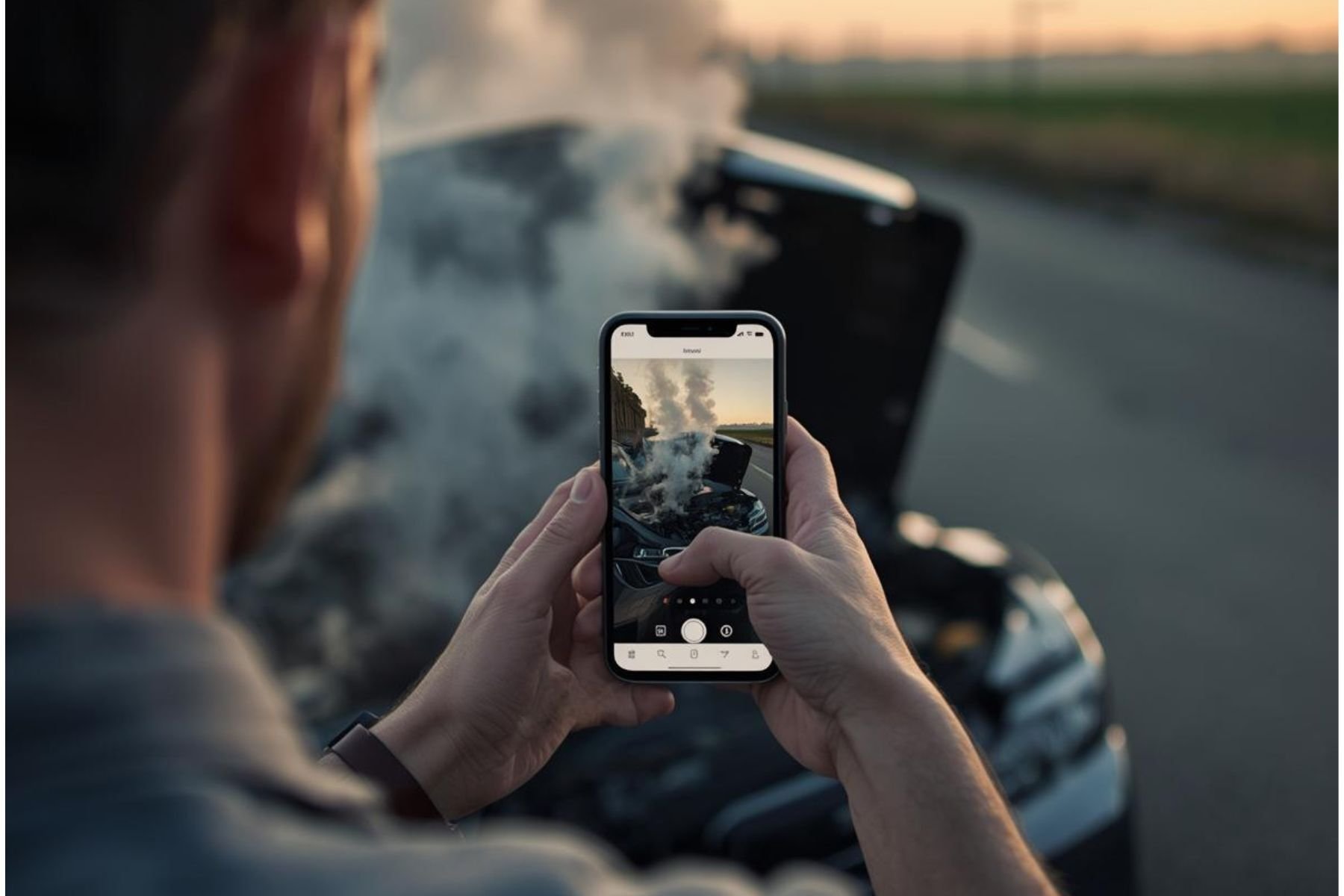
A customer reports an unusual engine noise. Using remote visual assistance, a service agent can view the engine via the customer’s smartphone, pinpoint the likely cause, and instruct them on temporary fixes until an in-person repair can be scheduled.
-
A dealership’s service team encounters a new diagnostic error code. Remote experts can guide technicians through testing procedures, reducing guesswork and preventing delays.
-
Warranty checks, software updates, or part installations can be supervised remotely, ensuring compliance and accuracy without waiting for an additional technician to arrive.
The result is accelerated repairs, happier customers, and fewer disruptions to daily operations.
Enhancing Customer Experience With Remote Visual Assistance
In today’s competitive automotive market, customer experience is critical. Long waits, repeated appointments, and multiple truck rolls create frustration. By integrating remote visual assistance into their support workflows, dealerships and automotive service providers can offer a higher level of convenience and reassurance.
Customers no longer need to leave their homes or wait for a technician to arrive. Instead, they receive real-time guidance and professional assistance from the comfort of their location. This not only improves satisfaction but also builds loyalty and trust in the dealership’s service capabilities.
Additionally, remote visual assistance can help customers understand issues more clearly. Instead of relying on verbal explanations alone, technicians can show customers exactly what’s happening with their vehicle, explain necessary repairs, and walk them through preventative measures—all in real time.
-2.jpg?width=1800&height=1200&name=SITE%20VARIETIES%20(3)-2.jpg)
Applications of Remote Visual Assistance in Automotive
The use cases for remote visual assistance in automotive are wide-ranging:
-
Dealership Support: Service agents can guide field technicians, reducing downtime and improving efficiency.
-
Customer Assistance: Homeowners can receive guidance for minor repairs, diagnostics, or maintenance checks without visiting the dealership.
-
Fleet Management: Companies with vehicle fleets can troubleshoot issues remotely, minimizing disruptions and operational downtime.
-
Training and Collaboration: New technicians can be guided by experienced experts through complex procedures, accelerating learning and reducing errors.
Each of these applications demonstrates how remote visual assistance can streamline operations, reduce costs, and enhance service quality.
Security and Compliance Considerations
While remote visual assistance is powerful, it must also be secure. Automotive companies handle sensitive customer information, including VIN numbers, warranty details, and sometimes payment data. Modern remote visual assistance platforms offer secure video feeds, masked sensitive fields, and controlled access, ensuring that both customers and companies are protected.
This security layer allows service teams to operate confidently while delivering high-quality remote support.
How Blitzz is Transforming Automotive Support
Tools like Blitzz are taking remote visual assistance to the next level in the automotive industry. By enabling live video guidance, on-screen annotations, and real-time collaboration, Blitzz allows dealerships and service centres to solve issues faster, reduce truck rolls, and improve overall efficiency.
For example, a technician at a dealership can use Blitzz to guide a customer or a field colleague through a complex diagnostic, showing exactly where a part needs inspection or replacement. This not only accelerates repairs but also reduces the need for multiple site visits, cutting costs and downtime.
Blitzz also helps standardize support workflows. New technicians can receive remote guidance from experienced staff, ensuring repairs are completed correctly the first time. Meanwhile, sensitive vehicle information remains secure, thanks to Blitzz’s privacy-focused features, giving both customers and service teams confidence in the process.
By integrating Blitzz into their operations, automotive companies can turn remote visual assistance into a practical, everyday tool—making service faster, smarter, and more customer-friendly.
The Bottom Line
The automotive industry is rapidly shifting toward digital-first service experiences. Remote visual assistance is no longer a futuristic concept—it’s a practical tool that reduces truck rolls, accelerates repairs, and improves customer satisfaction.
By integrating remote visual assistance into their workflows, dealerships and service centres can:
-
Reduce unnecessary truck rolls and associated costs.
-
Diagnose and fix problems faster with real-time guidance.
-
Enhance customer experience by providing professional support remotely.
-
Streamline technician training and collaboration.
-
Maintain security and compliance while delivering superior service.
In short, remote visual assistance is revolutionizing automotive support, helping dealerships and repair centres operate smarter, faster, and more efficiently. Those who adopt it now are not just keeping up with the industry—they’re setting the standard for modern automotive service.
Ready to see Blitzz in action? Book a demo with Blitzz and see how it helps your team reduce truck rolls, slash resolution times, and deliver a world-class customer experience.