
.png?width=120&height=55&name=Blitzz-Logo-right%20white%20eyes%20-%20not%20transparent%20(3).png)
Why Modern Automotive Service Can't Afford to Skip Remote Visual Support
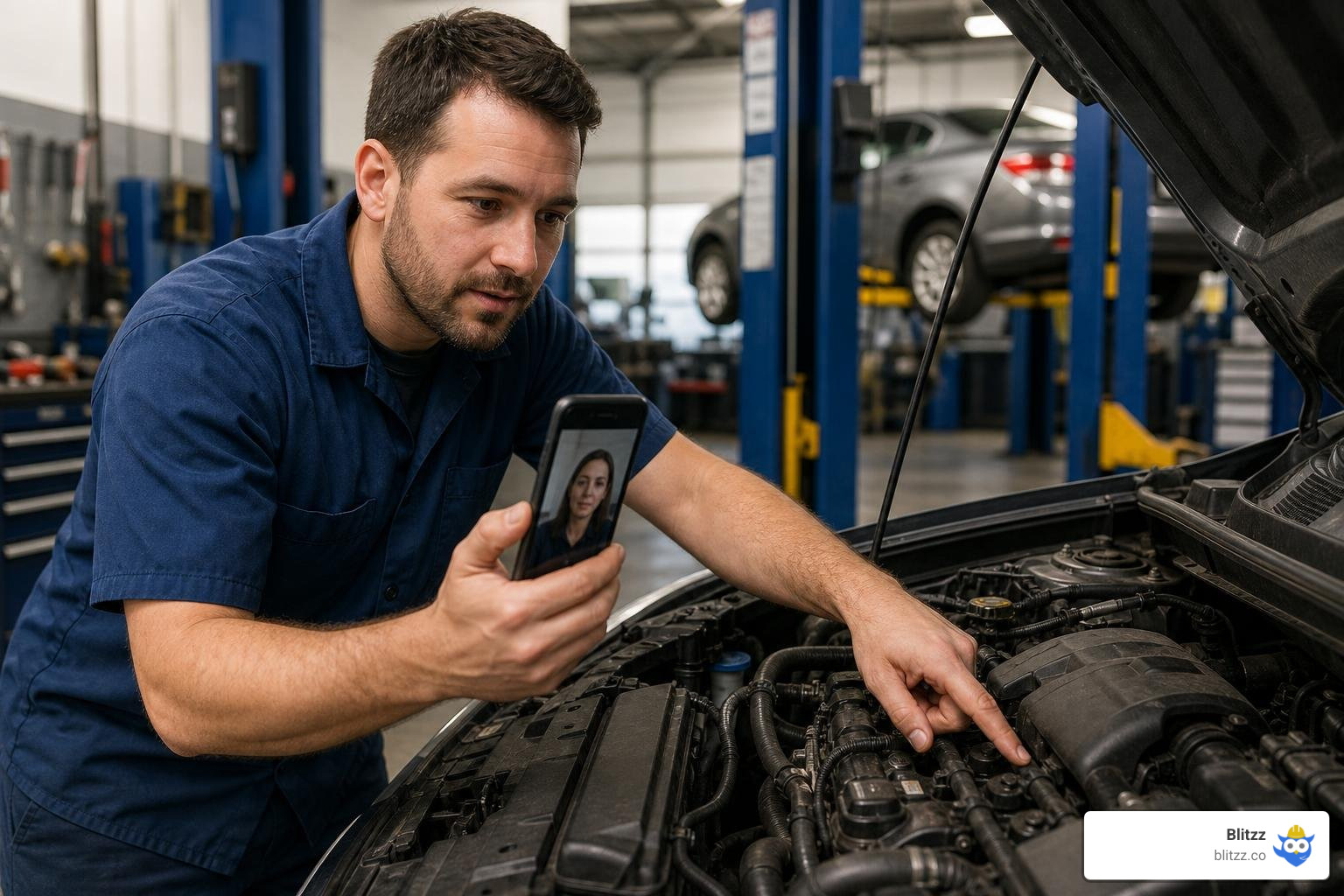
Automotive remote visual support is changing how dealerships, OEMs, and service teams diagnose and fix vehicle problems — without sending a technician to the scene.
Quick answer: What is automotive remote visual support?
- A service agent or expert connects to a customer or field technician via live video on their smartphone
- The expert sees exactly what the customer sees — in real time
- They use AR annotations, zoom, and photo capture to guide diagnosis and repair remotely
- No app download required — a single SMS or email link opens the session instantly in any mobile browser
- The result: faster fixes, fewer unnecessary truck rolls, and better documentation for warranty claims
The automotive industry is under serious pressure right now. Vehicles are more complex than ever, technician shortages are real, and customers expect fast, seamless service. At the same time, traditional phone-based support keeps letting teams down — a customer struggling to describe an engine noise in words rarely gives a technician enough to work with.
The cost of getting it wrong is steep. A single unnecessary truck roll can run anywhere from $100 to $300. Multiply that across a fleet or a dealer network, and the losses add up fast.
That's exactly the gap automotive remote visual support fills. Instead of relying on guesswork over the phone, service teams can see the problem directly — guiding customers or field technicians through diagnosis and repair in real time, from anywhere.
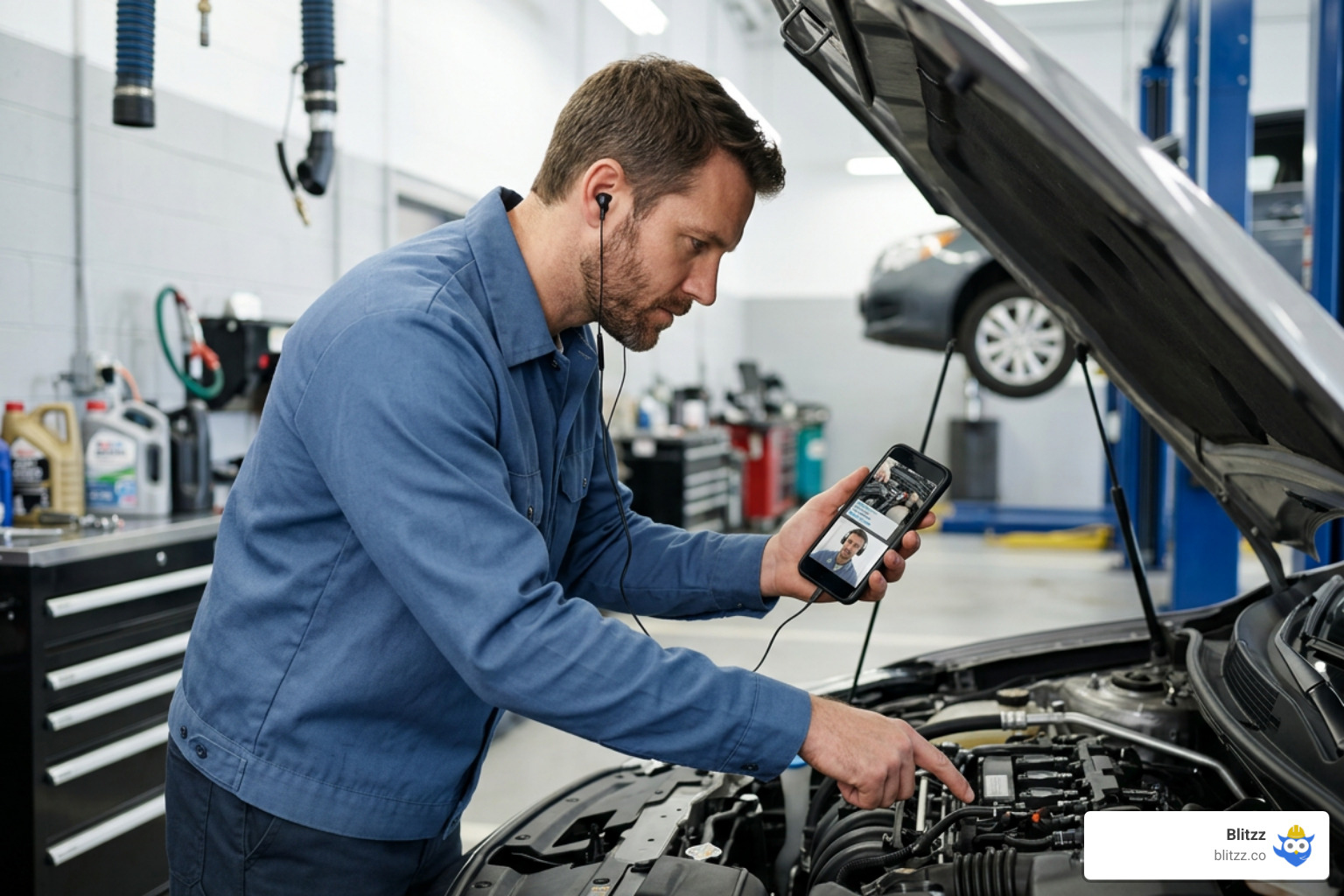
Discover more about automotive remote visual support:
What is Automotive Remote Visual Support?
At its core, automotive remote visual support is a "see-what-I-see" technology. It allows off-site experts — whether they are senior OEM engineers, master technicians at a dealership, or customer service agents — to visually step into the physical space of a vehicle owner or field technician.
By leveraging WebRTC technology, we can establish high-definition, real-time video connections directly through a standard web browser. This means there is no software to install and no complex setup to navigate. The remote expert gets an instant, high-fidelity window into the vehicle's engine bay, dashboard, or undercarriage, allowing them to collaborate with the person on-site as if they were standing right next to them.
This technology is transforming how we approach vehicle maintenance, roadside assistance, and dealer-to-OEM communication. To learn more about how this technology is reshaping the industry, check out our comprehensive automotive video support guide 2026.
Traditional Phone Support vs. Visual Assistance
For decades, remote automotive troubleshooting relied on the telephone. While voice-only support is fine for scheduling an appointment, it is incredibly inefficient for technical troubleshooting.
When a driver or a junior technician tries to describe a complex mechanical issue verbally, critical details get lost in translation. A "rattling noise near the front" could mean a dozen different things. This reliance on verbal descriptions leads to miscommunication, diagnostic errors, and ultimately, repeated shop visits or unnecessary parts dispatches.
Visual support changes the equation by replacing verbal descriptions with instant visual clarity. Here is how the two approaches compare:
| Feature | Traditional Phone Support | Automotive Remote Visual Support |
|---|---|---|
| Primary Medium | Voice call only | Real-time interactive HD video |
| Diagnostic Accuracy | Low (relies on subjective verbal descriptions) | High (expert sees components and error codes directly) |
| Resolution Time | Slow (often requires multiple follow-ups or visits) | Fast (reduces diagnostic time by up to 60%) |
| Guidance Tools | Verbal instructions ("turn the red dial...") | On-screen AR annotations, laser pointers, and zoom |
| Documentation | Hand-written notes or manual CRM entry | Timestamped, geotagged photos and video recordings |
| Customer Friction | High (frustrating back-and-forth communication) | Low (reassuring, transparent, and collaborative) |
Overcoming Adoption Barriers with App-Free Automotive Remote Visual Support
Historically, the biggest barrier to adopting remote video support was the "app friction" problem. If a driver is stranded on the side of the road or a dealership technician is working under a tight deadline, the last thing they want to do is open an app store, search for a specific application, wait for it to download, and create an account.
By eliminating the app download requirement, we remove the friction that kills user adoption. With an app-free, one-click connection, the remote expert simply sends a secure link via SMS or email. The recipient taps the link, grants camera permission in their mobile browser, and is instantly connected to a live video session.
This frictionless approach is why we see such high engagement rates, particularly in high-stress situations. For a deeper look at how leading automotive brands use this approach to keep drivers safe and happy, read our guide on how car brands use remote visual support to assist drivers in real-time.
Key Features of an Effective Automotive Remote Visual Support Platform
Not all video tools are created equal. While a consumer FaceTime or WhatsApp call lets you see the other side, it lacks the enterprise-grade features required to diagnose complex machinery and manage automotive workflows.
An effective platform built specifically for the automotive sector must combine high-performance video streaming with intelligent tools designed to streamline repairs and protect data. Our visual remote assistant for automotive is built from the ground up with these critical capabilities in mind.
Augmented Reality and AI-Powered Diagnostics
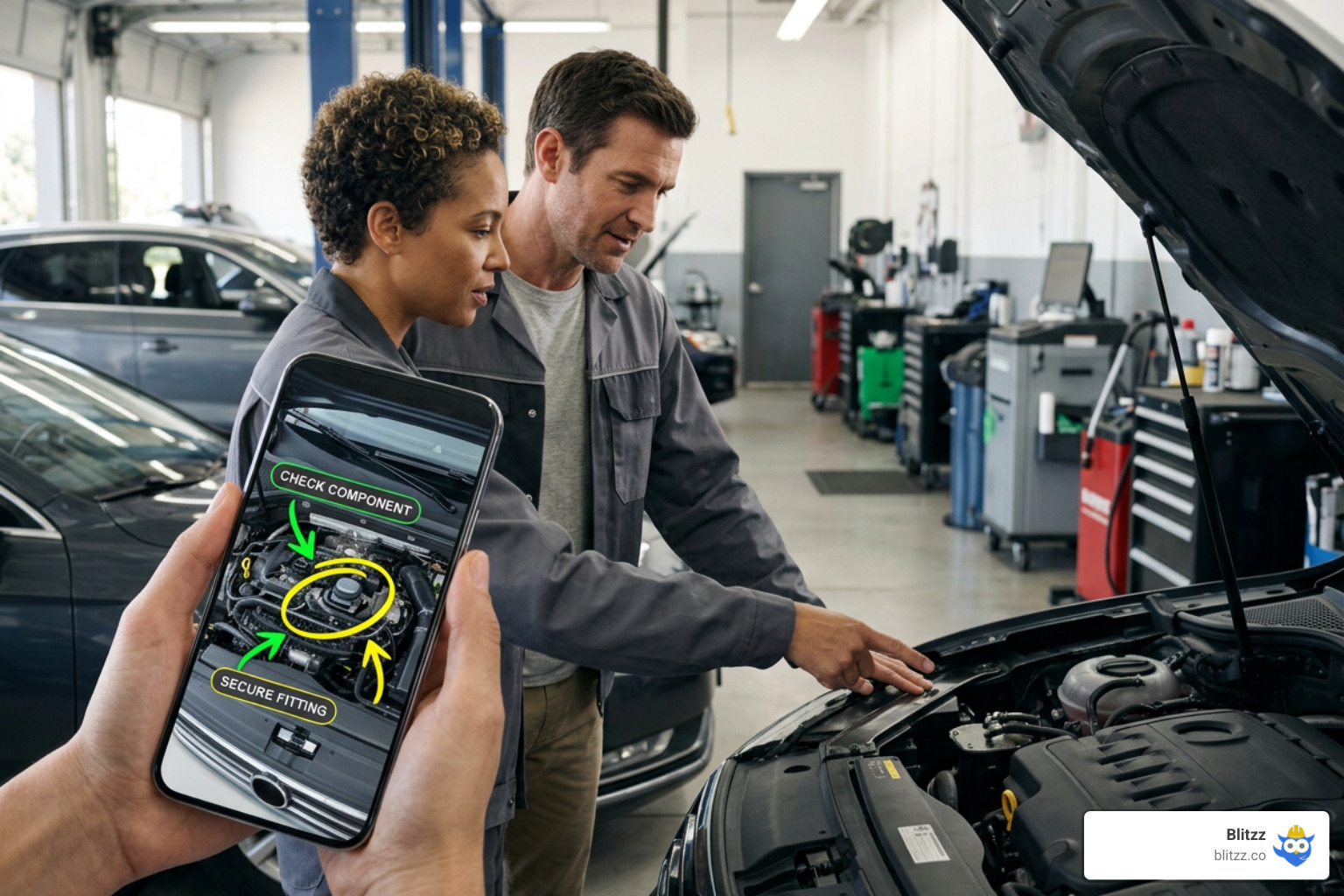
The real magic of remote visual support happens when we overlay digital intelligence onto the physical world. Augmented Reality (AR) annotation tools allow remote experts to draw, point, and place arrows directly on the user's mobile screen.
Thanks to advanced computer vision and spatial tracking, these digital annotations "stick" to the physical object (like a specific wire or bolt) even as the user moves their camera around.
Furthermore, integrating Artificial Intelligence (AI) takes diagnostics to the next level:
- Optical Character Recognition (OCR): Instantly scans and extracts VINs, part numbers, and tire sidewall codes directly from the video stream, eliminating manual typing errors.
- Computer Vision AI: Automatically identifies vehicle models, dashboard warning lights, and component defects (such as hairline cracks or fluid leaks) to assist the technician in real time.
- Real-Time Translation: Breaks down language barriers between global OEM engineering teams and local dealership mechanics by instantly translating voice and text chat during live support sessions.
Security, Compliance, and DMS Integrations
In the automotive sector, data integrity and compliance are non-negotiable. Video sessions often capture sensitive information, including vehicle identification numbers (VINs), license plates, and customer contact details.
An enterprise-ready platform must feature robust security measures:
- SOC-2 Type II Certification: Ensures the platform adheres to strict data security, availability, and confidentiality standards.
- End-to-End Encryption: Protects the video stream and shared media from unauthorized access.
- Data Masking: Automatically blurs sensitive fields, such as payment details or personal customer data, during live sessions.
- DMS and CRM Integration: Integrates directly with existing Dealer Management Systems (DMS) and customer databases. This ensures that session records, captured photos, and diagnostic notes are automatically attached to the correct work order, preventing compliance gaps and manual data re-entry.
For highly complex use cases — such as managing remote operations or handling camera failovers for autonomous vehicles — the industry is constantly innovating. For example, Toyota's patent EP4407982A1 - Remote support system and remote support method - Google Patents outlines sophisticated methods for handling video stream abnormalities and switching to alternative camera feeds, highlighting how vital robust, fail-safe visual architectures are to the future of automotive support.
How to Diagnose Automotive Issues Remotely: A Step-by-Step Guide
Implementing remote visual support into your daily operations is straightforward. Here is how a typical automotive video diagnostics session works in practice, from the moment a problem is reported to the final resolution.
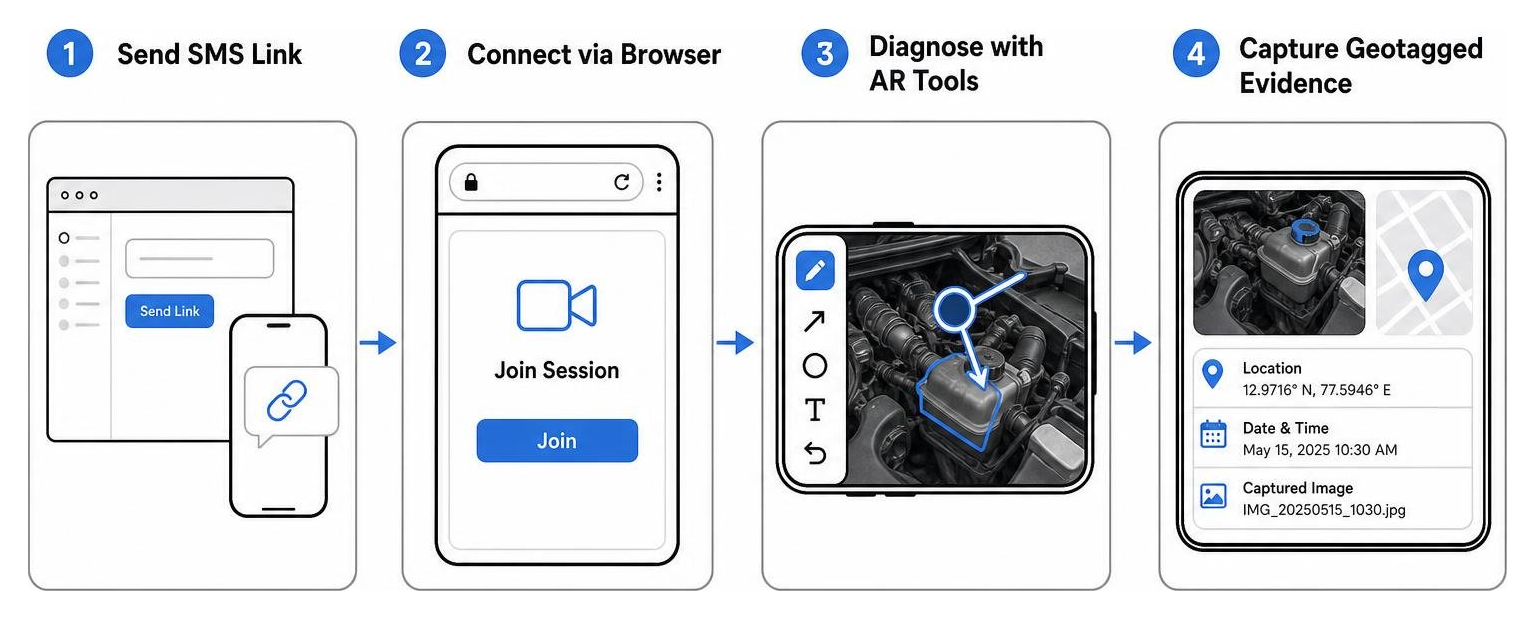
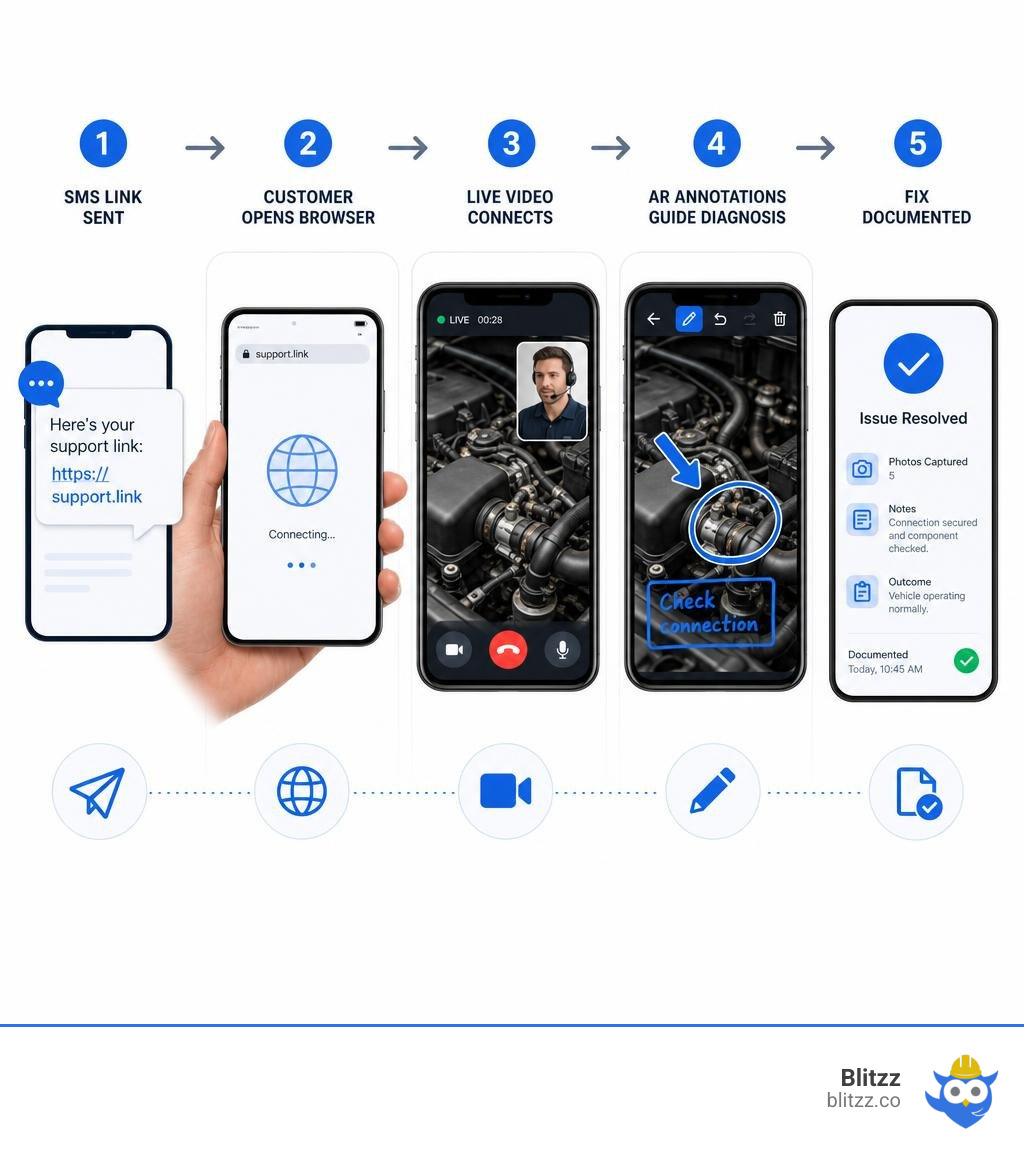
Step 1: Initiating the One-Click Video Connection
When a customer calls with an issue, or a dealership technician needs assistance with a complex repair, the support agent initiates the session from their desktop dashboard.
- The agent enters the recipient's phone number or email address and clicks "Send Link."
- The recipient receives a text message or email containing a secure, unique URL.
- The recipient taps the link, which opens instantly in their mobile browser (Safari, Chrome, etc.).
- With a single tap to grant camera and microphone access, the live "see-what-I-see" connection is established. This entire process takes under 30 seconds.
Step 2: Interactive Troubleshooting & Expert Guidance
Once the video feed is live, the remote expert can guide the on-site user through a structured diagnostic path. This interactive guidance is incredibly powerful: it helps teams reduce diagnostic time by up to 60%.
To see how this works in detail across different service scenarios, read our in-depth article on remote visual assistance for automotive reducing truck rolls and accelerating repairs.
During this step, the expert can:
- Use AR pointers and drawings to show the user exactly which fuse to check, which connector to wiggle, or where to attach a diagnostic tool.
- Take control of the mobile device's camera features remotely, turning on the flashlight in dark engine bays or zooming in to read small part numbers.
- Share their own screen to display wiring diagrams, technical service bulletins (TSBs), or step-by-step repair manuals directly to the technician in the field.
Step 3: Documenting and Verifying the Fix
A repair is not truly complete until it is documented and verified. Remote visual support platforms make it easy to collect undeniable proof of work, which is critical for streamlining warranty claims and maintaining clear audit trails.
For a deeper dive into optimizing dealership and manufacturer workflows, check out our guide on remote video inspections for automotive oems dealerships.
This step involves:
- High-Definition Photo Capture: The remote expert can snap high-resolution photos of the completed repair, replaced parts, or digital multimeter readings during the live stream.
- Timestamped and Geotagged Evidence: Every captured photo and video recording is automatically tagged with the precise time, date, and GPS coordinates, creating a tamper-proof record of the service.
- Seamless Warranty Submission: This clear visual evidence can be attached directly to warranty claims, reducing warranty claim cycle times by up to 65% by eliminating back-and-forth disputes with OEMs or insurers.
Maximizing ROI: Reducing Truck Rolls and Operational Costs
For automotive service managers, fleet operators, and OEMs, adopting new technology always comes down to the bottom line. Fortunately, remote visual support delivers some of the most immediate and measurable ROI in the industry.
Whether you are managing traditional combustion vehicles or navigating the unique challenges of electric vehicle fleets, remote diagnostics can dramatically lower your cost-to-serve. For instance, you can learn more about specialized EV applications in our article on how to reduce truck rolls remote troubleshooting for ev cars.
Slashing Field Engineer Dispatch Costs and Truck Rolls
In the service industry, a "truck roll" refers to dispatching a physical service vehicle and technician to a site. In the automotive world, this might mean sending a mobile service van to a customer's home, dispatching a roadside assistance truck, or sending an OEM field engineer to a struggling dealership.
The cost of a single truck roll typically ranges from $100 to $300 when accounting for fuel, vehicle wear-and-tear, travel time, and labor.
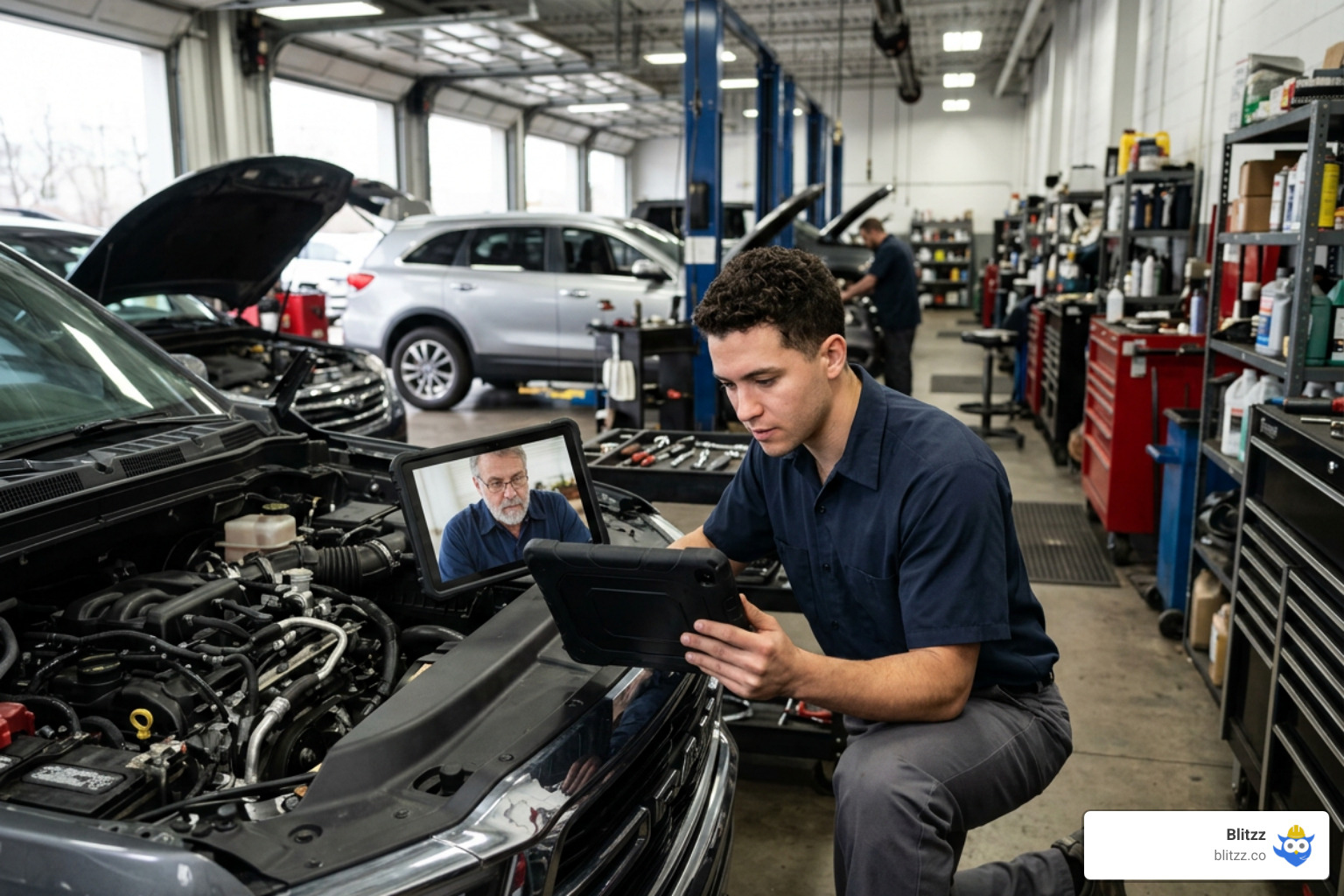
By implementing remote visual support, we can achieve:
- A 20% to 40% reduction in truck rolls: By diagnosing and resolving issues virtually before dispatching physical help.
- A 15% to 25% improvement in first-time fix rates: If a truck roll is required, the technician arrives knowing exactly what the problem is, equipped with the precise replacement parts needed to finish the job on the first visit.
- A 30% to 50% reduction in support time: Helping your existing staff handle more cases per day without adding headcount.
- Up to a 50% reduction in field engineer dispatch costs: By allowing specialized OEM engineers to support multiple dealerships virtually from a central location.
Improving Dealer-to-OEM Collaboration and Customer Satisfaction
When a dealership technician encounters a highly complex or unusual vehicle fault, they often have to escalate the issue to the OEM's technical assistance center. Historically, this meant submitting written tickets with static photos and waiting days for a field engineer to visit the shop.
Remote visual support simplifies this dealer-to-OEM escalation process, allowing dealership mechanics to share a live video feed with OEM experts instantly. This collaborative approach dramatically reduces vehicle downtime and gets customers back on the road faster. To see how this works in practice, explore how to simplify dealer to oem escalations with remote visual support.
Furthermore, this transparency builds immense trust with vehicle owners. Instead of receiving a vague phone call explaining an expensive repair, customers can be shown the exact issue via a quick video walkthrough. This visual clarity boosts customer satisfaction, improves repair approval rates, and fosters long-term brand loyalty.
Curious about how global automotive leaders implement these strategies? Read our case studies bmw to see remote visual support in action at the highest level of the industry.
Frequently Asked Questions about Remote Automotive Diagnostics
Do customers or dealership technicians need to download an app?
No, they do not. The best remote visual support platforms are entirely browser-based. The customer or technician simply receives a secure link via SMS or email, taps it, and connects instantly using their smartphone's native web browser (via WebRTC). This zero-install approach removes all technical barriers and ensures immediate adoption, even for non-technical users or stressed drivers stranded on the roadside.
How does remote visual support reduce warranty claim cycle times?
Traditional warranty verification relies heavily on static photos, written descriptions, and physical inspections, which often leads to long delays and disputes. Remote visual support allows OEM warranty administrators to inspect parts and verify issues virtually in real time.
By capturing timestamped, geotagged HD photos and video evidence during the live session, dealerships can submit indisputable proof of the defect. This streamlined process reduces warranty claim cycle times by up to 65%.
For insurance-specific applications, you can read more about smarter auto claims management for todays insurers and explore dedicated remote insurance inspection software for auto claims.
Is remote visual support secure for sharing sensitive vehicle data like VINs?
Yes, provided you use an enterprise-grade platform. Look for solutions that feature end-to-end encryption, SOC-2 Type II compliance, and GDPR alignment. Advanced visual support platforms also include data masking capabilities, which automatically blur or redact sensitive fields (like license plates, credit card numbers, or personal identification) during the live stream and in any saved recordings to ensure complete privacy protection.
Conclusion: Drive Your Service Operations into the Future
The automotive landscape is evolving at a breakneck pace. As vehicles become increasingly software-driven and complex, relying on traditional voice-only support is a recipe for high costs, frustrated technicians, and unhappy customers.
By adopting automotive remote visual support, we can bridge the physical distance between experts and vehicles. Whether you are looking to slash truck rolls, accelerate repair times, streamline warranty claims, or deliver a world-class customer experience, seeing is believing.
Are you ready to transform your service operations? Discover how we can help your dealership or OEM network thrive in 2026 by reading our guide on how to transform your automotive oem dealership operations in 2026. You can also explore our best practices for driving customer support excellence best practices for the automotive industry in 2026 or dive into how video support is revolutionizing the ev industry how remote video sales and support are accelerating market growth.
To see how real-time video, AR, and AI can redefine customer care in your contact centers and workshops, check out our flagship resource on how video, AR, and AI are redefining customer care and schedule your live demo with Blitzz today!