
.png?width=120&height=55&name=Blitzz-Logo-right%20white%20eyes%20-%20not%20transparent%20(3).png)
Did you know that a single truck roll can cost a company anywhere from $150 to over $1,000? And that’s just the tip of the iceberg. For businesses that rely on field service, inspections, or on-site audits, these costs add up quickly, often eating into profits without anyone realising it.
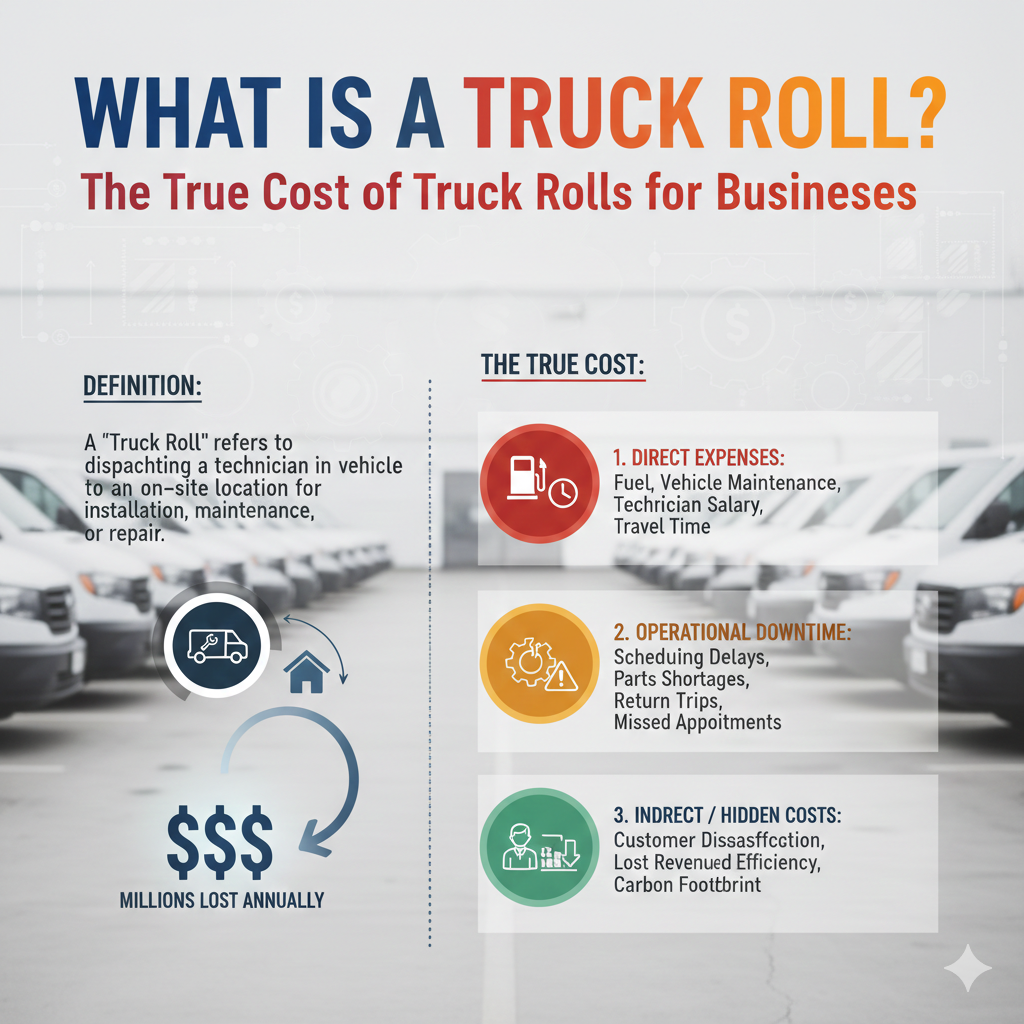
So, what exactly is a truck roll? In simple terms, a truck roll happens when a company dispatches a technician, engineer, or field worker to a customer site or facility to perform maintenance, fix equipment, or conduct an inspection. It sounds straightforward, but the hidden expenses behind each visit can be surprisingly high.
In this blog, we’ll break down the true cost of truck rolls for businesses, explore why they’re so expensive, and hint at how innovative tools like Blitzz can help companies cut costs, save time, and improve efficiency.
Truck rolls are common across many industries:
- Telecommunications: Technicians visit homes or businesses to install internet, repair outages, or maintain network hardware.
- Utilities: Field engineers travel to inspect meters, fix power lines, or check pipelines.
- Manufacturing & Industrial: On-site checks for production equipment, machinery calibration, or quality audits.
- Healthcare & Labs: Servicing medical devices, lab equipment, or refrigeration units.
- Retail & Logistics: Maintaining point-of-sale systems, warehouse equipment, or loading dock machinery.
Example: Imagine a cable company dispatching a technician to a home because a modem isn’t working. The tech drives 30 minutes each way, spends 20 minutes diagnosing the issue, and then fixes it. What seems like a simple visit can quickly rack up costs in wages, fuel, and lost productivity.
The Hidden Costs of Truck Rolls
While the most obvious cost is the technician’s time, the reality is far more complex. Let’s break it down:
1. Direct Costs
- Technician wages for travel and work.
- Vehicle expenses: fuel, maintenance, insurance, and depreciation.
- Tools or equipment used during the visit.
2. Indirect Costs
- Scheduling and dispatching overhead. Coordinating appointments, handling reschedules, and updating records all take time.
- Administrative costs: managing service tickets, reporting, and paperwork.
- Lost productivity if technicians spend more time on the road than on revenue-generating work.
3. Opportunity Costs
- Every hour a technician spends driving is an hour they’re not working on other critical tasks.
- Delays in customer service or production can impact revenue and reputation.
Industry Estimates:
- A single truck roll typically costs between $150 and $500 for standard visits.
- When you factor in overhead, lost productivity, and other hidden costs, the fully loaded cost can exceed $800–$1,000 per visit.
Mini-Case Example:
A mid-sized utility company performs 1,000 truck rolls a year. If each roll costs $300 directly, the company spends $300,000 annually just on these visits. Add indirect and opportunity costs, and the number could easily surpass $750,000 — all for what might seem like routine maintenance.
How Much Companies Really Spend on Truck Rolls Annually
When you strip away assumptions and look at real field service operations, truck roll costs add up shockingly fast — and the total annual spend varies widely depending on the industry, company size, and how often technicians are dispatched. Industry data shows that an individual truck roll usually costs anywhere from roughly $150–$300 on the low end to over $1,000 when you factor in hidden costs like lost productivity and vehicle overhead.
Here’s how that plays out across five major industries:
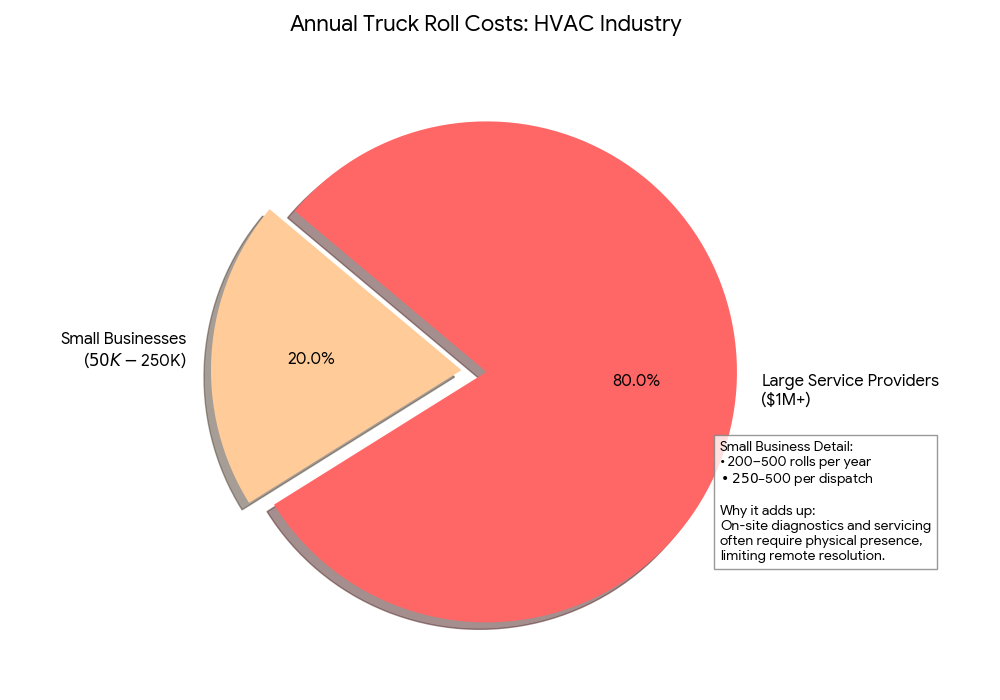
1. HVAC (Heating, Ventilation & Air Conditioning)
- Small Businesses: Typically performing tens to low hundreds of truck rolls per month, these companies might spend $50,000–$250,000 annually on dispatch visits (assuming roughly 200–500 rolls/year at ~$250–$500 each).
- Large HVAC Service Providers: With dozens of technicians and frequent emergency service calls, annual truck roll costs can climb to $1M+, especially during peak seasons such as summer or winter.
- Why it adds up: HVAC systems require on-site diagnostics and servicing that often can’t be resolved remotely, boosting dispatch volume and cost.
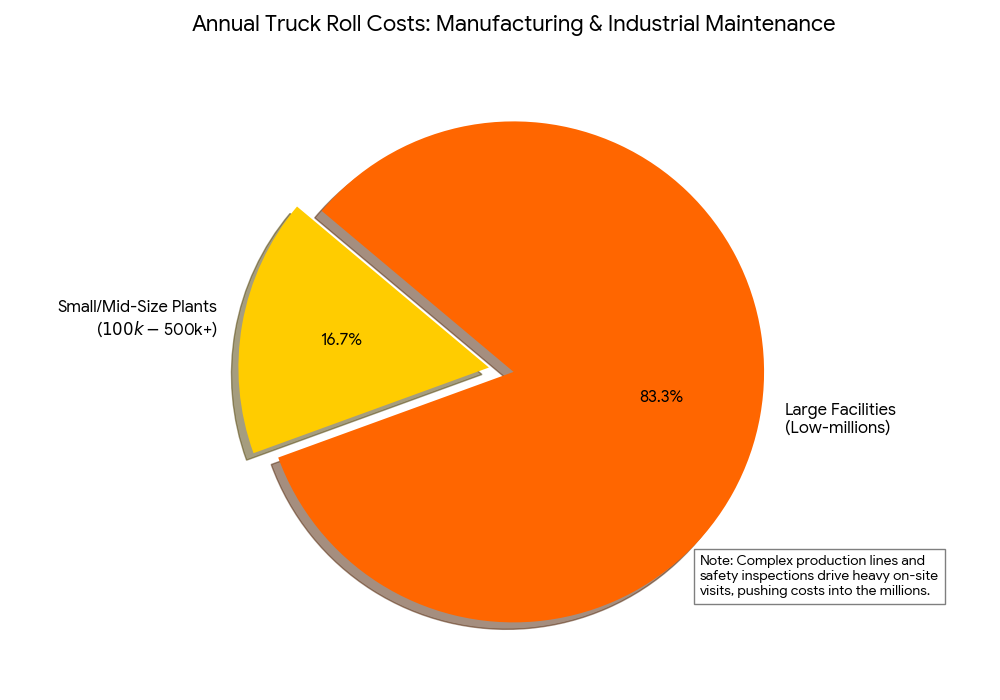
2. Manufacturing & Industrial Maintenance
- Small/Mid‑Size Plants: Routine equipment maintenance and breakdown calls might see $100,000–$500,000+ per year in truck roll expenses.
- Large Facilities: Complex production lines and safety inspections drive heavy on-site visits, pushing this into the low‑millions annually.
- Context: Many industrial repairs require trained technicians with specialised tools, so each roll not only costs a dispatch fee but often losses in production output while equipment is offline.
3. Electronics & Technical Equipment Support
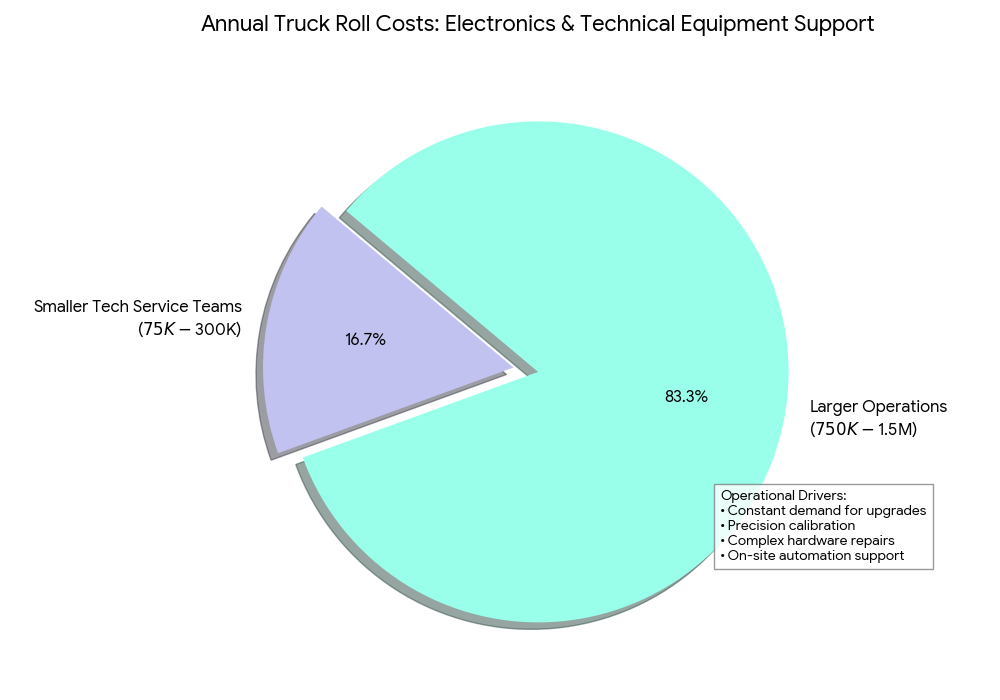
- Smaller Tech Service Teams: For companies servicing commercial electronics (lab equipment or automation), annual truck roll costs might run $75,000–$300,000.
- Larger Operations: With constant demand for upgrades, calibration, and repairs, costs can quickly exceed $750,000–$1.5M a year.
- Industry Insight: Electronics often have remote diagnostics available, yet if a visit is needed, the technician needs precise testing tools — adding to the job complexity and costs.
4. Automotive Field Services & Vehicle Systems
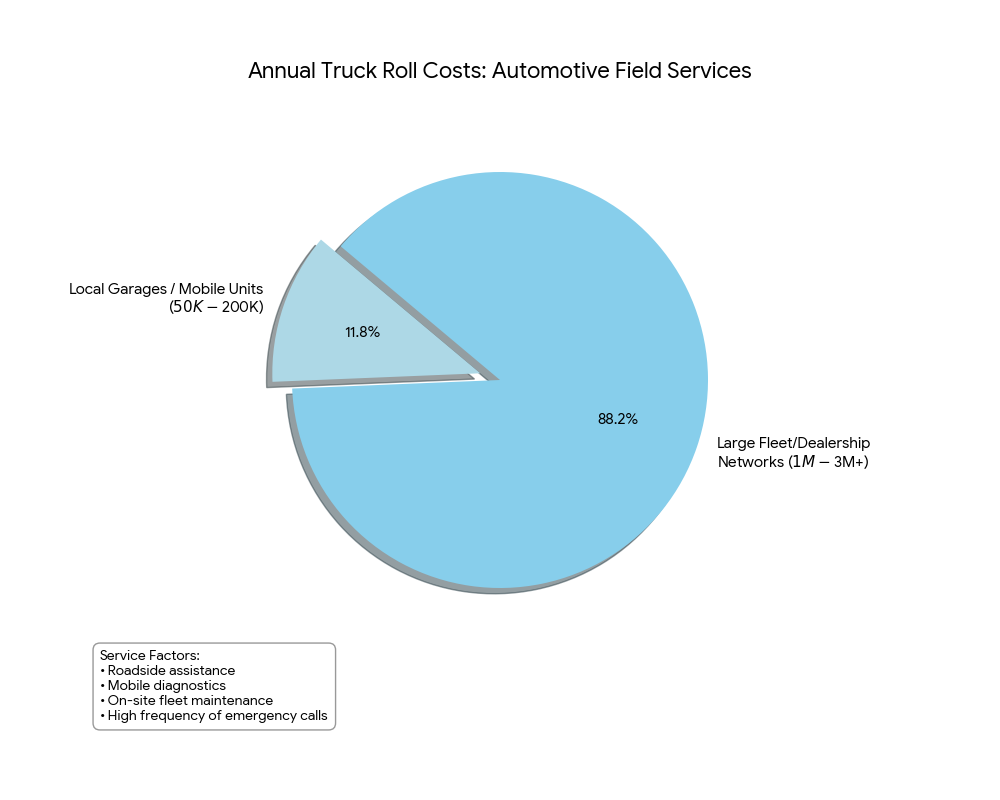
- Local Garages / Mobile Units: Smaller businesses offering mobile diagnostics and repairs might spend $50,000–$200,000 annually on truck roll operations.
- National Fleet Service Providers: Companies servicing large vehicle fleets or dealerships with mobile field units can spend well over $1M+ a year in combined labour, fuel, scheduling, and support costs.
- Reasoning: Automotive troubleshooting often requires hands‑on diagnostics and parts replacement, which can’t be done remotely, resulting in high dispatch frequency.
5. Internet, Telecom & Connectivity Providers
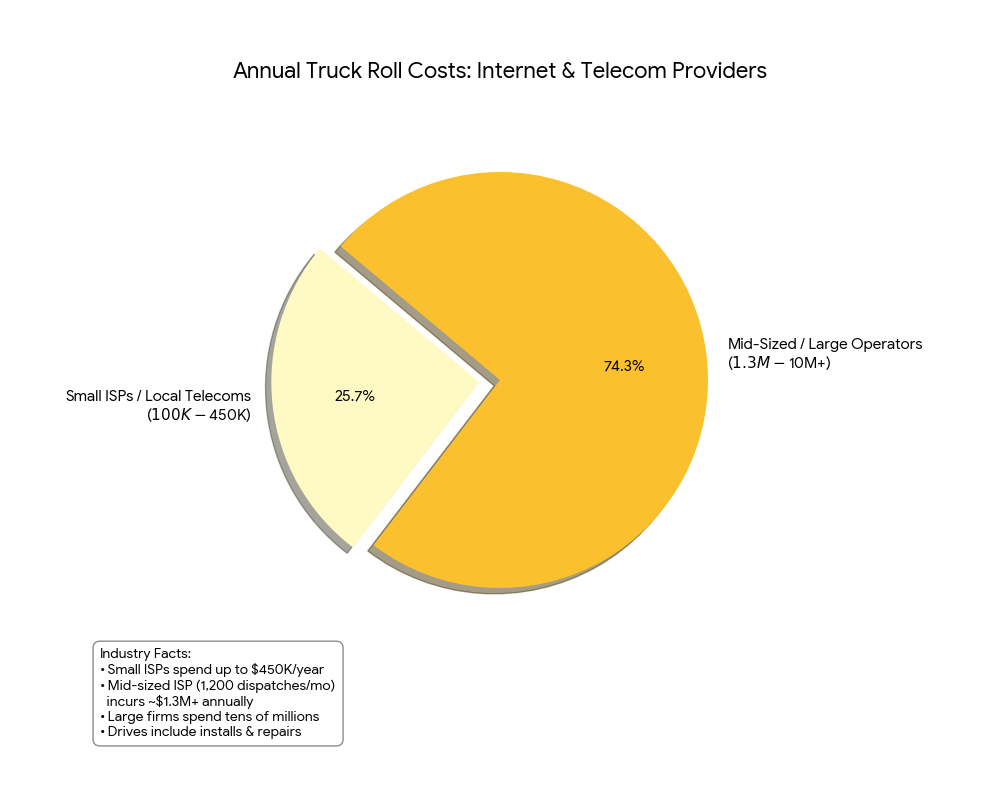
- Small ISPs / Local Telecoms: Even at modest volumes, annual truck roll costs can reach $100,000–$450,000 just to install, troubleshoot, or repair customer equipment.
- Large Telecom Operators: With thousands of dispatches needed every month, telecom firms often spend tens of millions annually on truck rolls. One real‑world calculation showed a mid‑sized ISP performing 1,200 monthly dispatches could incur roughly R21.6M (~USD 1.3M+) per year in truck roll expenses.
- Industry Reality: Telecom operations have some of the highest truck roll volumes, and many visits are driven by alerts and service calls that could be resolved remotely with better tools.
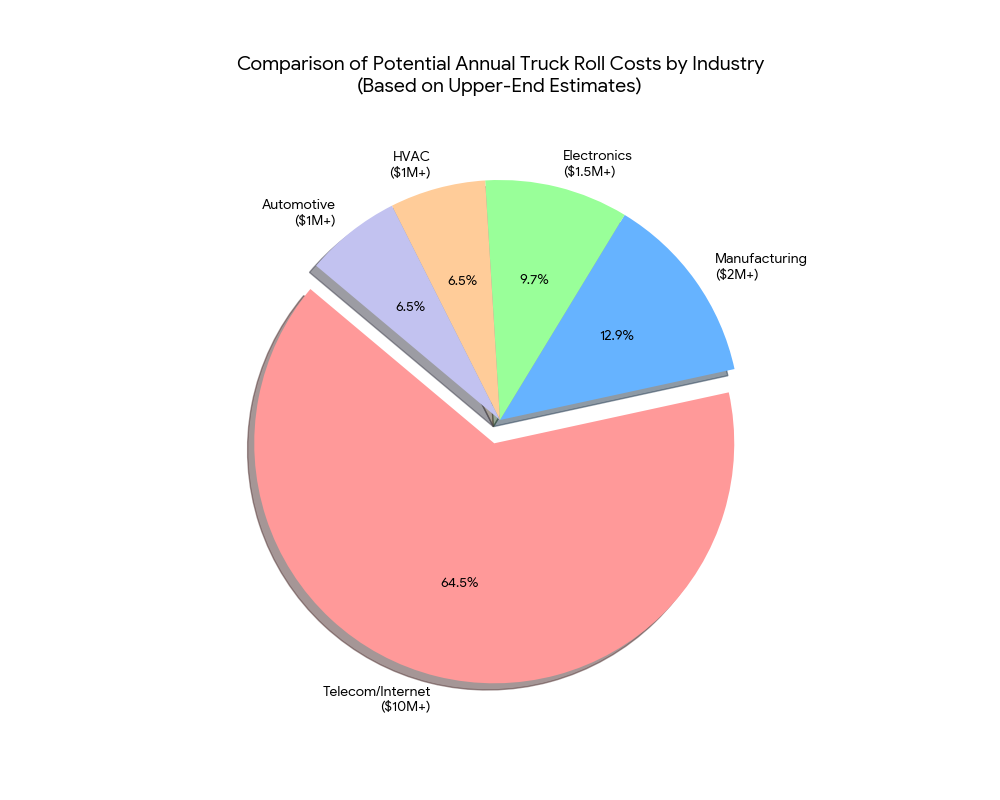
Below is a full comparison of the different industries and their annual truck roll expenditure, with Telecom as the leading industry with the highest spending. Want to learn how to cut your truck roll costs? Check out Blitzz Concierge for a smarter, faster solution.
Why These Costs Get So High
Once you start dispatching technicians regularly, these annual expenses compound quickly:
- Volume of Visits: Even a modest team doing two to five truck rolls per day per technician adds thousands of on‑site visits annually, multiplying the cost of each roll by hundreds or thousands.
- Hidden Costs: Beyond direct labour and vehicle costs, companies incur scheduling overhead, lost productivity, repeated visits, and downtime while issues remain unresolved.
- Low Efficiency: In many industries, a substantial percentage of truck rolls are avoidable — for example, no fault found or issues that could have been diagnosed remotely — meaning firms are paying a premium just to confirm the problem.
How Remote Inspection with Blitzz Can Reduce Costs
One of the smartest ways businesses are cutting truck roll expenses is through remote inspection software like Blitzz. Instead of sending a technician on-site for every issue, Blitzz allows your team to visually inspect, guide, and troubleshoot equipment in real time, all from a laptop, tablet, or smartphone.
Here’s how Blitzz helps reduce costs across industries:
- Fewer Unnecessary Truck Rolls: Many service calls don’t actually require an on-site visit. Blitzz lets you confirm issues remotely before dispatching a technician.
- Faster Problem Resolution: Technicians can guide on-site staff or customers through fixes virtually, reducing downtime and avoiding repeat visits.
- Lower Labour & Vehicle Costs: Less driving means savings on fuel, maintenance, and overtime.
- Minimized Productivity Loss: Your team spends more time resolving issues and less time on the road.
- Better Compliance & Documentation: Remote inspections can be recorded for audits, reducing administrative work and errors.
For instance, a mid-sized HVAC company performing 1,000 truck rolls a year at an average fully loaded cost of $300 per roll could save hundreds of thousands of dollars annually by resolving even 30–40% of issues remotely using Blitzz.
By leveraging remote inspection technology, businesses in telecom, manufacturing, electronics, automotive, and HVAC can drastically reduce on-site visits, cut operational costs, and improve service speed — all without compromising quality or safety.
Takeaway
Truck rolls are expensive — far more than most businesses realise. From technician wages and vehicle costs to lost productivity and administrative overhead, each on-site visit adds up quickly, especially for high-volume industries like HVAC, manufacturing, electronics, automotive, and telecom.
The good news is that remote inspection software like Blitzz can dramatically reduce these costs. By allowing your team to troubleshoot, guide, and audit equipment without leaving the office, you save time, cut unnecessary truck rolls, and improve operational efficiency.
If you’re ready to start cutting costs and improving service speed, check Blitzz pricing and see how easily it can integrate with your current system. Don’t let unnecessary truck rolls drain your budget — modernize your inspections and take control of your field service costs today.