
.png?width=120&height=55&name=Blitzz-Logo-right%20white%20eyes%20-%20not%20transparent%20(3).png)

On this page
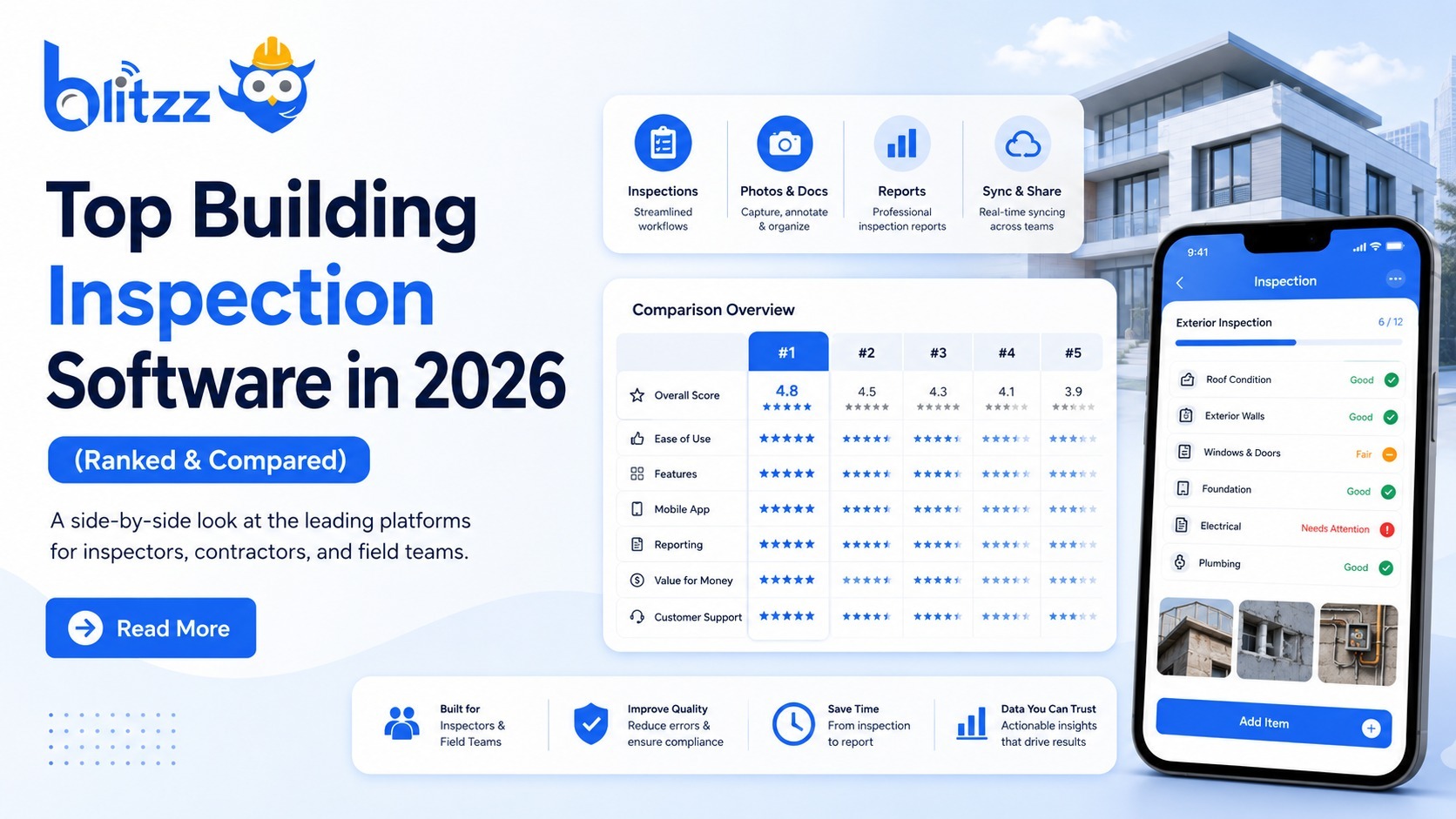
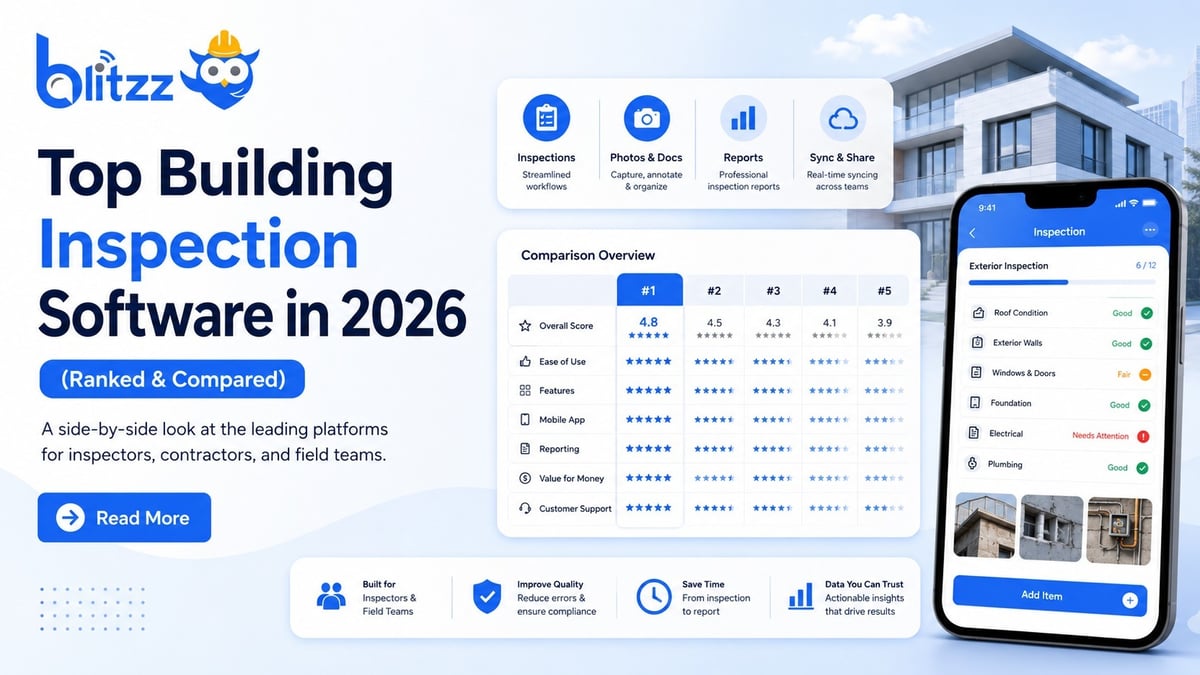
Building inspections aren't what they were five years ago. Between the rise of remote video inspections, AI-assisted reporting, and new state mandates like Florida's HB 667, the software your team relies on now decides how fast you close out a site, how defensible your records are, and how much you spend driving to addresses you never needed to visit.
But "building inspection software" is a crowded, confusing label. Some tools are built for solo home inspectors writing PDF reports. Others are mobile checklist apps for field audits. A growing category — the one driving the biggest savings in 2026 — lets you inspect a property live, through someone else's camera, without ever leaving your desk.
Below, we rank the top building inspection software for 2026 across all of those categories, explain who each one is actually for, and start with the platform that consistently delivers the fastest path from request to sign-off: Blitzz.
How we ranked these tools
No single tool wins for everyone, so we scored each platform on the factors that matter most to inspection teams in 2026:
- Inspection speed — how quickly you can go from request to a completed, documented inspection.
- Remote capability — whether you can inspect without a truck roll, and how easily the other party can connect.
- Reporting & evidence — photo/video capture, annotation, timestamps, geolocation, and AI-assisted reports.
- Integrations — how well it plugs into the systems you already run (CRM, claims, construction PM, permitting).
- Compliance & security — audit trails, data residency, and readiness for mandates like HB 667.
- Fit & value — who the tool is built for, and whether the price matches the outcome.
The top building inspection software for 2026
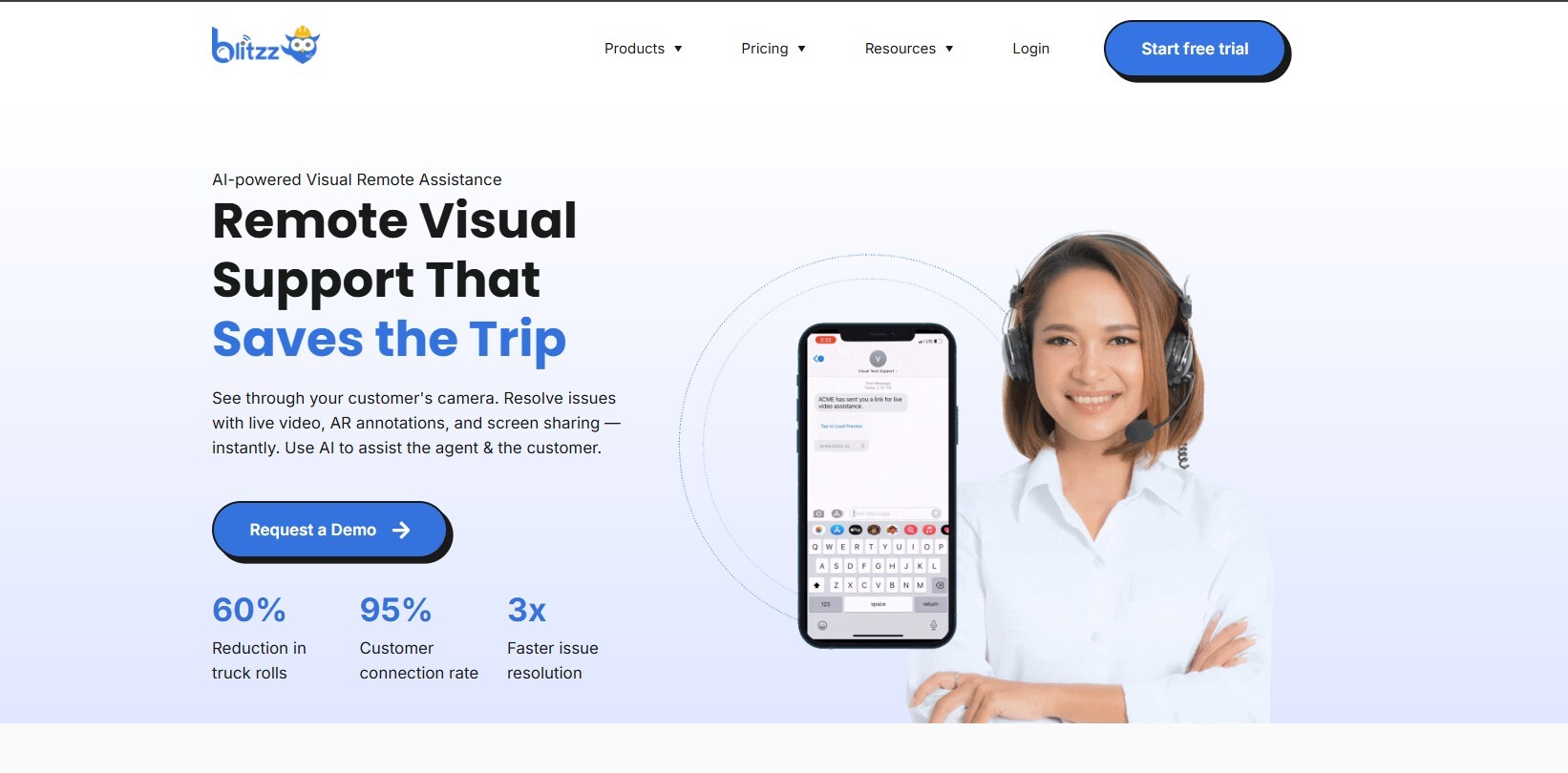
1. Blitzz — Best for remote video inspections at scale
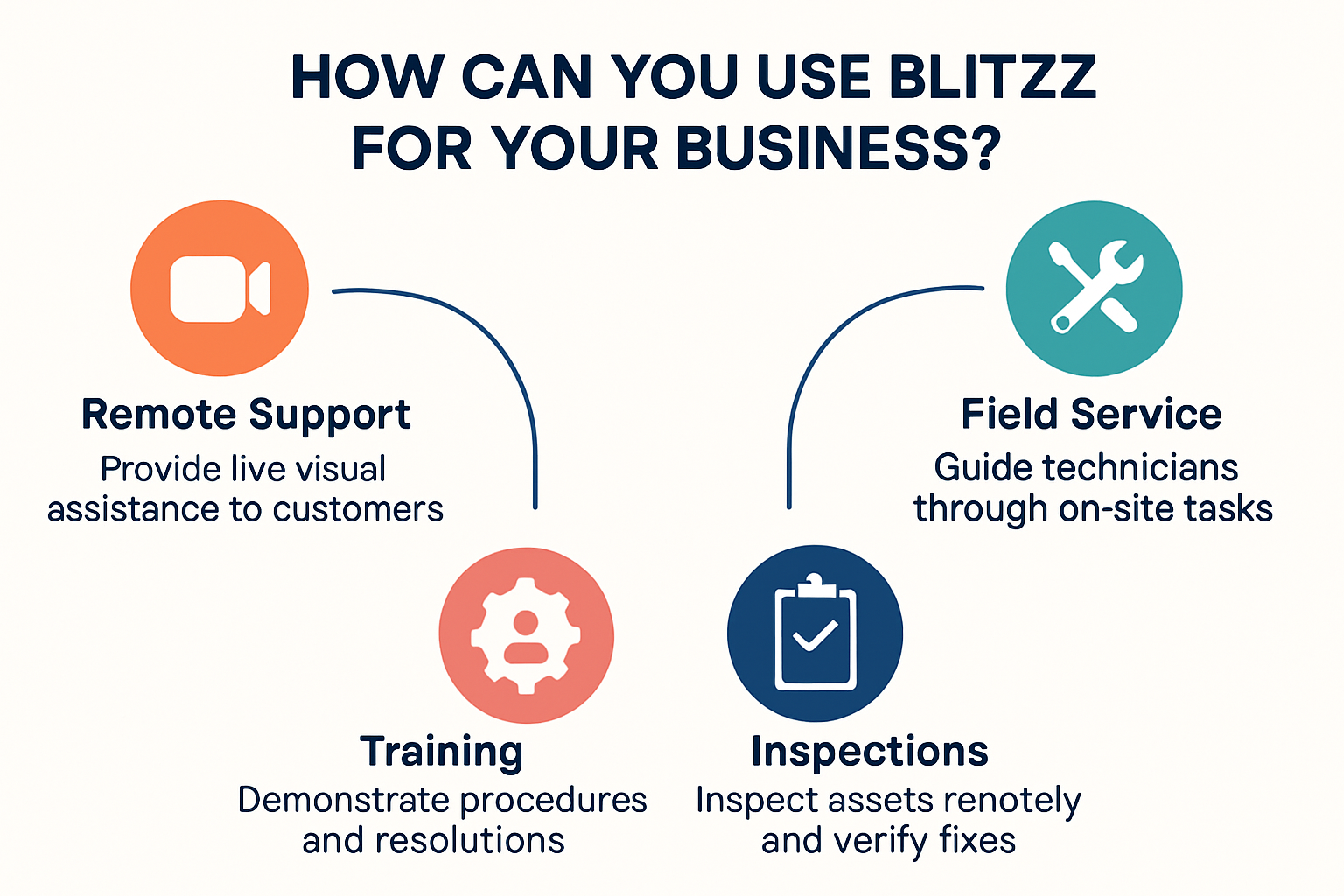
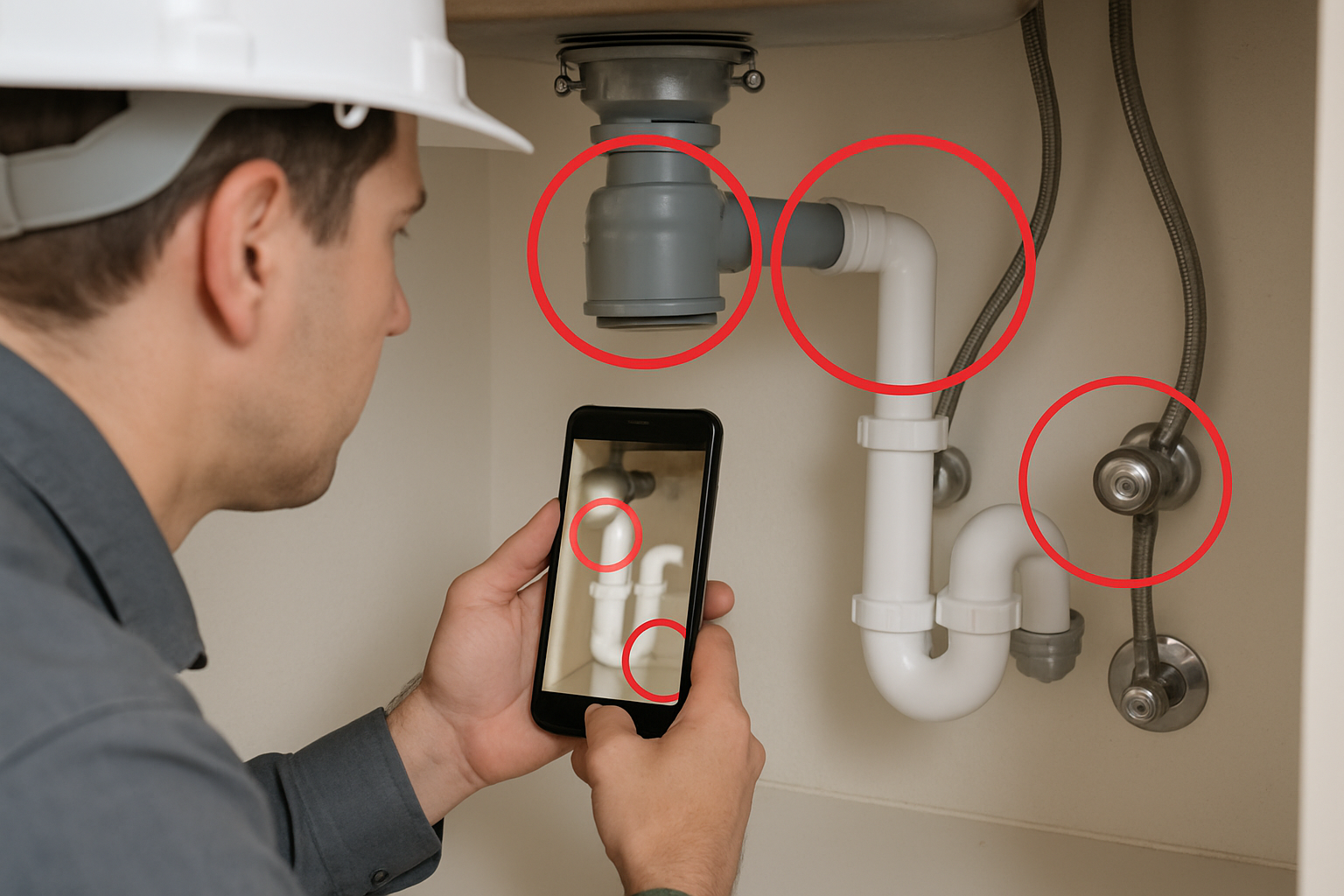
Blitzz tops the list because it solves the most expensive problem in inspections: the trip itself. Instead of dispatching an inspector, Blitzz lets your expert run a live, high-definition video inspection through the property owner's or technician's phone — no app download required. If the other person can open a text message, they can join with a single tap.
That "no-app, one-click" model is the difference between a connection that works on the first try and an inspection that stalls before it starts. Once connected, inspectors get a full toolkit: live pointers and annotation, high-resolution photo capture, geolocation tagging, optical character recognition (OCR) for reading serial and model numbers, and recording for a complete, time-stamped evidence trail.
For organizations, the economics are hard to ignore. Blitzz reports an average of $22,000 in monthly savings (roughly $282,000 a year) for teams running about 1,000 inspections a month, along with a stated 320% ROI in the first month and a meaningful cut in carbon emissions from eliminated truck rolls.
Where Blitzz really separates from point solutions is the enterprise stack around it. It integrates natively with Salesforce, ServiceNow, Zendesk, Procore, and Guidewire, offers a REST API and embeddable SDK, and is built for regulated workflows — making it a strong fit for government building departments, P&C insurance claims, and construction QA. It's already used by teams at Burns & McDonnell, BMW, Belron, and FedEx.
Best for: Building departments, insurers, construction firms, and field-service teams that want to cut site visits without sacrificing accuracy or compliance. Pricing: Starts around $400/month and scales with volume. See pricing or book a demo.
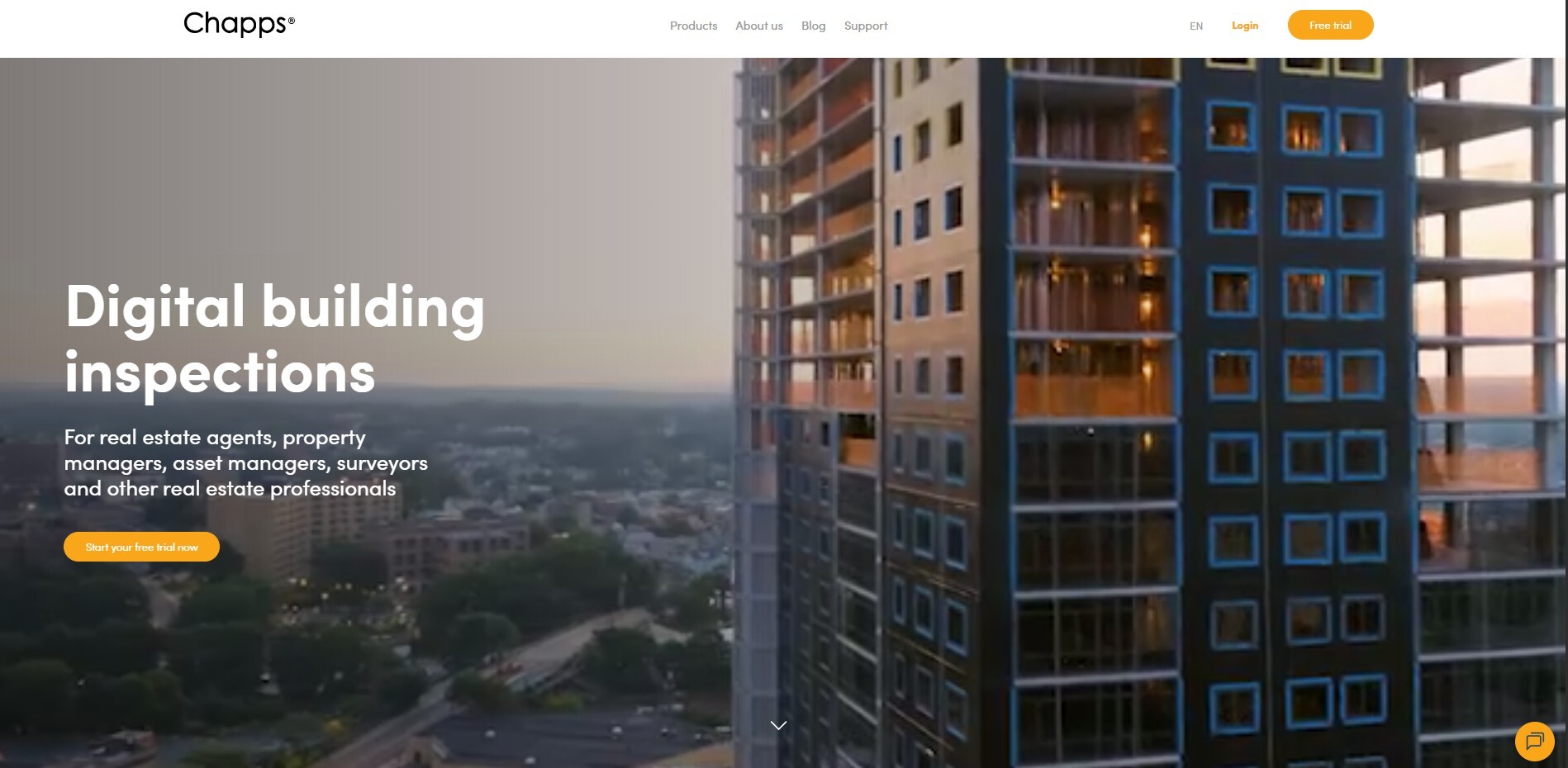
2. Chapps — Best for property managers and surveyors
Chapps is a property and building inspection app built specifically for real estate professionals — property managers, asset managers, surveyors, and facility teams. Its Building Inspector app lets you run inspections from your own checklists for safety, compliance, and maintenance; document damage and defects in detail with photos and annotations; and automatically generate clean, professional reports. Everything feeds into the Building Manager online portal, where you can track inspections, issues, and follow-up jobs and keep stakeholders informed. Chapps also offers a dedicated Rental Inspector for move-in/move-out condition reports.
A practical advantage for field teams: inspectors can work fully offline — no 5G or Wi-Fi needed — and sync once they're back in range. The trade-off is that, like most checklist-based tools, it still requires someone physically at the property; it doesn't replace the site visit the way live remote video does.
Best for: Property managers, surveyors, and facility teams running recurring building and rental inspections.
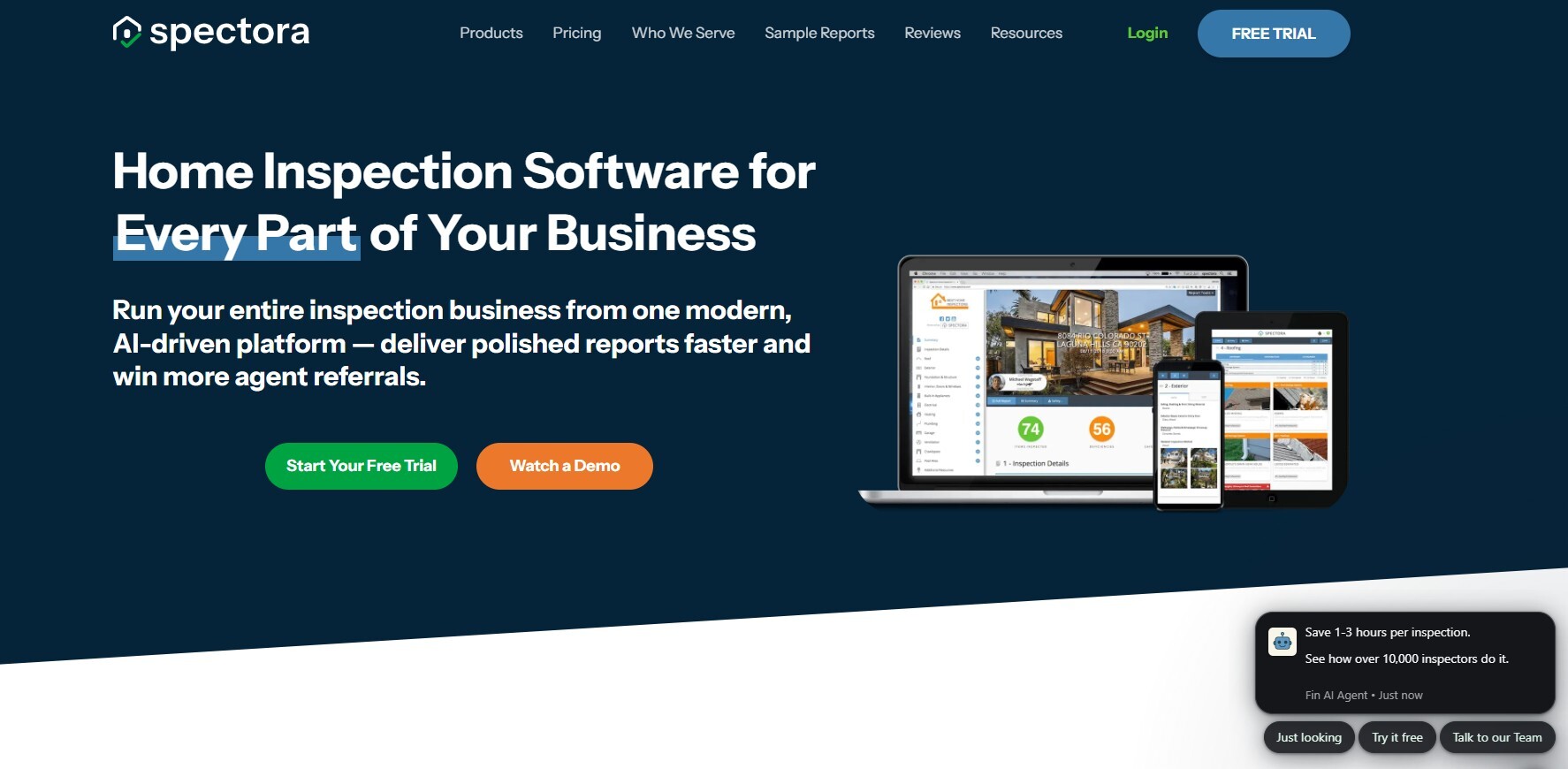
3. Spectora — Best for home inspectors
Spectora is widely considered the gold standard for residential home inspection reporting. Inspectors get a polished, mobile-first report builder that produces clean, interactive reports with photos and videos on-site, plus scheduling, a client portal, and agent-friendly delivery.
If your business is home inspection reports, Spectora is purpose-built for you. It's less suited to enterprise claims, permitting, or large-scale remote operations.
Best for: Independent and small-team home inspectors.
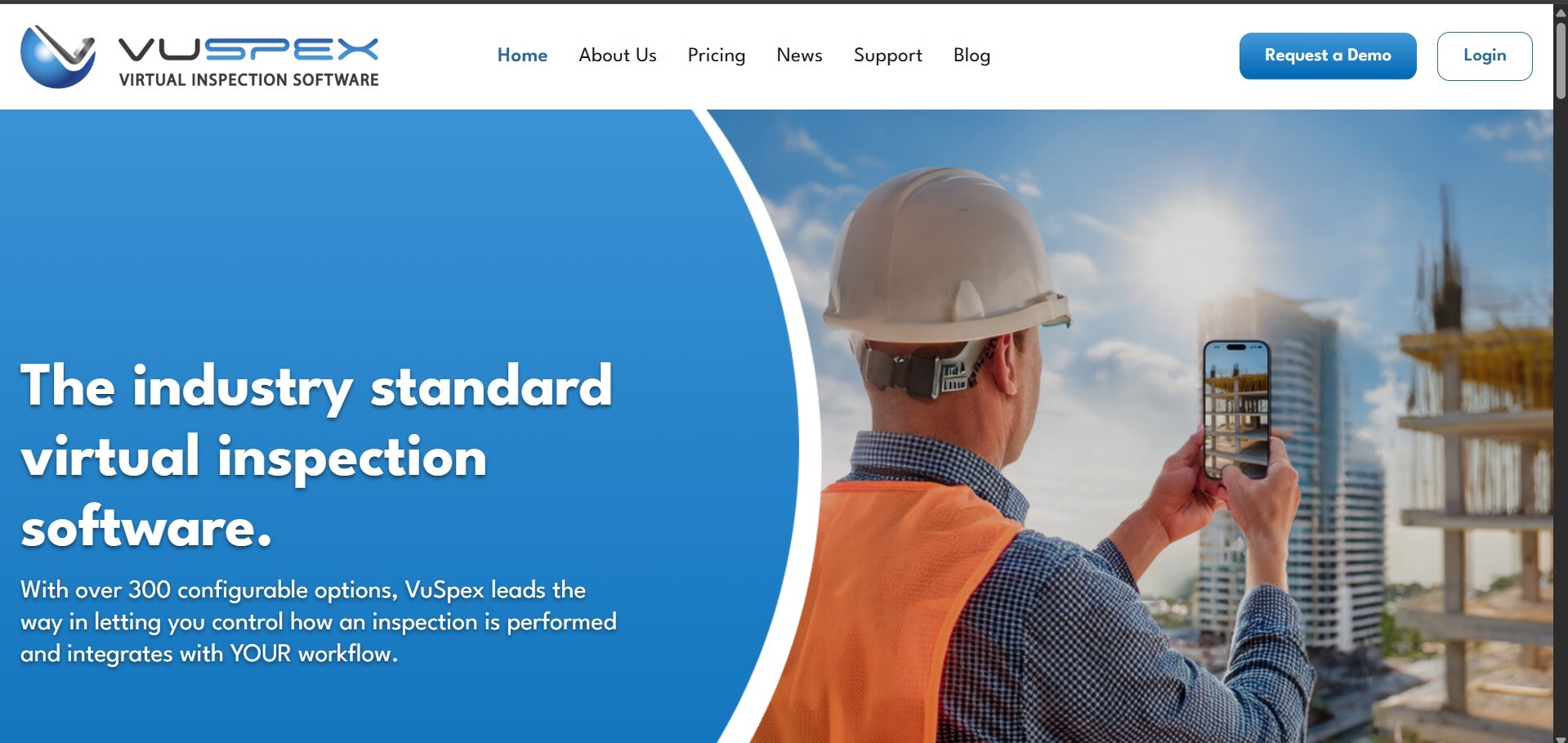
4. VuSpex — Best for municipal virtual inspections
VuSpex focuses squarely on building departments and the permitting/virtual-inspection use case, including video and photo-based remote inspections tied to permit records. It's a credible specialist in the government space.
If you're a building department weighing options, it's worth comparing head-to-head — we break down the trade-offs in Blitzz vs VuSpex.
Best for: City and county building departments.

5. Procore (Inspections) — Best for enterprise construction
Procore is a full construction management platform, and its inspections module ties quality and safety checks directly to projects, drawings, and punch lists. For large GCs already standardized on Procore, keeping inspections in the same system is a real advantage.
It's heavyweight and priced accordingly — overkill if inspections are your only need. Notably, Blitzz integrates with Procore, so live video inspections can flow straight into Procore workflows.
Best for: Enterprise construction teams already running Procore.
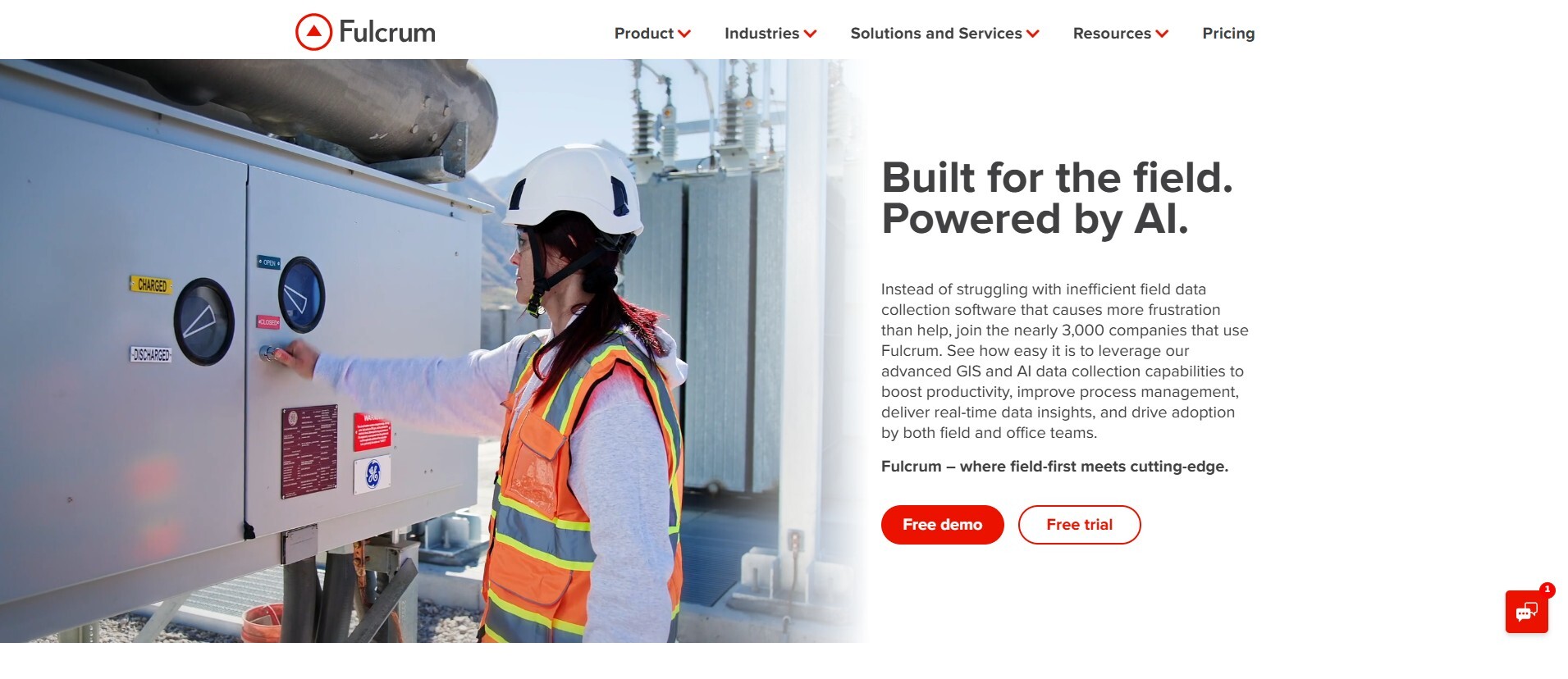
6. Fulcrum — Best for field data collection & GIS
Fulcrum is a powerful mobile data-collection platform for building custom inspection forms with offline support, rich media, and strong geospatial/GIS capabilities. Teams doing infrastructure, utility, and asset inspections in the field love its flexibility.
The trade-off is that flexibility requires setup — it's a build-your-own-workflow tool rather than turnkey.
Best for: Field and asset inspections with mapping/GIS needs.
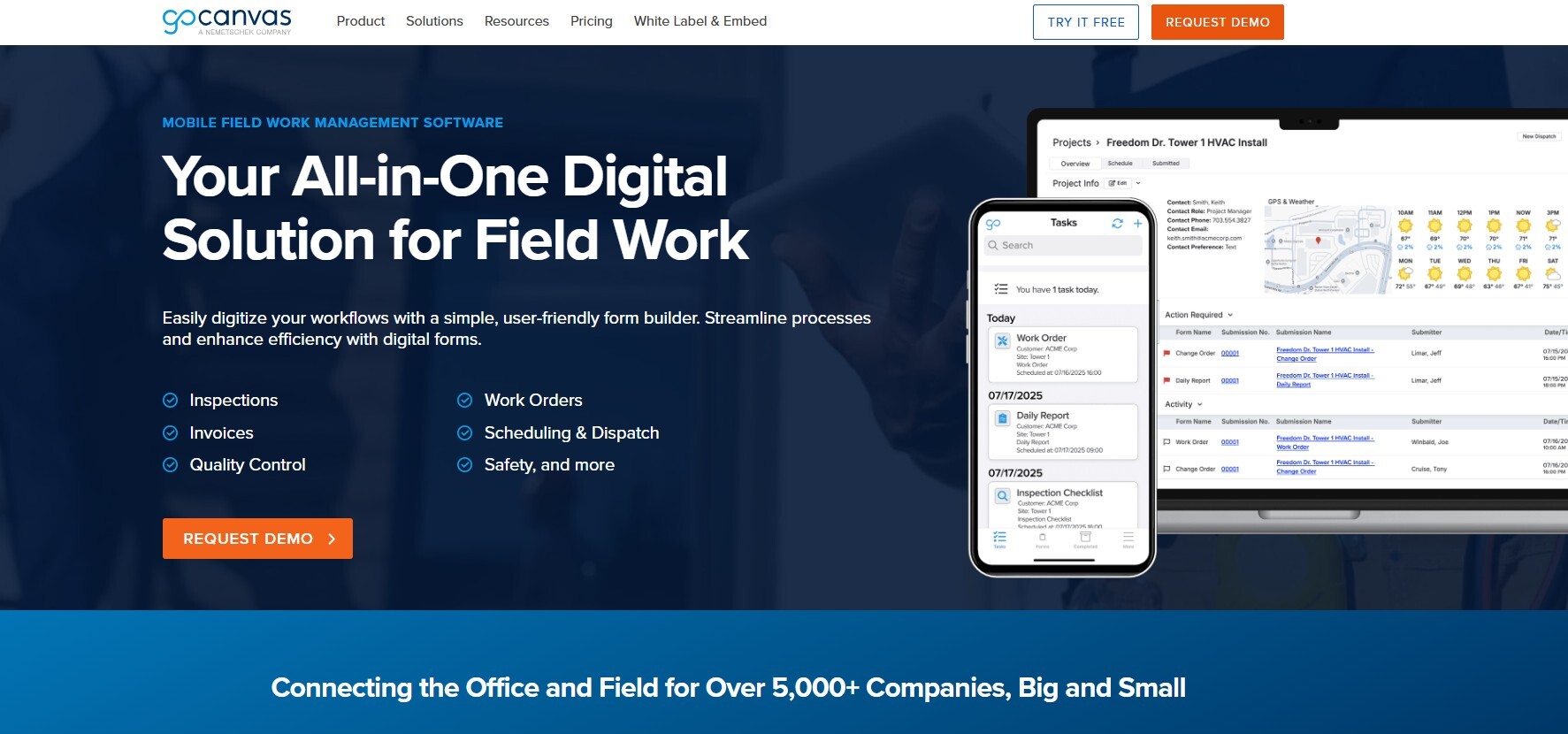
7. GoCanvas — Best for replacing paper forms
GoCanvas turns paper-based inspection forms into mobile apps with photo capture, signatures, and automated reporting. It's a practical, affordable way for field teams to digitize existing checklists without a heavy rollout.
Best for: Teams modernizing paper inspection forms.
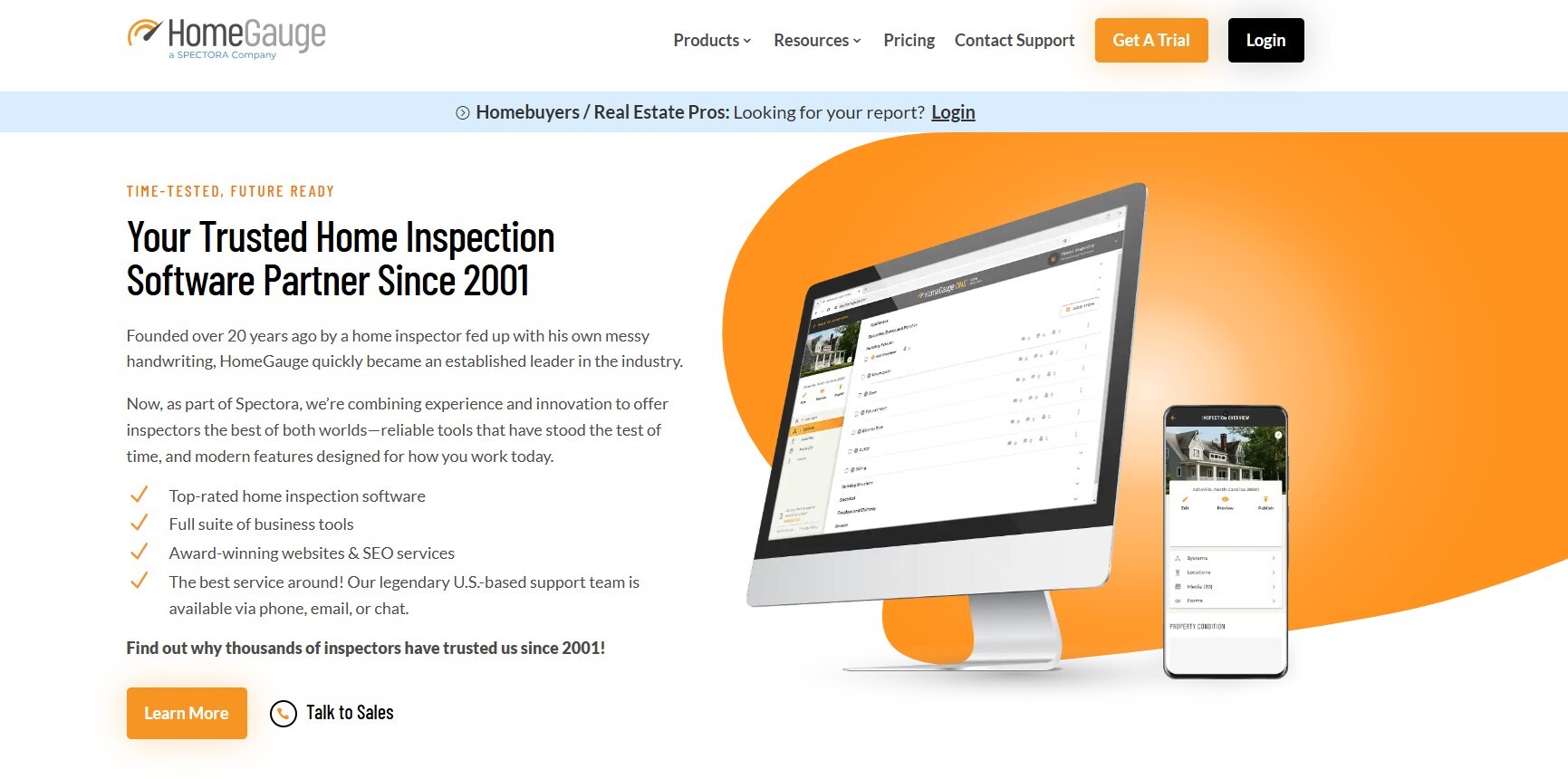
8. HomeGauge — Best all-in-one for inspection businesses
HomeGauge pairs detailed home inspection reporting with business-management tools like scheduling and agreements. It's a long-established option with a loyal base of professional inspectors who want reporting and back-office in one place.
Best for: Home inspection businesses wanting reporting plus operations.
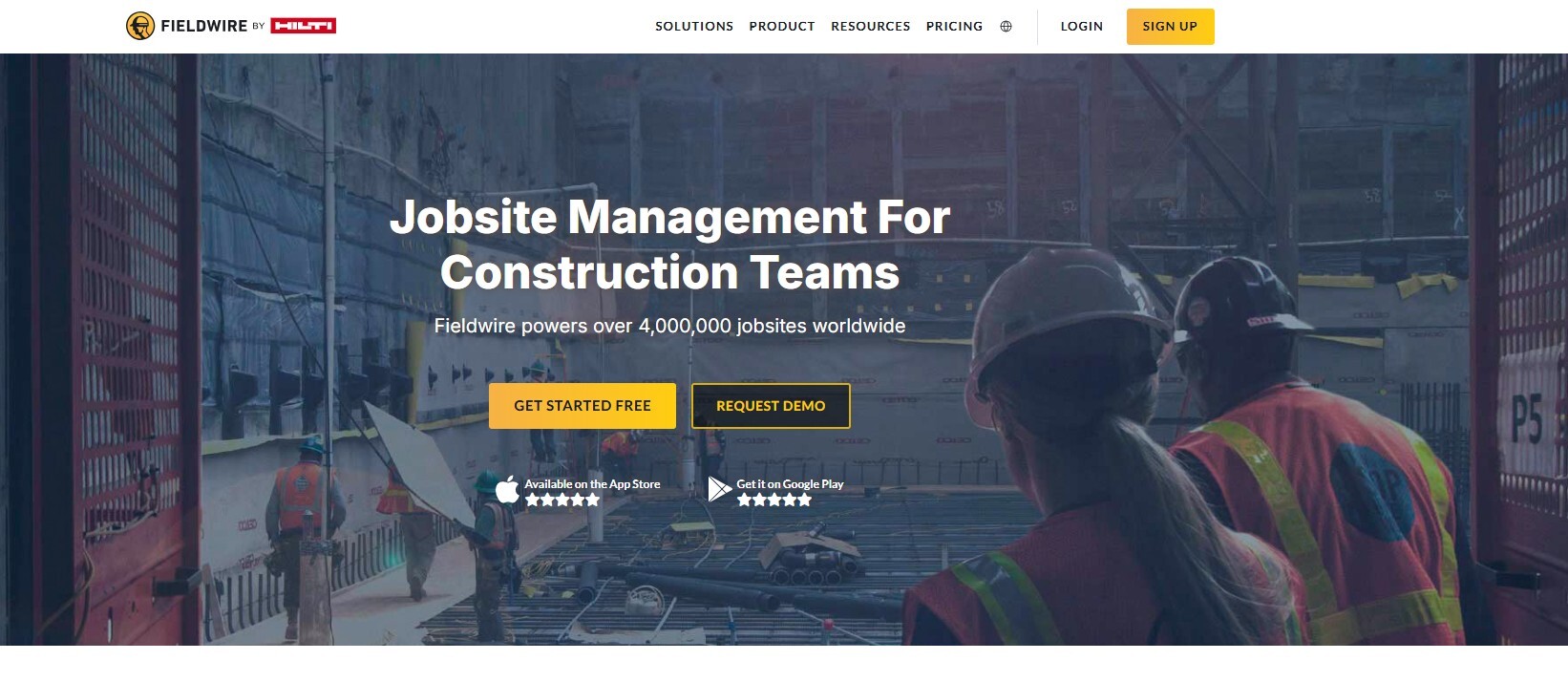
9. Fieldwire — Best for construction punch lists & QA
Fieldwire is a construction field-management app strong on task tracking, plan markup, and punch-list-driven inspections. It keeps superintendents and crews aligned on what needs fixing before sign-off.
Best for: On-site construction QA and punch-list management.
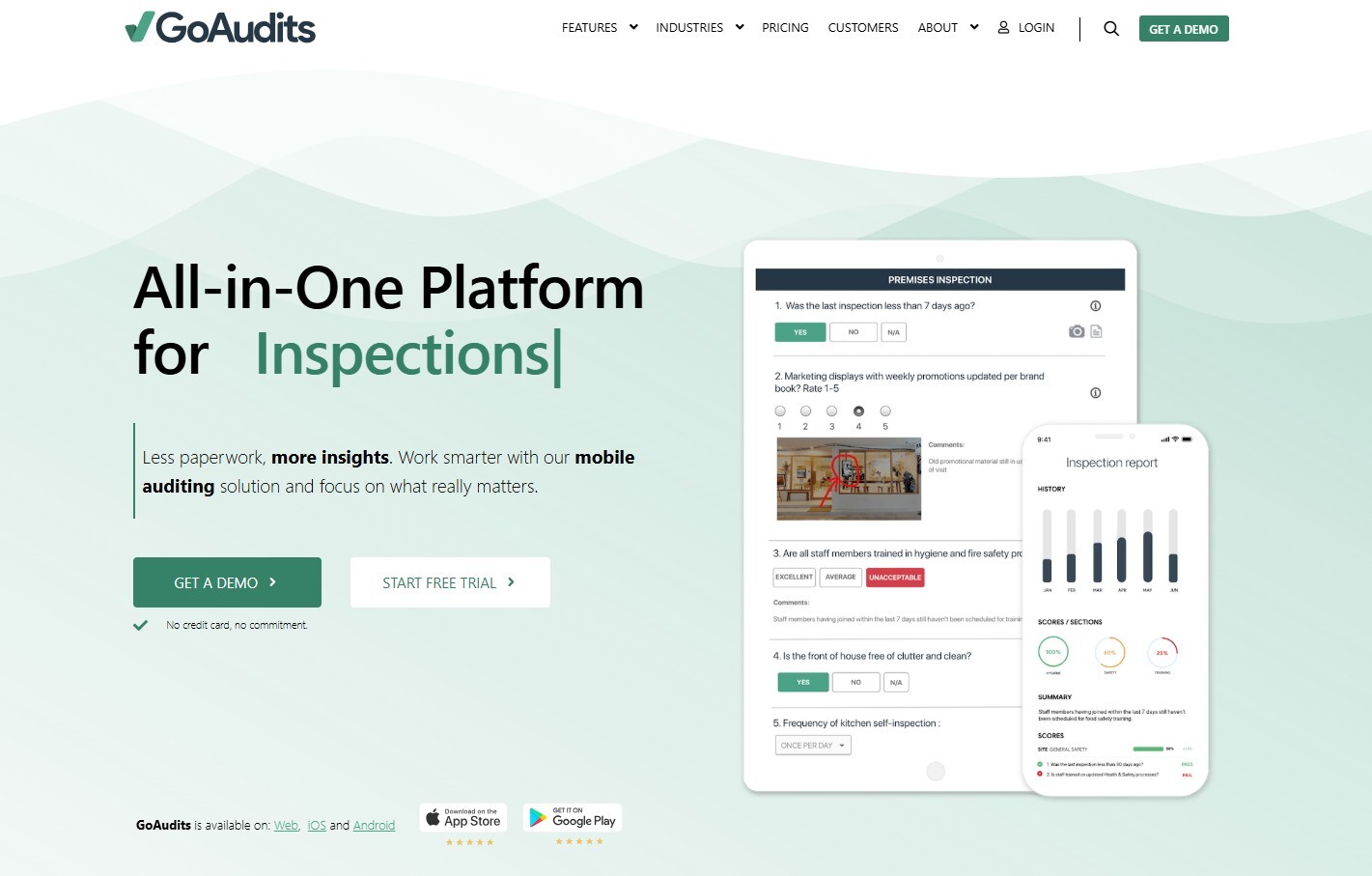
10. GoAudits — Best budget-friendly inspection app
GoAudits offers digital checklists, photo capture, instant reporting, and offline capability at a per-user price point that's friendly to smaller teams. A solid entry point for commercial and residential building checks on a budget.
Best for: Small teams wanting an affordable, mobile-first inspection app.
Quick comparison
| Software | Best for | Remote/live video | Standout strength |
|---|---|---|---|
| Blitzz | Remote inspections at scale | ✅ Live, no-app | Speed, AI reporting, enterprise integrations |
| SafetyCulture | Checklist audits | ⚠️ Limited | Template library |
| Spectora | Home inspectors | ❌ | Report quality |
| VuSpex | Building departments | ✅ | Permitting focus |
| Procore | Enterprise construction | ❌ | Full project integration |
| Fulcrum | Field/GIS data | ❌ | Geospatial forms |
| GoCanvas | Paper-to-digital | ❌ | Form digitization |
| HomeGauge | Inspection businesses | ❌ | Reporting + ops |
| Fieldwire | Construction QA | ❌ | Punch lists |
| GoAudits | Budget teams | ❌ | Price |
How to choose the right building inspection software
Start with the question that drives the most cost: do you still need to be on-site to inspect? If a large share of your inspections could be done remotely — insurance claims, permit close-outs, warranty checks, supplier audits — then a live remote platform like Blitzz pays for itself quickly by eliminating trips. If your inspections are inherently hands-on, a strong reporting or checklist tool may be the better core.
From there, weigh how the tool fits your existing systems, whether it meets your compliance requirements, and how easily the other person can connect. A platform is only as good as the inspections it actually completes — and the fewer barriers between "request" and "live feed," the better.
Frequently asked questions
What is building inspection software? It's any tool that helps inspectors plan, conduct, document, and report on inspections of buildings or property. In 2026 the category spans mobile checklist apps, home inspection reporting tools, construction QA platforms, and remote video inspection software that lets you inspect live without traveling to the site.
What's the difference between remote video inspection and a checklist app? A checklist app digitizes the form an inspector fills out while physically on-site. Remote video inspection — like Blitzz Inspect — replaces the trip entirely by letting the inspector see and document the property live through the other person's camera. Learn more in virtual inspection vs. remote video inspection.
Is remote inspection software compliant for building departments? It can be. Several jurisdictions now explicitly support electronic and virtual inspections — Florida's HB 667 is a leading example. The key is choosing a platform with proper recording, timestamps, geolocation, and audit trails. See our HB 667 compliance checklist.
How much does building inspection software cost? It ranges widely — from low per-user monthly fees for basic checklist apps to enterprise pricing for full construction platforms. Remote video inspection platforms like Blitzz start around $400/month and scale with volume, typically offset quickly by the travel costs they eliminate.
The bottom line
The best building inspection software in 2026 depends on what you inspect and how. For solo home inspectors, Spectora and HomeGauge are hard to beat. For checklist-driven audits, SafetyCulture leads. For enterprise construction, Procore.
But if your biggest cost is the drive to the site — and for most building departments, insurers, and field-service teams, it is — Blitzz is the clearest win: live inspections, no app, AI-assisted reporting, enterprise integrations, and a documented ROI most tools can't match.

Blitzz Team
The Blitzz Team writes about remote video support, virtual inspections and field service. Our guides come from working with home builders, property managers, warranty teams, contact centers and field service organizations that use Blitzz to see and solve issues without a truck roll.
.jpg)