
.png?width=120&height=55&name=Blitzz-Logo-right%20white%20eyes%20-%20not%20transparent%20(3).png)
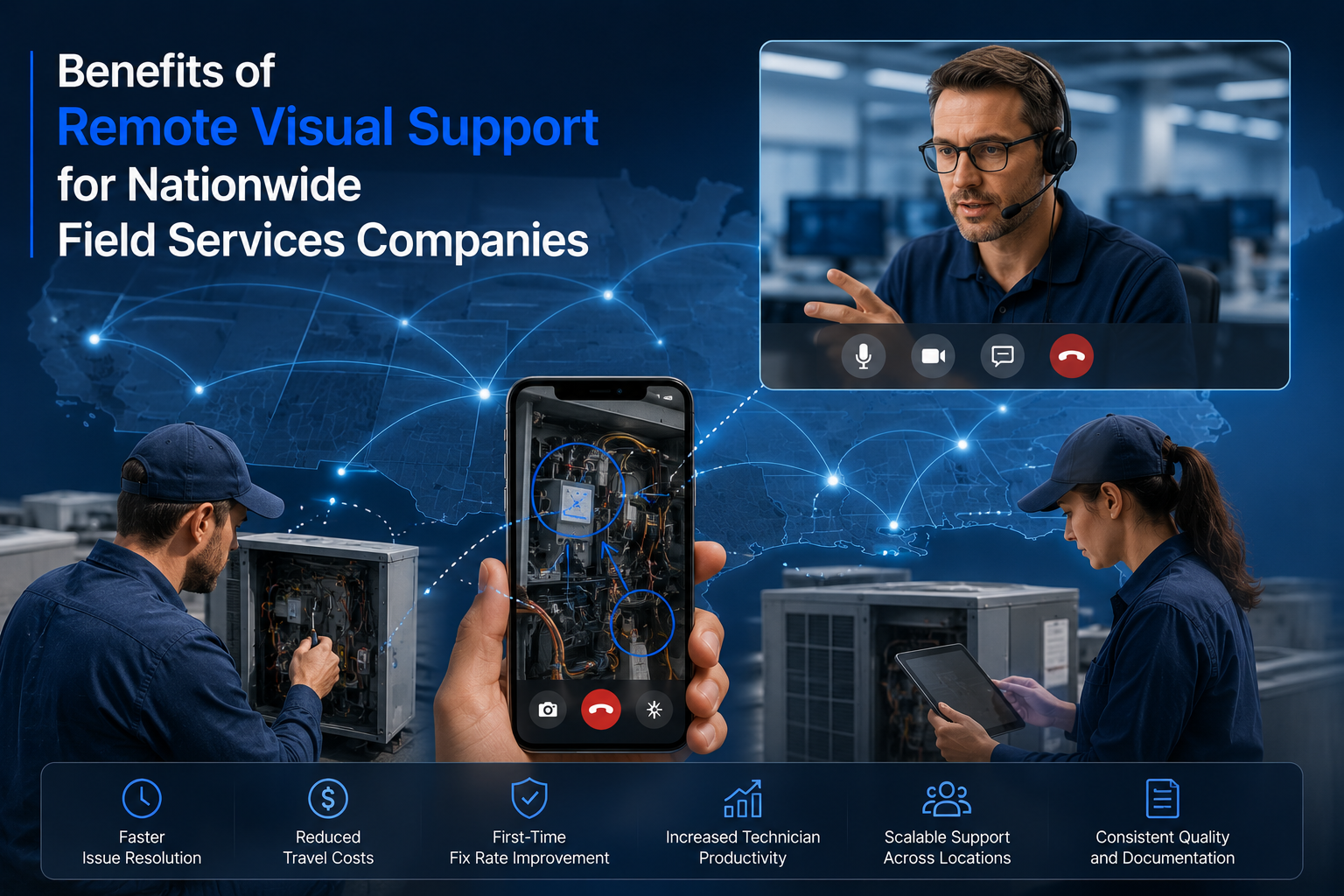
For nationwide field services companies, the math has always been brutal. Every service ticket, every site survey, every installation, every repair requires getting the right person to the right location at the right time, and doing it across hundreds or thousands of sites scattered across the country. The model works, but it's expensive, slow, and increasingly hard to scale as customer expectations rise and skilled technicians become harder to find.
Remote visual support is changing that equation. By giving field services teams the ability to see, guide, diagnose, and verify work in real time through a live video connection, this technology is helping nationwide service providers cut costs, accelerate projects, and improve customer outcomes, all without adding headcount or fleet size.
To illustrate how this works in practice, we'll reference ARS Services LLC, a nationwide managed technical services company with over 30 years of experience deploying and maintaining technical equipment, including digital signage, self-service kiosks, vending and POS systems, and EV charging stations across the country. Companies like ARS represent exactly the kind of operation where remote visual support delivers transformational ROI. Here's why.
1. It Eliminates Unnecessary Truck Rolls Across a Distributed Technician Network
Nationwide field services companies deploy technicians across the entire country to service equipment at customer sites, retail locations, charging stations, and industrial facilities. Every truck roll carries significant cost: fuel, labor hours, vehicle maintenance, travel time, and the opportunity cost of that technician not being deployed somewhere else.
Remote video inspection lets a senior engineer, project manager, or back-office expert guide a local technician (or even the customer themselves) through a survey or diagnostic without anyone having to physically dispatch a second person. For a company like ARS Services, which manages technical work at locations from coast to coast, this means one expert can support inspections happening simultaneously in five different states, all from a single workstation.
2. It Turns Site Surveys From a Bottleneck Into a Same-Day Function
Site surveys are the bridge between idea and implementation for nationwide rollouts. Before a single piece of equipment gets installed, someone has to walk the location, document existing conditions, identify power and connectivity requirements, and flag potential obstacles. Traditionally, that means flying or driving someone to every location, often weeks before the project itself can begin.
Remote video inspection collapses that timeline dramatically. Site surveys can happen the same day a project is signed, with an on-site contact at the customer location using a smartphone to walk the surveyor through the space via live video. The surveyor captures photos, annotates layouts, and documents requirements in real time, then immediately hands off a complete survey package to the implementation team. The result is faster project kickoffs and shorter sales-to-installation timelines.
3. It Makes Roll-Outs Across Thousands of Locations Scalable to Verify
When a field services company handles a project across 1,000 or 10,000 sites, sending project managers to verify each installation in person is logistically impossible. Most companies end up sampling a small percentage of sites and hoping the rest are correct, then absorbing the cost of fixing problems discovered weeks or months later when something fails.
Remote video inspection allows centralized QA teams to visually verify installations at every site in real time. As soon as a local technician completes their work, they connect with a QA reviewer via video link, walk through the installation, and get sign-off (or punch-list feedback) on the spot. Errors get caught immediately, not weeks later when they've already caused downtime or customer complaints. This is exactly the kind of capability that lets a company like ARS Services scale from one location to ten thousand without proportionally scaling oversight headcount.
4. It Improves First-Time Fix Rates by Putting Expert Eyes on Every Job
Field services companies pride themselves on getting the right technician with the right skill set to the right job. But the reality is that even the best dispatch system can't predict every problem a technician will encounter on-site. What happens when a generalist technician runs into a specialized issue they haven't seen before?
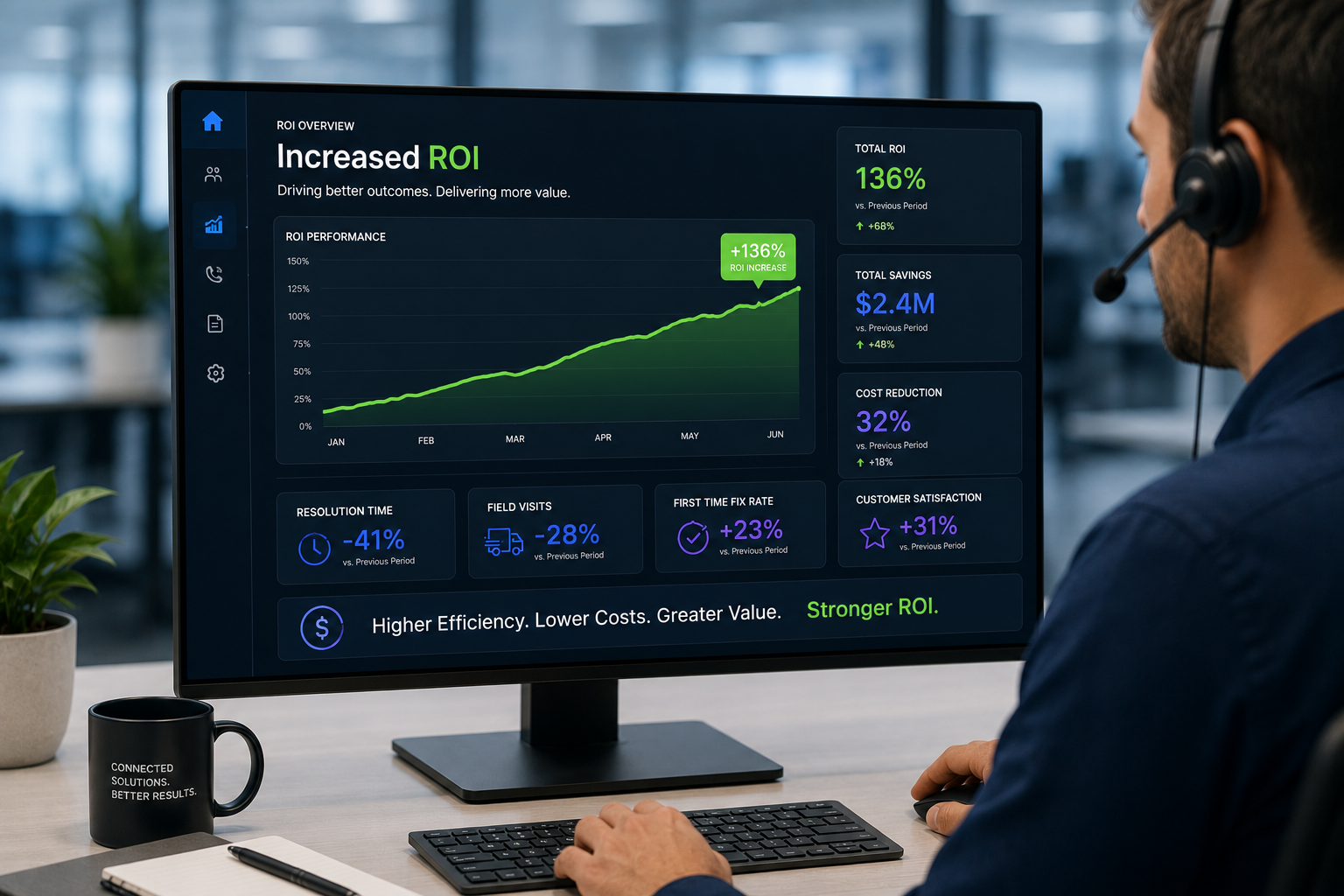
With remote visual support, the on-site tech can loop in a subject matter expert via live video, get AR-guided instructions on the live feed, and resolve the problem in a single trip. Industry data shows this approach can drive a 40% improvement in first-call resolution rates and a 30% reduction in overall truck roll needs. For field services companies that bill by completed work order, fewer repeat visits mean higher margins per ticket and happier customers.
5. It Transforms Preventative Maintenance From Reactive to Proactive
There's a common assumption in field services that "if there's a problem, we'll hear about it." That assumption is a major weakness. By the time a customer calls to report an issue, the equipment is already failing, the downtime has already started, and the cost of the emergency dispatch is already higher than a planned visit would have been.
Remote video inspection enables scheduled virtual check-ins with equipment at customer sites. A technician can spend 15 minutes guiding a customer through a visual walkthrough of the equipment, spotting wear, damage, or impending failures before they become emergencies. For nationwide service providers managing thousands of installed assets, this proactive approach prevents costly breakdowns, extends equipment lifespan, and turns maintenance contracts into genuine value drivers instead of reactive cost centers.
6. It Supercharges In-House Call Centers and Technical Support Teams
Many top field services companies (ARS Services among them) keep their technical support call centers in-house rather than outsourcing. This is a competitive advantage in terms of service quality, but it also means call center costs are absorbed directly by the business. Anything that improves call center efficiency drops straight to the bottom line.
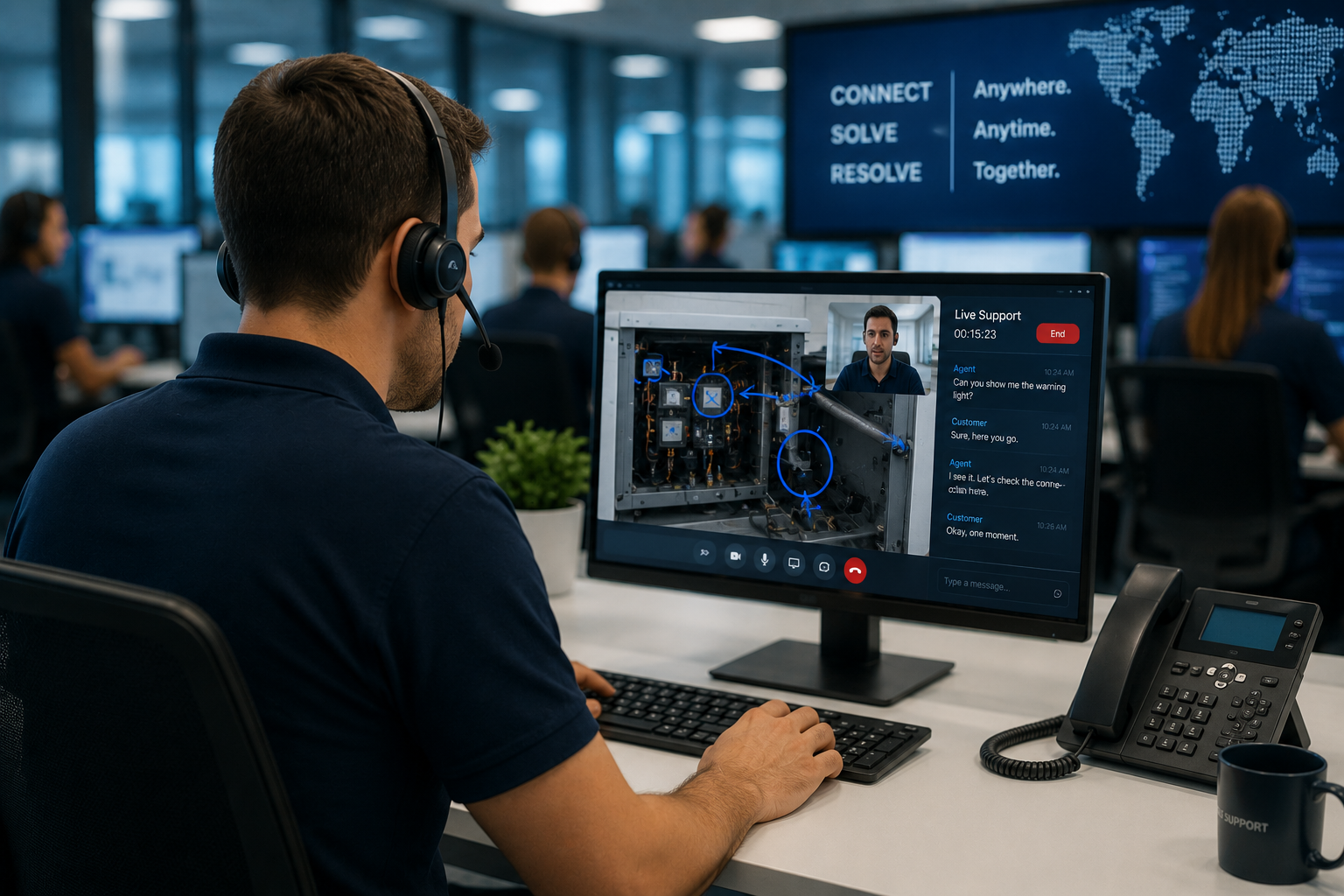
Adding remote visual support to a call center workflow transforms phone-based troubleshooting into visual diagnostic sessions. Support agents can actually see the equipment, walk customers through repairs, and resolve issues without escalating to a truck roll. The result: higher first-call resolution rates, fewer dispatched service calls, and dramatically better customer satisfaction scores. It's one of the highest-ROI applications of remote visual support in any field services operation.
7. It Keeps Up With Multi-Site Industries Where Speed Is Revenue
Some of the fastest-growing industries served by nationwide field services companies (EV charging networks, self-service kiosks, smart lockers, digital signage) share a common trait: downtime directly equals lost revenue. An EV charging station that's offline is a charging station that isn't earning money, and a frustrated driver is a customer who may not come back.
Remote video inspection lets technicians diagnose charging station issues, kiosk failures, or display problems in minutes, often resolving them remotely or arriving on-site with the exact parts needed instead of making an exploratory visit first. For companies like ARS Services that handle EV charging site surveys, installation support, and break-fix repairs, this speed advantage isn't just operational, it's strategic. Faster mean time to resolution translates directly into better client retention and more contract renewals.
8. It Closes the Skills Gap Without Hiring More Senior Technicians
The field services industry is facing a serious shortage of skilled technicians, and that gap is only widening as experienced workers retire. The traditional solution (hiring and training more senior technicians) takes years and costs millions. Remote visual support offers a faster path: it lets a small number of senior experts effectively oversee a much larger field workforce.
When a less-experienced technician gets stuck, they don't have to wait for a return visit or escalate the ticket. They get a senior tech on a live video call within minutes, work through the problem together, and complete the job. The junior tech learns on the job, the senior expert multiplies their impact across dozens of field workers per day, and the customer gets their issue resolved the first time.
Why Nationwide Field Services Companies Can't Afford to Wait
The competitive landscape for nationwide field services companies is tightening. Customers expect faster response times, lower prices, and higher first-time fix rates. At the same time, fuel costs are rising, skilled labor is getting harder to find, and emissions reporting requirements are starting to make the carbon footprint of every truck roll a measurable business concern.
Remote visual support addresses every one of these pressures at once. It reduces costs, accelerates timelines, improves quality, shrinks carbon emissions, and lets companies scale operations without scaling headcount. Companies like ARS Services that build remote visual support into their operating model aren't just optimizing their current workflow, they're positioning themselves to outcompete every traditional field services provider that still operates on a 100% truck-roll model.
Here's a new section you can add to the blog. I'd recommend placing it right before "Why Nationwide Field Services Companies Can't Afford to Wait" so it serves as a real-world example before the closing argument:
How Companies Like ARS Services Are Positioned to Lead
To see how all of these benefits come together in practice, consider ARS Services LLC, a nationwide managed technical services company with over 30 years of experience. Their core business covers exactly the kind of work where remote visual support delivers immediate, measurable returns: pre-installation site surveys, multi-location rollout installations, on-site repairs, preventative maintenance, and in-house call center technical support across industries like digital signage, self-service kiosks, smart lockers, vending and POS systems, and EV charging stations.
What makes a company like ARS such a strong fit for remote visual support is the structure of their business. They operate a nationwide network of qualified field technicians coordinated by experienced project managers, and they handle projects ranging from single-location installations to deployments across 10,000+ sites. Every part of that workflow benefits from remote visual support:
- Site surveys can happen the same day a project is signed, instead of waiting for a technician to travel to each location.
- Rollout installations can be verified in real time by centralized QA teams, no matter how many sites are involved.
- On-site repair technicians can loop in subject matter experts via live video to resolve specialized issues on the first visit.
- Preventative maintenance can shift from reactive emergency dispatches to scheduled virtual check-ins that catch problems early.
- The in-house call center can transform phone-based troubleshooting into visual diagnostic sessions that resolve more issues without a truck roll.
The point isn't that ARS Services is doing anything unusual by leveraging these capabilities. The point is that the structural characteristics of any nationwide field services company (distributed technicians, multi-site projects, in-house support, time-sensitive customer SLAs) create a near-perfect use case for remote visual support. Companies that recognize this and build the technology into their operating model will be the ones setting the pace for the industry over the next decade.
Ready to Modernize Your Field Services Operation?
Whether you're managing rollouts across thousands of sites, dispatching repair technicians nationwide, or running an in-house call center for technical equipment, remote visual support delivers measurable ROI from day one. Blitzz helps nationwide field services companies cut truck rolls, accelerate site surveys, improve first-time fix rates, and scale operations without scaling overhead.
Get in touch with the Blitzz team to see how remote visual support can fit into your operation, or start a free trial and see the impact for yourself.
Related Reading
- Mastering the Art of Truck Rolls: Reducing Costs and Boosting Efficiency
- Get Your Eyes on the Problem with AI & AR Remote Customer Support
- Want to Reduce Truck Rolls? Rethink Your Call Center's KPIs
- The Future of Field Service: Integrating Smart Glasses with Remote Assistance Platforms
- What Is a Truck Roll? And How Can You Reduce Your Carbon Footprint?