
.png?width=120&height=55&name=Blitzz-Logo-right%20white%20eyes%20-%20not%20transparent%20(3).png)
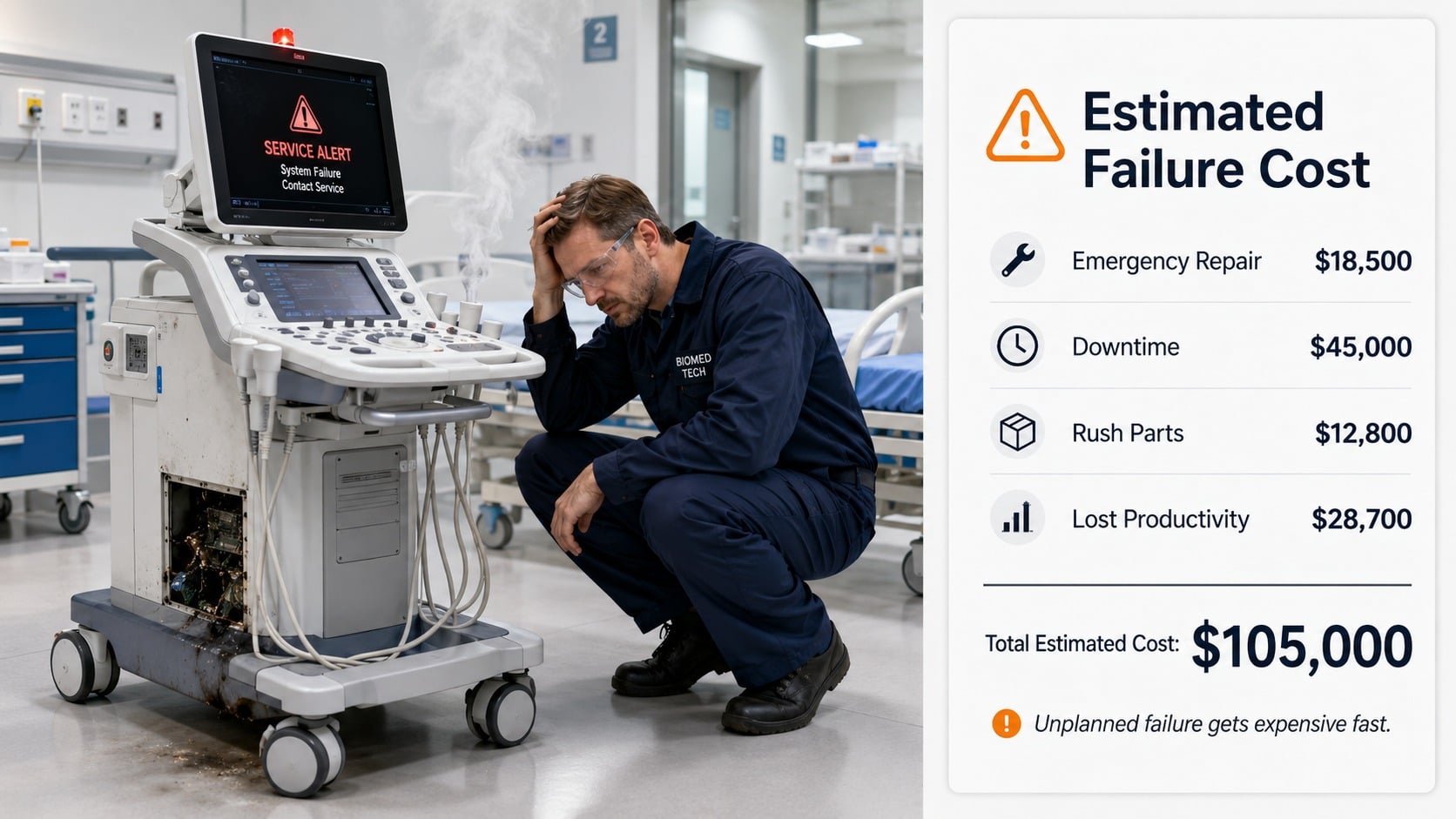
Modern manufacturing equipment has never been more complex — or more expensive to leave idle. With unplanned downtime in manufacturing averaging around $260,000 per hour (Aberdeen Group), every minute a machine sits broken is money lost. Yet traditional field service still leans on physical visits, travel time, and verbal troubleshooting that frequently leads to misdiagnosis and repeat trips. That's why manufacturers are turning to AI field service: AI to predict and diagnose problems, and AR visual assistance to let remote experts see and resolve issues in real time. The combination is reshaping how manufacturers keep production running — and platforms like Blitzz are at the centre of it.
The state of field service in manufacturing today
Manufacturers are squeezed from several directions at once. Equipment downtime is brutally expensive, skilled-technician shortages mean the right expert often isn't available, and on-site response times stretch into hours or days. When troubleshooting depends on a phone call between an operator and a remote engineer, diagnosis is slow and error-prone — and a wrong guess means a wasted truck roll and prolonged downtime.
Traditional field service simply can't keep pace. It depends heavily on physical inspections, suffers communication gaps between technicians and operators, and carries rising operational costs from travel and dispatch — roughly 20% of a technician's time is lost to travel alone. As Blitzz argues in Remote Support Revolution: Elevating Equipment Manufacturing, the old model wasn't built for the complexity — or the cost pressure — of modern production environments.
How AI is transforming field service operations
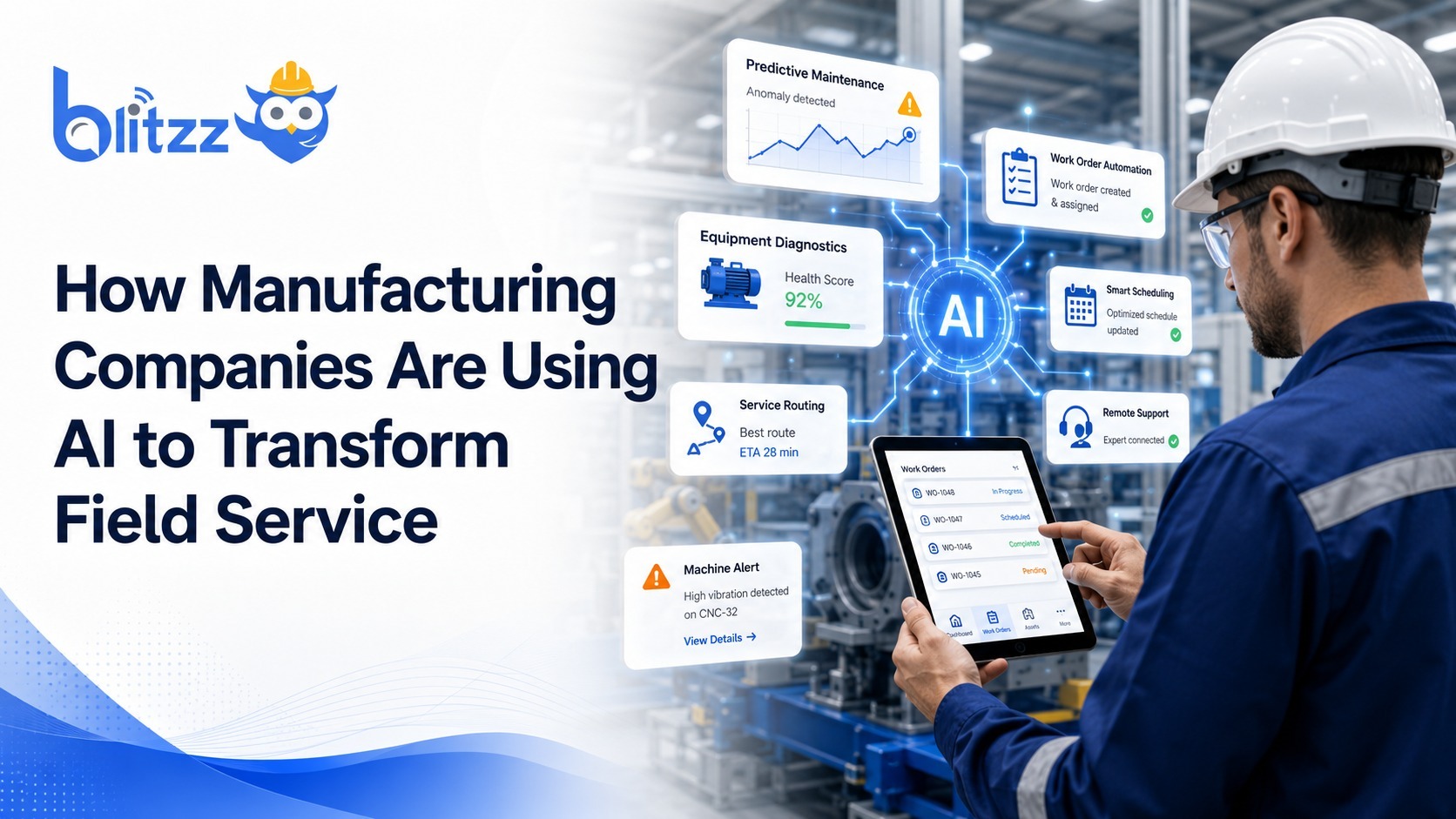
AI is changing field service across four fronts.
AI-powered diagnostics detect issues in real time and identify machine errors intelligently, narrowing the problem before anyone touches a wrench. Instead of starting from zero, technicians start from a likely root cause.
Predictive maintenance is the headline shift. By analysing equipment data, AI predicts failures before they happen, letting manufacturers service machines on their own schedule rather than scrambling after a breakdown. The result is far less unplanned downtime.
Intelligent ticket routing automatically assigns the right technician — by skill, location, and availability — so the appropriate expert is matched to each job and resolution workflows move faster.
Knowledge automation puts AI-assisted troubleshooting guides and technical documentation at a technician's fingertips, so institutional knowledge isn't trapped in the heads of a few veterans. Blitzz's broader take on AI as a service accelerator is in How Blitzz Uses AI to Transform Remote Support.
But AI has a ceiling: it can't physically see a seized bearing or a misaligned conveyor. That's where AR comes in.
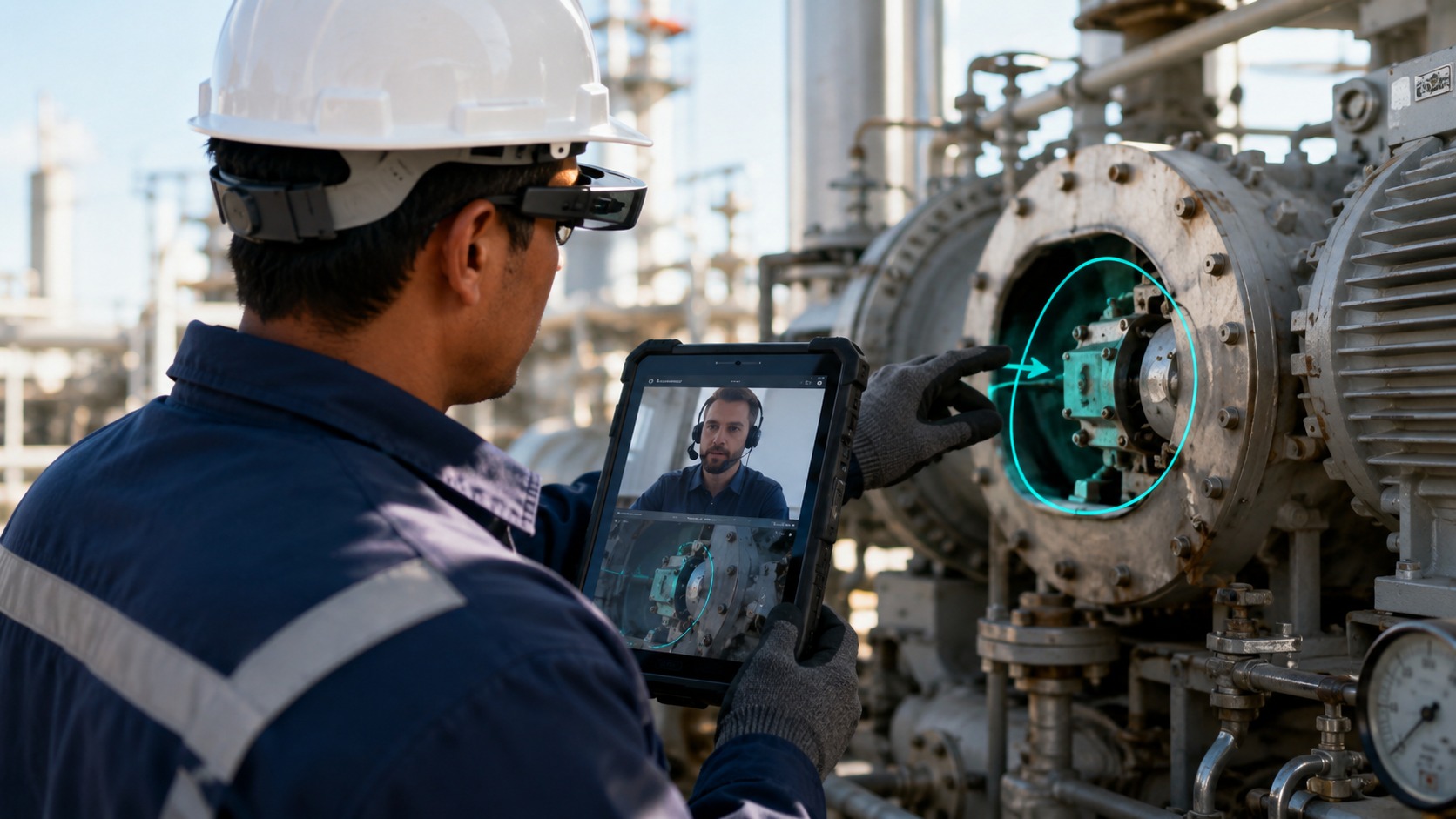
The rise of AR visual assistance in manufacturing
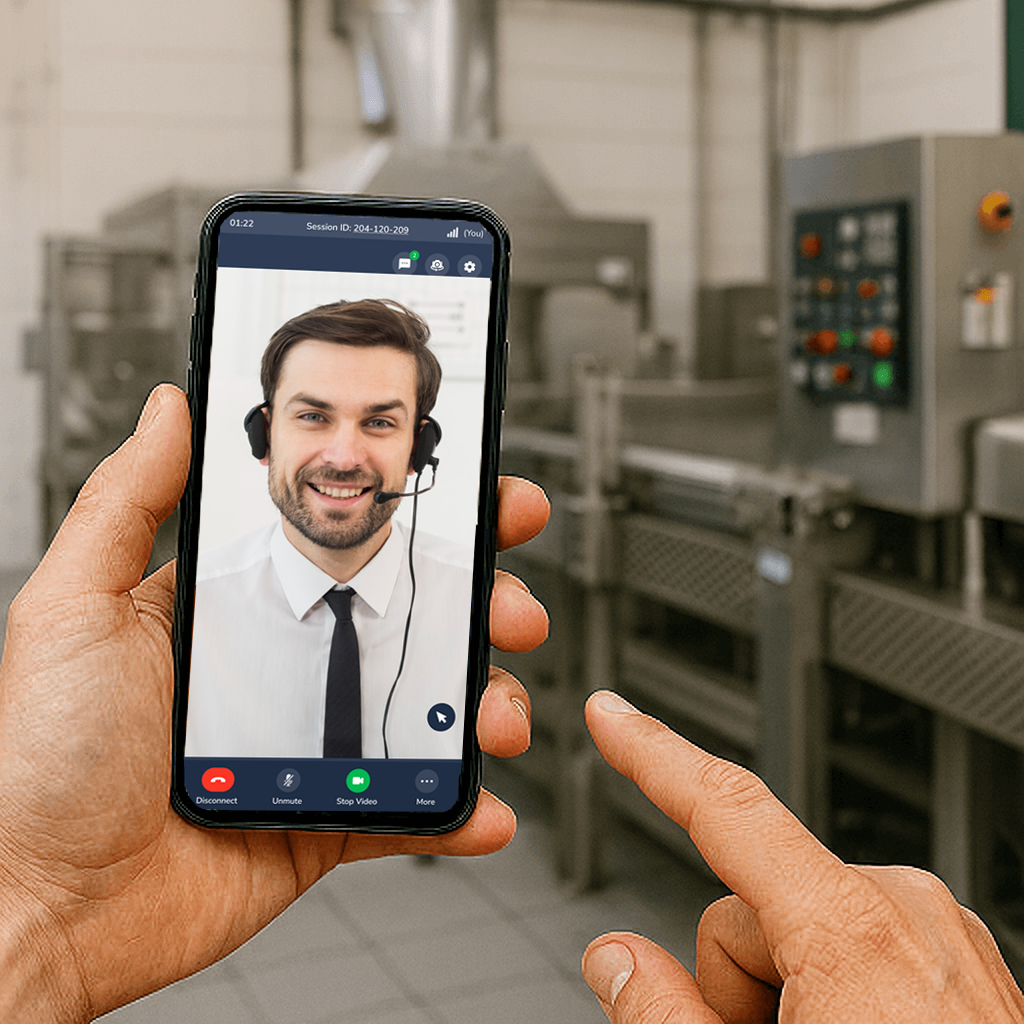
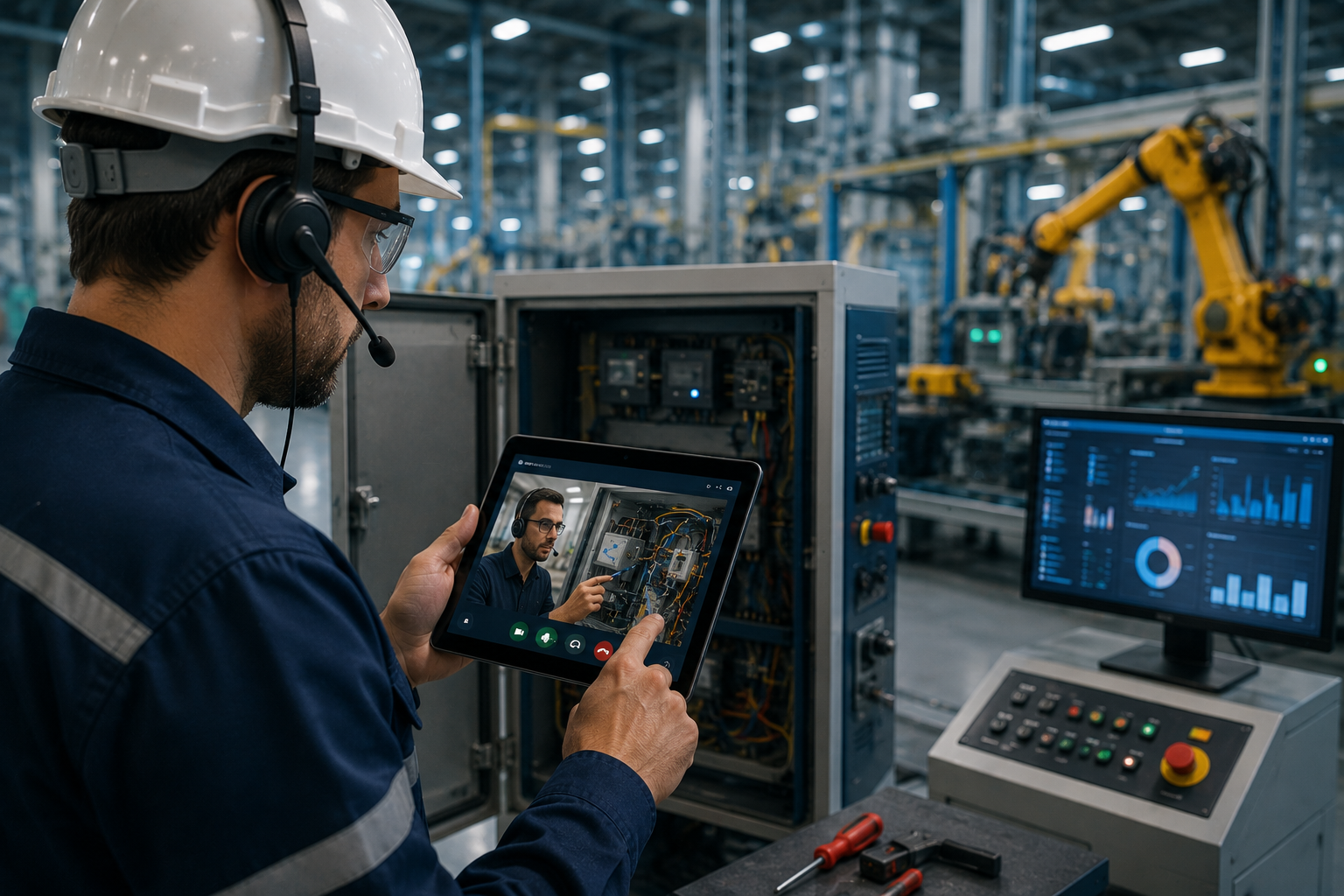
AR visual assistance means combining a real-time video feed with overlay instructions — a remote expert guiding an on-site technician or operator by annotating exactly what they see. Instead of describing a fault, the operator points a phone or smart-glasses camera at the machine, and the expert circles the precise component that needs attention.
It's a genuine game changer because it eliminates guesswork and miscommunication. The operator and the expert finally share the same view, so diagnosis is accurate and instructions are unambiguous. The most valuable manufacturing use cases include:
- Equipment breakdown diagnosis — identifying mechanical faults remotely, often resolving them within a single support session.
- Assembly line support — step-by-step visual guidance to clear a jam or correct a process without halting the whole line.
- Calibration and setup — confirming machines are configured correctly the first time.
- Safety inspections — remote verification of compliance standards, with recorded sessions providing verifiable audit documentation.
By letting experts see exactly what the operator sees, AR speeds root-cause analysis and sharpens decision-making. The deeper case is laid out in How Augmented Reality Helps Field Service Workers and Revolutionising Field Service with AR.
How AR and AI work together in field service
AR and AI are most powerful in combination, because each covers the other's blind spot.
AI provides the intelligence. It predicts failures, diagnoses errors, and suggests likely causes — compressing the path from symptom to probable fix.
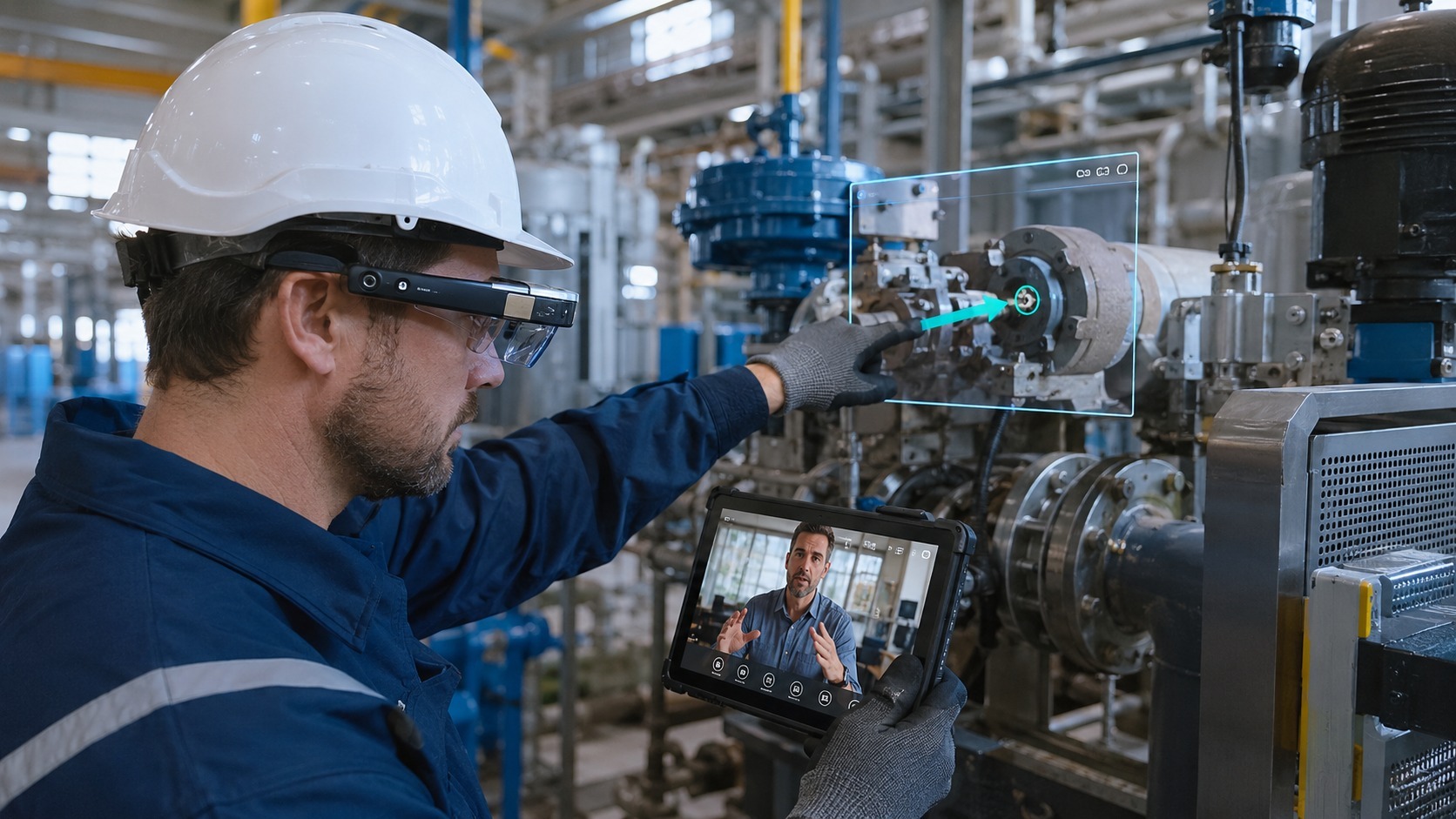
AR provides the visibility. A real-time video feed from the site, layered with visual annotations and overlays, lets a remote expert confirm the diagnosis and guide the hands-on work.
Together they shorten troubleshooting cycles, slash the need for on-site visits, and raise first-time fix rates. A typical workflow looks like this:
- A machine throws an error.
- AI identifies the likely issue and flags it.
- The on-site technician or operator connects remotely via Blitzz — sharing live video through a secure link, no app required.
- The remote expert assesses visually, annotates the feed, and guides the fix in real time — often resolving it on the spot.
This is the same "eyes-on-the-problem" model Blitzz describes in Get Your Eyes on the Problem with AI & AR, and it's why manufacturing plants increasingly avoid prolonged shutdowns by solving issues 10x faster.
Key benefits for manufacturing companies
The payoff shows up in the metrics manufacturers care about most:
- Reduced downtime. Faster issue resolution means less production interruption. One maintenance lead reported cutting equipment downtime by 50% with remote visual support, troubleshooting instantly instead of waiting for an engineer to drive across the state.
- Lower field service costs. Fewer technician dispatches and reduced travel expenses — a tank-inspection business cut travel costs by 75% using remote expert inspections, and a global construction company saved hundreds of hours by making QA remote.
- Higher technician efficiency. A single expert can support multiple sites — even globally — from a central location, instead of dispatching senior technicians everywhere.
- Improved first-time fix rate. With accurate visual context, technicians arrive with the right parts and tools, cutting repeat visits. The economics of avoided trips are in The Real Cost of a Truck Roll.
- Better knowledge retention. Recorded sessions capture troubleshooting data for reuse in training and to preserve the tribal knowledge that walks out the door when veteran technicians retire — a core feature of Blitzz's field service solution.
Real-world use cases of AI in manufacturing field service
The model applies across virtually every manufacturing vertical:
- Heavy machinery maintenance — remote diagnostics of large industrial machines that are costly to send specialists out to.
- Automotive manufacturing lines — assembly-line troubleshooting with AR guidance; automakers like BMW and Lincoln already use remote video support (see Why Blitzz).
- Food and beverage production — equipment calibration and sanitation checks verified remotely without halting lines.
- Energy and utilities equipment — remote inspection of turbines, pumps, and systems, including high-risk sites where AR overlays guide on-site staff safely.
- Electronics manufacturing — precision-equipment troubleshooting where exact visual confirmation matters.
The cross-industry pattern is covered in Field Service, Telecom, Insurance: How Genesys + Blitzz Helps, and the inspection angle in The Complete Guide to Remote Inspection Software.
Challenges and considerations when adopting AI field service
Adoption isn't plug-and-play, and it pays to plan for a few realities:
- Integration with legacy systems. Your AR platform needs to work alongside existing ERP and field-service-management tools. Blitzz keeps your CRM and FSM as the system of record while serving as the system of record for collaborative events, with native integrations for Salesforce, ServiceNow, and more.
- Training the workforce. Technicians and operators need to be comfortable with AR tools — though app-free, link-based access keeps the learning curve short, and most teams are up and running in hours, not weeks.
- Data security. Operational and equipment data is sensitive; insist on encrypted sessions and appropriate compliance controls.
- Connectivity requirements. Plants and remote sites need stable performance; look for platforms optimized for typical mobile connections with offline capture for low-signal environments.
The future of field service in manufacturing
The trajectory is clear. Field service is moving toward remote-first operations, where a site visit is the exception, not the default. AI agents will increasingly predict and even resolve issues automatically, while AR becomes standard equipment in every technician's kit. The biggest shift is cultural: from reactive break-fix to predictive maintenance, supported by real-time global collaboration between experts and field workers. Smart glasses and connected-technician models, explored in The Future of Field Service, point to a service operation that is predictive, collaborative, and data-driven.
Frequently asked questions
What is AI field service in manufacturing? It's the use of artificial intelligence — for diagnostics, predictive maintenance, intelligent routing, and knowledge automation — combined with AR visual assistance to resolve equipment issues faster and at lower cost. AI predicts and diagnoses; AR lets remote experts see and guide the fix.
How does AR visual assistance work in a factory setting? An operator or technician shares a live video feed of the equipment through a secure link, and a remote expert annotates that feed in real time — circling the exact component and guiding the repair step by step, without travelling to the site.
How much downtime can manufacturers save with remote visual support? Results vary by operation, but Blitzz reports cases such as a 50% reduction in equipment downtime and a 75% cut in inspection travel costs. Given that unplanned downtime can cost around $260,000 per hour, even modest reductions deliver large savings.
Does AI replace field technicians in manufacturing? No. AI handles prediction, diagnosis, and documentation, while skilled technicians — guided by AR and remote experts — perform the hands-on work. The strongest model pairs AI intelligence with human expertise.
What manufacturing tasks are best suited to remote visual support? Equipment breakdown diagnosis, assembly-line troubleshooting, calibration and setup, and safety or compliance inspections are all strong fits, because each benefits from accurate, shared visual context.
Do technicians need to install an app to use Blitzz? No. Sessions start from a secure link the technician or operator opens in a phone browser — no app or account — which keeps adoption fast across multiple sites.
Can remote visual support integrate with our existing systems? Yes. Blitzz integrates with ERP, CRM, and FSM platforms including Salesforce and ServiceNow, plus REST APIs and an SDK for custom systems, while your existing tools remain the system of record.
Modernize your field service operations
Manufacturing field service is being transformed by AI and AR — faster diagnosis, lower costs, fewer site visits, and higher first-time fix rates. AI brings the intelligence to predict and diagnose; AR brings the visibility to resolve issues in real time without a truck roll. Manufacturers that adopt these tools now gain a durable competitive edge in uptime and cost. See how Blitzz powers remote equipment troubleshooting, explore the full platform, review pricing, read more on the Blitzz blog, or book a demo to see AI + AR field service in action.