
.png?width=120&height=55&name=Blitzz-Logo-right%20white%20eyes%20-%20not%20transparent%20(3).png)

On this page
Why Video Documentation is Now Essential for Construction Defect Cases
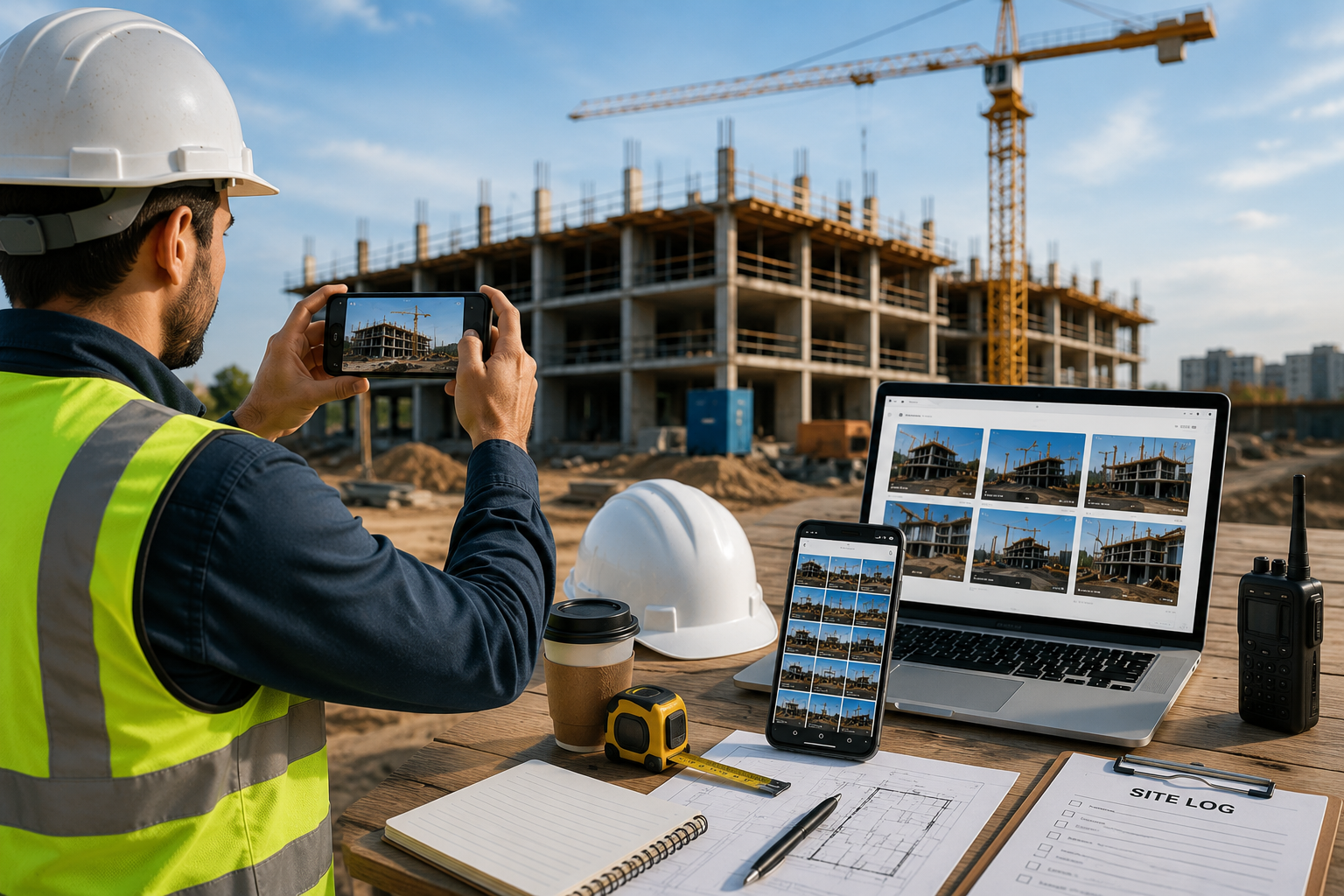
A construction defect video inspection is one of the most powerful tools available for capturing, preserving, and presenting evidence when something goes wrong on a build. Whether you're dealing with water intrusion behind a finished wall, improper framing hidden by drywall, or roofing failures that only reveal themselves under certain conditions, still photos often can't tell the whole story.
Here's what a construction defect video inspection covers at a glance:
- What it is: A recorded visual examination of a property to document construction failures, defects, or pre-existing conditions
- Who uses it: Attorneys, structural engineers, forensic consultants, and building envelope experts
- When it's used: During active litigation, pre-construction surveys, insurance claims, and expert witness examinations
- Why it matters: Video captures spatial relationships, movement, and context that still photography cannot
- Legal relevance: In Colorado, defect documentation supports required disclosures under C.R.S. § 13-20-803
Still photography has long been the default for defect documentation. But it has a fundamental limitation — it freezes a single moment from a single angle. A leaking roof, a mold-covered wall cavity, or a grading failure that channels water toward a foundation makes far more sense to a judge or jury when they can see it unfold in real time, in context, from multiple perspectives.
That's why video documentation is now used in over 70% of construction defect cases to preserve evidence for trial. And with modern tools like thermal imaging, drones, and remote video platforms, the quality and reach of these inspections has grown significantly.
This guide covers everything you need to know — from how these inspections work, to the tools and qualifications involved, to how video evidence is stored and presented in legal proceedings.
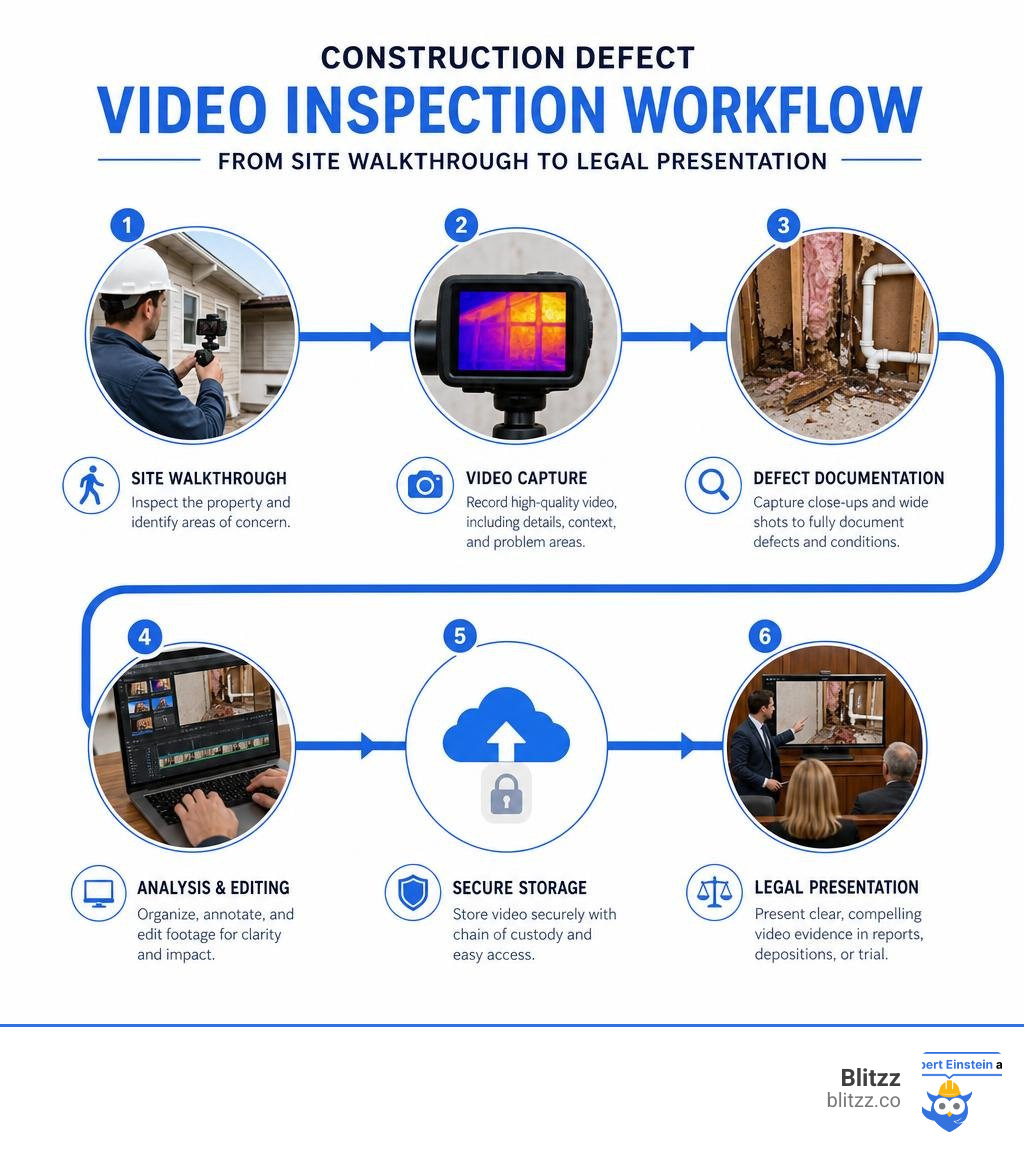
What is a Construction Defect Video Inspection?
At its core, a construction defect video inspection is a systematic, visually recorded evaluation of a building’s structural elements, finishes, or utility systems. Unlike a standard homeowner walkthrough, this is a forensic tool designed to uncover design flaws, installation errors, and code violations. It establishes an undeniable visual record of a property’s condition at a specific point in time.
But why can't we just rely on traditional still photography? While a photograph is excellent for documenting a localized crack or a missing fastener, it lacks three-dimensional spatial context. It cannot show how a localized defect fits into the larger building envelope. Video, on the other hand, allows us to pan, tilt, and zoom, mapping out the physical relationship between different building components. It captures the transition from an exterior stucco crack to the interior drywall rot directly behind it.
Furthermore, still photographs cannot capture dynamic failures — such as water actively pooling during a rain event, a pipe vibrating under pressure, or a structural beam deflecting under load. Video preserves this active evidence, making it incredibly difficult for opposing parties to downplay the severity of the issue.
To better understand how these two methods stack up, let's look at a direct comparison:
| Feature | Still Photography | Video Inspection |
|---|---|---|
| Spatial Context | Limited to the frame; difficult to see the "big picture" | High; shows continuous paths and structural relationships |
| Dynamic Capture | None; captures only static moments | High; records active leaks, movement, and sound |
| Evidence Preservation | Moderate; can be open to interpretation or context disputes | Exceptional; provides an unbroken, timestamped narrative |
| Courtroom Impact | Moderate; requires extensive explanation by experts | High; acts as a self-explanatory, engaging demonstrative aid |
| Inspection Speed | Slower; requires taking hundreds of individual shots | Faster; continuous recording covers large areas quickly |
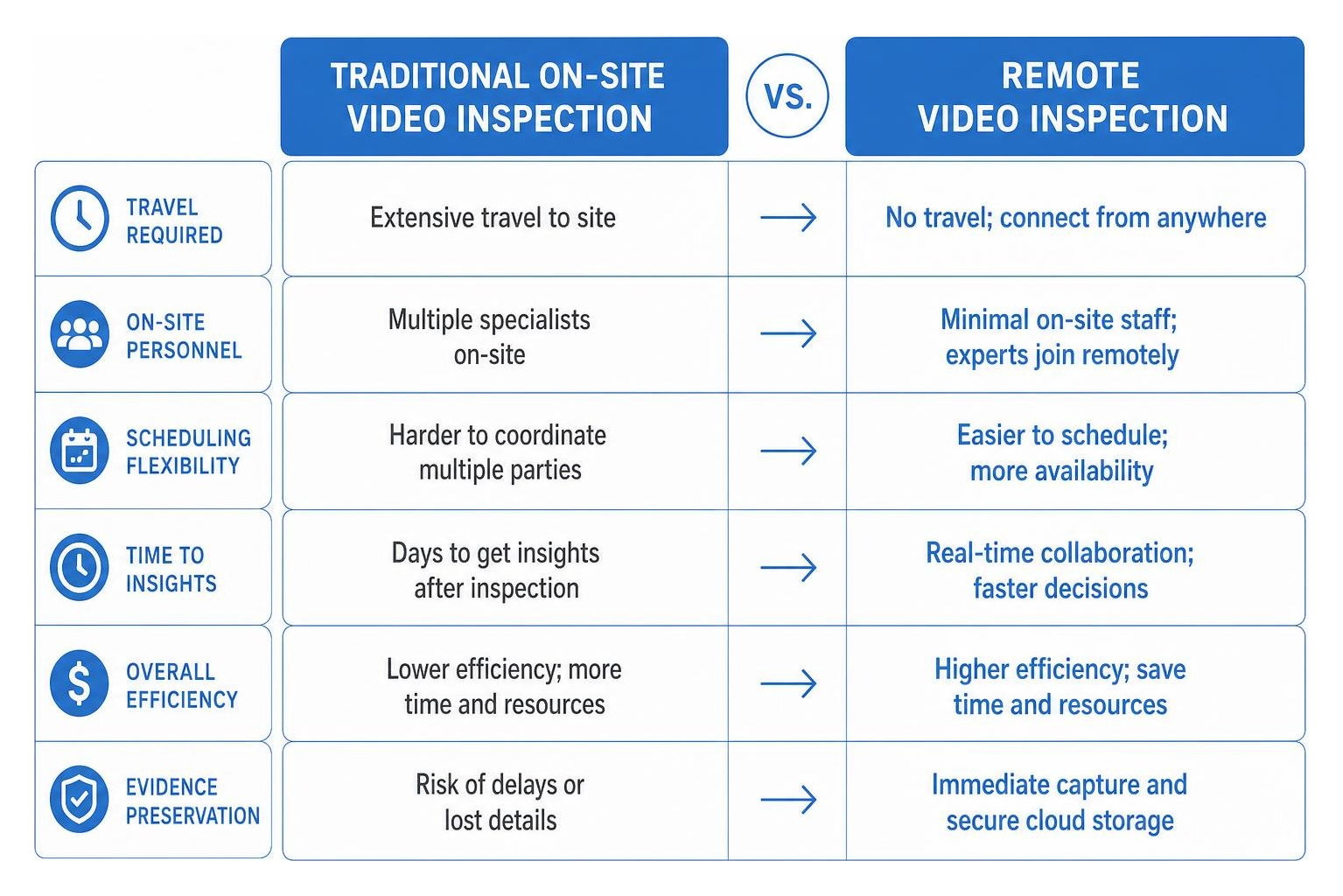
By leveraging the benefits of remote video inspections for the construction & building industry, modern teams can capture these critical details without needing to coordinate massive, expensive on-site delegations. Instead, a single technician or even a resident on-site can stream high-definition footage directly to off-site experts, saving time and preserving evidence before it is repaired or covered up.
Key Applications: When and Where to Deploy Video Documentation
Understanding when to deploy video is just as important as knowing how to use it. Video documentation should be integrated into multiple phases of a construction project’s lifecycle, particularly when disputes are anticipated or active.
During routine site walkthroughs, video provides a comprehensive baseline. Rather than taking isolated snapshots, a continuous walkthrough video captures the status of entire floors, framing layouts, and rough-in plumbing. This makes progress tracking simple and provides a reliable reference point if a subcontractor’s work is later covered by drywall. If a dispute arises regarding who damaged a specific utility line, we can simply roll back the walkthrough footage to verify the timeline.
Dynamic failures are another primary application. When a building system behaves unexpectedly under environmental stress, video is the only medium capable of capturing the problem in action. For instance, when high winds cause siding to rattle or heavy rains cause a basement to flood, a video inspection records the exact entry point of the water and the structural response to the wind.
Line-of-sight safety issues, complex warehouse layouts, and grading issues that cause improper water flow are also best documented through continuous video. It allows viewers to virtually "walk" the site, gaining an intuitive understanding of the physical layout that no 2D blueprint or static photo can replicate.
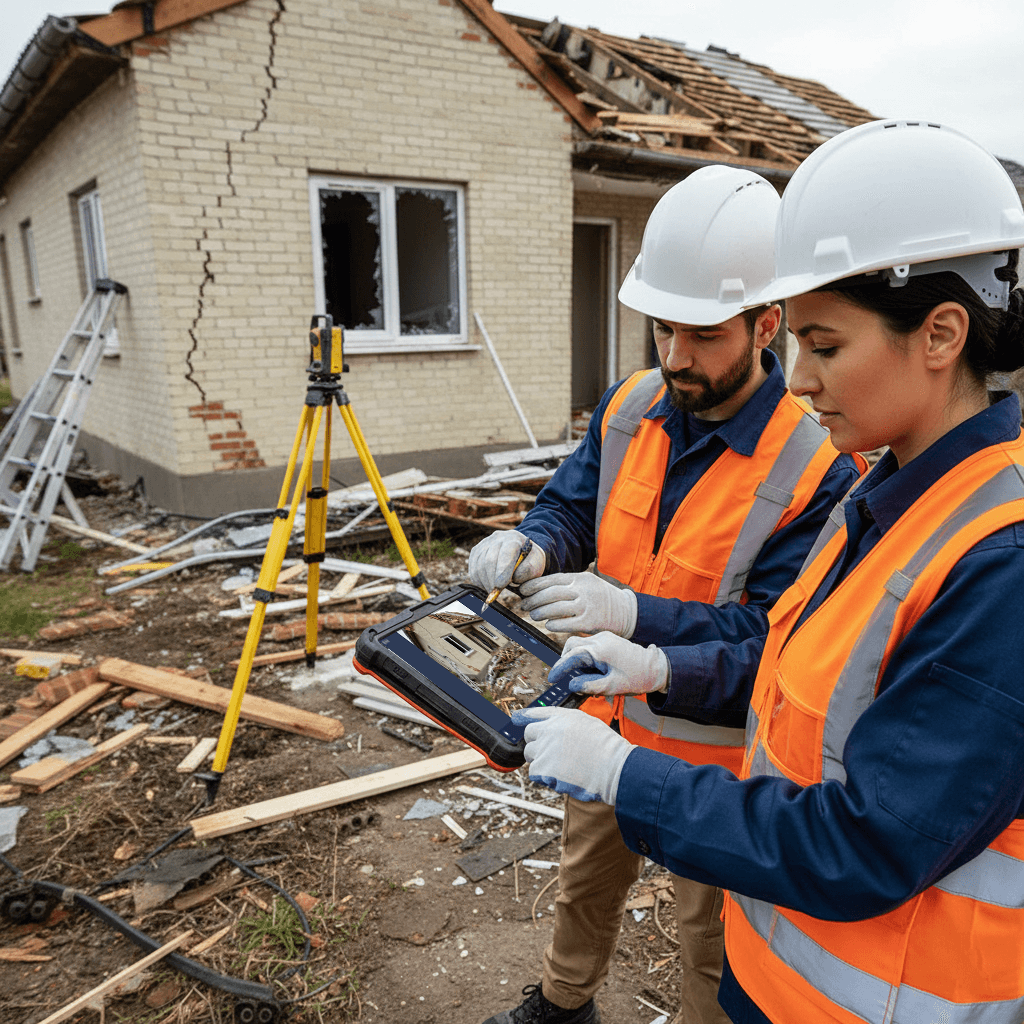
Documenting Specific Failures with a Construction Defect Video Inspection
Different building components fail in different ways, and video must be adapted to capture the unique characteristics of each defect:
- Mold and Water Intrusion: Water leaves a path. Video allows us to track moisture staining from its origin point down to where it pools, showing the continuous path of destruction.
- Grading and Sloping Issues: Standard photos cannot easily show a 2% slope mistake. A video showing water pooling against a foundation wall, or an inspector placing a digital level on a sloped slab, provides undeniable visual proof.
- Improper Framing: Video can sweep across an entire attic or floor system, highlighting missing joist hangers, over-spanned beams, and unblocked fire stops in one continuous, unedited take.
- Stucco, Siding, and Roofing Failures: Wind-driven rain and thermal expansion cause materials to move. Video captures the flexing of improperly fastened siding or the buckling of roofing membranes under heat.
- Drainage and Sewer Infrastructure: Some of the most expensive construction defects happen underground. Standard cameras cannot see inside a buried pipe. That is why specialized forensic drainage inspections are so critical. They utilize high-definition, self-leveling cameras to traverse sewer lines, mapping out bellies, cracked joints, and improper slopes that would otherwise remain hidden until a catastrophic backup occurs.
Pre-Construction Surveys and Boundary Documentation
Video inspections are not just for finding mistakes after a project is finished; they are also an excellent defensive tool before ground is ever broken. A pre-construction video survey documents the existing conditions of surrounding properties, public roads, and municipal infrastructure.
If a neighboring property owner later claims that your heavy excavation equipment caused cracks in their foundation, a pre-construction video provides the baseline proof of what cracks existed before work began.
These surveys are particularly valuable for documenting:
- Temporary and Permanent Easements: Showing the exact condition of the land before construction crews access it.
- Property Boundaries and Ingress/Egress Routes: Documenting existing road damage, sidewalk cracks, and landscaping.
- Landscape and Hardscape Conditions: Ensuring that any post-construction restoration matches the original state.
Using modern remote building inspections to conduct these pre-construction surveys allows developers and insurers to rapidly document vast areas, saving hours of administrative work while creating a secure, timestamped archive of the site.
Legal Admissibility and Evidence Preservation Under Colorado Law
For a construction defect video inspection to be useful in a legal dispute, it must be legally admissible. In Colorado, construction defect litigation is heavily governed by the Construction Defect Action Reform Act (CDARA), specifically under C.R.S. § 13-20-803.
Under this statute, claimants must provide construction professionals with a highly detailed, initial list of defects before a lawsuit can even be filed. This makes professional inspections essential in nearly 100% of cases. If your visual evidence is disorganized, lacks context, or cannot be verified, the defense may challenge its integrity, potentially delaying your claim or forcing expensive re-inspections.
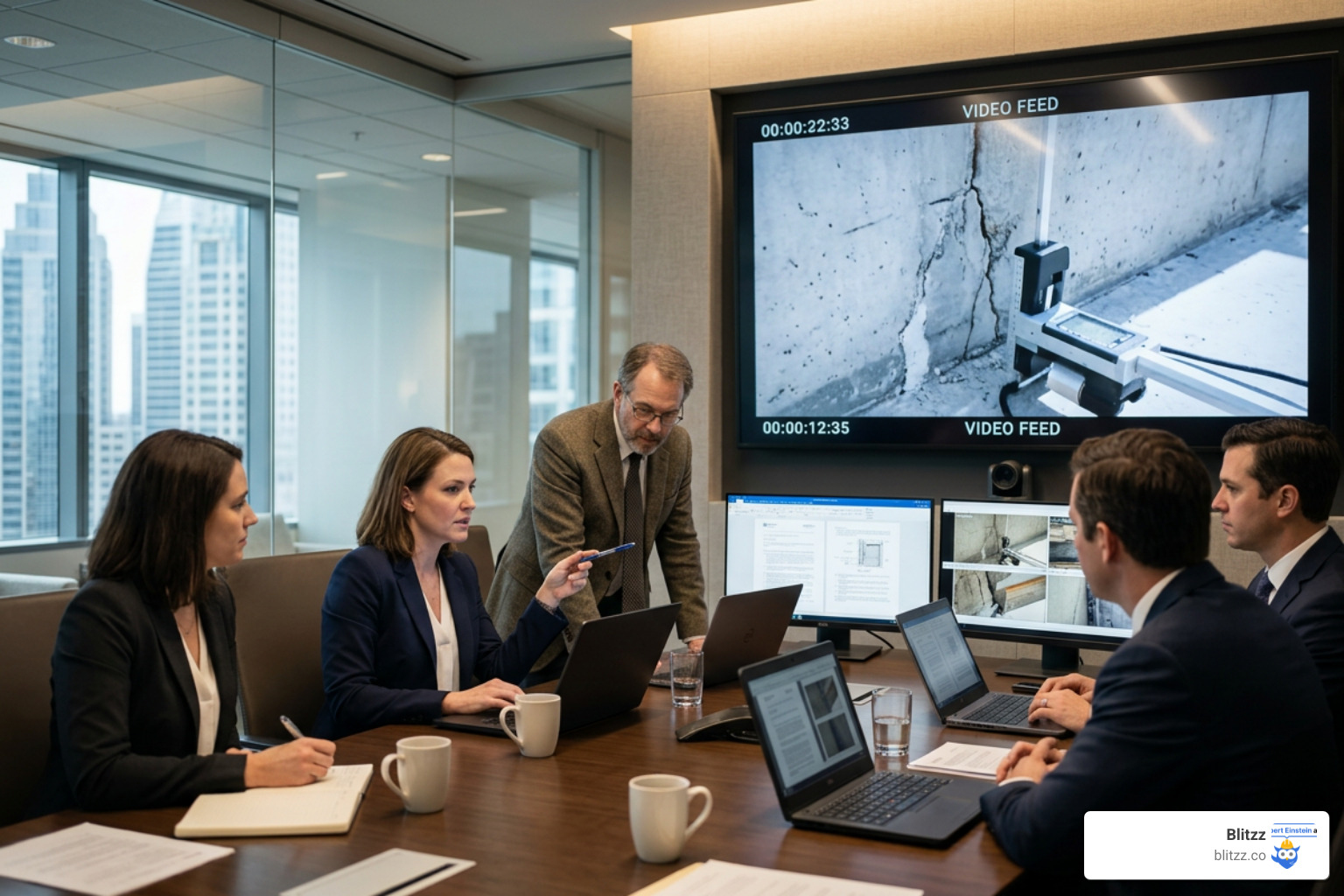
To ensure your video evidence stands up to scrutiny in a Colorado court, it must maintain absolute evidence integrity:
- Unedited, Raw Footage: While edited highlight reels are useful for quick presentations, the court will require access to the raw, unedited footage to prove that nothing was hidden or manipulated.
- Timestamped Metadata: Every second of footage must be embedded with metadata showing the exact date, time, and GPS coordinates of where the video was captured.
- Chain of Custody: We must be able to prove who captured the video, how it was stored, and that it was not altered from the moment of capture to its presentation in court.
- Expert Witness Foundation: A qualified expert (such as a structural engineer) must be able to testify that the video accurately represents the conditions they observed on-site.
This is where a construction defect attorney plays a vital role. They coordinate the inspection process, ensuring that the forensic videographer or inspector follows strict legal protocols. By working closely with legal counsel, we can structure the video walkthroughs to target the exact elements outlined in the CDARA notice of claim, building a cohesive, court-ready narrative from day one.
Technology, Tools, and Qualifications for Forensic Video Inspections
To capture forensic-grade evidence, we cannot rely on standard consumer smartphones alone. While modern phone cameras are incredibly sharp, they lack the specialized sensors and software integrations required to diagnose hidden structural failures.
Essential Hardware and Software for a Construction Defect Video Inspection
A professional defect investigation utilizes an array of advanced hardware:
- Thermal Imaging (Infrared) Cameras: Used in 85% of modern inspections, these cameras detect minute temperature differences, highlighting hidden water leaks behind drywall and missing insulation inside wall cavities.
- Moisture Meters: Pin-type and pinless moisture meters verify whether a dark spot on a video is an active leak or an old, dry stain.
- Drones: Equipped with 4K cameras, drones safely capture high-resolution imagery of roofs, high-rise facades, and chimney stacks without the need for dangerous scaffolding.
- Specialized Pipe Inspection Cameras: Systems like the Wöhler VIS 700 HD-Video Inspection System provide pan-and-tilt, high-definition internal views of wastewater lines, ventilation shafts, and flue gas systems, pinpointing cracks and blockages with electronic distance counters.
When conducting these complex reviews remotely, having the right tools for remote inspections is crucial. Software platforms must support real-time high-definition streaming, remote camera control (such as turning on the on-site device's flashlight or zooming in remotely), and instant AR annotations to highlight defects in real-time.
Inspector Qualifications and Professional Standards
The technology is only as good as the person operating it. A video captured by an untrained contractor is often dismissed as a mere "sales video" because it lacks systematic structure. To be legally defensible, inspections should be conducted or overseen by licensed professionals, such as:
- Licensed Structural Engineers (P.E.): To evaluate foundation movement and load-bearing framing.
- Registered Architects (AIA): To evaluate building envelope compliance and design deviations.
- Certified Forensic Consultants: Experts trained in ASTM standards for water testing and material failures.
These experts ensure that the inspection follows established guidelines, such as ASTM F1216 and ASTM F1743 for pipe linings, or local building codes. Furthermore, utilizing remote visual assistance tools not only speeds up this process but also ensures safety. We can see how remote inspections keep inspectors safe by allowing highly qualified, expensive experts to evaluate unstable structures, deep trenches, or high roofs from a safe distance, reducing on-site physical hazards.
Best Practices for Editing, Storing, and Presenting Video Evidence
Once a construction defect video inspection is complete, the raw footage must be managed carefully. Simply handing a lawyer or a judge a five-hour raw video file is a recipe for confusion.
To turn raw footage into a powerful legal tool, we must follow strict best practices for editing, storage, and presentation:
- Create a Master Copy: Always preserve the raw, unedited footage as your "Master" file. Never perform edits on the original file.
- Develop a Navigation Menu: For long inspections, edit the footage into clearly labeled chapters (e.g., "Chapter 1: Master Bathroom Leak," "Chapter 2: Attic Framing").
- Utilize Survey Overlays: Combine video footage with digital still photography, architectural blueprints, and survey overlays. Showing a video of a leaning wall side-by-side with a 3D laser scan or a structural drawing makes the defect immediately obvious.
- Implement Secure, Cloud-Based Storage: Store all footage on secure, redundant cloud servers with strict access controls to maintain the chain of custody.
- Keep Edits Objective: Do not add dramatic music, sound effects, or misleading transitions. The video must remain a neutral, factual record of the site.
When you prepare your case, deploying remote video inspections for construction simplifies this entire workflow. Modern platforms automatically catalog, timestamp, and geolocate every video clip, saving hours of manual editing and ensuring your evidence is organized and ready for mediation or trial.
Frequently Asked Questions About Construction Defect Video Inspections
Navigating construction defect litigation can be overwhelming. Here are some of the most common questions we hear regarding video inspections:
How does video help in construction defect mediation?
Mediation is all about finding a resolution before incurring the massive costs of a trial. Video is an incredibly persuasive tool during these negotiations. While a written report describing "water intrusion at the window sill" might be ignored, showing a 30-second video of water actively bubbling through a window frame during a rain simulator forces the defense to face reality. It eliminates debates over the severity of the issue, often leading to faster, more realistic settlement offers.
Can remote video inspections be used for legal claims?
Yes, absolutely! Remote video inspections are fully admissible in legal claims, provided they use secure, specialized software that verifies the location, date, and time of the recording. Because remote video inspections are here to stay, courts and insurance adjusters have widely accepted them as a reliable, objective method for documenting property conditions without requiring unnecessary travel.
What is the cost benefit of using video over traditional methods?
The cost savings are substantial. Traditional inspections require coordinating schedules for multiple experts (engineers, architects, lawyers, and contractors) to travel to the site, which can cost thousands of dollars per day in billable hours.
By utilizing remote video inspections, a single on-site technician can walk the property while off-site experts guide them in real-time. This reduces travel expenses, slashes inspection times by up to 70%, and delivers a much faster return on investment (ROI) for property owners and legal teams alike.
Conclusion
When it comes to proving a construction defect, a picture might be worth a thousand words — but a high-definition, interactive video is worth a thousand pictures.
At Blitzz, we help construction professionals, insurers, and legal teams transform how they document and evaluate properties. Our enterprise remote visual assistance software provides instant, browser-based video support that requires no app downloads. With features like real-time AR annotations, high-resolution screen sharing, and seamless CRM integrations, we make it easy to capture court-ready visual evidence while saving time and reducing on-site visits.
Ready to see how Blitzz can streamline your inspection workflow? Explore our Blitzz features today and change the way you inspect.

Blitzz Team
The Blitzz Team writes about remote video support, virtual inspections and field service. Our guides come from working with home builders, property managers, warranty teams, contact centers and field service organizations that use Blitzz to see and solve issues without a truck roll.