On this page
Short answer: Remote video inspections lower HVAC operating costs by replacing unnecessary site visits with a live video call. A technician or dispatcher sees the equipment through the customer's phone, diagnoses the issue, and only sends a truck when the job truly needs one. Savings come from fewer trips, shorter diagnosis time and better first-visit preparation.
Key takeaways
- Many HVAC calls can be triaged or resolved over live video, which avoids a wasted truck roll.
- Savings show up in fuel, drive time, labor hours and fewer repeat visits.
- Track a small set of metrics before and after rollout to prove your own ROI.
- Pick a tool customers can join from a text link with no app download, or adoption will stall.
- Photos and video saved to the job record also help with documentation and compliance.
Where HVAC operating costs come from
The cost of a traditional site visit
A typical service call starts with a drive. The technician arrives, looks at the unit and sometimes finds the problem could have been diagnosed in a few minutes on camera. Other times they find they brought the wrong part and need a second trip.
Each of those trips costs fuel, vehicle wear and paid hours. It also takes a technician away from a job that actually needed hands on the equipment. For more on how these costs add up, see the real cost of a truck roll.
Why HVAC contractors are changing the model
Customers expect fast answers and clear communication. Skilled technicians are hard to hire and retain. Contractors who use remote video inspections can get more out of the technicians they already have and respond to customers faster.
What remote video inspections are
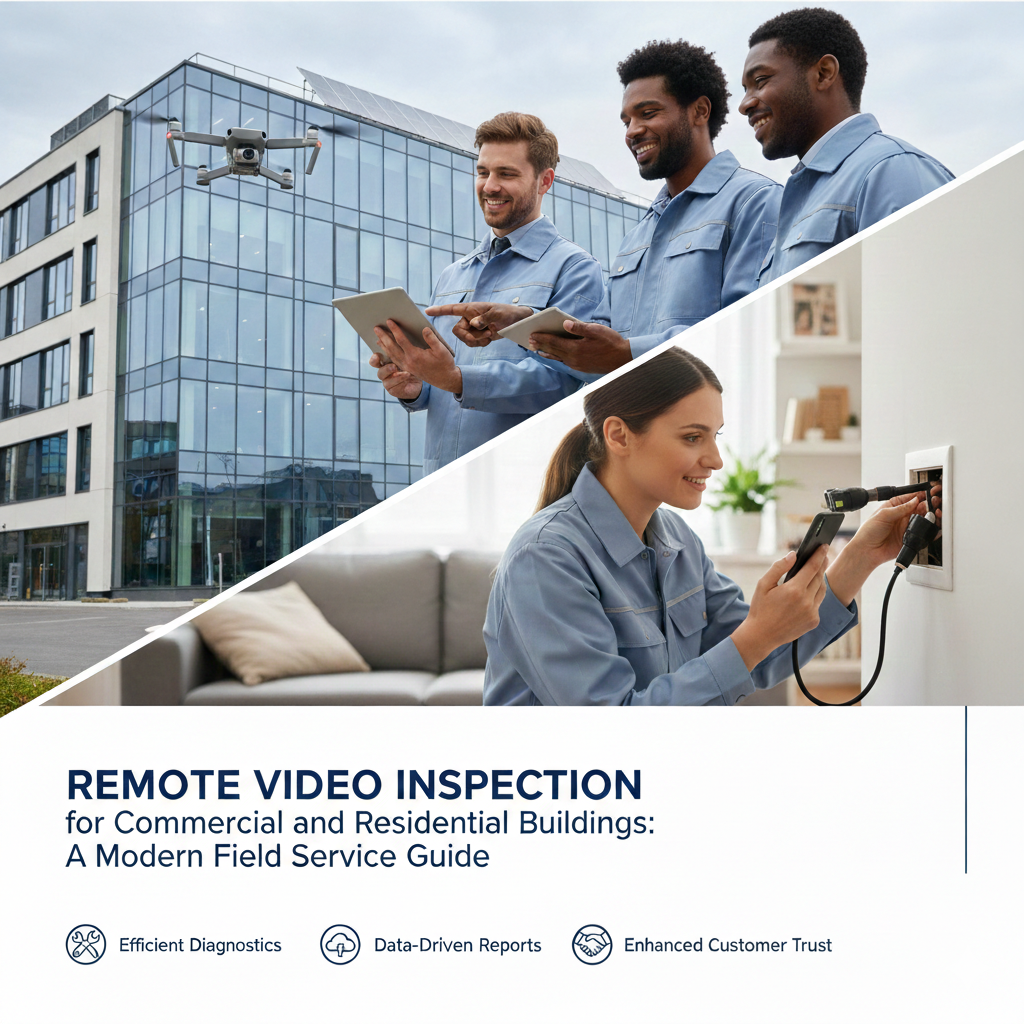
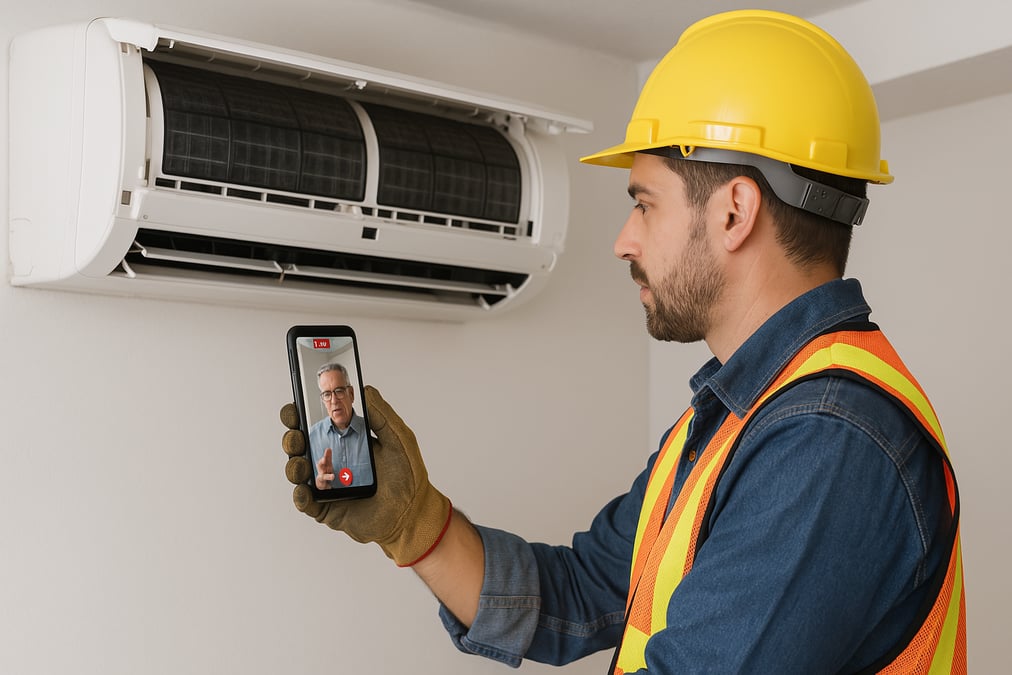
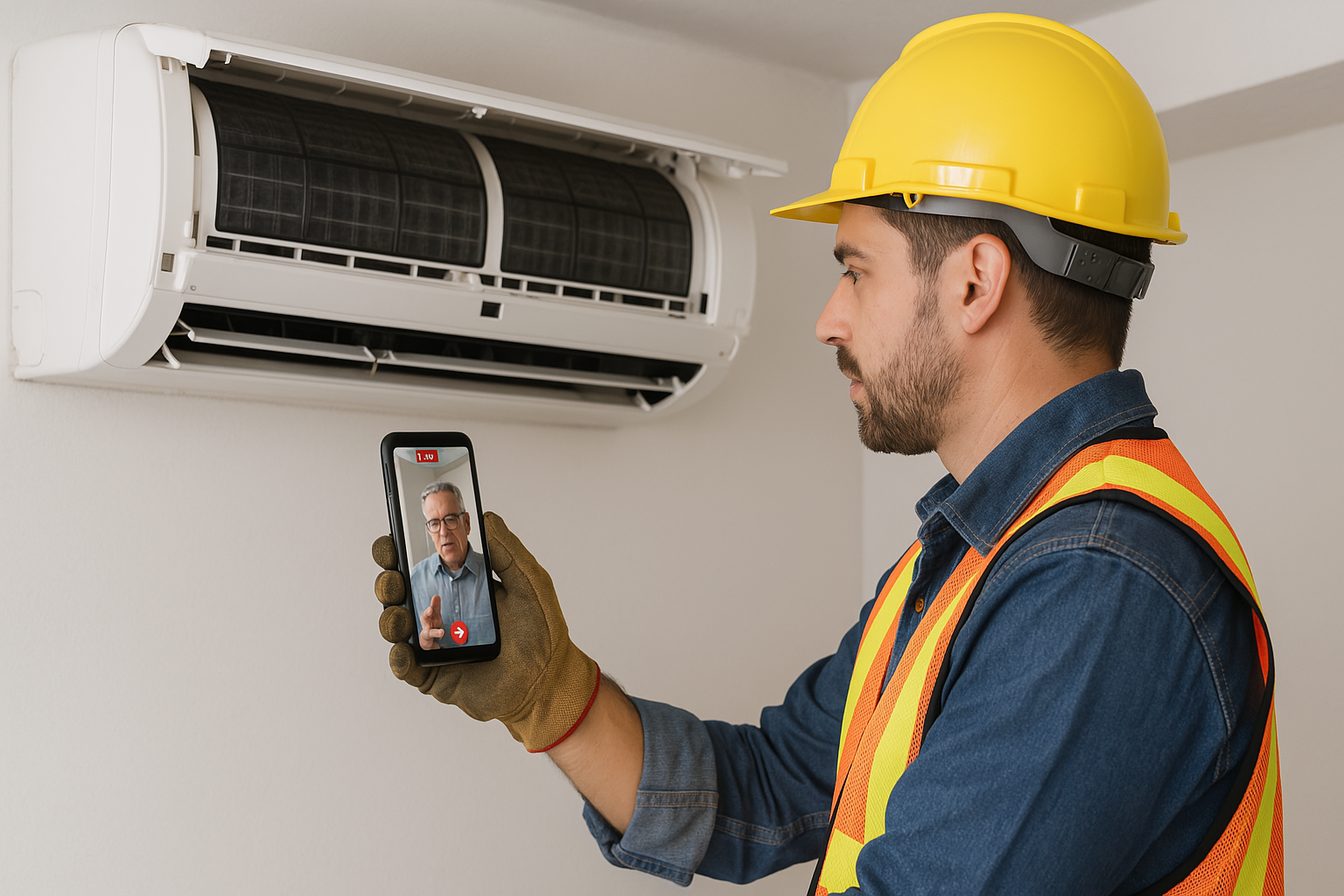
A remote video inspection is a live video session between your team and the person on site. The customer, a site contact or a junior technician points a phone camera at the equipment. Your expert sees what they see and guides them in real time.
With Blitzz, the customer joins from a text or email link in their mobile browser. There is no app to download. The expert can use an on-screen pointer and markup to show exactly which panel, valve or label to look at. OCR can read model and serial numbers from the data plate, and photos and video are saved to the record with time and location data.
Common HVAC use cases
- Triage of no-heat and no-cool calls before dispatch.
- Reading model and serial numbers to confirm parts and warranty status.
- Walking a customer through a thermostat reset, filter change or breaker check.
- Pre-installation site surveys and quote preparation.
- Post-job quality checks and maintenance documentation.
- Bringing a senior technician into a call to support a newer one in the field.
Remote video inspection vs. site visit
| Factor | Traditional site visit | Remote video inspection |
|---|---|---|
| Time to first look | Depends on schedule and drive time | Minutes after the customer opens the link |
| Travel cost | Fuel, vehicle wear, drive hours | None for the assessment |
| Parts preparation | Often confirmed on site | Confirmed before dispatch from the data plate |
| Documentation | Notes and photos taken manually | Photos and video saved with time and location data |
| Expert access | Only the technician on site | A senior expert can join the call |
Remote video does not replace every visit. Repairs that need tools and hands still need a technician. The goal is to make sure every truck that rolls is the right truck, with the right part, for a job that needs it. Our guide on remote visual assistance vs. site visits covers this decision in more detail.
How to measure the ROI
Upfront investment vs. ongoing savings
Rolling out remote video inspections involves software costs, some setup time and training. The ongoing savings come from every trip you avoid and every second visit you prevent. Your own numbers will depend on call volume, service area and job mix.
Steps to calculate your ROI
- Record your current average cost per truck roll, including labor, fuel and vehicle costs.
- Count how many calls each month are resolved remotely or avoided after a video triage.
- Count how many repeat visits are avoided because the right part was confirmed in advance.
- Multiply avoided trips by your cost per truck roll.
- Subtract software and training costs for the same period.
Metrics to track
- Truck rolls avoided per month
- First-time fix rate on dispatched jobs
- Time from customer call to diagnosis
- Jobs completed per technician per day
- Customer satisfaction scores
Measure these for a baseline period before rollout, then compare after 60 to 90 days of use.
Safety and documentation benefits
Fewer unnecessary site entries
Some HVAC equipment sits on rooftops, in crawl spaces or in tight mechanical rooms. A remote first look helps your team plan the visit, bring the right safety gear and avoid trips that were not needed. Read more on how remote inspections keep inspectors safe.
Records that support compliance
Photos and video captured during the session are saved to the job record with time and location data. That gives you a clear record of equipment condition and work performed. It helps with warranty claims, customer disputes and any standards your business needs to document.

Implementing remote video inspections in your business
Choose the right tool
Look for a tool that is easy for customers to use. A browser link with no app download removes the biggest barrier. Check that it works on weak connections, since basements and rooftops often have poor signal. Confirm it can connect to your CRM or service platform so recordings land on the right job.
Train your team and set rules
Decide which call types go to video first. Write a short script for dispatchers so customers know what to expect. Give technicians a few practice sessions and share early wins with the whole team.
How Blitzz supports HVAC contractors
Blitzz Inspect gives HVAC teams live video inspections that customers join from a link. Experts guide with pointer, markup and augmented reality, read labels with OCR and capture photos and video to the record. Multi-party calls let a senior technician join when a field tech needs help. AI call summaries reduce note-taking after each session.
Frequently asked questions
What is a remote video inspection for HVAC?
It is a live video session where a technician sees the equipment through the customer's or site contact's phone camera. The technician can diagnose issues, guide simple fixes and decide whether a site visit is needed.
How do remote video inspections save HVAC contractors money?
They reduce trips that do not need a technician on site and help confirm parts before dispatch. That cuts fuel, drive time and repeat visits.
Which metrics show ROI?
Track truck rolls avoided, first-time fix rate, time to diagnosis, jobs per technician per day and customer satisfaction. Compare a baseline period with the period after rollout.
Does the customer need to install an app?
Not with Blitzz. The customer taps a text or email link and the session opens in their mobile browser.
Related reading
- How to reduce truck rolls using remote video support
- Best remote video inspection software
- How remote video inspection can transform your business
Ready to cut unnecessary truck rolls? Book a demo or start a free trial.

Blitzz Team
The Blitzz Team writes about remote video support, virtual inspections and field service. Our guides come from working with home builders, property managers, warranty teams, contact centers and field service organizations that use Blitzz to see and solve issues without a truck roll.