
.png?width=120&height=55&name=Blitzz-Logo-right%20white%20eyes%20-%20not%20transparent%20(3).png)
Modern vehicles are no longer purely mechanical—they are increasingly digital ecosystems, equipped with advanced infotainment systems, driver assistance technologies, and integrated mobile applications designed to enhance the overall driving experience.
However, as these features become more sophisticated, they also become more difficult for the average driver to navigate.
Common areas of complexity include:
- Infotainment systems with layered menus and settings
- Driver assistance features that require configuration
- Mobile app integrations for connectivity and control
While these capabilities are designed to improve convenience and safety, many drivers find them unintuitive in real-world use. Even simple tasks—such as pairing a device or adjusting a setting—can become points of friction.
This gap between functionality and usability is increasingly reflected in customer support demand.
Support teams are now dealing with:
- A high volume of “how do I use this?” inquiries
- Longer wait times due to repetitive, low-complexity issues
- Frustrated drivers seeking immediate assistance
- Unnecessary dealership visits for non-mechanical concerns
From an operational perspective, these challenges create inefficiencies. From a customer experience standpoint, they introduce avoidable friction in what should otherwise be a seamless ownership journey.
To address this, automotive brands are beginning to adopt more effective support models.
Remote visual support provides a practical alternative by enabling real-time, visual interaction between support agents and drivers. Platforms like Blitzz allow agents to guide users directly within their context, reducing ambiguity and improving the speed and quality of resolution.
What is Remote Visual Support in Automotive?
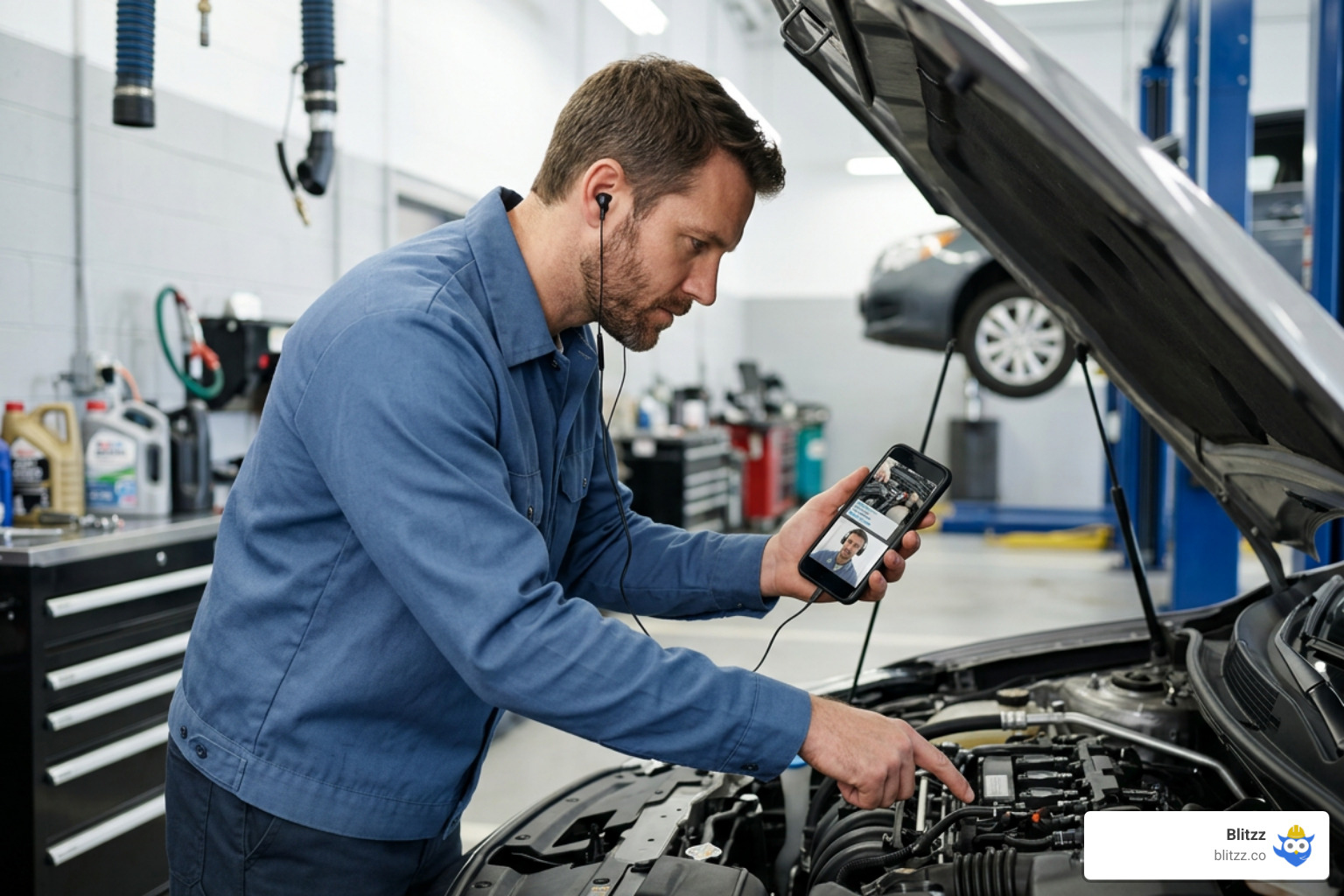
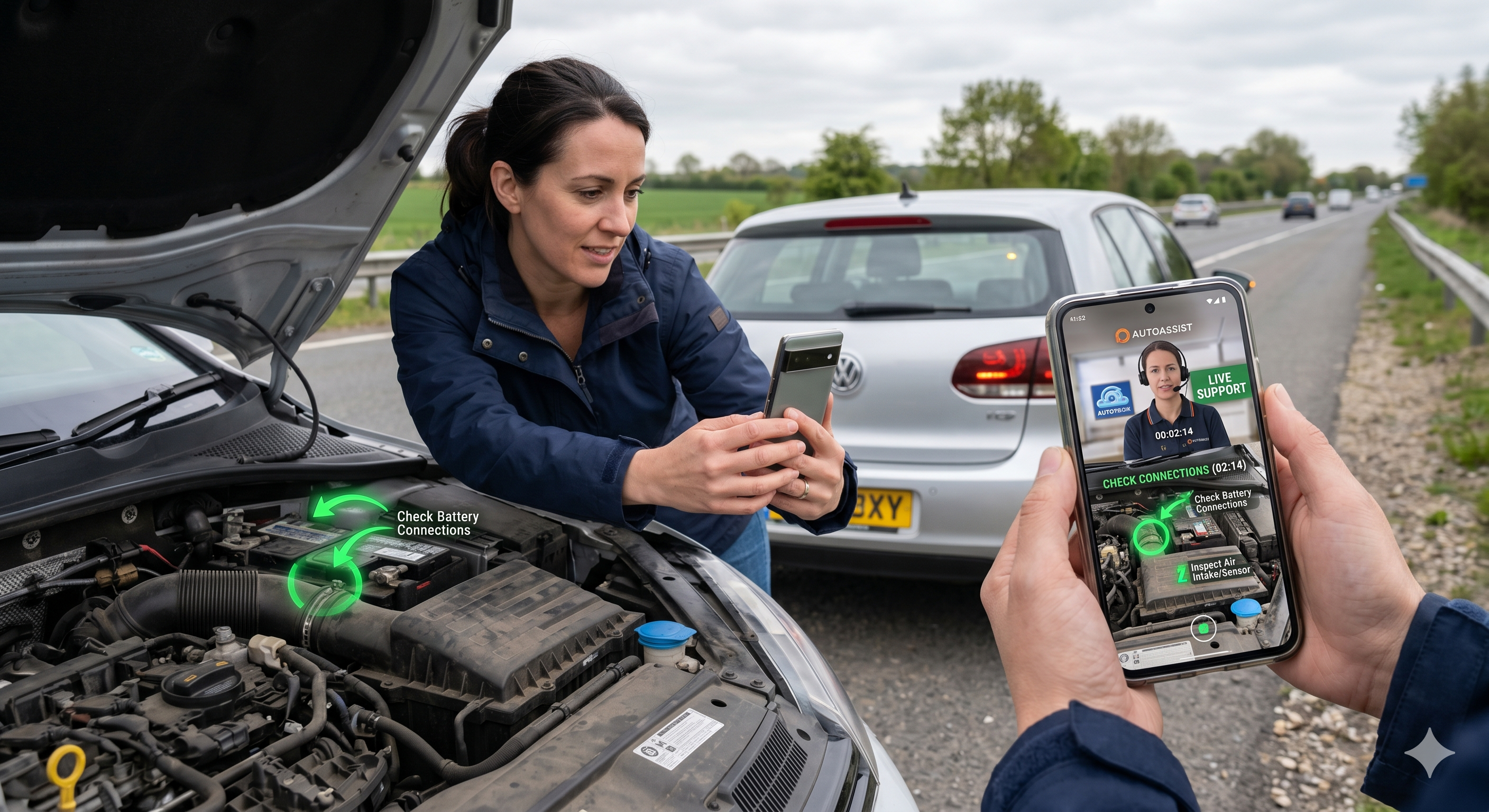
Remote visual support allows customer service teams to assist drivers through live video interaction, creating a more direct and contextual support experience.
Instead of relying solely on verbal explanations, agents can:
- See exactly what the driver is seeing in real time
- Understand the issue within its actual context
- Guide the driver step-by-step through the solution
- Use on-screen annotations to highlight specific actions
This approach is particularly effective for issues involving visual interfaces, where describing the problem over the phone often leads to confusion or misinterpretation.
In practice, the process is straightforward:
- A driver initiates a support request
- A live video session is established
- The agent observes the issue and provides guided assistance
By removing the need for guesswork, remote visual support allows issues to be identified and resolved more efficiently.
At its core, this model represents a shift in how support is delivered.
Rather than relying on explanation alone, it enables a more intuitive, observation-based approach—best described as a transition to “show, don’t tell” support, which is better aligned with the visual and interactive nature of modern vehicle systems.
Why Traditional Support is Failing Modern Drivers
As vehicle technology becomes more advanced, traditional support methods are increasingly misaligned with how drivers actually experience issues. Many of today’s challenges are visual, interface-driven, and context-specific—yet support is still largely delivered through channels that were designed for simpler, mechanical problems.
Voice Support Limitations
Voice-based support remains the default for many automotive brands, but it is not well-suited for resolving issues involving digital interfaces or system behaviour.
Agents are often required to rely on verbal descriptions, which can be unclear or incomplete. At the same time, drivers may struggle to accurately explain what they are seeing, especially when dealing with unfamiliar terminology or menu structures.
Common challenges include:
- Difficulty explaining visual or on-screen issues
- Miscommunication between driver and agent
- Extended call times due to repeated clarification
As a result, even simple issues can take longer to resolve than necessary. Read more about traditional phone support and remote video support.
Manuals Are Outdated
Owner’s manuals continue to serve as a reference point, but they are rarely effective in real-time support scenarios.
While comprehensive, they are often:
- Too long to navigate during a live issue
- Not structured for quick problem resolution
- Difficult for drivers to interpret without guidance
In practice, most drivers do not turn to manuals when they encounter a problem—they seek immediate, interactive support instead.
Dealership Dependency
When remote assistance fails to resolve an issue, the next step is often a visit to the dealership.
This approach introduces additional friction:
- It is time-consuming for the driver
- It increases operational costs for the brand
- It places additional load on service centres
In many cases, these visits are unnecessary, particularly when the issue is related to usability rather than hardware.
How Car Brands Use Remote Visual Support
To address these challenges, automotive brands are adopting remote visual support as a more effective way to assist drivers in real time. By enabling agents to see and guide interactions directly, this approach improves both resolution speed and overall support quality.
Real-Time Troubleshooting
Many common driver issues can be resolved quickly when agents have direct visibility into the problem.
Typical use cases include:
- Pairing Bluetooth devices
- Setting up or adjusting navigation systems
- Activating or configuring driver-assistance features
With real-time visual context, agents can identify the issue immediately and guide the driver through the correct steps without unnecessary back-and-forth.
Guided Feature Walkthroughs
Remote visual support also allows agents to provide structured, live walkthroughs of vehicle features.
This is particularly useful for:
- Navigating infotainment systems
- Connecting and syncing mobile applications
- Setting up voice commands and preferences
Rather than relying on static instructions or external resources, drivers receive hands-on guidance tailored to their specific situation.
Warning Light Assistance
Dashboard indicators are a common source of concern for drivers, especially when their meaning is unclear. Through a live visual session:
- The driver can show the dashboard in real time
- The agent can identify the warning indicator accurately
- Clear guidance can be provided on next steps
This reduces uncertainty and helps drivers make informed decisions without delay.
Pre-Service Diagnostics
Remote visual support can also be used as a preliminary step before scheduling a dealership visit. By assessing the issue remotely, support teams can:
- Determine whether in-person service is necessary
- Reduce unnecessary appointments
- Prioritise cases that require immediate attention
This not only improves operational efficiency but also enhances the overall customer experience by minimising disruption.
How Car Brands Use Remote Visual Support
To address the limitations of traditional support models, automotive brands are increasingly adopting remote visual support as a more effective way to assist drivers in real time.
By allowing agents to see what the driver sees and guide interactions directly, this approach removes much of the ambiguity associated with voice-based support. As a result, issues can be resolved more efficiently, while maintaining a higher level of accuracy and consistency across support interactions.
Real-Time Troubleshooting
Many common driver issues can be resolved quickly when agents have direct visibility into the problem.
Instead of relying on descriptions, agents can observe the issue as it happens and provide immediate, contextual guidance. This is particularly effective for everyday usability concerns such as:
- Pairing Bluetooth devices
- Setting up or adjusting navigation systems
- Activating or configuring driver-assistance features
With real-time visual context, agents can identify the root cause more quickly and guide the driver through the correct steps without repeated clarification or back-and-forth communication.
Guided Feature Walkthroughs
Remote visual support also enables agents to provide structured, live walkthroughs of vehicle features, helping drivers become more confident in using their vehicle’s capabilities.
This is especially useful when introducing or troubleshooting:
- Infotainment system navigation
- Mobile app connectivity and syncing
- Voice command setup and personalisation
Rather than directing drivers to manuals or pre-recorded content, agents can provide hands-on guidance tailored to the driver’s specific situation, making the learning process more intuitive and efficient.
Warning Light Assistance
Dashboard indicators are a common source of concern, particularly when their meaning is not immediately clear.
Through a live visual session:
- The driver can share a real-time view of the dashboard
- The agent can accurately identify the warning indicator
- Clear and relevant guidance can be provided on the appropriate next steps
This reduces uncertainty and allows drivers to respond appropriately, whether the issue requires immediate attention or simple monitoring.
Pre-Service Diagnostics
Remote visual support can also serve as a preliminary step before scheduling a dealership visit, helping to determine the appropriate course of action.
By assessing the issue remotely, support teams can:
- Confirm whether an in-person service visit is necessary
- Reduce unnecessary appointments for non-critical concerns
- Prioritise cases that require immediate or specialised attention
This not only improves operational efficiency but also enhances the overall customer experience by reducing unnecessary disruption and saving time for both the driver and the service network.
Real-World Scenario: Supporting Drivers in Real Time
Automotive brands such as BMW have set a high standard for customer experience, and support is an increasingly important part of that expectation.
Consider a common scenario.
A driver is unable to connect their smartphone to the vehicle’s infotainment system. While the issue itself is relatively minor, resolving it through traditional support channels can be time-consuming and unclear.
With remote visual support, the process becomes more direct:
- The driver initiates a support request
- A live video session is established via Blitzz
- The agent views the infotainment interface in real time
- Step-by-step guidance is provided based on what the agent sees
Because the agent can observe the issue directly, there is no need for repeated clarification or guesswork. The driver follows along visually, and the issue is resolved within minutes. In this case, the outcome is straightforward but meaningful. The issue is resolved quickly, without the need for a dealership visit, reducing both customer effort and operational overhead.
Key Benefits for Automotive Brands
The adoption of remote visual support delivers measurable improvements across both operational efficiency and customer experience.
Faster Resolution Times
By enabling real-time problem solving, agents can diagnose and resolve issues more quickly, reducing the duration of support interactions.
Reduced Call Volume
Clear, visual guidance increases the likelihood that issues are resolved during the first interaction, resulting in fewer repeat calls and follow-ups.
Fewer Dealership Visits
Many non-mechanical concerns can be addressed remotely, helping to reduce unnecessary service appointments and associated costs.
Improved Customer Experience
Drivers receive timely, accurate, and personalised assistance, contributing to a more seamless and premium support experience.
Higher First-Call Resolution (FCR)
With improved visibility and context, agents are better equipped to resolve issues during the initial interaction, minimising the need for escalation.
The Role of Automation
The value of remote visual support extends beyond the live interaction, particularly when integrated with tools like Zapier.
Once a session is completed, automated workflows can be triggered to ensure that all relevant actions are handled without manual effort. These may include:
- Automatically generating and sending session reports
- Updating customer records within CRM systems
- Notifying internal teams or stakeholders
- Triggering follow-up actions or scheduling workflows
By combining visual support with automation, each interaction becomes part of a broader, connected process rather than a standalone event. In effect, visual support captures the interaction, while automation ensures that the outcome is documented, distributed, and acted upon—creating a more efficient and scalable support system.
The Future of Automotive Customer Support
As vehicles continue to evolve, the expectations placed on customer support will evolve alongside them.
Several trends are already shaping the direction of automotive support:
- Increasing feature complexity across vehicle systems
- Growing demand for immediate, on-demand assistance
- A shift from reactive support models to more proactive engagement
- A transition from voice-based communication to visual interaction
These changes indicate a broader transformation in how support is delivered. Remote visual support is positioned to become a standard capability for automotive brands, aligning more closely with the needs of modern drivers and the nature of connected vehicle technologies.
Conclusion
Remote visual support represents a practical and scalable approach to modernising automotive customer service.
By enabling real-time, visual interaction, brands can reduce operational inefficiencies, improve resolution outcomes, and deliver a more consistent support experience.
As customer expectations continue to evolve, this capability is no longer optional—it is increasingly becoming a competitive differentiator for automotive brands seeking to deliver high-quality, responsive support.To explore how this approach can be implemented within your organisation, book a demo and see how Blitzz supports real-time, visual driver assistance at scale.
Related readings:
Speed Matters: How Live Video Support Cuts Resolution Time, Boosts Efficiency