
.png?width=120&height=55&name=Blitzz-Logo-right%20white%20eyes%20-%20not%20transparent%20(3).png)
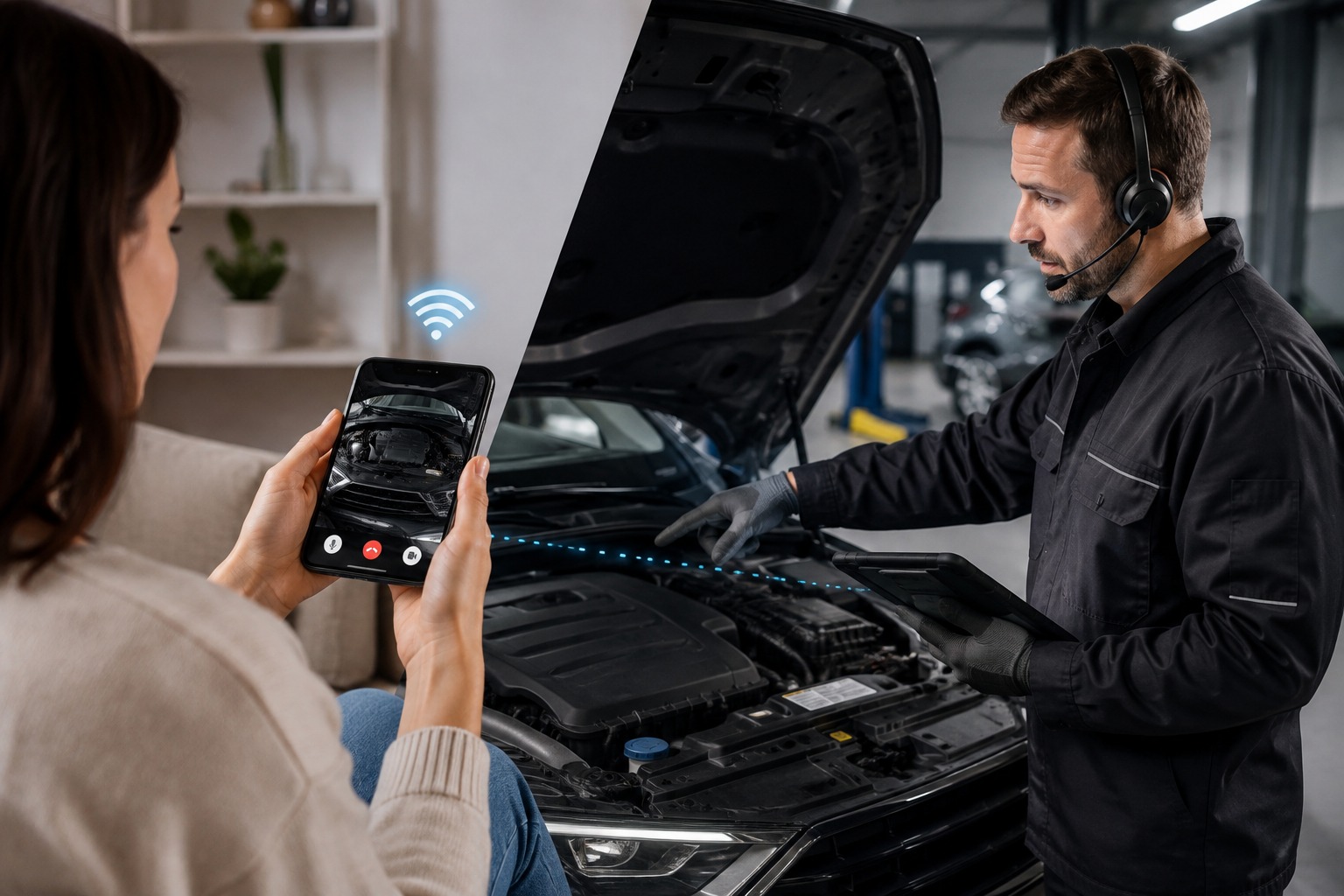
Remote vehicle diagnostics reduce dealership service visits by letting a service advisor or technician see a vehicle's warning lights, dashboard displays, and visible symptoms over live video before a customer ever drives in, allowing many issues to be diagnosed, explained, or even resolved remotely — and letting dealerships reserve in-person service bays for the visits that genuinely require a technician's hands on the vehicle. For a service department juggling limited bay capacity and customers who often show up for issues that turn out to be minor, this shift changes both the cost of running the service department and the experience customers have with it.
This guide looks at why unnecessary service visits are such a common problem for dealerships, how remote video diagnostics change that dynamic, and what this means for service department efficiency and customer satisfaction.
Why Dealership Service Departments Struggle With Unnecessary Visits
Dealership service departments operate under a persistent capacity constraint: a limited number of service bays and technicians, set against unpredictable customer demand. A meaningful share of that demand turns out to be avoidable — customers who schedule a service appointment because a dashboard light came on, because they heard an unfamiliar noise, or because something about the vehicle “feels off,” without any way to get a preliminary read on whether the issue is serious before committing to a visit.
Some of these visits end with a technician spending only a few minutes resolving something straightforward — a loose gas cap triggering a check engine light, a tire pressure sensor needing a simple reset, a maintenance reminder the customer didn't understand. Others turn out to require parts that weren't ordered in advance because nobody knew what the actual problem was until the vehicle was already on the lift. Both scenarios represent inefficient use of the service department's most constrained resource: bay time.
Where Traditional Phone-Based Triage Falls Short
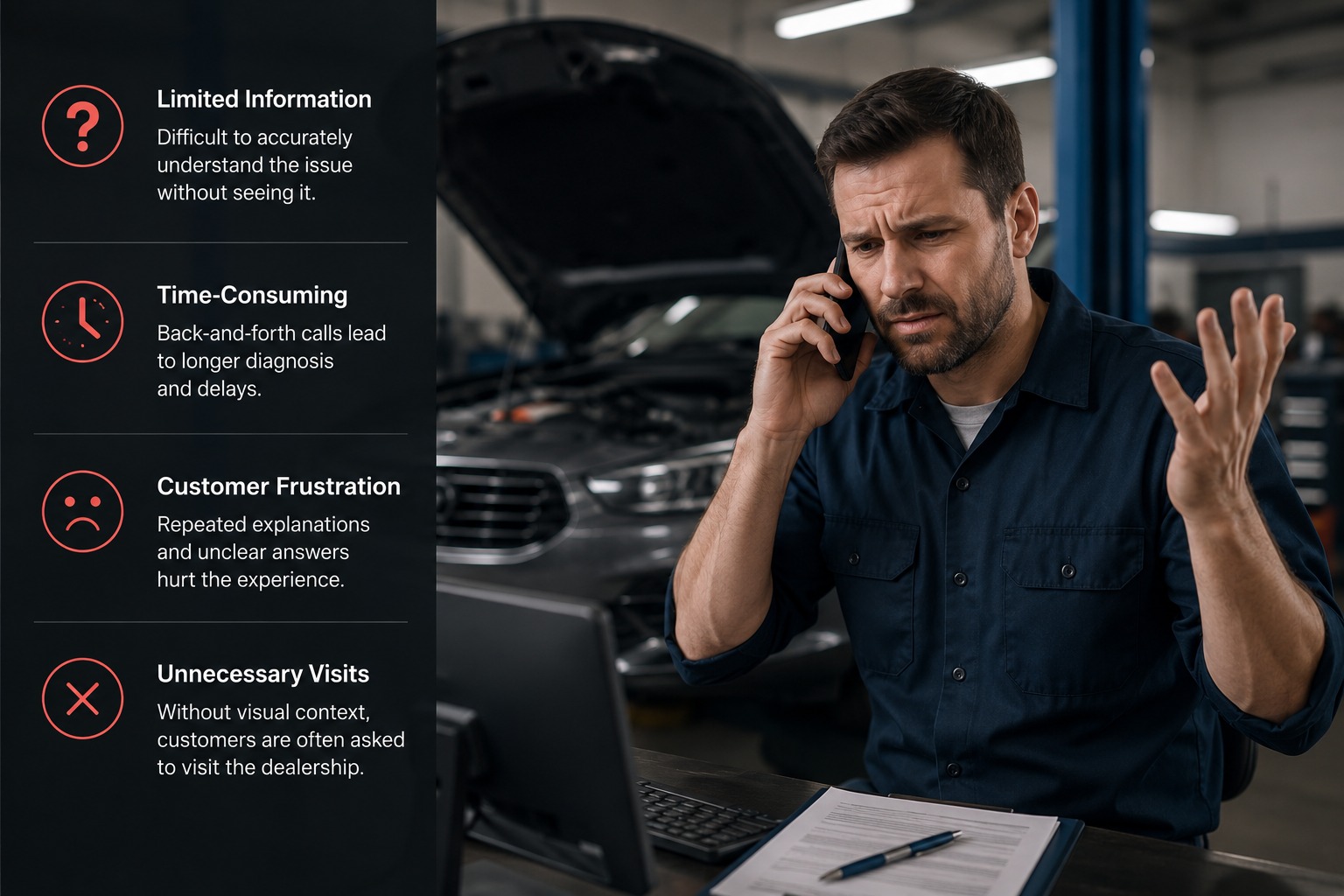
Service advisors have long tried to triage these situations over the phone, asking customers to describe what they're seeing or hearing before scheduling an appointment. This approach runs into a familiar limitation: most customers aren't equipped to describe a dashboard warning light, an engine noise, or a visible issue with the technical precision needed for an advisor to make an informed judgment.
A customer might describe a warning light as “the orange one” without knowing whether it's a check engine light, a tire pressure warning, or something more specific to their vehicle's dashboard layout. They might describe a noise as “a clicking sound” without being able to convey where it's coming from or under what conditions it happens. This ambiguity means service advisors often default to scheduling a standard appointment regardless of actual urgency, since there's no reliable way to distinguish a five-minute fix from a half-day repair over a phone description alone.
How Remote Video Diagnostics Change the Triage Process
Remote video support addresses this gap directly by letting a service advisor or technician see the actual vehicle before the customer ever drives in. A customer receives a secure video link — sent by text or email — that opens their camera directly in a browser, without requiring an app download, and can then show the service team exactly what's happening: the dashboard display, a warning light, a visible leak, or the source of an unusual noise.
This changes the triage process in several concrete ways:
Warning lights get identified accurately, not guessed at. Rather than relying on a customer's uncertain description, the service team can see exactly which indicator is illuminated and, in many cases, immediately explain what it means and how urgently it needs attention.
Minor issues can sometimes be resolved without a visit at all. A tire pressure warning caused by seasonal temperature changes, a maintenance reminder light that doesn't indicate an actual problem, or a simple reset a customer can perform themselves are all issues that a video call can resolve directly, without any need for the vehicle to come in.
Genuine issues get properly prepared for in advance. When a technician can see a visible symptom — a leak, a damaged component, a specific dashboard code — before the vehicle arrives, the service department can order the right parts and allocate appropriate bay time in advance, rather than discovering the scope of the repair only after the vehicle is already on the lift.
Urgent issues get flagged and prioritized appropriately. A video call can help distinguish a genuinely urgent safety issue from a minor annoyance, allowing the service department to prioritize scheduling accordingly rather than treating every reported issue with the same urgency.
Why AI-Assisted Diagnosis Adds Further Value
Video alone solves the description problem, but a service advisor still has to correctly interpret what they're seeing, and dashboard warning systems, error codes, and visible symptoms vary considerably across manufacturers, models, and model years. An advisor who primarily works with one brand may not immediately recognize an unfamiliar warning light from a different manufacturer, or may not have memorized every possible dashboard indicator across a wide range of vehicles a multi-brand dealership group might service.
AI-powered visual recognition addresses this by identifying the specific vehicle, reading dashboard displays and warning indicators directly from the video feed, and matching what it sees against manufacturer documentation and known issue patterns — effectively extending every advisor's diagnostic capability to cover vehicles and warning systems they may not have personally encountered before. Rather than an advisor needing to look up an unfamiliar warning light or consult a colleague, the matching explanation and recommended next step can surface automatically during the call itself.
A Practical Example
Consider a customer whose dashboard shows an unfamiliar warning light after starting their car on a cold morning. In a traditional phone-based triage, the service advisor would ask the customer to describe the light's color and any accompanying symbols, likely getting an imprecise answer, and would probably default to scheduling a same-day or next-day appointment just to be safe, since there's no reliable way to rule out something serious over the phone.
With remote video diagnostics, the same customer instead connects via a video link from their driveway. The advisor, supported by AI-powered recognition, immediately identifies the vehicle and reads the specific warning indicator directly from the dashboard display, recognizing it as a common cold-weather tire pressure alert rather than an engine-related concern. The advisor can explain this to the customer on the spot, suggest checking tire pressure once temperatures rise, and avoid an unnecessary service visit entirely — freeing that bay slot for a customer with a genuine repair need.
Why This Matters for Service Department Economics
Every unnecessary service visit consumes bay time, technician labor, and administrative overhead that could otherwise go toward billable repair work or toward customers with genuinely urgent needs. Reducing the volume of low-value visits — the loose gas caps, the easily explained warning lights, the maintenance reminders that don't require any action — directly frees up capacity for the service work that actually generates revenue and requires hands-on expertise.
This also affects customer experience in a way that compounds over time. A customer who drives in for what turns out to be a five-minute fix, after taking time off work and waiting in a service line, tends to leave less satisfied than one who gets the same explanation over a two-minute video call from their own driveway. Multiplied across a dealership's full customer base, this difference in experience has a real effect on service department satisfaction scores and repeat business.
Reducing Diagnostic Time Once a Vehicle Does Come In
Remote video diagnostics don't only help before a visit — they can also shorten the diagnostic phase once a vehicle genuinely does need to come in. A brief video call before the appointment, capturing a visible symptom or reproducing a noise under specific conditions, gives the technician a head start on diagnosis before the vehicle is even on the lift, reducing the time spent re-discovering information that could have been gathered in advance.
This is particularly valuable for intermittent issues — a noise that only happens under certain conditions, a warning light that comes and goes — where a video captured at the moment the symptom occurs is far more useful than a customer's after-the-fact description once they've arrived at the dealership and the symptom is no longer present.
Supporting Multi-Brand and Multi-Location Dealership Groups
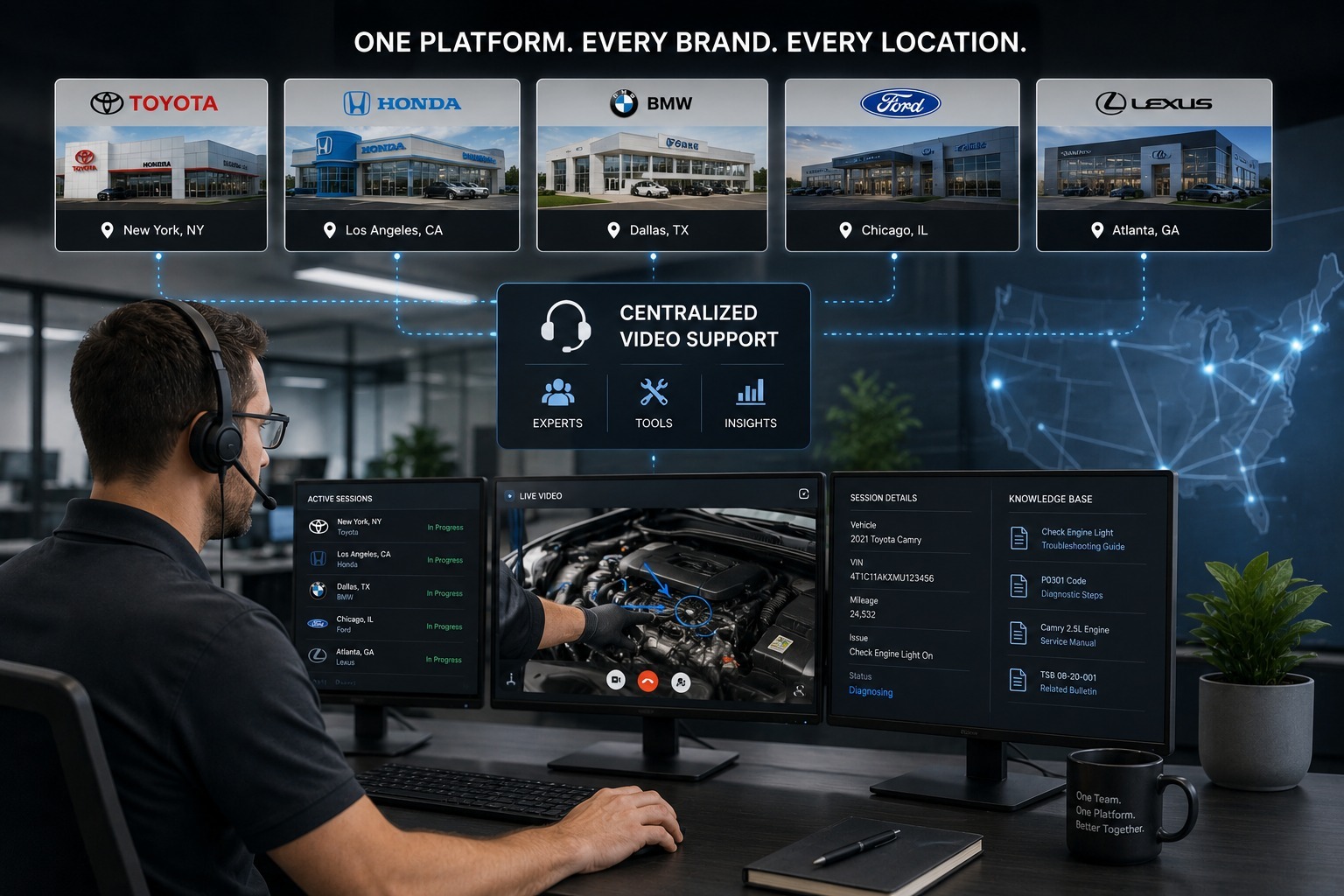
Larger dealership groups often service multiple vehicle brands across several locations, which multiplies the challenge of consistent diagnostic quality. An advisor trained primarily on one brand's dashboard conventions and common issues may be less confident triaging a different manufacturer's vehicle. AI-assisted visual recognition, trained across a dealership group's full brand portfolio, helps standardize triage quality regardless of which advisor takes a given call or which brand the customer drives — reducing the dependency on any single advisor's personal experience with a specific manufacturer.
What Kinds of Issues Are Best Suited to Remote Triage
Not every automotive issue can be resolved or fully diagnosed remotely, but several categories are particularly well suited to video-based triage:
Dashboard warning lights and indicators. Many warning lights can be identified and explained accurately over video, often resolving customer uncertainty without requiring a visit at all.
Visible damage or fluid leaks. A visible leak, a damaged component, or exterior damage can often be assessed well enough over video to determine urgency and prepare for the right repair in advance.
Unusual noises with a visible source. Where a noise is associated with a visible symptom — a loose component, visible wear — video can help confirm what's happening, though sound-only symptoms remain harder to diagnose remotely.
Maintenance and service reminders. Many customers aren't sure whether a reminder light indicates a required action or a routine notification, a distinction a quick video call can resolve immediately.
What Still Requires an In-Person Visit
It's important to be clear that remote video diagnostics aren't meant to replace in-person service for every issue. Mechanical problems that require physical inspection, issues that depend on driving the vehicle to reproduce, and repairs that need hands-on diagnostic equipment still require the vehicle to come in. The goal of remote triage isn't to avoid service visits altogether, but to ensure that every visit scheduled is genuinely necessary, and that the ones that are necessary are better prepared for in advance.
Common Questions About Remote Vehicle Diagnostics
Does remote video diagnosis replace the need for a technician to physically inspect the vehicle? No. It helps triage and prepare for visits more accurately, but mechanical issues requiring hands-on inspection or specialized diagnostic equipment still require the vehicle to be brought in.
Can this help with intermittent issues that aren't happening during the call? Partially — a customer can often reproduce a symptom during the call if it's related to something visible or a specific action, though purely intermittent issues that can't be reproduced on demand remain harder to diagnose remotely.
Does this work across different vehicle makes and models? Effectiveness depends on how well the underlying AI recognition has been trained across a dealership's specific brand portfolio and vehicle range, since dashboard layouts and warning systems vary significantly by manufacturer.
How does this affect service appointment scheduling? Remote triage helps distinguish urgent issues from minor ones, allowing service departments to prioritize scheduling more accurately and prepare parts and bay time in advance for confirmed repairs.
Does this require customers to download an app? Most implementations connect through a secure browser-based link requiring no app download, which helps ensure more customers actually complete the video session rather than abandoning the process.
The Bottom Line
Dealership service departments operate with limited bay capacity against unpredictable and often avoidable customer demand, much of which stems from uncertainty that a phone call alone can't resolve. Remote video diagnostics close that gap by letting a service advisor see the actual vehicle, warning light, or symptom before a customer ever drives in — resolving straightforward issues immediately, better preparing for genuine repairs in advance, and reserving limited service capacity for the visits that truly need it. For dealerships looking to improve both service department efficiency and the customer experience surrounding it, remote video diagnostics address one of the most persistent inefficiencies in how service visits get triaged in the first place.