
.png?width=120&height=55&name=Blitzz-Logo-right%20white%20eyes%20-%20not%20transparent%20(3).png)
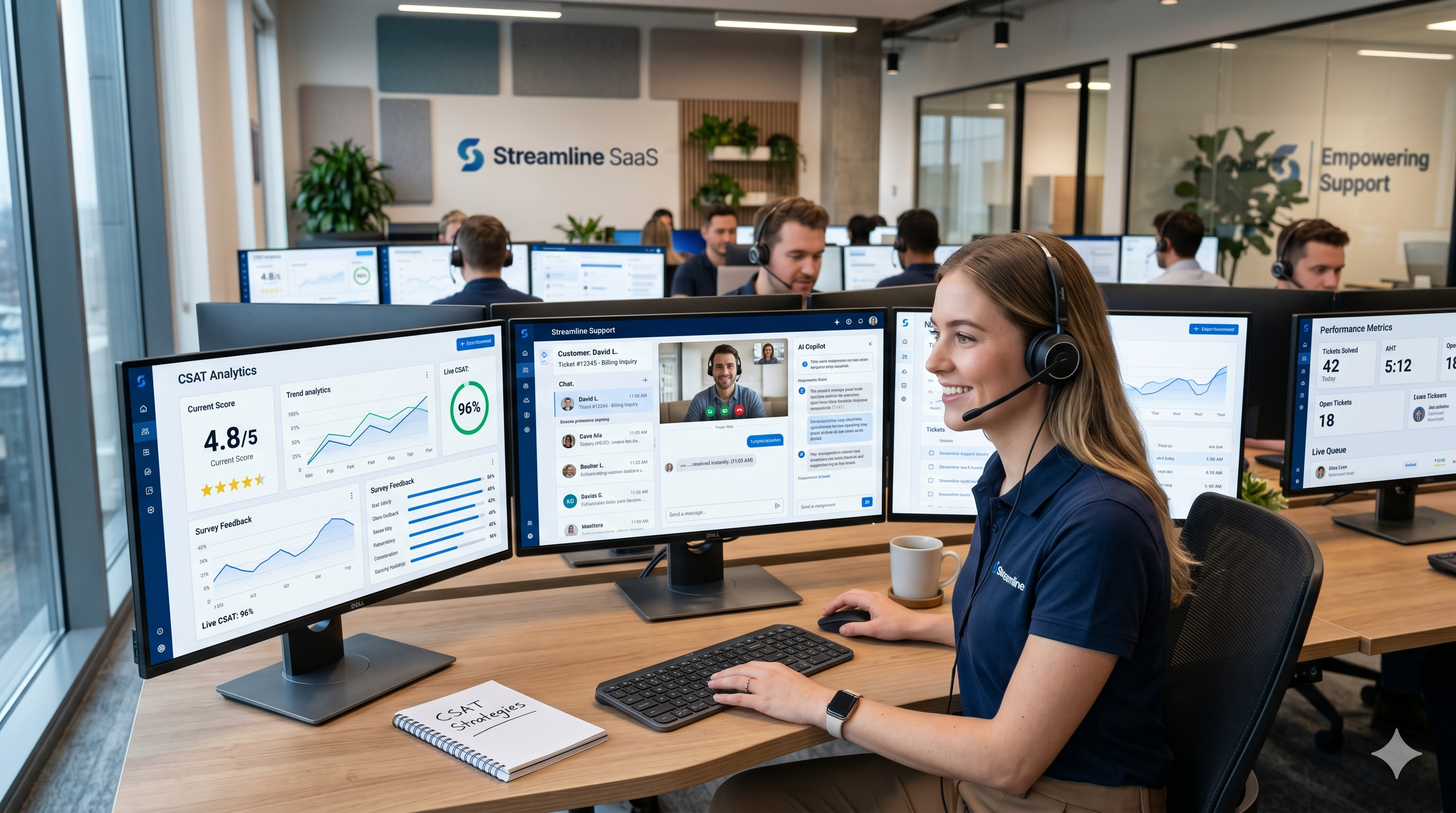
In the competitive SaaS landscape, your product might get customers through the door, but exceptional customer support is what keeps them subscribed year after year. Customer Satisfaction (CSAT) scores have become one of the most critical metrics for SaaS companies, directly influencing churn rates, expansion revenue, and brand reputation. A high CSAT score signals that your customers feel valued, heard, and supported, while a declining score is often the first warning sign of trouble ahead.
The challenge for SaaS businesses is that customer expectations have skyrocketed. Today's users expect instant responses, personalized solutions, and proactive guidance, all while navigating increasingly complex software products. Meeting these expectations requires more than just a ticketing system and a support team. It demands a strategic approach built on proven SaaS customer support best practices that transform reactive customer service into a competitive advantage.
In this article, we'll explore 12 actionable SaaS customer support best practices that can significantly boost your CSAT scores and turn your support team into a revenue-driving powerhouse.
1. Implement Visual Support with Co-Browsing and Video Assistance
Traditional text-based support often leads to frustrating back-and-forth exchanges, especially when customers struggle to describe technical issues. Visual support tools like co-browsing and live video assistance allow agents to see exactly what customers are experiencing in real time. This eliminates miscommunication, reduces resolution times, and creates a more human connection.
When agents can guide customers through their screens visually, complex issues get resolved in minutes rather than hours. Platforms like Blitzz Concierge enable support teams to launch instant video sessions without requiring customers to download apps or create accounts, making visual support accessible to users of all technical backgrounds.
2. Build a Comprehensive Self-Service Knowledge Base
Modern SaaS customers prefer to solve problems on their own before reaching out to support. A well-organized knowledge base with searchable articles, video tutorials, and step-by-step guides empowers users to find answers instantly. This not only improves customer satisfaction but also reduces the volume of incoming tickets, allowing your team to focus on complex issues that truly require human intervention.
Make sure your knowledge base is regularly updated, easy to navigate, and includes content for different user skill levels. Track which articles are most viewed and which searches return no results to continuously refine your content strategy.
3. Offer Omnichannel Support Without Sacrificing Continuity
Customers expect to reach you on their preferred channels, whether that's email, chat, phone, social media, or in-app messaging. However, omnichannel support is only effective when conversations flow seamlessly between channels. A customer who starts a conversation via chat shouldn't have to repeat their issue when they switch to email or phone.
Invest in a unified support platform that consolidates all customer interactions into a single thread, giving agents complete context regardless of where the conversation originated. Solutions that integrate directly with platforms like Zendesk ensure this continuity is built right into your existing workflow, delivering the smooth, frustration-free experience that drives high CSAT scores.
4. Prioritize Speed Without Compromising Quality
Response time is one of the strongest predictors of customer satisfaction in SaaS. Studies consistently show that customers expect first responses within minutes, not hours. However, speed without resolution is meaningless. Your goal should be to balance rapid acknowledgment with thorough, accurate solutions.
Set clear SLAs for both first response time and resolution time, then monitor performance closely. Using the right remote tech support software can automate ticket acknowledgment, route them to the right agents, and provide initial troubleshooting steps while customers wait for human assistance.
5. Personalize Every Interaction
Generic, scripted responses are the fastest way to tank your CSAT scores. Today's customers expect support agents to know who they are, what plan they're on, and what issues they've experienced in the past. Personalization shows customers that they're valued as individuals, not just ticket numbers.
Equip your agents with a 360-degree view of each customer, including their subscription details, usage patterns, previous support interactions, and any open issues. This context allows agents to provide tailored solutions and proactively address related concerns before they become problems.
6. Train Your Team on Both Technical and Soft Skills
SaaS support requires a unique blend of technical expertise and emotional intelligence. Agents need to understand the product deeply enough to troubleshoot complex issues, but they also need the communication skills to explain solutions clearly and empathize with frustrated customers.
Invest in ongoing training programs that cover product updates, troubleshooting techniques, active listening, de-escalation strategies, and written communication. Role-playing exercises and shadowing senior agents can help newer team members develop the confidence and competence needed to handle challenging situations.
7. Use Customer Feedback to Drive Continuous Improvement
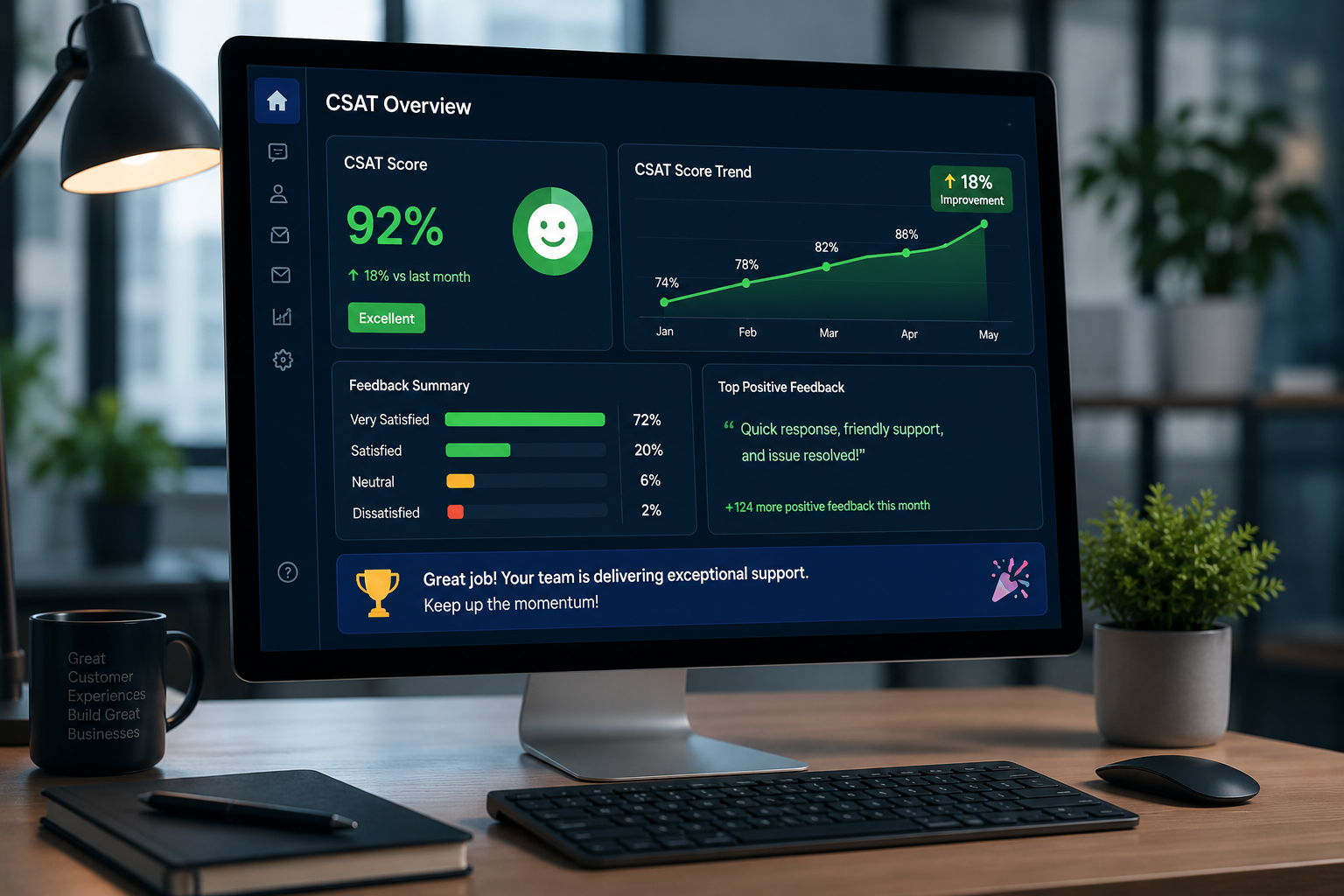
CSAT scores tell you how customers feel, but they don't tell you why. To truly improve satisfaction, you need to dig deeper into the qualitative feedback behind the scores. Send post-interaction surveys, conduct periodic customer interviews, and analyze support ticket patterns to identify recurring pain points.
Share this feedback across your organization, not just within the support team. Product, engineering, and marketing teams can all benefit from understanding what customers are struggling with and what they love about your service.
8. Implement Proactive Support Through Customer Health Monitoring
The best customer support happens before customers even realize they have a problem. By monitoring product usage, login frequency, feature adoption, and other behavioral signals, you can identify at-risk customers and reach out proactively with helpful resources or check-ins.
This proactive approach not only prevents churn but also delights customers who feel like you're genuinely invested in their success. Tools that give your agents the flexibility to deliver support on their customer's preferred terms make it easy to trigger personalized outreach based on specific usage patterns or warning signs.
9. Empower Agents with Autonomy and Decision-Making Authority
Nothing frustrates customers more than agents who have to escalate every decision or repeatedly say "let me check with my manager." Empower your support team with the authority to make decisions, offer refunds within certain limits, extend trials, and resolve issues without bureaucratic delays.
Trusting your agents to use their judgment leads to faster resolutions, more satisfied customers, and more engaged employees. Set clear guidelines for what agents can do independently, then trust them to execute within those boundaries.
10. Leverage AI and Automation Strategically
Artificial intelligence and automation can dramatically improve support efficiency when used thoughtfully. Chatbots can handle common questions, route tickets intelligently, and provide instant answers to frequently asked questions. AI-powered remote support tools can also help agents respond more quickly and accurately, with features like augmented reality guidance and intelligent issue recognition.
However, automation should enhance human support, not replace it. Customers should always have an easy way to reach a real person when needed, and AI tools should be transparent about their capabilities and limitations. The goal is to use technology to handle routine tasks so your human agents can focus on the high-value interactions that truly impact CSAT.
11. Create a Customer-Centric Culture Across the Organization
Exceptional customer support isn't just the support team's responsibility. It requires buy-in from every department, from product development to sales to leadership. When your entire organization is aligned around customer success, the impact on CSAT scores is profound.
Encourage cross-functional collaboration by sharing customer insights widely, involving support agents in product decisions, and recognizing employees who go above and beyond for customers. When everyone in the company sees themselves as part of the customer experience, magic happens.
12. Measure What Matters and Act on the Data
Finally, you can't improve what you don't measure. Beyond CSAT, track metrics like Net Promoter Score (NPS), Customer Effort Score (CES), first contact resolution rate, average handle time, and ticket backlog. Each of these provides a different lens into your support performance.
The key is to use these metrics as a starting point for action, not just reporting. Set specific, measurable goals for improvement, identify the root causes of underperformance, and implement targeted initiatives to drive better outcomes. Regular reviews of your metrics with your team keep everyone focused and accountable. Understanding why visual support drives better outcomes across all of these KPIs can help you choose the right tools to move the needle.
Final Thoughts
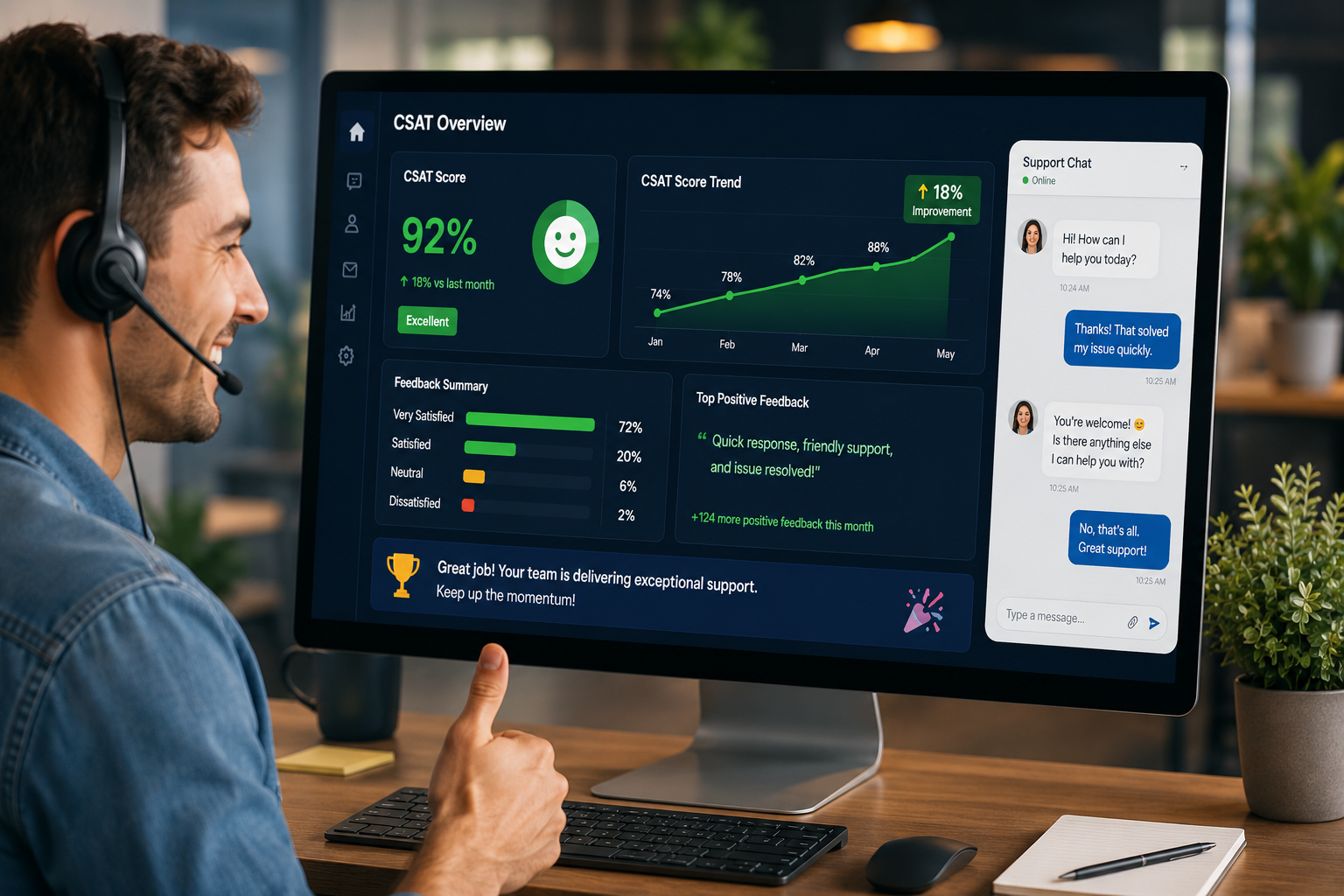
Boosting CSAT scores in the SaaS industry isn't about implementing a single magic bullet. It's about consistently executing on multiple fronts, from the tools you use to the culture you build. The 12 best practices outlined above provide a comprehensive framework for transforming your customer support operation into a true competitive advantage.
Remember that customer satisfaction is a journey, not a destination. Customer expectations will continue to evolve, and your support strategy must evolve with them. By embracing enterprise-grade cobrowsing and visual support, investing in your team, and putting customers at the center of everything you do, you'll not only boost your CSAT scores but also build a loyal customer base that drives sustainable growth for years to come.
Ready to see how visual support can transform your CSAT scores? Get in touch with the Blitzz team to learn how leading SaaS companies are delivering 5-star customer experiences.
Related readings:
- 5 SaaS Customer Support Best Practices for Higher CSAT Scores
- How Visual Remote Assistants Are Redefining Customer Support in 2025
- The Best Remote Tech Support Software for Call Centers
- Get Your Eyes on the Problem with AI & AR Remote Customer Support
- Offer Customers the Flexibility They Want


.jpg)