
.png?width=120&height=55&name=Blitzz-Logo-right%20white%20eyes%20-%20not%20transparent%20(3).png)

A claims file is only as strong as the documentation behind it. An adjuster who photographs damage during a field visit is building the evidence that will support — or fail to support — a settlement decision, a fraud investigation, or a dispute that ends up in appraisal or litigation months later. When that documentation is a handful of unverified phone photos, the file is only as strong as the adjuster's memory of the visit.
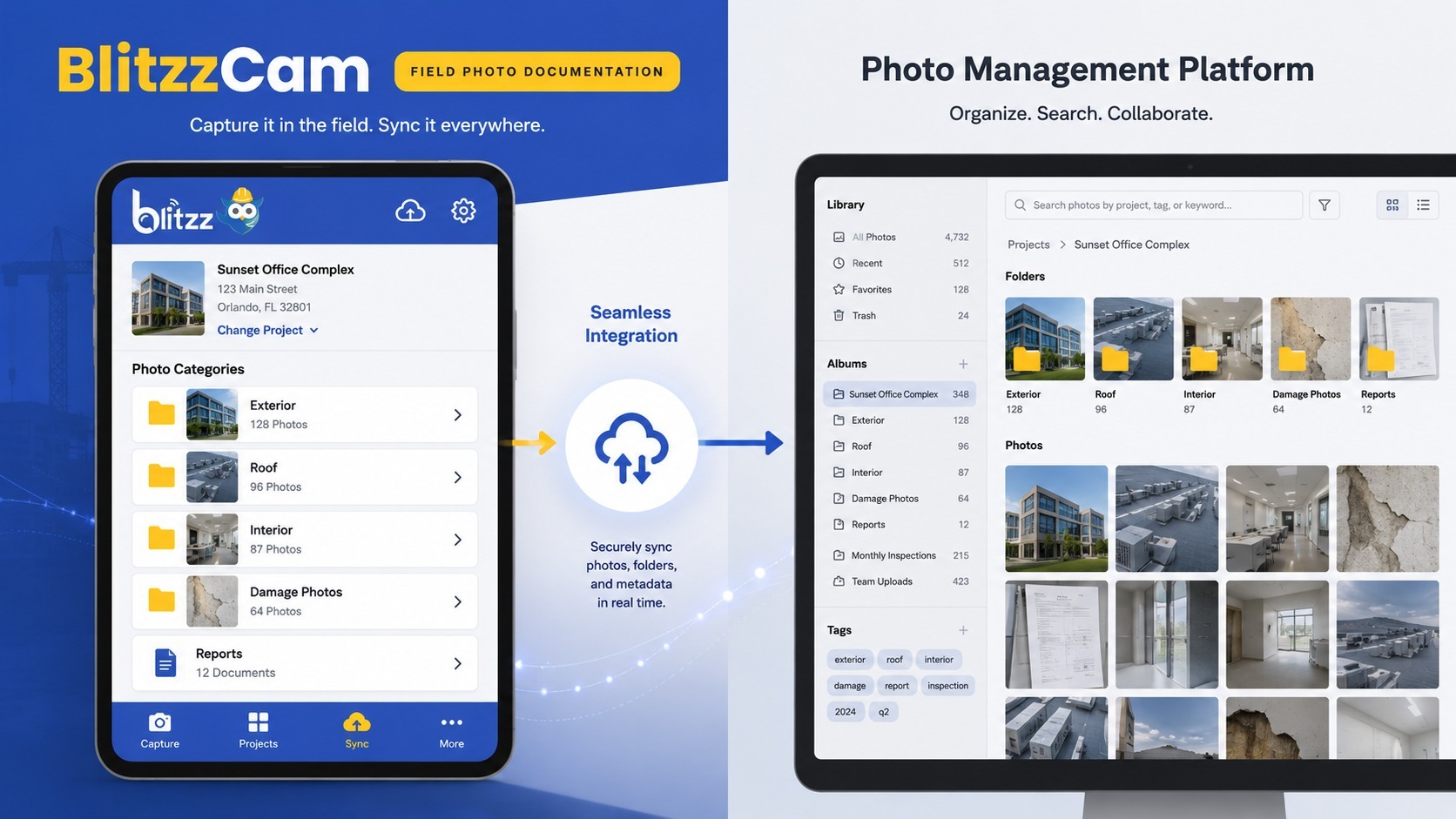
BlitzzCam gives adjusters a way to build a stronger record from the start. Every photo taken through it is automatically stamped with GPS location and a timestamp, then filed under the correct claim — creating a verified, organized record that holds up to scrutiny far better than an unlabeled camera roll.
This piece looks at how that documentation gets used across the claims lifecycle, from the initial field visit through settlement, and where it can help with fraud prevention and disputes.
Why Claims Documentation Quality Determines Outcomes
Insurance claims live or die on documentation. A disputed claim, a fraud investigation, or an appraisal disagreement all come down to the same underlying question: what evidence exists showing the actual condition of the property or vehicle, and how credible is that evidence? An adjuster relying on unverified phone photos is in a weaker position to answer that question than one with a documented, time-stamped record.
This matters at every point in the claims process, not just the ones that escalate into disputes. Even routine, undisputed claims move faster and settle more confidently when the underlying documentation is clear and well-organized rather than something the adjuster has to reconstruct from memory or a mixed camera roll.
What a Verified Photo Adds to a Claim File
A standard photo shows what damage looked like. A BlitzzCam-verified photo shows what the damage looked like, exactly where, and exactly when — because GPS location and a timestamp are attached automatically the moment the photo is captured, and that verification stays with the photo through storage and sharing.
This distinction becomes critical the moment a claim is questioned. If a policyholder or a third party disputes when damage occurred, or claims it was pre-existing, an adjuster with verified documentation has a defensible answer: here is the verified condition, at this location, on this date. Without that verification, it's a matter of the adjuster's word against a competing account.
Documenting Property Damage During Field Visits
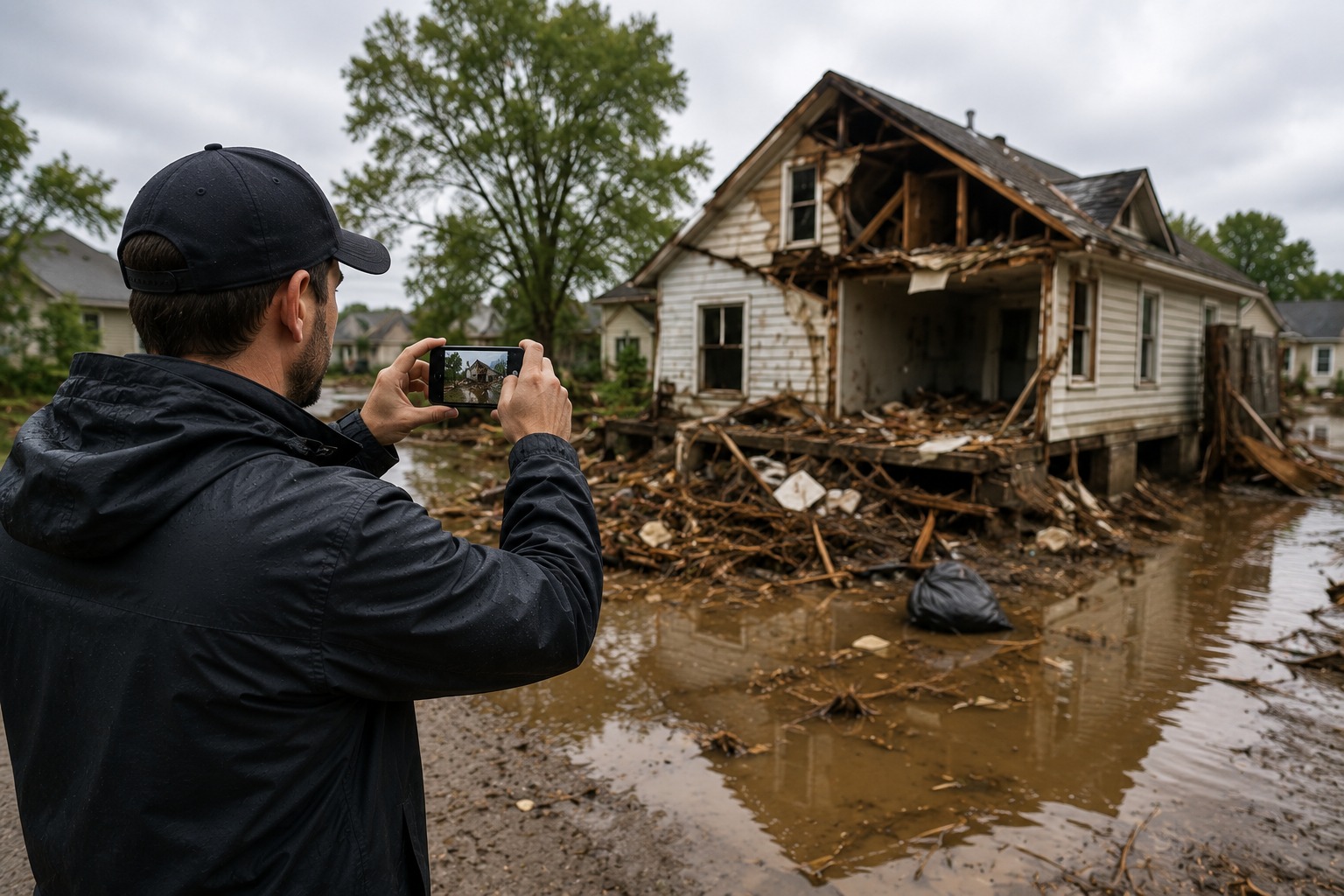
During a field inspection, an adjuster using BlitzzCam photographs damage the same way they always would — room by room, angle by angle — but every photo is automatically verified and filed under the correct claim as it's taken. There's no separate step of labeling or organizing images after the visit; the documentation is structured and retrievable from the moment it's captured.
This matters most for adjusters handling a high caseload, where organizing photos manually after every visit adds up to meaningful administrative time across dozens of open claims.
Organizing Photos by Claim Number Automatically
Adjusters managing multiple open claims at once benefit directly from BlitzzCam's automatic filing by project — in this context, by claim. Photos from one claim don't get mixed up with photos from another, and there's no risk of misattributing an image to the wrong policyholder or property, which is a real risk when relying on a standard camera roll across a busy caseload.
This organization also makes claims easier to hand off between adjusters — a claim reassigned mid-process comes with a complete, organized photo history that a new adjuster can review without needing the original adjuster to walk them through where everything is stored.
Sharing Documentation With Policyholders and Third Parties
Claims documentation often needs to be shared beyond the adjuster's own file — with the policyholder, with a contractor providing an estimate, or with a third-party appraiser reviewing a disputed valuation. BlitzzCam's portal sharing lets an adjuster send a link that any of these parties can view directly, without an app download or a batch of email attachments that strip out the original verification.
This transparency can also help settle claims faster — a policyholder who can see the same verified documentation the adjuster is working from is often more willing to accept a settlement figure than one asked to simply trust the adjuster's written estimate.
Supporting Fraud Prevention and SIU Referrals
Verified location and time data gives special investigation units a stronger starting point when reviewing a claim for potential fraud. A photo that can't be verified as having been taken at the claimed property, on the claimed date, is a red flag worth investigating — and BlitzzCam's verification makes that kind of inconsistency far easier to spot than it would be with unverified photos submitted by a policyholder or field adjuster.
This doesn't replace the judgment of a trained SIU investigator, but it gives them a more reliable starting data point: photos that are either clearly verified and consistent, or that raise questions worth investigating further, rather than a set of images with no way to confirm their origin.
Standardizing Documentation Across an Adjuster Team
Claims documentation quality shouldn't depend on which adjuster happens to be assigned to a file, but without a standardized process, it often does. BlitzzCam's checklist functionality lets a claims organization define exactly what needs to be photographed for a given claim type — water damage, wind damage, total loss assessment — so a newer adjuster documents a claim the same way a senior adjuster would.
For claims organizations managing a large adjuster team, this consistency reduces the variability that otherwise shows up in claim files depending on individual adjuster habits, which matters both for internal quality control and for how defensible a file looks if it's later reviewed or disputed.
Speeding Up Claims Review and Settlement
A well-organized, verified photo record speeds up every step of claims review that follows the field visit — a supervisor reviewing the file for approval, a reinsurer requesting documentation, or a settlement negotiation where clear evidence supports a faster resolution. Rather than reconstructing what was found from an adjuster's notes and a loose set of photos, reviewers can work directly from an organized, verified record.
This speed compounds across a claims organization's overall cycle time — the metric most carriers track closely, since faster resolution generally correlates with lower claims leakage and higher policyholder satisfaction.
Supporting Litigation and Appraisal Disputes
When a claim escalates to appraisal or litigation, documentation quality becomes the central factor in how the dispute resolves. An adjuster with a verified, organized photo record has a straightforward account to present: here is the documented condition, verified by location and time, at the point of the field visit.
Legal and appraisal teams reviewing a disputed claim generally treat verified, time-stamped documentation as considerably stronger evidence than a handful of unverified photos, since the metadata removes the most common grounds for challenging when and where the documentation was actually captured.
Working Alongside Live AR Remote Inspection
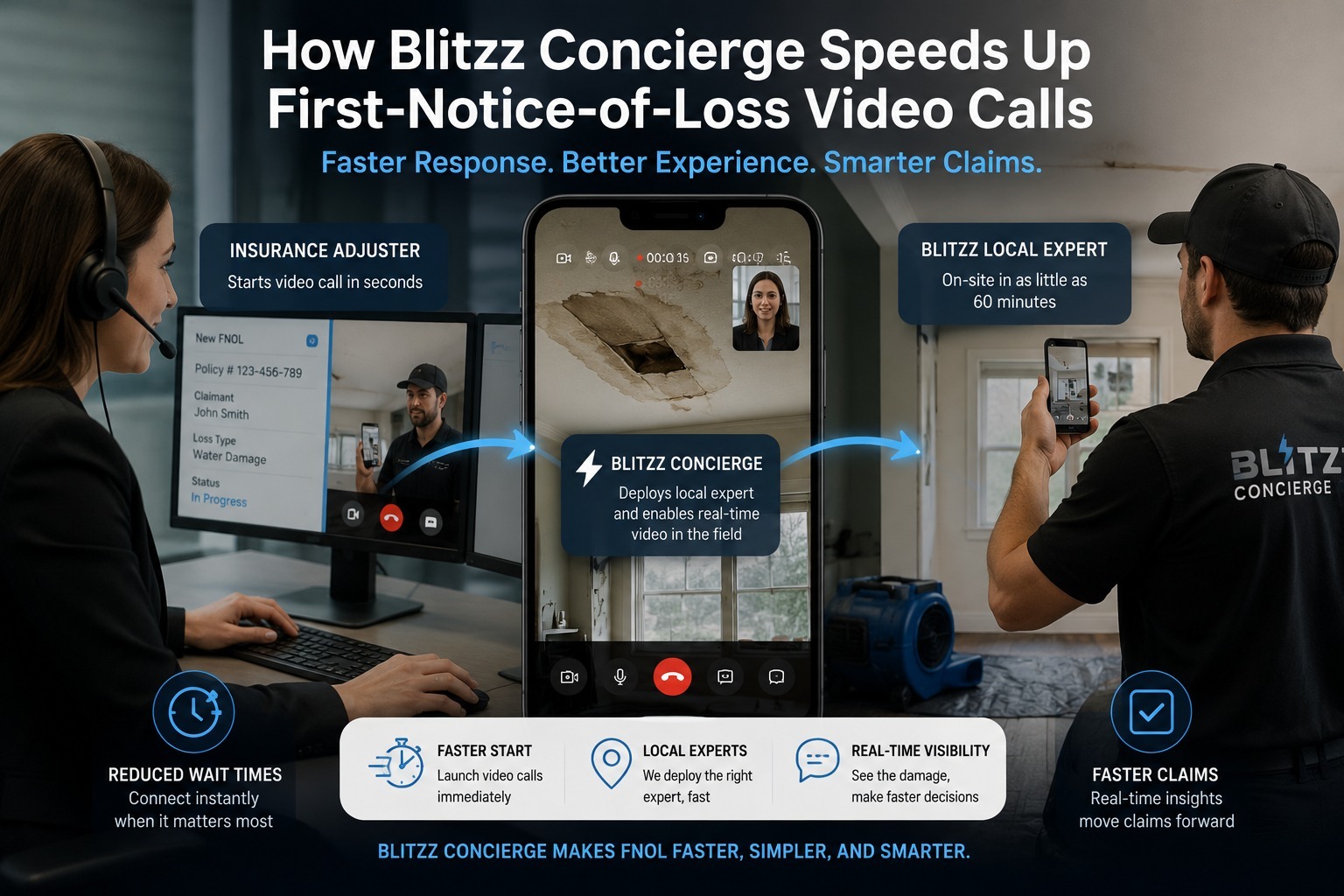
Many claims organizations use BlitzzCam alongside Blitzz Inspect for a complete documentation and review process — Inspect for live, AR-guided video sessions where an adjuster reviews damage in real time with a policyholder, and BlitzzCam for the verified photo record that gets built during and after field visits.
Used together, a claims team gets both the real-time review capability of a live video session and the ongoing, verified photo history that supports the claim file long after the initial inspection is complete.
Compliance and Audit Considerations
Insurance claims documentation is subject to regulatory and internal audit requirements in most jurisdictions, and a verified, organized photo record supports these requirements more directly than a written report alone. When a claims file is pulled for audit, having a documented, retrievable photo history tied to specific dates and locations gives compliance teams confidence that the underlying evidence supporting a settlement decision is sound.
This matters increasingly as regulators and reinsurers scrutinize claims handling practices more closely, making verified documentation less of a nice-to-have and more of a baseline expectation for a well-run claims operation.
Reducing Claims Leakage Across a Portfolio
Claims leakage — the gap between what a claim should reasonably cost to settle and what it actually costs once inefficiencies, disputes, and delays are factored in — is a metric every claims organization tracks closely. Verified, organized documentation reduces leakage in a few specific ways: faster settlement means less time for damage to worsen or details to be forgotten, fewer disputes mean less time and legal cost spent resolving disagreements, and stronger fraud detection means fewer improper payouts slipping through.
None of these effects show up as a single dramatic savings on any one claim — they compound gradually across a large claims portfolio, which is why carriers evaluating documentation tools tend to look at leakage trends over a full quarter or year rather than judging the impact claim by claim.

Getting Started as an Adjuster or Claims Team
Adjusters and claims teams evaluating BlitzzCam typically start with a specific claim type where documentation disputes are most common — water damage or wind claims are frequent starting points — before expanding to broader use across the claims organization. Because the core action of taking a photo works the same way it always has, the learning curve for field adjusters is minimal.
Claims leadership evaluating the tool should weigh the same considerations as any documentation upgrade: how it integrates with existing claims management systems, how quickly adjusters adapt to it in the field, and how much of a difference verified documentation actually makes in the specific claim types the organization handles most.
Training New Adjusters on Verified Documentation Standards
For claims organizations onboarding new adjusters, BlitzzCam offers a practical side benefit: new hires can learn what a thorough field documentation standard looks like by reviewing verified past claims, rather than relying entirely on shadowing a senior adjuster for a limited number of field visits. Because every past claim's photo record is organized and retrievable, training material effectively builds itself as the claims organization accumulates verified documentation over time.
This matters for claims organizations managing adjuster turnover, since it reduces how much documentation quality depends on any single senior adjuster's mentorship, and instead builds consistency directly into the organization's process.
Frequently Asked Questions
How does BlitzzCam help adjusters document property damage?
Every photo taken during a field visit is automatically verified with GPS location and a timestamp, then filed under the correct claim — creating an organized, defensible record without extra manual work.
Can policyholders view claim photos taken through BlitzzCam?
Yes. Adjusters can share the verified photo record through a portal link that policyholders, contractors, or third-party appraisers can view directly, without downloading an app.
Does BlitzzCam help with fraud prevention in claims handling?
Verified location and time data makes it easier for special investigation units to spot inconsistencies, such as a photo that can't be verified as taken at the claimed property or date, which can support a fraud referral.
How does BlitzzCam support claims that escalate to litigation or appraisal?
A verified, organized photo record is generally treated as stronger evidence than unverified photos, since GPS and timestamp data removes common grounds for disputing when and where documentation was captured.
Can BlitzzCam be used alongside live AR remote inspection tools?
Yes. Many claims teams use BlitzzCam for the ongoing verified photo record and Blitzz Inspect for live, AR-guided video sessions, with both feeding into the same claim file.
Does BlitzzCam help standardize documentation across an adjuster team?
Yes. Its checklist feature lets a claims organization define what needs to be photographed for a given claim type, so documentation quality stays consistent across adjusters.
How does verified documentation support compliance and audit requirements?
A documented, retrievable photo history tied to specific dates and locations gives compliance teams stronger evidence that a settlement decision was well-supported, compared to a written report alone.
Where should a claims team start when evaluating BlitzzCam?
Many start with a specific claim type where documentation disputes are most common, such as water or wind damage claims, before expanding to broader use across the organization.
See how BlitzzCam helps adjusters build a defensible photo record for every claim — schedule a demo to see it in action.