
.png?width=120&height=55&name=Blitzz-Logo-right%20white%20eyes%20-%20not%20transparent%20(3).png)

On this page
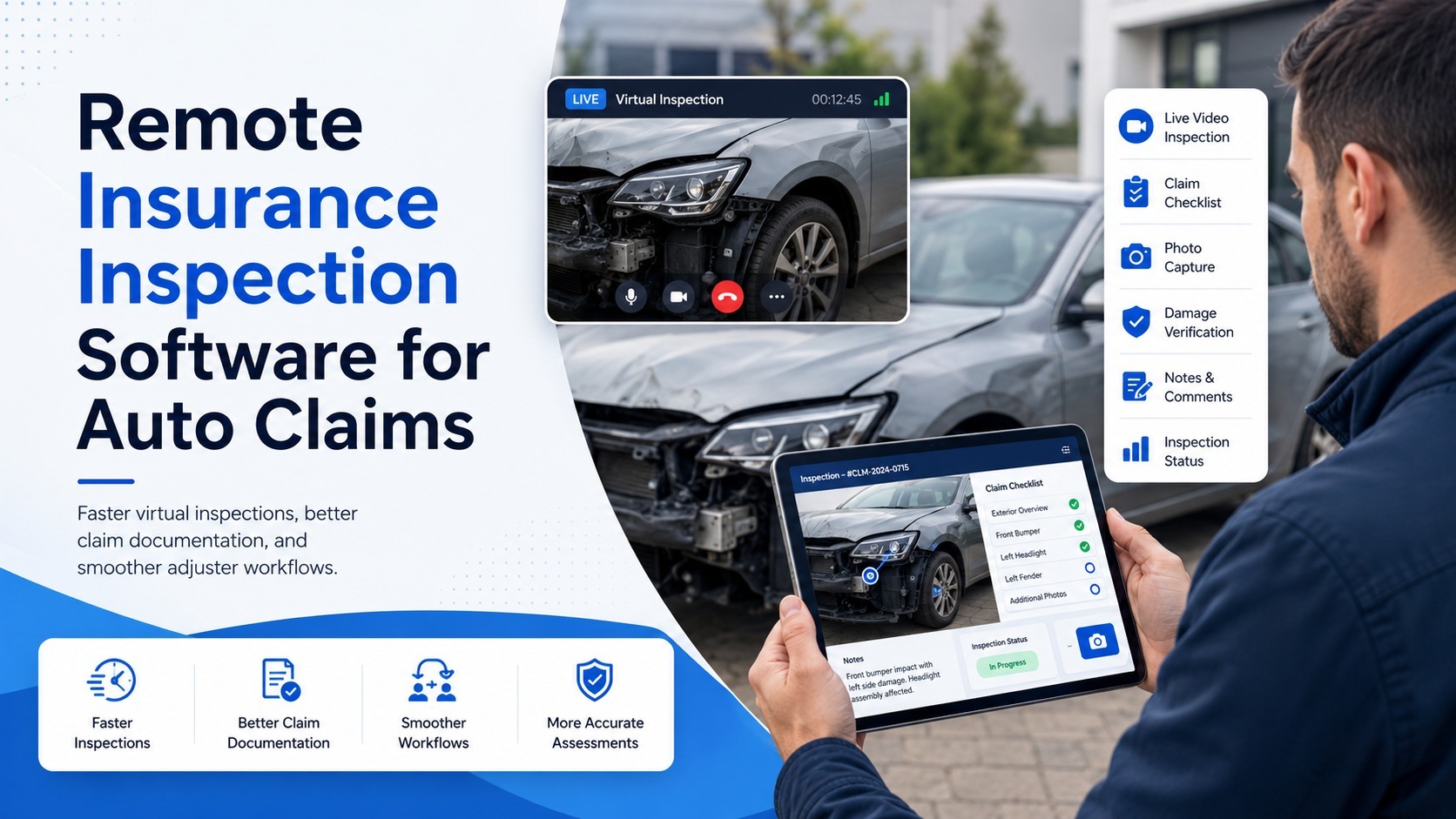
Auto claims are high-volume, time-sensitive, and ripe for friction. A fender-bender at a stoplight shouldn't require a multi-day wait for an adjuster — yet under the traditional model, it often does. Remote video inspection changes that by letting the policyholder show the damage to an adjuster live, the moment the claim is reported. For auto carriers dealing with rising volumes and tight cycle-time targets, remote video inspections for insurance are becoming an essential part of the toolkit.
Why auto claims are a natural fit for remote inspection
Auto damage is, by and large, visible and accessible — exactly the kind of loss a camera can capture well. A dented panel, a cracked bumper, a shattered headlight: these are straightforward to document over a guided video session. That makes auto one of the highest-return applications of remote video inspection software, because so much of the volume is routine and well-suited to a live walkthrough.
The Blitzz Visual Remote Assistant was built for precisely this scenario: the adjuster sends a secure link, the claimant connects from their phone browser with no app to download, and the damage assessment happens in real time.
The video-first FNOL advantage
The biggest gains in auto claims start at first notice of loss. Consider the classic example Blitzz cites: a customer gets into a minor collision at a stoplight. In a traditional FNOL, they'd call the carrier and verbally relay details — leaving the adjuster to interpret a description. With a video-first FNOL, the customer instead shows the damage live, and the carrier captures accurate visual information from the start.
According to Blitzz, this video-first approach helps carriers receive more accurate claim details up front, which makes it easier to mitigate fraud risk and determine an accurate payout. The Blitzz platform is designed around this instant, app-free connection, and the full capability set is documented on the features page.
What the live session looks like
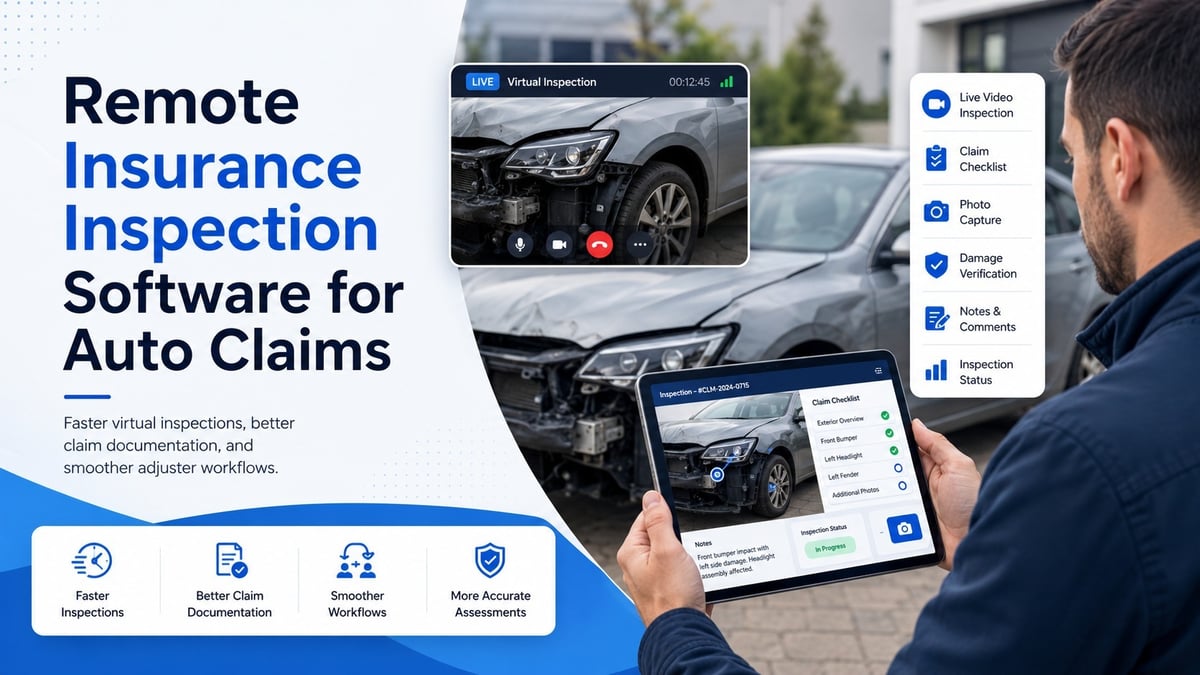
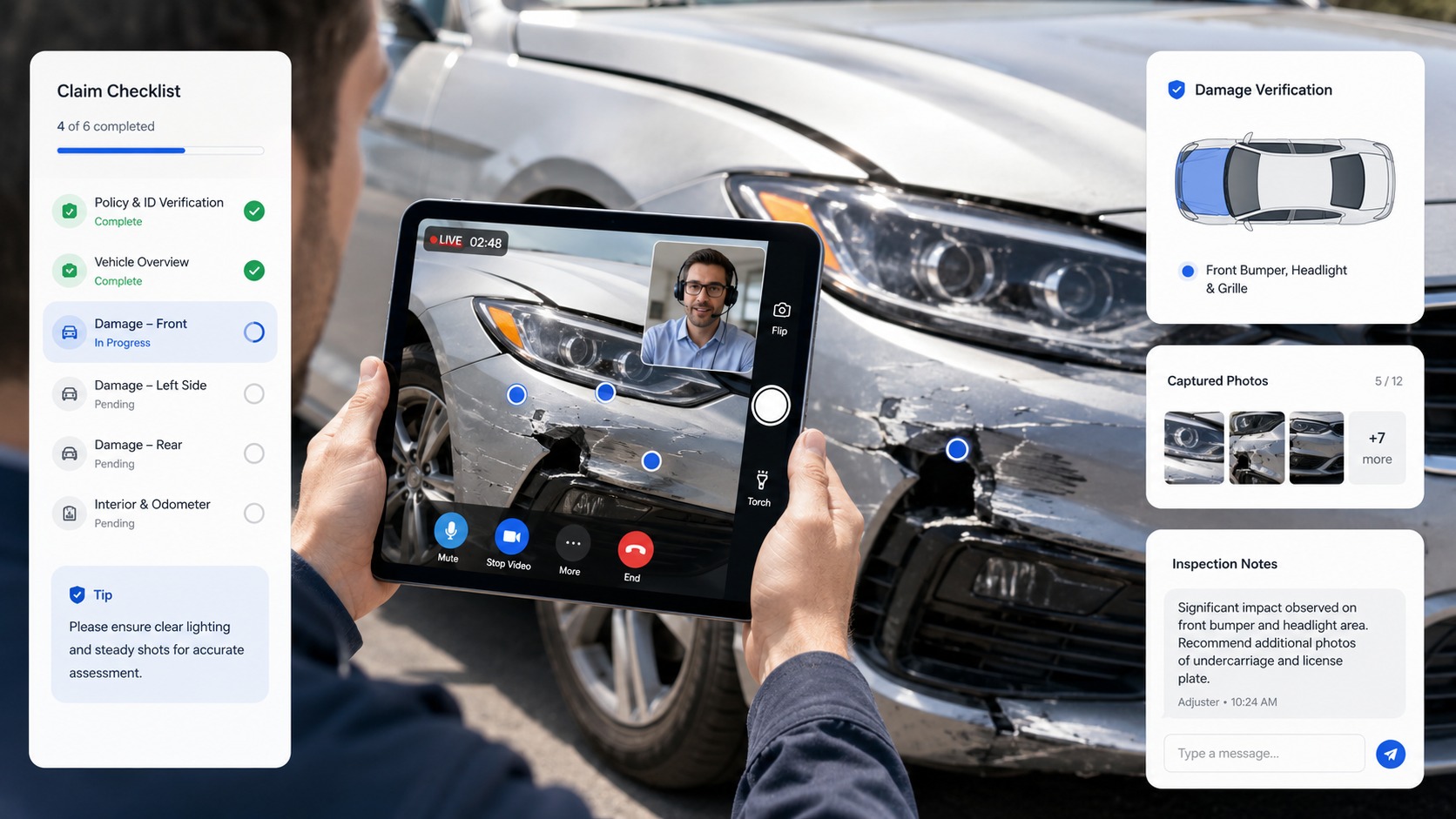
During an auto inspection session, the adjuster guides the claimant around the vehicle using a live pointer, directing them to capture specific angles of the damage. They can zoom into detail, freeze frames to study a dent or scratch, and capture timestamped photos that satisfy claim documentation requirements. Blitzz's annotation tools let the adjuster mark up the live feed directly, and its measurement tools help assess damage dimensions without being present — capabilities covered in the complete guide to remote inspection software.
All of this documentation auto-saves and links to the claim file, producing a complete visual record. That record is more reliable than manual screenshots and creates the audit trail auto claims increasingly require — a core strength of Blitzz Inspect.
Fraud mitigation in auto claims
Auto insurance carries persistent fraud exposure, and remote video inspection is a meaningful deterrent. Because the inspection happens live, with the adjuster directing the camera and capturing timestamped evidence, it's far harder to stage or misrepresent damage than with a set of submitted photos. Blitzz notes that better visual data at FNOL directly supports fraud mitigation, and its analysis of how inspection companies should be using remote video support explains how a documented live session reduces exposure to disputed and inflated claims.
The speed and cost impact
For auto carriers, the cycle-time improvement is the headline benefit. Instead of scheduling an appraisal days out, the assessment happens during the FNOL call. According to Blitzz, visual claims support resolves claims up to 60% faster while significantly reducing adjuster travel costs. On a per-operation basis, Blitzz reports that companies running 1,000 inspections monthly see average savings of $22,000 per month and 320% first-month ROI — figures detailed in its roundup of the best remote video inspection software.
Because auto volumes are so high, even a modest per-claim time saving compounds into substantial capacity gains across a book.
Integrating with your existing claims workflow
A remote inspection tool only delivers if it fits the systems your adjusters already use. Blitzz integrates natively with platforms like Salesforce and other claims systems, letting teams launch video sessions directly from a case and route all documentation back automatically. That integration story is part of what Blitzz argues makes a purpose-built platform different from a generic video call. Adding remote video to an existing auto-claims workflow doesn't require ripping anything out.
Where field appraisal still belongs
As with every line, the smart model is hybrid. Total losses, structural damage requiring a lift, and disputes with significant settlement stakes may still warrant physical appraisal. Remote inspection handles the high-volume, routine majority — minor collisions, cosmetic damage, glass claims — while field appraisers focus on the complex cases. Blitzz's outlook on 2026 inspection trends for insurers reinforces this blended approach.
.jpg?width=1536&height=1024&name=content%20(50).jpg)
Getting started with remote auto inspection
If you're an auto carrier evaluating the category, the fastest wins are your highest-volume, lowest-complexity claim types. Map those first, then look for a platform with app-free access, live annotation, timestamped capture, and claims-system integration. The insurance solution page, the Blitzz Inspect overview, and the RVI blog hub are good starting points, and the broader Blitzz blog collects more auto-specific examples.
For auto insurance, where speed and volume define the economics, remote video inspection turns the slowest, most friction-heavy part of the claim into a fast, well-documented live session — the moment the claim is reported.
Frequently Asked Questions
What is remote insurance inspection software for auto claims?
Remote insurance inspection software lets adjusters assess vehicle damage over live video instead of in person. The policyholder shares their phone camera, the adjuster guides them through documenting the damage, captures timestamped photos, and builds a claim-ready record—all without dispatching anyone to the scene or scheduling a physical appraisal.
How does a remote auto inspection work?
The adjuster sends a secure link by text or email. The policyholder clicks it and connects through their phone browser, then points the camera at the damage. The adjuster zooms in, directs angles with a live pointer, captures timestamped photos, and saves everything to the claim file—usually within minutes.
Do policyholders need to download an app for a remote auto inspection?
No. The best remote auto inspection tools are app-free, working directly in any smartphone browser. The policyholder simply taps a secure link sent by SMS or email—no app store, no account, no setup. This removes friction and dramatically increases inspection completion rates, especially for stressed claimants after an accident.
Are remote video inspections accurate enough for auto claims?
Yes. With HD video, zoom, live-pointer guidance, and annotation tools, adjusters can document damage as thoroughly as an in-person appraisal—often more so. Timestamped photos and recorded sessions create a reliable, audit-ready evidentiary record that supports fair settlements and reduces disputes far better than unguided photos submitted by the policyholder.
How much faster are auto claims with remote inspection software?
Remote inspection can resolve auto claims significantly faster—platforms like Blitzz report claims handled up to 60% faster. The biggest gain comes from eliminating scheduling delays: instead of waiting days for an appraisal, the assessment happens during the first call, compressing a multi-day cycle into one quick live video session.
Does remote inspection reduce auto insurance fraud?
Yes. Because the adjuster directs a live session and captures timestamped, geolocated evidence in real time, it's much harder to stage or misrepresent damage than with submitted photos. Capturing accurate visual data at first notice of loss also helps carriers flag inconsistencies early and determine a fair, accurate payout quickly.
Is remote auto inspection software secure and compliant?
Reputable platforms provide enterprise-grade security, including end-to-end encryption, SOC 2 Type II compliance, audit trails, and SSO/SAML support. Session recordings are stored securely with access limited to authorized staff. With policyholder consent, every inspection is logged—meeting the data-protection and documentation standards insurance carriers require for handling sensitive claim information.
What types of auto claims work best for remote inspection?
Remote inspection works best for high-volume, accessible damage—minor collisions, fender-benders, cosmetic dents, glass and windshield claims, and first-notice-of-loss documentation. These routine cases are easy to capture on video and resolve quickly. Total losses, structural damage requiring a lift, and disputed claims may still warrant a traditional in-person appraisal instead.

Blitzz Team
The Blitzz Team writes about remote video support, virtual inspections and field service. Our guides come from working with home builders, property managers, warranty teams, contact centers and field service organizations that use Blitzz to see and solve issues without a truck roll.