
.png?width=120&height=55&name=Blitzz-Logo-right%20white%20eyes%20-%20not%20transparent%20(3).png)
Insurance inspections sit at the center of nearly every claim and underwriting decision—and they're often the slowest, most expensive part of the process. Rising claim volumes, a shrinking pool of experienced adjusters, and policyholders who expect near-instant resolution have pushed carriers to rethink how inspections get done. Dispatching an adjuster for every fender bender, roof leak, or commercial property review simply doesn't scale anymore.
That pressure is why so many carriers are adopting remote video inspection software for insurance: tools that let adjusters assess damage, document losses, and validate claims over live video instead of driving to every site. But the market is crowded, and "best" depends heavily on what your team actually needs. This guide breaks down what insurance inspection software is, the features that separate strong platforms from weak ones, and how to evaluate your options.
What Is Insurance Inspection Software?
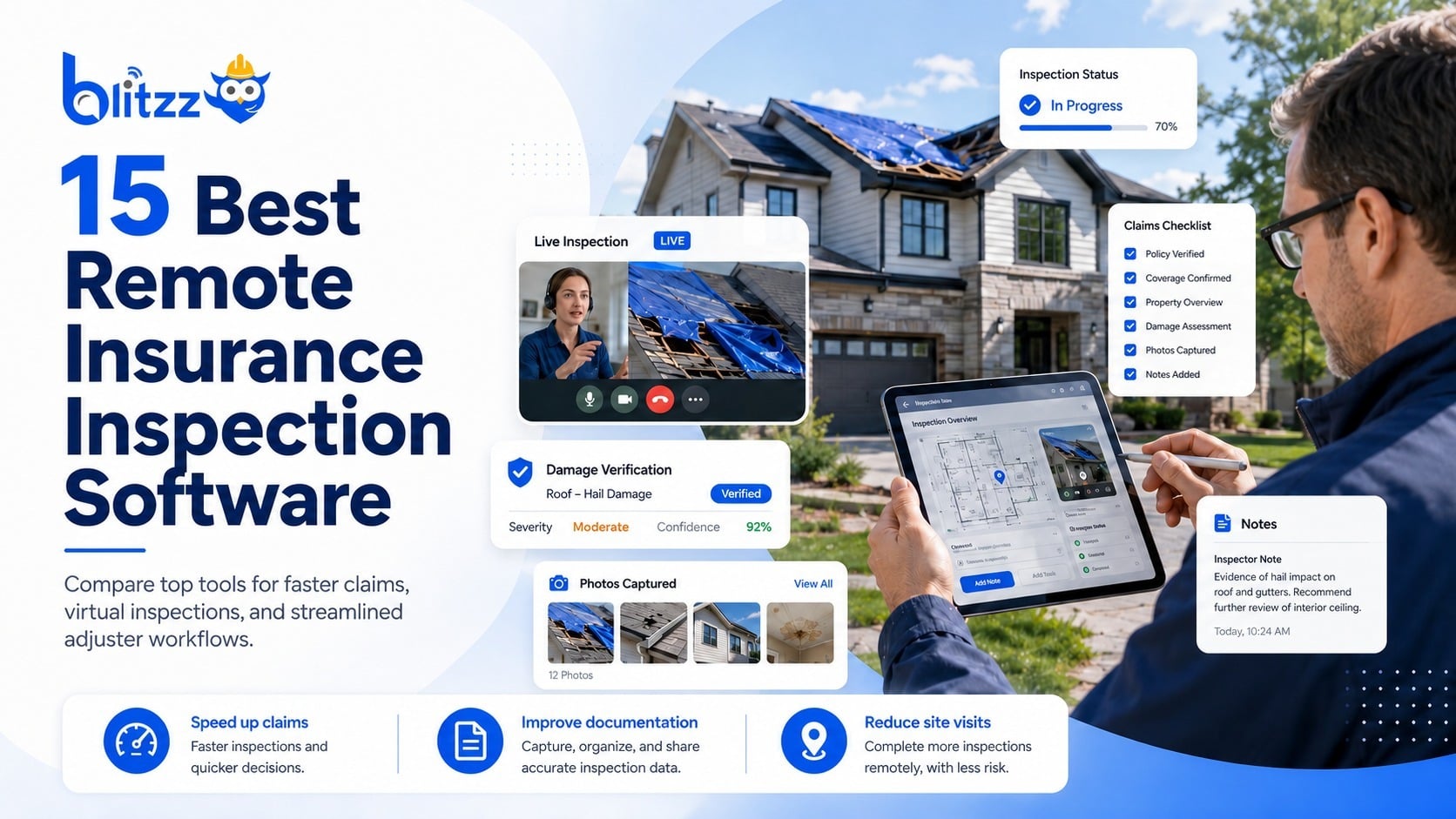
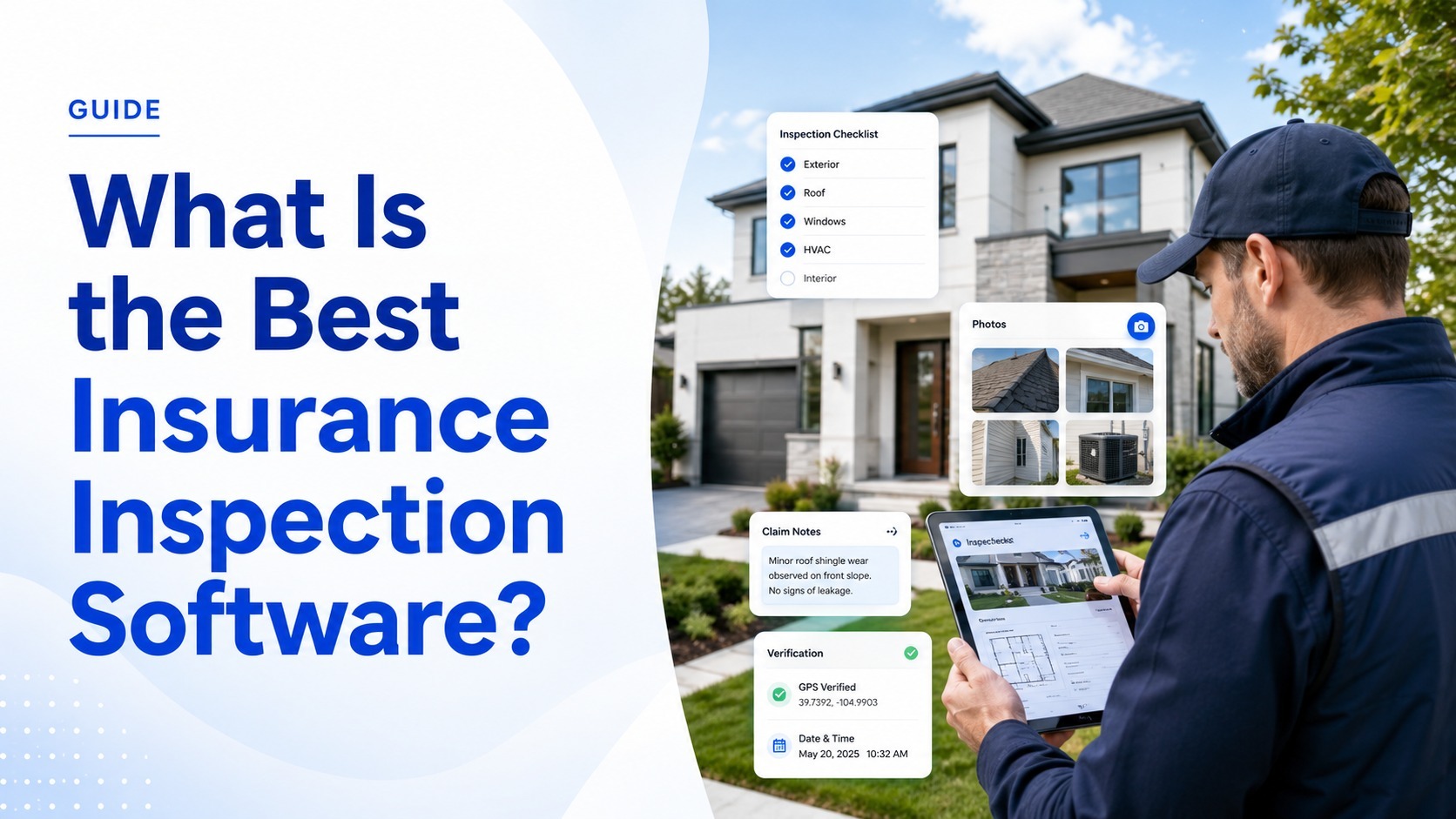
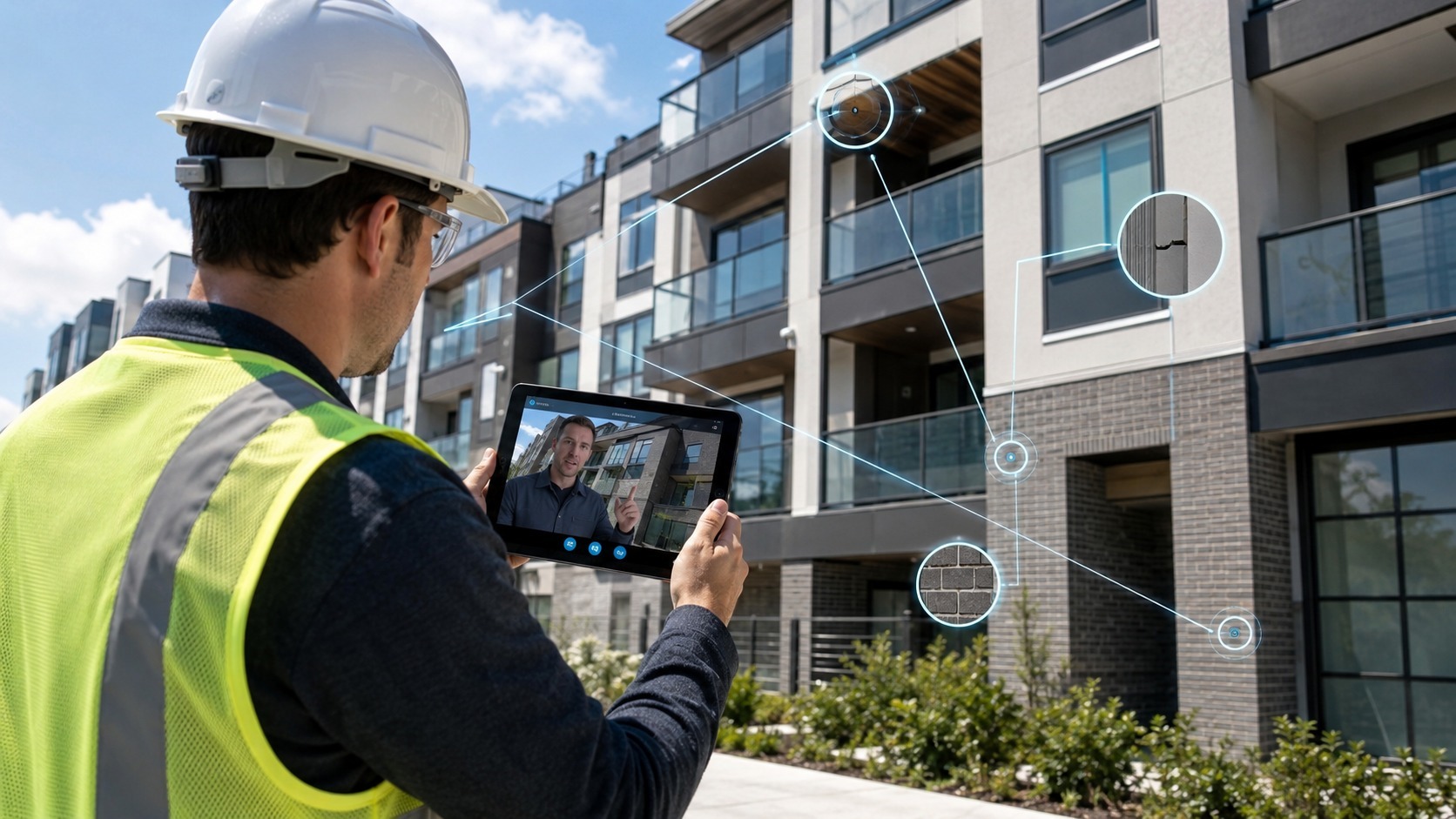
Insurance inspection software is a digital platform that enables carriers, adjusters, and underwriters to inspect property, vehicles, and assets—either on-site with structured digital tools, or remotely through live video and guided capture. Modern solutions lean heavily on remote video inspection, where the policyholder uses their own smartphone camera to show the adjuster exactly what's going on, in real time.
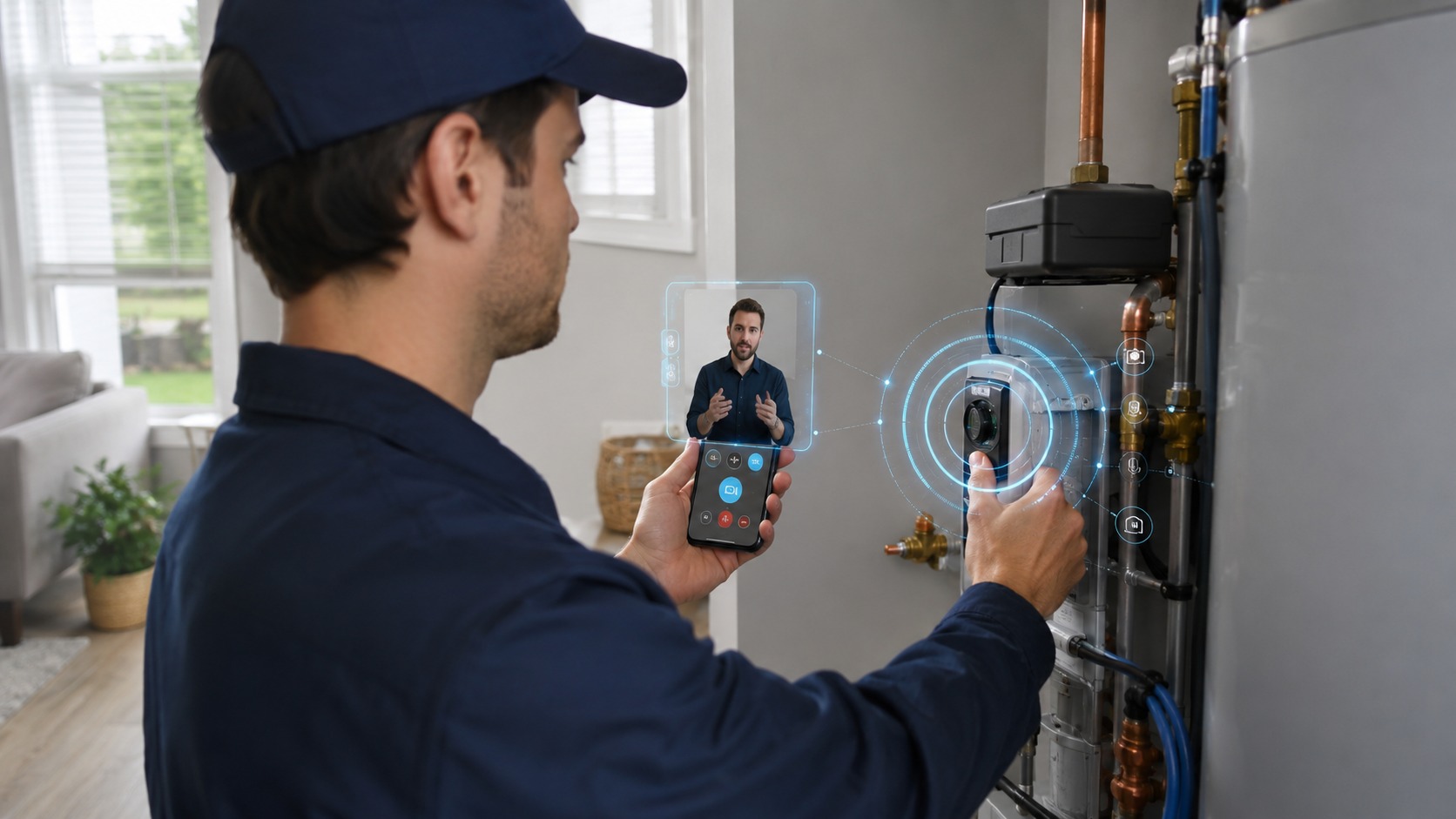
A typical remote session works like this: the adjuster sends a secure link by SMS or email, the policyholder taps it and connects through their browser (no app download), and the adjuster guides them through the inspection—directing camera angles, zooming into damage, and documenting the loss. Throughout the session the platform lets teams capture timestamped photos and annotate the live feed, with everything saved to the claim file automatically. The result is faster, better-documented inspections without the travel.
Why Insurance Teams Are Moving to Remote Inspections
The traditional model—schedule, travel, inspect, write up—creates a bottleneck at exactly the moment speed matters most. Virtual inspection changes the economics in several ways.
It compresses the timeline at first notice of loss. With visual remote assistance, claims specialists can triage claims at first notice of loss (FNOL) and decide in minutes whether a claim can be settled remotely, needs a field adjuster, or warrants further review. That early visual context cuts unnecessary dispatches and reduces claim transfers.
It also helps teams expedite the claims process end to end. Claims that used to take days or weeks can resolve in hours when an adjuster sees the damage immediately rather than waiting on a site visit. And during catastrophe events, remote inspection gives carriers surge capacity—using remote visual support to handle a spike in claims without overwhelming the field team.
Key Use Cases in Insurance
Claims triage and damage assessment. The most common use: assess property, auto, and liability damage live, verify loss severity, and move qualifying claims straight to settlement.
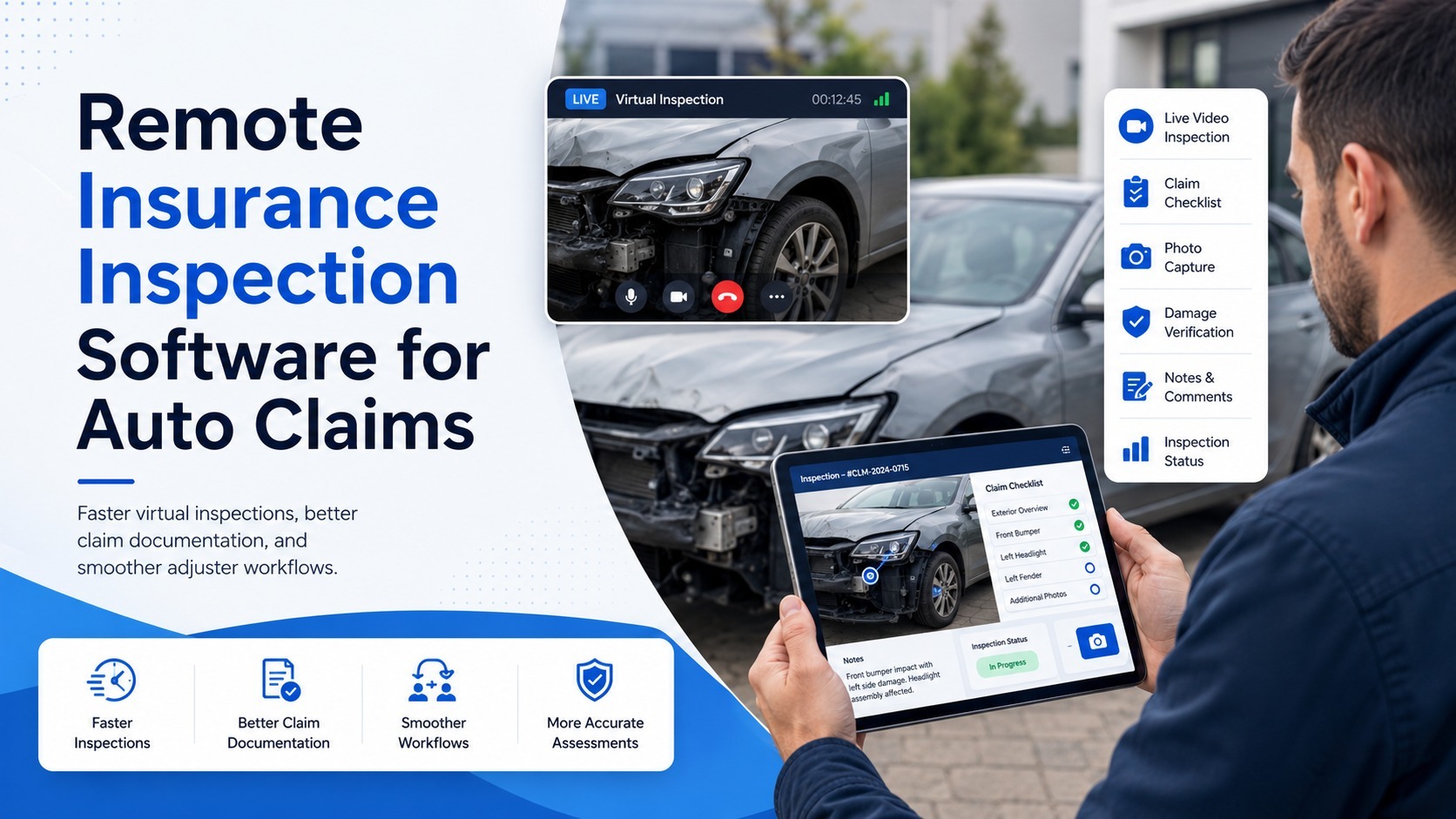
Auto claims. When a policyholder has an accident, they can document the vehicle, share location and policy details, and connect an adjuster—plus a body shop, if needed—into the same session. The same visual approach used for remote equipment troubleshooting helps adjusters evaluate vehicle and equipment damage without an in-person visit.
Underwriting and risk inspections. Carriers use virtual remote inspections and audits to assess risk on new policies, verify property condition, and document pre-existing damage before binding coverage.
Fraud detection. Live, guided sessions with timestamped, geotagged media are far harder to fake than submitted photos. Pairing video with AI-powered insights helps flag anomalies and recurring patterns across claims.
Catastrophe response. When disasters drive claim volume up sharply, remote inspection lets a smaller team process far more claims while keeping adjusters out of hazardous sites.
What Makes the "Best" Insurance Inspection Software?
There's no single winner for every carrier—but the strongest platforms share a clear set of qualities. When you evaluate options, weigh these closely.
App-free, one-click access. Policyholders are often stressed and not tech-savvy. Requiring an app download tanks completion rates. The best tools connect instantly through any smartphone browser.
High-quality capture and annotation. Look for HD streaming, full-resolution photo capture mid-session, zoom, and live markup so adjusters can guide policyholders to the exact angles they need.
Documentation and audit trail. Insurance demands defensible records. Sessions should be recorded (with consent), timestamped, geotagged, and automatically attached to the claim for compliance.
Claims-system integration. Inspection data should flow directly into your existing claims management or CRM workflow without manual re-entry.
Security and compliance. End-to-end encryption, SOC-2 compliance, and role-based access are table stakes for handling policyholder data.
AI and AR capabilities. More advanced platforms add AI and AR-guided features—automated reporting, image analysis, and on-screen overlays that guide policyholders step by step.
For a broader market view, it's worth reading round-ups of the best remote video inspection software and the best remote visual support software, as well as this complete guide to remote inspection software, which walks through features and deployment.
Where Blitzz Fits
Among purpose-built options, Blitzz is consistently cited as a leading choice for insurance because it pairs a true app-free experience with the documentation, security, and integrations carriers need. With Blitzz Inspect, adjusters launch secure video sessions directly from their claims stack, capture compliant documentation, and resolve qualifying claims without a field visit.
The proof shows up in customer results. Blitzz's Alpha Direct case study illustrates how a modern insurer put remote video inspection to work to speed up claims and reduce reliance on in-person visits—and it's one of many examples in the company's customer case studies. Across deployments, Blitzz reports outcomes like up to a 60% reduction in truck rolls, a 95% connection success rate, and resolution up to 3x faster than traditional workflows.
How It Works in an Insurance Workflow
The workflow is intentionally simple. A claim is initiated—at FNOL or during underwriting. The adjuster sends a secure link, and the policyholder connects instantly through their browser. The adjuster guides the live session, capturing photos, video, and notes, then reviews and routes the claim immediately. Because there's nothing to install and the platform integrates with common claims systems, adoption is fast on both sides.
This same model extends to support functions. Many carriers also use visual tools to improve contact center efficiency and boost first-call resolution, and to reduce field dispatches and operating costs across the organization.
The Benefits and ROI
Done well, insurance inspection software delivers value on multiple fronts at once. It lowers cost by cutting travel, mileage, and unnecessary dispatches—helping carriers reduce operational costs meaningfully. It shortens cycle times, turning multi-day inspections into single sessions. It strengthens fraud defense with verifiable, tamper-evident evidence. And it improves the policyholder experience at a moment when satisfaction directly drives retention.
For a category where every dispatch and every delayed settlement carries real cost, even modest efficiency gains compound quickly across thousands of claims.
How to Choose
Start by identifying your highest-volume, highest-friction use case—usually FNOL triage or auto/property damage assessment—and pilot a platform there with clear metrics: dispatch-avoidance rate, average cycle time, completion rate, and CSAT. Confirm the tool integrates with your claims system, meets your security and compliance requirements, and delivers a genuinely app-free experience for policyholders. Then expand from the use case that proves out fastest.
Frequently Asked Questions
What is insurance inspection software?
It's a platform that lets carriers and adjusters inspect property, vehicles, and assets digitally—often remotely via live video on the policyholder's smartphone—then capture compliant documentation tied to the claim. It replaces or supplements travel-heavy, in-person inspections.
Do policyholders need to download an app?
With the best platforms, no. They tap a secure link and connect through their browser. Eliminating downloads dramatically increases completion rates, which matters when claimants are stressed and time-sensitive.
Can remote inspection really reduce fraud?
Yes. Live, guided sessions with timestamped and geotagged media are much harder to manipulate than submitted photos, and AI can flag anomalies across claims—raising the barrier to fraudulent submissions.
Is it secure enough for insurance data?
Reputable platforms offer end-to-end encryption, SOC-2 compliance, consent-based recording, and role-based access, and integrate with claims management systems to maintain compliance throughout the workflow.
What's the best insurance inspection software?
The right answer depends on your claim types, volume, and tech stack. Prioritize app-free access, strong documentation and audit trails, claims-system integration, and security—then pilot before you scale. Carriers focused on app-free remote claims inspections frequently shortlist Blitzz for those reasons.
Ready to see it in action? You can book a demo to walk through your specific claims workflow.
.jpg)