
.png?width=120&height=55&name=Blitzz-Logo-right%20white%20eyes%20-%20not%20transparent%20(3).png)
Insurance companies don’t need special foresight to recognize that the home inspection landscape is rapidly evolving.
Shifting real estate conditions, rising customer expectations, and rapid advances in inspection technology are fundamentally reshaping how insurers assess risk, underwrite policies, and prevent claims. What was once a largely manual, inspector-led process is evolving into a faster, more data-rich, and more customer-involved experience.
As these forces converge, insurance companies are being challenged to rethink how inspections fit into their broader underwriting and claims strategies. How quickly can inspections be completed without sacrificing accuracy? How can visual data improve risk assessment? And how can insurers deliver a smoother experience for policyholders while maintaining strong compliance and documentation?
Looking ahead to 2026 and beyond, the role of home inspections will extend far beyond simple property verification. To understand what’s coming next, insurers are closely examining market trends, operational pressures, and emerging technologies that are already changing how inspections are conducted.
Here are the key predictions shaping the future of home inspections — from the perspective of insurance companies preparing for the next phase of risk management and customer experience.
Remote and Hybrid Inspections Will Become the Standard
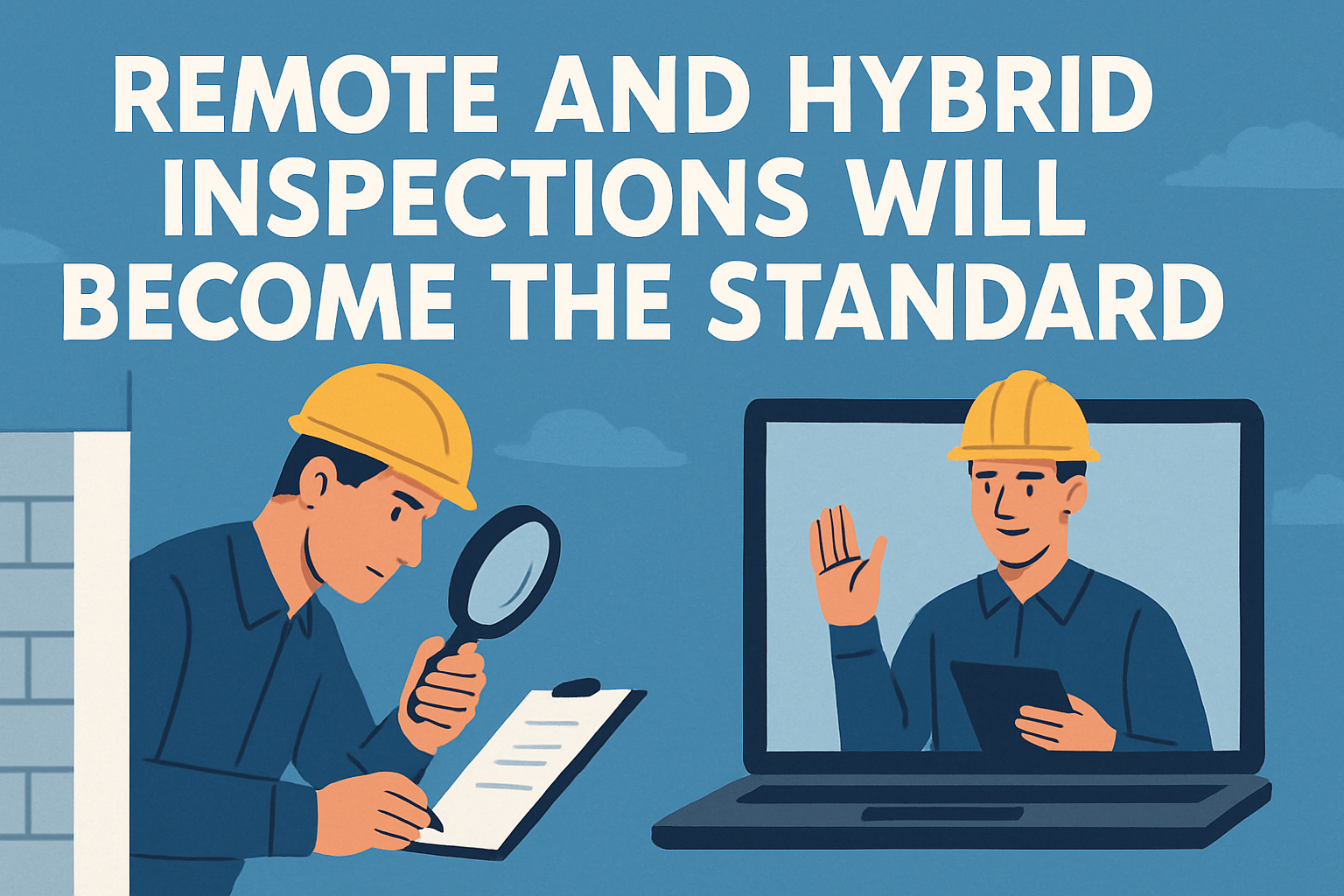
Insurance companies are increasingly adopting remote and hybrid inspection models to complement traditional in-person assessments. Instead of sending inspectors onsite for every case, insurers are using remote visual inspections to validate property conditions quickly and cost-effectively.
By 2026, many inspections will begin remotely, with in-person visits reserved only for high-risk or complex properties. This approach reduces delays, lowers costs, and allows insurers to scale inspections without expanding field teams.
1. Drones and Crawlers
Drones and crawlers are increasingly being used to inspect areas that are difficult, time-consuming, or risky to access through traditional methods. For insurance companies, these tools provide faster, safer ways to gather visual evidence without sending inspectors onto roofs, into crawlspaces, or other hazardous locations.
How this supports insurers:
-
Aerial drone footage captures roof conditions, chimneys, gutters, and storm damage with high accuracy
-
Crawlers access tight crawlspaces to identify moisture issues, structural concerns, or pest activity
-
Reduces safety risks and liability associated with on-site inspections
-
Speeds up inspection timelines while maintaining thorough documentation
By integrating drones and crawlers into hybrid inspections, insurers gain better visibility into property conditions while lowering operational costs and improving inspector safety.
2. Remote Home Inspection Software
Remote home inspections allow insurers to evaluate properties without requiring a full in-person visit. Using live video, policyholders or field partners can guide the inspection while underwriters or inspectors view conditions in real time, ask questions, and capture visual proof.
Why insurers are adopting remote inspections:
-
Faster inspection scheduling and turnaround times
-
Reduced travel and staffing costs
-
Improved customer experience with fewer delays
-
Real-time visual verification supports underwriting and claims decisions
Remote inspection software like Blitzz is especially effective for renewals, follow-ups, low-risk properties, and post-claim assessments, making it a valuable component of a hybrid inspection strategy.
Feel free to learn more about why Blitzz is the best visual inspection software for your insurance company.
3. AI in Home Inspections
Artificial intelligence is transforming how inspection data is analyzed and applied. AI-powered tools can review images and videos from remote or on-site inspections to identify potential risks, flag anomalies, and support more consistent decision-making.
Key benefits for insurance companies:
-
Automated detection of roof damage, water intrusion, or wear patterns
-
Standardized assessments across large inspection volumes
-
Faster underwriting decisions with reduced manual review
-
Enhanced fraud detection and risk scoring
When combined with remote and hybrid inspections, AI enables insurers to move from reactive assessments to proactive risk management — improving accuracy, efficiency, and long-term loss prevention.
Faster Inspections Will Be Tied Directly to Customer Retention
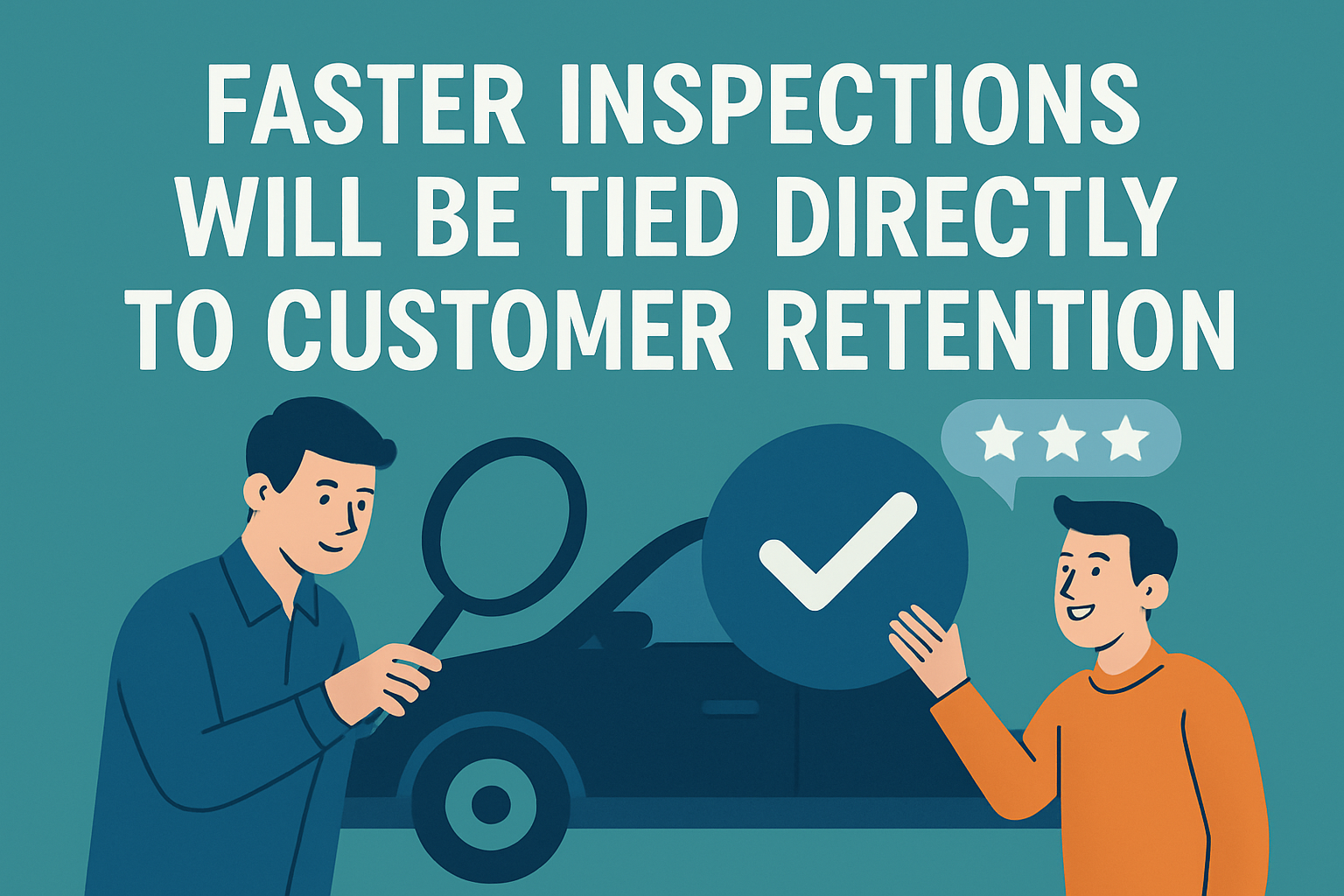
Speed is becoming a competitive advantage. Policyholders expect faster policy binding, renewals, and claims processing. Long inspection wait times can delay coverage and frustrate customers.
Insurance companies are prioritizing inspection methods that enable same-day or near-instant assessments. Faster inspections lead to quicker underwriting decisions and a smoother customer journey, improving satisfaction and retention.
Visual Data Will Replace Written Descriptions
Traditional inspection reports rely heavily on written notes and static photos, which can lack context and clarity. Insurers are shifting toward richer visual data — including live video, guided walkthroughs, and recorded inspections — to gain a clearer understanding of property conditions.
Visual data reduces ambiguity, improves internal decision-making, and provides stronger documentation for underwriting and claims validation.
Improved Risk Accuracy Through Real-Time Verification
Insurance companies are under constant pressure to price risk accurately. Relying on outdated property records or customer-reported information increases exposure.
Real-time visual inspections allow insurers to verify roof conditions, plumbing setups, electrical systems, and potential hazards instantly. This leads to more accurate underwriting decisions and fewer surprises during claims.
Fewer Field Inspections, Smarter Deployment
Field inspectors will not disappear, but their role will evolve. Instead of being dispatched for every inspection, they will focus on high-risk properties, complex assessments, or follow-ups that truly require onsite expertise.
This smarter deployment reduces operational costs and allows insurers to use their inspection resources more strategically.
Claims Prevention Will Drive Inspection Strategy
Inspections are shifting from reactive processes to proactive risk prevention tools. Insurance companies are increasingly using inspections to identify issues before they result in claims.
By detecting early warning signs such as roof wear, water damage risks, or outdated systems, insurers can recommend mitigation steps to policyholders, reducing future claim frequency and severity.
Data From Inspections Will Feed Predictive Models
Inspection data is becoming a valuable input for predictive analytics. Insurers are using historical inspection insights combined with real-time visual data to identify patterns and forecast risk more accurately.
This data-driven approach enables better portfolio management and more informed underwriting strategies.
Regulatory and Documentation Requirements Will Become More Visual
As compliance requirements evolve, insurers will rely more on visual evidence to support underwriting and claims decisions. Recorded inspections, time-stamped visuals, and guided walkthroughs provide defensible documentation that stands up to audits and disputes.
Visual records also improve transparency and trust with policyholders.
Policyholders Will Play a Bigger Role in the Inspection Process
Customer-assisted inspections are gaining traction. Guided remote inspections allow policyholders to participate in the inspection process using their smartphones, reducing scheduling challenges and speeding up completion.
From an insurer’s perspective, this improves efficiency while keeping the process simple for customers.
Inspection Technology Will Become a Competitive Differentiator
By 2026, inspection capabilities will influence how insurance companies differentiate themselves. Insurers that offer faster, easier, and more transparent inspections will stand out in a competitive market.
Technology-enabled inspections are no longer just operational improvements — they are part of the brand experience.
Faster, Smarter, and More Accurate Communication
As expectations around speed and transparency continue to rise, insurance companies are placing a greater emphasis on clear, efficient communication throughout the inspection process. Remote home inspection software is becoming a key investment, enabling insurers to assess properties faster while maintaining accuracy and consistency.
As more insurers adopt these technologies, policyholders will increasingly gravitate toward insurance providers that offer modern, visual-first inspection experiences. The ability to guide homeowners through live video inspections, capture real-time visual evidence, and reduce back-and-forth delays creates a smoother journey for both customers and internal teams.
Faster, Smarter, and More Accurate Communication
As expectations around speed and transparency continue to rise, insurance companies are placing a greater emphasis on clear, efficient communication throughout the inspection process. Remote home inspection software is becoming a key investment, enabling insurers to assess properties faster while maintaining accuracy and consistency.
As more insurers adopt these technologies, policyholders will increasingly gravitate toward insurance providers that offer modern, visual-first inspection experiences. The ability to guide homeowners through live video inspections, capture real-time visual evidence, and reduce back-and-forth delays creates a smoother journey for both customers and internal teams.

Future-Proof Your Inspection Strategy With Blitzz
Blitzz enables insurance companies to modernize home inspections through secure remote video, co-browse, and real-time visual communication.
See how Colonade transformed claims assessment using remote video inspections. By reducing inspection delays, improving documentation accuracy, and enhancing collaboration, Blitzz helps insurers deliver faster decisions and better customer experiences.
Ready to prepare your inspection operations for the future?
Future-proof your inspection strategy with Blitzz and see how visual inspections can transform the way your teams work. Learn more about Blitzz Inspect Pricing and Features or book a demo today.
.jpg)