
.png?width=120&height=55&name=Blitzz-Logo-right%20white%20eyes%20-%20not%20transparent%20(3).png)
On-site inspections used to mean one thing: Put someone in a truck. Send them out. Wait.
Today, that model is changing. Digital transformation isn’t just a buzzword anymore — it’s redefining how inspections are conducted across commercial and residential buildings. Technologies like cloud computing, AI-powered documentation, real-time video collaboration, and secure mobile connectivity are reshaping field service workflows.
And at the center of this evolution is Remote Video Inspection (RVI).
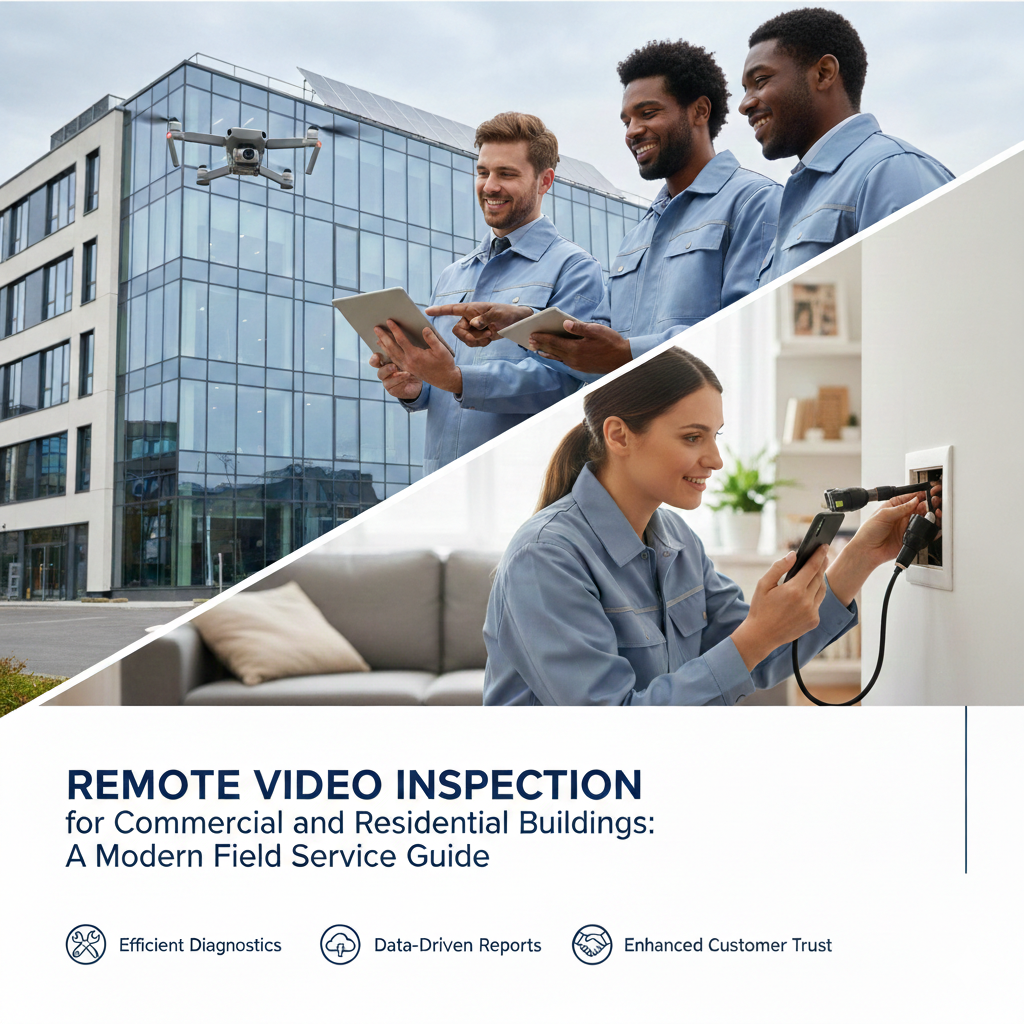
What Is Remote Video Inspection?
Remote Video Inspection (RVI) allows inspectors to evaluate buildings, systems, or installed components using secure live video — without physically traveling to the site.
Instead of driving across town or across the state, inspectors connect virtually with:
- Property owners
- Contractors
- Field technicians
- Maintenance staff
Using real-time video, they can:
- Review electrical, mechanical, or plumbing work
- Verify installations
- Troubleshoot issues
- Capture documentation
- Complete compliance checks
- Approve permits
It’s the same inspection process — just delivered digitally.
Why Remote Inspections Are No Longer Optional
Remote inspections surged during the global pandemic, but they didn’t disappear when restrictions lifted.
Why? Because organizations realized something important:
Remote inspection isn’t just a temporary solution. It’s a smarter operational model.
Today, building departments, property managers, utilities, and service providers are using RVI to:
- Reduce truck rolls
- Increase inspector productivity
- Shorten approval timelines
- Improve documentation accuracy
- Serve more customers per day
The shift isn’t about crisis response anymore — it’s about operational efficiency.

Key Benefits of Remote Video Inspection
1. Reduced Downtime
Waiting days for an on-site inspection slows construction timelines and service completion. Remote inspection allows faster scheduling and quicker approvals.
2. Lower Operational Costs
Each truck roll includes fuel, vehicle wear, labor hours, and opportunity cost. Remote inspection reduces or eliminates those expenses for many use cases.
3. Higher Productivity
Inspectors can conduct multiple inspections in a single day without commuting between locations. That means more completed inspections per week — without expanding staff.
4. Improved Documentation
Digital inspections allow:
- Recorded sessions
- Captured images
- Time-stamped documentation
- Secure audit trails
In many cases, remote documentation is more organized than traditional paper-based field notes.
5. Better Customer Experience
Contractors and property owners benefit from:
- Faster turnaround
- Flexible scheduling
- Less disruption
It’s a win for both sides.
Where Remote Video Inspection Is Being Used
Remote Video Inspection is now widely adopted across:
Commercial and Residential Construction
- Electrical inspections
- Mechanical systems
- Plumbing compliance
- HVAC change-outs
- Reroof inspections
- Solar installations
- Spa and pool connections
Municipal and County Building Departments
Many cities and counties now allow remote inspections for permit approvals, reducing backlog and accelerating construction timelines. Discover organizations that utilize remote video inspections to speed up processes and save resources.
Property Management and Facilities
Property managers use remote video inspection software for real estate to verify repairs, inspect damages, and troubleshoot maintenance issues without dispatching staff unnecessarily.
Industrial and Vendor Inspections
Manufacturing plants, utilities, and industrial sites use remote inspections for equipment validation, compliance audits, and vendor verification.
Remote inspection isn’t limited to buildings — it extends across industries wherever visual validation is required.
What Technology Is Required?
One of the biggest misconceptions about remote inspection is that it requires a complicated setup.
In reality, you only need:
- A smartphone, tablet, or laptop with a camera
- A stable internet connection
With platforms like Blitzz, there is:
- No app download required
- No complex software installation
- No technical training barrier
Inspectors simply send a secure link via SMS, email, or messaging platform. The recipient clicks and joins instantly.
This simplicity is what drives adoption.
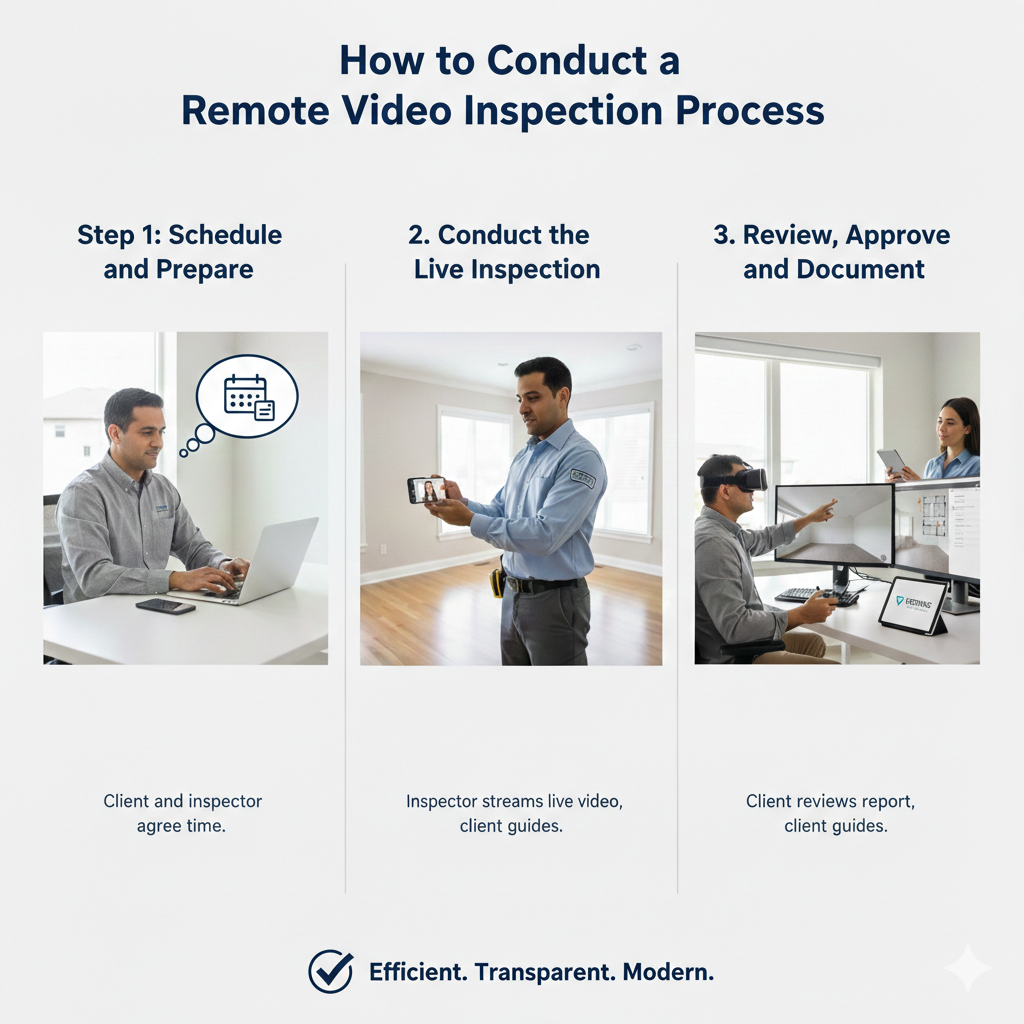
How to Conduct a Remote Video Inspection
The process closely mirrors traditional on-site inspections — just without the commute.
Step 1: Schedule and Prepare
Set a date and time. Ensure the right people are present:
- Property owner or contractor
- On-site personnel
- Inspector
- Optional subject matter expert
Have relevant documents ready, including approved plans, permits, and required tools such as a tape measure or flashlight.
Preparation ensures the inspection runs smoothly.
Step 2: Conduct the Live Inspection
At the scheduled time:
- Share the secure Blitzz link
- Confirm devices are charged
- Ensure adequate lighting and connectivity
The inspector guides the on-site participant through the inspection process, requesting specific camera angles and measurements as needed.
With advanced remote tools, inspectors can:
- Zoom into details
- Annotate directly on screen
- Capture photos
- Record sessions
- Extract text such as serial numbers
- Document findings in real time
Clear communication is key. Maintaining open dialogue helps prevent delays and misunderstandings.
Step 3: Review, Approve, and Document
Once compliance requirements are satisfied, sign-off can occur electronically according to department guidelines.
In many cases, approvals are completed the same day — significantly reducing project delays. Feel free to book a demo with Blitzz's team to see it in action.
Important Considerations
While remote inspections are highly effective, they require:
- Adequate lighting
- Reliable internet connection
- Cooperative on-site participants
If environmental conditions are unsuitable, rescheduling may be necessary.
That said, the vast majority of inspections can be completed successfully with proper preparation.
The Future of Field Service
Field service businesses are under increasing pressure to:
- Improve efficiency
- Reduce truck rolls
- Serve more customers
- Maintain compliance
- Operate sustainably
Remote Video Inspection aligns with all of these objectives.
It allows organizations to modernize operations without increasing headcount or fleet size.
And in competitive markets, that operational advantage matters.
Rolling Out Remote Inspection with Blitzz
Blitzz enables organizations to launch secure, professional-grade remote inspections instantly.
With features like:
- Secure live video
- Camera control and zoom
- Annotation tools
- Image capture and recording
- Seamless integration with existing systems
Blitzz helps inspection teams:
- Increase productivity
- Reduce operational costs
- Improve documentation
- Enhance customer experience
If you’re ready to modernize your inspection workflow, reduce unnecessary truck rolls, and improve service delivery, explore how Blitzz can fit into your operation.
The future of inspection isn’t about sending more trucks.
It’s about sending expertise — instantly.