

.png?width=120&height=55&name=Blitzz-Logo-right%20white%20eyes%20-%20not%20transparent%20(3).png)
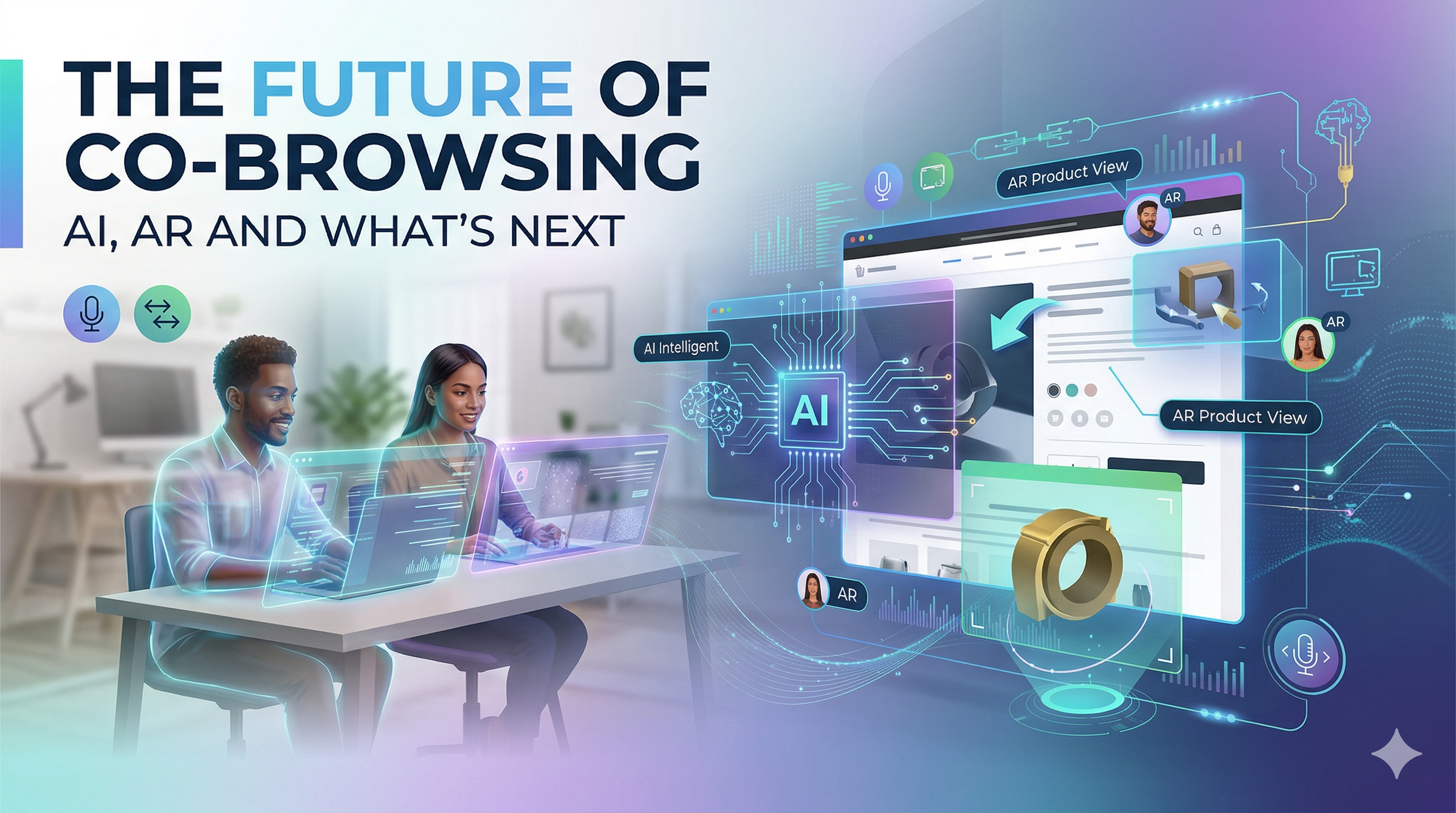
Two categories of software that once looked completely different are converging fast.
On one side: co-browsing — agents and customers sharing a synchronized browser session, working through a form together, navigating a product in real time, resolving digital friction before it becomes a lost customer.
On the other: remote visual inspections — experts assessing physical environments, equipment, damaged property, or infrastructure from anywhere in the world, through a live camera feed with AR annotation and inspection-grade documentation.
For years, these were treated as separate tools for separate teams. The contact center used co-browsing. The field service team used remote visual inspection software. The insurance company used one for claims intake and another for field appraisal.
That distinction is collapsing. And the organizations that see the convergence early are building customer experience and field service capabilities that their competitors will spend years trying to catch up to.
At Blitzz, we've been building at this intersection since the beginning — combining co-browsing, live video visual support, and AR-guided remote inspections into a single platform. What we're seeing in 2026 is not incremental improvement in either category. It's a fundamental shift in what's possible — driven by AI, by AR maturation, by agentic systems, and by hardware that makes the boundary between digital and physical almost meaningless.
This article covers the six trends reshaping both co-browsing and remote visual inspections — and what they mean for teams building support and inspection infrastructure today.
Why This Moment Matters: The Market Numbers Are Telling a Story
Before diving into the trends, the market context sets the stakes.
The global remote visual inspection market was valued at approximately $2.8 billion in 2023 and is projected to grow to around $5.9 billion by 2032, reflecting a compound annual growth rate of 8.7%.
But zoom out to the AI layer being built on top of those inspections, and the growth curve steepens dramatically. The AI Visual Inspection System Market, valued at $30.23 billion in 2025, is projected to reach $74.6 billion by 2029 — growing at a 25.3% CAGR.
And the agentic AI systems that will increasingly run these workflows autonomously? The agentic AI sector is expanding from $5.25 billion in 2024 to $199.05 billion by 2034 — a 38-fold increase, growing at a 43.84% compound annual growth rate.
These aren't niche technology trends. They're the infrastructure of how businesses will operate support, inspection, and quality assurance within the next five years. The question for every field service leader, CX director, and inspection manager isn't whether to adapt — it's whether to move now or spend the next three years catching up.
AI Makes Remote Visual Inspections Exponentially Smarter
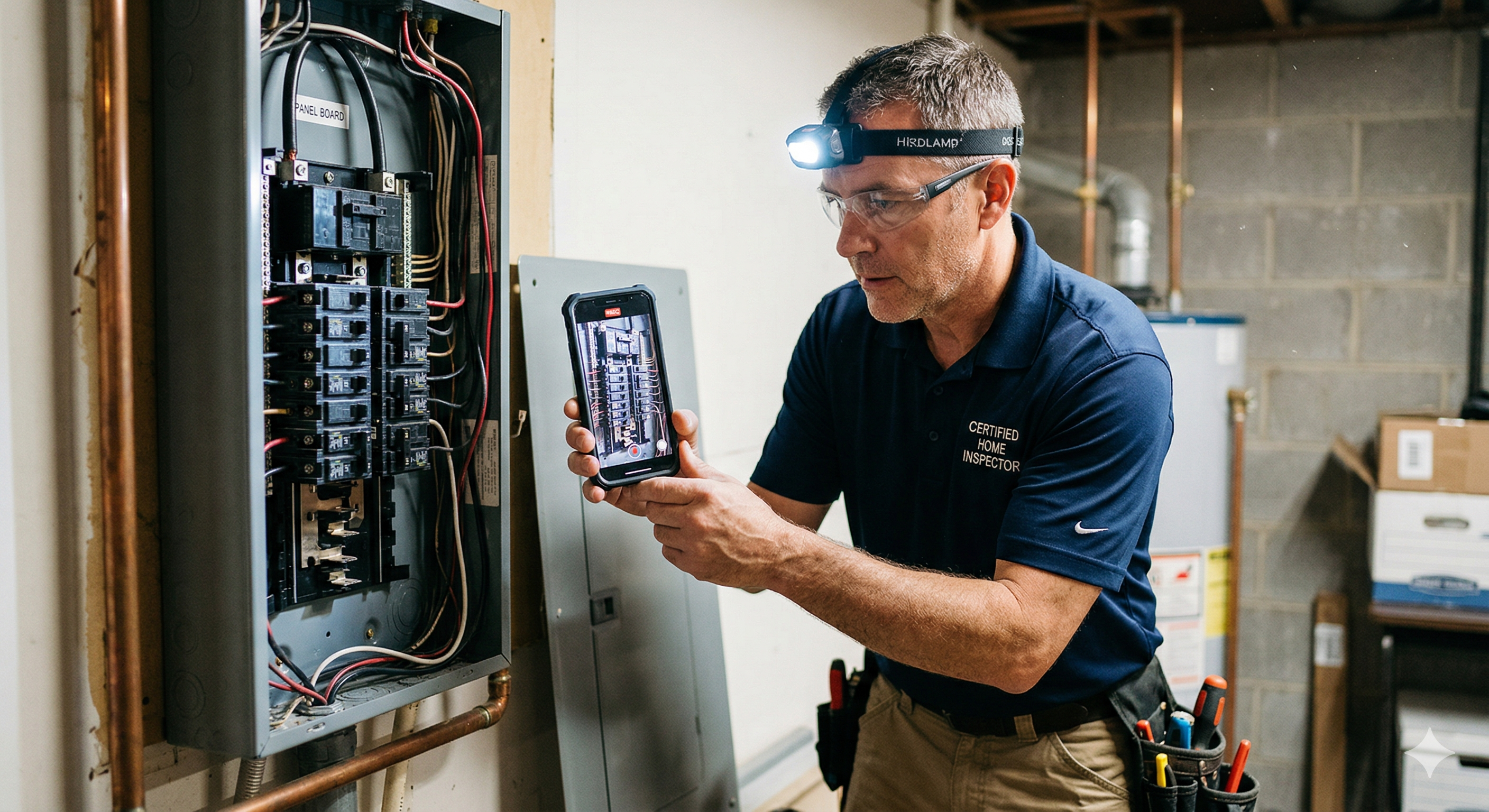
How AI Is Transforming Remote Visual Inspection From Observation to Intelligence
The first and most impactful shift happening in remote visual inspections right now is the addition of an AI layer that transforms passive observation into active intelligence.
Traditional remote visual inspection was essentially a better camera. An expert viewed a live feed, applied their knowledge, and directed the on-site worker or customer verbally. The intelligence lived entirely in the expert's head. The camera was just a transmission mechanism.
AI changes what the camera sees and what happens to what it sees.
Emerging trends in remote visual inspection include AI-powered defect recognition, cloud-based data management, and 3D measurement with ultra-high-resolution imaging — enabling faster, more accurate inspections, predictive maintenance, and reduced downtime across aerospace, energy, oil and gas, and manufacturing.
In practical terms for the kinds of remote visual inspections Blitzz supports, this means:
Real-time object recognition during live sessions. The AI layer identifies the device, equipment model, or component in the camera feed and surfaces the relevant documentation, service history, and procedure — without the agent having to ask the customer for the model number or look it up manually. The system sees what the expert sees and tells them what they need to know.
Automated defect detection and flagging. During a quality inspection or insurance claim assessment, AI can analyze the live video feed and flag anomalies, inconsistencies, or damage patterns — highlighting them with visual overlays before the expert even notices them manually. Inspection accuracy improves. Missed defects decrease. Research shows that XR-assisted inspection achieves a mean error rate of just 2.88% compared to 20.19% in baseline conditions — a near-complete elimination of inspection errors.
Predictive maintenance integration. The data captured during remote visual inspections feeds predictive models that identify equipment likely to fail before it does. AI-powered visual inspection enables predictive maintenance strategies that reduce downtime and extend asset life — particularly in high-risk environments where unexpected failures carry significant cost or safety implications.
AI-Assisted Remote Visual Inspections in Blitzz's Platform
For Blitzz customers, the AI layer in remote visual inspections shows up in three immediate ways:
OCR and live text extraction captures serial numbers, VINs, model codes, and meter readings directly from the live camera feed — automatically populating CRM and FSM records without manual entry. This eliminates a time-consuming, error-prone step that compounds across thousands of inspections.
AI-generated session summaries draft inspection reports, case notes, and follow-up actions at the end of every session — giving inspectors and agents the documentation they need without the post-session overhead that adds to every interaction's cost.
CRM-connected session intelligence means every remote visual inspection session builds on the prior history of that customer, asset, or site — giving the expert context before the session even begins.
AR Goes From Demo Feature to Core Infrastructure
Augmented Reality Is Now the Operating Layer of Remote Visual Inspections
For years, augmented reality in remote visual inspections was treated as a differentiating feature — impressive in demos, deployed cautiously in production. That era is ending.
The global AR market is projected to exceed $100 billion by 2026, fueled by enterprise adoption, generative AI integration, and cross-device compatibility. More importantly for the remote visual inspection use case, the AR is increasingly running on hardware everyone already owns.
In manufacturing, AI-powered AR solutions overlay real-time data on machinery, providing technicians with precise, context-aware guidance for complex tasks — reducing errors, improving efficiency, and ensuring that even intricate processes are executed accurately. Boeing uses this approach in aircraft production, projecting wiring diagrams directly into the technician's view, resulting in a 25% reduction in assembly errors.
Three Levels of AR in Remote Visual Inspections — Where the Industry Is Today
Level 1 — Live AR annotation (standard now): The remote expert draws arrows, places text labels, and uses a live pointer directly on the customer's or technician's camera feed. The on-site person sees the annotations overlaid on their real-world view in real time. This is what Blitzz Inspect and Blitzz Concierge deliver today — and it already represents a fundamental improvement over voice-only or video-only remote visual inspections.
Level 2 — Contextual AI overlays (emerging, 12–24 months): The system recognizes the object being inspected and automatically overlays relevant schematics, procedures, or compliance checklists onto the live view. The inspector doesn't need to locate the right documentation — the AR system surfaces it because it can identify what it's looking at. AR overlays internal schematics onto the machine or allows a remote expert to draw 3D annotations directly in the worker's field of view — giving quality inspection objective verification by overlaying CAD models onto physical parts so deviations or missing components are highlighted instantly.
Level 3 — Persistent spatial AR (2027+): Assets carry persistent digital histories. A piece of industrial equipment has its entire inspection and maintenance log attached as a spatial AR overlay — visible the moment a technician or inspector points a camera at it. The history is spatially anchored to the physical object, not buried in a database someone has to manually query.
What This Means for Co-Browsing + Remote Visual Inspections Together
The AR layer that Blitzz applies to physical remote visual inspections is the same architectural layer that will increasingly extend to browser-based co-browsing sessions. A customer navigating a complex insurance claim form and an inspector assessing physical property damage are fundamentally similar interactions — an expert guiding a non-expert through something they can't handle alone, with real-time visual context.
The platform that handles both — annotating a web form and annotating a live camera feed — with one agent workflow, one data trail, and one set of CRM integrations, is where Blitzz's product suite is built to operate.
Agentic AI Begins Running Remote Visual Inspections Autonomously
When AI Doesn't Just Assist Remote Visual Inspections — It Conducts Them
The third wave goes further than AI assistance. Agentic AI doesn't just support the human expert during a remote visual inspection — for defined, repeatable inspection types, it becomes the inspector.
79% of organizations have some AI agent adoption, with 96% planning expansion in 2025. The agentic AI sector shows remarkable 43.84% compound annual growth — indicating we're witnessing not just another technology trend, but a fundamental shift in how businesses operate.
In the context of remote visual inspections, agentic AI means inspection workflows that run without a human initiating every step:
Automated pre-inspection triage. Before a human inspector joins a session, an AI agent assesses the submitted photos, previous inspection history, and reported issue description — classifying the inspection type, confirming the right documentation is ready, and flagging anomalies that require specialized expertise. The human inspector joins with a briefing, not a blank slate.
Autonomous routine inspections. For highly standardized, repeatable remote visual inspection scenarios — inventory checks, compliance photo documentation, condition assessments against a defined rubric — agentic systems can conduct the inspection, flag exceptions, and route edge cases to human reviewers. This is already happening in manufacturing quality control, where AI visual inspection systems run continuously without human involvement at the routine level.
Intelligent escalation routing. When an AI-assisted remote visual inspection identifies something outside its confidence threshold — unusual damage, an unrecognized component, a compliance gray area — it escalates to a human expert with the full context already assembled. The human gets the hard cases. The AI handles the rest.
Agentic AI in Co-Browsing and Remote Visual Inspections at Blitzz
The same agentic principles that are transforming industrial remote visual inspections apply to customer-facing co-browsing sessions. Routine insurance intake forms, standard onboarding walkthroughs, and predictable troubleshooting flows are all candidates for agentic handling — with human escalation designed in from the start.
40% of agentic AI projects fail due to inadequate foundations, making platform selection critical. The organizations that deploy agentic inspection and support capabilities successfully are those that build the data and integration infrastructure first. Every Blitzz session that auto-syncs to Salesforce, Zendesk, Dynamics 365, or Genesys is a deposit in the data foundation that agentic capabilities draw from.
The Digital Twin Becomes the Remote Inspection's Permanent Record
How Digital Twins Are Extending the Value of Remote Visual Inspections
A digital twin is a continuously updated virtual replica of a physical asset — an industrial machine, a property, a piece of infrastructure — that reflects its real-world condition at any given moment. For remote visual inspections, the digital twin represents a paradigm shift: from inspection as a periodic event to inspection as a continuous state.
Remote visual inspection data is becoming a critical input for digital twin ecosystems and predictive maintenance models, while secure, standardized workflows support global regulatory compliance, cybersecurity, and traceability in connected industrial environments.
Emerging trends in remote visual inspection include digital twins — creating virtual replicas of assets to simulate and predict performance — alongside edge AI running models directly on inspection devices for real-time analysis without internet connectivity.
For practical remote visual inspection programs, this translates to:
Every Blitzz session — the timestamped photos, the AR-annotated findings, the GPS location data, the OCR-extracted component data — doesn't just close a case. It updates the permanent record of that asset. The next inspector who visits that piece of equipment, that property, or that installation arrives with a full visual history of every prior inspection: what was found, what was annotated, what was repaired, and what was deferred.
This is the inspection audit trail that compliance teams have always wanted and never quite had. It's being built, session by session, through every Blitzz Inspect deployment.
Remote Visual Inspection Documentation That Actually Gets Used
One of the most consistent frustrations in remote visual inspection programs is documentation that sits in silos. Photos live in email attachments. Notes live in the inspector's notebook. Session recordings aren't indexed or searchable. The data was captured but it isn't usable.
Blitzz's integration ecosystem exists precisely to solve this. When remote visual inspection sessions sync automatically to Salesforce records, Zendesk tickets, HubSpot contacts, Procore project files, or Dynamics 365 field service work orders, the inspection data becomes part of the operational record — searchable, auditable, and available to every subsequent touchpoint with that customer or asset.
No-Code Inspection Workflows and Zero-Download Access Become the Standard
The Friction-Free Future of Remote Visual Inspections
One of the most practical trends reshaping remote visual inspections is the elimination of the technical barrier to entry — both for inspectors deploying the technology and for field contacts participating in sessions.
Early remote visual inspection deployments required IT involvement, specialized hardware, app installations on customer devices, and significant configuration effort before a session could start. The technology was powerful but slow to deploy and hard to scale.
Two shifts are making this frictionless:
WebAR and browser-based access mean that the field contact — a customer, a site worker, a property owner — taps a link and joins the inspection in their mobile browser. No app download. No account creation. No technical barrier. WebAR reflects augmented reality future trends, making AR more accessible than ever — instead of downloading special apps, users dive into AR experiences directly through their web browsers, with no complicated setups and instant access across devices.
This is the architecture Blitzz was built on from day one. The entire Blitzz Inspect and Blitzz Concierge experience is browser-based for the field contact — which is why deployment scales to thousands of sessions per month without an IT project to get there.
Low-code and no-code workflow builders mean that the inspection workflows themselves — the question sequences, the photo capture triggers, the escalation rules, the CRM sync mappings — can be configured by operations teams without engineering involvement. As these capabilities mature, the organizations best positioned to take advantage of them will be those already running on platforms with open integration architecture.
What Zero-Download Access Means for Remote Visual Inspection at Scale
The compounding effect of app-free remote visual inspections isn't visible in a single session. It appears when you look at completion rates across thousands of sessions. Every percentage point of friction in the join experience — an app download, a permissions request, a slow load — translates directly to sessions that don't start.
Blitzz customers running remote visual inspection programs at scale report that the browser-based join experience is one of the primary drivers of high session completion rates. When there's no barrier between "receiving the link" and "being in the session," almost everyone who receives the invitation completes the connection.

Co-Browsing and Remote Visual Inspections Converge Into One Platform
The Single Platform for Digital Co-Browsing and Physical Remote Visual Inspections
This is the most strategically significant trend — and the one most directly relevant to how Blitzz is positioned.
The organizational separation between "co-browsing for digital support" and "remote visual inspections for field operations" is an artifact of how these tools were built, not a reflection of how customer interactions actually work.
Consider a real interaction that happens regularly for Blitzz customers:
A homeowner contacts their insurance company to file a property damage claim. The interaction starts digitally — the claims agent helps them navigate the FNOL form using Blitzz Co-Browse, guiding them through each field and ensuring accurate data entry. Midway through the form, the agent needs visual evidence of the damage. With one click, the agent escalates to a camera session. The homeowner's phone becomes an inspection device — the agent can see the damage, annotate it with AR markers, capture timestamped photos, and extract the property's address and policy number via OCR, all within the same Blitzz session.
The entire interaction — co-browse for the form, camera session for the remote visual inspection, photos and notes synced to the Salesforce claim record — happened in one workflow, on one platform, with one data trail.
This is not a future scenario. This is what the Blitzz product suite enables today. And as co-browsing and remote visual inspection technology continue to converge, the organizations running fragmented toolstacks will face increasing operational disadvantages: siloed data, disconnected workflows, duplicate documentation effort, and an inability to leverage AI across the full interaction because the data lives in too many separate places.
The Integration Layer That Makes Convergence Real
Convergence between co-browsing and remote visual inspections is only operationally meaningful if the data flows where your team works. Blitzz's integration ecosystem is the infrastructure that makes the convergence real rather than theoretical:
- Salesforce — co-browse sessions and remote visual inspection sessions both sync automatically to the same customer record in Service Cloud, Sales Cloud, or Field Service
- Zendesk — session recordings, captured images, and AI summaries attach to tickets whether the session was a browser co-browse or a camera-based remote inspection
- HubSpot — visual support sessions and inspection sessions both log to the same contact record, building a unified interaction history
- Microsoft Dynamics 365 — field service work orders and customer service cases both receive session documentation from the full Blitzz product suite
- Genesys Cloud CX — agents transition from voice to visual co-browse or remote visual inspection seamlessly during active calls
- Procore — construction project remote visual inspections sync to project records for compliance documentation and site progress tracking
Every integration serves the same purpose: ensuring that whether the interaction was a digital co-browsing session or a physical remote visual inspection, the data ends up in one place, in one format, feeding one intelligence layer.
What the Convergence Means for Your Team Right Now
Knowing where co-browsing and remote visual inspections are heading is only valuable if it shapes decisions you can make today. Here's the practical framework:
Audit whether your current tools can converge. If you're running separate platforms for digital co-browsing and physical remote visual inspections, map the data flow. Where does session data from each platform end up? Is it in the same CRM record? Is the same AI layer reading both? If not, you're operating two separate intelligence systems — and paying the overhead of both.
Build your session data foundation now. Every co-browsing session and every remote visual inspection session that syncs automatically to your CRM is building the dataset that future AI personalization, predictive maintenance, and agentic automation will draw from. Organizations investing in this infrastructure today will have a two-to-three year advantage over those who start in 2028.
Deploy browser-based access for all field contacts. For any team running remote visual inspections at scale, app-free access isn't a convenience — it's a completion rate metric. Require browser-based join from any platform you evaluate.
Design for human-AI collaboration, not replacement. While automation and AI are transforming remote visual inspection, human expertise remains irreplaceable — the future is about augmenting human inspectors with the best tools, not replacing them. The organizations that design clear human-AI collaboration workflows — where AI handles the routine and humans handle the complex — will outperform those that either automate indiscriminately or resist AI integration entirely.
Choose platforms with open integration architecture. The AI layer that will run across your co-browsing and remote visual inspection data needs a data pipeline to work with. Closed platforms that don't push session data to your CRM are not building the infrastructure the future requires.
Frequently Asked Questions
What is the future of remote visual inspections?
Remote visual inspections are evolving along three simultaneous tracks: AI is adding object recognition, defect detection, and predictive intelligence to inspection workflows; AR is maturing from a demo feature to a core operational tool with contextual overlays and spatial persistence; and agentic AI is beginning to conduct routine inspections autonomously, with human experts handling complex and edge cases. The global remote visual inspection market is projected to grow from $2.8 billion to $5.9 billion by 2032 — while the AI visual inspection systems market is growing far faster, from $30 billion in 2025 to $74.6 billion by 2029.
How is AI changing co-browsing and remote visual inspections?
AI is transforming both categories at three levels: as a copilot surfacing real-time guidance and auto-generating session documentation; as an agentic system handling routine interactions end-to-end; and as a memory layer that connects session history across co-browsing and remote visual inspection sessions to deliver personalized, context-aware experiences. The most advanced AI deployments combine both categories — using AI to handle the digital workflow (co-browse) and the physical assessment (remote visual inspection) within a single, connected session.
What is the connection between co-browsing and remote visual inspections?
Co-browsing and remote visual inspections are based on the same underlying principle: an expert sharing a real-time visual context with a non-expert and guiding them to resolution. The difference is the surface being shared — a browser session for co-browsing, a camera feed of the physical world for remote visual inspections. As platforms like Blitzz combine both capabilities, the distinction is becoming operational rather than categorical — a single session can move from browser co-browse to camera-based remote visual inspection and back, with one data trail connecting both.
Does Blitzz support both co-browsing and remote visual inspections?
Yes. Blitzz operates across three products that collectively cover both categories: Blitzz Co-Browse for guided browser sessions; Blitzz Concierge for camera-based live visual support with AR annotation; and Blitzz Inspect for inspection-grade remote visual inspections with GPS capture, OCR extraction, timestamped photo documentation, and compliance-ready audit trails. All three products share the same integration ecosystem and CRM sync infrastructure.
What industries benefit most from the convergence of co-browsing and remote visual inspections?
Insurance (digital FNOL co-browse escalating to camera-based property remote visual inspection), field service (digital ticket co-browse combining with live equipment remote visual inspection for triage), construction (project management co-browse combined with site remote visual inspection for progress documentation), manufacturing (quality control workflow co-browse with AR-guided production remote visual inspection), and any industry where customer interactions cross between digital and physical environments.
How should teams prepare for the AI and AR future of remote visual inspections?
Four priorities: build your session data foundation now (every session synced to your CRM is the training data for future AI); deploy browser-based, app-free access for all field contacts (completion rates are your critical metric); choose platforms with open integration architecture (the AI layer needs a data pipeline); and design human-AI collaboration workflows before deploying agentic capabilities (the escalation path is as important as the automation).
When will AR become standard in remote visual inspections?
Browser-based AR annotation on live video feeds is standard now — it requires no specialist hardware and runs on smartphones field contacts already own. Contextual AI overlays (where the system identifies the asset and surfaces relevant documentation automatically) are emerging and will be table stakes within 24 months. Spatial persistent AR — where digital histories are anchored to physical assets — is a 2027+ horizon. Organizations investing in the current level of AR now will be architecturally ready for the next levels without platform replacement.
The Organizations Building This Infrastructure Now Will Define the Category
The future of co-browsing and remote visual inspections is not a single technology shift. It's a convergence of AI intelligence, AR annotation, agentic automation, digital twin integration, and zero-friction access — arriving at different speeds, but all pointing toward the same destination: a world where the distinction between a digital support session and a physical remote visual inspection is invisible to both the customer and the expert.
The platforms that will lead in 2029 are being chosen today. And the data infrastructure being built now — in every session that syncs to Salesforce, every remote visual inspection that auto-generates a timestamped photo record, every co-browse interaction that updates a customer's history — is the compounding asset that makes AI, AR, and agentic capabilities possible when they arrive.
Blitzz is building toward this convergence across Co-Browse, Concierge, and Inspect — connected by a deep integration ecosystem that ensures every session, regardless of type, feeds the same operational intelligence.
Ready to see the convergence in action?
Start a free 30-day Blitzz trial at blitzz.co → — no app download required for your field contacts or customers, no credit card to get started.

.jpg)