



On this page
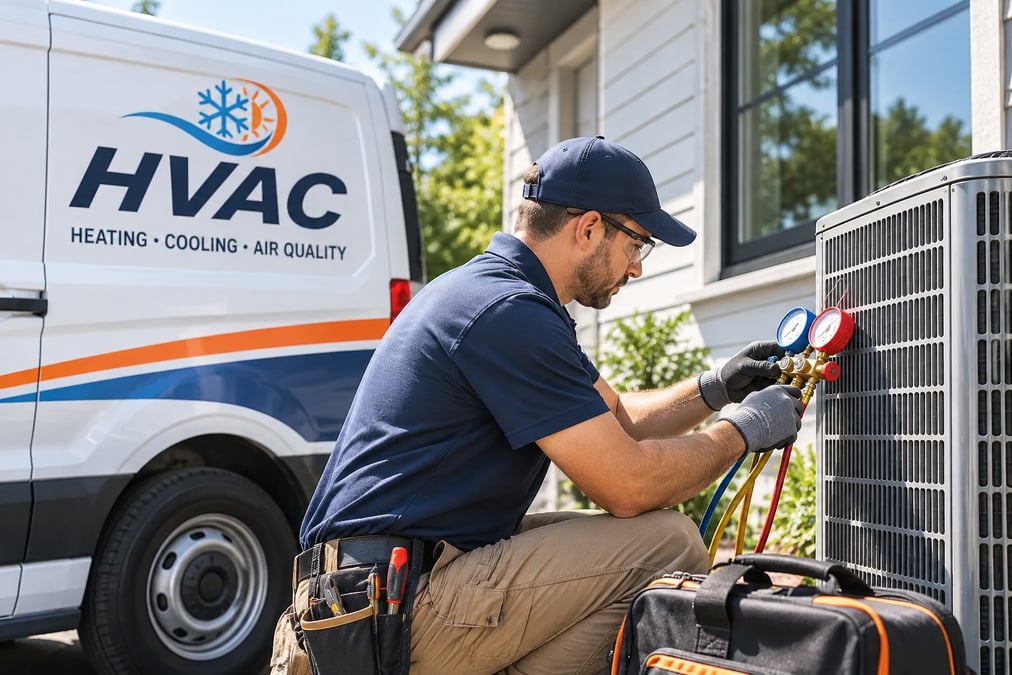
Remote video inspection is important for HVAC companies because it lets them verify equipment, model plates and connections without a trip to the site. A supervisor, estimator or inspector joins through a technician’s or homeowner’s phone camera, sees the system live, captures time stamped photos and makes a decision on the call. For change outs, quality checks, warranty documentation and service triage, that removes drives that do not need to happen.
HVAC companies run on technician time, and every unnecessary truck roll takes a skilled tech away from billable work. Blitzz Inspect makes remote verification practical: the person on site taps a link and joins from a phone browser with no app, and Owlbert AI identifies equipment and model plates in the live video, keeps the inspection on its checklist and writes the notes and report when the call ends.
Key takeaways
- Many HVAC checks are visual: model plates, line sets, electrical connections, condensate routing and clearances can all be confirmed on camera.
- Remote video reduces truck rolls for change out verification, supervisor QA, pre-quote surveys and service triage.
- Owlbert AI reads equipment and model plates in the live video and writes the report, so verification produces documentation automatically.
- Remote video does not replace hands-on diagnostics, refrigerant work or inspections that require test instruments.
- No app for the person on site. Homeowners and techs should join from a link in their phone browser.
- Equipment and model plate recognition. AI that reads model plates in the live video saves typing and transcription errors.
- GPS and time stamped photos. Location and time make the record dependable for warranties, rebates and disputes.
- AI-written notes and reports. The inspector should finish the call with documentation done.
- Guided checklists. Checklists keep every verification consistent and flag missing items.
- Integrations. Findings should reach the CRM or field service system, such as Salesforce, HubSpot, Zapier or a REST API. See all Blitzz integrations.
- Language support. Live Chat Translation translates chat messages between the inspector and the customer during the session.
- Security. Sessions involve customers’ homes and personal details. See Blitzz security.
What challenges do HVAC companies face today?
Technician time is the scarcest resource
Experienced HVAC technicians are hard to find and expensive to keep. When a senior tech or supervisor drives across town to look at a nameplate or confirm a connection, that is time not spent on installations or service calls that generate revenue.
Seasonal demand spikes
The first heat wave or cold snap of the season floods dispatch with calls. Companies that can triage remotely, separating true emergencies from issues a homeowner can resolve with guidance, and confirming what equipment is on site before dispatching, can serve more customers in the weeks that matter most.
Change outs need verification
Every system replacement involves details that need to be right: the equipment installed matches the quote and permit, the model and serial numbers are recorded, the connections are correct and the installation meets code. Verifying those details in person for every job is slow, and skipping verification creates risk.
Warranties and rebates depend on documentation
Manufacturer warranty registration, utility rebate programs and service agreements often require model and serial numbers, installation photos or proof of completion. Missing or unclear documentation delays registrations and payments, and occasionally costs the customer coverage.
Second trips are expensive
When a technician arrives without the right part, or a quote is built on the wrong equipment details, the result is a second trip. Each one adds fuel, time and customer frustration.
How does remote video inspection help HVAC companies?
Remote video inspection helps by bringing the right person to the equipment without bringing them to the site. In Blitzz Inspect, a session works in four steps:
- Send a link. Text or email a session link to the technician, homeowner or property manager.
- Join in one click. They open the link in their phone browser. No app download is required.
- Inspect with AI. The inspector guides the camera while Owlbert AI identifies equipment and model plates and tracks the checklist. High resolution photos are captured with location and time.
- Close it out. Owlbert writes the notes and report when the call ends, and findings can sync to the systems the company already uses.
- The technician opens the link and starts with a wide shot of the outdoor unit and its pad, showing clearances on each side.
- The supervisor asks for the outdoor unit’s data plate. Owlbert reads the model and serial number from the live video, and the supervisor captures a photo.
- The technician follows the line set from the condenser to the wall penetration, showing insulation and support.
- At the disconnect, the supervisor checks the box, whip and labeling, then asks for a close-up of the connections with the cover removed safely by the technician.
- Inside, the technician shows the indoor unit or coil and its data plate, the condensate line and trap, and the thermostat.
- Before the call ends, Owlbert flags that the secondary drain photo is missing. The technician shows it, and the checklist is complete.
Owlbert also includes Ask AI, which pulls the right section of a company’s own manuals and procedures while the call is live. Guided checklists flag missing items before the inspector hangs up, so a verification does not come back incomplete.
Where does remote video fit in HVAC work?
Change out verification
After a system replacement, a supervisor can verify the installation over video: the outdoor and indoor units, model plates, line set and insulation, electrical disconnect and whip, condensate line and trap, and clearances. Owlbert reads the model plates on camera, and every photo is stamped with location and time for the job record.
Supervisor quality checks
Installation managers can review work before the crew leaves the site. A short video check of brazed joints, refrigerant line routing, thermostat wiring or ductwork connections catches issues while they are still easy to fix, without a supervisor driving to every job.
Pre-quote equipment surveys
Before sending an estimator, the office can ask the homeowner to show the existing equipment. A clear view of the nameplates, the installation location and the electrical panel helps qualify the lead, confirm what is there and plan the visit, so the estimator arrives prepared.
Service triage
When a customer calls about a system that is not cooling or heating, a quick video session can show the thermostat, the air filter, the breaker and the outdoor unit. Some calls are resolved on the spot. Others are dispatched with a clearer picture of the likely problem and the parts the technician may need.
Expert support for technicians in the field
Newer technicians can bring in a senior tech on video when they hit an unfamiliar system. The expert sees what the tech sees and guides the next step, which helps the job get done on the first visit and builds the team’s skills.
Permit and code inspections
Some building departments now offer remote inspections for HVAC change outs, verifying equipment, model plates and connections over video. Contractors who are comfortable with remote sessions make those inspections faster for everyone. See how Blitzz supports government building departments.
What does a remote change out verification look like?
The walkthrough below is illustrative and shows how a supervisor might verify a split system replacement in a short session with the installing technician.
When the supervisor hangs up, Owlbert writes the report with each photo, its location and time, and the equipment details. The job record is complete before the crew leaves the driveway.
What can be verified remotely, and what cannot?
|
Item |
Remote video |
In person |
|
Model and serial plates |
Well suited; Owlbert reads plates on camera |
Rarely needed |
|
Equipment placement and clearances |
Well suited with a wide shot and close-ups |
When access or measurements are unclear |
|
Line set, insulation and routing |
Well suited for visible runs |
For concealed sections |
|
Electrical disconnect and connections |
Well suited for visual confirmation |
For testing and measurements |
|
Condensate drain and trap |
Well suited |
For hidden routing |
|
Refrigerant charge and pressures |
Can review gauge readings shown on camera |
Charging and testing require a technician |
|
Combustion and venting safety |
Useful for visual review |
Combustion analysis requires instruments on site |
The rule of thumb: use remote video when seeing the equipment is enough to make a decision, and send a technician when the job requires tools, measurements or hands on the system.
What does remote video change for the business?
The biggest change is how technician time is spent. When supervisors verify installs remotely and the office triages calls on video, senior techs spend more of the day on work only they can do. Fewer second trips mean fewer wasted miles and fewer rescheduled customers.
Documentation improves as a side effect. Every remote session produces time stamped photos and a written report, so model numbers for warranty registration, installation photos for rebate programs and proof of completion for customers are captured as part of the work, not chased afterward.
Customers notice too. A homeowner who can show the problem on a call and get an answer quickly has a better experience than one who waits for a technician to arrive and look. And when a technician does arrive, they come prepared.
What should HVAC companies look for in remote video inspection software?
For a wider comparison, read our guide to the best remote video inspection software.
How does BlitzzCam fit alongside remote video?
Remote video handles verification when the decision-maker is not on site. For documentation the crew captures during the job, BlitzzCam is Blitzz’s field photo app for HVAC contractors. Technicians take GPS and time stamped photos of every install, use AI Walkthrough to talk while they shoot so notes are written for them, and connect jobs with field service systems such as ServiceTitan.
FAQ
Why is remote video inspection important for HVAC companies?
It lets HVAC companies verify equipment, model plates and connections without a trip to the site, which saves technician time, reduces second trips and produces documentation for every job.
Can Blitzz read HVAC model plates?
Yes. Owlbert AI identifies equipment and model plates in the live video during a Blitzz Inspect session.
Does the homeowner need an app?
No. They tap a link and join from an iPhone or Android browser.
Can remote video replace HVAC service calls?
Not entirely. It works well for verification, triage and expert guidance, but repairs, refrigerant work and testing still need a technician on site.
Who writes the inspection report?
Owlbert AI writes the notes and report when the call ends. The inspector reviews the findings and makes every decision.
How much does Blitzz Inspect cost?
Blitzz Inspect offers a free account or a 30-day pilot; see the Blitzz Inspect pricing page.
Where else is remote video inspection used?
Across insurance, construction, utilities and building departments. See top 10 industries using AI-powered remote inspection, remote video inspections for construction, and trade examples such as roofing and water heater inspections.
Verify HVAC work without the drive
See how Blitzz Inspect handles change outs, QA and triage from link to report. Read our guide to remote video inspections, start free or book a demo.

Blitzz Team
The Blitzz Team writes about remote video support, virtual inspections and field service. Our guides come from working with home builders, property managers, warranty teams, contact centers and field service organizations that use Blitzz to see and solve issues without a truck roll.