

.png?width=120&height=55&name=Blitzz-Logo-right%20white%20eyes%20-%20not%20transparent%20(3).png)
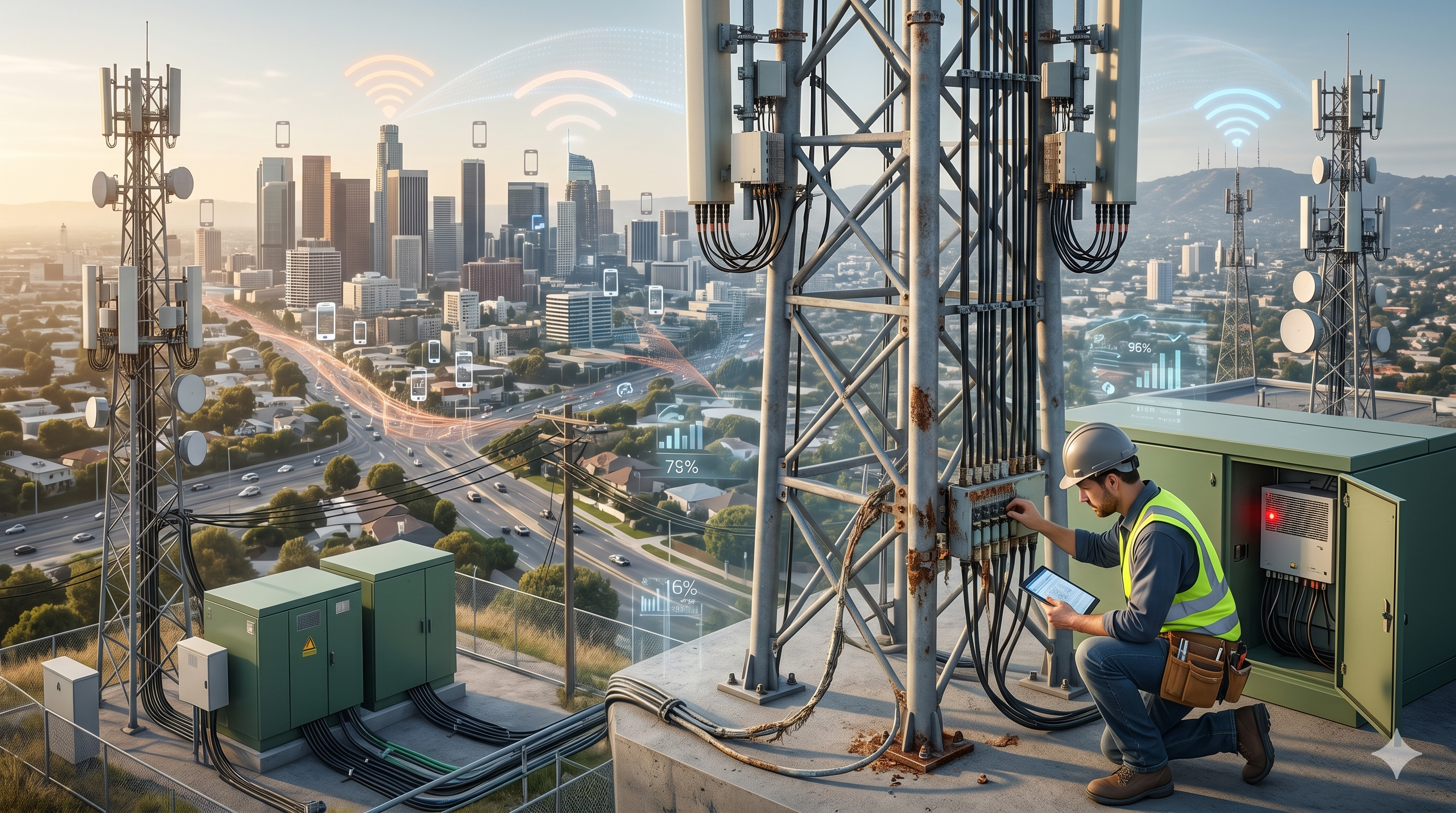
Telecom infrastructure rarely fails all at once. More often, it’s a series of small, visible issues—an antenna slightly out of alignment, a cable beginning to wear, early signs of corrosion, or a connection that’s no longer secure. On their own, these may seem minor. But over time, they compound into degraded performance, service disruptions, and costly emergency interventions.
The challenge isn’t just identifying these issues—it’s how they’re traditionally discovered.
In many cases, detection still relies on scheduled site visits, manual inspections, and reactive responses after performance has already been affected. This approach creates delays, increases operational costs, and limits how quickly teams can respond to emerging problems.
But that model is changing. With remote visual inspection, many of these common infrastructure failures can now be identified early—without the need to send a crew on-site. By enabling real-time visibility and guided assessments, teams can diagnose issues faster, validate conditions instantly, and make informed decisions without disrupting existing workflows.
So before dispatching another team, it’s worth asking: What issues can you already detect—without ever setting foot on-site? In this article, we’ll explore five common telecom infrastructure failures that can be identified early—without the need for an on-site visit. Learn more about how remote visual inspection help with detecting issues without setting foot on-site and reducing truck rolls.
Antenna Misalignment
Antenna alignment is critical to maintaining consistent signal coverage, but it doesn’t take much for it to shift. Environmental factors like strong winds, heavy rain, temperature changes, or even gradual structural movement can cause antennas to move slightly out of position over time. These shifts are often subtle and can go unnoticed during routine operations.
Even a minor misalignment can have a significant impact on network performance. Signal strength may weaken, coverage areas can shrink or shift, and users may experience slower speeds or dropped connections. Left unaddressed, what starts as a small deviation can lead to widespread service issues and increased customer complaints.
With remote visual inspection, teams can assess antenna positioning in real time without needing to be physically on-site. This allows for faster identification of potential issues, including:
- Visible tilt or directional shift
- Changes in surrounding obstructions (such as new structures or debris)
- Signs of mounting instability or loosened fixtures
By leveraging remote visual inspection, technicians can guide on-site personnel or end users through a live inspection, ensuring accurate diagnostics without the delays of traditional site visits.
Cable Damage
Telecom cables are constantly exposed to environmental and operational stress. Over time, factors such as weather conditions, UV exposure, physical tension, and improper installation can cause cables to deteriorate. This wear and tear often begins subtly—small cracks, slight fraying, or minor strain—but can quickly worsen if not identified early.Cable damage is one of the most common sources of network issues. Even minor defects can lead to signal loss, intermittent connectivity, and overall performance degradation. As damage progresses, it can result in service interruptions, increased maintenance costs, and the need for urgent on-site repairs. With remote visual inspection, teams can inspect cable conditions in real time without the need for immediate site visits. This enables faster identification of early warning signs, including:
- Frayed or exposed wiring
- Cracks or wear in cable insulation
- Improper routing or visible stress points
Using remote visual inspection, technicians can guide on-site personnel through a live inspection, ensuring accurate diagnostics while reducing delays and unnecessary dispatches.
Corrosion and Environmental Wear
Telecom infrastructure is constantly exposed to environmental conditions that slowly degrade metal components. Moisture, salt air (especially in coastal regions), air pollution, and temperature fluctuations all contribute to corrosion over time. This process is gradual, often starting at a microscopic level before becoming visually apparent.
Corrosion weakens structural integrity and electrical connectivity. As it progresses, it can compromise performance, reduce reliability, and eventually lead to complete equipment failure. What makes it particularly dangerous is that it often develops silently—without immediate or obvious service impact until it becomes critical.
With remote video inspection, teams can identify early signs of environmental wear without requiring an on-site visit. High-resolution live video allows technicians to assess key indicators such as:
- Rust buildup on connectors, mounts, or exposed metal surfaces
- Discoloration, oxidation, or visible residue
- Early signs of material degradation or surface breakdown
Remote video inspection enables faster detection and validation of these conditions, helping teams prioritize maintenance before corrosion becomes a failure point.
Loose or Faulty Connections
Connections within telecom infrastructure can loosen over time due to vibration, thermal expansion, installation quality, or general wear and tear. Even components that were initially secured correctly can gradually shift under continuous environmental and operational stress. Loose or faulty connections are one of the most common causes of intermittent outages and performance inconsistencies. Unlike complete failures, these issues often come and go, making them harder to diagnose and more disruptive to service reliability.
Using remote video inspection, technicians can quickly assess connection stability and physical integrity in real time. This allows for early identification of issues such as:
- Unsecured cables or visibly loose connectors
- Gaps, misalignment, or improper fittings
- Movement or instability observed during live inspection
Remote video inspection helps teams confirm issues instantly and guide on-site adjustments without unnecessary dispatch delays.
Physical Obstructions & Site Changes
Telecom sites don’t exist in static environments. Over time, surrounding conditions change—new construction projects emerge, vegetation grows, and unexpected debris can accumulate around equipment. These changes can gradually interfere with line-of-sight, accessibility, and overall equipment performance.
Physical obstructions can block or weaken signal transmission, reduce operational efficiency, and create unexpected coverage gaps or blind spots. In many cases, these issues develop gradually, making them easy to overlook until performance is already impacted. With remote video inspection, teams can continuously evaluate site conditions without needing to physically attend each location. This enables early detection of environmental and structural changes such as:
- Overgrown trees, vegetation, or newly introduced obstacles
- Partial or full equipment blockage
- Noticeable environmental changes around the site layout
Remote video inspection provides real-time visibility into evolving site conditions, allowing teams to respond proactively rather than reactively.
What is Blitzz Inspect?
Blitzz Inspect is a remote visual inspection solution designed to help teams assess, diagnose, and document field conditions in real time—without the need for an on-site visit. Using live video, guided workflows, and AI-powered tools, it enables technicians, support teams, or even end users to collaborate instantly, capture accurate visual data, and make faster, more informed decisions. As a flexible SaaS platform, Blitzz Inspect integrates seamlessly into existing systems such as CRM or service management tools, allowing inspections to happen directly within your current workflow rather than as a separate process. The result is a more efficient, scalable approach to inspections—reducing delays, minimising unnecessary dispatches, and improving overall operational visibility.
Key benefits of Blitzz Inspect:
- Real-time remote visual inspection and collaboration
- Reduced need for on-site visits and truck rolls
- Faster issue identification and resolution
- Seamless integration with existing workflows and systems
- Improved operational efficiency and cost savings
- Enhanced documentation with visual records and data capture
- Scalable solution for distributed teams and field operations

Moby Transforms Support with Remote Visual Inspection
A great example of remote visual inspection in action comes from Moby, one of Canada’s fastest-growing telecommunications providers.
Like many telecom companies, Moby’s support team relied heavily on phone-based troubleshooting to resolve customer issues. Without visual context, agents had to depend on customer descriptions, which often led to misdiagnosis, repeated callbacks, and unnecessary technician dispatches. This not only increased operational costs but also slowed down resolution times and impacted customer satisfaction.
To solve this, Moby implemented Blitzz’s app-free remote video support, allowing agents to see exactly what customers see in real time. Instead of guessing, support teams could instantly diagnose issues, guide customers visually, and resolve problems on the spot—all within their existing workflow.
The results were significant. Moby achieved a 95% first-call resolution rate, reduced truck rolls by 75%, and brought average resolution time down to just 10 minutes.
Midco Scales Customer Support with Visual Remote Assistance
Another strong example of remote visual inspection at scale comes from Midco, a leading telecommunications provider serving hundreds of thousands of customers across the U.S. Midwest.
During the COVID-19 pandemic, Midco faced a surge in service demand while needing to minimise in-home technician visits to protect both employees and customers. At the same time, their traditional support model—relying heavily on phone-based troubleshooting—created limitations. Without visual context, agents struggled to accurately diagnose issues, leading to longer resolution times, repeated interactions, and unnecessary technician dispatches. To address this, Midco implemented Blitzz’s app-free remote video support, enabling agents to see exactly what customers see in real time. This transformed troubleshooting from guesswork into guided, visual problem-solving—allowing teams to diagnose issues faster, assist with self-installations, and resolve problems without sending crews on-site.
Comwave Accelerated Customer Support with Real-Time Visual Assistance
A strong example of scaling support operations through remote visual inspection comes from Comwave, one of Canada’s largest independent telecommunications providers.
Like many telecom companies, Comwave relied heavily on traditional phone-based troubleshooting to resolve customer issues. However, without visual context, agents often struggled to accurately diagnose problems based on customer descriptions alone. This led to extended resolution times, miscommunication, repeated troubleshooting steps, and increased customer frustration.
To overcome these limitations, Comwave implemented Blitzz’s app-free remote video support. With a simple text link, customers could instantly connect with support agents via live video—allowing agents to see exactly what the customer sees in real time. This eliminated guesswork and enabled more precise, guided troubleshooting directly within the support workflow.
Conclusion
Across all of these telecom infrastructure issues, the common thread is clear—they are almost always visible long before they escalate into critical failures. The real challenge has never been whether these problems can be detected, but how quickly and efficiently teams can identify and act on them before they impact performance.
This is where remote visual inspection changes the equation. Instead of relying on scheduled site visits or reactive dispatches, teams can assess site conditions in real time, often directly within their existing workflow. Whether it’s integrated into platforms like Salesforce or other operational systems, inspections become faster, more connected, and far less disruptive.
The result is a more streamlined approach to operations—no delays in decision-making, no unnecessary field dispatches, and no interruption to ongoing workflows.
If you’re looking to modernise how your team handles inspections and reduce operational friction, explore how Blitzz fits into your existing system. Check out Blitzz pricing or connect with our team to see how remote visual inspection can scale with your operations.