
.png?width=120&height=55&name=Blitzz-Logo-right%20white%20eyes%20-%20not%20transparent%20(3).png)

On this page
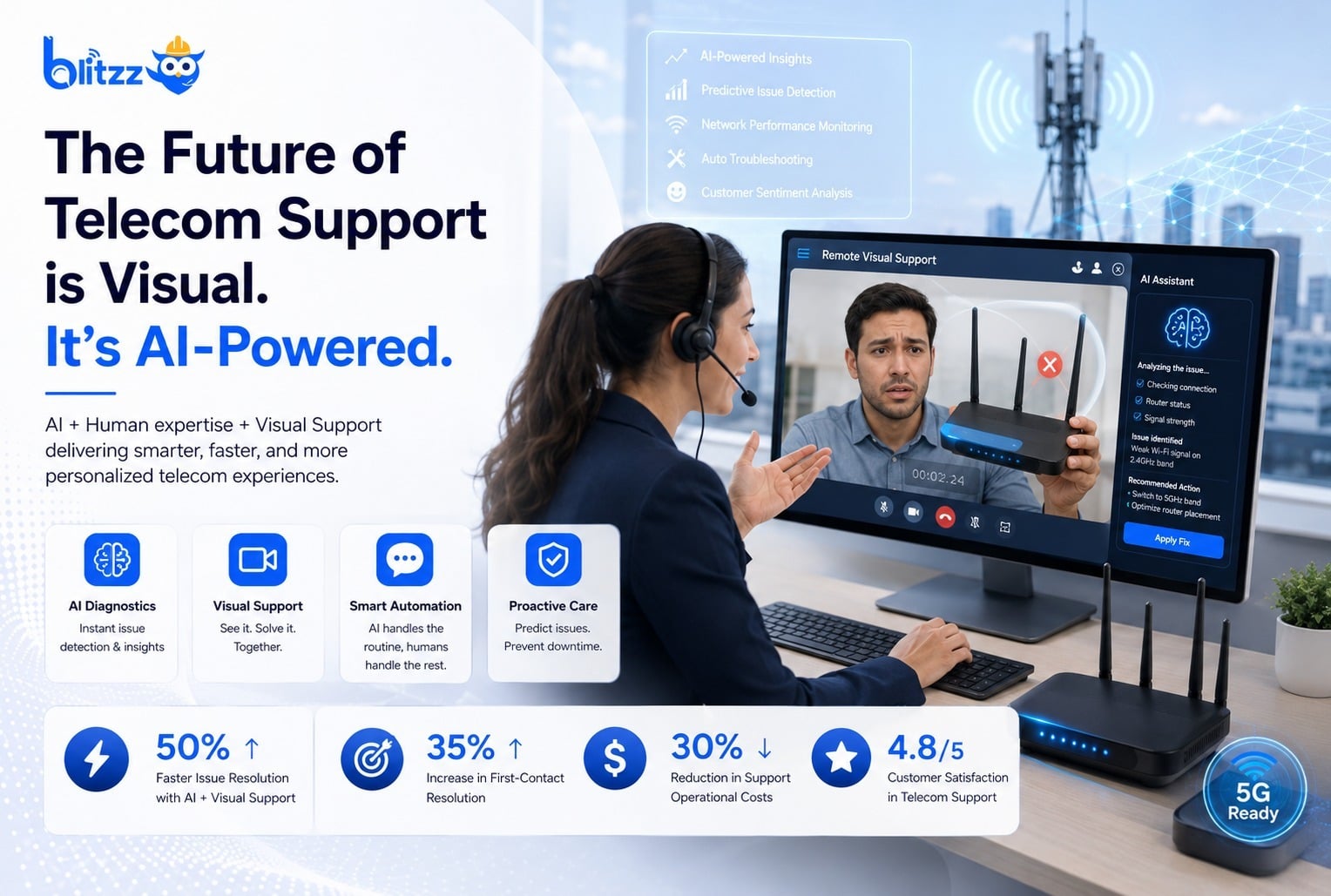
Customer expectations have changed for good. People now want support that is instant and frictionless — and they have little patience for the back-and-forth of explaining a technical problem they can barely describe. Phone, email, and chat all share the same blind spot: the agent can't see the issue. That gap is the single biggest unsolved problem in customer experience, and it's why a new category has emerged. Visual customer support brings live video, photos, and augmented reality into the support interaction so agents can see exactly what the customer sees and resolve issues in real time. As visual-first experiences become the norm across every industry, visual support is fast becoming the next evolution of CX — and platforms like Blitzz are pioneering the shift.
The problem with traditional customer support
Voice and text-based support run into the same wall again and again: customers struggle to describe technical issues accurately, so agents are left guessing. "Is the light flashing or solid? Which cable is in which port?" becomes a slow, frustrating negotiation that drags out resolution and forces repeated interactions.
That miscommunication is expensive. It produces repeat calls, technician dispatch errors, and poor first-contact resolution — every misunderstanding compounds into wasted time and cost. As Blitzz lays out in Visual Customer Support vs. Traditional Call Centres, the problem isn't the agents; it's that they're working without the one thing that would let them solve the problem completely — sight.
Some industries feel this more acutely than others, because their problems are inherently physical:
- Telecom — routers, modems, cabling, and connectivity issues.
- Home services — HVAC, plumbing, and appliance faults.
- Healthcare equipment — medical and home monitoring devices.
- Insurance — assessing damage that has to be documented accurately.
In each case, a customer is trying to describe something they can see but the agent cannot — and that's exactly the gap visual support closes.
Defining visual customer support
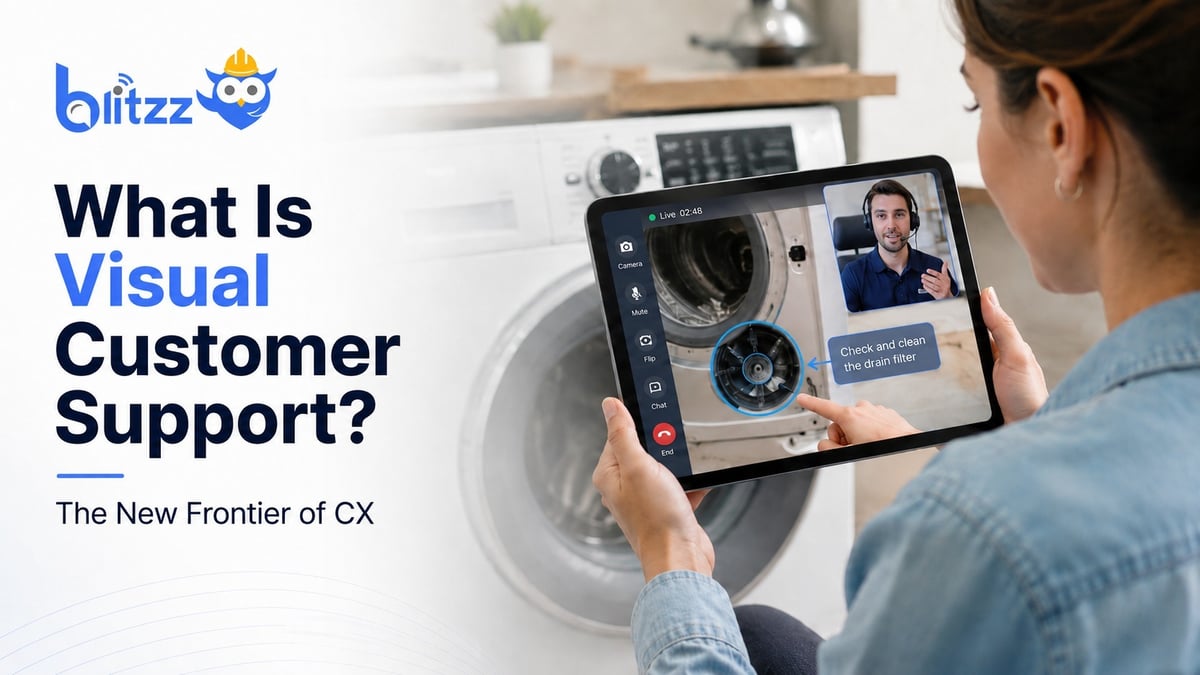
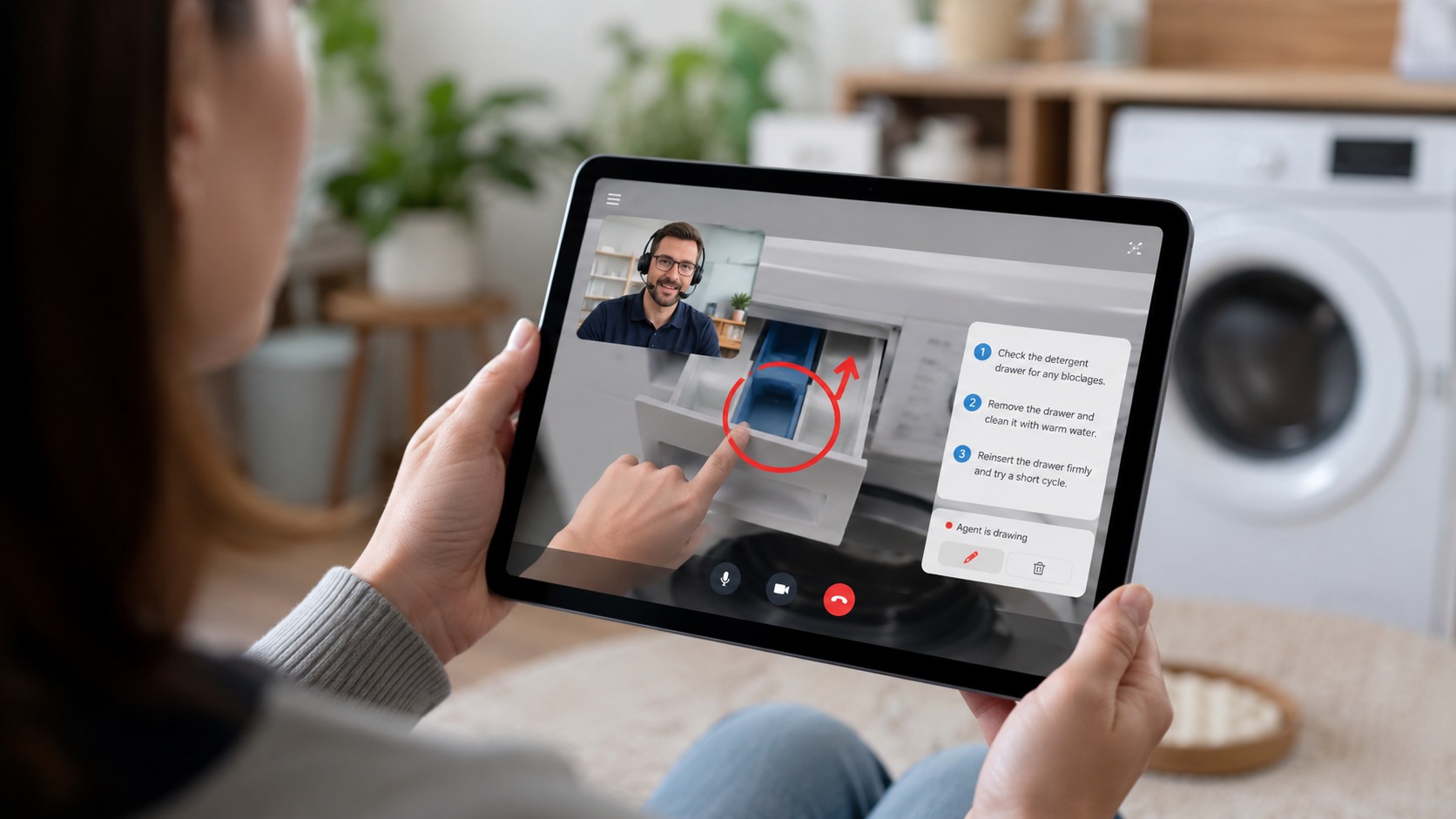
Visual customer support is real-time customer support in which agents and customers connect through live video, photos, or AR overlays to visually diagnose and resolve issues. Instead of relying on a verbal description, the agent observes the actual problem and guides the customer to a fix on screen.
It rests on four key components:
- Live video assistance — the agent sees what the customer sees in real time, the foundation of the whole model.
- AI-guided visual troubleshooting — step-by-step assistance, intelligently sequenced, that walks the customer through a resolution.
- Photo-based issue capture — images submitted before a live session enable pre-diagnosis, so the interaction starts with context.
- Augmented reality (AR) guidance — on-screen annotations and instructions that highlight the exact button, cable, or setting to act on.
The shift it represents can be summed up in three moves: from voice to visual, from assumption to observation, and from delay to real-time resolution. Where traditional support guesses and waits, visual support sees and solves. The full picture of this transition is in Blitzz's complete guide to seeing what your customer sees.
Why visual context changes everything in CX
The power of visual support comes down to a simple truth: seeing the problem eliminates guesswork. When an agent can observe the issue directly, root-cause identification is faster and support decisions are far more accurate. There's no diagnostic detour, no wrong assumption sending the conversation down a dead end.
That accuracy moves the metrics that define customer experience:
- First Contact Resolution (FCR) improves significantly when issues are seen rather than described — Blitzz customers consistently report FCR gains of 20–40%.
- Average Handle Time (AHT) drops as diagnostic time collapses; in one deployment, handle time fell about 35%, with 30-minute calls resolved in under 10.
- Customer Effort Score (CES) falls because the customer no longer has to translate a technical problem into words — they just show it.
The emotional impact matters just as much as the metrics. Customers feel less frustrated, more confident in using their equipment, and — critically — guided rather than interrogated. Showing a problem feels collaborative; describing one over and over feels like a test. That sense of being helped, explored further in how to improve customer experience with remote video support, is what turns a support interaction into a loyalty-building moment. In a Blitzz survey, 73% of customers preferred video assistance over a voice-only call, and 78% found the tool extremely helpful.
Use cases of visual customer support
Visual support delivers across virtually any industry where problems are physical and visible. As Blitzz puts it, if it can be seen, it can be supported. The strongest use cases include:
Telecom and internet providers. Router setup, connectivity troubleshooting, and fibre installation support — agents see the equipment and guide subscribers through fixes instead of dispatching a technician. The telecom playbook is detailed in how telcos leverage remote video support.
Home services. HVAC diagnostics, plumbing verification, and appliance repair triage. Distributor APR Supply Co. used Blitzz Concierge to help HVAC and plumbing contractors resolve issues in minutes instead of days, replacing costly site visits with instant visual problem-solving.
Insurance. Damage assessment and remote claims documentation, with timestamped photo capture that stands up to audit — covered on the insurance visual remote assistant page.
Healthcare equipment support. Medical device setup and home monitoring guidance, delivered with healthcare-grade security through Blitzz for healthcare devices and telehealth.
Retail and consumer electronics. Product setup guidance and warranty troubleshooting — guiding customers through configuration so a confusing unboxing doesn't become a return, an area equipment troubleshooting handles for everything from appliances to electronics.
How visual customer support works
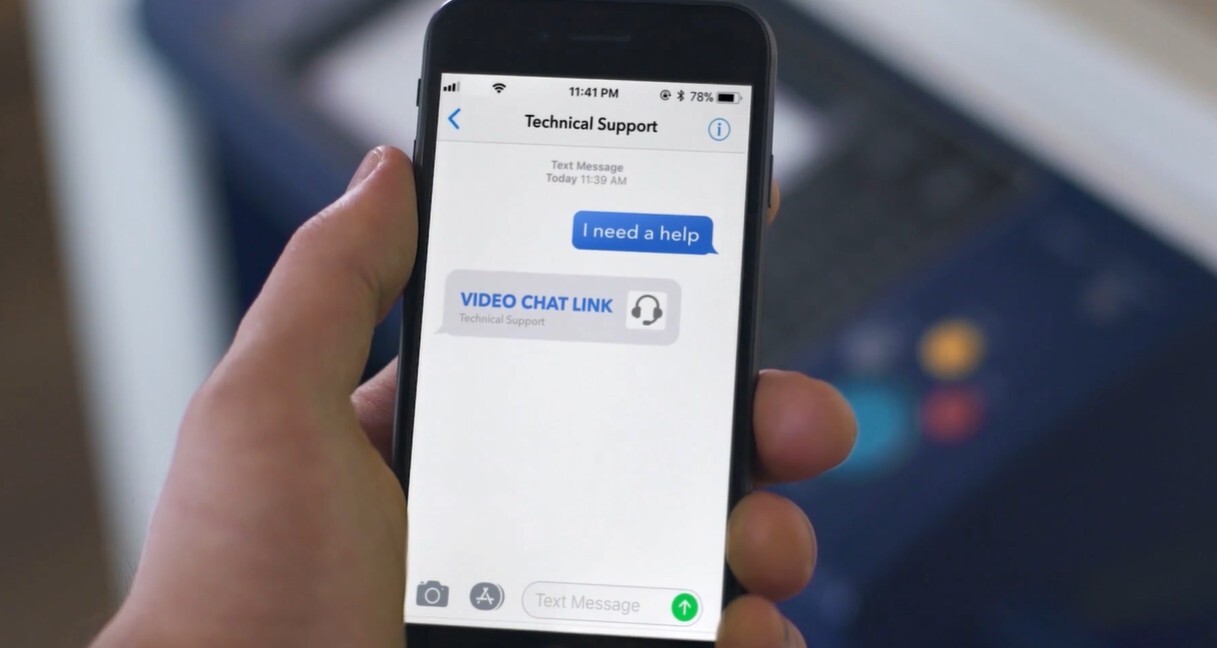
In practice, a visual support session follows five simple steps:
- The customer initiates a support request — via a link, an app, or the company website.
- AI pre-triage (optional layer) categorises the issue and suggests a visual session when one would help.
- The live visual session begins — the customer connects through a secure video link, with no app download required on platforms like Blitzz.
- Real-time guidance — the agent sees the issue directly and uses AR annotations to guide the customer step by step.
- Resolution or escalation — the issue is resolved immediately, or, if hands-on work is genuinely required, a technician is dispatched with full visual context and the right parts.
That last point is what makes visual support so efficient: even when a field visit is unavoidable, the preliminary visual session means the technician arrives prepared, lifting first-time fix rates and cutting wasted trips — the economics of which are in The Real Cost of a Truck Roll.
The role of AI in visual customer support
AI is the intelligence layer that makes visual support smarter. It can pre-diagnose issues from submitted photos, route each customer to the right agent, and surface real-time suggestions during a live session so the agent reaches the correct fix faster. Blitzz's broader approach is detailed in How Blitzz Uses AI to Transform Remote Support.
Crucially, AI works with humans rather than replacing them. AI handles classification, guidance, and documentation; human agents provide the judgment and empathy that complex or sensitive situations demand. This collaboration is the heart of the model — the AI removes friction so the human can focus on the customer.
Looking ahead, AI also unlocks predictive support: anticipating issues before customers even report them and triggering proactive troubleshooting workflows. The combination of AI intelligence and visual sight is what makes this category genuinely new, rather than just "video calls for support."
Introducing Blitzz: powering the visual CX revolution
Blitzz exists to eliminate guesswork in customer support. It was built for real-time visual troubleshooting at scale — turning "describe the problem" into "show me, and I'll guide you."
What Blitzz enables:
- Instant visual connectivity — customers join from a secure link in their phone browser, with no app friction.
- Remote expert assistance — issues get resolved without dispatching a technician, with experts supporting multiple sites from anywhere.
- AR-powered guidance — agents annotate the live video to direct customers visually, with HD video, freeze-frame, zoom, and timestamped photo capture (see Blitzz features).
- Enterprise-grade scalability — built for telecom, insurance, home services, healthcare, manufacturing, and more, with native integrations for Salesforce, ServiceNow, Zendesk, and Genesys.
The business impact is consistent: lower operational costs, faster resolution times, fewer truck rolls and dispatches, and improved CX metrics across the board. One telecom provider reduced truck rolls by 60%; contact-centre teams report diagnosing issues 2x faster — and onboarding is fast, with no app for customers to install.
Benefits of visual customer support for businesses
The advantages compound across the operation:
- Operational efficiency — reduced call duration and fewer repeat interactions, because issues are solved correctly the first time.
- Cost reduction — less technician dispatch and lower support overhead, with savings that often appear within the first month of deployment.
- CX improvements — higher satisfaction scores and faster resolution, the app-free experience customers increasingly expect.
- Workforce efficiency — agents resolve more complex issues faster, and expert teams are used where they add the most value rather than driving between sites.
The future of customer support is visual-first
The trajectory is clear. Support is shifting from reactive problem-handling to real-time visual resolution, and AI plus AR is becoming a standard layer in CX platforms rather than a novelty. Customer expectations are evolving toward "show me, don't tell me" — people want to point a camera at a problem and have it solved, not narrate it down a phone line. As that expectation hardens, visual support moves from a competitive advantage to a core enterprise capability, with Blitzz positioned as an early leader in the transformation.
Conclusion
Visual customer support — real-time support through live video, photos, and AR that lets agents see and resolve issues directly — represents the next frontier of customer experience. It eliminates the guesswork that has limited phone and chat support for decades, improves the metrics that matter most (FCR, AHT, CES, and CSAT), and delivers measurable savings across telecom, home services, healthcare, insurance, and beyond. Paired with AI, it forms a combined intelligence-and-visibility layer that fundamentally changes what support can accomplish. The companies adopting it now aren't just keeping up — they're defining the category, with Blitzz leading the way.
Frequently asked questions
What is visual customer support? Visual customer support is real-time support in which agents and customers connect through live video, photos, or AR overlays to visually diagnose and resolve issues — so the agent sees the problem directly instead of relying on a verbal description.
How is visual customer support different from a normal video call? A normal video call shows faces. Visual customer support adds AR annotation on the customer's live camera feed, photo capture, AI-guided troubleshooting, secure recording, and integration into support systems — purpose-built to diagnose and resolve technical issues, not just to talk.
How does visual customer support improve CX metrics? By letting agents see the problem, it raises First Contact Resolution (often by 20–40%), reduces Average Handle Time, and lowers Customer Effort Score — while improving satisfaction because customers feel guided rather than interrogated.
Which industries benefit most from visual customer support? Industries with physical, visible problems benefit most: telecom, home services (HVAC, plumbing, appliances), healthcare equipment, insurance claims, and retail or consumer electronics.
Do customers need to download an app? Not with platforms like Blitzz. Customers tap a secure link sent by SMS, email, or WhatsApp and join from their phone browser — no app, no account.
What role does AI play in visual customer support? AI acts as the intelligence layer — pre-diagnosing issues from photos, routing customers to the right agent, and providing real-time guidance — while human agents handle judgment and empathy. Together they make support faster and more accurate.
What is Blitzz Concierge? Blitzz Concierge is a visual customer support platform that combines live video, AR annotation, and AI to let agents see exactly what the customer sees, resolve issues in a single session, and reduce unnecessary field visits.
See it to solve it
Visual customer support is redefining customer experience — replacing guesswork with real-time sight, lowering costs, and resolving issues faster across every industry. Discover how Blitzz combines live video, AI, and AR guidance to elevate your CX: explore Blitzz Concierge, review pricing, read more on the Blitzz blog, or book a demo to see visual customer support in action.

Blitzz Team
The Blitzz Team writes about remote video support, virtual inspections and field service. Our guides come from working with home builders, property managers, warranty teams, contact centers and field service organizations that use Blitzz to see and solve issues without a truck roll.