
.png?width=120&height=55&name=Blitzz-Logo-right%20white%20eyes%20-%20not%20transparent%20(3).png)
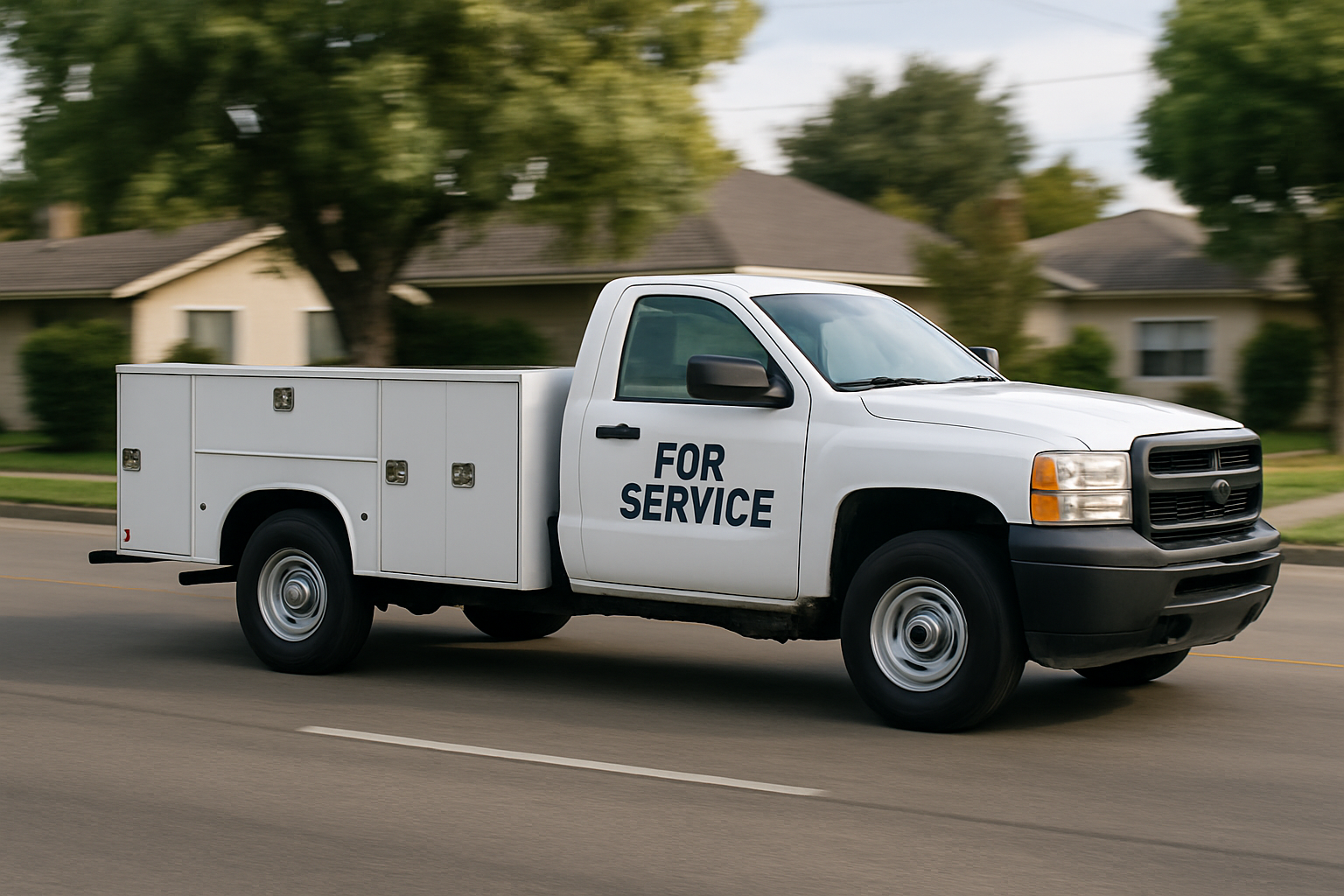
In telecom operations, a truck roll refers to the dispatch of a field technician to a customer location to install, repair, or troubleshoot services. While often necessary, these on-site visits come with a significant cost burden that extends far beyond the visible expense of sending a technician into the field.
Each truck roll involves labor costs, fuel, vehicle maintenance, and scheduling logistics. More importantly, it consumes valuable time—both for the service provider and the customer. Missed or delayed service-level agreements (SLAs), repeat visits due to incorrect diagnostics, and inefficient routing only compound the issue. At scale, these inefficiencies add up quickly. Large telecom operators may dispatch thousands of technicians ежедневно, turning truck rolls into one of the most expensive components of service delivery.
Yet, a substantial portion of these visits are avoidable. Many issues stem from misdiagnosis, limited remote troubleshooting capabilities, or lack of real-time visibility into network and customer environments. With smarter support models—leveraging automation, remote diagnostics, and proactive monitoring—operators can resolve a significant share of problems without ever leaving the office.
Reducing truck rolls, therefore, is not just about cutting operational costs. It’s about delivering faster resolutions, improving first-time fix rates, and creating a more seamless customer experience—while transforming field operations into a more efficient, scalable, and intelligent system.
Why Truck Rolls Happen: Root Causes at Scale
To effectively reduce truck rolls, telecom operators must first understand why they occur in the first place. While some field visits are unavoidable—such as physical infrastructure failures or new installations—a surprisingly large percentage stem from issues that could be resolved remotely with better systems and processes in place.
Misdiagnosis during first-line support
First-line support teams often lack advanced diagnostic tools or sufficient training to accurately identify the root cause of issues. This leads to incorrect escalation decisions, where problems that could be resolved remotely are instead assigned to field technicians unnecessarily.
Lack of real-time network visibility
Without access to real-time network data and performance insights, support teams operate with limited context. This uncertainty makes it difficult to pinpoint issues remotely, increasing reliance on physical visits as a fallback rather than confidently resolving problems through remote diagnostics.
Customer-side issues (Wi-Fi, device misconfigurations)
A large portion of service problems originate within the customer’s home, such as poor Wi-Fi coverage, incorrect router settings, or device-level misconfigurations. These issues rarely require technician visits but are frequently mistaken for network faults, triggering avoidable truck rolls.
Siloed systems (support tools not integrated)
Disconnected systems across customer support, network operations, and field service teams create fragmented workflows. Without a unified view of customer data and network status, support agents struggle to make informed decisions, often defaulting to dispatching technicians to resolve uncertainty.
Reactive vs. proactive operations
Many telecom operators rely on reactive support models, addressing issues only after customers report them. This approach misses opportunities to detect and resolve problems early. As a result, minor issues escalate into service disruptions that ultimately require costly and avoidable truck rolls.
The Business Impact: Beyond Cost Reduction
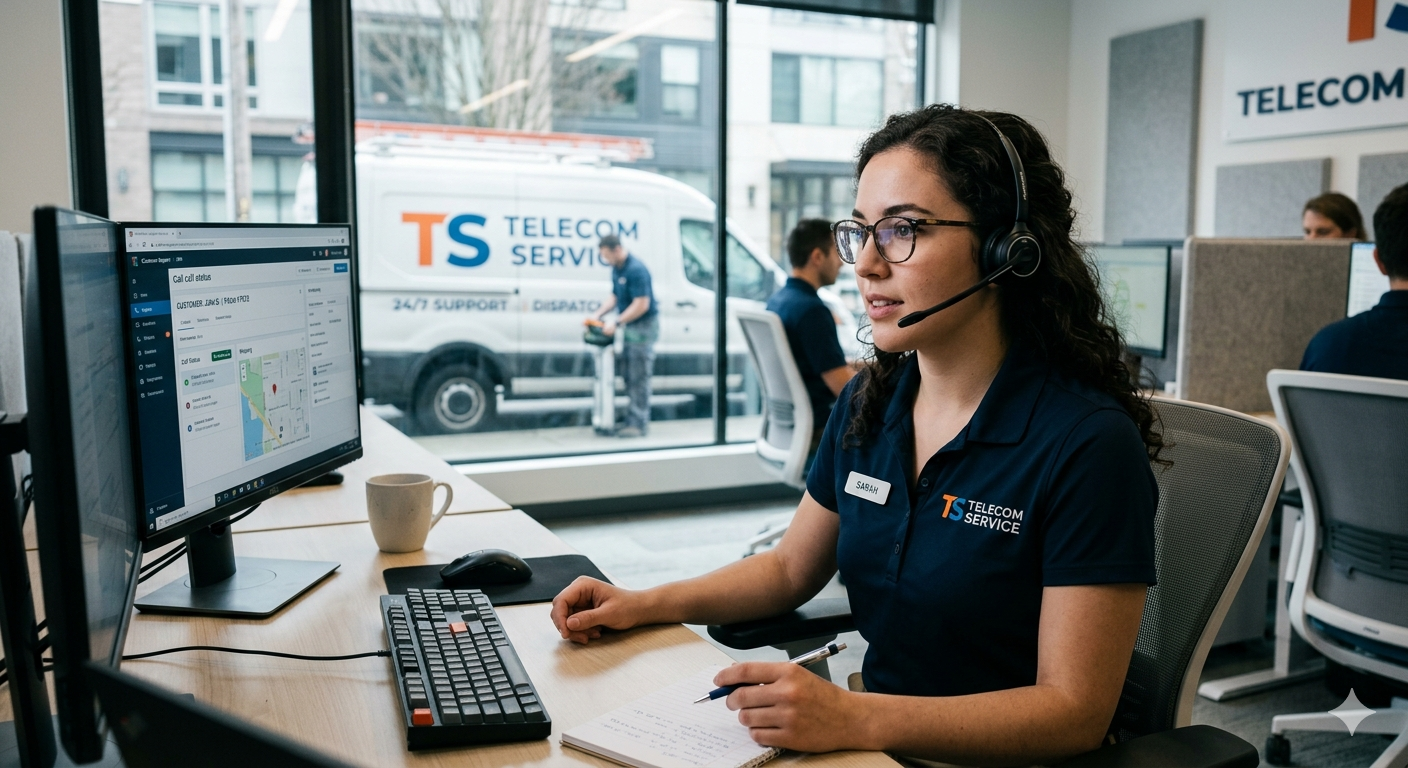
Reducing truck rolls is often framed as a cost-saving initiative, but its true impact extends far beyond operational budgets. For telecom operators, inefficient field dispatches influence productivity, customer satisfaction, sustainability, and even long-term market competitiveness. Understanding these broader implications is critical for leadership teams evaluating transformation investments. The following areas highlight why truck rolls should be addressed as a strategic business priority, not just a tactical efficiency issue.
Direct costs (fuel, workforce, logistics)
Truck rolls generate significant direct operational expenses, including fuel, vehicle maintenance, dispatch coordination, and technician labor. Each visit requires careful scheduling and resource allocation. At scale, these costs compound rapidly, making field operations one of the most expensive components of telecom service delivery.
Opportunity cost (technicians tied up unnecessarily)
When technicians are dispatched for avoidable issues, their time is diverted from higher-value work such as network upgrades, complex fault resolution, or new installations. This inefficiency limits productivity and scalability, forcing operators to either delay critical work or hire additional staff to meet demand.
Customer experience impact (delays, repeat visits)
Unnecessary truck rolls often result in longer resolution times, delayed appointments, and repeat visits when the initial diagnosis is incorrect. These inefficiencies frustrate customers and reduce trust in the service provider. Over time, poor service experiences directly impact satisfaction and loyalty.
Environmental impact (carbon footprint)
Each truck roll contributes to fuel consumption and carbon emissions through vehicle travel and logistics operations. When multiplied across thousands of daily dispatches, the environmental footprint becomes significant. Reducing unnecessary visits supports sustainability goals and helps telecom operators align with ESG commitments.
Brand perception and churn risk
Frequent service failures, delays, and repeated technician visits damage brand reputation and reduce perceived reliability. In competitive markets, customers are quick to switch providers when experiences are poor. High truck roll rates therefore increase churn risk and weaken long-term customer loyalty and trust.
How Remote Visual Support Reduces Truck Rolls at Scale
For telecom operators, reducing truck rolls is not simply about cutting field activity. It is about building a smarter support model that helps teams make better decisions earlier in the service journey. Remote visual support changes the equation by giving agents and technicians the ability to see what is happening in real time, rather than relying on incomplete descriptions over the phone. That shift alone can dramatically improve accuracy, speed, and operational efficiency across high-volume support environments.
Resolve issues on the first call with visual confirmation
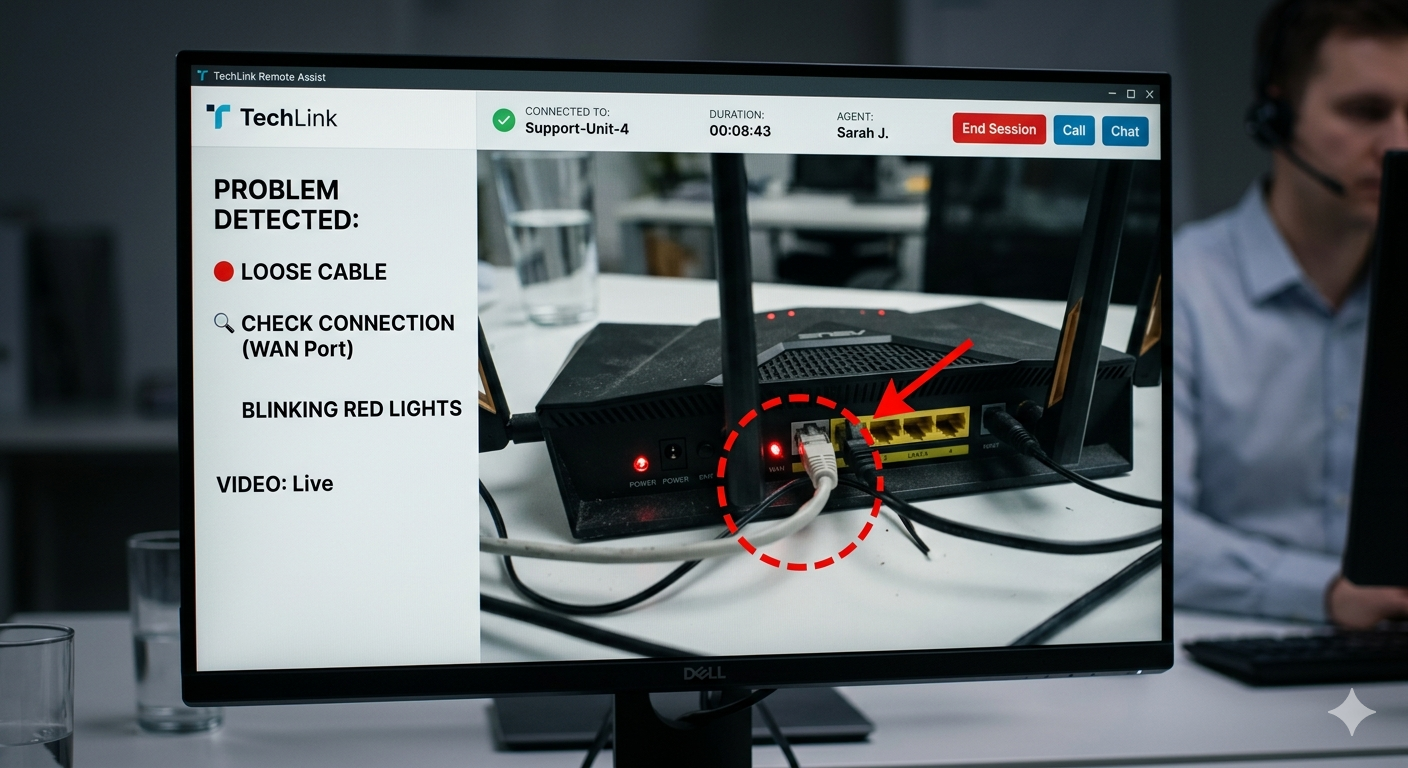
One of the biggest drivers of unnecessary truck rolls is uncertainty. In a traditional voice-only support model, agents are often forced to troubleshoot based on what the customer says they see, which can lead to guesswork, incomplete diagnosis, or overly cautious dispatch decisions. A blinking light, a loose cable, damaged equipment, or an incorrect setup can all be difficult to assess without visual context.
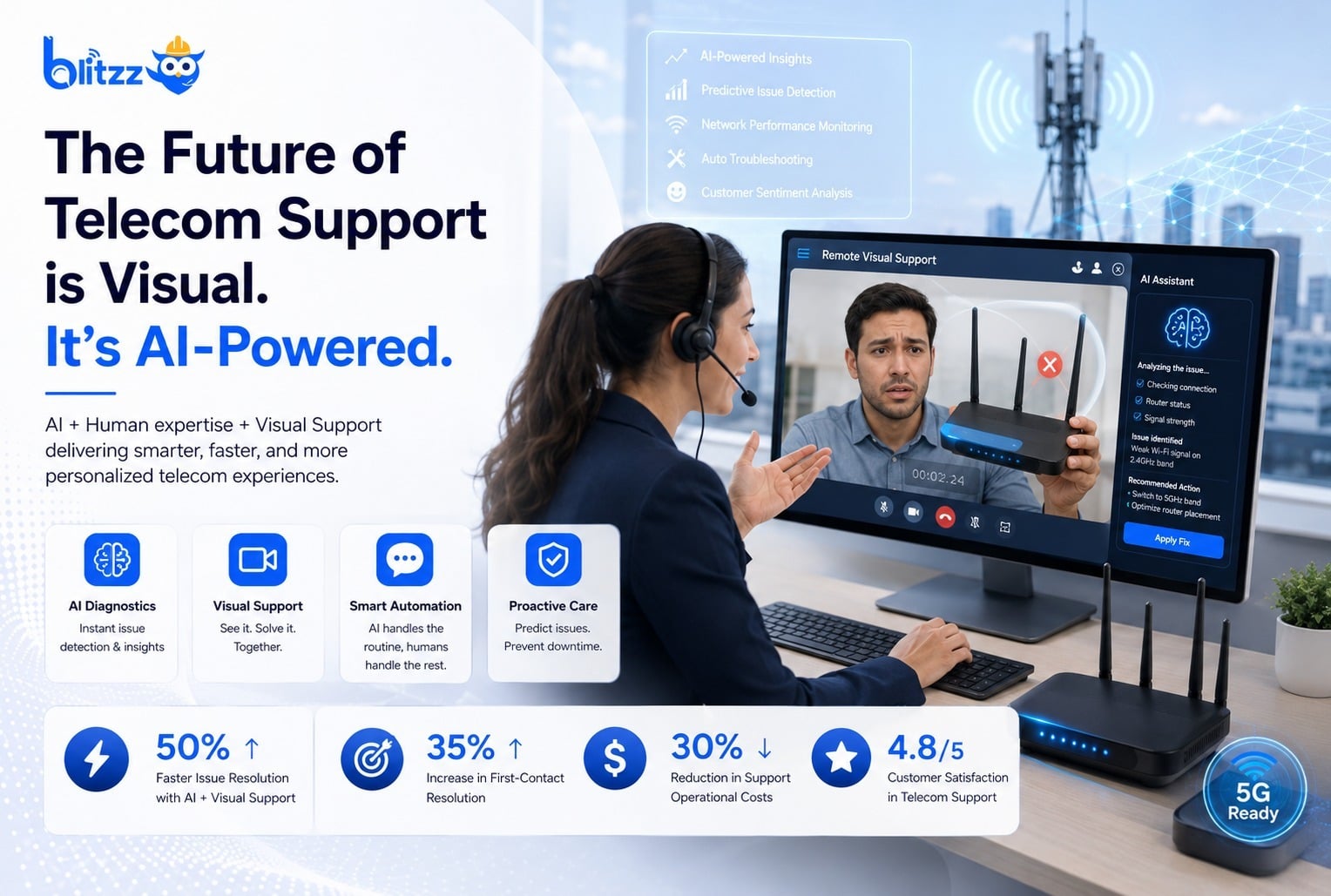
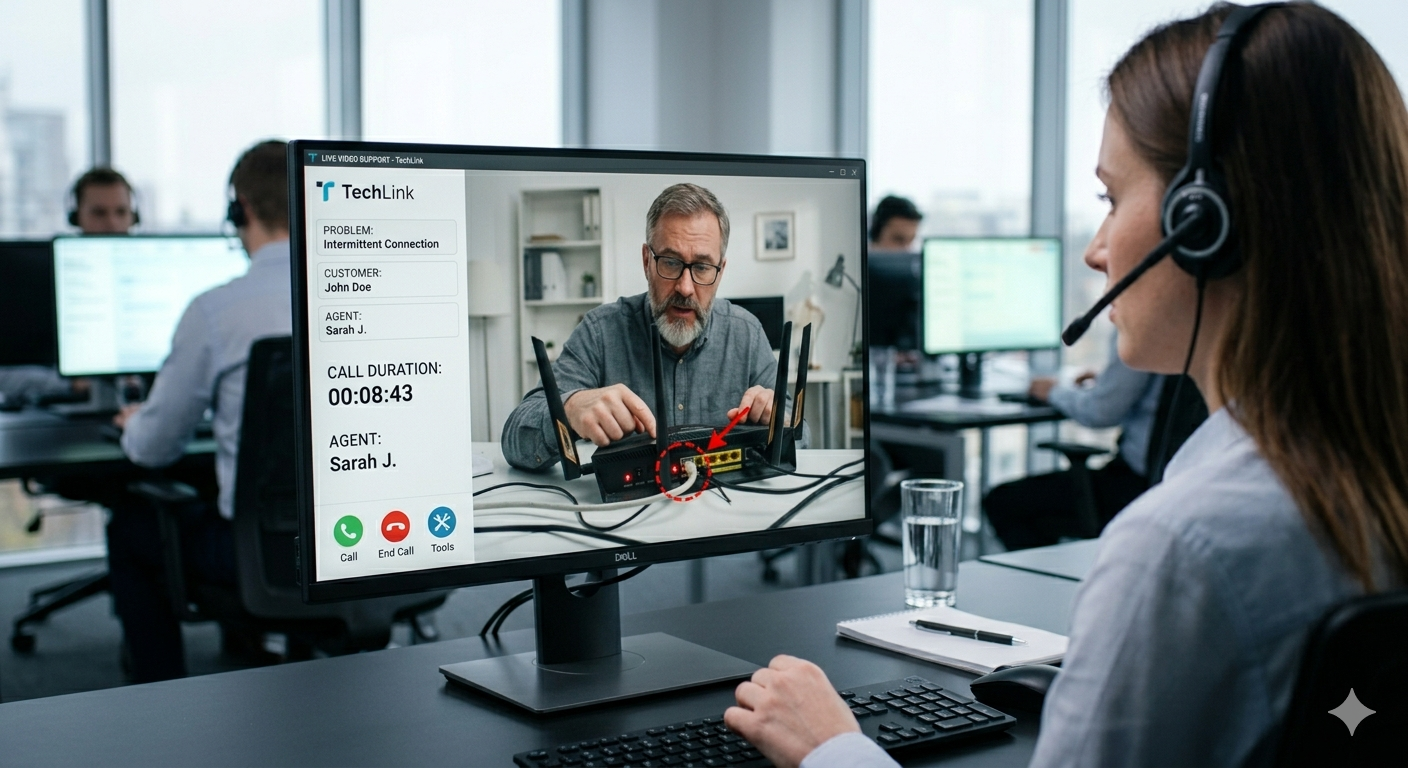
Remote visual support removes that guesswork. With a live video session, the agent can instantly verify the issue, assess the environment, and identify the root cause with much greater confidence. Instead of dispatching a technician just to determine what is wrong, the support team can diagnose the issue during the first interaction and, in many cases, resolve it immediately.
This has a direct impact on first-call resolution. When agents can visually confirm the problem, they are better equipped to provide precise guidance, avoid misdiagnosis, and eliminate unnecessary escalations. For telecom operators handling high support volumes, even a modest improvement in first-call resolution can translate into a major reduction in field dispatches over time.
Guide customers to fix simple problems themselves
Not every service issue requires an on-site visit. In fact, many common telecom problems can be resolved quickly when customers receive clear, visual guidance. Loose connections, incorrect router placement, unplugged power supplies, damaged cables, or simple configuration issues are often easy to fix once the customer is shown exactly what to do.
This is where remote visual support becomes especially powerful. Instead of explaining technical steps through a voice-only call, agents can guide customers in real time using live video, visual cues, and on-screen annotations. The experience becomes more intuitive, less frustrating, and far more effective for customers who may not be technically confident.
For the operator, this creates a scalable way to deflect avoidable truck rolls while still delivering a high-quality support experience. Customers get faster answers, agents can resolve more cases without dispatching, and field technicians are reserved for issues that genuinely require physical intervention. It is a better use of resources on both sides of the interaction.
Escalate only when truly necessary
In many support environments, dispatch decisions are made with limited information. When the issue is unclear, sending a technician can feel like the safest option. But at scale, this approach becomes expensive and inefficient. It clogs field operations with avoidable visits, increases response times for more urgent cases, and creates a cycle of reactive support.
Remote visual support enables a much more intelligent escalation process. By seeing the issue firsthand, the support team can determine whether the problem can be resolved remotely, whether it requires advanced technical guidance, or whether a field visit is genuinely necessary. This creates a more disciplined and data-driven triage model.
When a dispatch is needed, it is also more informed. The team can collect context before the technician arrives, helping ensure the right person, tools, and parts are sent the first time. That reduces repeat visits, shortens repair windows, and improves productivity across the field service operation. In other words, remote visual support does not just reduce truck rolls. It also makes the remaining truck rolls more efficient and more likely to succeed on the first visit.
Capture evidence for faster, better decision-making
Another major advantage of remote visual support is the ability to capture photos, videos, and visual records during the support interaction. In telecom operations, documentation matters. It helps teams validate conditions, confirm damage, review setup issues, and create a reliable record of what was observed during the session.
This evidence can speed up decision-making across multiple levels of the organisation. Supervisors can review cases more quickly. Technical teams can assess whether a dispatch is justified. Field technicians can arrive with better context. In some cases, captured visuals can also support quality assurance, training, compliance, and post-case analysis.
Instead of depending on notes alone, teams gain a clearer operational picture. That leads to faster handoffs, fewer misunderstandings, and more confident next steps. For large telecom operators managing thousands of support interactions, this kind of visibility can significantly improve workflow efficiency and reduce friction across support and field teams.
Before vs After: A Smarter Support Workflow
The difference between traditional support and remote visual support becomes clear when you compare the workflow.
Before: Dispatch → Diagnose on-site → Repeat visits
In a traditional model, the operator often sends a technician before the issue is fully understood. The technician arrives, diagnoses the problem on-site, and may then discover that additional tools, parts, or follow-up work are needed. This can result in repeat visits, longer resolution times, higher costs, and a frustrating customer experience.
After: Diagnose remotely → Resolve instantly or dispatch once
With remote visual support, diagnosis happens much earlier in the process. Agents can assess the issue live, guide the customer through simple fixes, and only dispatch when physical intervention is truly required. When a technician is sent, they arrive with clearer information and a higher likelihood of resolving the issue in a single visit.
That shift is what makes remote visual support so valuable at scale. It turns truck rolls from a default response into a deliberate, informed action. For telecom operators under pressure to improve efficiency, reduce costs, and deliver better customer experiences, that is not just an operational improvement. It is a smarter support model.
From Cost Centre to Competitive Advantage
Reducing truck rolls is no longer just an operational goal—it’s a strategic lever for telecom operators looking to scale efficiently while delivering better customer experiences. Every avoided dispatch represents saved costs, faster resolutions, and a more streamlined support workflow. But more importantly, it reflects a shift from reactive service to intelligent, visual-first support.
Remote visual support empowers your team to see problems clearly, resolve issues faster, and make smarter decisions at every stage of the customer journey. It reduces unnecessary field visits, improves first-call resolution, and ensures that when a truck roll does happen, it is purposeful, prepared, and productive.
At scale, these gains compound. What starts as a simple improvement in troubleshooting becomes a transformation in how your entire support operation runs—more agile, more efficient, and more aligned with modern customer expectations.
If you’re ready to reduce truck rolls while improving performance across your support and field teams, the next step is simple.
Explore Blitzz pricing or book a demo today to see how remote visual support can fit seamlessly into your existing workflow and start delivering measurable results.
FAQs
What is a truck roll in telecom?
A truck roll refers to dispatching a field technician to a customer’s location to diagnose, repair, or install telecom equipment. While it’s essential for complex or physical issues, it is also one of the most expensive operational activities due to labour, fuel, scheduling, and travel time. At scale, excessive or unnecessary truck rolls can significantly impact margins, slow down service delivery, and strain field resources.
How does remote visual support reduce truck rolls?
Remote visual support enables agents to see the customer’s issue in real time through live video, rather than relying on verbal descriptions. This visual context allows for more accurate troubleshooting, faster identification of root causes, and the ability to resolve many issues during the first interaction. As a result, operators can avoid dispatching technicians for problems that can be handled remotely, reducing both costs and resolution time.
Do customers need to download an app to use it?
No. Modern solutions like Blitzz are designed to be completely app-free, removing friction from the support experience. Customers can simply click a secure link sent via SMS or email to join a live video session instantly. This ease of access is especially important for non-technical users or urgent situations, ensuring faster adoption and smoother interactions without delays caused by downloads or setup.
What types of telecom issues can be resolved remotely?
A wide range of common telecom issues can be handled without an on-site visit. These include router and modem setup, cable and port connections, signal troubleshooting, hardware checks, configuration issues, and installation guidance. With visual support, agents can walk customers through step-by-step fixes, verify equipment status, and ensure everything is correctly set up—often resolving the issue in minutes.
Will this replace field technicians?
No. Remote visual support is not a replacement for field technicians—it is an optimisation layer. It ensures that technicians are deployed only when their expertise is truly required. By filtering out avoidable visits and improving pre-dispatch diagnostics, field teams can focus on higher-value, complex tasks. This leads to better productivity, fewer repeat visits, and more effective use of skilled resources.
How does this impact customer experience?
The impact is significant. Customers benefit from faster issue resolution, reduced wait times, and fewer disruptions caused by scheduling in-home visits. Instead of waiting days for a technician, many problems can be resolved immediately during a single interaction. This convenience, combined with clearer communication through visual guidance, leads to higher satisfaction, improved trust, and stronger brand perception.
Is remote visual support scalable for large telecom operations?
Yes. Remote visual support is built to scale across high-volume support environments. It integrates with existing contact centre and CRM systems, enabling teams to handle large numbers of interactions efficiently. By improving first-call resolution, reducing unnecessary dispatches, and standardising support workflows, operators can maintain consistent service quality while lowering operational costs—even as demand grows.
Related readings:
Reduce Truck Rolls, Remote Supplier Audits For Food Equipment
Remote Visual Support for HVAC Contractors: Fewer Truck Rolls, Happier Customers
Reduce Truck Rolls: Remote Troubleshooting for EV Cars