

.png?width=120&height=55&name=Blitzz-Logo-right%20white%20eyes%20-%20not%20transparent%20(3).png)
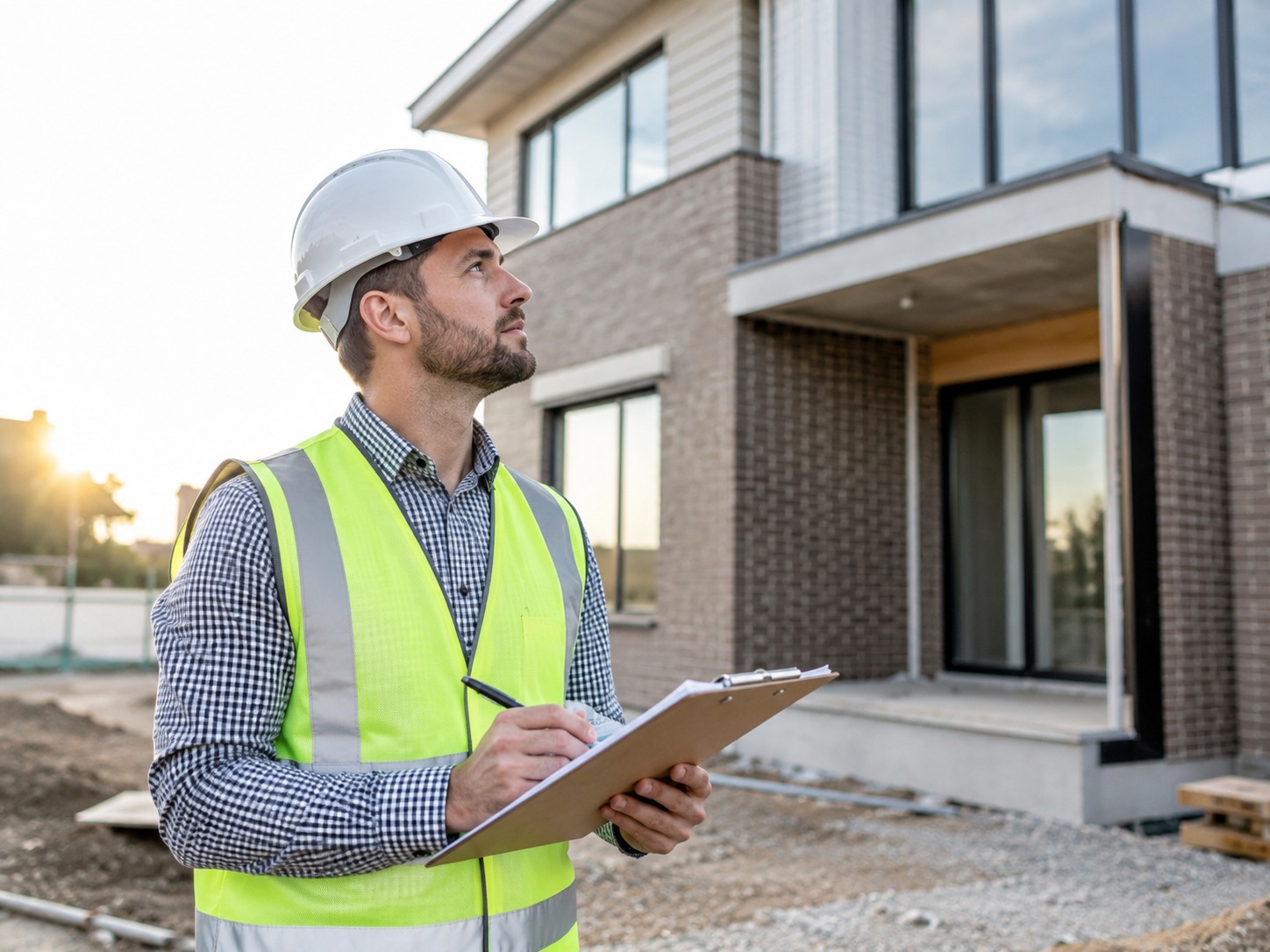
Municipal building departments are frequently stretched thin — a limited number of inspectors covering a growing volume of permits, scheduling constraints, and the physical reality that an inspector can only be at one site at a time. The result is inspection backlogs that delay projects, frustrate contractors, and create pressure on departments to do more with the same staff.
These pressures rarely arrive evenly. A department sized for typical permit volume can be overwhelmed almost overnight by a seasonal construction surge or, more dramatically, by the wave of rebuilding permits that follows a major storm or disaster — precisely the moments when speed matters most to the community being served.
AR remote inspection gives municipal building departments a way to conduct many routine permit compliance checks via live, annotated video rather than a scheduled in-person visit — helping departments clear backlogs, speed up project timelines, and extend inspector capacity without adding headcount.
The Capacity Problem in Municipal Inspections
Building departments size their inspector staff against typical permit volume, but construction activity fluctuates — a busy building season, a post-disaster rebuilding surge, or simple population growth can push permit volume well past what existing staff can inspect on schedule.
This capacity strain shows up in a few specific, recurring ways:
- Seasonal permit spikes: Building activity isn't evenly distributed across the year — most jurisdictions see a sharp rise in permit applications during spring and summer construction seasons, compressing months of typical demand into a shorter window than staffing was ever designed to absorb.
- Post-disaster rebuilding surges: After a hurricane, wildfire, flood, or other major event, permit volume can spike dramatically almost overnight as residents and contractors rush to rebuild, overwhelming a department sized for ordinary conditions at exactly the moment speed matters most to the community.
- Geographic spread and drive time: Departments covering large, rural, or sprawling jurisdictions lose a meaningful share of an inspector's day to travel between sites, meaning the real constraint often isn't the number of inspectors but how much ground each one can physically cover in a shift.
- Inspector recruitment and retention: Licensed building inspectors require specific certifications and experience, and many departments — especially smaller or rural ones — struggle to recruit and retain qualified staff, making it hard to scale up quickly even when budget is approved.
- Scheduling inflexibility: A single missed appointment, a contractor who isn't ready at the scheduled time, or a no-show can cost an inspector hours that can't easily be recovered, since the next available slot may be days away in a fully booked schedule.
When inspections fall behind, the cost lands on everyone: contractors face delayed project timelines waiting for a scheduled inspection slot, homeowners experience longer permit-to-completion timelines, and departments face public pressure over backlogs that are often driven by geography and scheduling constraints as much as by staffing levels.
How AR Remote Inspection Fits Municipal Compliance Checks
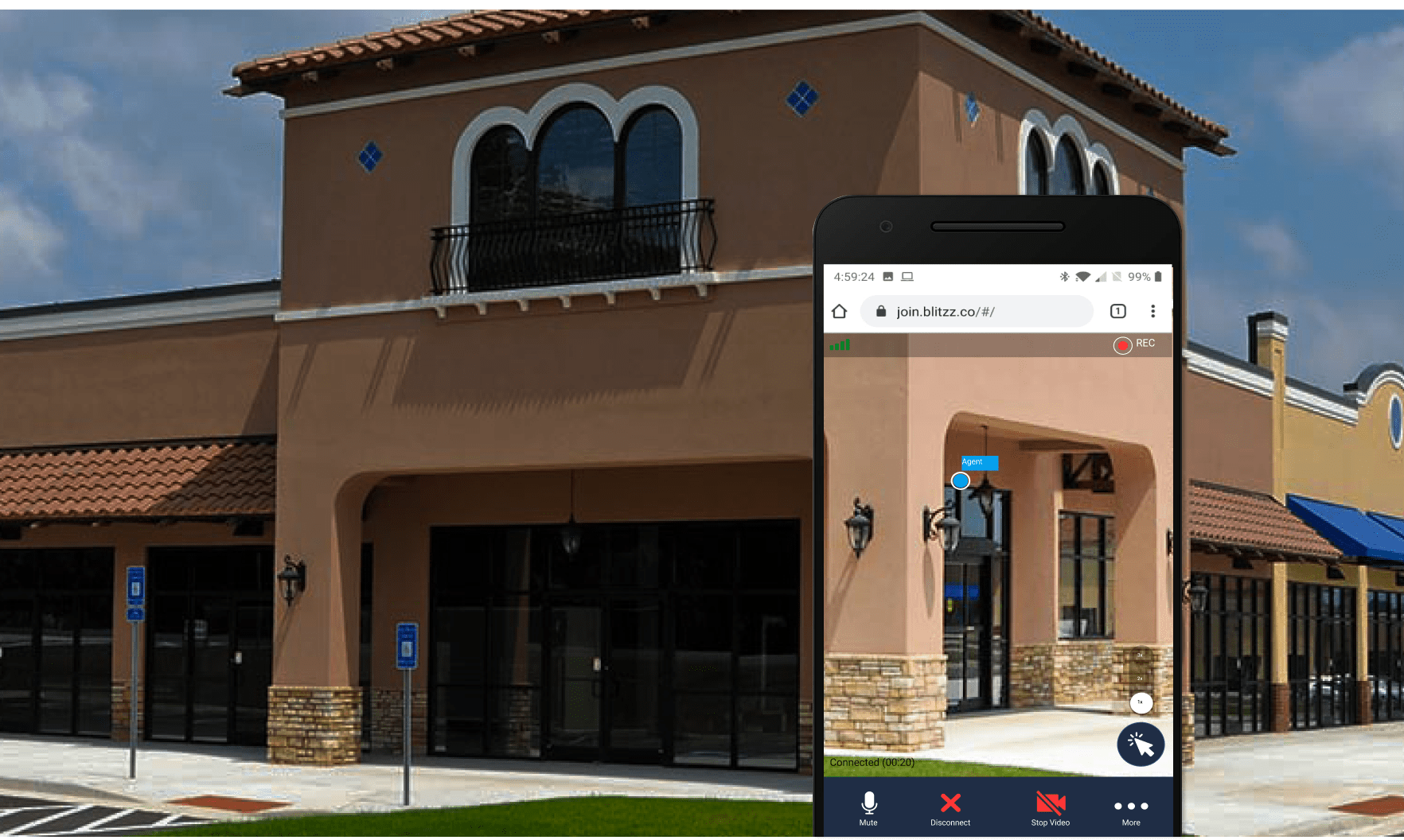
For inspection types that don't require the inspector's physical presence to certify — many rough-in checks, progress verifications, and re-inspections after a minor correction — an inspector can join a live video session with the contractor or homeowner on-site, guided through the specific areas that need review.
Using AR annotation, the inspector marks exactly what needs to be corrected or confirmed, the same way they would walking the site in person, and the session is recorded as part of the permit file — creating a documented, time-stamped compliance record for the jurisdiction.
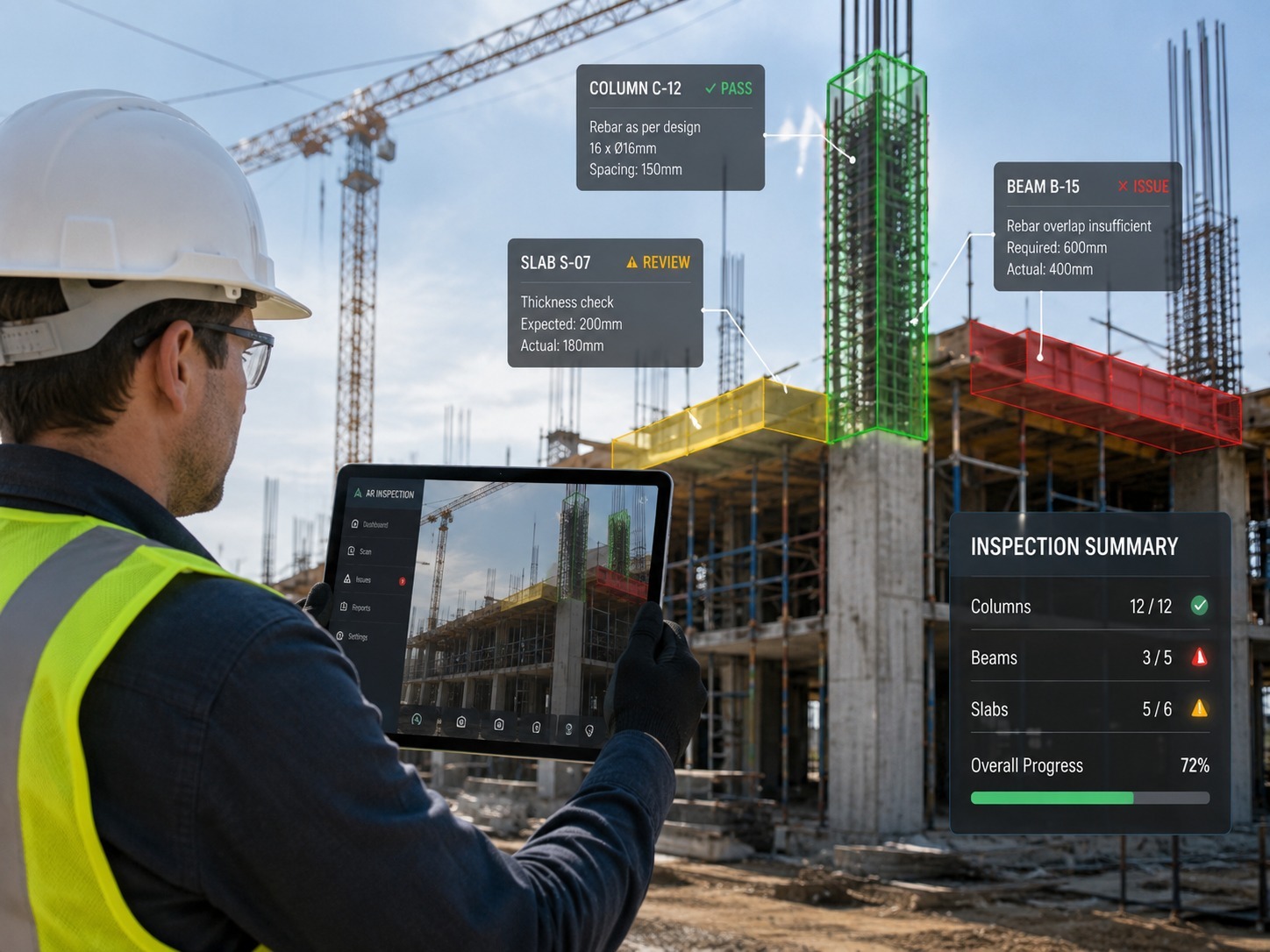
How AR Construction Inspection Reduces Backlog Pressure
- Re-inspections after a minor correction: Instead of scheduling a full return visit for a small fix, the inspector confirms the correction via a short AR session.
- Routine progress checks: Framing, rough-in, and other interim inspections that don't require hands-on testing can often be verified remotely.
- Rural or hard-to-reach sites: Jurisdictions covering large or dispersed geographic areas reduce inspector drive time between sites, freeing up capacity for in-person inspections where they're genuinely needed.
- Surge periods: During high permit volume — storm rebuilding, seasonal construction peaks — AR inspection lets a fixed inspector staff clear more of the queue without adding temporary headcount.
- Contractor convenience: Contractors avoid losing a half-day waiting for a scheduled inspector visit, and can often get same-day compliance confirmation.
What Still Requires an In-Person Inspector
AR remote inspection is not a replacement for every inspection type. Final inspections tied to occupancy certification, inspections requiring specific testing equipment, structural certifications, and anything where local code explicitly requires physical presence should remain in-person. Departments adopting AR inspection typically define clearly which inspection types are eligible for remote review and which are not, so contractors and inspectors both know what to expect.
The goal isn't to remove inspectors from the field — it's to give departments a way to handle a portion of the routine, lower-risk inspection volume remotely, so in-person capacity is reserved for inspections that genuinely need it.
Building Public Trust in Remote Compliance Checks
Because every AR session is recorded and time-stamped, departments maintain the same — or better — documentation standard as an in-person visit, which supports transparency and accountability. If a compliance decision is questioned later, the recorded session provides a clear, reviewable record of what was inspected and what was approved.
This documentation also supports departments during audits of their own inspection practices, since remote inspection records are inherently more detailed than a checkbox on a paper form.
Policy and Legal Considerations for Departments
Adopting remote inspection at the municipal level usually requires coordination with the department's legal counsel and, in some jurisdictions, formal policy or code updates authorizing remote review for specific inspection types. Departments that move carefully here — defining eligible inspection categories in writing and training inspectors on consistent remote-review standards — tend to see smoother adoption and fewer disputes over whether a given inspection was properly conducted.
Some jurisdictions have found it useful to pilot remote inspection with a single inspection type first, gather data on outcomes and contractor feedback, and use that as the basis for expanding to additional inspection categories.
Getting Started at the Department Level
Municipalities typically pilot AR remote inspection with a narrow, well-defined set of inspection types — re-inspections and routine progress checks are common starting points — before expanding based on how well it performs against existing compliance and documentation standards. Coordination with permitting software ensures recorded sessions are filed alongside the rest of the permit record rather than stored separately.
Budget and Staffing Impact for Departments
For building departments operating under tight municipal budgets, extending inspector capacity without adding headcount is often the most persuasive argument for adoption — it addresses backlog pressure without requiring a new line item in next year's budget request. Departments that have shifted a meaningful share of routine inspections to AR remote review typically find they can absorb permit volume growth or seasonal surges using existing staff, rather than requesting seasonal or temporary inspector positions that add ongoing administrative overhead.
This is particularly relevant for smaller or rural jurisdictions, where hiring an additional inspector may not be justified by year-round demand, but where seasonal surges or a widely dispersed geographic area still create real capacity strain during peak periods.
Contractor and Homeowner Response to Remote Inspections
Departments that have rolled out AR remote inspection generally report positive reception from contractors and homeowners alike, largely because it removes one of the most frustrating parts of the permitting process: waiting an entire day, or losing a scheduled slot to a no-show, for what turns out to be a five-minute visual check.
Homeowners in particular tend to appreciate not having to take time off work or coordinate around an inspector's arrival window for straightforward re-inspections, and contractors managing multiple permits across a jurisdiction benefit from being able to schedule remote inspections more flexibly than they could coordinate an in-person inspector visit.
Training Inspectors for Consistent Remote Review
Just as with in-person inspections, the quality of a remote compliance check depends on the inspector applying a consistent standard. Departments introducing AR remote inspection typically train inspectors on what a thorough remote walkthrough should cover for each eligible inspection type, so that a re-inspection conducted remotely by one inspector matches the rigor of one conducted in person by another.
This training investment is generally modest, since experienced inspectors already know what they're looking for — the adjustment is mainly learning to direct a contractor's camera work effectively and to annotate findings clearly within the video session rather than on a paper form.
Frequently Asked Questions
Can building inspectors legally approve permits through a remote video inspection?
This depends on local code and department policy. Many jurisdictions allow remote review for select inspection types — such as re-inspections and routine progress checks — while requiring in-person presence for final and structural certifications.
How does AR remote inspection help with permit backlogs?
By allowing a portion of routine inspections to be completed via video session rather than a scheduled site visit, departments can clear more of the queue with the same inspector staff, reserving in-person capacity for inspections that require it.
Is a recorded AR inspection session an acceptable compliance record?
A time-stamped, annotated recording generally provides a more detailed documentation trail than a standard paper inspection form, though departments should confirm this fits their own recordkeeping and legal requirements.
What inspection types are best suited to AR remote review?
Re-inspections after minor corrections and routine progress checks (such as framing or rough-in) are common candidates, while final inspections and structural certifications typically remain in-person.
Do departments need to update local code before adopting remote inspection?
Some jurisdictions require formal policy or code updates to authorize remote review for specific inspection types, so coordination with legal counsel is a common early step in adoption.
How do departments typically pilot this before a full rollout?
Most start with a single, well-defined inspection type — such as re-inspections after a minor correction — gather data on outcomes and contractor feedback, and use that to inform expansion to additional inspection categories.
See how Blitzz Inspect helps municipal departments clear inspection backlogs — schedule a demo to see it in action.
%20(1).jpg)