
.png?width=120&height=55&name=Blitzz-Logo-right%20white%20eyes%20-%20not%20transparent%20(3).png)
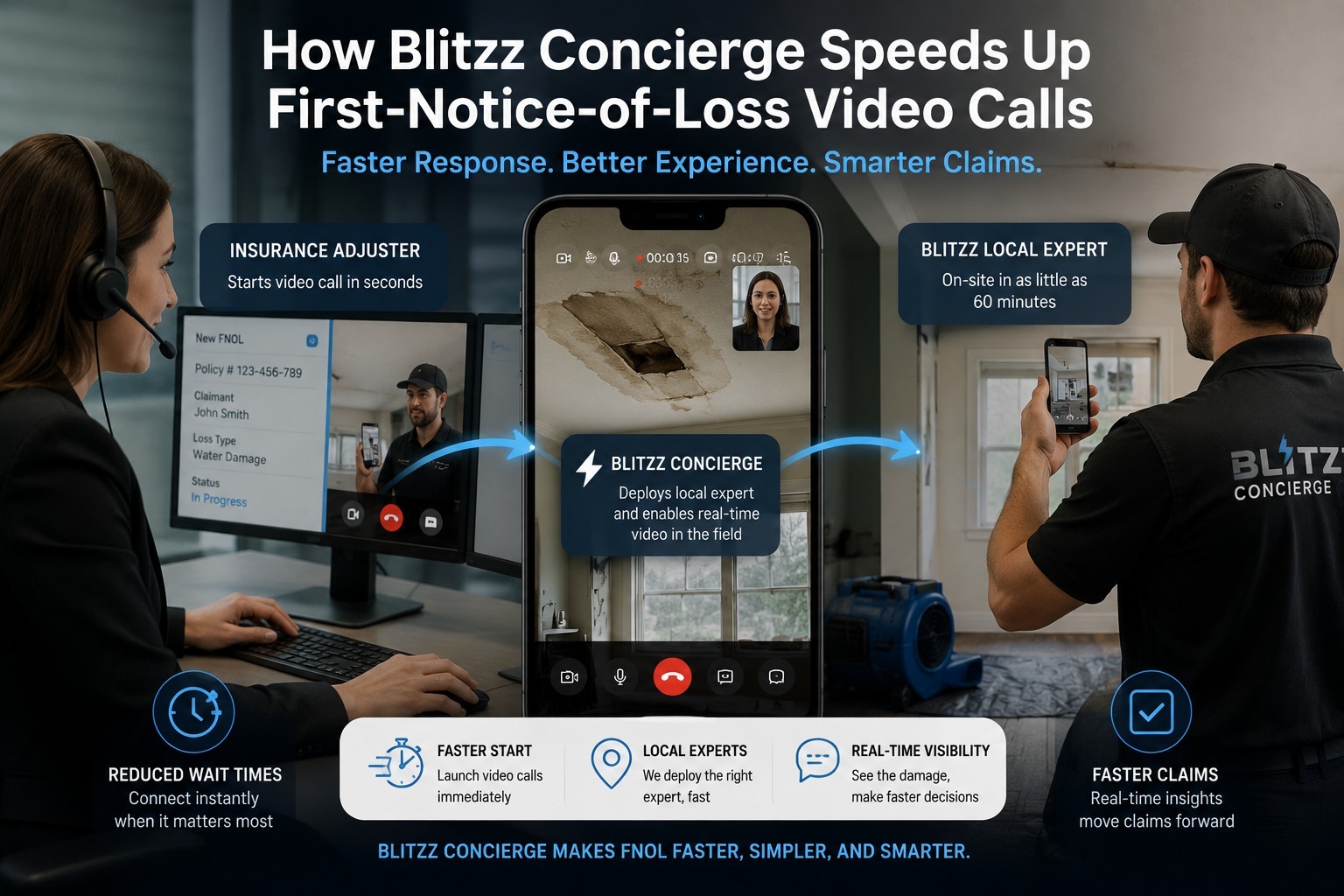
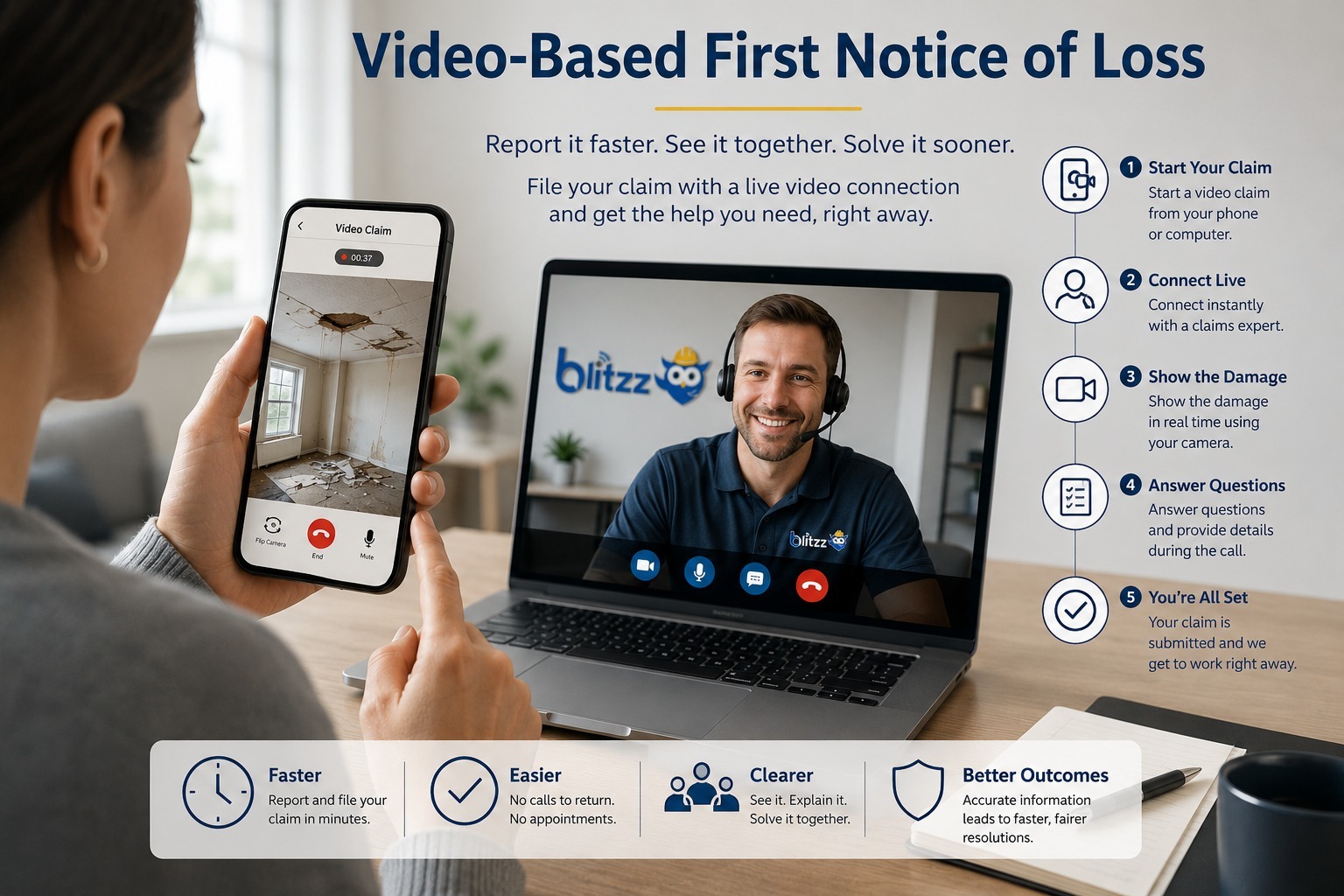
Blitzz Concierge speeds up first-notice-of-loss calls by letting an insurer see the damage the moment a policyholder reports it, rather than waiting days for a scheduled adjuster visit to confirm what actually happened. A policyholder connects over a secure video link the moment they file a claim, and the claims team can begin documenting damage, verifying details, and triaging the case in that same call — turning what has traditionally been the slowest part of the claims lifecycle into something that can start moving within minutes of a loss being reported.
This guide looks at why first notice of loss has historically been such a bottleneck, how live video changes what's possible in that very first call, and what this means for claims cycle time, accuracy, and policyholder experience.
Why First Notice of Loss Is Such a Critical Moment
First notice of loss — the moment a policyholder first reports a claim — sets the trajectory for everything that follows. The information gathered during this initial contact determines how a claim gets triaged, how quickly it gets routed to the right adjuster or specialist, and how much back-and-forth will be needed later to fill in details that weren't captured the first time.
Traditionally, this moment has been almost entirely verbal: a policyholder calls in, describes what happened, and an intake agent takes notes based on that description. The agent has no way to verify the extent of damage, confirm the details match what the policy covers, or catch anything the policyholder didn't think to mention. Everything of real evidentiary value — the actual condition of the property or vehicle — remains unseen until an adjuster is eventually dispatched, which can take days depending on adjuster availability and claim volume.
Where the Traditional FNOL Process Breaks Down
A few specific weaknesses show up consistently in a voice-only or text-based first notice of loss process:
Incomplete or inaccurate initial information. A policyholder describing water damage as “some staining” or a vehicle collision as “minor” gives an intake agent very little to work with, and these subjective descriptions often don't match what an adjuster eventually finds on-site.
Delayed triage. Without visual confirmation, claims teams often default to a standard process regardless of actual severity, since there's no reliable way to distinguish a straightforward, low-complexity claim from one that will need significant investigation until someone physically inspects it.
Scheduling delays before any real progress is made. The gap between the initial report and the first in-person inspection can stretch to days, particularly after a major weather event when adjuster capacity is stretched across a surge of simultaneous claims.
Lost or forgotten details. Policyholders describing an incident from memory, sometimes under stress shortly after a loss occurred, often omit details that would have been obvious in a photo or video — a secondary point of damage, a relevant nearby condition, an important contextual detail.
How Live Video Changes the First Call
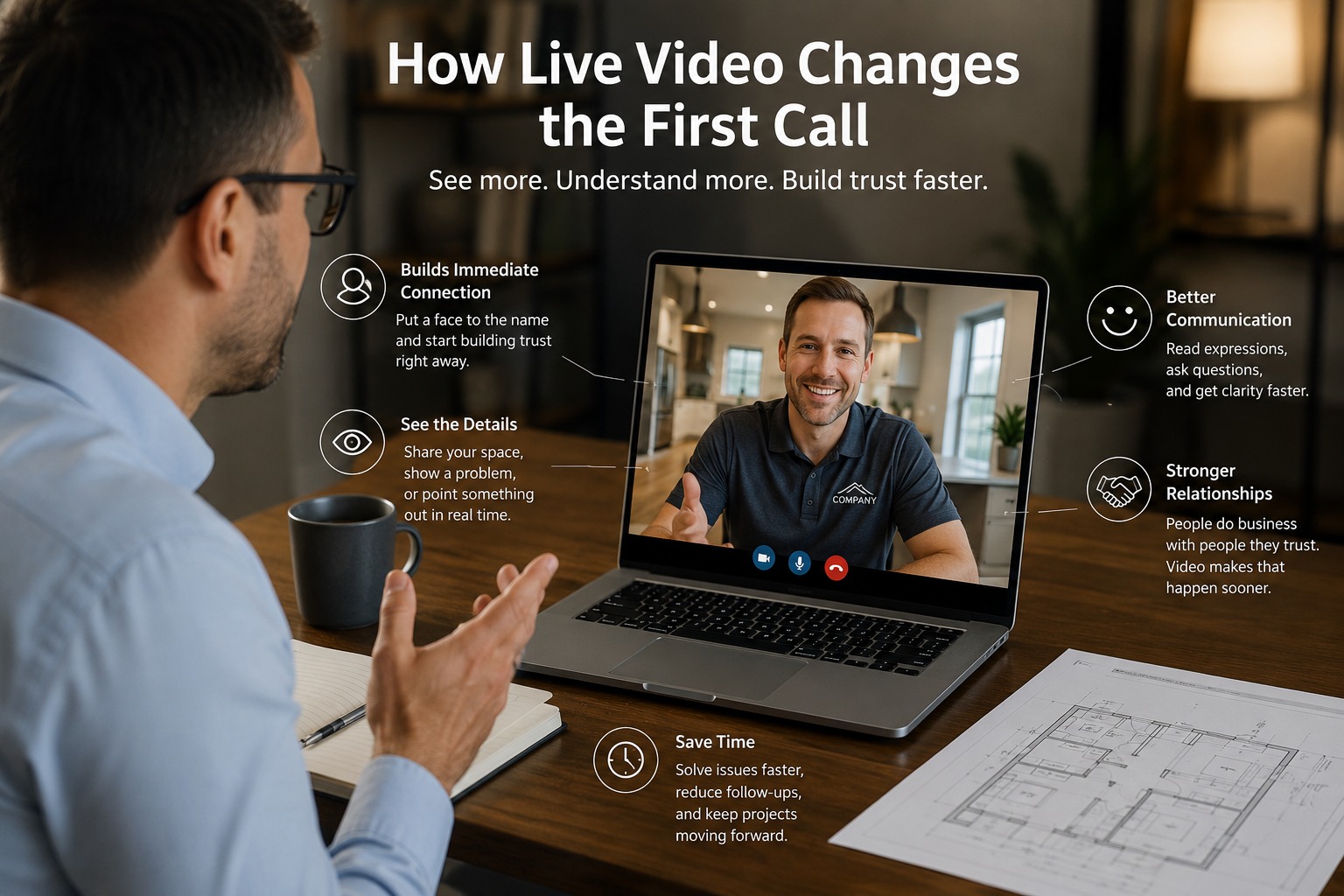
Blitzz Concierge, combined with AI Agent Assist, addresses each of these weaknesses by making it possible to see the damage during the very first contact, rather than days later. When a policyholder reports a claim, they receive a secure link — sent by text or email — that opens their camera directly in a browser, without requiring any app download. The intake agent or adjuster can then guide the policyholder through capturing the affected area live, asking them to show specific angles or details as needed, the same way an in-person adjuster would direct their own inspection.
This shifts the entire first-notice-of-loss interaction in a few concrete ways:
Damage gets documented immediately, not days later. Rather than waiting for a scheduled in-person visit, the visual record — arguably the most important piece of evidence in the entire claim — is captured at the earliest possible point, while conditions are freshest and before anything changes.
Triage becomes accurate rather than assumed. Seeing the actual damage during the first call reduces the kind of misdiagnosis that happens when accuracy depends on memory or description alone, letting a claims team correctly route the case immediately — a straightforward, clearly documented claim can move toward fast settlement, while a complex or ambiguous one can be flagged for specialist review right away.
Guided capture reduces missing information. Because the agent can direct the policyholder in real time — “can you show me the ceiling above that area,” “pan over to the left a bit” — similar to how on-demand capture works during a live video call, the resulting documentation tends to be far more complete than what a policyholder would think to photograph unprompted.
GPS and timestamp verification happen automatically. Location and time data captured alongside the video session support both claims accuracy and fraud prevention, without requiring any manual entry from the policyholder or agent.
What This Looks Like in Practice
Consider a policyholder calling in shortly after discovering water damage in their home following a storm. In a traditional process, the intake agent gathers a verbal description, opens a claim file, and schedules an adjuster visit — which, depending on adjuster availability and whether the storm affected a wide area with many simultaneous claims, might not happen for several days.
With Blitzz Concierge, the same call instead starts with a video link sent to the policyholder's phone. Within minutes, the agent is looking at the actual water staining, guiding the policyholder to show the ceiling, the affected wall, and any visible source of the leak — the same kind of guided equipment and damage identification used across other AI Agent Assist use cases. The agent can immediately assess whether this looks like a straightforward, well-documented claim or one that will need a more detailed structural evaluation, and can communicate a realistic next step to the policyholder on the same call — rather than leaving them waiting, uncertain, for a scheduled visit that hasn't even been booked yet.
Why Speed at FNOL Matters for the Entire Claims Lifecycle
The value of accelerating first notice of loss isn't limited to that single call — it compounds across everything that follows, in much the same way that reducing average handle time compounds across a high-volume support operation. A claim that starts with accurate, thorough visual documentation moves through underwriting review, adjuster assignment, and settlement discussions with far less back-and-forth than one that starts with only a verbal description and has to be filled in with follow-up questions and delayed inspections.
This matters enormously for overall claims cycle time, one of the most closely watched metrics in the insurance industry, both for its direct cost implications and its significant effect on policyholder satisfaction. Much like the see, reason, resolve framework that underlies real-time diagnosis elsewhere, a faster, more accurate start to the claims process tends to produce faster resolution throughout, since fewer downstream steps are needed to gather information that could have been captured at the outset.
Why This Matters Especially During High-Volume Events
The value of live video at first notice of loss becomes especially clear following major weather events or other incidents that generate a sudden surge in claims across a wide area. In-person adjuster capacity is inherently limited and can't scale instantly to meet a sudden spike in claim volume, creating significant backlogs for scheduling visits during exactly the moments when policyholders most need a fast response.
Video-based FNOL allows a claims team to begin processing a much larger volume of claims immediately after an event, triaging straightforward cases for potential fast-track settlement while reserving limited adjuster capacity for the claims that genuinely require in-person evaluation. This ability to scale intake capacity quickly without a corresponding increase in headcount is one of the more significant operational advantages of moving FNOL to video.
Supporting Consistency Across Intake Agents
Beyond speed, live video at first notice of loss also improves consistency. Different intake agents, working purely from a policyholder's verbal account, may ask different follow-up questions or interpret ambiguous descriptions differently — the same kind of agent-to-agent variance that affects any support process relying on individual interpretation. When an agent can see the actual damage directly, and when that same visual evidence is available to anyone who reviews the claim later, the initial assessment becomes considerably less dependent on which individual agent happened to take the call.
What Kinds of Claims Benefit Most From Video FNOL
Not every claim type sees equal benefit from moving first notice of loss to video, but several categories see particularly strong results:
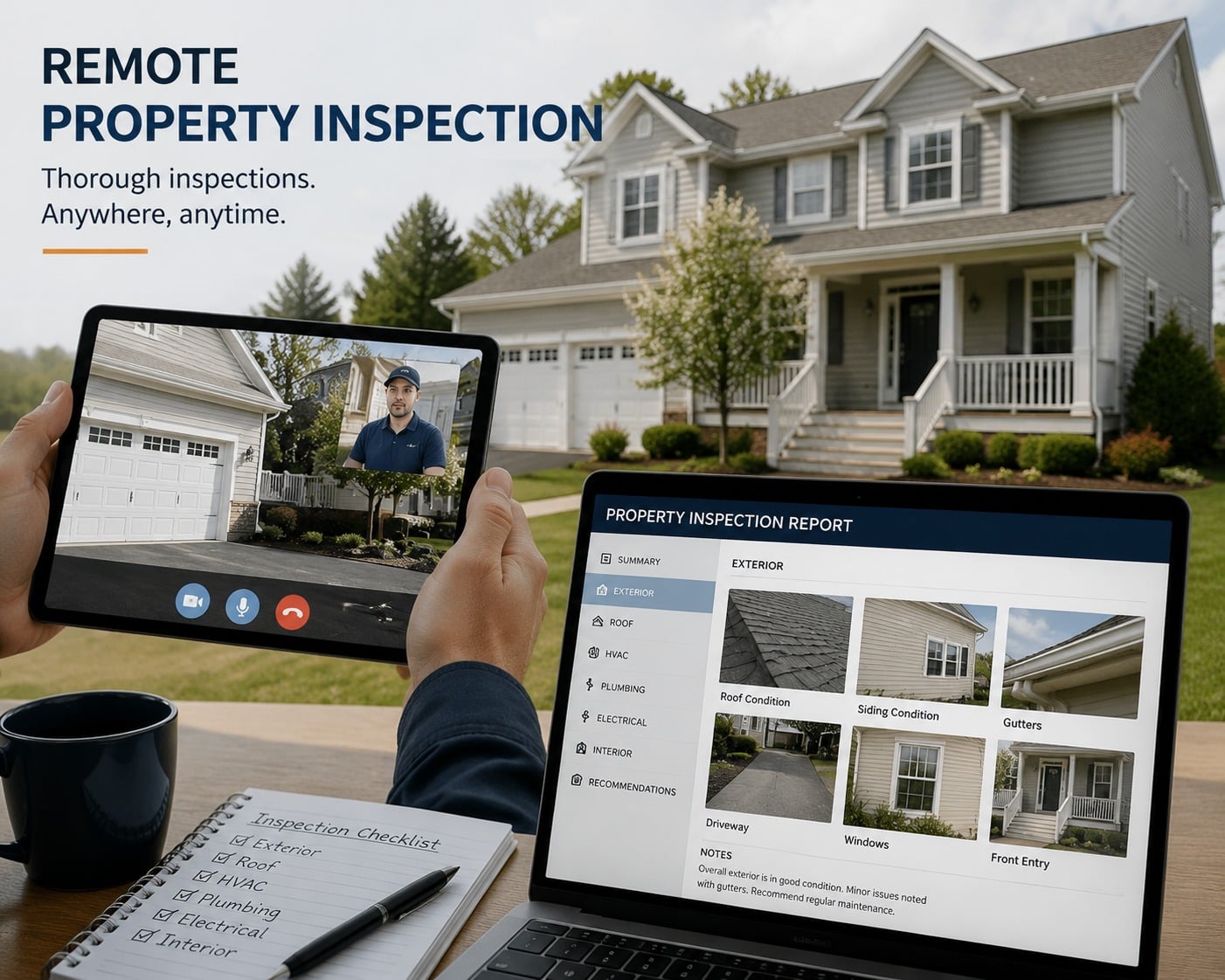
Property damage claims. Storm damage, water intrusion, and other visible property conditions are well suited to video documentation at first contact, since the damage itself is directly observable.
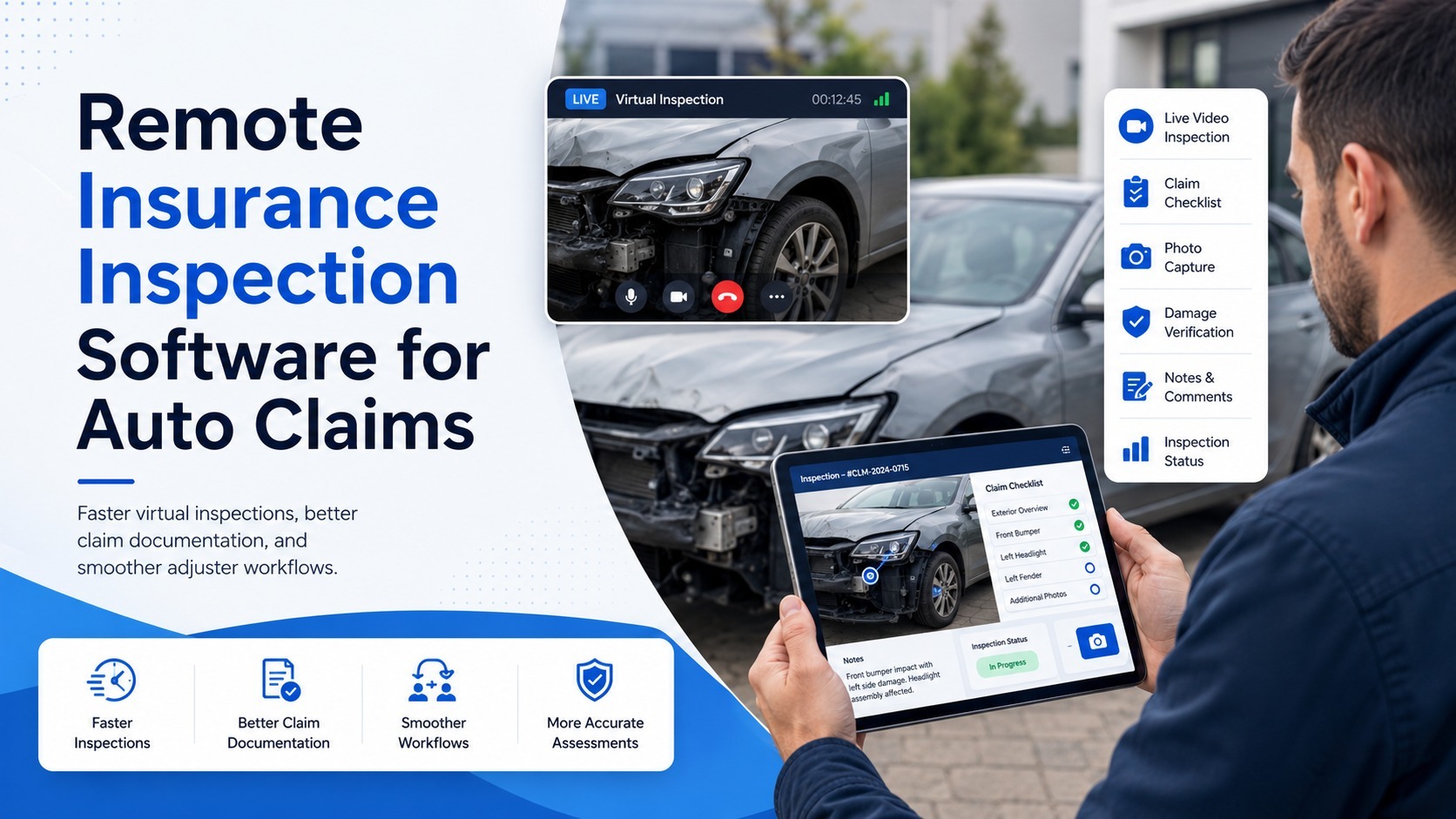
Auto claims. Visible vehicle damage from a collision can often be thoroughly assessed at first notice of loss, similar to how AI Agent Assist reduces truck rolls in field service by confirming remotely what would otherwise require an in-person visit, allowing faster initial severity classification and repair estimate initiation.
High-volume, catastrophe-related claims. Following a widespread event, video FNOL allows rapid triage across a large claim volume simultaneously, relying on the same underlying real-time visual analysis used during any live video session, which is precisely when traditional in-person scheduling capacity is most strained.
Claims where fraud risk benefits from early documentation. Capturing GPS-verified, timestamped visual evidence at the earliest possible point strengthens the documentation trail from the very start of the claims process, complementing the kind of automated, structured records described in the comparison of AI Agent Assist and AI call summaries, rather than relying on evidence gathered days later.
What Still Requires an In-Person Follow-Up
It's worth being clear that video-based FNOL isn't intended to replace in-person adjusters across every claim, in the same way that truck rolls still make sense for certain field service issues. Complex structural damage, claims involving significant disputes, and situations where full assessment genuinely requires physical presence still benefit from — or require — an in-person visit. The goal of accelerating first notice of loss with video isn't to eliminate in-person adjustment, but to make sure that the decision about whether an in-person visit is needed, and how urgently, is based on actual visual evidence rather than an assumption made from a verbal description alone.
Getting Started
For insurers looking to modernize their intake process, Blitzz Concierge is built specifically to support this kind of live, guided video interaction from the very first policyholder contact — combining a simple, app-free connection experience with the structure needed to capture consistent, thorough documentation during a claim's very first moments. Insurers looking to extend documentation beyond live calls may also find BlitzzCam useful for organizing photo evidence submitted outside of a scheduled session, while Blitzz ScreenShare offers a complementary option for claims involving online account or policy documentation issues rather than physical damage.
Common Questions About Video-Based First Notice of Loss
Does video FNOL replace the need for an in-person adjuster entirely?
No. It changes when and how the claims team gets its first accurate look at a loss, but complex or disputed claims still benefit from in-person evaluation. Video FNOL is about making that decision an informed one, made early, rather than the default fallback for every claim.
How quickly can a policyholder connect to a video call after reporting a loss?
Since the connection happens through a secure browser-based link with no app download required, most policyholders can connect within the same initial contact, rather than needing a separate scheduled appointment.
Does this work for policyholders who aren't comfortable with technology?
The process is designed to be as simple as tapping a link sent by text or email, which tends to be accessible even for policyholders less familiar with more complex apps or software.
What happens to the video and documentation captured during the call?
The session, along with any GPS and timestamp data, typically becomes part of the claim record automatically, supporting both the ongoing claims process and any later audit or dispute resolution needs.
Does faster FNOL processing increase the risk of missing important details?
When the video session is guided by a trained agent directing the policyholder to capture specific angles and details, documentation tends to be more thorough than an unguided photo submission, not less.
Is this approach only useful after major weather events?
No — while the benefit is especially visible during high-volume catastrophe events, video FNOL improves speed and accuracy for individual, everyday claims as well, regardless of overall claim volume at a given time.
The Bottom Line
First notice of loss has traditionally been the slowest and least informed step in the claims lifecycle, built around a verbal account that leaves the most important evidence — the actual condition of the damage — unseen until an in-person visit finally happens, sometimes days later. Blitzz Concierge closes that gap in much the same way remote video support closes it for consumer electronics returns and repairs, making it possible to see, document, and triage a claim during the very first contact, turning what used to be an information-poor first step into an accurate, evidence-based starting point that speeds up everything that follows in the claims process.