
.png?width=120&height=55&name=Blitzz-Logo-right%20white%20eyes%20-%20not%20transparent%20(3).png)


On this page

BPOs use AI Agent Assist to cut average handle time by giving agents real-time visual diagnosis during live video calls — identifying equipment, matching symptoms to known issues, and surfacing the right knowledge base article automatically — which removes much of the manual searching, escalation, and guesswork that otherwise extends a call's duration. For BPOs managing high call volumes across multiple client programs, even small reductions in average handle time compound into significant operational savings and capacity gains.
This guide examines why average handle time is such a central metric for BPO operations, how AI Agent Assist directly affects it, and what results BPOs typically see after adoption.
Why Average Handle Time Matters So Much to BPOs
Average handle time — the total time an agent spends on a single customer interaction, from start to resolution — is one of the most closely watched metrics in BPO operations, for good reason. It directly affects how many calls a given team can handle in a day, which in turn affects staffing requirements, client contract economics, and an agent's overall workload and stress level — challenges that compound further in distributed, multi-timezone BPO environments.
Even modest reductions in average handle time, applied across a large volume of calls, translate into substantial capacity gains. A BPO handling tens of thousands of calls per month can see meaningful cost and staffing implications from a reduction measured in seconds or minutes per call, which is why this metric receives so much operational attention.
Where Time Gets Spent in a Typical Call
To understand how AI Agent Assist reduces handle time, it helps to break down where time typically goes during a support interaction that involves diagnosing a physical issue:
Gathering an accurate description. Especially on voice-only calls, agents often spend a meaningful portion of call time asking clarifying questions to build an accurate picture of what's actually wrong, since customers frequently struggle to describe technical issues precisely.
Searching for the right documentation. Once an agent has a working theory about the issue, they often need to search a knowledge base or internal documentation to find the specific troubleshooting steps that apply — a process that takes longer the less familiar an agent is with a specific issue or piece of equipment.
Consulting colleagues or escalating. When an agent isn't confident in their diagnosis or can't find matching documentation, they may need to consult a more experienced colleague or escalate the call entirely, both of which add significant time and, in the case of escalation, may extend the customer's overall resolution time well beyond the original call.
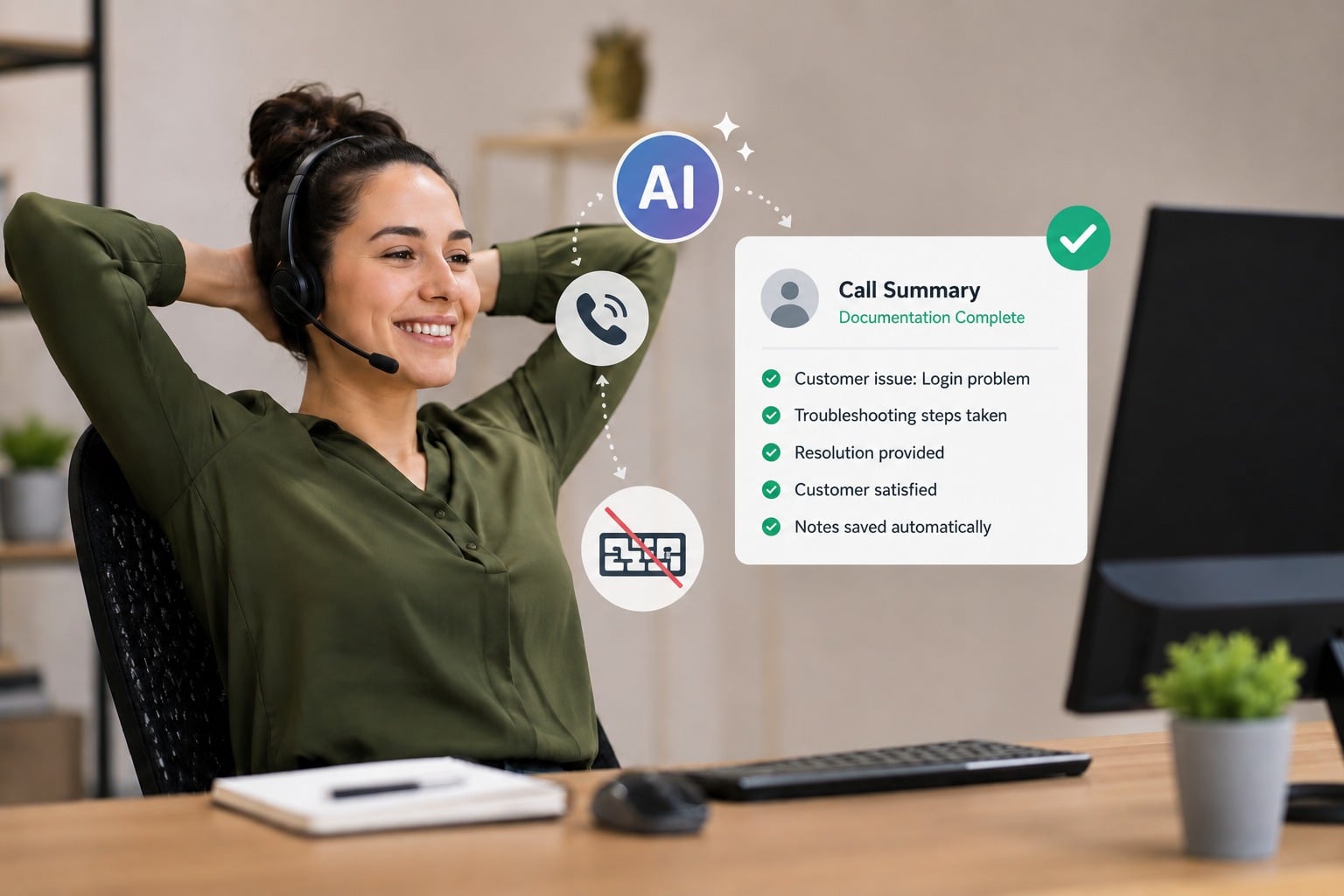
Post-call documentation. After the customer interaction ends, agents typically need to write up notes summarizing the issue, steps taken, and resolution using AI call summary tools — time that, while not part of "handle time" in some measurement conventions, still represents agent time spent per interaction.
How AI Agent Assist Reduces Time at Each Stage
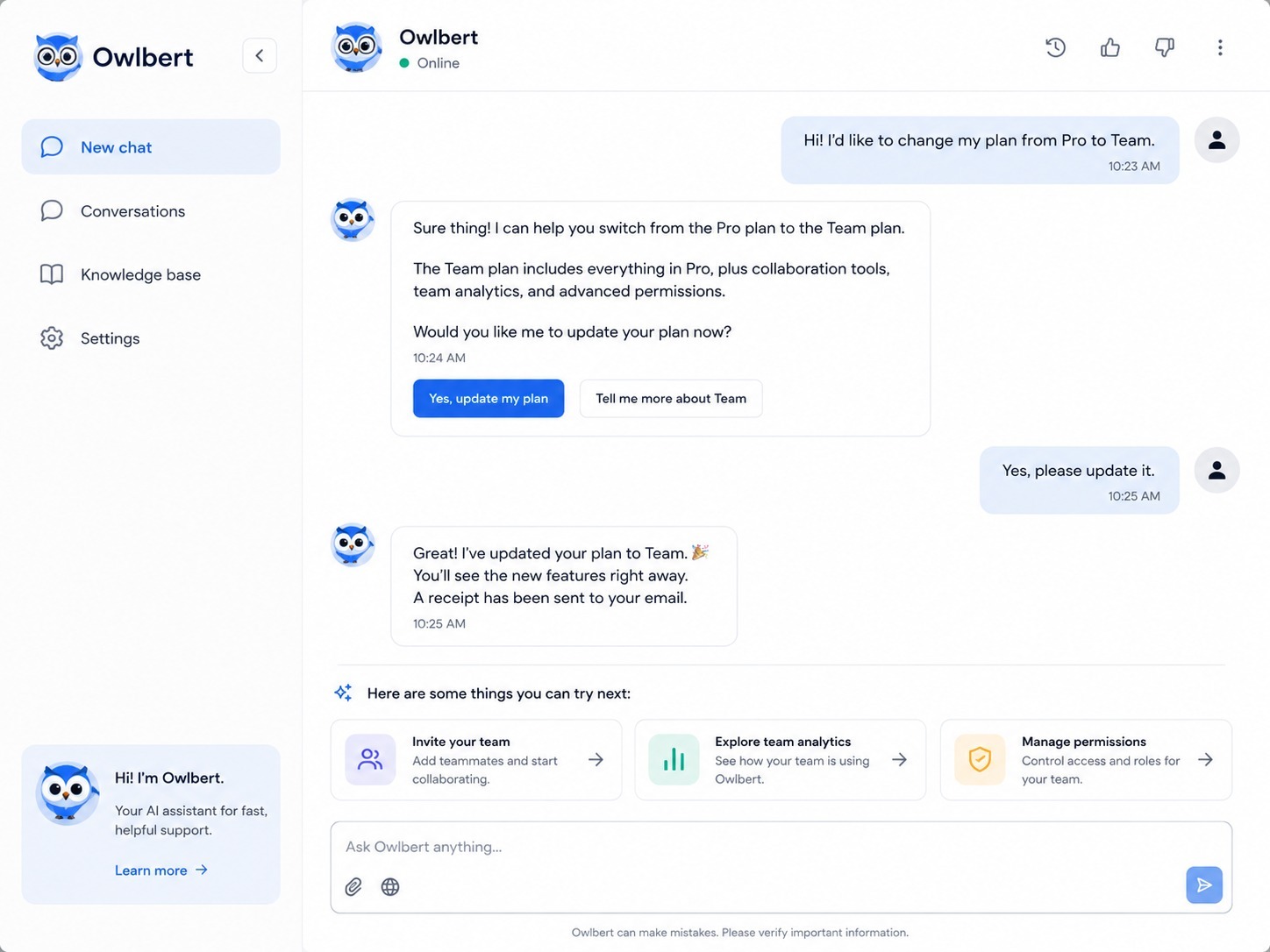
AI Agent Assist directly addresses several of these time sinks simultaneously:
Removing the need for extensive clarifying questions. When the AI can see the equipment and symptom directly through live video, agents don't need to spend time asking the customer to describe details that the AI can identify and confirm automatically.
Automatically surfacing the matching documentation. Rather than manually searching a knowledge base, the agent receives the relevant article or troubleshooting steps automatically, matched to the AI's diagnosis of what's actually happening in the video feed.
Reducing the need for escalation. Because the AI effectively extends every agent's diagnostic capability to match the company's full knowledge base, newer or less experienced agents can resolve a wider range of issues on their own, without needing to escalate to a specialist — directly improving first-call resolution rates in the process.
Automating post-call documentation. Since the AI has already analyzed what happened during the call, it can generate a structured summary automatically and sync it directly to the client's CRM or ticketing system, removing what would otherwise be several minutes of manual note-taking per call.
Why This Matters Especially for BPOs
While these benefits apply broadly across support operations, a few factors make average handle time reduction particularly significant for BPOs specifically:
High agent turnover. BPOs frequently experience higher staff turnover than in-house support teams, meaning a larger share of any given workforce is relatively new and hasn't yet built up the pattern recognition experienced agents rely on — a dynamic closely tied to the burnout driving that turnover in the first place. AI Agent Assist effectively gives new agents that same capability from their first day, reducing the handle time gap between new and experienced staff.
Multiple client programs with different equipment and knowledge bases. A single BPO agent might support several different client programs — a telecom account one shift, a banking or fintech program the next — each with its own products, equipment, and documentation. AI Agent Assist trained on each client's specific knowledge base helps agents switch between programs without needing to have separately memorized each one.
Contractual performance metrics. Many BPO client contracts include specific service level agreements tied to metrics like average handle time and first-call resolution rate, making improvements in these areas directly relevant to contract performance and client satisfaction — especially for programs supporting insurance or healthcare clients with strict SLAs.
Onboarding speed for new programs. When a BPO takes on a new client program, agents typically need time to build familiarity with that client's specific products and issues. AI Agent Assist, once trained on the new program's documentation, can shorten this ramp-up period considerably.
Reported Results
Organizations implementing AI Agent Assist in BPO and contact center environments have reported approximately a 35 percent reduction in average handle time, along with related benefits including faster agent onboarding — with some organizations reporting the ability to bring large numbers of new agents up to speed in a matter of days rather than weeks. These figures illustrate the kind of impact possible when real-time visual diagnosis removes several of the largest time sinks in a typical support call simultaneously.
What This Looks Like for an Individual Agent
Consider a new agent, only a few weeks into a BPO role supporting a telecom client's router troubleshooting program. Before AI Agent Assist, this agent would likely need to rely heavily on scripted troubleshooting flows and frequent escalations to more experienced colleagues, since they haven't yet built up familiarity with the range of equipment and failure patterns experienced agents recognize from memory.
With AI Agent Assist in place, the same agent receives real-time equipment identification and matched documentation during every call, effectively giving them access to the same diagnostic capability as a much more experienced colleague. This doesn't just reduce their individual handle time — it reduces the variability in handle time across the entire team, since performance becomes less dependent on any individual agent's tenure and accumulated experience.
Compliance and Documentation Benefits Alongside Speed
For BPOs supporting clients in regulated industries — banking, insurance, healthcare — reduced average handle time isn't the only benefit worth tracking. Automated, AI-generated call summaries also tend to produce more consistent, complete documentation than agents writing notes manually under time pressure, which matters for programs with strict compliance or audit requirements. A faster call that also produces better documentation represents a stronger overall outcome than speed alone, particularly for BPO programs where client contracts include specific documentation standards alongside handle time targets.
Measuring the Full Impact
For BPOs evaluating this kind of technology, it's worth tracking a few related metrics alongside average handle time itself, since the full impact often shows up across several connected areas:
First-call resolution rate. Whether issues get fully resolved within the initial interaction, without requiring a callback or escalation.
Escalation rate. How often calls get passed to a more experienced agent or specialist, which AI Agent Assist tends to reduce by extending diagnostic capability to a wider range of agents.
New agent ramp-up time. How long it takes new hires to reach acceptable performance benchmarks, a metric particularly relevant given typical BPO staff turnover.
Post-call documentation time. The time agents spend writing up notes after a call ends, separate from the handle time of the call itself but still a meaningful part of overall agent workload.

Common Questions About AI Agent Assist and Average Handle Time in BPOs
Does AI Agent Assist work across multiple client programs within a single BPO? Yes, provided the system is trained on each client's specific equipment and documentation. A BPO supporting several different programs would typically need the AI configured separately for each client's knowledge base — the same tiered configuration approach used across other multi-program deployments.
How quickly do new agents become productive with AI Agent Assist in place? Results vary, but organizations have reported onboarding large cohorts of new agents to full productivity within days rather than the weeks typically required without this kind of support.
Does reducing average handle time come at the cost of resolution quality? When implemented well, the opposite tends to be true — faster resolutions driven by accurate visual diagnosis generally correlate with higher first-call resolution rates, not lower quality, since the time saved comes from removing guesswork rather than rushing the interaction.
Does this technology require significant training investment before it becomes useful? The system itself requires training on a company's specific equipment and documentation, but agents typically require relatively little additional training to use it, since the AI's suggestions are designed to fit naturally into an agent's existing workflow.
Is average handle time reduction consistent across all types of calls? The reduction tends to be most significant for calls involving physical equipment or visual symptoms, where AI diagnosis directly replaces what would otherwise require extensive verbal clarification. Purely informational or account-based calls see less direct benefit from this specific capability.
The Bottom Line
Average handle time is one of the most consequential metrics in BPO operations, and AI Agent Assist addresses several of its largest contributing factors at once: the time spent gathering an accurate description, searching for documentation, escalating to more experienced colleagues, and writing up notes after the call ends. For BPOs managing high call volumes, multiple client programs, and typically higher agent turnover than in-house teams, the combination of faster resolutions and faster new-agent ramp-up time makes this one of the more directly measurable returns available from adopting AI-assisted visual support.

Blitzz Team
The Blitzz Team writes about remote video support, virtual inspections and field service. Our guides come from working with home builders, property managers, warranty teams, contact centers and field service organizations that use Blitzz to see and solve issues without a truck roll.
.jpg)