
.png?width=120&height=55&name=Blitzz-Logo-right%20white%20eyes%20-%20not%20transparent%20(3).png)
Unplanned equipment downtime remains one of the most costly and disruptive challenges in modern manufacturing operations. Every minute a critical machine is offline directly affects production throughput, delays order fulfillment, and chips away at revenue. In high-volume environments, even short interruptions can create cascading effects across the entire production line.
For manufacturers, the question is no longer whether downtime can be eliminated. It's whether your team has the tools to diagnose and resolve equipment issues fast enough to keep production moving. That's where remote video inspection and remote visual support are reshaping the manufacturing landscape, allowing engineering teams to see, diagnose, and resolve equipment problems in real time without waiting for someone to physically arrive on-site.
The Cost of Equipment Downtime in Manufacturing
The impact of downtime extends far beyond lost output. According to Aberdeen Group, the average cost of unplanned downtime in manufacturing reaches $260,000 per hour. When a critical machine goes offline, the disruption ripples through every part of the operation:
- Supply chain commitments break down, leading to missed delivery timelines and strained customer relationships
- Labor efficiency plummets as operators and technicians are left idle or reassigned while waiting for issues to be diagnosed
- Operational costs accumulate quickly, reducing overall plant performance and margin
Several common factors contribute to prolonged downtime: waiting for specialized technicians or external experts to arrive on-site, misdiagnosed issues that require additional troubleshooting cycles, and multiple service visits caused by incomplete or inaccurate initial assessments.
In most cases, downtime isn't extended because the problem itself is complex. It's extended because teams lack immediate visibility into the issue and the ability to diagnose it in real time.
Why Equipment Diagnostics Get Delayed
Delays in equipment diagnostics are usually the result of limited visibility, fragmented workflows, and dependence on physical presence rather than the complexity of the issue itself. Identifying the root cause of a problem typically requires multiple coordination steps, access to specialized expertise, and time-consuming back-and-forth between teams.
Several key factors contribute to these delays:
- Limited visibility into the issue. Teams often rely on verbal descriptions or static images, which may not capture enough detail for precise diagnosis.
- Dependence on on-site expertise. Specialized technicians or engineers aren't always immediately available, especially for complex machinery, leading to scheduling delays.
- Inefficient troubleshooting workflows. Trial-and-error approaches prolong resolution time, particularly when initial assumptions are incorrect.
- Geographically distributed operations. Remote plants or facilities increase response times when expert support must travel to the site.
- Lack of real-time collaboration. On-site teams can't easily connect with remote experts, delaying decision-making and escalation.
These challenges highlight the limitations of traditional diagnostic processes and point to the need for a more connected, real-time approach powered by remote visual support technology.
What Is Remote Video Diagnostics in Manufacturing
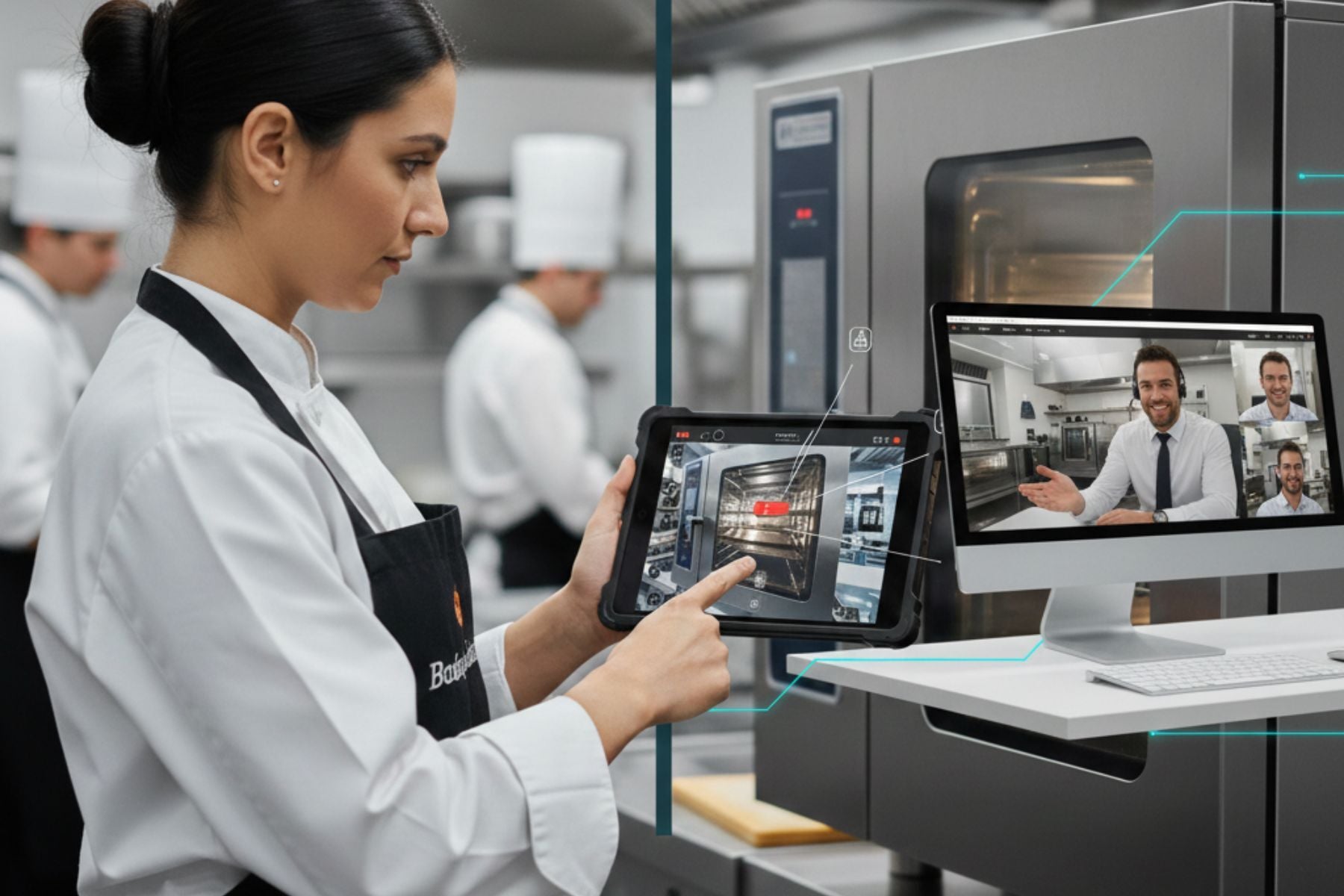
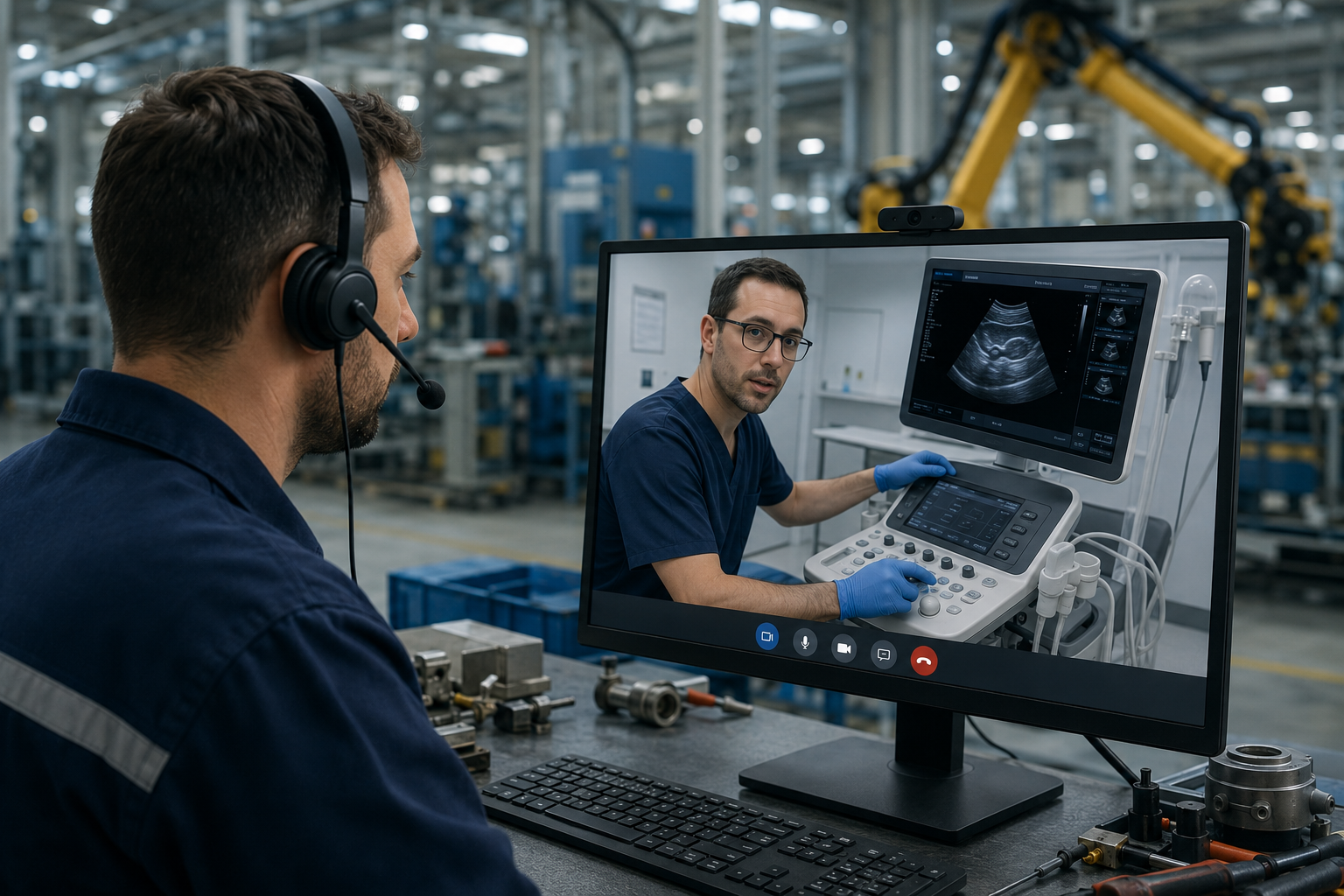
Remote video diagnostics enables manufacturing teams to assess and troubleshoot equipment issues in real time through live video collaboration. By connecting on-site personnel with remote experts via remote video support platforms, organizations can quickly diagnose problems without waiting for physical presence.
In practice, this involves:
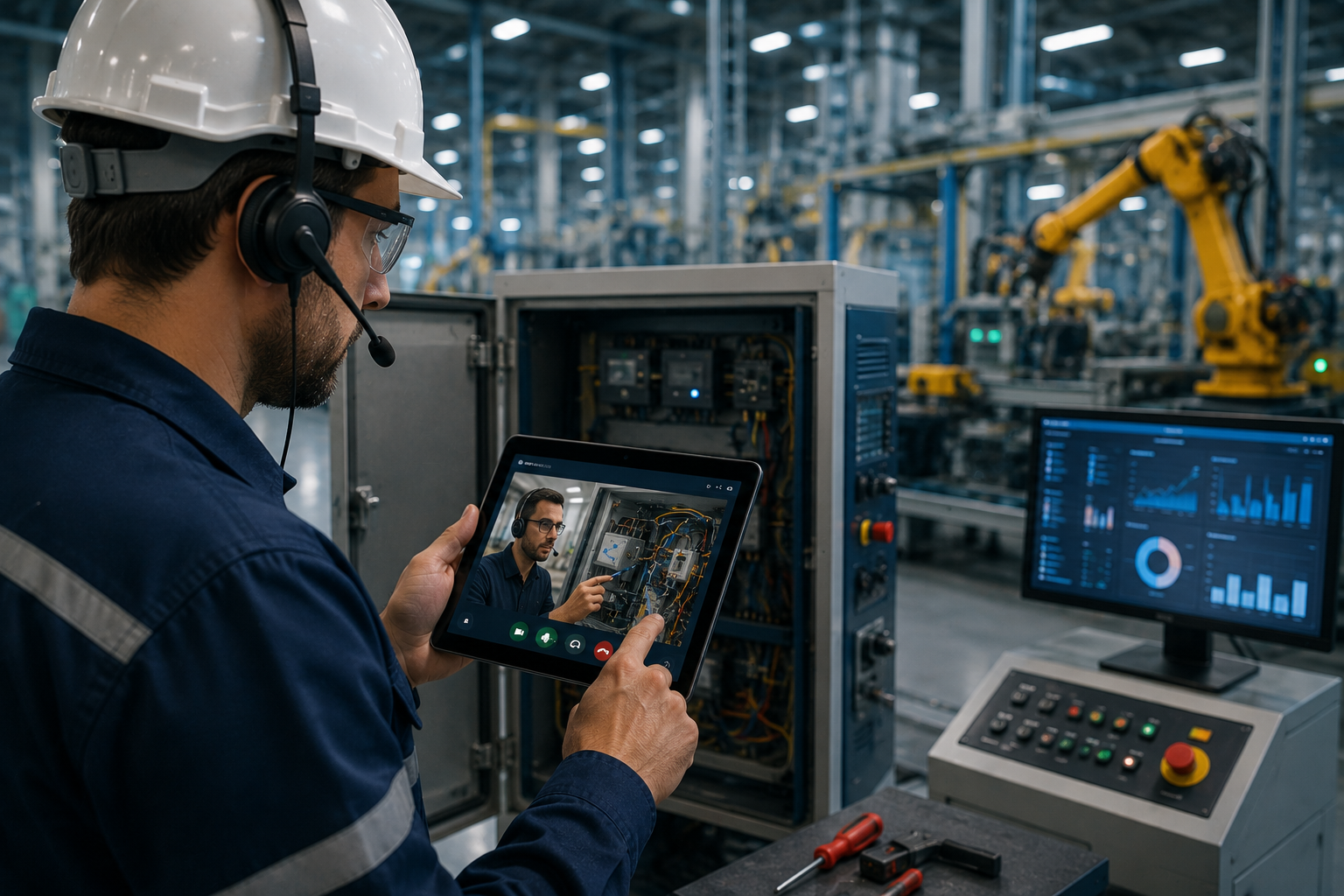
- On-site technicians and remote experts connecting through live video, allowing specialists to visually inspect equipment and guide troubleshooting
- Operators and support teams collaborating in real time to identify issues and determine the appropriate course of action
This approach allows for immediate visual inspection of machinery, components, and operating conditions. Instead of relying on descriptions, experts can directly observe the issue, ask targeted questions, and provide precise instructions.
Advanced implementations using modern remote inspection software may also incorporate AI to enhance the diagnostic process, including:
- Issue detection that helps identify potential faults or anomalies automatically
- Annotations and guided troubleshooting that enable experts to highlight components and direct actions clearly on the live video feed
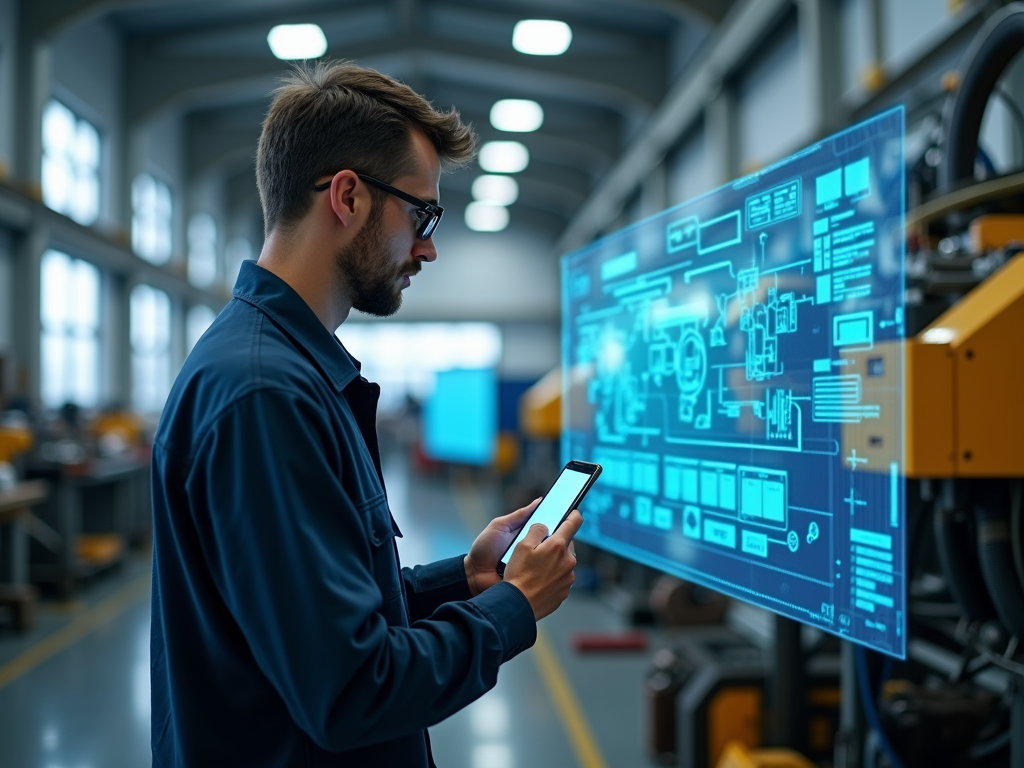
- Data overlays that provide contextual information alongside the visual feed
The result is a practical, efficient way to diagnose and resolve equipment issues, reducing delays and improving accuracy across manufacturing operations.
How Remote Diagnostics Reduces Downtime
Remote visual inspection software directly addresses the root causes of downtime by enabling immediate visibility and real-time collaboration. Instead of waiting for experts to arrive on-site or relying on incomplete information, teams can diagnose and resolve issues as they happen.
Faster Issue Identification
With live video, experts can visually inspect machinery, components, and operating conditions in real time. This eliminates guesswork and allows problems to be identified within minutes rather than hours or days.
Real-Time Guided Troubleshooting
On-site technicians receive step-by-step instructions from remote experts during the session. This ensures that troubleshooting is precise, efficient, and aligned with best practices.
Reduced Need for On-Site Experts
Specialists no longer need to travel to every location. They can support multiple sites remotely, reducing delays associated with scheduling and travel while lowering operational costs.
Improved First-Time Fix Rates
With accurate, real-time diagnostics, issues are more likely to be resolved correctly on the first attempt. This minimizes repeat interventions and prevents prolonged downtime.
Continuous Support for Distributed Operations
Facilities in remote or geographically dispersed locations gain immediate access to expert support. This ensures consistent service levels across all sites, regardless of location.
Together, these capabilities transform maintenance from a reactive, time-intensive process into a faster, more efficient, and scalable operation.
Workflow: Equipment Troubleshooting With vs Without Remote Video
The impact of remote diagnostics becomes clear when comparing traditional troubleshooting workflows with a video-enabled approach.
Traditional workflow:
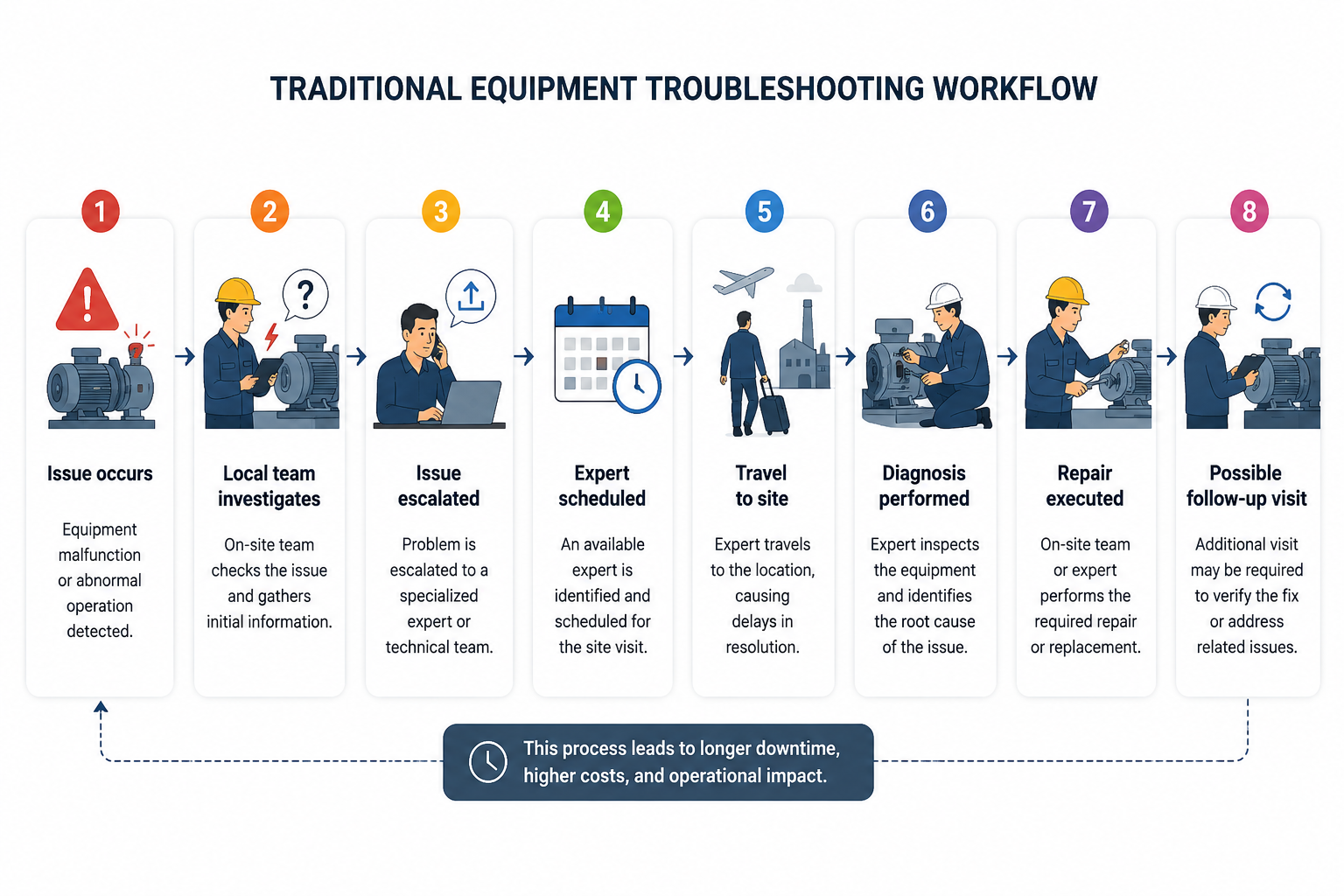
This process introduces delays at multiple stages, particularly when expert availability and travel are required.
With remote diagnostics: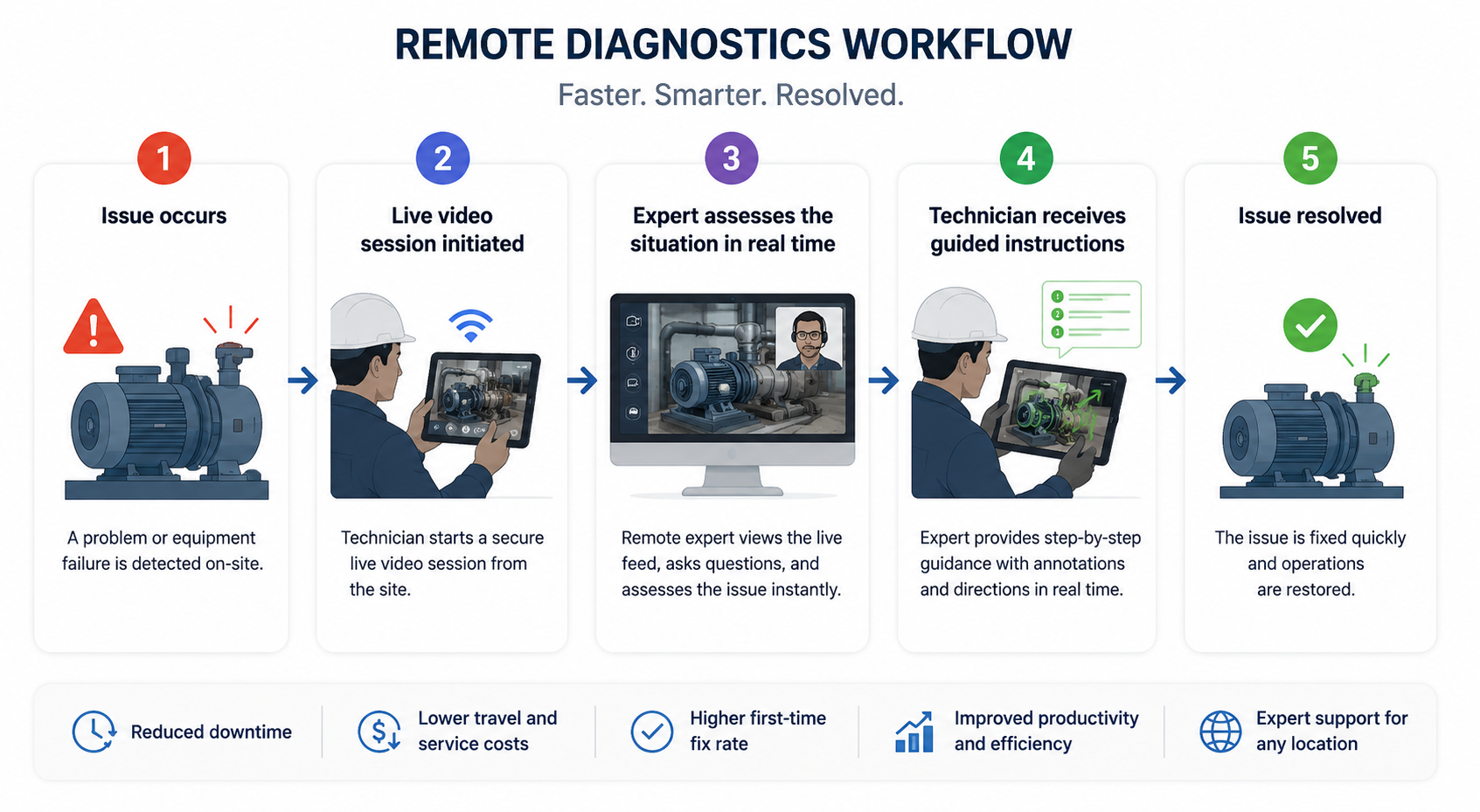
By removing delays related to escalation and travel, remote diagnostics significantly shortens the time from problem identification to resolution, reducing downtime and improving operational efficiency.
Business Impact for Manufacturers
For manufacturers, the adoption of remote diagnostics delivers measurable improvements across operations, cost management, and resource utilization. By reducing delays in identifying and resolving equipment issues, organizations can significantly improve overall production performance.
- Reduced downtime and production loss. Faster diagnostics and resolution minimize disruptions, keeping production lines running and output consistent.
- Lower maintenance and travel costs. Fewer on-site visits from specialized technicians reduce expenses related to travel, logistics, and external support.
- Faster mean time to repair (MTTR). Real-time collaboration accelerates troubleshooting and repair, shortening the time required to restore equipment to full operation.
- Improved operational efficiency. Streamlined workflows and quicker decision-making enable teams to respond more effectively to issues as they arise.
- Better utilization of expert resources. Specialists can support multiple sites remotely, focusing their time on critical issues rather than traveling between locations.
These outcomes position remote video support as a strategic capability for manufacturers aiming to increase uptime, reduce costs, and optimize performance at scale.
Real-World Manufacturing Use Cases
Remote diagnostics can be applied across a wide range of manufacturing scenarios, helping teams address both routine issues and complex equipment challenges more efficiently.
- Heavy machinery troubleshooting. Diagnose and resolve issues in CNC machines, conveyors, robotics, and other critical equipment through live visual inspection and guidance.
- Assembly line issue diagnosis. Quickly identify bottlenecks or malfunctions on production lines and resolve them with real-time expert input.
- Equipment installation and setup verification. Ensure machinery is installed and configured correctly from the start, reducing errors and rework.
- Preventive maintenance inspections. Conduct routine checks remotely to identify potential issues before they lead to failures.
- Remote support for global facilities. Provide consistent expert guidance across geographically distributed plants without the need for travel.
These use cases demonstrate how remote visual support enhances flexibility, responsiveness, and consistency across manufacturing operations.
Why Integration Matters
For manufacturing organizations, the value of remote diagnostics depends on how seamlessly it integrates into existing systems and workflows. Introducing new technology should enhance operations, not create additional complexity or force teams to change how they work.
To be effective, remote visual inspection software must integrate with core platforms such as:
- Maintenance management systems (CMMS), where work orders, asset history, and maintenance activities are managed
- ERP systems, which coordinate production, inventory, and operational planning
- Service and support platforms, where issues are tracked, escalated, and resolved
When integrated properly, remote diagnostics becomes part of the natural workflow. Technicians can initiate video sessions directly from a work order, experts can collaborate within the same system, and all interactions are documented in a centralized record.
This approach ensures minimal disruption, reduces training requirements, and enables faster adoption across teams, allowing manufacturers to scale new capabilities without interrupting ongoing operations.
How Blitzz Supports Manufacturing Workflows
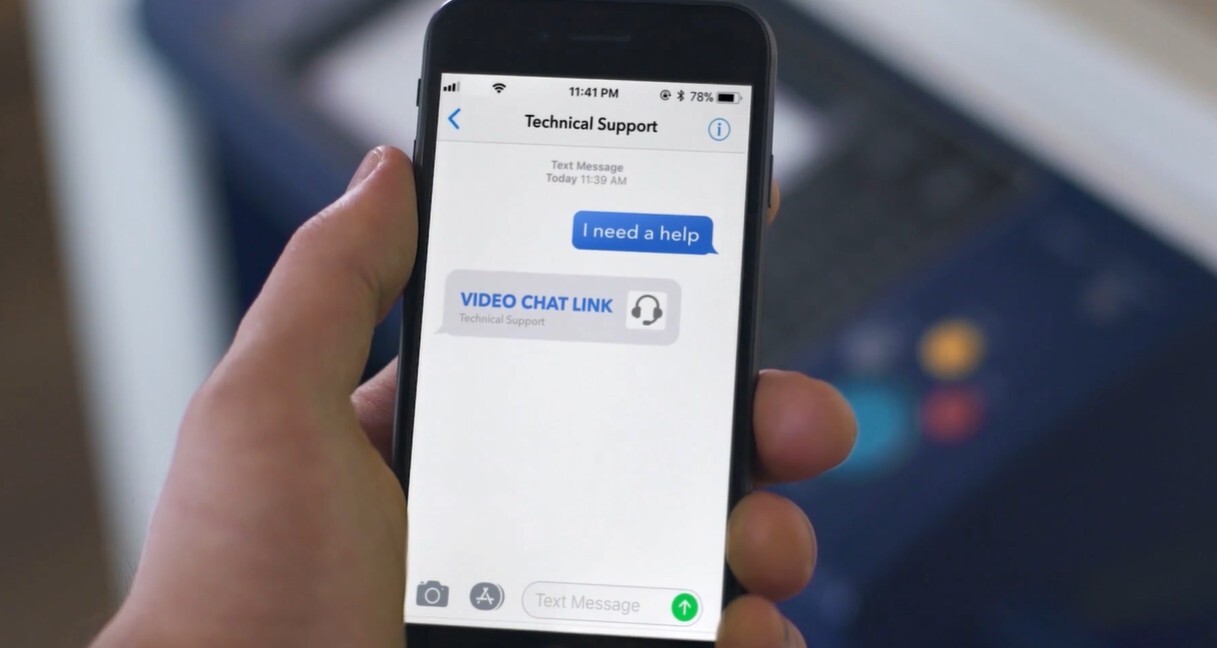
Blitzz enables manufacturers to bring real-time visual diagnostics into their existing operations without adding friction. With instant, browser-based video sessions, on-site technicians can quickly connect with remote experts, eliminating delays associated with travel or scheduling.
The platform is designed to work across both mobile devices and smart glasses, allowing technicians to receive hands-free guidance while working directly on equipment. This improves accuracy and efficiency during troubleshooting and repair tasks. For specialized scenarios, Blitzz also powers equipment troubleshooting use cases where reducing equipment downtime by 50% or more is a documented outcome.
Blitzz also incorporates AI-assisted features such as real-time annotations and guided instructions, helping standardize diagnostics and ensure that issues are addressed correctly the first time. By integrating seamlessly with existing systems, all video sessions and captured insights become part of the broader maintenance and service workflow.
The result is a more responsive and efficient operation: reduced downtime, faster issue resolution, and better use of expert resources across all facilities.
From Reactive Maintenance to Real-Time Diagnostics
Manufacturing operations are shifting from reactive maintenance models, where issues are addressed only after they cause disruption, to a more proactive, real-time approach enabled by remote video inspection. This transformation allows teams to respond to equipment issues immediately, reducing delays and improving overall operational performance.
With real-time visibility and expert collaboration, issues can be identified and resolved faster, minimizing downtime and preventing small problems from escalating into major disruptions. At the same time, reliance on on-site experts is significantly reduced, enabling organizations to access specialized knowledge without the constraints of travel or scheduling.
More importantly, remote diagnostics supports scalable and efficient maintenance operations. Manufacturers can extend expert support across multiple facilities, standardize troubleshooting processes, and optimize resource allocation, all while maintaining consistent service levels across all locations.
This shift isn't just about improving maintenance. It's about enabling smarter, more resilient operations in an increasingly complex manufacturing environment.
Ready to Eliminate Equipment Downtime in Your Manufacturing Operation?
Whether you're managing a single high-volume facility or coordinating maintenance across globally distributed plants, remote visual support and remote video inspection deliver measurable ROI from day one. Faster diagnostics, lower travel costs, better first-time fix rates, and improved uptime across every site.
Get in touch with the Blitzz team to see how remote video diagnostics can fit into your manufacturing operation, or schedule a free demo to experience the impact for yourself.