
.png?width=120&height=55&name=Blitzz-Logo-right%20white%20eyes%20-%20not%20transparent%20(3).png)


On this page

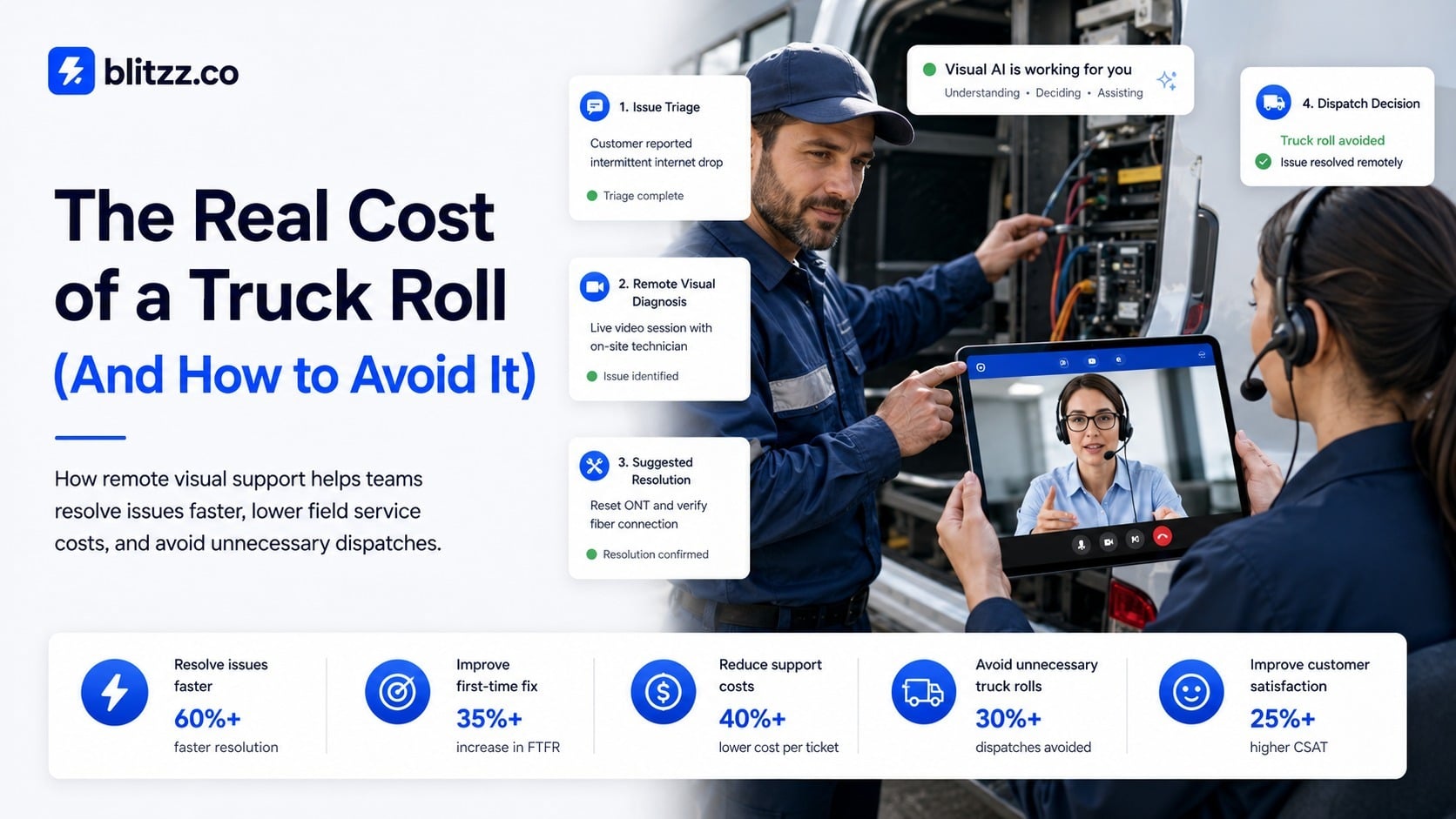
Complex technical support issues can be resolved without a field visit when your agent can see the problem in real time instead of guessing from a verbal description. The answer is remote visual support: a live video session that puts the agent's eyes on the equipment, the error, and the environment — so they can diagnose, guide, and document the fix from anywhere. Blitzz Concierge is the concierge-style solution built for exactly this: app-free, one-click visual support that turns "we'll have to send someone out" into "let's solve it right now."
The short answer
You handle a complex issue without a truck roll by establishing visual context fast. The moment an agent can see what the customer sees — the cable run, the blinking fault light, the cracked panel — most "complex" problems collapse into a guided, step-by-step fix. Remote visual support replaces blurry emailed photos and back-and-forth phone descriptions with a live, annotated video session, and a field visit becomes the exception rather than the default.
Why complex issues traditionally trigger a field visit
Field visits happen because the agent is working blind. When a customer calls in about an outage, a misconfigured device, or an intermittent fault, the agent has only words to go on — and words are a low-bandwidth way to describe a physical problem. Misdiagnosis, repeat callbacks, and "just send a tech to be safe" are the predictable results.
Those visits are expensive. A single truck roll carries labor, fuel, vehicle, and scheduling costs, and a meaningful share of them turn out to be avoidable — the issue was something an agent could have talked the customer through if only they could have seen it. We break down the real economics in Mastering the Art of Truck Rolls: Reducing Costs and Boosting Efficiency, and for high-volume operators specifically in Reducing Truck Rolls at Scale.
What "complex" actually means in technical support
A complex issue is usually one of three things: a multi-step configuration, an ambiguous diagnosis, or an intermittent fault. Each of these is hard over the phone precisely because it depends on seeing state — which port the cable is in, what the on-screen error reads, whether the indicator is solid or flashing. Strip away the visual ambiguity and "complex" often becomes "guided."
That's the core insight behind why voice-only support no longer holds up on its own: the difficulty isn't the problem, it's the missing line of sight.
Remote visual support is the answer
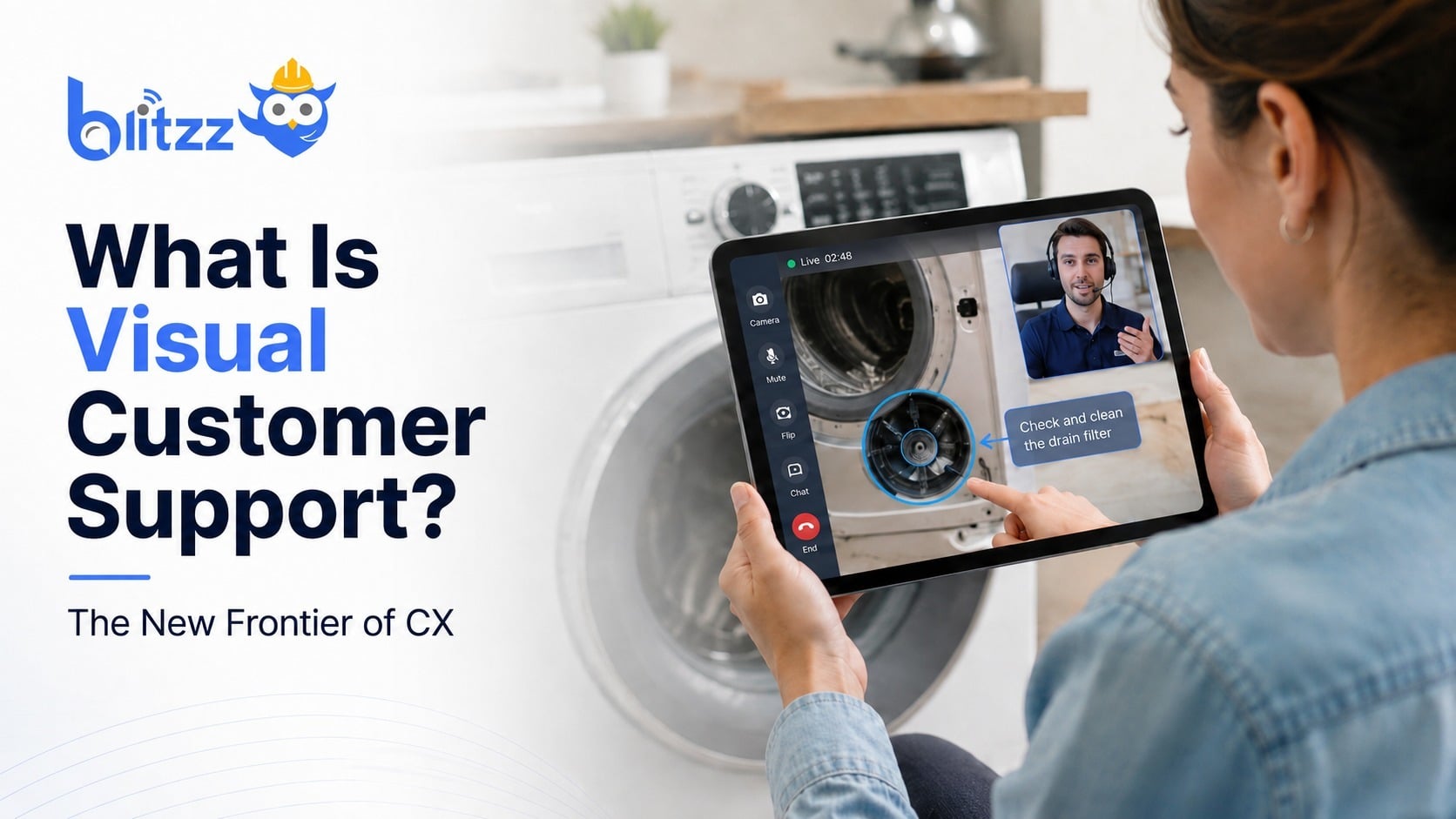
Remote visual support lets an agent see the customer's environment through their phone camera and guide them through a fix in real time. Instead of "describe the back of the router," the agent watches the live feed and uses augmented-reality tools — a live pointer, on-screen markup, annotation — to draw directly on the video and show exactly which button to press or which cable to move.
This is the difference between a generic video call and purpose-built support. A Zoom or Teams call shows you a face; it doesn't let you annotate the customer's live camera feed or capture documentation. The full toolset is laid out in Blitzz's core features, and the contrast with phone-only support is covered in depth in Visual Customer Support vs Traditional Call Centers.
How Blitzz Concierge handles complex issues: The concierge approach
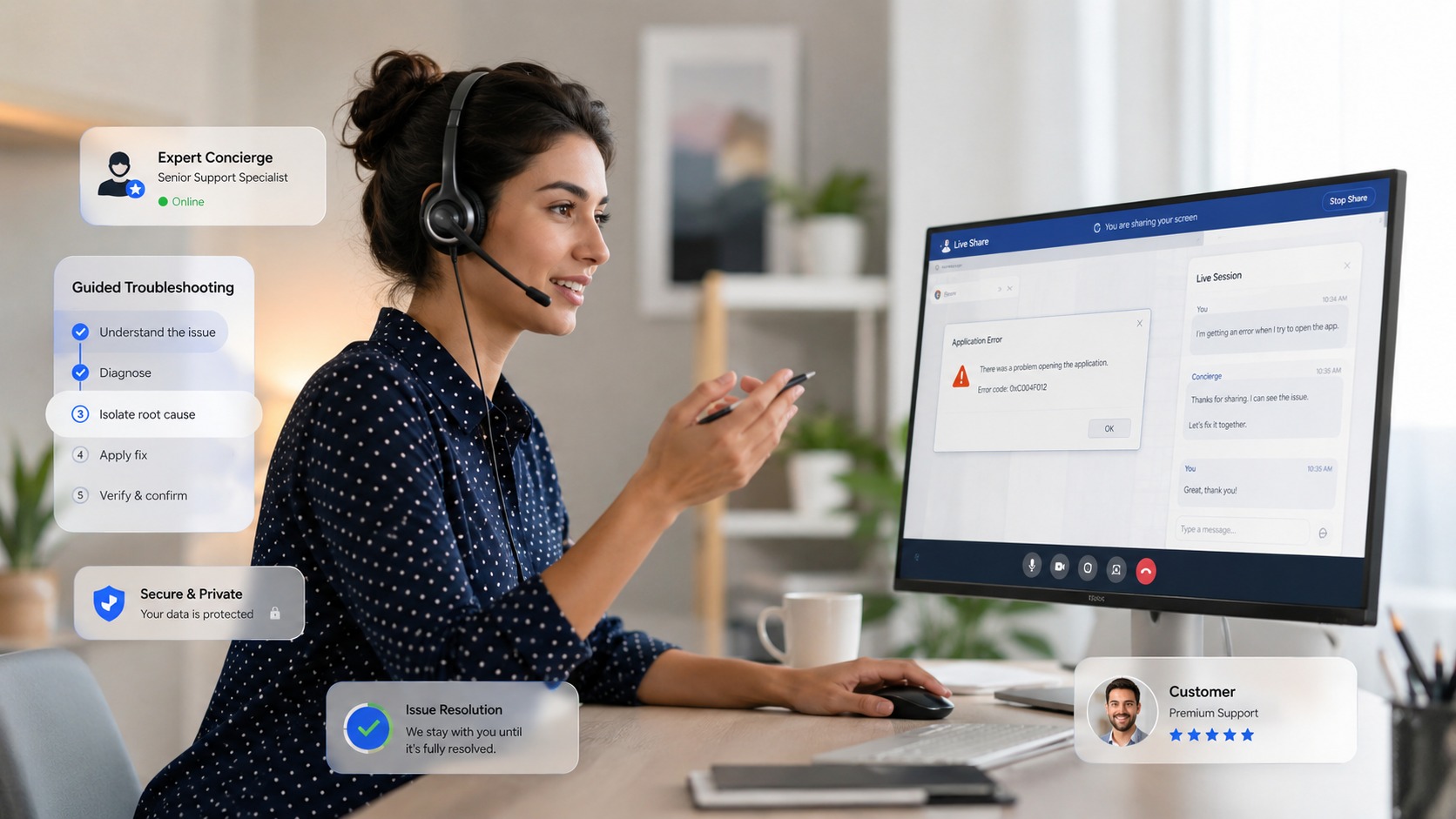
Blitzz Concierge treats every support session like a white-glove, guided experience. The customer gets a link by SMS, email, or WhatsApp, taps it, and is connected in one click — no app to download, no account to create. From there the agent leads the session like a concierge: seeing the problem, annotating the live feed, walking the customer through each step, and capturing a record of the whole interaction.
Crucially, Concierge is also a triage layer. Field service teams have traditionally dispatched a technician for almost every issue; Concierge solves the simple and moderate ones remotely so you only roll a truck when the work genuinely requires hands on site. You can see how support teams put this into practice on the support use-case page.
A step-by-step playbook for resolving a complex issue remotely
Here's how a field-visit-free resolution actually unfolds:
- Connect instantly. Send the customer a link; they join from their phone browser in one tap, no install required.
- See the problem. Switch to the customer's rear camera and get eyes on the equipment, the error state, and the surroundings.
- Diagnose with visual context. What was ambiguous over the phone is now obvious — the loose connector, the wrong setting, the physical damage.
- Guide with AR tools. Use the live pointer and on-screen annotation to show the customer precisely what to do, step by step.
- Document everything. Capture timestamped photos and notes automatically so there's a clean record for the ticket, the claim, or the warranty.
- Escalate only if needed. If the issue truly requires a technician, you now dispatch the right person with the right parts — informed by what you already saw.
This is the model that lets teams solve customer service issues dramatically faster: even when a visit is unavoidable, the preliminary visual call means the technician resolves it on the first trip.
The three layers that crack complex problems
Blitzz's approach to visual support works on three layers, and complex issues usually need all three:
Layer 1 — Live, human-guided visual sight. The agent sees what the customer sees and guides them in real time. This alone resolves the majority of "complex" calls, because most complexity was really just missing visual context.
Layer 2 — Visual AI and AR augmentation. Image recognition, live pointers, and markup help the agent identify equipment, highlight the exact component, and reduce guesswork. Blitzz's broader use of AI to speed diagnosis and reduce dispatches is detailed in How Blitzz Uses AI to Transform Remote Support.
Layer 3 — Automated documentation and workflow integration. The session generates a documented record and syncs into the systems your team already runs, so nothing has to be re-keyed and every resolution is auditable.
The results: what teams actually see
Blitzz reports the kind of numbers that make the field-visit-free model concrete. A large telecom provider reduced truck rolls by 60% while improving customer satisfaction, and Blitzz Concierge customers in telecom have cut truck rolls by up to 30% while improving first-call resolution by 40%. One contact-center deployment reduced average issue resolution time by 48%, and in an AI-assisted telecom case, truck rolls dropped by 75% as technicians were dispatched only when truly necessary.
Customer preference backs it up too: in a Blitzz survey, 73% of customers preferred video assistance over a voice-only call, and 78% who were served with Concierge found the tool extremely helpful. Onboarding is fast enough to match — one North American telecom brought 1,500 agents up to speed in just two days. The same playbook extends beyond support into regulated, evidence-heavy work like insurance claims and remote inspections.
When you do still need a field visit
Be honest with your customers and your own team: some problems require hands on site — a hardware swap, a physical install, a safety-critical repair. The point of remote visual support isn't to eliminate every visit; it's to make sure you only send a technician when the work genuinely demands it, and that when you do, they arrive prepared. That's the difference between reactive dispatching and a smart support model, a theme we explore for buyers comparing platforms in Top Building Inspection Software in 2026.
It plugs into the tools you already use
Remote visual support shouldn't be one more siloed login. Blitzz integrates natively with Salesforce, Zendesk, ServiceNow, Genesys, and more, so sessions launch from inside your existing workflow and the documentation flows straight back into your CRM or ticketing system. For contact centers running live chat, the Zendesk cobrowsing integration escalates a chat into a visual session the moment an issue gets complex, and the Genesys integration does the same for contact-center teams. For browser- and screen-based problems specifically, Blitzz Co-Browse lets agents guide customers through a digital flow without a download.
Frequently asked questions
Can complex technical support issues really be resolved without a field visit? Yes. Most field visits are triggered by a lack of visual context, not by work that physically requires a technician. Once an agent can see the equipment and the error in real time and guide the customer with AR tools, a large share of complex issues are resolved remotely — Blitzz reports truck-roll reductions of 30–75% depending on the use case.
What is remote visual support? Remote visual support is a live video session in which a support agent sees the customer's environment through their device camera and guides them through a fix in real time, using tools like live pointers, on-screen annotation, and image capture. It replaces verbal descriptions and emailed photos with shared, real-time sight.
How is Blitzz Concierge different from a Zoom or FaceTime call? A standard video call shows faces; it doesn't let an agent annotate the customer's live camera feed, capture timestamped documentation, or sync the session into a CRM. Blitzz Concierge is built specifically for guided support, with AR markup, no-download access, and workflow integrations.
Does the customer need to download an app? No. The customer taps a link sent by SMS, email, or WhatsApp and joins from their phone browser in one click — no app, no account, no friction.
What types of complex issues can be solved remotely? Multi-step device configurations, ambiguous diagnoses, intermittent faults, equipment troubleshooting, and damage assessment are all strong candidates, because each becomes far easier the moment the agent can see it.
How much does Blitzz Concierge cost? Blitzz Concierge pricing starts at $420/year per user, based on a minimum of five licenses, and scales as your team grows.
When should you still send a technician? When the resolution requires physical work — a hardware replacement, an install, or a safety-critical repair. Concierge acts as a triage layer so those are the only visits you make, and the technician arrives already briefed on the problem.
Ready to handle complex issues without the truck roll?
Remote visual support is the most direct way to resolve complex technical problems faster, cut avoidable field visits, and give customers a better experience — and Blitzz Concierge delivers it in a guided, concierge-style package your team can deploy in hours. Explore the full Blitzz platform and browse more support insights on the blog, or book a Blitzz Concierge demo to see a field-visit-free resolution in action.


Blitzz Team
The Blitzz Team writes about remote video support, virtual inspections and field service. Our guides come from working with home builders, property managers, warranty teams, contact centers and field service organizations that use Blitzz to see and solve issues without a truck roll.