
.png?width=120&height=55&name=Blitzz-Logo-right%20white%20eyes%20-%20not%20transparent%20(3).png)


On this page
Why Hazardous Sites Need a Remote Visual Inspection Solution Now
A remote visual inspection solution lets your experts see, assess, and guide — without ever setting foot on a dangerous site.
If you're evaluating options, here's a quick breakdown of the top reasons enterprise teams are making the switch:
- Safety first - Keeps inspectors out of confined spaces, high-voltage zones, and other hazardous environments
- Fewer truck rolls - Resolve issues remotely before dispatching a technician
- Faster resolution - AR annotations and live video cut diagnosis time dramatically
- Better documentation - Auto-generated reports, timestamps, and session recordings for compliance
- Lower costs - One field operator supported by remote experts replaces a full on-site team
Think about what a typical inspection day looks like right now. A technician drives out to a substation or industrial site — sometimes hours away. They spend time on-site doing work that, in many cases, a remote expert could have triaged, diagnosed, or even fully resolved from a laptop.
That's not just expensive. In hazardous environments, every unnecessary site visit is also a safety risk.
The numbers back this up. Remote inspection platforms have been shown to cut inspection time in half, reduce truck rolls by 50%, and push first-time fix rates from the mid-70s all the way past 98% in real deployments.
That's not a marginal improvement — that's a fundamentally different way of working.
Industries from oil and gas to utilities, aerospace, and insurance are already shifting to remote visual inspection workflows. The technology has moved well past "experimental." For enterprise teams managing aging infrastructure with lean field crews, it's quickly becoming the baseline expectation.
This guide walks you through how to evaluate and choose the right solution for your operations.
What is Remote Visual Inspection (RVI) and How Does It Work?
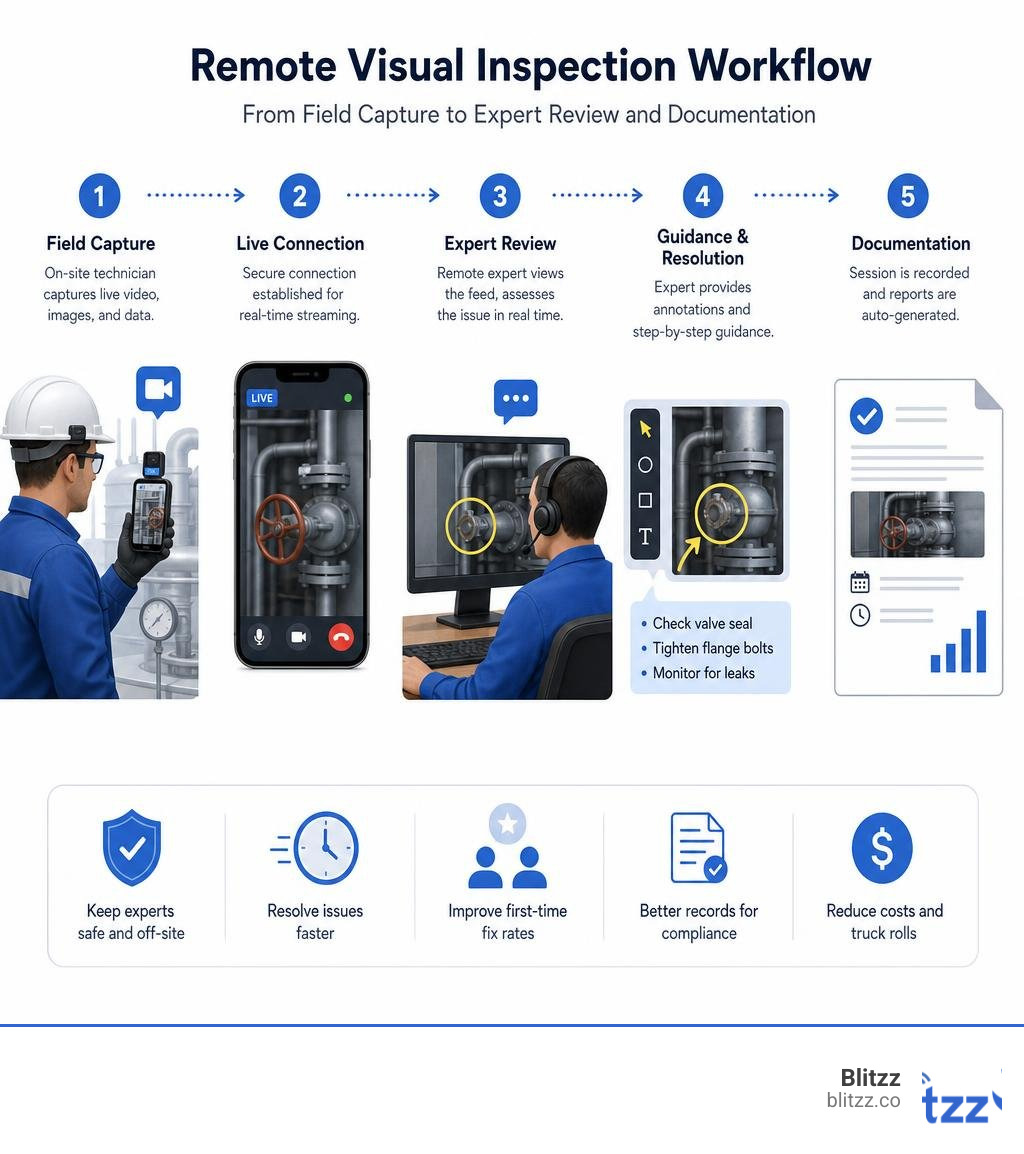
At its core, a remote visual inspection solution is a nondestructive testing (NDT) methodology that allows quality managers, engineers, and safety auditors to examine critical infrastructure and machinery from a safe distance. Instead of physically climbing inside a storage tank, dangling from a wind turbine, or walking through a high-temperature zone, inspectors use digital eyes to collect, analyze, and document visual data in real-time.
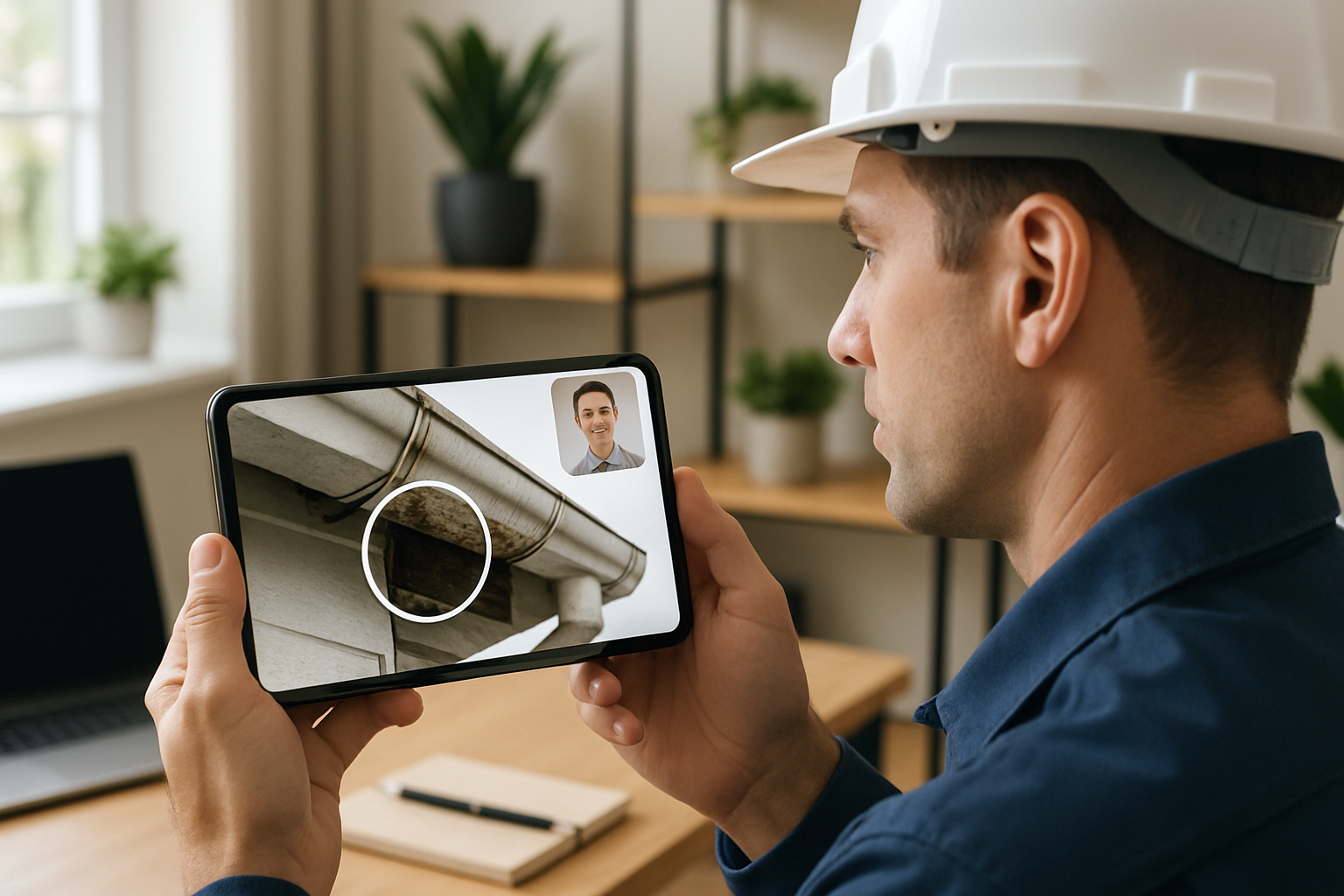
To understand how it functions, it helps to look at What Are Remote Video Inspections in practice. RVI works by bridging the physical gap between the asset in the field and the specialized knowledge of your engineering team. An on-site operator, equipped with standard mobile hardware, smart glasses, or specialized cameras, establishes a live, high-definition video stream with a remote expert.
Rather than a simple passive video feed, modern RVI is an interactive, bidirectional collaboration. The remote inspector doesn't just watch; they guide the field operator, snap high-resolution photos, draw on-screen using spatial augmented reality (AR) markers, and capture metrically accurate data. This real-time monitoring eliminates the delays of traditional "record-now, analyze-later" workflows, transforming visual access into instant, actionable intelligence.
The Evolution of NDT and Visual Inspections
For decades, visual inspection was the most basic yet hazardous form of nondestructive testing. It relied heavily on the physical presence of highly trained inspectors who had to squeeze into confined spaces, scale scaffolding, or enter hazardous environments. These manual inspections carried massive liabilities. If an inspector missed a hairline crack in a high-pressure line because of poor lighting or physical fatigue, the consequences could be catastrophic.
Furthermore, traditional asset management suffered from extreme documentation inconsistencies. Inspections were recorded on paper clipboards, and photos were stored across scattered local drives. The transition to digital and remote workflows has changed everything. By shifting to a Remote Video Inspection workflow, enterprises have removed the subjectivity of the "expert eye."
Modern RVI software integrates advanced imaging, automated workflows, and cloud storage. It ensures that inspections are standardized, repeatable, and easily auditable. This evolution has turned visual inspection from a high-risk operational bottleneck into a streamlined, data-driven process that supports predictive maintenance and long-term asset integrity.
Key Technologies: From Hardware to AR and Browser-Based Video
The modern RVI ecosystem is built on a sophisticated combination of hardware and software. On the hardware side, field operators utilize everything from everyday smartphones and tablets to specialized industrial equipment:
- Industrial Videoscopes and Borescopes: Flexible, thin insertion tubes equipped with high-resolution cameras and fiber-optic lighting, designed to navigate the internal structures of turbine blades, engines, and complex piping.
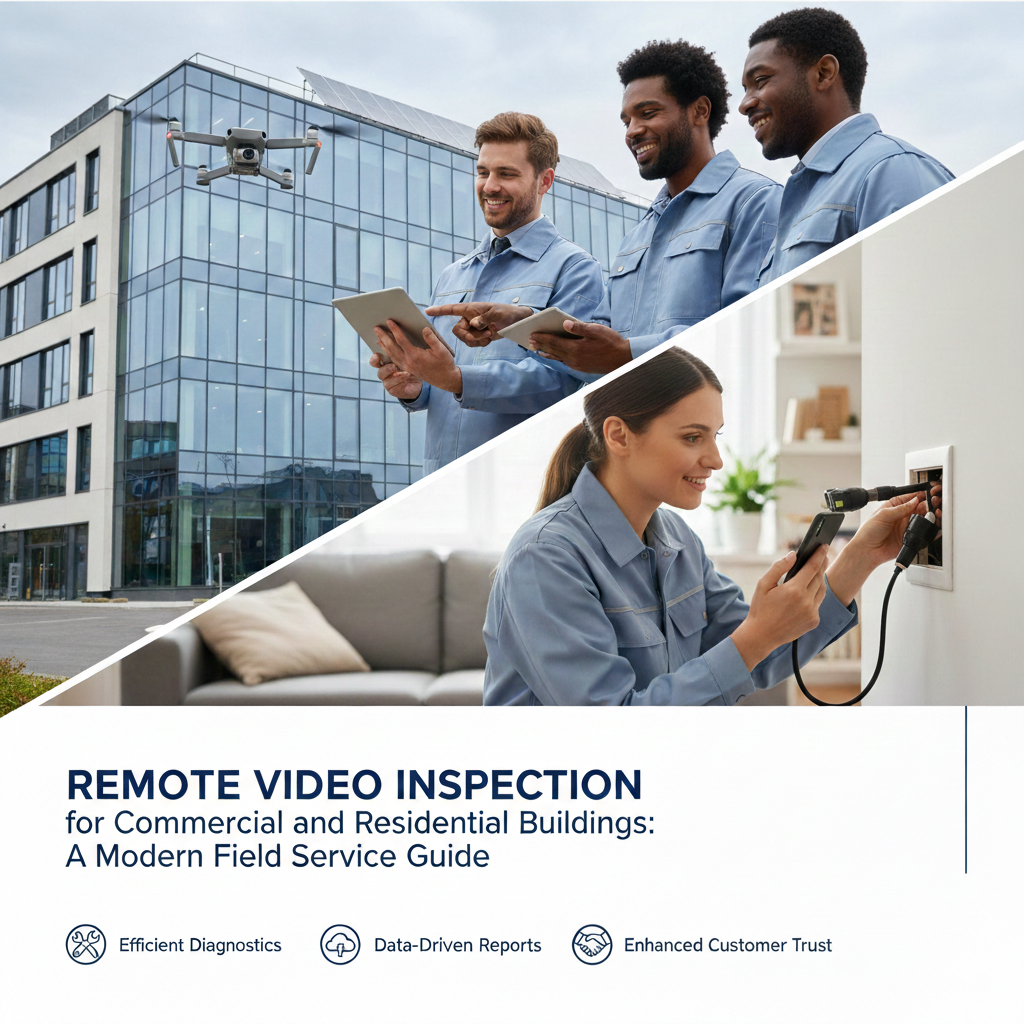
- Robotic Crawlers and Drones (UAVs): Remotely operated devices that traverse pipelines, storage tanks, and offshore rigs.
- Smart Glasses and Wearables: Hands-free head-mounted displays that allow field technicians to work with both hands while receiving real-time guidance from a remote expert.
On the software side, the magic happens through Remote Video Inspection Using Live Video Call platforms. Rather than relying on clunky, proprietary software that requires extensive training, the industry has shifted toward lightweight, browser-based solutions.
These platforms use WebRTC technology to deliver ultra-low latency video streaming directly inside a mobile web browser. Combined with AR tools—which allow experts to pin virtual annotations, arrows, and checklists directly onto physical objects in the technician's view—and advanced 3D spatial modeling tools like NODAR AssetView | Automated 3D Asset Inspection , remote experts can collaborate as if they were standing right next to the machine.
The Core Benefits of RVI in High-Risk Environments

Implementing a robust remote visual inspection solution yields immediate dividends across safety, operations, and compliance. In high-risk environments, the primary objective is always to minimize human exposure to danger. However, the secondary operational benefits—such as slashing travel budgets and cutting equipment downtime—are what make RVI an easy sell to executive stakeholders. Let's look at the Benefits of Remote Video Inspections through the lens of industrial operations.
Maximizing Safety and Eliminating Confined Space Entry
Every year, industrial facilities face severe safety incidents during routine inspections of confined spaces like storage tanks, boilers, and silos. These areas present chemical, atmospheric, and structural hazards that require extensive safety permits, standby rescue teams, and expensive scaffolding.
By leveraging RVI, you can safely assess the condition of hard-to-reach or hazardous areas without direct contact. In the energy sector, for example, deploying Remote Video Inspections for Utilities & Energy allows operators to inspect substations, transmission lines, and wind turbines from the ground. Only one operator needs to be in the field to position the camera, drastically reducing the health, safety, and environmental (HSE) risk profile of the entire operation.
Reducing Operational Downtime and Travel Costs
In heavy industries, when an asset goes down, the clock starts ticking. Traditional workflows require waiting days for a specialized expert to fly to the site, inspect the issue, and recommend a fix. During this time, production is halted, costing thousands of dollars per hour.
With Remote Video Inspections for Manufacturing & Heavy Equipment, you can triage and resolve issues in a fraction of the time. Local technicians can instantly connect with global experts to diagnose complex machinery failures on the spot.
For specialized businesses, the savings are even more pronounced. For instance, using a Remote Video Inspection for Tank Inspection Business: Reduce Travel Cost by 75% approach demonstrates how companies can eliminate up to 80% of transit time for their senior engineers. Instead of spending days traveling between remote storage facilities, a single certified inspector can conduct multiple high-quality audits in a single afternoon from their office.
Choosing the Right Remote Visual Inspection Solution for Enterprise Operations
Not all video solutions are created equal. While consumer-grade video calling apps are great for catching up with family, they lack the security, precision, and collaborative features required for industrial-grade inspections.
To help visualize the operational differences, consider the transition your organization undergoes when moving away from traditional on-site visits:
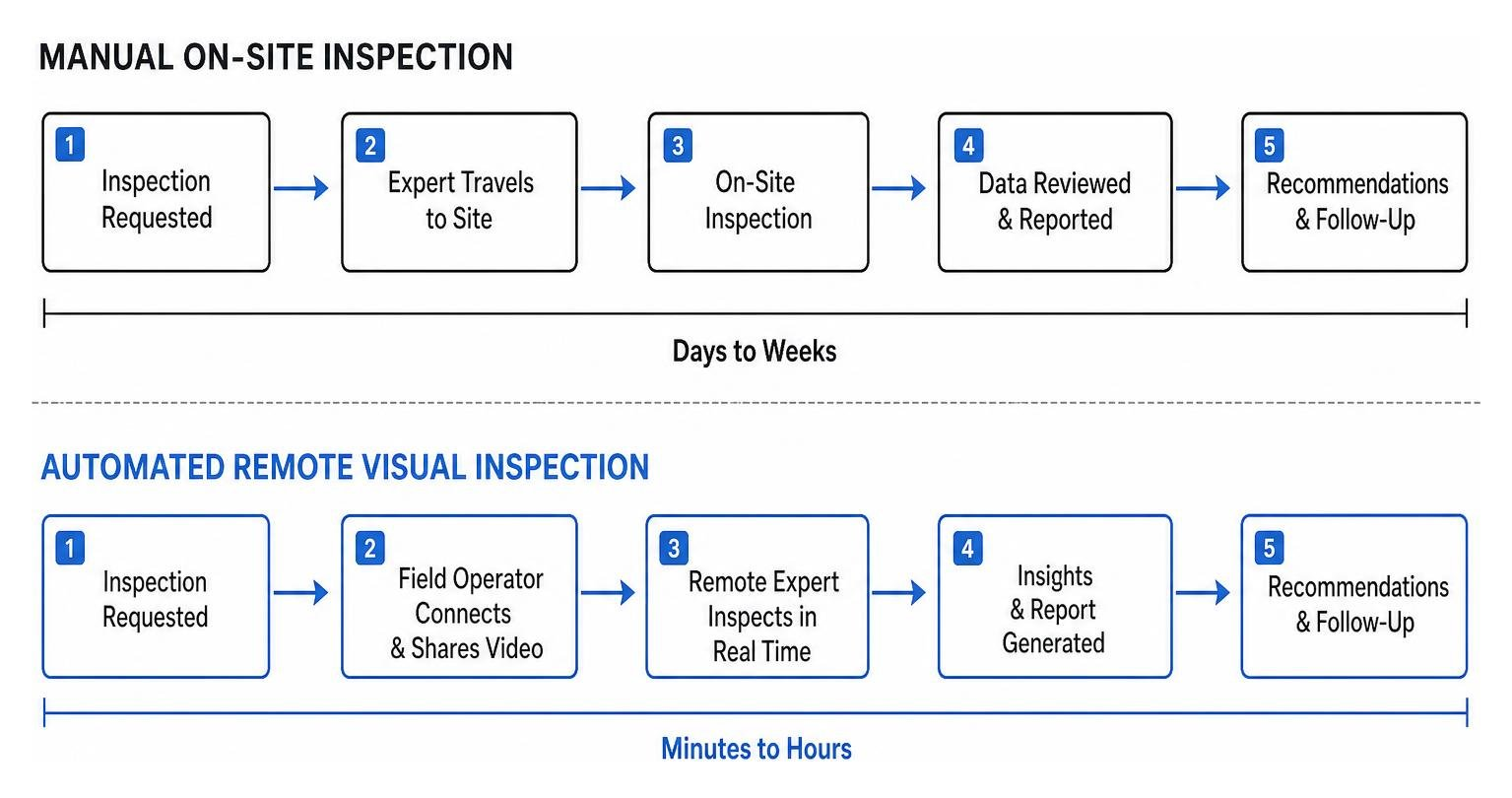
Let's compare how traditional on-site inspections stack up against a dedicated enterprise remote visual inspection solution:
| Feature | Traditional On-Site Inspections | Enterprise Remote Visual Inspection Solution |
|---|---|---|
| Safety Risk | High (exposure to hazardous areas, heights, confined spaces) | Low (field operator remains in safe zone; expert is remote) |
| Average Time to Inspect | Days (due to travel, logistics, and scheduling) | Minutes to Hours (instant connection, rapid triage) |
| Resource Utilization | Requires full team on-site (inspectors, safety standby, escorts) | Requires only one field operator; experts join virtually |
| Data & Documentation | Manual reports, scattered photos, prone to human error | Auto-generated PDF reports, secure cloud storage, OCR data capture |
| System Integration | None (manual data entry into ERP/CRM systems) | Seamless API integrations with Salesforce, Microsoft, and FSMs |
| Bandwidth Adaptability | N/A | High (optimizes video quality dynamically; offline support) |
Key Features of a Modern Remote Visual Inspection Solution
When searching for the perfect remote visual inspection solution, certain features are non-negotiable for enterprise-grade performance. First and foremost is ease of access. If your field technicians or third-party contractors have to download, install, and configure a complex mobile app, adoption will plummet.
Look for a web-based Remote Video Inspection Software that runs natively in any standard mobile browser via an instant SMS or email link.
Additionally, your software should include:
- Interactive AR Annotations: The ability for remote experts to draw, place arrows, and write instructions that remain pinned to physical equipment, even if the camera moves.
- High-Quality Pause & Freeze-Frame: Allows inspectors to pause the live stream to capture a high-resolution, crystal-clear image—even over a weak network connection—and annotate it for the report.
- Automated Document Generation: Platforms should automatically compile photos, notes, GPS coordinates, and session transcripts into a structured, compliance-ready PDF report immediately after the call ends.
- Optical Character Recognition (OCR): AI-powered tools that automatically read and digitize serial numbers, barcodes, and analog gauge readings directly from the camera feed.
To manage large-scale operations, look for an enterprise-level Remote Video Inspection Platform that supports multi-party calling, allowing up to 20 experts or regulatory auditors to join a single session simultaneously.
How to Evaluate a Remote Visual Inspection Solution Vendor
To ensure your chosen vendor can support your long-term digital transformation goals, you must look beyond basic video features. Enterprise integration is critical. Your RVI software should not create another data silo; instead, it must integrate seamlessly with your existing Customer Relationship Management (CRM), Field Service Management (FSM), and Enterprise Asset Management (EAM) platforms.
According to the Best Remote Inspection Software: The Complete Guide to Inspecting in 2026, a successful rollout depends heavily on user experience and security. Ensure the vendor holds robust security certifications, including SOC-2 Type II, ISO 27001, and GDPR compliance, with end-to-end encryption for all live streams and data storage.
Remember that Remote Video Inspections Are Here to Stay. Choosing a vendor with a clean, intuitive UI ensures that both your seasoned engineers and your external customers can use the system with zero training, maximizing your return on investment from day one.
Frequently Asked Questions About Remote Visual Inspections
What is the difference between a virtual inspection and a remote video inspection?
While they sound similar, they represent two very different levels of precision and interaction. Understanding Virtual Inspection vs. Remote Video Inspection: What's the Difference is crucial for selecting the right operational model.
A virtual inspection typically relies on asynchronous, pre-recorded data. An on-site worker captures photos or videos on their own time and uploads them to a portal for an inspector to review later.
In contrast, a remote video inspection is a live, real-time collaborative session. It allows for immediate, two-way communication, live AR guidance, and on-the-spot adjustments. When safety and immediate decision-making are paramount, enterprises choose Remote Video Inspections Over Virtual Inspections to ensure that nothing is missed and that repairs can be verified before the technician leaves the site.
How does remote visual inspection software handle low-bandwidth environments?
Industrial environments, offshore rigs, and remote utility substations are notorious for poor cellular coverage. A great RVI solution must be built to handle these challenges.
Enterprise platforms use advanced, low-bitrate optimization algorithms that dynamically adjust video resolution to prioritize stable audio and clear still-image sharing, even over weak 3G or satellite connections.
Furthermore, features like "High-Quality Pause" allow the remote expert to freeze a frame locally. The software then pulls a high-resolution snapshot directly from the device's camera sensor, bypassing the compressed live video stream entirely to provide a crisp, detailed image for close-up analysis.
Do on-site technicians or customers need to download an app to participate?
No. The best modern RVI platforms offer a completely "no-app" experience. The on-site technician, subcontractor, or policyholder simply clicks a secure link sent via SMS, email, or WhatsApp.
The link opens the inspection interface directly inside their device's native web browser (such as Safari or Chrome), granting secure access to the camera, microphone, and AR tools instantly. This eliminates the friction of app store downloads, login creations, and software updates, allowing inspections to start in seconds.
Conclusion
In hazardous, industrial environments, keeping your workforce safe while maintaining asset integrity is a constant balancing act. Implementing a modern remote visual inspection solution like Blitzz allows you to achieve both. By empowering your field technicians with instant, browser-based video support, interactive AR annotations, and seamless CRM integrations, you can eliminate unnecessary travel, slash equipment downtime, and keep your most valuable experts out of harm's way.
Whether you are managing utility grids, heavy manufacturing plants, or complex insurance claims, the future of field service is remote, collaborative, and data-driven.
Are you ready to modernize your inspection workflows and experience the safety and cost-saving benefits of remote visual support firsthand? Learn how we can help your team transition to smarter, safer operations by exploring our dedicated solutions for Remote Video Inspections for Industrial and Manufacturing.

Blitzz Team
The Blitzz Team writes about remote video support, virtual inspections and field service. Our guides come from working with home builders, property managers, warranty teams, contact centers and field service organizations that use Blitzz to see and solve issues without a truck roll.
-3.jpg)