
.png?width=120&height=55&name=Blitzz-Logo-right%20white%20eyes%20-%20not%20transparent%20(3).png)


On this page
Why Automotive Video Diagnostics Is Reshaping the Modern Service Lane
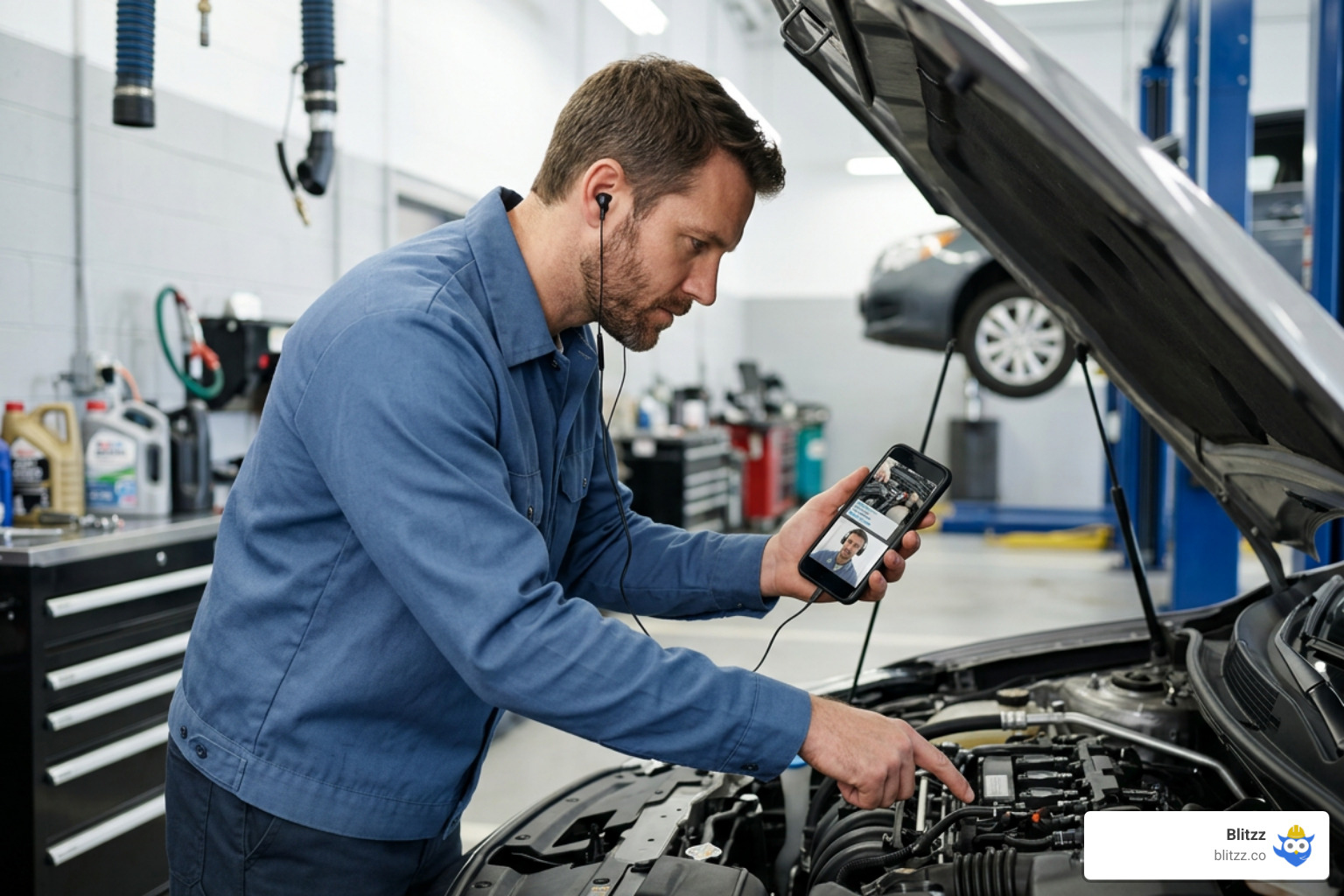
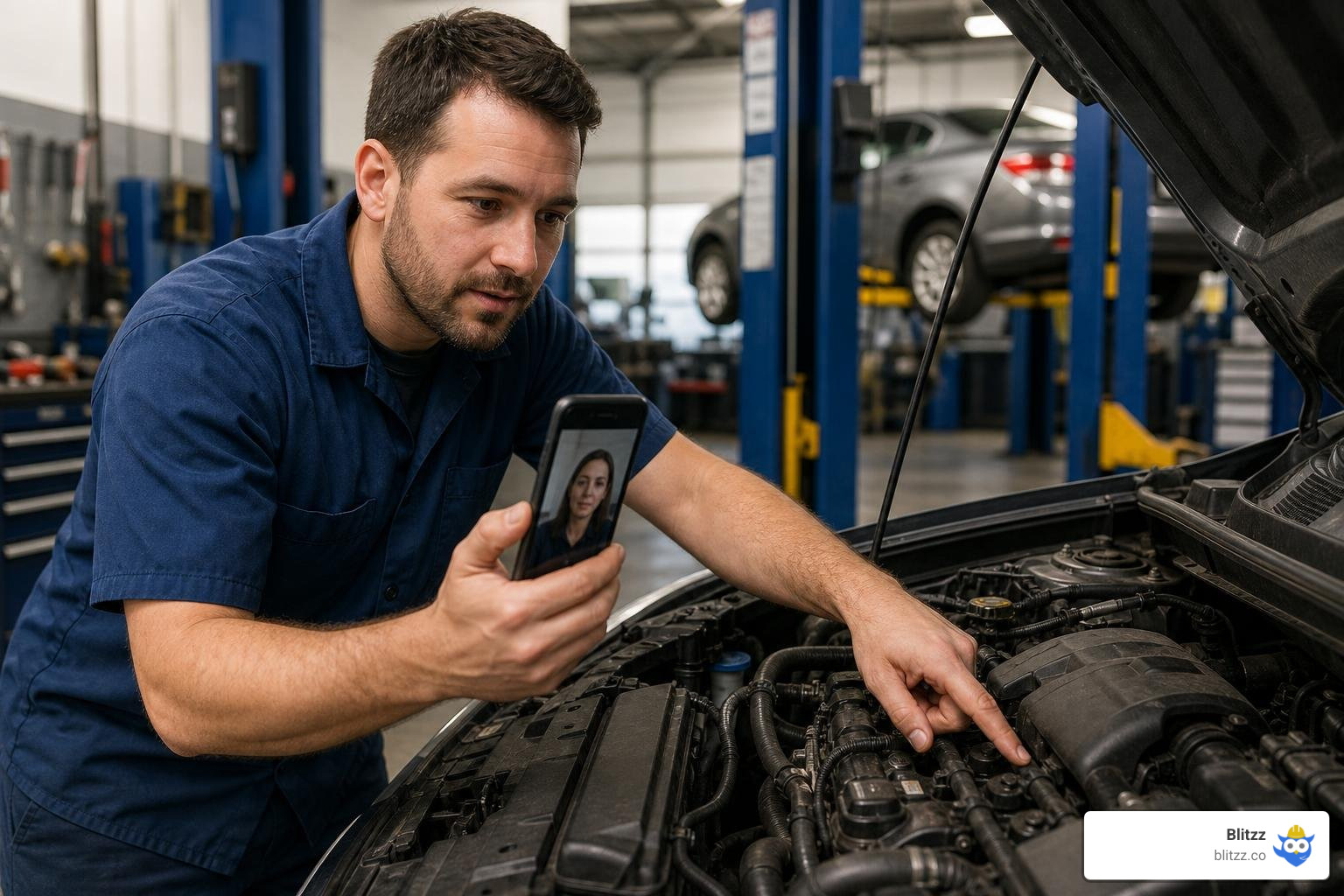
Automotive video diagnostics is changing how shops inspect vehicles, communicate with customers, and get repairs approved — fast.
Here's a quick snapshot of what it is and why it matters:
| What | Why It Matters |
|---|---|
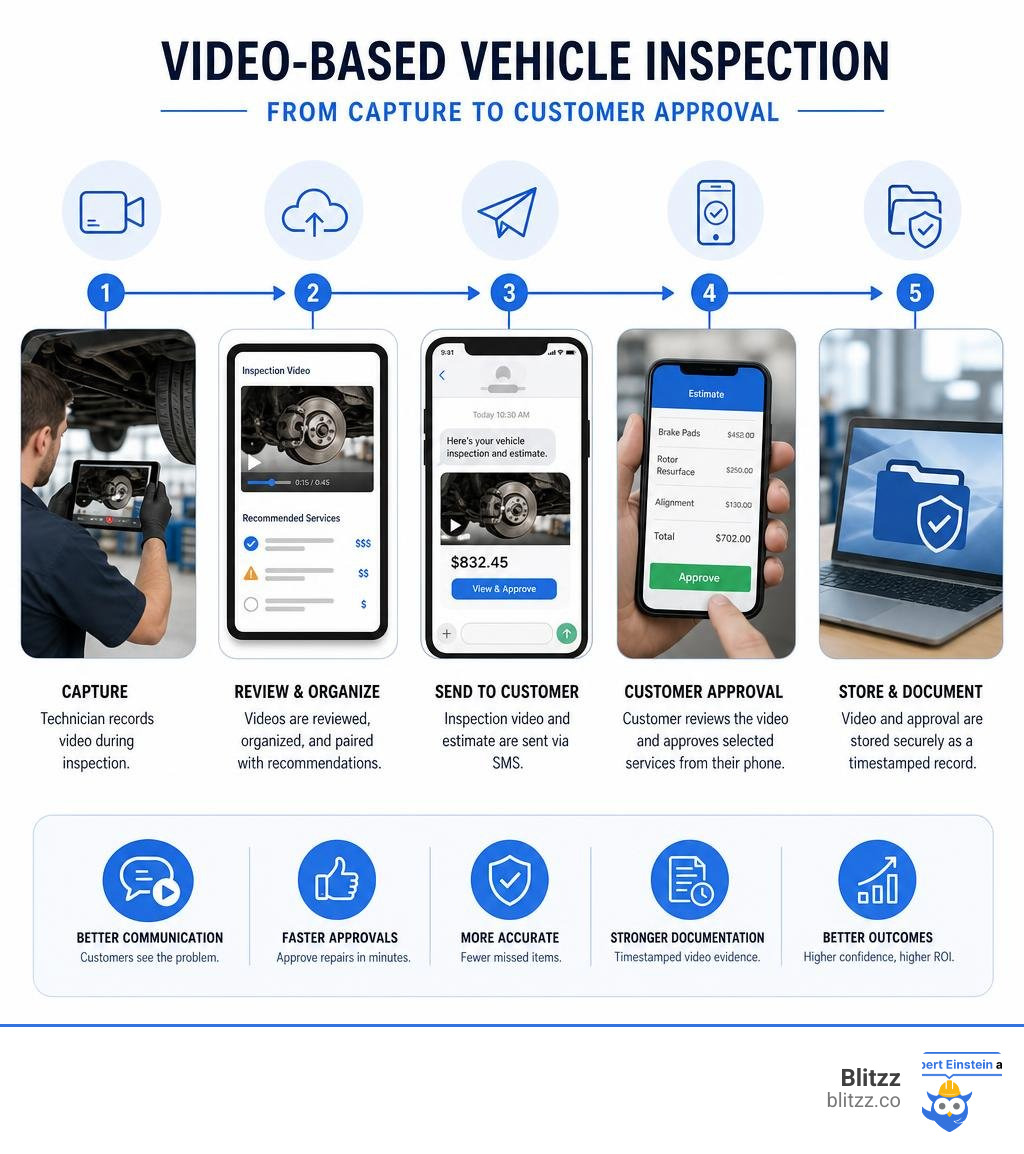
| Technicians record video during inspections | Customers see the problem instead of just hearing about it |
| Videos are sent via SMS with digital estimates | Customers approve repairs from their phone in minutes |
| AI analyzes footage for damage and completeness | Fewer missed items, better documentation |
| Timestamped video is stored as evidence | Disputes drop, warranty claims are easier to verify |
| Integrates with DMS and CRM platforms | No extra admin work for service advisors |
The numbers back it up. Shops using video inspections report an average of +$144 per repair order. Some dealer groups have seen a 162% increase in average RO value. And 64% of customers want photos or video with their inspection — yet only 26% of mass-market dealers currently deliver that.
The gap between what customers expect and what most shops provide is wide. And it's costing real money.
This guide evaluates the best automotive video diagnostic tools and platforms available in July 2026 — so you can find the right fit for your shop.
What is Automotive Video Diagnostics?
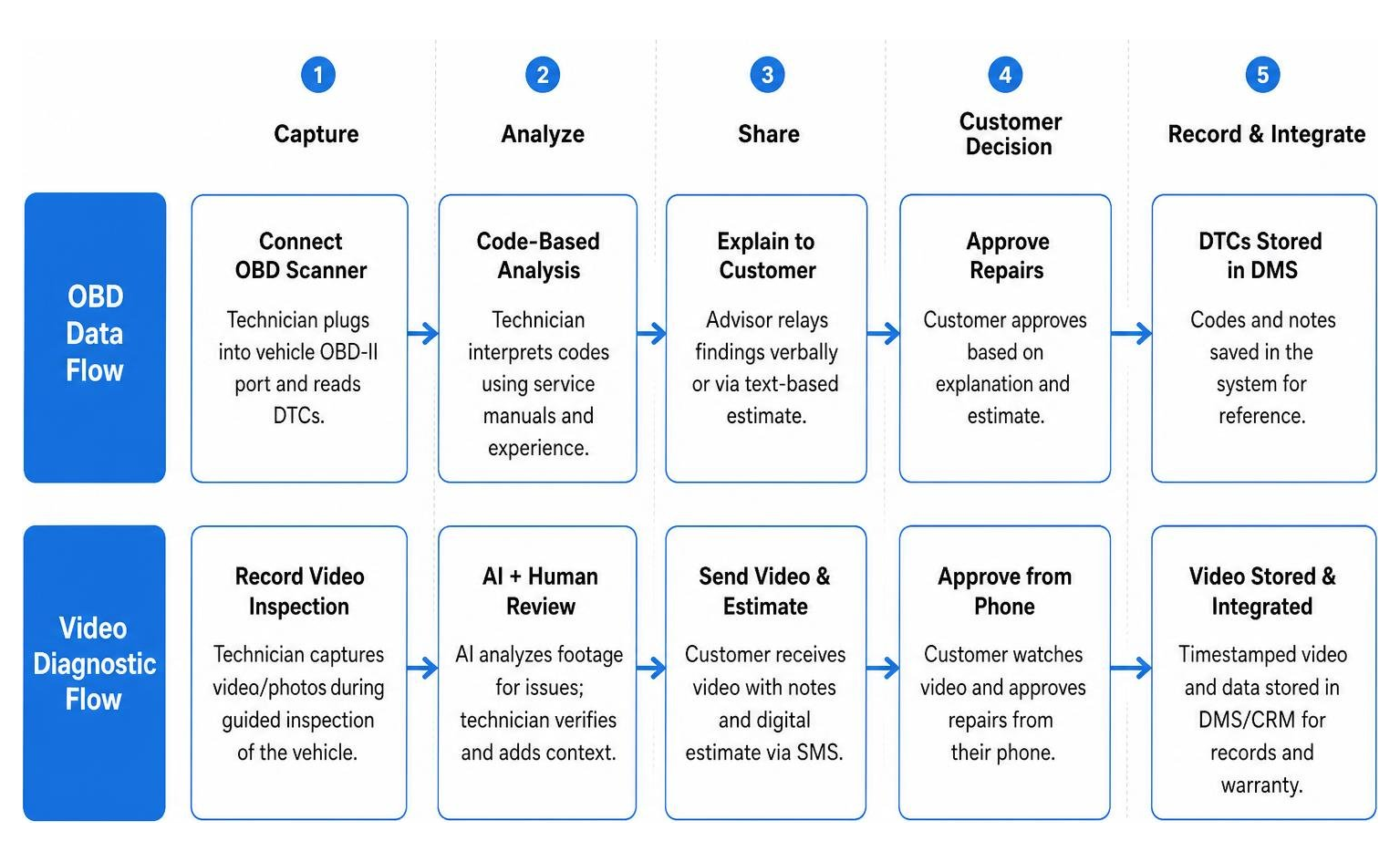
For decades, vehicle diagnostics was a purely data-driven, text-based process. A technician plugged a scan tool into a vehicle's OBD-II port, retrieved a Diagnostic Trouble Code (DTC), and cross-referenced it with a service manual. While scan tools are indispensable for reading electrical and sensor parameters, they have a massive limitation: they cannot show physical wear, fluid leaks, structural damage, or transient visual glitches.
Automotive video diagnostics bridges this gap. It is the practice of capturing high-definition video, photos, and live visual streams of a vehicle’s physical state to diagnose issues, verify calibrations, and document vehicle conditions.
Unlike traditional OBD diagnostics, which speak only to the technician, video diagnostics speaks directly to the customer, the service advisor, and the warranty administrator. By translating a complex mechanical issue into a 45-second video clip, shops eliminate the "black box" of the service bay.
For a step-by-step comparison, let's look at how these two diagnostic approaches operate side-by-side in a modern shop:
Through electronic multipoint inspections (eMPI), technicians use tablets, smartphones, or even assisted-reality smart glasses to record guided walk-arounds. This visual evidence acts as an undeniable record of truth, transforming a simple diagnostic recommendation into an interactive, transparent customer experience.
Key Use Cases and Functional Safety Standards
Modern vehicles are essentially supercomputers on wheels. This complexity has expanded the role of video diagnostics far beyond finding rust or oil leaks. Today, visual validation is a core component of safety-critical system testing and customer-pay repairs.
For those looking to understand the intersection of artificial intelligence and physical diagnostics, you can read more about how these technologies pair together in this guide on Automotive Repair — AI Diagnostics & Video Guides | DIYFixIt.tech.
Functional Safety and Display Diagnostics
As vehicles shift toward digital cockpits, heads-up displays (HUDs), and camera monitor systems (CMS) that replace traditional side mirrors, display safety has become a matter of life and death. If an instrument cluster freezes while a driver is traveling at highway speeds, the driver won't know their actual speed or if critical safety alerts are active.
To prevent these catastrophic failures, the automotive industry relies on strict functional safety standards, specifically ISO 26262 ASIL B (Automotive Safety Integrity Level B). Modern display systems utilize specialized video diagnostic hardware, such as advanced LVDS bridge ICs, to perform real-time video stream monitoring. These systems can instantly detect:
- Frozen Images: Ensuring the display is actively updating.
- Flickering or Flashing: Identifying hardware degradation or signal interference.
- Incorrect Colors: Preventing critical warning icons (like red brake indicators) from rendering in the wrong color or failing to show up at all.
Multipoint Inspections and Audio Systems
On the service floor, video diagnostics plays a daily role in standard multipoint inspections and audio system troubleshooting. For example, diagnosing complex automotive audio systems and acoustic vehicle alerting systems (AVAS) in electric vehicles requires precise testing.
Technicians use video platforms to document and diagnose audio amplifier protection mechanisms, including:
- DC Diagnostics: Detecting short circuits to the battery or ground.
- AC Diagnostics: Verifying speaker impedance and load connections.
- Clip Detection and Thermal Warnings: Showing real-time performance degradation when an amplifier overheats or distorts.
Beyond advanced electronics, common video diagnostic use cases include:
- ADAS Calibration Verification: Documenting that front-facing cameras and radar sensors are physically aligned and calibrated to OEM specifications.
- Under-Carriage Inspections: Capturing clear video of torn CV boots, leaking struts, or worn brake pads next to a measuring gauge.
- Pre-Delivery Inspections (PDI): Establishing a flawless visual record of a vehicle's condition before it is handed over to a buyer.
Business Impact, ROI, and Warranty Compliance
Implementing video diagnostics is not just an operational upgrade; it is a highly profitable business strategy. By integrating visual support, shops can scale their operations, build trust, and drastically reduce overhead. To understand how visual tools optimize fleet and dealership networks, explore our deep dive into Remote Video Inspections for Automotive OEMs & Dealerships.
Maximizing Revenue and Repair Authorization Rates with Automotive Video Diagnostics
The hardest part of a service advisor's job is explaining to a customer why they need to spend $1,200 on a repair they didn't know they needed. When a customer receives a text message with a video showing their actual brake rotors worn down to the metal, the conversation changes from skepticism to appreciation.
The financial metrics associated with video-based diagnostics are staggering:
- 15% to 30% lift in service authorization rates.
- 162% increase in average repair order (RO) value for shops transitioning from text-only communication to video.
- +$144 incremental revenue per repair order across thousands of active service lanes.
- +26% close rate improvement when sending video messages compared to static photos or text.
- +50% labor sales per technician in heavy-duty and fleet operations due to clear, visual-first documentation.
By showing instead of telling, shops eliminate the endless back-and-forth phone calls, resulting in a 40%+ reduction in documentation and administrative time. This efficiency allows service advisors to handle more vehicles per day while driving a massive lift in Customer Satisfaction Index (CSI) scores. For more strategies on maximizing service lane throughput, check out our guide on Remote Visual Assistance for Automotive: Reducing Truck Rolls and Accelerating Repairs.
Reducing Disputes and Streamlining Warranty Compliance
"That scratch wasn't there when I dropped my car off." Every service manager dreads these words.
By capturing a quick, 90-second video walk-around of every vehicle entering the service drive, shops establish a verifiable, timestamped record of the vehicle's pre-existing condition. This simple practice has demonstrated up to an 80% reduction in customer service disputes.
For franchise dealers, video diagnostics is also a powerful tool for warranty claims verification. OEMs lose billions of dollars annually to warranty misclassification and fraud. By attaching clear, timestamped video evidence to warranty claims, dealers provide undeniable proof of component failures. This speeds up claim approval times from weeks to hours and ensures seamless compliance during OEM audits.
Technical Challenges and AI Innovations in Shop Environments
While the benefits of video diagnostics are clear, implementing a reliable system inside a bustling, metal-clad service bay is technically demanding.
Overcoming Service Bay Connectivity and Device Fragmentation
Service bays are notoriously hostile environments for digital devices. They are filled with concrete walls, heavy steel lifts, and electromagnetic interference from diagnostic equipment—creating dead zones for Wi-Fi and cellular networks.
To prevent technicians from getting frustrated by failed uploads, modern video diagnostic platforms must utilize advanced infrastructure solutions:
- Chunked Resumable Uploads: If a technician loses connection mid-recording, the platform saves the progress and automatically resumes uploading once connection is restored.
- Transcoding at Scale: Compressing high-definition video files in real-time so they can be sent quickly over weak networks without draining battery life or data plans.
- Device Fragmentation Support: Ensuring the web-based or native application runs flawlessly across a massive variety of iOS and Android devices, regardless of screen size or operating system version.
How AI and Computer Vision Power Modern Automotive Video Diagnostics
To make video capture even faster, artificial intelligence and computer vision have been integrated directly into the diagnostic workflow.
Instead of relying on manual data entry, modern platforms use AI to automate and enhance the inspection process:
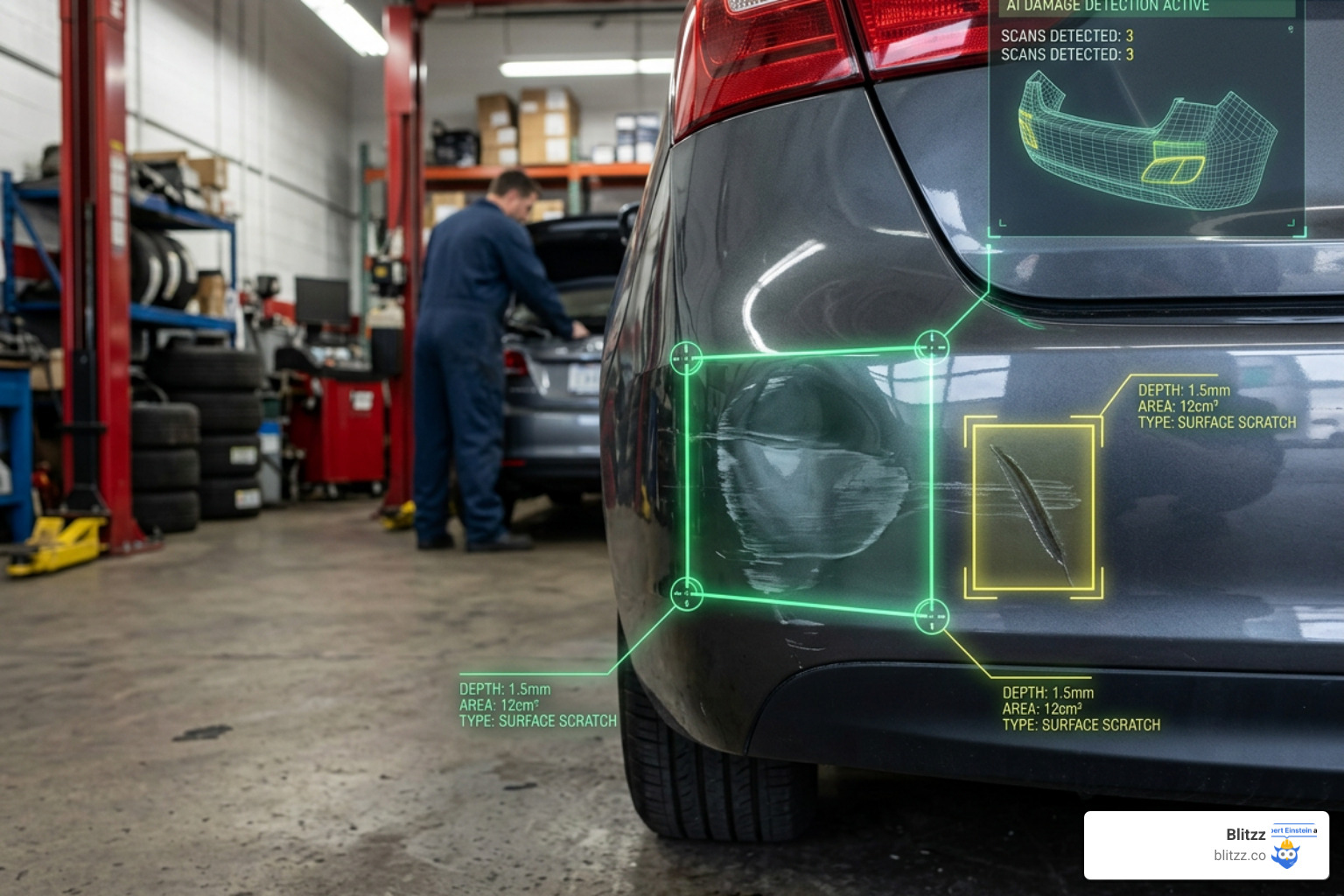
- 3D Spatial Mesh Generation: By taking a quick video walk-around, AI can build a calibrated 3D model of the vehicle to track and measure physical changes over time.
- Change-of-State Tracking: The system compares the vehicle’s current visual state against previous visits, automatically highlighting and measuring new dents, scratches, or wear.
- Voice-First Capture and AI Noise Cancellation: Technicians can narrate their inspection (e.g., "Front left tire tread at 3 millimeters") in a noisy shop. The AI filters out air wrenches and engine revs, transcribing the audio into structured, written inspection reports.
- AI Video Coaching: Algorithms analyze recorded videos and score them based on lighting, clarity, and completeness, helping technicians improve their communication skills over time.
Frequently Asked Questions about Video Diagnostics
What training is required for technicians to use video diagnostics?
Very little. Modern video diagnostic tools are designed to be as simple as sending a text message. Because the software is highly intuitive, shops consistently report a 90%+ staff adoption rate within the first few weeks of deployment.
While advanced technical training (such as ASE-accredited courses or hands-on ADAS workshops) is valuable for complex mechanical repairs, basic video capture requires no specialized computer skills. Many platforms even offer gamified video coaching to help technicians perfect their camera angles and narration.
How do video diagnostics integrate with existing DMS and CRM systems?
To prevent service advisors from having to double-enter data, video diagnostic platforms integrate directly with major Dealership Management Systems (DMS) and Customer Relationship Management (CRM) platforms (such as CDK Global, Reynolds & Reynolds, and Salesforce).
Through secure APIs and SDKs, the video and its approved line-item estimates are automatically written back to the customer's repair order, maintaining a single, unified record of the service visit.
Can video diagnostics help troubleshoot electric vehicles (EVs) remotely?
Absolutely. EVs present unique safety hazards, such as high-voltage battery systems, which require specialized handling. Remote video diagnostics allows master EV technicians to visually guide junior mechanics through complex troubleshooting procedures in real-time.
To see how remote visual support is accelerating EV service efficiency, read our detailed analysis on Reduce Truck Rolls: Remote Troubleshooting for EV Cars and explore how this technology is Revolutionizing the EV Industry: How Remote Video Sales and Support Are Accelerating Market Growth.
Conclusion: Drive Your Shop Forward with Blitzz
As we navigate 2026, the shops that thrive will be the ones that prioritize transparency, speed, and modern customer experiences. Automotive video diagnostics is no longer a luxury—it is a fundamental requirement for running a profitable, modern service operation.
At Blitzz, we provide enterprise-grade, remote visual assistance and video inspection software designed to eliminate friction in your service lanes. Our platform requires no app downloads for your customers; it runs instantly inside any mobile browser. With interactive AR annotations, real-time screen sharing, and seamless CRM integrations, we help you reduce unnecessary truck rolls, accelerate repair times, and build lasting customer trust.
Ready to transform your automotive operations and elevate your customer experience? Discover the industry's best practices by reading Driving Customer Support Excellence: Best Practices for the Automotive Industry in 2026, or take the next step and book a demo with our visual support experts today.

Blitzz Team
The Blitzz Team writes about remote video support, virtual inspections and field service. Our guides come from working with home builders, property managers, warranty teams, contact centers and field service organizations that use Blitzz to see and solve issues without a truck roll.