
.png?width=120&height=55&name=Blitzz-Logo-right%20white%20eyes%20-%20not%20transparent%20(3).png)

On this page
Consumer electronics have become more advanced, more connected, and more central to everyday life. From smart TVs and home assistants to routers, printers, and wearable devices, modern households rely on a growing ecosystem of technology that is expected to function seamlessly.
However, as functionality expands, so does complexity.
For many consumers, troubleshooting even minor issues—such as connectivity problems, device setup, or configuration errors—can quickly become frustrating. What should be a simple resolution often turns into a prolonged support experience involving multiple calls, unclear instructions, or unnecessary product returns.
For brands, this creates both an operational challenge and a customer experience gap.
Remote visual support is emerging as a practical and scalable solution. By enabling real-time, visual interaction between support agents and customers, it fundamentally improves how troubleshooting is delivered—making it faster, more accurate, and more efficient.
The Growing Complexity of Consumer Electronics
Modern consumer electronics are no longer standalone devices. They are interconnected systems that depend on software, networks, and user configuration to function correctly.
Common areas of complexity include:
- Device setup and onboarding
- Wi-Fi and connectivity issues
- Integration with mobile apps
- Firmware updates and compatibility
- Multi-device ecosystems (e.g., smart home environments)
While these features enhance capability, they also introduce friction when something goes wrong. Many issues are not hardware failures, but rather configuration or usability challenges that require guided resolution.
From the customer’s perspective, the distinction is not always clear. A simple setup issue may feel like a product defect, leading to dissatisfaction or even product returns.
From the support team’s perspective, resolving these issues through traditional channels can be inefficient.

Limitations of Traditional Troubleshooting Methods
Despite the increasing complexity of devices, support models have remained largely unchanged. Most consumer electronics brands still rely on a combination of voice support, static documentation, and in some cases, in-person service.
These methods present several limitations.
Voice-Based Support
Phone-based troubleshooting requires customers to describe what they are seeing, often without the correct terminology. At the same time, agents must interpret these descriptions and provide guidance without direct visibility.
This frequently leads to:
- Miscommunication
- Repeated clarification
- Longer call durations
- Incomplete or incorrect resolutions
Even experienced support agents are limited by the lack of visual context.
Static Documentation
User manuals, FAQs, and online guides are designed to provide self-service support, but they are not always effective in real-time scenarios.
Common challenges include:
- Difficulty locating relevant information quickly
- Generic instructions that may not match the customer’s situation
- Lack of interactivity
As a result, many customers abandon self-service and escalate to live support.
Product Returns and Service Visits
When issues cannot be resolved remotely, customers may choose to return the product or seek in-person assistance.
In many cases:
- The device is not defective
- The issue could have been resolved with proper guidance
This creates unnecessary costs for brands and inconvenience for customers.
What is Remote Visual Support?
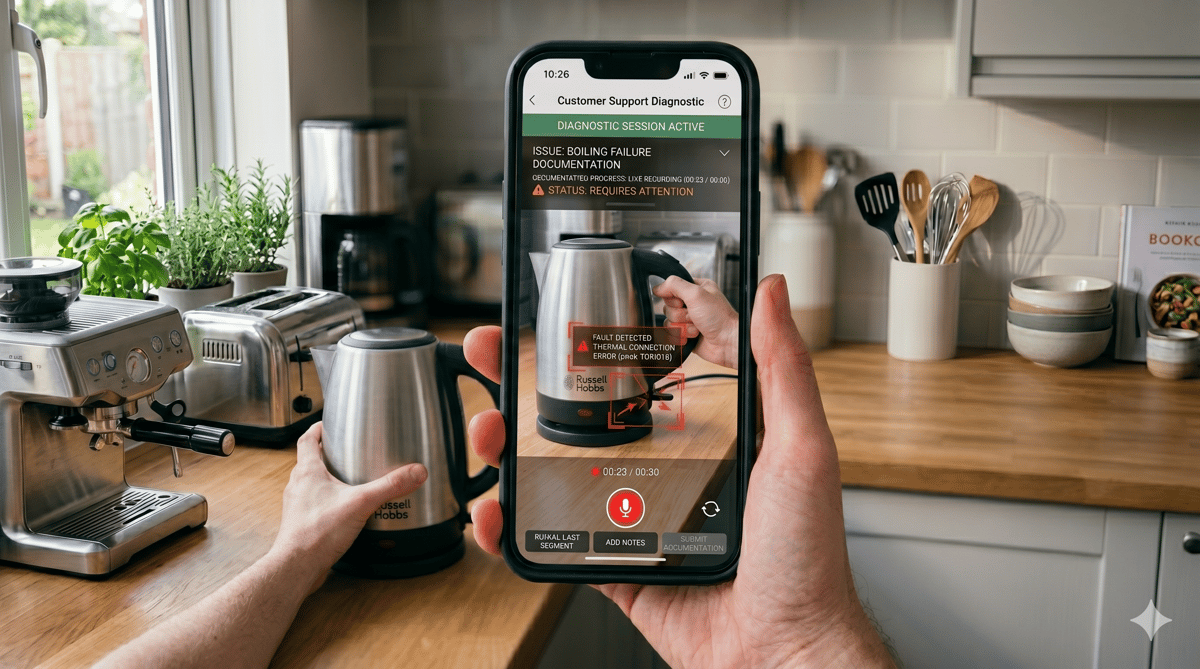
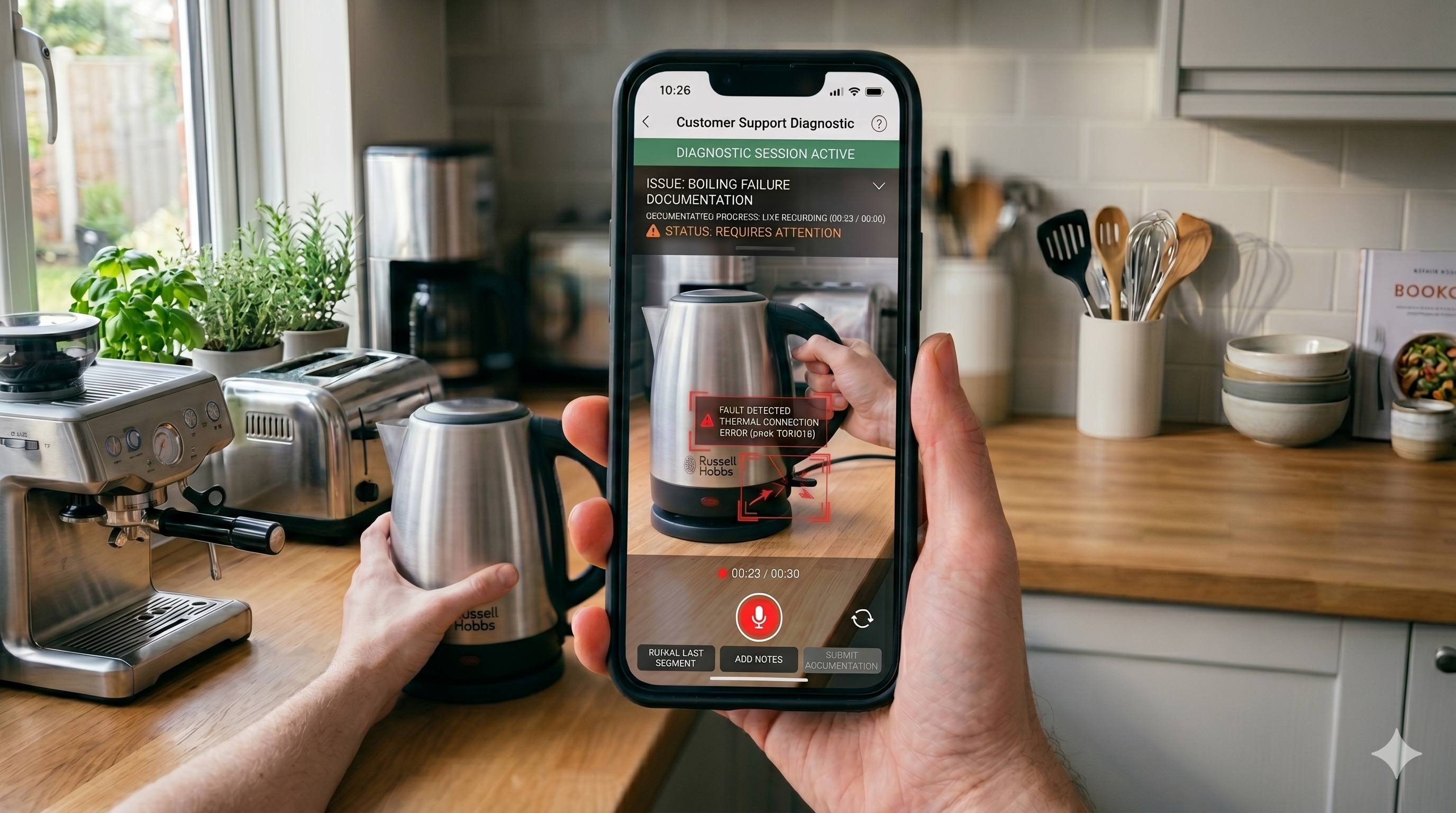
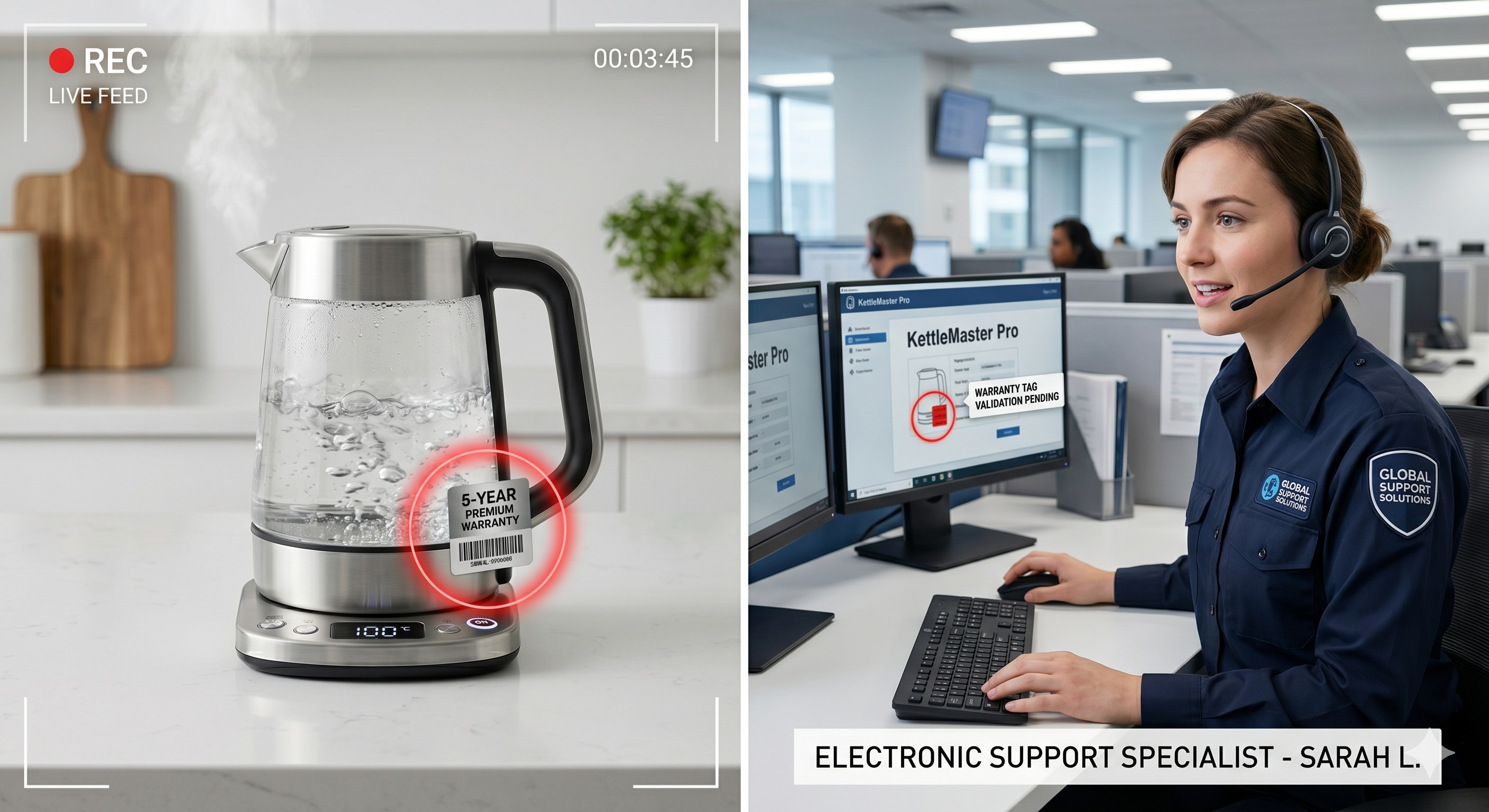
Remote visual support enables customer service agents to assist users through live video interaction, providing real-time visibility into the customer’s environment.
Instead of relying on verbal descriptions, agents can:
- See the device and surrounding setup
- Observe the issue directly
- Provide step-by-step guidance
- Use visual cues or annotations to direct actions
This approach transforms troubleshooting from an explanation-based process into an observation-based one. It is particularly effective for consumer electronics, where many issues are inherently visual.
How Remote Visual Support Improves Troubleshooting
Remote visual support enhances troubleshooting across several key dimensions, particularly in environments where issues are difficult to describe verbally and often depend on visual context. By enabling agents to see exactly what the customer is experiencing, it removes much of the uncertainty that typically slows down resolution and improves both the accuracy and efficiency of support interactions.
Faster Issue Identification
With direct visibility into the customer’s environment, agents are able to quickly understand the nature of the problem without relying on assumptions or incomplete descriptions. This is especially valuable in consumer electronics, where small configuration errors or overlooked details can lead to significant functionality issues.
For example, an agent may immediately identify:
- A router incorrectly connected to the modem
- A TV input setting that has been misconfigured
- A printer displaying a specific error code on screen
In traditional support scenarios, identifying these issues would require a series of back-and-forth questions, often prolonging the interaction. With remote visual support, the agent can assess the situation in real time and move directly toward resolution, reducing both effort and time for all parties involved.
More Accurate Guidance
Visual context allows agents to provide guidance that is directly aligned with the customer’s specific setup, rather than relying on generalised instructions that may not apply in every case. This significantly reduces ambiguity and improves the effectiveness of each interaction.
As a result:
- Instructions are more precise and relevant to the situation
- Steps are easier for the customer to follow in real time
- The likelihood of errors or missteps is reduced
Rather than asking customers to interpret written instructions or verbal explanations, agents can guide them through the exact process required, ensuring that each step is completed correctly. This leads to a more consistent and reliable troubleshooting experience.
Reduced Resolution Time
By eliminating the need for repeated clarification and minimising miscommunication, remote visual support can significantly shorten the time required to resolve issues. Many of the delays associated with traditional support—such as verifying details or correcting misunderstandings—are effectively removed.
In practice, what might take 20 to 30 minutes over a standard phone call can often be resolved within a few minutes when visual guidance is available. This not only improves efficiency for support teams but also enhances the overall customer experience by delivering faster outcomes.
Improved First-Call Resolution
Because agents have full visibility into the issue during the initial interaction, they are better equipped to resolve problems without the need for escalation or follow-up. This has a direct impact on first-call resolution rates, which are a key performance metric for support operations.
Improved first-call resolution leads to:
- Fewer repeat contacts from customers
- Higher levels of customer satisfaction
- Lower overall support costs
By resolving issues correctly the first time, brands can reduce operational strain while delivering a more seamless support experience.
Key Use Cases in Consumer Electronics
Remote visual support can be applied across a wide range of troubleshooting scenarios within consumer electronics, particularly in cases where setup, configuration, or integration plays a critical role.
Device Setup and Onboarding
Many customers encounter challenges during the initial setup phase, especially when devices require multiple steps or integration with other systems. Without proper guidance, this stage can quickly become a point of frustration.
With remote visual support, agents can guide users through:
- Unboxing and physical setup
- Correct cable connections
- Initial configuration and system checks
This ensures that devices are set up correctly from the outset, reducing the likelihood of future issues and improving the overall onboarding experience.
Connectivity Issues
Wi-Fi and network-related problems are among the most common reasons customers seek support. These issues are often influenced by physical setup, device positioning, and configuration settings, all of which are easier to assess visually.
Through remote visual support, agents can:
- Verify that cables are connected correctly
- Check the placement of routers and devices
- Observe and adjust relevant device settings
This enables faster and more accurate diagnosis, helping to resolve connectivity issues without unnecessary escalation.
Smart Device Integration
As smart home ecosystems become more prevalent, customers are increasingly required to connect multiple devices across platforms and applications. This process can be complex, particularly when compatibility or configuration issues arise.
Agents can provide real-time assistance with:
- Linking devices to mobile applications
- Configuring automation and preferences
- Troubleshooting integration challenges
By guiding users through these steps visually, support teams can simplify what would otherwise be a complicated process.
Error Code Resolution
When devices display error messages or warning indicators, customers often lack the context needed to interpret them correctly. This can lead to confusion and, in some cases, unnecessary concern.
With visual access, agents can:
- Identify the error code directly from the device
- Explain its meaning in a clear and relevant way
- Provide immediate steps to resolve the issue
This approach reduces uncertainty and enables faster, more confident decision-making.
Product Education
Beyond troubleshooting, remote visual support can also be used to help customers better understand and use product features. This is particularly valuable for devices with advanced functionality that may not be immediately intuitive.
By offering guided demonstrations and real-time assistance, agents can:
- Help customers explore key features
- Improve overall product usability
- Enhance long-term customer satisfaction
This extends the value of support beyond problem resolution and contributes to a more positive product experience.
Operational Benefits for Brands
In addition to improving customer-facing outcomes, remote visual support delivers measurable benefits at an operational level. By increasing efficiency and reducing unnecessary workload, it enables support teams to operate more effectively at scale while maintaining a consistent level of service quality.
Across the consumer electronics and connected device space, several organisations have already demonstrated how visual support can translate into tangible operational gains—from faster resolution times to improved service workflows.
Reduced Support Costs
Shorter interaction times and fewer escalations contribute directly to lower overall support costs. When agents can see the issue in real time, they spend less time diagnosing problems and more time resolving them.
For example, companies like Ambiance IQ have implemented app-free remote video support to accelerate issue resolution, reducing the need for prolonged troubleshooting sessions and minimising repeat interactions. By streamlining the support process, brands are able to optimise resource utilisation without compromising service quality.
Fewer Product Returns
A significant portion of product returns in consumer electronics is driven not by hardware defects, but by setup challenges or usability issues. These scenarios often result in unnecessary logistics costs and lost revenue.
Organisations such as Dansons have addressed this by using live video support to guide customers through troubleshooting in real time. By resolving issues that would otherwise be mistaken for product faults, they are able to reduce return rates and improve overall customer satisfaction.
Improved Agent Productivity
With better tools and clearer context, agents can handle cases more efficiently and with greater confidence. Visual support removes much of the uncertainty associated with traditional troubleshooting, allowing agents to focus on resolution rather than diagnosis.
Treehouse, for instance, has used live video support to streamline EV charger installation workflows, enabling teams to resolve issues faster and manage higher volumes of requests. This type of visibility-driven support model allows agents to be more productive without increasing operational complexity.
Better Data and Insights
Visual support interactions provide richer, more contextual data compared to traditional support channels. This information can be used to identify recurring issues, improve product design, and refine support strategies over time.
Companies like Encompass have leveraged visual support to enable instant, accurate part identification during customer interactions. This not only improves resolution accuracy but also generates valuable insights into common product issues and service patterns.
Similarly, brands such as BMW have incorporated remote visual guidance into their customer support experience, reinforcing high service standards while gaining deeper visibility into customer challenges.
Extending Value Through Automation
The impact of remote visual support can be further enhanced when integrated with automation platforms such as Zapier. Once a session is completed, automated workflows can manage follow-up processes, including:
- Generating and sending support summaries
- Updating customer records within CRM systems
- Logging issue categories for reporting and analysis
- Triggering follow-up communications or actions
This ensures that each interaction is not only resolved but also properly documented and integrated into broader operational systems, without requiring additional manual effort.

The Future of Consumer Electronics Support
As consumer electronics continue to evolve, so too will expectations around support. Customers increasingly expect assistance that is immediate, intuitive, and requires minimal effort on their part.
Key expectations include:
- Access to immediate support when issues arise
- Clear, easy-to-follow guidance
- Efficient resolution with minimal disruption
At the same time, support teams are under pressure to deliver these outcomes while maintaining operational efficiency.
Remote visual support aligns closely with these evolving needs. It represents a shift:
- From reactive support to more proactive engagement
- From explanation-based interactions to visual guidance
- From disconnected processes to integrated, end-to-end workflows
As adoption continues to grow, remote visual support is likely to become a standard component of customer support strategies across the consumer electronics industry.
Related readings:
Benefits of Remote Video Inspections You Can’t Ignore in 2026
Benefits of Remote Video Inspections for the Construction & Building Industry
How to Start a Remote Inspection Business (And Why It’s a Game-Changing Opportunity Right Now)
State-by-State Home Inspector Licensing Requirements for 2026

Blitzz Team
The Blitzz Team writes about remote video support, virtual inspections and field service. Our guides come from working with home builders, property managers, warranty teams, contact centers and field service organizations that use Blitzz to see and solve issues without a truck roll.