
.png?width=120&height=55&name=Blitzz-Logo-right%20white%20eyes%20-%20not%20transparent%20(3).png)

On this page
Why Telecom Networks Can't Afford to Ignore Remote Inspection Tools
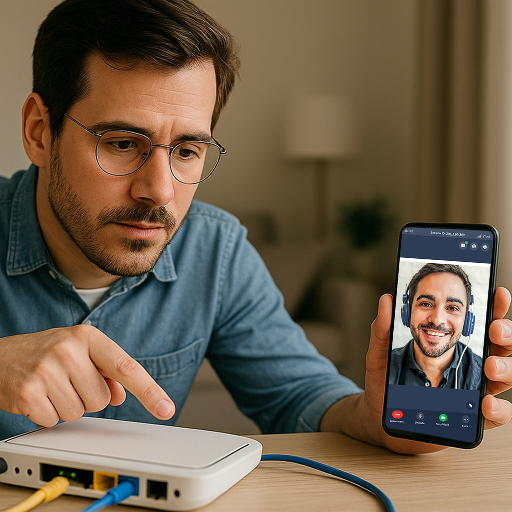
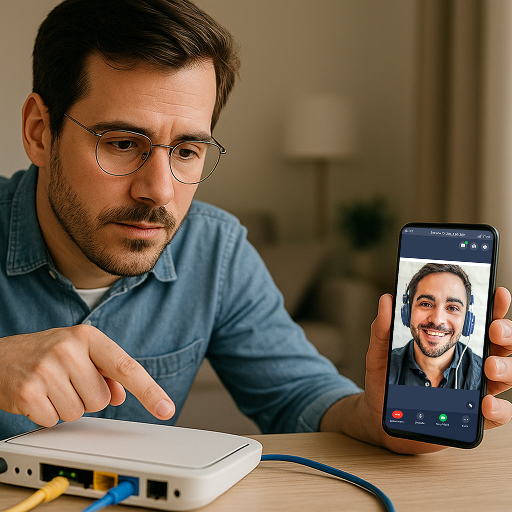
Telecom remote inspection tools are software and hardware solutions that let engineers, field managers, and remote experts inspect towers, fiber lines, underground vaults, and customer equipment — without always sending a technician to the site.
Here's a quick look at the main types available in 2026:
| Tool Type | Best For | Example Use Case |
|---|---|---|
| Drone + AI / Digital Twin | Cell tower structural audits, PIM, close-outs | Replacing physical tower climbs with 3D model review |
| Video / AR platforms | Live expert guidance, customer-side troubleshooting | Remote tech walking a field tech through a repair |
| Fiber probe microscopes | End-face inspection, PON build and maintenance | Certifying fiber connectors without a lab visit |
| Remote fiber test units | Network-wide fiber monitoring and fault location | Pinpointing a break across hundreds of miles from a NOC |
| Vault / underground cameras | Confined-space inspections without entry | Checking cable damage in a manhole without descending |
If you manage field operations for a telecom or utility company, you already know the pain: a single truck roll can eat hundreds of dollars before a technician even opens their toolbox. Multiply that across hundreds of sites, and the numbers get ugly fast.
The good news? The tools available in July 2026 are genuinely impressive. One Tier 1 provider cut onsite time by more than 50% and reduced labor costs by 52% after deploying remote inspection workflows. Another operation saw first-time fix rates jump from 77.3% to 98.84%.
These aren't edge cases — they're becoming the new baseline for operators who adopt the right tools.
This guide breaks down every major category of telecom remote inspection tool, what to look for when evaluating them, and how to build a business case around the numbers that matter to your leadership team.
Evaluating the Best Telecom Remote Inspection Tools for Modern Networks
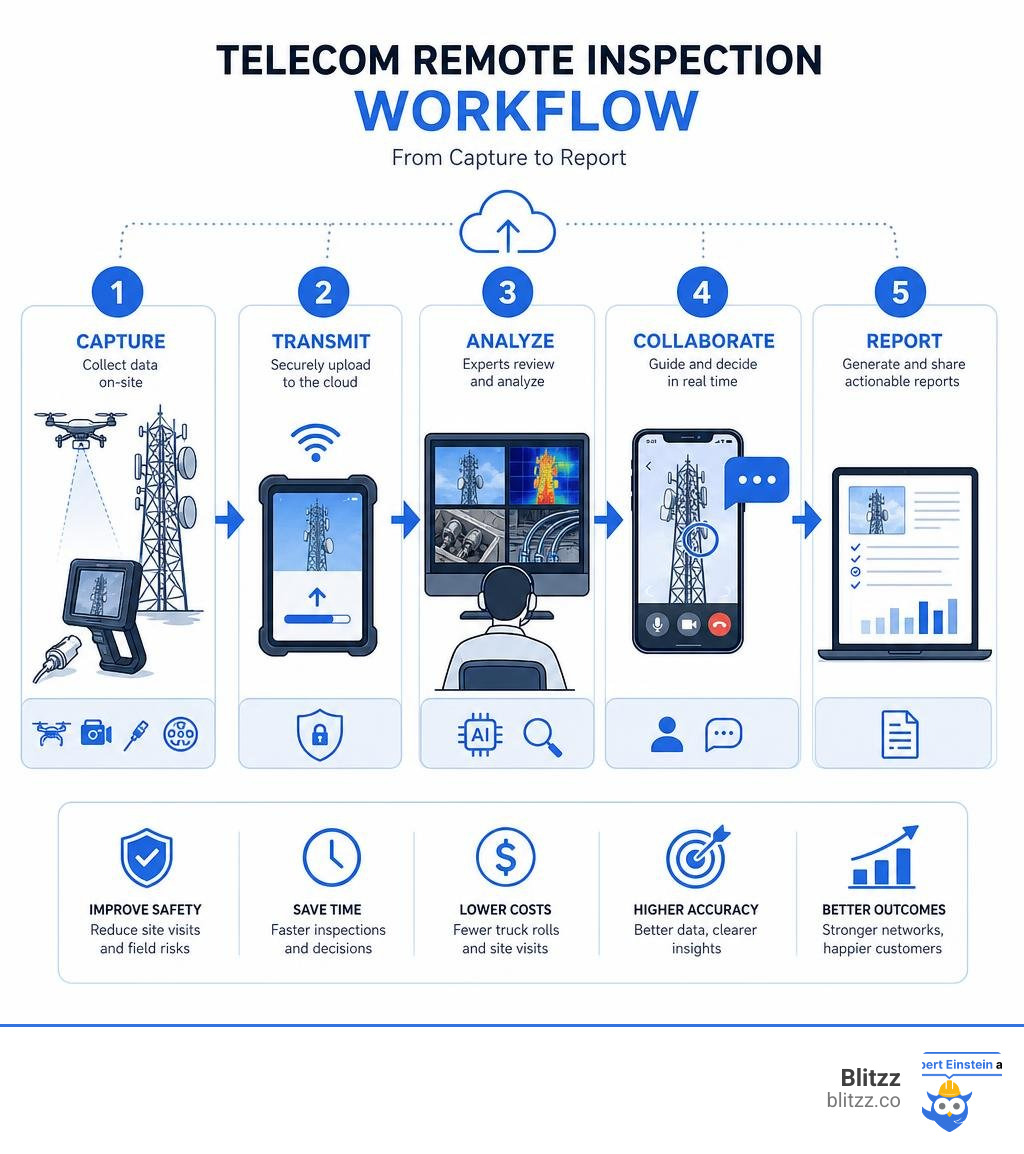
Evaluating telecom remote inspection tools requires understanding how different hardware and software layers interact. In July 2026, the market is no longer divided into simple "video calls" versus "boots on the ground." Instead, we see a spectrum of specialized tools designed to capture, process, and analyze network assets from afar.

The Core Categories of Telecom Remote Inspection Tools
To build a resilient network, operators rely on a combination of four distinct remote inspection technologies:
- Drone-Based Capture Platforms: Drones fly automated flight paths around cell towers, capturing thousands of high-resolution RGB and thermal images. This imagery is processed to build accurate 3D models.
- Remote Video and AR Platforms: These tools connect on-site technicians (or even customers) with remote experts. Using web-browser-based video streams, experts can guide field work in real time, capturing high-resolution photos and adding on-screen annotations.
- Fiber Probe Microscopes and Testers: Physical fiber connections require extreme precision. Handheld digital probes, such as the Fiber Inspection Microscope | VIAVI FiberChek Probe, allow field techs to inspect fiber connector end-faces for microscopic dirt and damage, automatically grading them against IEC standards.
- Remote Fiber Testing & Monitoring (RFTM): For long-haul and PON networks, centralized systems like the RFTM | Remote fiber testing and monitoring solution | EXFO use optical time-domain reflectometers (OTDR) to continuously scan physical fiber lines from the central office, detecting and locating degradation before customers notice a drop in service.
Key Features to Look For in Telecom Remote Inspection Tools
When shopping for an enterprise-grade platform, keep an eye out for these essential capabilities:
- Multi-Modal Data Capture: Your platform should seamlessly handle RGB imagery, thermal data (to spot overheating radios), LiDAR point clouds, and 360-degree panoramas.
- Intact Proof Chain: A great inspection tool doesn't just store files in scattered folders. It maintains an unbroken "proof chain," linking every finding (e.g., a loose bolt or rusted mount) directly to the exact photo, coordinate, and angle it was captured from.
- Desktop Triage Capabilities: Before sending a crew out, engineers should be able to review assets virtually. For example, you can identify and troubleshoot 5 Common Telecom Infrastructure Failures You Can Detect Without Setting Foot On Site, saving thousands of dollars in exploratory truck rolls.
How Remote Inspections Maximize Field Safety and Efficiency
Safety and efficiency are two sides of the same coin. When you make inspections remote, you automatically eliminate the physical risks associated with the job.
Reducing Tower Climbs and Confined Space Hazards
Every tower climb carries inherent risk, requires expensive safety gear, and demands extensive coordination. Similarly, entering underground utility vaults exposes technicians to hazards like poor ventilation, water accumulation, and electrical arc flashes.
By utilizing specialized camera poles, 360-degree vault cameras, or drones, operators can inspect underground chambers and high tower mounts from a safe distance. This dramatically reduces the need for confined space entry and high-altitude climbs. When a climb is absolutely necessary, the crew already knows exactly what tools and replacement parts they need, narrowing their time spent in high-risk environments.
Augmented Reality (AR) and Live Expert Guidance
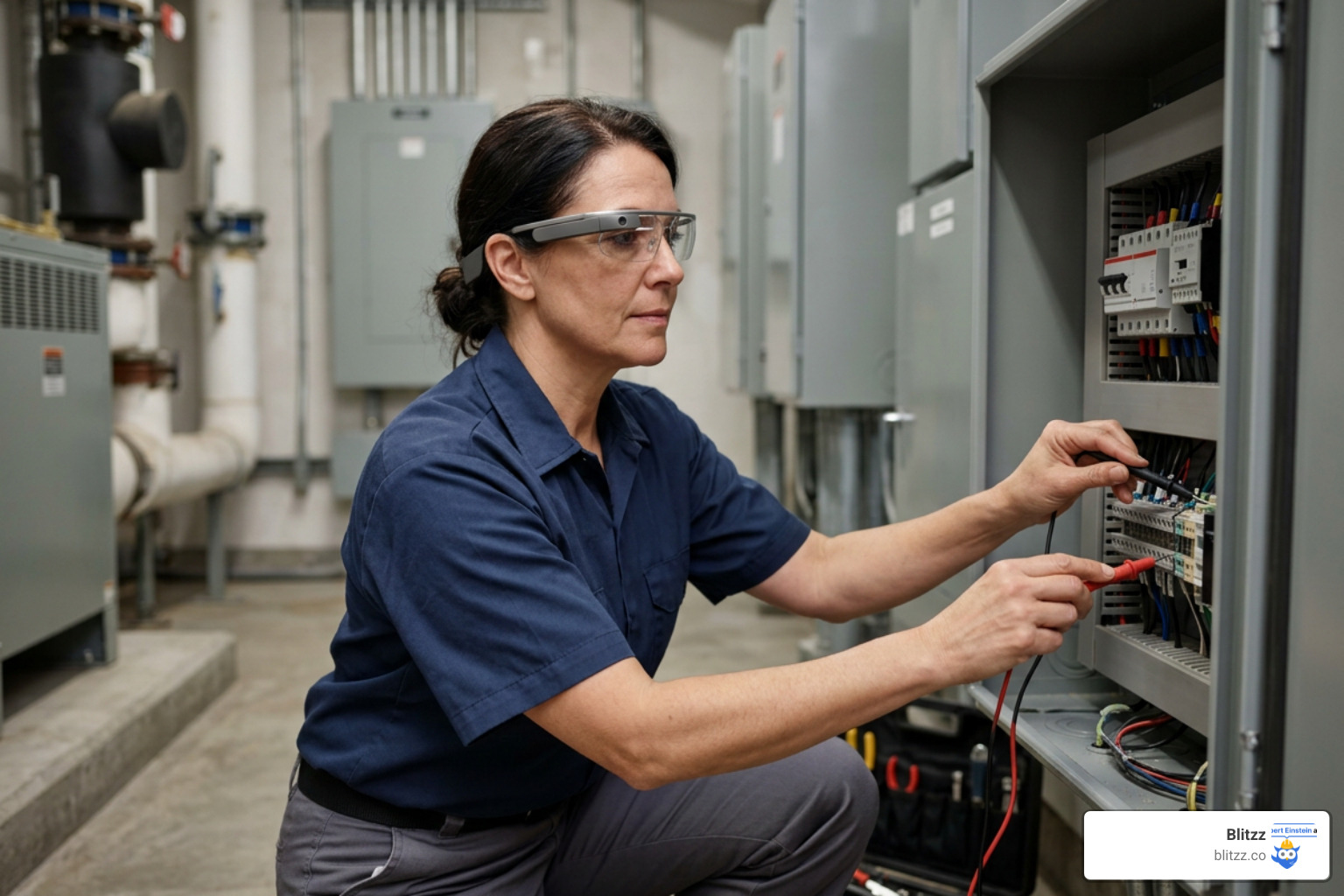
When a junior technician is in the field facing a complex wiring cabinet, they don't have to guess. AR-powered remote visual assistance allows a senior engineer back at the office to overlay digital instructions directly onto the technician's live screen.
Using tools like a Visual Remote Assistant For Telecom Internet Providers, experts can draw arrows, highlight specific ports, and share schematics in real time. For hands-free operations, technicians can wear smart glasses, allowing them to perform intricate repairs while receiving live, heads-up guidance. If you want to dive deeper into this setup, check out our guide on How To Enable Hands Free Remote Video Inspection And Support With Smart Glass A Telecom Guide.
Live Expert Collaboration vs. Asynchronous Inspections
While live, interactive video sessions are incredible for troubleshooting urgent outages, they aren't always necessary for routine audits. Modern platforms support both live and asynchronous workflows:
- Live Sessions: Best for complex, real-time troubleshooting where an expert needs to interactively guide the on-site technician.
- Asynchronous/Self-Guided Inspections: Best for standard close-out audits. The on-site technician follows an interactive checklist on their mobile browser, capturing photos and videos at designated steps. These are saved to the cloud for an auditor to review and approve later, which significantly cuts down on scheduling bottlenecks.
This dual approach is one of the many Benefits Of Live Video Support For Telco Companies, allowing highly valued specialists to audit dozens of sites a day without spending hours on the road.
Standardizing Workflows and Accelerating Project Timelines
In telecom, consistency is everything. If three different technicians inspect three different towers using their own pen-and-paper checklists, you'll end up with inconsistent, unreliable data.
Standardizing Workflows with Digital Process Automation (DPA)
Digital Process Automation (DPA) replaces paper checklists with dynamic, interactive digital flows. As the technician walks the site, the software prompts them to capture specific photos, take exact measurements, and log standardized metadata.
This standardization ensures that no steps are skipped, leading to a massive boost in quality control. When technicians are guided step-by-step, return visits drop dramatically. In fact, operators often see a direct line From Callbacks To First Call Fixes Improving Internet Issue Resolution With Remote Visual Support, keeping project timelines on track.
AI-Driven Digital Twins and 3D Modeling
By combining drone imagery with AI, platforms can generate highly accurate 3D digital twins of cell towers. These models are accurate down to the millimeter, allowing engineers to:
- Measure antenna azimuth, mechanical downtilt, and mount heights remotely.
- Run structural analyses to compare the "as-built" reality with the original CAD engineering drawings.
- Plan RAD center optimization and simulate how adding new carrier equipment will affect wind loading.
This level of detail is a massive upgrade over traditional static photo reports, which is why many ISPs are replacing phone-only support and manual site visits with visual assistance and digital twin modeling. For a closer look at this shift, read about Why Isps Are Replacing Phone Only Support With Visual Assistance.
Accelerating Close-outs, Lease Assessments, and PIM Mitigation
When a construction crew finishes upgrading a tower, the operator must verify the work before releasing payment. This "post-construction close-out" historically required an auditor to physically climb the tower.
With remote inspection tools, the local crew simply uploads drone captures or walks the site with a live video link. Auditors review the work from their desks, approving close-outs in hours rather than weeks. Similarly, lease assessments (verifying exactly which antennas are on a tower to calculate rent) and Passive Intermodulation (PIM) mitigation projects are accelerated, keeping networks running at peak performance. For more on how live video streamlines these field operations, see Remote Tech Help How Live Video Is Changing Cable Service.
Quantifying the ROI: Cost Savings and Operational KPIs
Implementing new technology always comes down to the bottom line. Fortunately, remote inspection tools offer some of the most clear-cut ROI metrics in the telecom industry.
Reducing Truck Rolls and Travel Expenses
The most immediate financial benefit of remote inspections is the reduction of truck rolls. Sending a service vehicle to a remote tower or a customer's home is expensive, time-consuming, and hard on the environment.
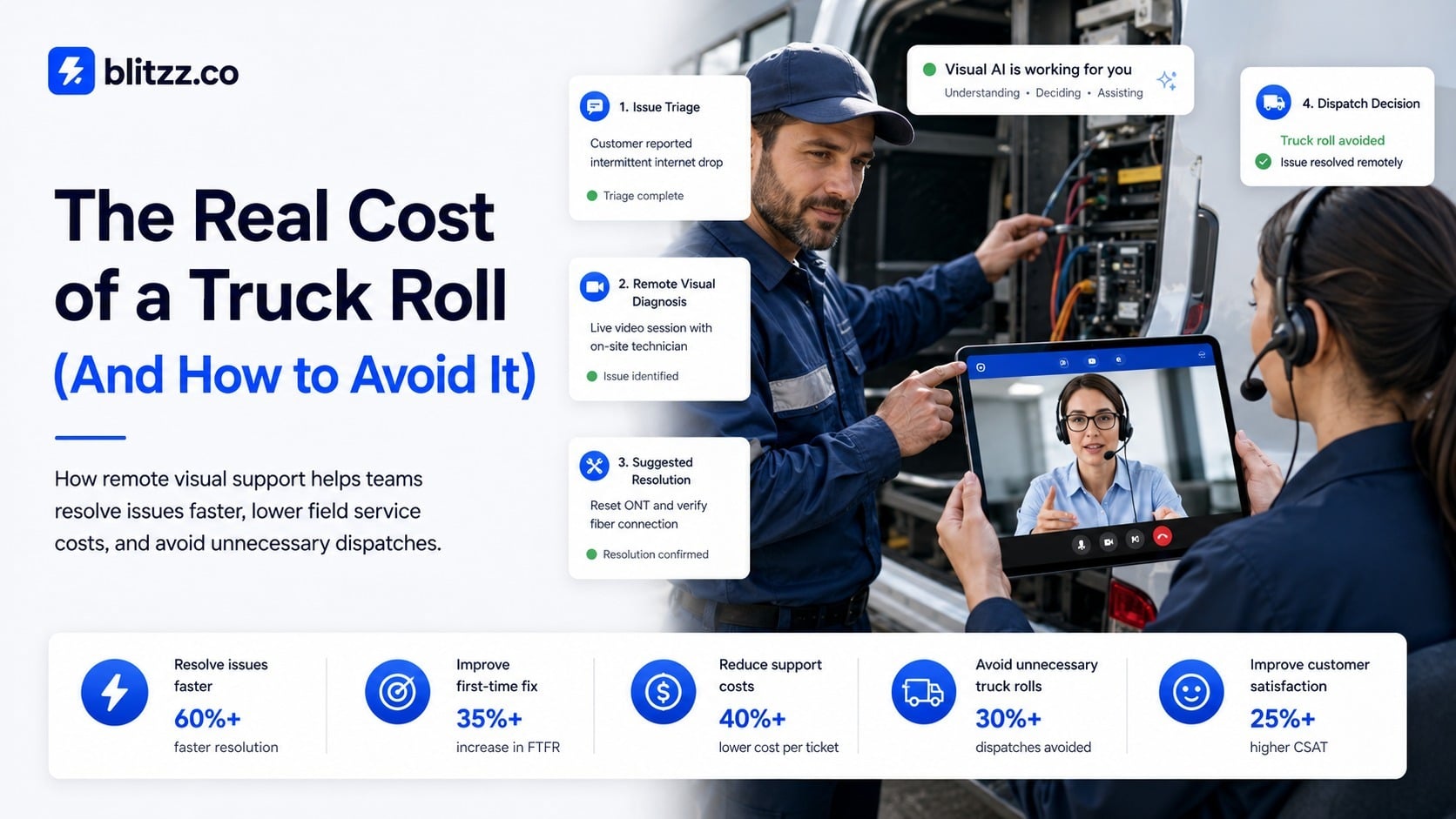
By triaging issues virtually before dispatching a vehicle, or by using remote experts to guide a local technician who is already on-site, operators can slash travel costs. For a deeper dive into the economics of this strategy, explore our resource on Reducing Truck Rolls At Scale A Smarter Support Model For Telecom Operators.
Key Performance Indicators (KPIs) to Track
To measure the success of your remote inspection rollout, keep a close eye on these four critical KPIs:
- First-Time Fix Rate (FTFR): How often is an issue resolved on the very first visit? With AR-guided remote support, first-time fix rates often skyrocket, sometimes climbing as high as 98.84%.
- Mean Time to Resolution (MTTR): The average time it takes to resolve an issue. Utilizing remote visual assistance can shorten maintenance turnaround times from three days down to just 6 to 8 hours.
- Audit Pass Rates: Standardized digital checklists and automated quality assurance lead to a 33% decrease in defects and a 62% increase in passed audits on the first try.
- Customer Satisfaction (CSAT): Resolving network issues faster and with fewer disruptions directly translates to happier subscribers. Learn more about How Telcos Leverage Remote Video Support To Provide Exceptional Customer Support.
Security, Integration, and Deployment Considerations
An inspection tool is only useful if it fits securely into your existing operational ecosystem and is easy for your team to use.
Enterprise Integration: FSM, CRM, and Asset Management
To prevent data silos, your remote inspection software must integrate with your existing software stack. This includes:
- Field Service Management (FSM) systems to automatically attach inspection reports to work orders.
- Customer Relationship Management (CRM) platforms to log visual proof of repairs directly under customer accounts.
- Enterprise Asset Management (EAM) and GIS platforms to update asset health scores in real time.
Failing to integrate these systems creates massive administrative bottlenecks—one of the 10 Barriers That Kill Customer Support In 2026 Why It Matters For Telecom Industry.
Data Security, Connectivity, and Cloud Considerations
Field technicians often work in remote areas with spotty cellular coverage. Your remote inspection tools must support offline capabilities, allowing technicians to capture photos, log data, and follow checklists offline, automatically syncing to the cloud once they regain connectivity.
From a security standpoint, look for platforms that offer:
- Secure SSH Tunneling for remote control of field testing instruments, preventing unauthorized access.
- Granular Access Controls to ensure only authorized personnel can view sensitive site data.
- Secure Cloud Storage with encryption at rest and in transit.
These security protocols are especially crucial when dealing with home network troubleshooting, where customer privacy is paramount. If you are dealing with residential network setups, you might also find our guide on resolving Wi Fi Connectivity Problems Live Video Support For Telecom helpful.
Deployment Timelines and Change Management
A typical operator can deploy a browser-based remote video platform in just a few days, as it requires no software installation for the end-user. More complex systems, like drone-to-digital-twin integrations, can take a few weeks to fully onboard.
To ensure a smooth transition, focus on change management:
- Provide clear, workflow-led onboarding for field crews.
- Keep training sessions short and hands-on.
- Highlight how the tools make the technician's job safer and eliminate tedious paperwork.
Meeting Compliance, Audits, and Structural Standards
Telecom infrastructure is heavily regulated. Structural audits must comply with strict engineering standards, such as the TIA-222 standard for steel antenna towers.
Remote inspection platforms help operators meet these compliance requirements more efficiently by generating highly detailed, standardized reports. Because every finding is linked to high-resolution visual evidence, structural engineers can confidently sign off on mount analyses and structural integrity reports from their desks. This digital paper trail also simplifies lease audits, ensuring that tower owners and carriers have a single, indisputable source of truth for equipment inventories.
Future Trends Shaping Telecom Remote Inspection Tools
As we look toward the future, several emerging technologies are set to make remote inspections even more powerful:
- 5G Densification: The massive rollout of small cells and 5G nodes requires a higher volume of rapid, localized inspections. Lightweight, browser-based video tools are perfect for managing this scale.
- Edge Computing: Processing drone imagery and 3D models directly at the network edge will allow field technicians to receive real-time structural analysis and defect detection while still on-site.
- Predictive Maintenance: By comparing digital twins over time, machine learning algorithms will predict when a mount is rusting to the point of failure or when an antenna is beginning to drift out of alignment—allowing operators to schedule maintenance before an outage occurs.
Frequently Asked Questions about Telecom Remote Inspection Tools
How do remote inspection tools improve technician safety?
By utilizing drones, telescopic cameras, and 360-degree vault sensors, technicians can inspect high-altitude tower mounts and hazardous underground vaults from a safe distance on the ground. This drastically minimizes the need for risky tower climbs and confined space entries, keeping your field crews out of harm's way.
What are the typical cost savings associated with remote inspections?
Operators typically report a 52% reduction in labor costs and a 50% reduction in onsite time. By eliminating unnecessary truck rolls, streamlining close-out audits, and utilizing remote experts to guide local teams, telecom companies save hundreds of thousands of dollars in travel, fuel, and labor expenses within the first few months of deployment.
How do these platforms integrate with existing telecom FSM and CRM systems?
Modern remote inspection software features open APIs that allow seamless integration with major FSM, CRM, and asset-management systems. This integration ensures that whenever a remote inspection is completed, the visual evidence, annotated photos, and automated reports are automatically synced and logged under the correct work order or asset ID.
Conclusion
The era of relying solely on physical site visits, manual tower climbs, and disjointed photo folders is coming to an end. Implementing the right telecom remote inspection tools is no longer just a way to save a few bucks on travel—it's a fundamental shift in how modern networks are maintained safely, efficiently, and at scale.
At Blitzz, we specialize in making remote visual assistance as simple and frictionless as possible. Our platform provides instant, browser-based video support equipped with interactive AR annotations, screen sharing, and seamless CRM integrations—allowing your remote experts to see exactly what your field technicians (or customers) see, without requiring them to install a clunky app.
Ready to see how remote visual assistance can transform your field operations, boost your first-time fix rates, and keep your technicians safe?
Request a demo with Blitzz today to start your digital transformation journey!

Blitzz Team
The Blitzz Team writes about remote video support, virtual inspections and field service. Our guides come from working with home builders, property managers, warranty teams, contact centers and field service organizations that use Blitzz to see and solve issues without a truck roll.