
.png?width=120&height=55&name=Blitzz-Logo-right%20white%20eyes%20-%20not%20transparent%20(3).png)
Why Telecom Support Has a Visibility Problem — And What It's Costing You
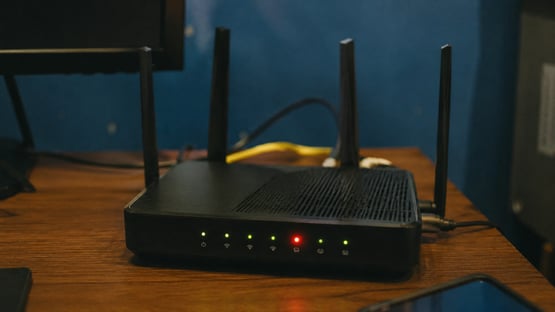
Visual assistance for telecom is a technology that lets a support agent see exactly what a customer sees — through their smartphone camera — and guide them to a fix in real time, using live video and on-screen annotations.
Here's the quick version of what you need to know:
- What it is: Browser-based video support that connects agents to customers or field technicians without requiring an app download
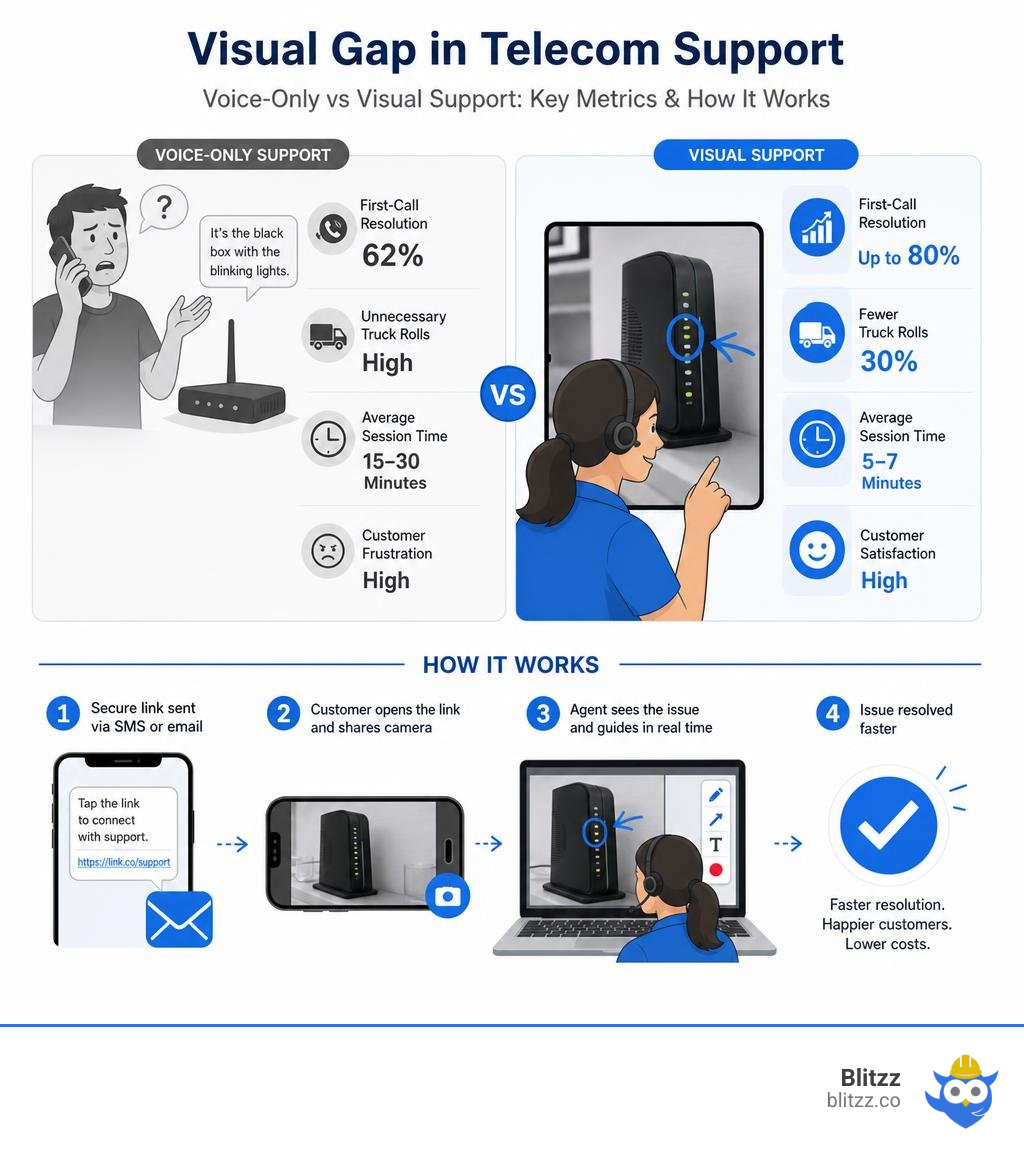
- How it works: A secure link is sent via SMS or email; the customer taps it, points their camera, and the agent can draw, highlight, and annotate directly on the live feed
- Why it matters: It eliminates the guesswork of voice-only support, where customers try to describe blinking lights and "the black box with the cables"
- Key results: Up to 80% first-contact resolution, 30% fewer truck rolls, and average sessions wrapped up in 5–7 minutes
If you manage field service or customer support for a telecom or ISP, you already know the problem. A subscriber calls in about a connectivity issue. Your agent asks them to describe the router. The customer says something like "it's the black box with the blinking lights." The agent reads from a script. Nobody really knows what's happening. A truck gets dispatched. The technician arrives, swaps one cable, and leaves in 15 minutes — a visit that cost $150 or more and could have been avoided entirely.
This is the visual gap — the disconnect between what your agents can hear and what they actually need to see to solve the problem.
It's not a small issue. The average first-call resolution (FCR) rate in telecom sits at just 62%, well below the 75% cross-industry average. And 39% of telecom customers say they've left a provider because of poor service. Every unresolved call, every unnecessary dispatch, every repeat contact chips away at retention and inflates your cost-to-serve.
In 2026, voice-only support is simply not equipped to handle the complexity of modern telecom hardware, mesh networks, fiber installs, and streaming device configurations. The good news? Visual assistance is a practical, proven fix — and it's already working at scale.
Key terms for visual assistance for telecom:
What is Visual Assistance for Telecom and How Does It Work?
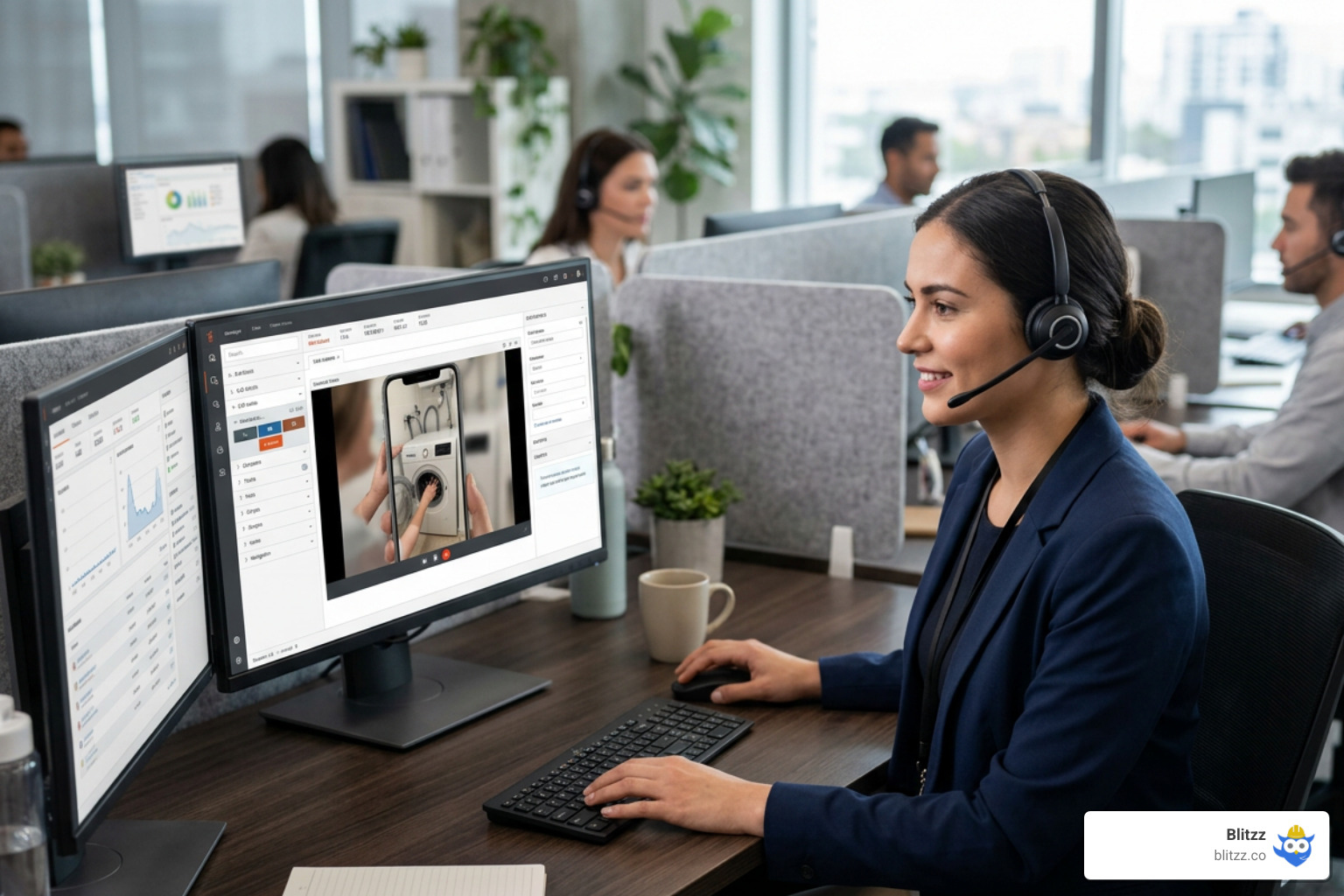
At its core, visual assistance for telecom is about turning a standard voice call into a collaborative, interactive visual session. Instead of forcing agents to troubleshoot in the dark, visual support bridges the communication gap by using the customer’s smartphone camera as the agent’s eyes on-site.
When a customer contacts support with a hardware or connectivity issue, the workflow is simple and intuitive:
- The customer calls or chats with an agent.
- Recognizing a physical hardware or setup issue, the agent sends a secure link via SMS or email directly from their console.
- The customer taps the link. It opens instantly in their mobile web browser — no app store downloads or logins required.
- The customer grants temporary camera permission, allowing the agent to see the live feed of their modem, router, or cables.
- The agent uses tools like live AR annotations, freeze-frames, and laser pointers to guide the customer step-by-step through the solution.
This real-time visual collaboration completely changes the dynamic of telecom customer service. It takes the burden of technical explanation off the customer and places the power of direct observation in the hands of the expert. For a deeper look at how this transforms the support dynamic, see our guide on How Telcos Leverage Remote Video Support to Provide Exceptional Customer Support.
Why Traditional Voice Support Fails and Why We Need Visual Assistance for Telecom
Traditional voice-only support is inherently limited. It relies entirely on the customer’s ability to accurately describe complex technical components. In a world of fiber-to-the-home (FTTH) gateways, dual-band mesh extenders, and complex coaxial setups, asking a non-technical subscriber to identify a WAN port versus a LAN port is a recipe for frustration.
This descriptive barrier leads directly to several operational headaches:
- Inflated Average Handle Time (AHT): Agents spend 15 minutes simply trying to establish which device the customer has and which lights are blinking.
- High Customer Churn: Frustrated by endless scripts and repetitive troubleshooting, customers lose patience and switch providers.
- "No Fault Found" (NFF) Hardware Returns: A staggering percentage of returned routers and set-top boxes have absolutely nothing wrong with them physically; they were simply plugged into the wrong outlet or port.
- Wasted Truck Rolls: Because the agent cannot confirm the physical state of the equipment, dispatching a technician becomes the default "safe" option.
By replacing blind verbal instructions with real-time sight, telecom providers can bypass these barriers entirely. For more details on this shift, check out our analysis of Why ISPs Are Replacing Phone-Only Support with Visual Assistance and explore the 10 Barriers That Kill Customer Support in 2026: Why It Matters for Telecom Industry.
The Mechanics of Browser-Based WebRTC Video Support
The magic that makes modern visual assistance so effective is WebRTC (Web Real-Time Communication) technology.
In the early days of remote video support, customers had to download a dedicated mobile app, create an account, and navigate permissions before they could share their video. This process created immense friction. If a customer is already dealing with a frustrating internet outage, the last thing they want to do is download a 50MB app using their precious mobile data.
WebRTC solves this by enabling high-definition, secure, real-time video streaming directly inside standard mobile browsers like Safari (on iOS) and Chrome (on Android). The customer simply taps a link, and they are live.
Furthermore, enterprise-grade visual assistance platforms use adaptive streaming. This means the video quality automatically scales down to match the available bandwidth. Even if a customer is calling to troubleshoot a weak Wi-Fi signal in a basement, the connection remains stable, dropping to high-resolution freeze-frames if necessary to ensure the troubleshooting session can be completed successfully. Discover more about these technical advantages in our post on the Benefits of Live Video Support for Telco Companies.
The Business Case: Reducing Truck Rolls and Cutting Operational Costs
Every telecom executive knows that dispatching a physical service van — a "truck roll" — is one of the most expensive operational line items in the industry. Between vehicle maintenance, fuel, scheduling overhead, and technician labor, a single truck roll typically costs between $150 and $1,000 depending on the complexity of the visit.
Worse yet, up to 30% to 40% of these dispatches are completely avoidable. They are triggered by simple issues like a loose cable, an unplugged power supply, a misplaced Wi-Fi node, or a customer who simply doesn't know how to navigate their streaming menu.

By integrating visual support into the contact center, telecom operators can visually triage issues before sending a technician. If the issue is a simple physical setup error, the agent can guide the customer to a self-fix on the spot. If a technician dispatch is truly required, the agent can document the exact problem with photos and notes, ensuring the technician arrives with the right parts and tools to fix the issue on the first visit.
To explore how to implement this cost-saving strategy across your organization, read our complete guide on Reducing Truck Rolls at Scale: A Smarter Support Model for Telecom Operators.
Slashing Avoidable Dispatches and Field Service Costs
When an agent can see the physical setup, the decision-making process changes instantly. Consider these common scenarios:
- The Splicing Error: Instead of sending a technician to investigate a "dead" line, the agent uses the customer's camera to inspect the Optical Network Terminal (ONT). They spot a pinched fiber patch cable. The agent guides the customer to gently reposition it, restoring service in minutes.
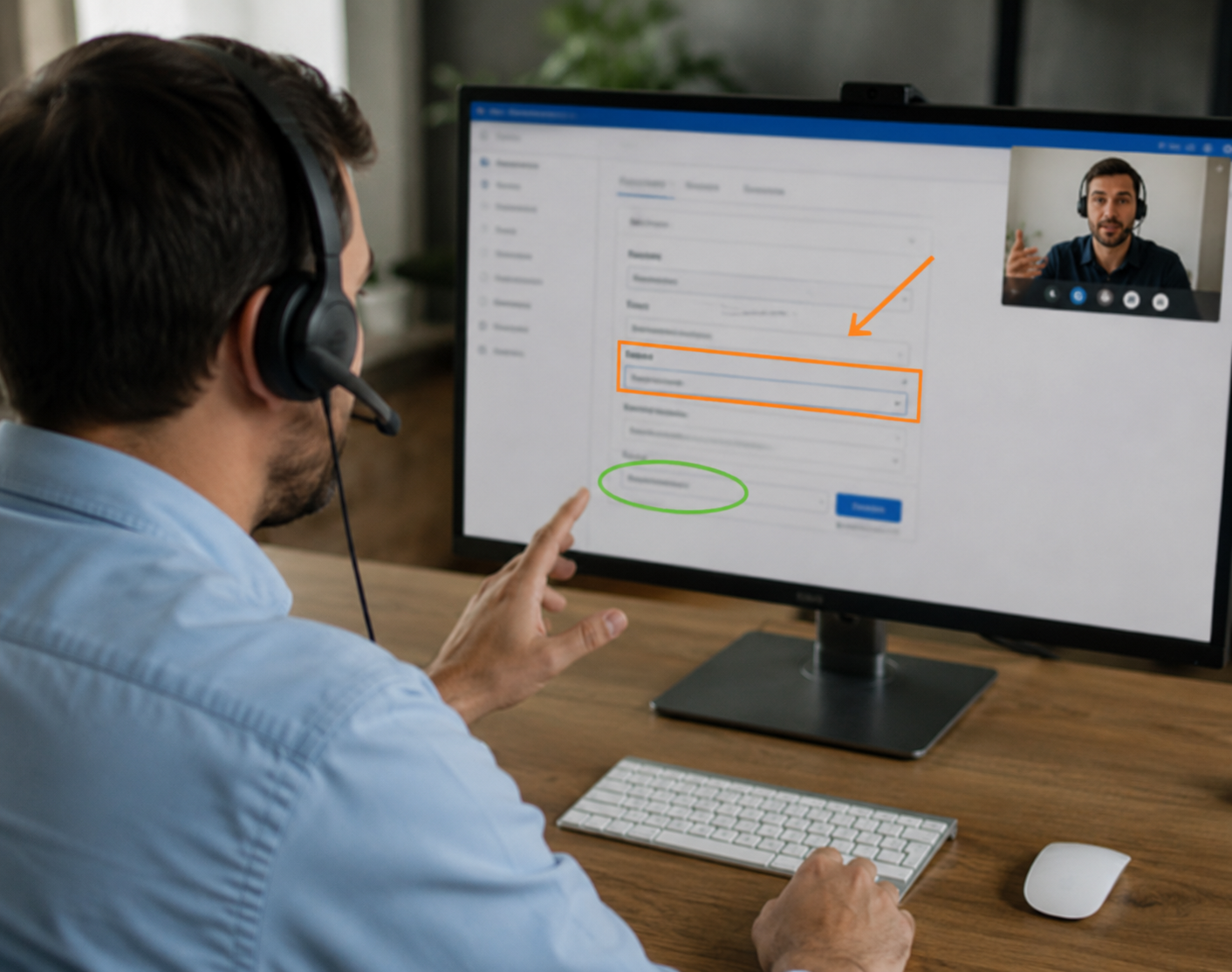
- The Port Mix-up: A subscriber self-installing fiber internet plugs the ethernet cable into the wrong port on their residential gateway. A visual agent circles the correct yellow WAN port on the customer's screen using AR drawing. The issue is resolved instantly.
- Technician Preparation: Even when a truck roll is necessary, visual support ensures the field team is prepared. Technicians don't waste time on doorstep diagnoses because they already have photos of the wiring, the model numbers, and the physical environment attached to the work order.
This proactive approach dramatically reduces overall field service costs and keeps your technicians focused on complex infrastructure issues rather than basic cable plugs. Learn more about transforming your operations in our article on How Telecom Companies Can Use Technology to Transform Customer Support.
Improving First-Call Resolution and Customer Retention
Customer satisfaction in telecom is heavily tied to how quickly and easily issues are resolved. When a customer has to call back multiple times or wait three days for a technician visit, their likelihood of churning skyrockets.
Visual assistance is the single most effective tool for boosting First-Call Resolution (FCR) in telecom contact centers. By removing the guesswork of voice-only support, agents can resolve issues up to 52% faster and improve FCR by up to 40%.
| Metric | Voice-Only Support | Visual Remote Assistance |
|---|---|---|
| First-Call Resolution (FCR) | ~62% | Up to 80% - 90% |
| Average Handle Time (AHT) | 15 - 20 minutes | 5 - 7 minutes |
| Avoidable Truck Rolls | High (20%-30% of total) | Reduced by 30% |
| Customer Satisfaction (CSAT) | Average | 7.8 out of 10 (or higher) |
| Agent Burnout / Turnover | High (due to repetitive frustration) | Low (empowered with visual clarity) |
This shift doesn't just benefit the customer; it also has a massive impact on call center agents. Repetitive, frustrating calls where agents struggle to guide blindfolded customers through technical steps are a primary driver of agent burnout in high-turnover telecom BPOs. Giving agents the ability to "just see the problem" reduces stress, lowers hold times, and boosts overall team morale.
For deeper insights into how visual tools improve agent retention and BPO efficiency, read our articles on How Remote Visual Support Tools Reduce Agent Burnout in High-Turnover BPOs and From Callbacks to First Call Fixes: Improving Internet Issue Resolution with Remote Visual Support.
Practical Use Cases: From Router Setup to Infrastructure Inspections
The utility of visual assistance for telecom spans the entire customer lifecycle — from onboarding and self-installation to ongoing hardware maintenance and high-level infrastructure monitoring.
To manage physical network assets and ensure accurate serviceability checks, platforms like Geosite Telecom | Fiber Network Mapping & Monitoring help ISPs organize, map, and monitor their physical fiber inventory. When combined with real-time remote visual assistance, telecom operators can achieve total visibility from the core network down to the customer's living room.
Troubleshooting Wi-Fi Connectivity and Hardware Setup
The first 90 days of a subscriber's lifecycle are critical. If a customer struggles to set up their new router, mesh nodes, or TV set-top box, they are highly likely to cancel their contract immediately. Traditional "self-install-in-a-box" kits have up to a 50% failure rate when guided only by paper manuals.
With visual support, agents can walk subscribers through the setup process live:
- Router & Modem Unboxing: Guiding the customer through power connections, coax cable tightening, and LED light verification.
- Wi-Fi Coverage Optimization: Helping customers place their mesh nodes in optimal locations (e.g., avoiding thick concrete walls or metal cabinets) by visually surveying the home layout.
- Set-Top Box Configuration: Walking customers through HDMI port selection, remote control pairing, and on-screen streaming menu navigation.
This hands-on, visual onboarding turns what is usually a frustrating chore into an empowering, positive customer experience. To see how video support solves these home connectivity hurdles, check out Wi-Fi Connectivity Problems? Live Video Support for Telecom and Remote Tech Help: How Live Video Is Changing Cable Service.
Empowering Field Technicians and Remote Inspections
Visual assistance isn't just for customer-facing support; it is also a powerful tool for empowering field teams and conducting remote infrastructure inspections.
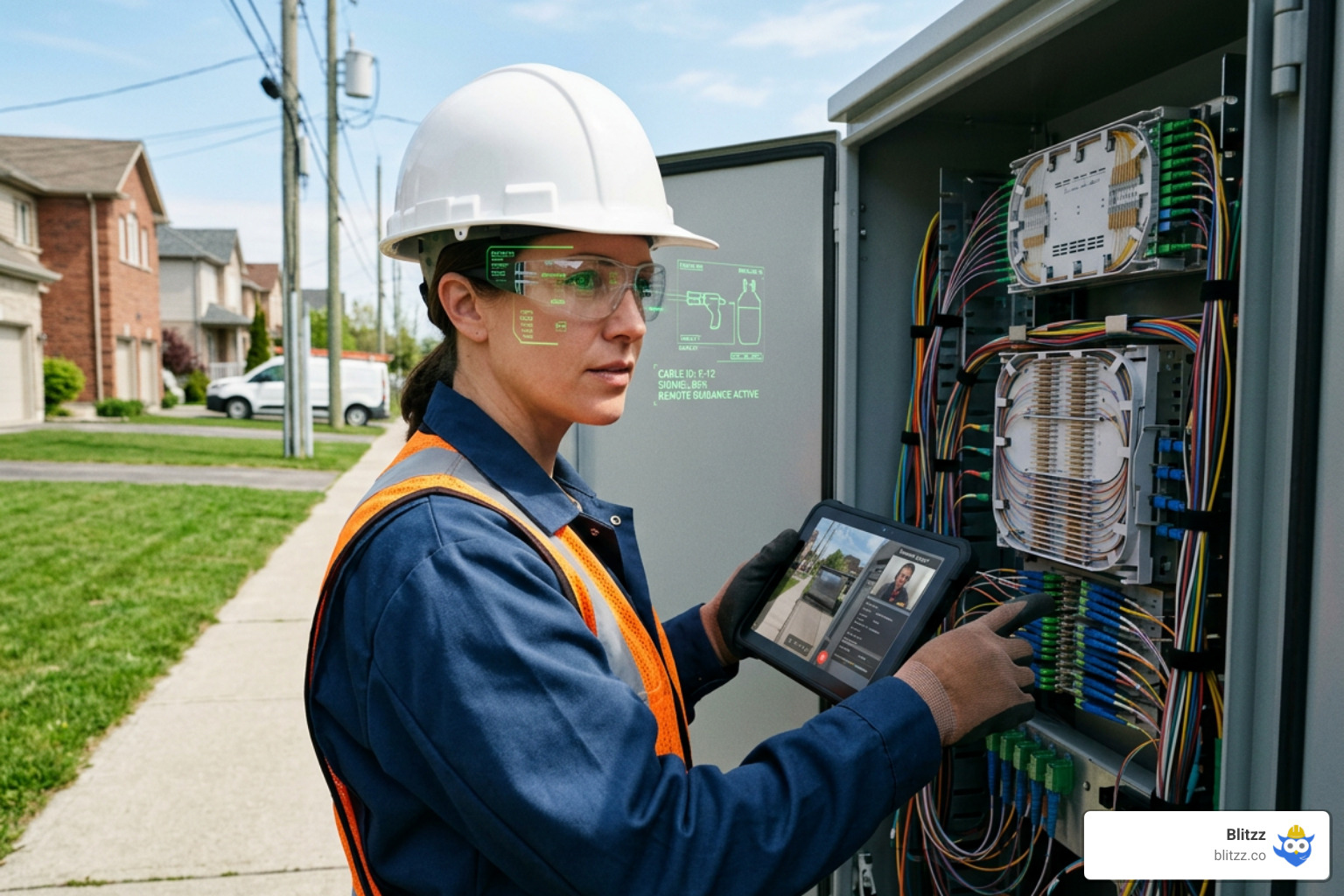
When junior technicians encounter complex issues at a cell tower, fiber distribution hub, or central office, they can instantly connect with a senior remote expert back at headquarters. Using smartphones, tablets, or hands-free smart glasses, the field tech can share a live feed of the wiring panel or hardware rack. The remote expert can then overlay precise AR markers to show exactly which fiber to splice or which card to swap.
This remote expert-on-demand model helps telecom companies:
- Bridge the skills gap for junior technicians.
- Conduct remote quality assurance inspections on completed field work, boosting task verification accuracy from 60% to over 95%.
- Safely inspect hazardous, high-altitude tower equipment using drone video feeds combined with live AR annotations.
To learn more about remote inspections, smart glasses, and detecting infrastructure failures without traveling to the site, explore our resources:
- Telecom Remote Inspection Guide 2026
- How to Enable Hands-Free Remote Video Inspection and Support with Smart Glass: A Telecom Guide
- 5 Common Telecom Infrastructure Failures You Can Detect Without Setting Foot on Site
Choosing the Right Platform: Key Features and Integrations
To successfully deploy visual assistance across a telecom organization, choosing the right platform is critical. The software must be robust enough to handle low-bandwidth scenarios, secure enough to meet strict global compliance standards, and easy enough for both agents and customers to use without friction.
For a complete overview of enterprise-grade visual support capabilities, check out our Visual Remote Assistant for Telecom & Internet Providers solution page.
Key Features to Look For in Visual Assistance for Telecom Solutions
When evaluating visual support software, prioritize the following essential features:
- App-Free WebRTC Connection: The software must run directly in standard mobile browsers via a secure SMS or email link to ensure maximum customer adoption.
- Interactive AR Annotations: Agents must be able to draw, circle, and write text on the customer's live screen, with annotations remaining locked to the physical object even if the camera moves.
- Freeze-Frame & High-Res Photo Capture: The ability to pause the live video feed to take high-resolution, timestamped, and geotagged photos of serial numbers, barcodes, or cable connections.
- Low-Bandwidth Optimization: Adaptive streaming that automatically adjusts video resolution based on real-time network conditions to keep the session active.
- CRM & Contact Center Integrations: Out-of-the-box integrations with major platforms like Salesforce, Zendesk, ServiceNow, Genesys, and Microsoft Dynamics, allowing agents to launch visual sessions with a single click and automatically save recordings to the customer's ticket.
- Security & GDPR Compliance: End-to-end encryption, SOC-2 compliance, and clear customer consent protocols to protect subscriber privacy.
Driving Adoption Among Agents and Customers
Even the best software is useless if your team and customers don't use it. To drive high adoption rates, telecom operators should focus on the following strategies:
- Make the Experience Effortless: Ensure there are zero app downloads. If a customer has to exert effort to download software during an outage, adoption will plummet.
- Leverage "Super-Agents": Identify tech-savvy agents in your contact center to act as power users. Let them champion the tool, share their success stories, and train their peers.
- Integrate into Existing Workflows: Use Single Sign-On (SSO) and integrate the visual launch button directly into the agent's CRM console so they don't have to switch windows or log into a separate system.
- Link Usage to Core KPIs: Build management dashboards that track how visual sessions directly impact agent handle times, FCR, and avoided truck rolls, rewarding high-performing teams.
For more insights on driving tech adoption and leveraging AI-powered support features in 2026, read our guide on AI-Powered Customer Support for Telecom: What's Working in 2026.
Frequently Asked Questions about Telecom Visual Support
How does visual support address accessibility for blind or low-vision customers?
Visual assistance is a game-changer for accessibility. By combining live one-way video and two-way audio, customer support agents can act as the "eyes" for blind or low-vision subscribers. Agents can guide users through physical device setups, SIM card activations, and remote control configurations. Furthermore, integrating visual AI and computer vision can automate basic accessibility requests, allowing users to point their cameras at devices to receive automated, spoken step-by-step instructions.
Does the customer need to download an app to use visual support?
No. The best enterprise visual assistance solutions run entirely in the customer's mobile web browser using WebRTC technology. The agent simply sends a secure link via SMS or email. The customer taps the link, grants camera permission, and the session begins instantly. This app-free approach eliminates friction, respects mobile data limits, and ensures high customer adoption rates.
How do telecom companies measure the ROI of visual assistance?
Telecom operators measure ROI by tracking several key paired metrics:
- Avoided Truck Rolls: The number of dispatches canceled or prevented because the issue was resolved during a remote visual session (calculated against the average cost of $150+ per dispatch).
- First-Call Resolution (FCR): The percentage of customer issues resolved on the first contact.
- Average Handle Time (AHT): The reduction in call duration due to clear visual troubleshooting compared to blind verbal instructions.
- Equipment Return Rates: The reduction in "No Fault Found" (NFF) hardware returns because setup errors were resolved visually.
Conclusion
In the competitive telecom and ISP landscape of 2026, customer experience is the ultimate differentiator. Relying on outdated, voice-only support channels to resolve complex in-home hardware issues is no longer viable. It frustrates subscribers, burns out contact center agents, and drains operational budgets through thousands of avoidable, high-cost truck rolls.
By bridging the visual gap with browser-based remote visual assistance, telecom operators can transform their customer service from a costly pain point into a streamlined, highly efficient competitive advantage.
Ready to see how real-time video, AR annotations, and seamless CRM integrations can redefine your support operations? Explore our comprehensive guide to Remote Visual Assistance for Contact Centers and schedule a live demo with Blitzz today to start cutting costs and boosting subscriber satisfaction.