
.png?width=120&height=55&name=Blitzz-Logo-right%20white%20eyes%20-%20not%20transparent%20(3).png)
AR-Enabled Diagnostics: From $4 Billion Market to the Future of Medicine and Field Service
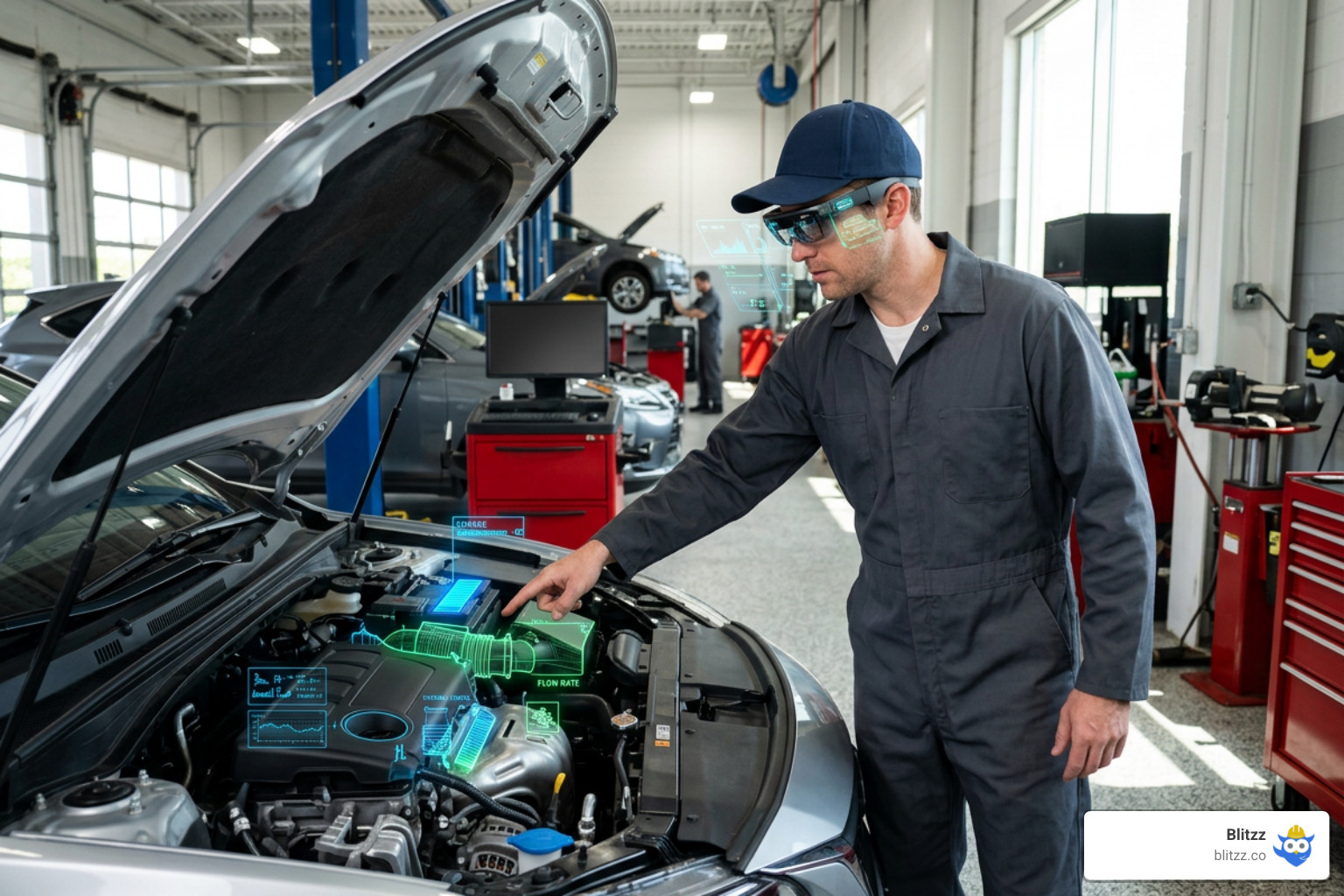
AR-enabled diagnostics are transforming how clinicians detect disease, how technicians troubleshoot complex equipment, and how field service teams resolve issues without rolling a truck.
Here's what you need to know at a glance:
| Question | Quick Answer |
|---|---|
| What is it? | Technology that overlays real-time digital data onto physical objects or patients to guide diagnosis |
| Who uses it? | Surgeons, pathologists, radiologists, automotive technicians, field service engineers |
| Key benefit | Faster, more accurate diagnoses — with less experience required |
| FDA status | Over 100 AR/VR medical devices authorized as of October 2025 |
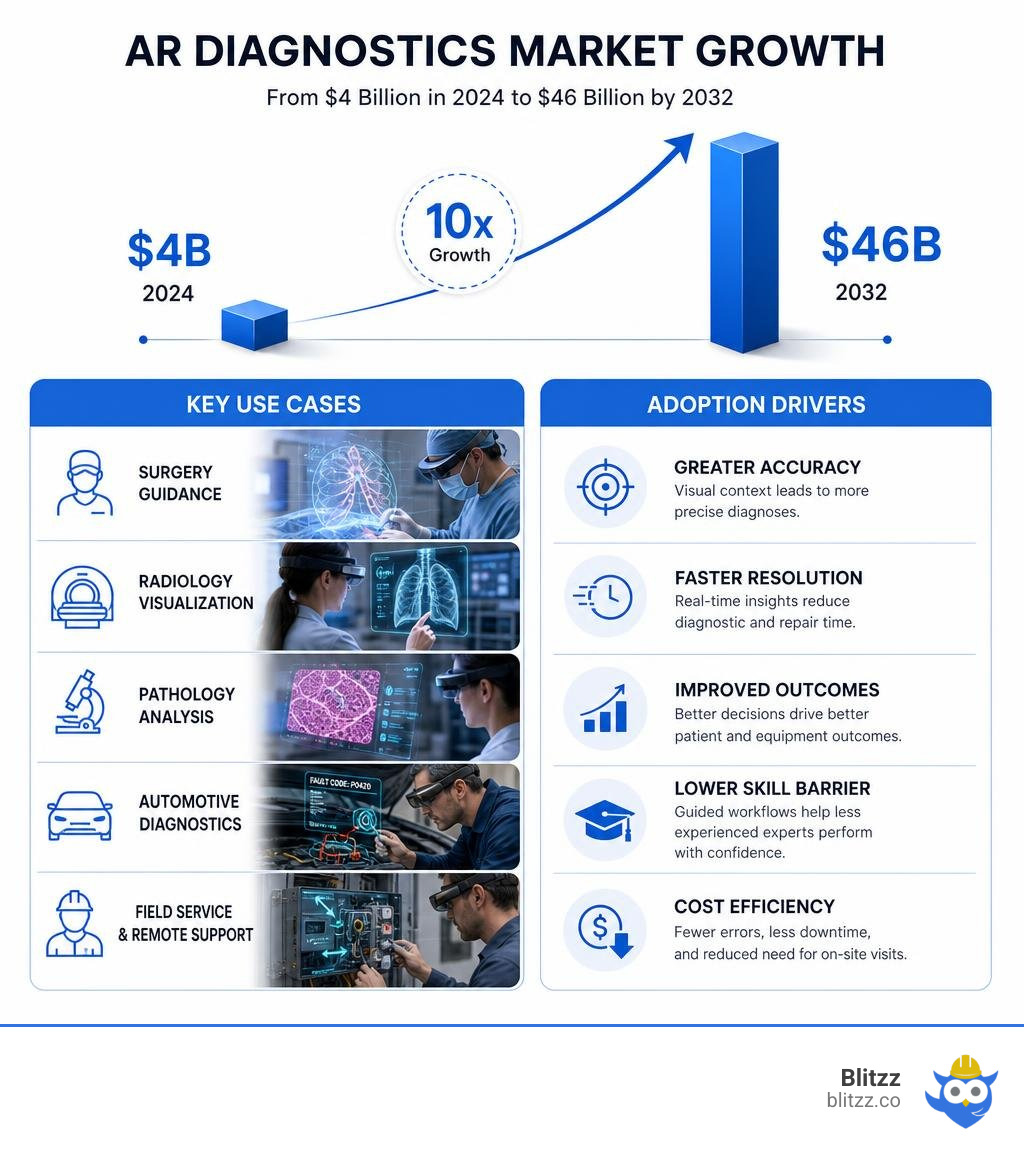
| Market size | Growing from ~$4 billion (2024) to over $46 billion by 2032 |
| Biggest risks | Cybersickness, data privacy, hardware cost, regulatory complexity |
The numbers tell a compelling story. The AR/VR healthcare market is on track to grow more than 10x in under a decade. And 84% of healthcare professionals believe these technologies will positively change their industry.
But this isn't just a healthcare story.
For field service managers dealing with high truck-roll costs and slow issue resolution, AR diagnostics offer something equally powerful: the ability to see a problem remotely, guide a technician in real time, and fix it right the first time.
The core idea is simple. Instead of reading a flat screen or a cryptic error code, AR overlays the critical information — a scan, a fault code, a needle trajectory, a repair animation — directly onto the physical world. That shift from 2D to 2D, from static to live, changes everything about how fast and how accurately a diagnosis gets made.
Important AR-enabled diagnostics terms:
The Evolution of AR-Enabled Diagnostics: Overcoming the 2D Imaging Bottleneck
For decades, both medical and industrial diagnostics have suffered from the same core limitation: flat screens trying to represent a three-dimensional world.
In medicine, this is often called the "mental tomography bottleneck." When a radiologist or sonographer performs an ultrasound, they capture 2D image slices of a patient's body. To understand what is actually happening inside the tissue, the clinician must mentally reconstruct those flat slices into a 3D mental model. This process is highly cognitively demanding, slow, and heavily dependent on the operator's experience. If the clinician’s mental mapping is slightly off, the diagnosis or intervention—such as a needle biopsy—can fail.
A breakthrough development from MIT researchers, known as the AR-VIU (Augmented Reality-Visualizing Imaging Ultrasound) system, aims to shatter this bottleneck. According to research highlighted in Augmented reality system could make medical ultrasounds easier to interpret, this system uses a 3D computer graphics engine to convert raw ultrasound data into direct 3D representations in real time, projecting them directly over the patient's anatomy via an AR headset.
This evolution from flat screens to spatial overlays solves several critical challenges across both clinical and field service environments:
| Diagnostic Feature | Traditional 2D Methods | AR-Enabled 3D Diagnostics |
|---|---|---|
| Cognitive Load | High; requires mental reconstruction of flat images | Low; data is superimposed directly onto the physical target |
| Spatial Alignment | Gaze-split; looking back and forth between screen and patient/machine | Unified; data and physical target are in the same line of sight |
| Accuracy & Precision | Highly variable; operator-dependent | Standardized; guided by real-time spatial indicators |
| Procedure Time | Often prolonged by manual searching and recalibration | Streamlined by direct pathing and target highlighting |
| Collaboration | Limited to verbal descriptions or side-by-side screen viewing | Shared spatial views with remote annotations |
By placing the data exactly where the action is, AR-enabled diagnostics eliminate the need to look away from the patient or the machine. Whether you are a surgeon aligning a biopsy needle or a field technician locating a faulty sensor deep inside an engine bay, spatial context ensures you work with absolute precision.
Clinical and Industrial Frontiers: Where AR Diagnostics Excel
The application of AR diagnostics is no longer restricted to experimental labs. In both clinical medicine and industrial field service, these tools have moved into active deployment, backed by regulatory approvals and commercial success.
On the medical front, the FDA has taken a proactive stance toward immersive technologies. As of October 2025, the FDA has authorized over 100 AR/VR medical devices for marketing in the United States. These authorizations span a range of clinical specialties, with radiology, neurology, orthopedics, and cardiovascular medicine leading the charge.
For instance, the platform developed by MediView XR became the first AR system to earn FDA clearance for live imaging during surgical procedures, providing clinicians with virtual "X-ray vision" by projecting live ultrasound feeds directly onto the patient's body. Meanwhile, therapeutics like AppliedVR’s RelieVRx have demonstrated that home-use immersive systems can achieve clinical-grade outcomes, showing an over 50% reduction in chronic lower back pain by training patients in pain-regulation techniques.
Let’s look closer at how these breakthroughs are playing out in specific domains.
Clinical Applications: How AR-Enabled Diagnostics Transform Surgery and Pathology
In clinical environments, AR diagnostics are turning complex, invasive procedures into highly targeted, safer interventions.

One of the most remarkable examples of this is the Augmented Reality Microscope (ARM) developed for cancer detection. As detailed in An Augmented Reality Microscope for Cancer Detection, this system retrofits standard clinical light microscopes with a digital camera and a compute unit.
As the pathologist moves the tissue slide, machine learning models run in the background at 10 frames per second, projecting visual indicators—like bright green contours—directly into the optical path to highlight suspected tumor cells. This approach achieved an area-under-the-curve (AUC) of 0.98 for detecting breast cancer metastasis and 0.96 for prostate cancer, showcasing how AR can democratize advanced AI diagnostics globally without requiring clinics to purchase expensive digital whole-slide scanners.
AR is also solving the high error rates associated with traditional needle interventions. In ultrasound-guided breast biopsies, operators face up to a 10% tissue sampling error rate due to hand-eye coordination challenges.
A study published in Augmented Reality-Assisted Ultrasound Breast Biopsy demonstrated that tracking both the ultrasound probe and the biopsy needle using AR markers allows the system to project a real-time trajectory line directly into the clinician's field of view. This dual-object tracking achieved a needle alignment precision of 92.67 degrees compared to the highly variable 89.99 ± 37.49 degrees seen in traditional methods.
Furthermore, we are seeing high-precision AR tools move to the most accessible hardware of all: the smartphone. A clinical study analyzed in Integrated Needle Guide on Smartphone for Percutaneous Interventions Using Augmented Reality evaluated a smartphone AR application paired with a 3D-printed needle guide. The results were staggering:
- Median Target Accuracy: 4 mm with smartphone AR versus 18 mm for freehand needle placement.
- Angular Error: Reduced from 9 degrees (freehand) to just 2.7 degrees (AR).
- Target Success Rate: 78% of targets were successfully reached using the smartphone AR app, compared to only 24% using freehand methods.
Crucially, the study showed no significant difference in performance between medical students and senior attendings when using the AR tool, proving that AR can effectively level the playing field and standardize clinical outcomes.
This democratization of clinical expertise is a core reason why immersive tech is expanding so rapidly. For a broader look at how these systems are breaking out of the entertainment space, check out our guide on AR and VR: More Than Just Video Games.
Innovations in this space are even targeting how we interact with patient medical histories. As outlined in the patent application AUGMENTED REALITY MEDICAL DIAGNOSTIC PROJECTION - Patent Application, future AR systems will be able to superimpose multi-generational family medical histories and localized epidemiological data as transparent, interactive layers directly over a patient’s physical body during an exam. Open-source projects like the pradeepmisal/MEDI_AR repository are already showing how developers can combine AI conversational assistants with interactive 3D anatomical models to improve medical literacy and preliminary symptom analysis.
Automotive and Industrial Use Cases: AR-Enabled Diagnostics in the Field
While the impact of AR on medicine is profound, the technology is driving an equally massive revolution in the automotive and industrial sectors. Modern vehicles and industrial machines are essentially "computers on wheels," packed with complex Electronic Control Units (ECUs) and sensors communicating over a Controller Area Network (CAN bus).
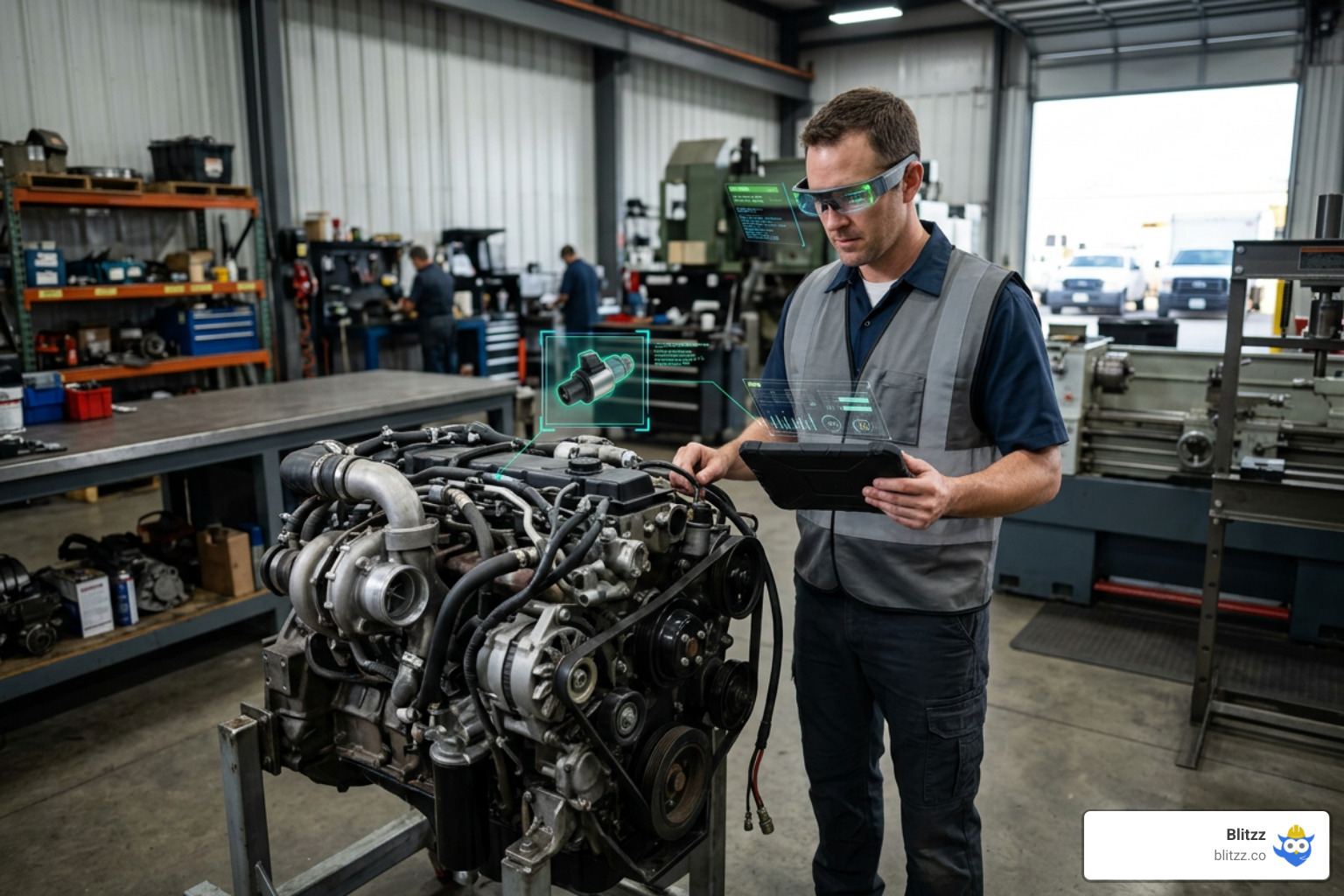
When a machine breaks down, it typically generates a Diagnostic Trouble Code (DTC) via an On-Board Diagnostics (OBD-II) port. However, a raw OBD-II code like "P0300" (random cylinder misfire) or "P0420" (catalyst system efficiency below threshold) only tells you what system is failing—not where the physical component is, or how to fix it.
By integrating AR with vehicle diagnostics, we can bridge this gap entirely:
- Visual Locating: The technician scans the vehicle with a mobile device or AR smart glasses. The system reads the DTC via a Bluetooth OBD-II adapter and immediately highlights the exact physical sensor or component on the engine block.
- Step-by-Step Animations: Instead of flipping through a 500-page paper manual, the technician sees 3D repair animations overlaid directly on the physical parts, showing them exactly which bolts to remove and in what order.
- Live Telemetry: Real-time sensor data, such as fuel trims, temperatures, or voltages, can be projected as floating digital dials right next to the physical components as the engine runs.
This spatial guidance drastically reduces diagnostic search times and prevents costly repair errors. Field service organizations are leveraging these capabilities to support less-experienced technicians, ensuring they can perform complex repairs with confidence.
To learn more about how these spatial tools are changing the landscape for field teams, see our articles on How Augmented Reality Helps Field Service Workers and Revolutionizing Field Service with Augmented Reality.
The Power of Convergence: Integrating AI and IoT with AR
The true magic of AR-enabled diagnostics happens when AR converges with Artificial Intelligence (AI) and the Internet of Things (IoT).
IoT sensors continuously harvest operational data from machines or wearable medical devices. AI models analyze this data in real time to perform anomaly detection and predict failures before they happen. AR then steps in as the human-machine interface, translating complex data streams into intuitive visual guides.
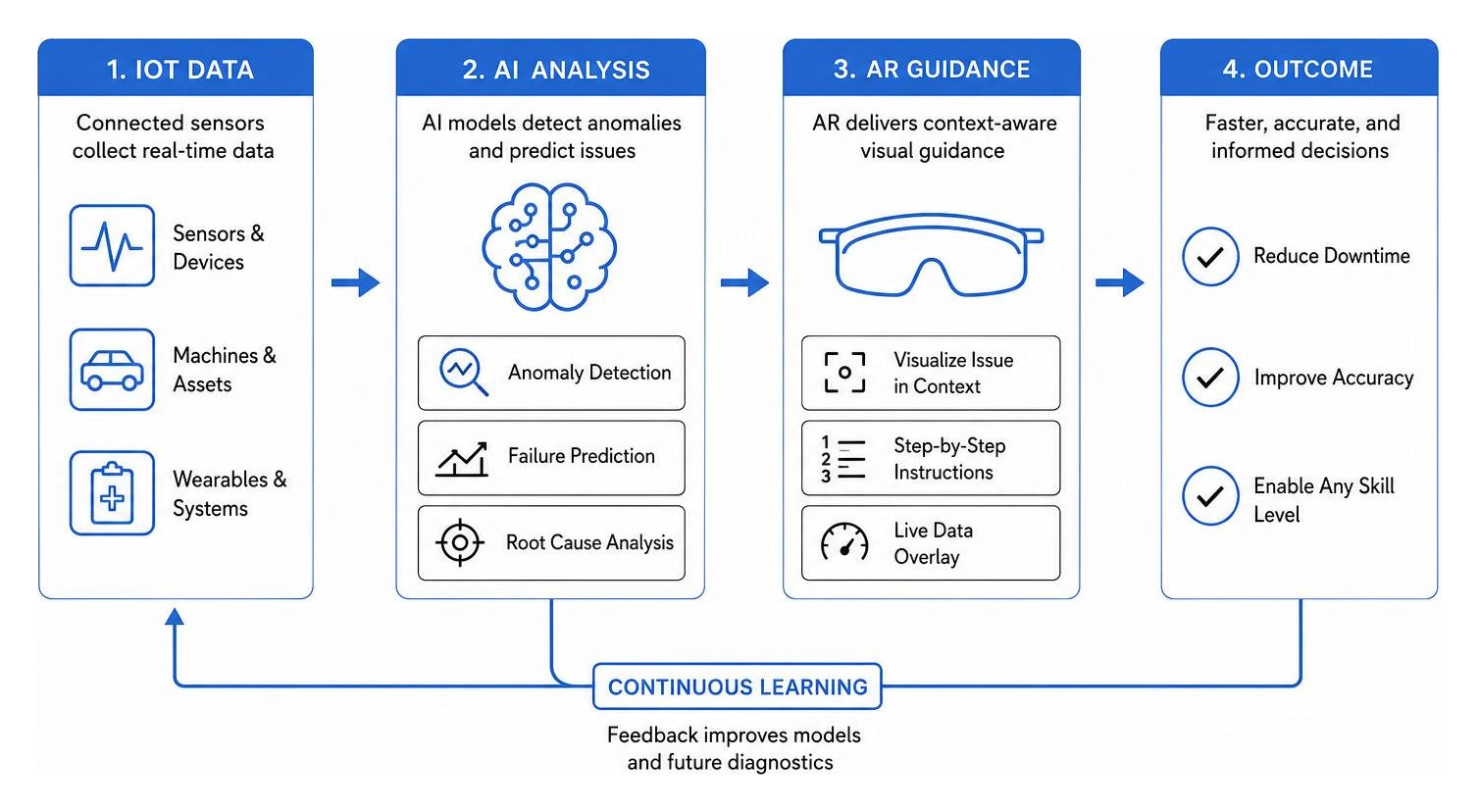
This combination is central to the creation of digital twins—highly accurate digital replicas of physical assets or even patients. In an industrial setting, a digital twin allows a remote expert to run simulations and identify the root cause of a failure virtually, then project the exact fix onto the field technician's screen.
In customer support, this convergence allows support agents to see exactly what the customer is seeing and draw precise annotations on their mobile screen to resolve issues instantly. To explore how this visual evolution is redefining support, take a look at our insights on AR and AI on Customer Support, Get Your Eyes on the Problem with AI AR Remote Customer Support, and The Future of Co-Browsing: AI, AR, and What's Next.
Challenges, Risks, and Regulatory Barriers to Adoption
Despite its incredible potential, the widespread adoption of AR-enabled diagnostics faces several significant hurdles.
First are the physiological and ergonomic challenges. Wearable AR headsets can cause cybersickness—a form of motion sickness triggered by latency between a user's head movement and the digital display update. Additionally, the physical weight of heavy head-mounted displays can cause neck strain and fatigue during long procedures, while display limitations like low contrast or alignment errors can lead to eye strain. These comfort and safety risks are detailed further in Augmented Reality Based Remote Assistance Risks.
Second, data privacy and security are paramount. Because AR diagnostic devices capture real-time video feeds of patients or proprietary industrial equipment, they must comply with strict regulations like HIPAA in healthcare and local data protection laws in industrial sectors. Ensuring secure, encrypted data transmission is a massive technical requirement.
Third, hardware limitations and cost remain high. High-end AR headsets are expensive and require significant compute power. Because AR devices lack the onboard GPU capacity to run complex AI models (such as real-time cancer segmentation) locally, they must offload processing to external computers.
This introduces latency and requires high-bandwidth, low-latency wireless connections. For real-time streaming, developers often have to use lightweight protocols like UDP, which reduces latency but can suffer from high packet loss (up to 57.3% in some clinical test environments).
Because of these headset limitations, many organizations are finding that mobile-based AR—using the smartphones and tablets that technicians and patients already own—is a much more practical, ergonomic, and cost-effective starting point. To understand how handheld devices stack up against dedicated smart glasses, read our comparison on Mobile Video Calls vs. AR-Enabled Smart Glasses: Which Delivers Better Field Support.
Frequently Asked Questions about AR Diagnostics
How does AR-enabled diagnostics improve surgical accuracy?
AR improves surgical accuracy by projecting 3D anatomical data directly onto the patient's body, giving surgeons virtual "X-ray vision."
For example, in a clinical study of 28 spinal surgeries, AR-guided screw placement achieved an incredible 98% accuracy score on standard performance metrics. This is a massive improvement over the standard, clinically acceptable freehand rate of around 90%. By providing real-time trajectory lines and highlighting critical structures (like blood vessels or nerves), AR tools prevent deviation and significantly reduce surgical error rates.
Can AR diagnostics be used in remote or rural areas?
Yes, and this is one of its most transformative use cases. Globally, 56% of people living in rural areas lack access to essential healthcare services. In the U.S., rural residents live an average of 10 miles from the nearest hospital, compared to just 5 miles for urban residents.
AR diagnostics allow local general practitioners or field technicians to connect with off-site specialists via live video. The remote expert can view the local user's surroundings and draw precise AR annotations directly on their screen to guide them through complex diagnostics or emergency procedures.
To see how this works in practice, explore our Augmented Reality Remote Assistance Guide 2026 and our review of AR Remote Collaboration Tools.
What are the main barriers to widespread adoption of AR diagnostics?
The main barriers include:
- High Hardware Costs: Premium AR headsets can cost thousands of dollars per unit, making large-scale deployment expensive.
- UI/UX Complexity: If an AR interface is poorly designed, it can overwhelm the user with information, leading to cognitive fatigue or distraction.
- Integration Challenges: Connecting AR software with legacy systems, such as Electronic Health Records (EHR) in medicine or proprietary enterprise databases in field service, requires custom development and strict compliance checks.
Conclusion: The Future of Diagnostics is Browser-Based
The diagnostic landscape is changing fast. Whether in a sterile operating room or a busy automotive repair shop, the transition from flat 2D screens to interactive, spatial AR-enabled diagnostics is helping people work faster, make fewer mistakes, and collaborate across massive distances.
But you don't need to purchase expensive, heavy headsets or build complex custom apps to start benefiting from AR.
At Blitzz, we believe the most powerful tool is the one already in your pocket. Our enterprise remote visual assistance software brings the power of AR diagnostics directly to any smartphone or tablet. With our instant, browser-based video support, your customers or field technicians can launch a live, high-definition diagnostic session with a single click—no app downloads required.
With interactive AR annotations, screen sharing, and seamless CRM integrations, we help you see the problem, guide the fix, and eliminate unnecessary on-site visits.
Ready to see how simple AR diagnostics can be? Get started with Blitzz remote visual support today.