
.png?width=120&height=55&name=Blitzz-Logo-right%20white%20eyes%20-%20not%20transparent%20(3).png)

.jpg?width=1200&height=675&name=Untitled%20(22).jpg)
On this page
.jpg?width=1624&height=968&name=Untitled%20(22).jpg)
Say "AI agent" to a room full of field techs, and you won't get one reaction — you'll get two. Some people picture software working quietly in the background. Others picture a person: a sales agent, an insurance agent, someone new showing up to represent the company. Same word, two completely different mental pictures, and now you're spending your rollout explaining what you meant instead of getting people to actually use the tool.
That's not a minor wording issue. For a field team that's usually introduced to new software in one sentence, mid-task, with no slide deck and no time for follow-up questions, the word you choose is doing a lot of the work. Pick the wrong one, and you've created confusion you didn't need to create.
"Agent" Had a Job Long Before Software Borrowed It
Before "AI agent" meant anything technical, "agent" already meant something very specific in everyday language: a person who acts on your behalf. A real estate agent. An insurance agent. A talent agent. A customer service agent on the other end of a support line. In every one of those, the word points at a human being, not a piece of software.
That meaning didn't go away just because the tech industry started using the same word differently. It's still the first thing most people picture, because it's the version they've encountered the most in daily life. Software terminology doesn't get to overwrite decades of ordinary usage just by adopting the same word — it has to compete with it, and outside of tech circles, it usually loses.
.jpg?width=1536&height=1024&name=Untitled%20(23).jpg)
What "AI Agent" Actually Means in Software
In software and AI circles, "agent" has taken on a real, specific, and genuinely useful technical meaning. An AI agent, in that context, is a system that can take autonomous action on a goal — deciding what steps to take, calling tools, chaining decisions together — without a human directing every single move. That's a meaningfully different capability from a simple chatbot that just answers questions when asked, and the distinction between agentic AI and a basic assistant is one worth making clearly — when you're talking to engineers, product teams, or anyone evaluating what a piece of software can technically do on its own.
The problem isn't that this technical meaning is wrong. It's that it's specialized. It lives comfortably in a developer conversation or a product spec sheet. It doesn't travel well onto a job site, where nobody has that definition loaded, and where the word "agent" still just means "a person."
Why the Split Meaning Causes Real Problems in the Field
An office rollout can absorb some ambiguity. Someone joins a training call, sees a demo, asks a clarifying question, and moves on with a clear picture of what the tool does. A field crew doesn't get that runway. Instructions have to land instantly, usually delivered by a supervisor between two other tasks, with no built-in moment for a follow-up Q&A.
In that setting, a word with two possible meanings isn't a small inconvenience — it's a tax you pay every time you use it. Tell a crew "we're bringing in an AI agent to help with documentation," and you've handed half the room a mental model of software and the other half a mental model of a new coworker they haven't met. Neither group is wrong to picture what they pictured — the word genuinely supports both readings. But now you're the one fielding questions about who this new person is, when the honest answer is: there isn't one.
This shows up most often in exactly the kind of environment Blitzz's customers work in — HVAC, plumbing, roofing, and general construction crews who are already juggling tools, schedules, and customer expectations without adding a vocabulary lesson to the mix. The last thing a busy field team needs from a new piece of software is a term that requires its own explanation before anyone can use it.
Why "Assistant" Doesn't Have This Problem
"Assistant" doesn't carry the same split. Nobody hears "assistant" and pictures a stranger sent to represent them. The word reads the same way almost everywhere it shows up — something that helps you do your job, not something that replaces or represents you. It requires no technical background to parse correctly, and it doesn't accidentally introduce a character into a conversation that was only ever supposed to be about a feature.
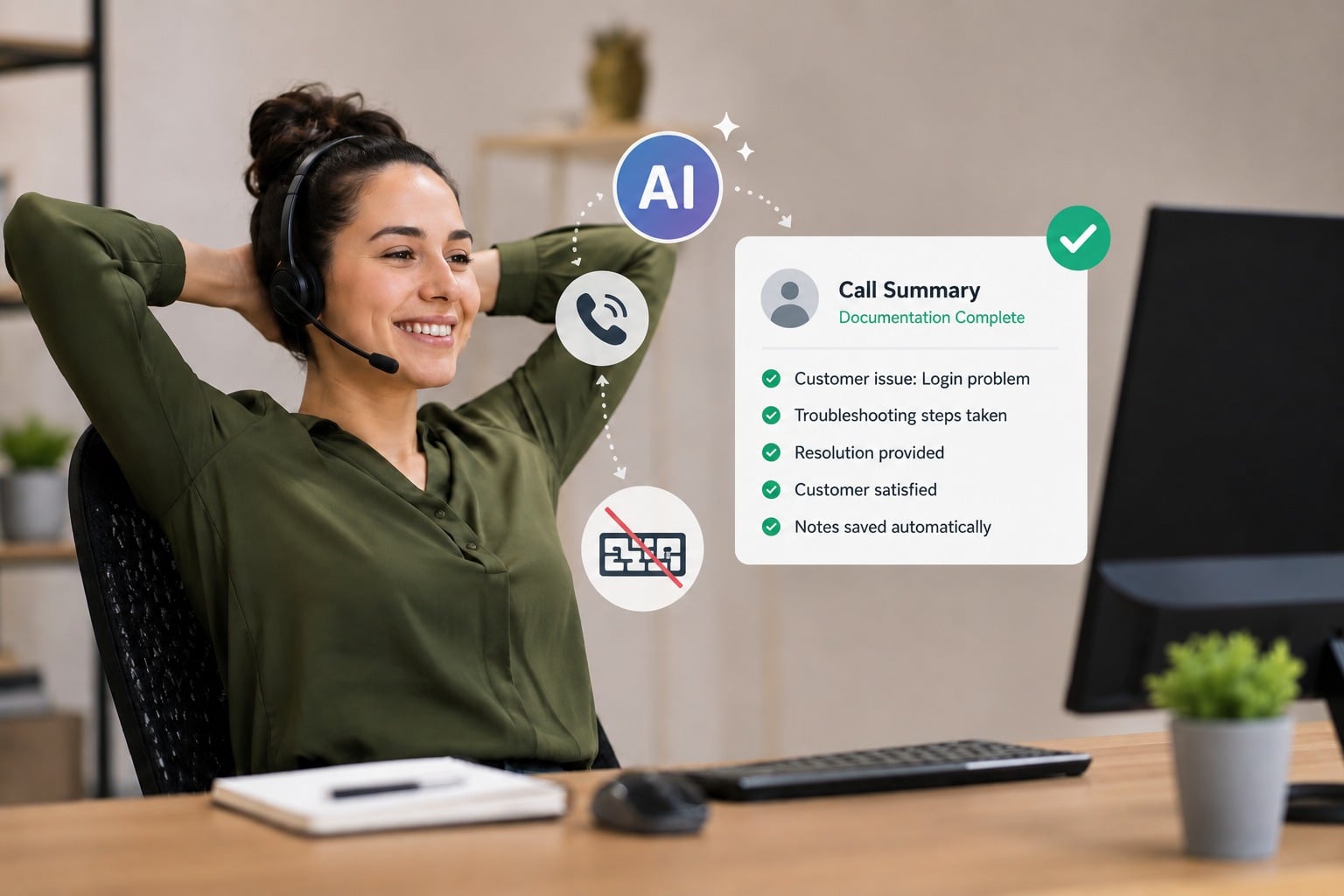
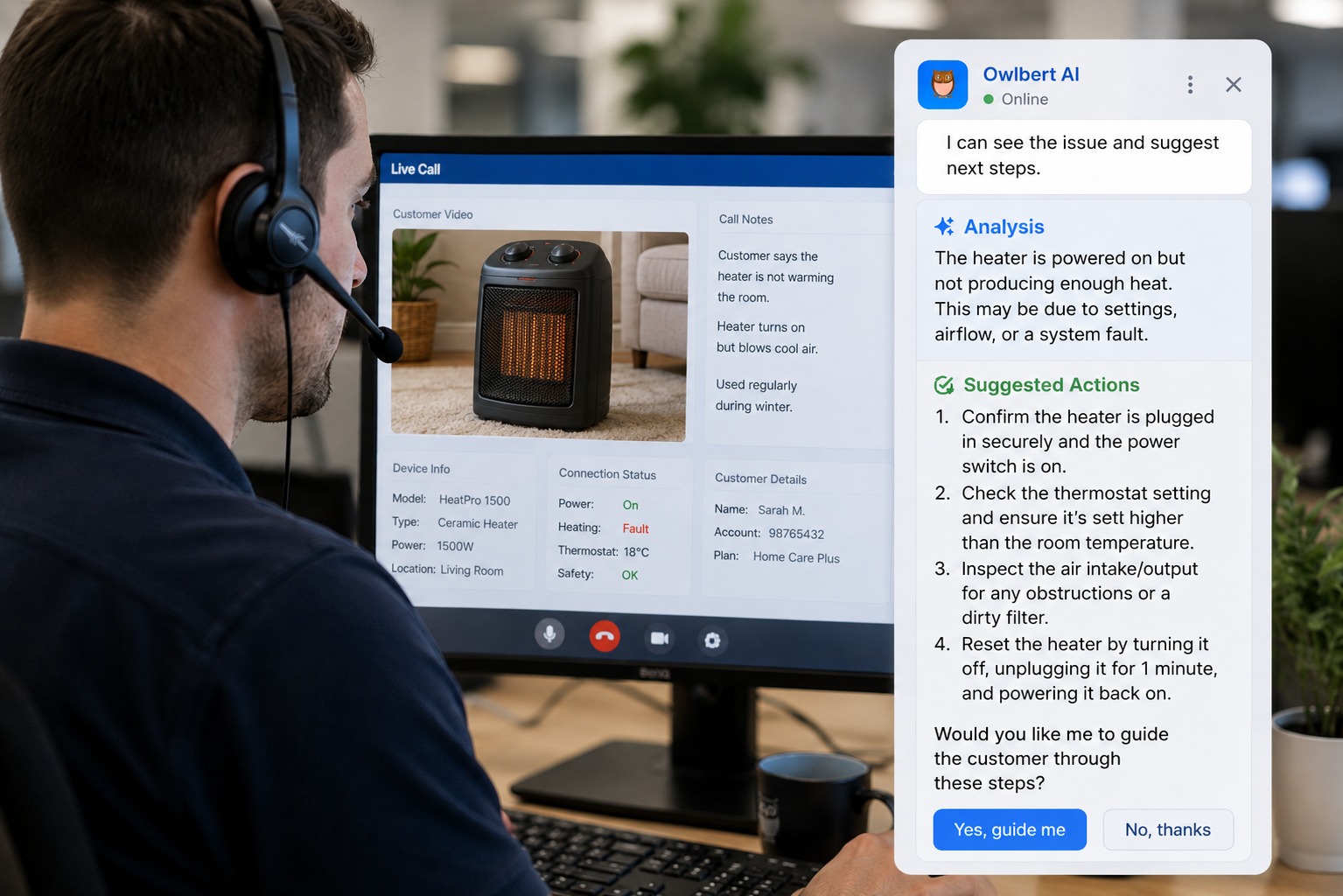
That's precisely the plain-language bar a field-facing AI tool needs to clear, and it's why Blitzz doesn't introduce its own AI to contractors as an "agent." Owlbert AI is built and described as an assistant — something that listens to what a technician is already saying out loud on a job and turns it into a structured checklist item or a clean call summary, in the moment, with the human still fully in control of the work. Nothing about how it's positioned suggests autonomous decision-making happening behind someone's back, because that's not what it's for, and that's not how the word "assistant" reads to the person using it.
That framing carries through in how Blitzz describes what Owlbert actually does day to day — turning a spoken description into documentation in real time, rather than working quietly in the background and reporting back later. It's also the same distinction that separates a tool built to help during the moment from one that simply records a call for someone to review afterward — and having visual context from the actual job, not just a transcript, is part of what makes that real-time help possible in the first place.
The Industry Isn't Consistent Either — Which Makes This Worse
Part of what makes this confusing for a crew is that the software industry itself hasn't settled on one usage. Plenty of legitimate products use "agent" the old-fashioned way — a human support agent, a field agent, a customer service agent — right alongside AI-specific features aimed at helping those same human agents work faster. Others use "agent assist" to describe tools that support a live human agent during a call, which is a completely different concept from an autonomous AI agent working independently — yet it uses the exact same headline word.
None of that is a mistake on any one company's part. It's just evidence that "agent" is doing double, sometimes triple duty across the industry right now, without a shared, universally understood definition. When even software companies aren't consistent with each other, it's unrealistic to expect a field crew to intuit the "correct" meaning on their own. The safer assumption is that they won't — and that whoever's rolling out the tool will end up doing the defining, one conversation at a time, unless they pick a clearer word from the start.
Putting This Into Practice
None of this requires changing what a tool actually does — only how you talk about it with the people who'll be using it day to day.
- Talking to your crew: Lead with "assistant." It's the word that reads as help, and it's the one that needs no follow-up explanation before someone will trust it.
- Talking to developers or software vendors: "Agent" is fine, and often the more accurate term, when the conversation is specifically about autonomous, tool-calling AI behavior rather than a feature that helps a person in the moment.
- Writing training materials or announcements: Describe what the tool helps someone do, before you reach for a label at all. "This listens to what you say and builds your checklist for you" tells a crew everything they need to know — the word "assistant" is just a shorthand for that idea, not a replacement for explaining it.
- When a customer or crew member asks "is this like hiring someone new?" — that question is your signal the wording didn't land. Answer it directly, and consider whether "assistant" would have prevented the question from coming up at all.
- Rolling this out for the first time? The same plain-language principle applies to onboarding, not just the label. If your team is setting up BlitzzCam for the first project, walk crews through what the assistant actually does for them in that first week — the checklist it builds, the summary it writes — rather than opening with a feature name and letting people fill in the blanks themselves.
A construction superintendent, a plumbing dispatcher, and an HVAC service manager are all solving the same underlying problem here: getting a crew to trust a new piece of software fast enough that it actually gets used. The same wording principle applies whether the crew is running remote video inspections on a jobsite or documenting a residential service call — lead with what helps, not with a label that needs defining.
Frequently Asked Questions
What's the actual difference between an AI agent and an AI assistant?
Technically, both terms can describe AI software, but they emphasize different things. "Assistant" emphasizes helping a person do their own work faster. "Agent," in its modern technical sense, emphasizes a system acting with some autonomy — making decisions and taking steps without a human directing each one. To a general audience, though, "agent" also still carries its older meaning of a human representative, which is where the confusion comes from.
Why does "AI agent" confuse people outside of tech?
Because the word had an established, human meaning long before AI adopted it. Someone without a technical background has no strong reason to override "agent means a person" with "agent means autonomous software" — both are legitimate readings of the same word, and most people default to the one they already know.
Should a field-service or construction company ever use the word "agent"?
It depends on the audience. In conversations with developers, IT teams, or software vendors about specific AI capabilities, "agent" can be the more precise term. In conversations with a field crew or customers, "assistant" almost always communicates the same underlying idea with far less risk of being misread.
Is this just a matter of preference, or does it actually affect adoption?
Language shapes first impressions, and first impressions shape whether someone trusts a new tool enough to actually try it. A crew that's quietly confused about what a tool is — software or person — is a crew that hesitates before using it. Choosing the word that avoids that hesitation costs nothing and removes a barrier that was never necessary in the first place.
The Word Is Free to Change — Today
This isn't a product change, a new purchase, or a process overhaul. It's a word swap, and it costs nothing to make. When you're introducing Owlbert AI or BlitzzCam to your team, lead with "assistant," describe what it actually does for the person using it, and save "agent" for the conversations where its technical meaning is genuinely the point. Your crew will understand what you're rolling out faster — and you'll spend a lot less time explaining who, exactly, you were talking about.

Blitzz Team
The Blitzz Team writes about remote video support, virtual inspections and field service. Our guides come from working with home builders, property managers, warranty teams, contact centers and field service organizations that use Blitzz to see and solve issues without a truck roll.