


On this page
A tenant sends a photo of black spots on a bedroom wall. The housing team logs the report and books a surveyor. Three weeks later, the surveyor arrives, finds mostly surface condensation, gives ventilation advice, and leaves. The visit took half a day, the tenant waited weeks for an answer, and the only record is a few handwritten notes and photos taken after the fact.
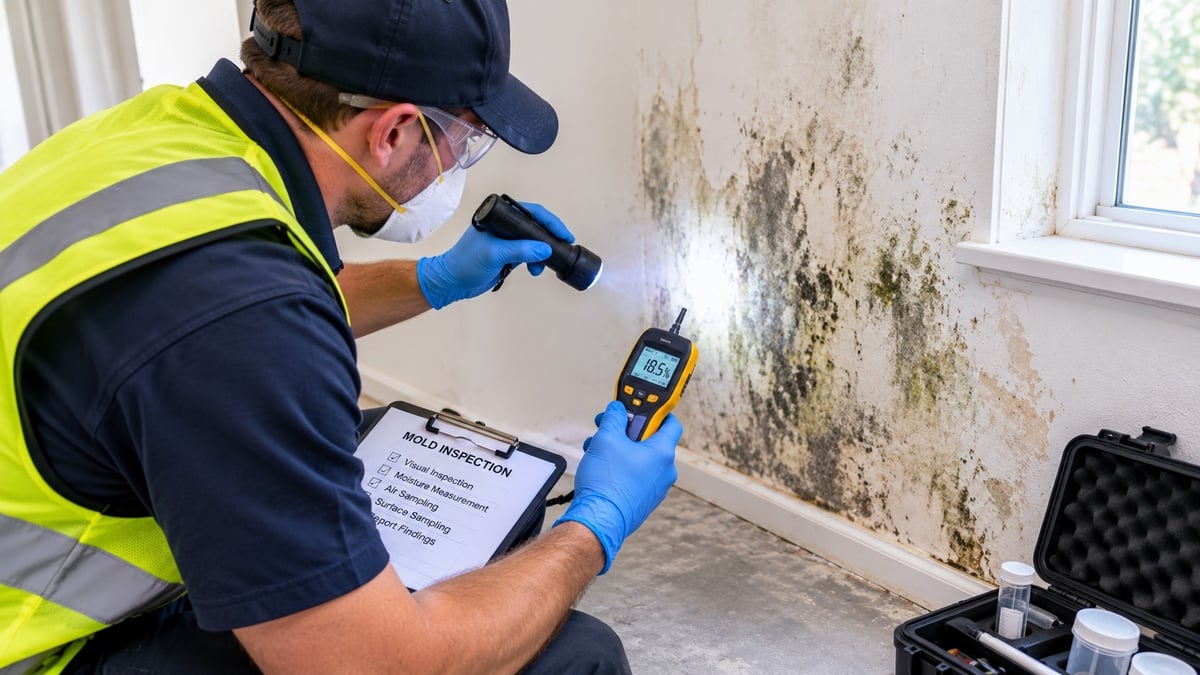
Mould inspections are among the most common and most scrutinised jobs in social housing. They are also a major source of avoidable surveyor visits. Reports arrive in large numbers, qualified surveyors are limited, and the pressure to respond quickly and keep clear records keeps growing. Teams need a way to see the problem sooner, decide the right next step, and prove what was reported and what was done.
Blitzz gives housing teams that first look. A short live video session with the tenant lets a surveyor or housing officer assess the situation, decide whether a visit is needed, and capture evidence in the same call. This article covers why mould inspections create so many truck rolls, how remote triage and documentation work in practice, and how to build a process that saves visits without cutting corners.
Why Mould Inspections Create So Many Truck Rolls
Mould reports usually begin with a description or a photo. The person deciding what happens next cannot judge the cause, the extent, or the urgency from that alone, so the safe default is to send a surveyor.
Common drivers include:
- Unclear causes. Mould can come from condensation, a leaking pipe, failed seals, a roof defect, or rising damp. Each needs a different response and a different trade.
- High report volumes. Seasonal spikes can overwhelm survey capacity, so urgent and routine cases compete for the same appointments.
- Limited surveyor availability. Qualified surveyors are scarce, and every unnecessary visit delays a case that genuinely needs one.
- Weak first information. Photos sent by tenants are often taken from a distance, in poor light, or of the wrong area.
- Repeat visits. A surveyor arrives, finds that a contractor, a plumber, or access equipment is needed, and has to come back.
- Complaints and escalation. Tenants who wait too long contact the landlord repeatedly, which creates more work and more pressure.
The pattern is the same as in other field service sectors: the expert cannot see the problem, so a person has to travel to look at it.
The Cost of Sending a Surveyor Blind
A surveyor visit costs more than mileage and a morning of a professional’s time. Blitzz’s guide to what a truck roll really costs covers vehicle expenses, technician time, scheduling overhead, and customer impact, and Blitzz’s own analysis puts a single unnecessary truck roll at up to $1,000 once every factor is counted.
For mould cases, the costs go further:
- Delayed action. A report that waits for a survey slot can worsen, which increases repair cost and tenant concern.
- Wasted capacity. Each routine visit that could have been triaged remotely uses time that complex cases need.
- Duplicate trips. One defect can generate a survey, a contractor visit, and a follow-up inspection.
- Poor records. When evidence is thin or scattered, it becomes hard to show what was seen, when, and what was decided.
The post on the real cost of a truck roll and how to avoid it includes a simple two-step framework for estimating your own exposure from your cost per visit and monthly volume.
How Blitzz Works for Mould Triage
Blitzz turns the first contact into a live assessment. The process takes minutes:
- A surveyor, housing officer, or repairs coordinator sends the tenant a secure link by text message, email, or WhatsApp.
- The tenant taps the link and joins live video from their phone browser. There is no app to download and no account to create.
- The surveyor asks the tenant to show the affected area, then the surrounding walls, ceiling, windows, extractor fans, and any pipework nearby.
- The surveyor zooms in on details, uses a live pointer or markup to direct attention, and asks questions as the tenant moves around.
- The surveyor captures time-stamped, geo-tagged images during the call and adds notes.
- The session record attaches to the case, so everything seen and decided stays together.
Blitzz Concierge provides live video, zoom, markup, and image capture, and Blitzz Inspect is built for remote inspections from any phone. Both include Owlbert AI, which supports session summaries and recognition so notes are produced faster. Blitzz’s remote video inspections for real estate and property management page describes how property teams run assessments with tenants, owners, and field personnel, and states that remote inspections can reduce inspection turnaround times by up to 60%.
What Triage Can Decide in One Call
A short live session helps the surveyor choose one of several outcomes, instead of defaulting to a visit.
Resolve with advice
Many cases involve condensation that can be managed with ventilation, heating, and moisture habits. The surveyor can see the room, check whether extractor fans and trickle vents are present and working, and give specific, practical advice while the tenant is still on the line. The advice is recorded in the case notes.
Raise a repair directly
If the video shows a clear fault, such as a failed window seal, a leaking waste pipe, or damaged sealant, the surveyor can raise the right repair immediately without a separate survey.
Send a specific trade
When the cause is clear but needs a specialist, such as a roofer or plumber, the surveyor can dispatch the right trade with accurate information and photos. The contractor arrives prepared, which supports first-time fix.
Book a full survey with the right preparation
For complex or unclear cases, the surveyor books a full inspection and knows what to bring: moisture meters, access equipment, or a second professional. The visit is shorter and more productive because the preliminary work is done.
Escalate urgent cases
If the video shows serious hazards, such as extensive growth, active water ingress, or vulnerable occupants affected, the surveyor can escalate and prioritise the case immediately instead of waiting in a queue.
Document Every Report, Automatically
Triage saves visits. Documentation protects the organisation and the tenant. Every remote session can create a record that captures:
- Time-stamped, geo-tagged images showing the condition as it was at the moment of the report
- Annotated images where the surveyor has marked specific areas of concern
- Session notes and summaries attached to the case
- Recordings and history per case, so any later review starts with what was actually seen
Blitzz’s Zendesk integration describes how session history per ticket includes recordings, files, and AI-generated call summaries, along with time-stamped images with GPS locations, image markup, and OCR. The same principle applies when sessions are launched from other case management or CRM tools. Browse the available integrations to see which fit your stack.
Good documentation helps in several ways:
- Clear audit trail. You can show when the report came in, when it was assessed, what was seen, and what was decided.
- Faster handovers. The next surveyor or contractor does not have to start from scratch.
- Consistent decisions. Teams can compare similar cases and train new staff on real examples.
- Better conversations. If a tenant questions an outcome, the evidence is there.
- Less admin. Notes and images are captured as the work happens instead of written up afterwards.
Blitzz’s guide to a home inspection for insurance checklist shows how structured video capture creates defensible documentation, including evidence of past water damage or mould growth, and the same approach carries over to housing.
What a Good Mould Triage Checklist Includes
Consistency is what makes documentation useful. A structured checklist, followed on every call, makes sure the same details are captured each time. A typical list might include:
- Location and room, including floor and orientation
- Extent of visible growth, shown with a reference object for scale
- Surrounding surfaces: walls, ceiling, window reveals, corners, and behind furniture
- Windows and seals, including condition and signs of condensation
- Ventilation: extractor fans, trickle vents, and whether they are in use
- Plumbing and potential leak sources nearby
- External factors visible from inside, such as gutters or roof lines where safe to view
- Heating arrangements and how the home is used day to day
- Presence of vulnerable occupants, where the tenant chooses to share it
- Immediate hazards, such as electrical fittings near water
Guided checklists also help Blitzz users record inspections methodically. Durango Turnkey Services, for example, uses checklist-guided video walkthroughs to modernise property turnovers across thousands of units, as described in the Durango case study.
Case Studies: Remote Inspection in Practice
These Blitzz customer stories show how property-related organisations use remote video to cut travel and speed up inspections. None is a housing association, but the workflow transfers directly: a report arrives, a professional looks live, a decision is made, and the right resource is sent.
Toscano Floor Designs manages work across multiple sites remotely with Blitzz. The case study reports more than four hours saved per site visit as the team cuts commutes by handling assessments over live video.
The City of Berkeley uses remote video to streamline inspections. The case study reports a 50% reduction in scheduling wait times, which means residents get answers sooner.
The City of San Mateo uses remote video for building inspections, and its case study reports a 90% user satisfaction rate, showing that remote inspection can be well received by the people on the other end of the call.
For more examples, visit the Blitzz customer stories page. Results vary by organisation, case type, and process, and remote triage works best as a first step rather than a full replacement for qualified on-site surveys.
Benefits Beyond Fewer Truck Rolls
Faster response. Tenants get someone looking at their problem within hours or days, not weeks. That matters for reassurance and for limiting damage.
Better use of surveyors. Qualified professionals focus on complex cases that need them.
Right trade, first time. Accurate triage means the correct contractor attends with the right equipment. The article on improving first-time fix rates with fewer truck rolls explains the principle.
Stronger tenant relationships. People feel heard when someone looks at their home quickly and explains the next step. That reduces repeat contacts and complaints.
More consistent practice. Checklists and recorded sessions make assessments more uniform across the team.
Easier training. Real session examples help new surveyors learn what to look for and how to explain it.
Lower emissions. Fewer unnecessary trips mean less fuel burned, which supports environmental commitments.
Where Video Cannot Replace a Surveyor
Remote triage has limits. A phone camera cannot take moisture readings, thermal images, core samples, or structural measurements. It cannot show what is behind a wall or beneath flooring. Serious hazards, cases that need formal inspection by a qualified person, and any situation where a regulation or your own policy requires an on-site assessment still need a surveyor in the property.
Tenants should also always have the option of an in-person visit. Accessibility, language, confidence with technology, and personal preference all affect whether video is the right first step for a given household.
The goal is not to remove surveyors. It is to make sure each visit has a clear purpose, the right equipment, and good background information.
How to Roll Out Remote Mould Triage
1. Start with your highest-volume report types. Review recent mould and damp reports and surveyor bookings. Identify the cases that most often end with advice, minor repairs, or a repeat visit.
2. Define triage outcomes. Agree what happens in each case: advice, direct repair, specific trade, full survey, or urgent escalation. Put safety and vulnerable occupants at the top of the list.
3. Offer video as the first response. Contact the tenant promptly and offer a video session, with an in-person option always available.
4. Build a checklist. Create a standard sequence of areas to view and details to capture, so every record is complete.
5. Train staff. Cover how to guide the tenant, keep the conversation reassuring, capture useful images, and recognise when a case needs an early visit.
6. Connect to your case system. Launch sessions from the platform your team already uses so images and notes attach to the right case.
7. Measure results. Track visits avoided, time to first assessment, first-time fix rate, repeat contacts, and tenant satisfaction. Review which case types resolve well by video and which need an early visit.
For further reading, the guide on how inspection companies should use remote video support and the article on the biggest bottlenecks in property inspections are useful companions. Remote video inspection for commercial and residential buildings and what a virtual property inspection is cover the wider context.
Look First, Record Everything, Send the Right Person
Mould inspections will always need skilled people on site for the cases that call for them. But not every report needs a surveyor in the first week, and every report deserves a clear record. When teams look first, many cases are resolved with advice, routed to the right trade, or scoped properly before anyone drives out. And when every session leaves behind images, notes, and recordings, the organisation can show what was seen and what was done.
The result is faster response for tenants, better use of scarce surveyors, fewer repeat trips, and records you can rely on.
To see how it could work for your team, explore Blitzz Concierge, review the remote video inspections for real estate page, browse the full list of features, or read more guides on the Blitzz blog. When you are ready, book a demo.

Blitzz Team
The Blitzz Team writes about remote video support, virtual inspections and field service. Our guides come from working with home builders, property managers, warranty teams, contact centers and field service organizations that use Blitzz to see and solve issues without a truck roll.