
.png?width=120&height=55&name=Blitzz-Logo-right%20white%20eyes%20-%20not%20transparent%20(3).png)
The Real Cost of Sending a Truck When You Could Send a Signal

An enterprise remote diagnostics platform is software that lets your team monitor, diagnose, and often fix equipment problems from anywhere — without rolling a truck or dispatching a technician on-site.
If you're evaluating platforms right now, here's a quick comparison of the top options covered in this guide:
| Platform Type / Focus | Best For | Key Strength |
|---|---|---|
| Visual & Field Service (e.g., Blitzz) | Telecom, utilities, equipment maintenance | AR-powered live video, browser-based access, workflow integration |
| IT/OT Enterprise Access | Remote server & infrastructure management | Zero-trust security, IAM integration, remote desktop control |
| Industrial & Manufacturing OEM | Factory floor machines, PLCs, robotic arms | Machine-level segmentation, CMMS/ERP API integrations |
| Healthcare & Medical Devices | Diagnostic imaging, lab equipment | HIPAA compliance, strict PHI protection controls |
| Automotive & Fleet Telematics | Connected vehicles, fleet operations | Over-the-air (OTA) updates, workshop diagnostics |
If you manage field operations for a telecom or utility company, you already know the pain: a customer reports an outage, a tech drives two hours, and the fix takes fifteen minutes. Or worse — they arrive and can't fix it at all.
That pattern is expensive. And it's increasingly unnecessary.
The global remote diagnostics services market hit $24.7 billion in 2024 and is on track to reach $75.4 billion by 2033 — growing at 14.2% annually. That growth isn't hype. It reflects real operational pressure across industries to cut truck rolls, reduce mean time to resolution (MTTR), and fix more issues on the first contact.
Fleet operators using predictive remote diagnostics report 10–18% improvements in vehicle uptime and 6–9% reductions in maintenance costs compared to reactive or scheduled servicing. Manufacturers have cut on-site service visits by as much as 80%, saving millions annually in travel alone.
The right platform makes that possible. The wrong one — or no platform at all — keeps your costs high and your customers frustrated.
This guide breaks down the leading enterprise remote diagnostics platforms, what they do well, and how to choose the right fit for your operations.
Defining the Enterprise Remote Diagnostics Platform
To understand what an enterprise remote diagnostics platform actually is, we have to look at what it replaces.
Traditionally, diagnostics meant physical proximity. If a telecom hub went dark, an industrial chiller started vibrating, or a medical imaging system threw an error, a specialist had to physically stand in front of the machine. They would plug in proprietary scan tools, open the chassis with a screwdriver, and manually measure voltages or read localized error logs. This process was slow, highly dependent on the individual technician's memory, and completely reactive.
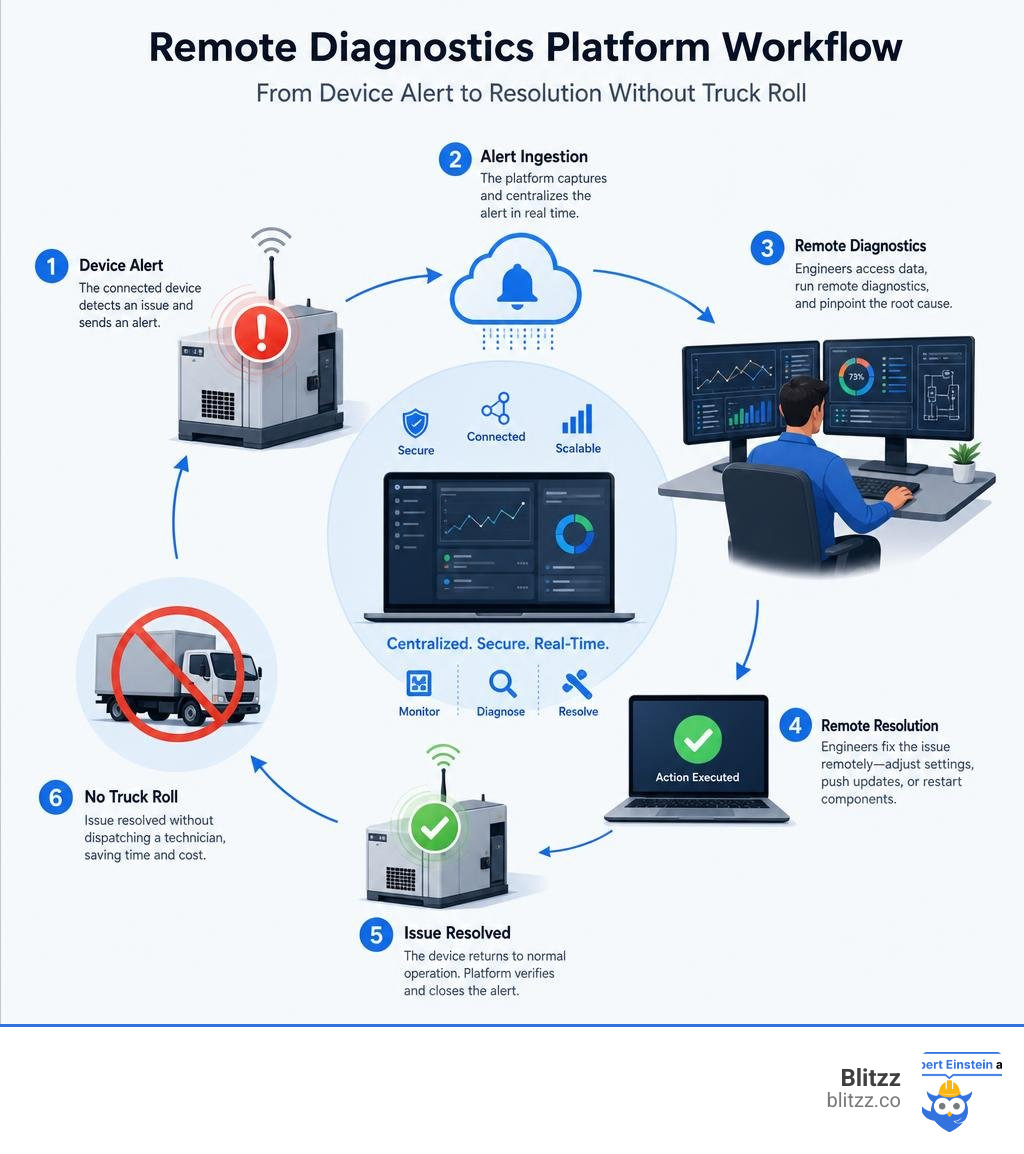
An enterprise remote diagnostics platform shifts this dynamic entirely. By combining IoT connectivity, edge computing, cloud-based deployment, and live visual streaming, these platforms pull real-time data from the asset directly into a centralized dashboard.

Instead of waiting for a physical inspection, support teams can instantly pull error codes, review historical performance logs, and even look at the physical device through a high-definition video feed. By routing this data through cloud-based environments, any authorized expert in your global network can diagnose the issue, regardless of where the physical hardware is located.
Core Capabilities of an Enterprise Remote Diagnostics Platform
An enterprise-grade platform is more than just a remote screen-sharing tool. To support complex operations, it must bundle several core technical capabilities:
- Real-Time Telemetry & Monitoring: Continuous data streaming of critical performance parameters (such as temperature, voltage, pressure, or bandwidth) directly from the device to the cloud.
- Predictive Analytics: Machine learning models that analyze telemetry trends to identify anomalies and predict component failures before they occur.
- Secure Remote Access & Control: The ability to safely log into the device, run scripts, execute test sequences, or change configurations without compromising network security.
- Compliance and Audit Trails: Automated logging of every session, keystroke, and visual inspection to satisfy strict regulatory requirements.
For organizations that support a mix of physical hardware and human operators, integrating these telemetry feeds with visual support is critical. When software logs alone cannot explain a hardware failure, having the right Remote Support Service Tools ensures that your back-office engineers can see exactly what the on-site operator sees.
How Modern Platforms Differ from Traditional On-Site Troubleshooting
The operational difference between modern remote platforms and traditional on-site troubleshooting comes down to three key metrics: truck rolls, mean time to resolution (MTTR), and first-time fix rates.
When an organization relies on traditional troubleshooting, the workflow is inherently fragmented. A customer calls with an issue, a dispatcher schedules a technician, and the technician drives to the site (the "truck roll"). If the technician doesn't have the right part or needs to consult a senior engineer, they have to schedule a second visit. This drives up MTTR and tanks the first-time fix rate.
With a modern remote platform, we turn this workflow on its head:
- Pre-Diagnostic Triage: Before anyone climbs into a vehicle, engineers pull remote diagnostics to pinpoint the exact failure mode.
- Virtual Resolution: If the issue is software-related, a configuration error, or a simple physical adjustment, the expert guides the customer or a junior technician through the fix remotely.
- Optimized Dispatches: If an on-site visit is truly necessary, the technician arrives with the exact replacement part and step-by-step instructions already in hand.
By using the Best Remote Support Tools, enterprises can resolve a significant portion of their service tickets without ever sending a truck, cutting travel costs and dramatically improving customer satisfaction.
Key Industries and Use Cases Driving Adoption
While remote diagnostics can benefit almost any organization, certain sectors see immediate, high-value returns because of the sheer cost of their asset downtime.
Automotive and Connected Vehicle Fleet Diagnostics
The automotive industry is in the middle of a massive shift toward software-defined vehicles (SDVs). The global automotive remote diagnostics market was valued at USD 17.86 billion in 2025 and is projected to reach USD 55.00 billion by 2034, growing at a CAGR of 12.92%. Europe currently leads this space with a 34.8% market share, heavily supported by strict emission regulations and advanced OEM telematics.
Modern fleet operators use remote diagnostics to monitor everything from battery state-of-health in electric vehicles (EVs) to advanced driver-assistance systems (ADAS) calibration. With 4G LTE holding a 48.7% share of connectivity in 2025, and 5G rapidly expanding, platforms can stream live telemetry while vehicles are actively on the road.
To manage these complex systems, OEMs and fleets rely on specialized diagnostic architectures:
- Over-the-Air (OTA) & Workshop Integration: Modern solutions bridge the gap between engineering and aftersales by combining workshop diagnostics with OTA software updates. These systems support compliance standards like UNECE R156 for software update campaigns and allow independent workshops secure, role-based access.
- Standardized Diagnostic Interfaces: Built on open standards like the ASAM SOVD REST API, unified interfaces enable seamless vehicle diagnostics, updates, and test sequences across onboard, proximity, and remote environments. This standardized approach dramatically reduces supplier integration time and repeat repair visits.
Industrial Equipment and Smart Manufacturing (OT)
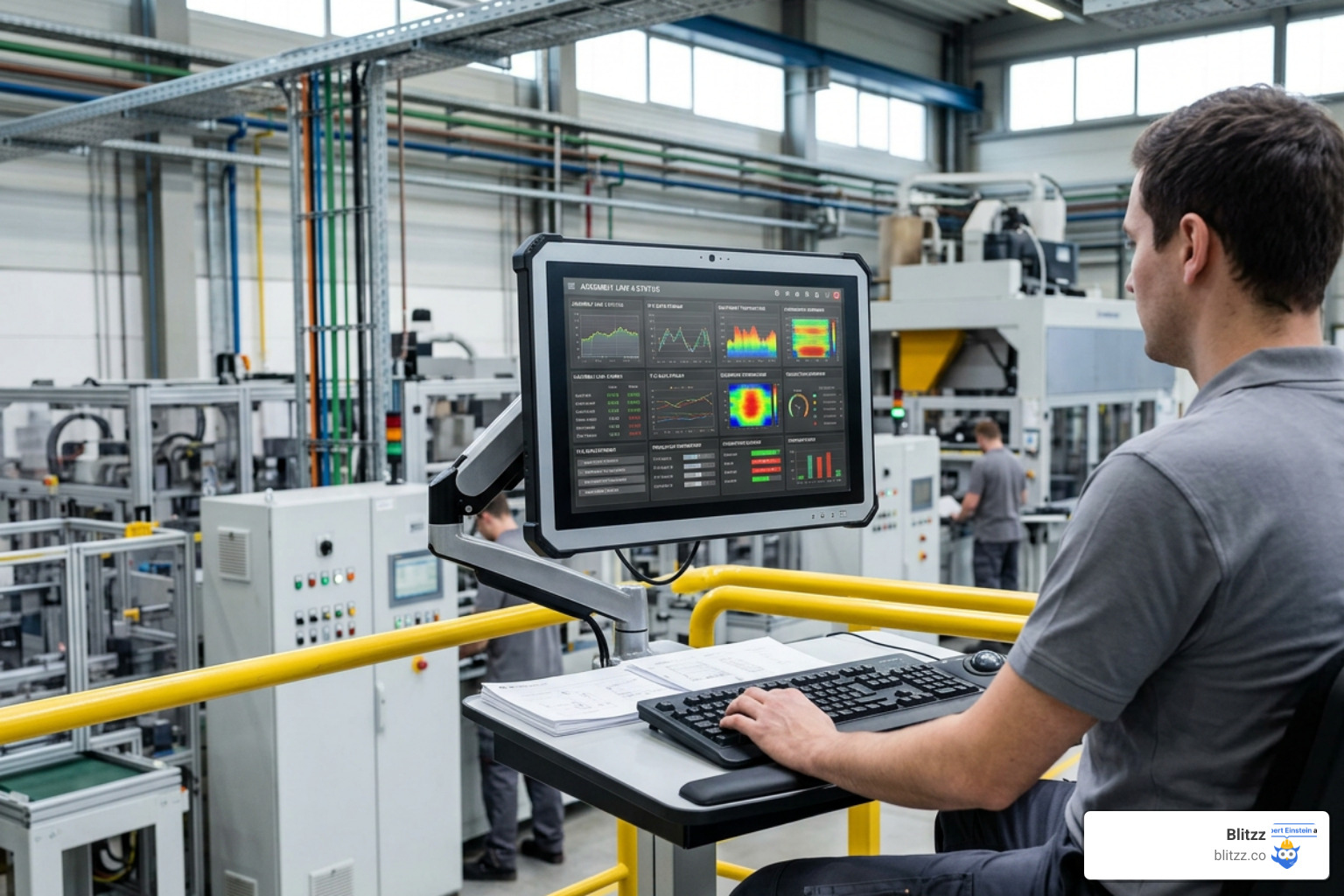
On the factory floor, a single hour of unplanned downtime can cost a manufacturer hundreds of thousands of dollars. As industrial facilities embrace Industry 4.0, they are connecting programmable logic controllers (PLCs), human-machine interfaces (HMIs), and robotic arms to remote diagnostics platforms.
This setup allows remote engineers to troubleshoot complex automation systems without stepping foot in the facility. For example, advanced industrial monitoring systems use dedicated hardware gateways capable of logging up to 250,000 tags per second. If a drive trips or a marine vessel experiences a power blackout, the system automatically captures a high-resolution snapshot of the event and alerts a 24/7 support team, allowing engineers to troubleshoot the issue immediately without needing to be physically present.
HVAC and Building Automation Systems
Commercial buildings use massive, highly complex HVAC systems that require constant tuning to maintain energy efficiency and comfort. Remote diagnostics platforms allow OEMs and property managers to monitor these systems continuously.
Cloud-based solutions designed specifically for HVAC OEMs transform equipment data into actionable intelligence. This allows service teams to optimize system performance, run remote health checks, and resolve comfort complaints before occupants even notice a temperature change.
Technical Architecture, Integration, and Strategic ROI
Successfully deploying an enterprise remote diagnostics platform requires a clear understanding of how the software fits into your existing technology stack.
One of the first decisions you will face is choosing between a cloud-native or on-premises deployment. While cloud deployments are rapidly gaining preference due to lower capital expenditure and linear scalability, some highly regulated industries still require on-premises infrastructure.
| Feature | Cloud-Based Deployment | On-Premises Deployment |
|---|---|---|
| Scalability | Instant, elastic scaling for millions of devices | Limited by physical server capacity |
| Upfront Cost | Low (SaaS subscription model) | High (hardware purchases + licensing) |
| Maintenance | Managed entirely by the platform vendor | Managed by internal IT staff |
| Data Sovereignty | Relies on cloud provider region configurations | Complete local control over physical data |
| Integration | Standard RESTful APIs and webhooks | Custom database connectors and local middleware |
Integrating an Enterprise Remote Diagnostics Platform with Legacy IT/OT Systems
The reality of enterprise operations is that you are rarely working with a clean slate. Your remote diagnostics platform must play nice with legacy PLCs, proprietary databases, and existing software like Computerized Maintenance Management Systems (CMMS) and Enterprise Resource Planning (ERP) platforms.
To bridge this gap, modern platforms use API gateways and edge connectivity modules. For example, modern industrial platforms use secure edge gateways to translate local machine protocols into secure, outbound-only HTTPS traffic. By avoiding inbound firewall ports entirely, these platforms protect the local OT network from external intrusion while streaming data directly into ERP and CMMS platforms for automatic work-order generation.
Security, Data Privacy, and Regulatory Compliance
When you are streaming sensitive diagnostic data, machine logs, or live video feeds from an enterprise environment, security cannot be an afterthought. This is especially true in healthcare (governed by HIPAA) and automotive manufacturing (governed by cybersecurity standards like UNECE R155 and R156).
Leading platforms secure their environments through several key mechanisms:
- Zero-Trust Network Access (ZTNA): Unlike traditional VPNs that grant broad network access, zero-trust architectures authenticate users at the individual device level.
- End-to-End Encryption: Session data must be encrypted using robust protocols (such as RSA-4096 and AES-256) to prevent interception.
- Role-Based Access Control (RBAC): Restricting actions (such as viewing data vs. writing configuration changes) based on verified user profiles.
For BPO and customer-facing support environments, security requirements are even more granular. To understand how to evaluate these controls during your purchasing process, check out The Enterprise Buyers Checklist for Remote Support Tools in BPO Environments.
Shifting from Reactive to Predictive Maintenance Models
Most organizations start their service journeys in a reactive model: something breaks, and they fix it. Some mature to a scheduled model, servicing equipment based on calendar time or operational hours. But both models are inefficient. Reactive maintenance causes expensive emergency downtime, while scheduled maintenance often replaces perfectly good parts prematurely.
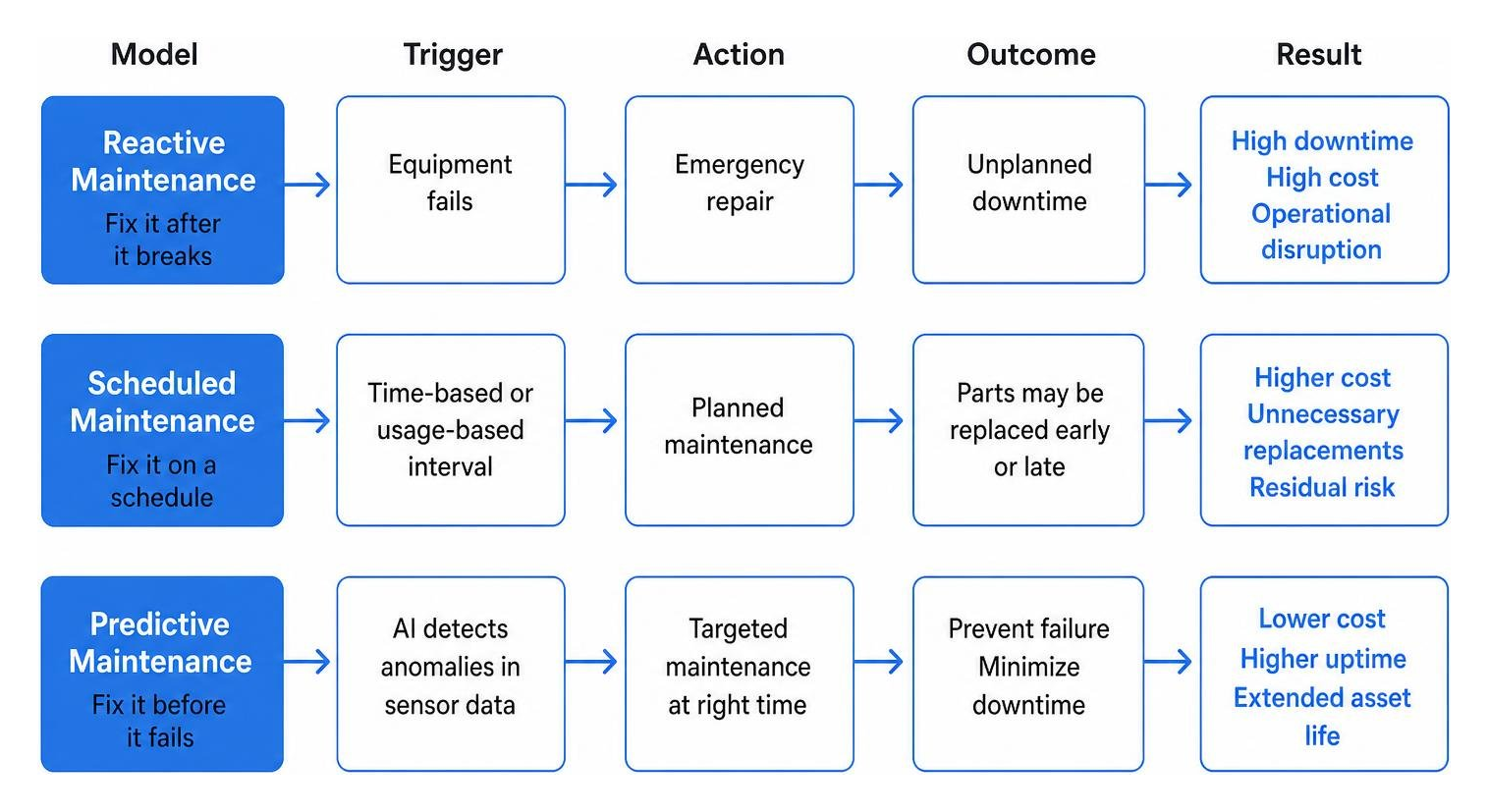
An enterprise remote diagnostics platform enables the gold standard: predictive maintenance. By using machine learning models to analyze continuous streams of IoT sensor data, the platform identifies subtle anomalies — like a tiny increase in motor vibration or a slow drift in temperature — that signal an impending failure.
When software indicators aren't enough to diagnose a physical wear issue, pairing your telemetry with Remote Visual Support Software allows off-site specialists to visually inspect physical components, run guided test scripts, and order the correct replacement parts before the machine actually breaks down.
Key Performance Indicators to Track Deployment Success
To justify your investment in a remote diagnostics platform, you must track clear, quantifiable business outcomes. We recommend focusing on four primary KPIs:
- Truck Roll Reduction Rate: The percentage of service requests resolved entirely through remote intervention.
- First-Time Fix Rate (FTFR): When an on-site visit is required, how often is the issue resolved on the very first visit?
- Mean Time to Resolution (MTTR): The average time elapsed from when an issue is reported to when it is fully resolved.
- Asset Uptime / Availability: The percentage of time your critical machinery or fleet is fully operational.
To see how these metrics translate directly to bottom-line savings and operational excellence, explore our philosophy on Why Blitzz is built from the ground up to optimize these exact field service workflows.
Frequently Asked Questions about Remote Diagnostics
How does a remote diagnostics platform differ from a traditional VPN?
A traditional VPN (Virtual Private Network) connects a remote user directly to an entire corporate or industrial network, granting them an IP address on that network. This creates a massive security risk: if the user's laptop is compromised, the entire network is exposed.
In contrast, a modern remote diagnostics platform uses a zero-trust architecture. It establishes secure, outbound-only connections from the individual machine to a secure cloud gateway. Remote users authenticate through the gateway and are granted access only to the specific device or PLC they need to troubleshoot, with no exposure to the broader corporate network.
What security measures protect sensitive diagnostic data and patient privacy?
Enterprise platforms protect sensitive data using a multi-layered security framework:
- Data Encryption: All data is encrypted in transit using TLS 1.3 and at rest using AES-256 encryption.
- No PHI/PII Transmission: In industries like healthcare, platforms are designed to transmit machine performance data and error codes without sending any Protected Health Information (PHI) or Personally Identifiable Information (PII).
- Multi-Level Approvals: Physical switches or on-screen prompts often require a local operator to manually approve a remote technician's request to change settings or view a live camera feed.
- Complete Auditing: Every session, file transfer, and remote command is logged in an unalterable audit trail for compliance verification.
How do remote diagnostics support predictive maintenance over reactive models?
Reactive models rely on physical failures to trigger action. Remote diagnostics support predictive maintenance by continuously collecting telemetry from IoT sensors embedded in the machinery.
Machine learning algorithms analyze this historical and real-time data to establish a "normal" baseline. When the system detects a deviation from this baseline—such as a subtle spike in power consumption or a thermal anomaly—it flags the issue immediately. This allows your team to schedule a targeted maintenance window to replace the failing component before it causes an unplanned operational shutdown.
Conclusion
The pressure on enterprise operations to maximize uptime while controlling service costs has never been higher. Relying on traditional, physical-first troubleshooting models is no longer a viable strategy in a hyper-competitive, connected world.
Adopting an enterprise remote diagnostics platform allows your organization to resolve issues faster, protect critical assets, and transform your field operations from a costly, reactive headache into a streamlined, predictive competitive advantage.
If you are ready to eliminate unnecessary truck rolls and empower your team with instant, browser-based visual diagnostics, discover how we can help your operations at Blitzz Remote Inspection Software.