
.png?width=120&height=55&name=Blitzz-Logo-right%20white%20eyes%20-%20not%20transparent%20(3).png)
Why Insurance Inspection Workflow Software Is Now a Business Necessity
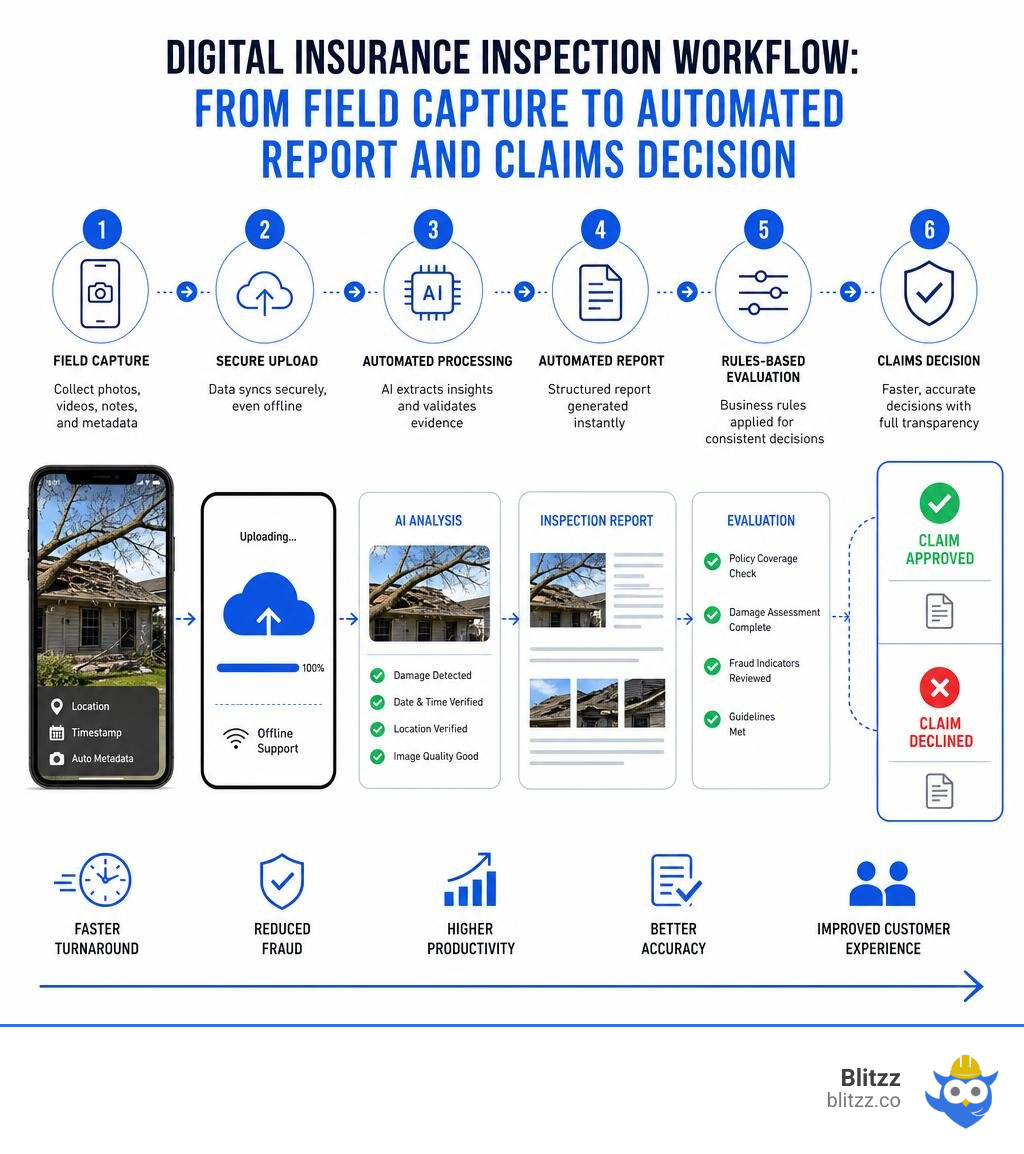
Insurance inspection workflow software connects mobile field capture, automated documentation, and rules-based case management into a single process — replacing the slow, paper-heavy systems that still dominate most carriers today.
If you want the short answer on what it does:
| What It Does | Why It Matters |
|---|---|
| Digitizes field data capture | No more lost paper forms or manual re-entry |
| Automates report generation | Adjusters stop wasting hours in Word and Excel |
| Validates evidence at point of capture | Metadata, location, and timestamps prevent fraud |
| Supports offline data collection | Field teams work uninterrupted in remote or disaster zones |
| Integrates with claims management systems | No data silos, no double handling |
| Enables remote visual inspections | Adjusters handle more claims without traveling |
The numbers tell a clear story. Adjusters under traditional workflows spend an average of 5 hours per day in their cars just to visit 2-3 customers. Remote video inspection technology can push that capacity to 10-12 claims per day. Meanwhile, autonomous drone imagery has been shown to reduce adjuster review time by 33%, and AI-driven survey tools can save 15-45 minutes per survey.
Yet most carriers are still scheduling site visits days out, relying on inconsistent photo emails, and manually formatting reports after the fact. The gap between what's possible and what's standard practice is significant.
That gap is exactly what modern inspection workflow software is designed to close.
Insurance inspection workflow software helpful reading:
- construction remote diagnostics platform
- enterprise remote collaboration suite
- remote service desk platform
Understanding Modern Insurance Inspection Workflow Software
Historically, insurance inspections have been a logistical headache. To assess a property risk or verify a claim, a carrier had to coordinate schedules, dispatch a field adjuster, wait for them to drive to the site, take photos with a digital camera, scribble down notes on a clipboard, drive back, and spend hours manually compiling everything into a PDF report.
This manual approach introduces massive bottlenecks:
- High Travel Expenses: Driving to remote locations consumes valuable time and fuel.
- Inconsistent Documentation: Different adjusters capture different details, leading to gaps in underwriting or claims files.
- Delayed Decision-Making: Reports can take days or weeks to reach the desk of an underwriter or claims manager.
- Vulnerability to Fraud: Standard photos sent via email lack verifiable metadata, leaving the door open to tampered evidence.
Modern insurance inspection workflow software completely redefines this process. It digitizes the entire inspection lifecycle—from intake and scheduling to field execution, evidence validation, and final report generation. By transitioning to a digital workflow, carriers can drastically improve claims cycle times and boost adjuster productivity.
How do these methods stack up? Let's look at a head-to-head comparison:
| Feature | Traditional Manual Inspections | Digital Inspection Workflow Software |
|---|---|---|
| Inspection Capacity | 2 to 3 site visits per day | 10 to 12 remote assessments per day |
| Report Turnaround | Days or weeks of manual compiling | Minutes via automated PDF generation |
| Data Integrity | Easily manipulated unverified photos | Cryptographic metadata validation (time, location, device) |
| Connectivity Dependency | Work stops or relies on paper notes | Offline local caching with automatic cloud sync |
| Customer Experience | Frustrating scheduling delays | Rapid, guided self-service or live video calls |
As we navigate through 2026, the shift toward remote and automated inspections is accelerating. To understand how these changes are shaping the industry, see our detailed breakdown on How Insurance Inspections Changed This Year and What It Means for 2026.
Key Technologies Powering Modern Inspection Platforms
The rapid evolution of insurance inspection workflow software is driven by a technological convergence. By combining cloud processing, spatial data, and mobile-first operations, modern platforms turn what used to be a subjective guessing game into an objective science.
AI-Driven Automation in Insurance Inspection Workflow Software
Artificial Intelligence is no longer a futuristic concept; it is the engine of modern workflows. Generative AI and advanced machine learning models significantly reduce the manual effort required from field teams and desk adjusters alike.
- Automated Form Filling: Instead of manually typing out property details, surveyors can take a photo of an asset (like a water heater or electrical panel). The AI automatically extracts serial numbers, models, and conditions, instantly populating the digital checklist.
- Computer Vision and Image Analysis: AI models trained on billions of observational data points can analyze photos in real time. They can identify specific damage types, such as hail impacts on shingles or water stains on drywall, and flag them for closer review.
- AI Voice-to-Text: Inspectors can speak their observations out loud while navigating a loss site. The AI transcribes the audio in real time, converting unstructured speech into structured data fields within the inspection report.
- Automated Risk Scoring: By comparing captured photos against historical databases, AI can instantly calculate a risk or damage severity score, helping underwriters make faster binding decisions.
To dive deeper into how artificial intelligence is reshaping claims, read about The Future of Insurance Claims AI Visual Inspection.
Drones, LiDAR, and 3D Digital Twins
For exterior and complex property assessments, physical measurements are being replaced by high-fidelity spatial data.

- Autonomous Drones: Traditional drone flights required highly skilled pilots. Today, autonomous drones can capture over 90% of a roof area at pre-programmed flight distances. This ensures consistent, high-resolution imagery that machine learning algorithms can easily scan for wind or hail damage.
- LiDAR Scanners: Modern consumer-grade smartphones now come equipped with LiDAR scanners. Field adjusters can use these to map indoor environments with millimeter-level accuracy, capturing millions of data points in seconds.
- 3D Digital Twins: By processing LiDAR and high-resolution photo data, software can generate 3D digital twins of properties. These models allow desk adjusters to virtually walk through a loss site, take accurate digital measurements, and even verify if claimed items were physically present prior to a loss.
Mobile Apps and Remote Visual Inspection Tools
At the ground level, mobile inspection apps and Remote Visual Inspection (RVI) tools are the primary touchpoints for field adjusters and policyholders.
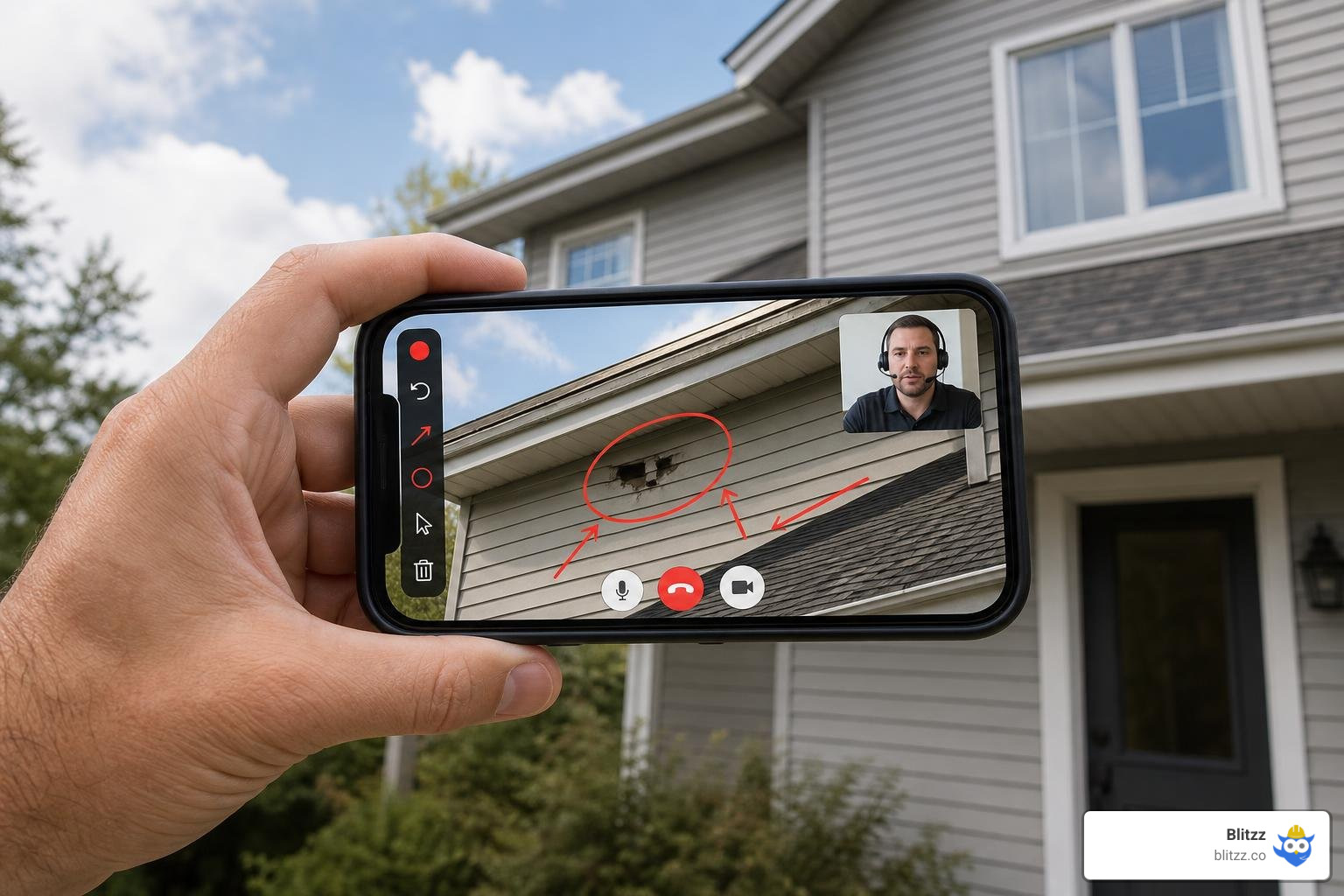
Rather than forcing policyholders to download a heavy, specialized application, we focus on browser-based video support. With a simple SMS link, a policyholder can launch a secure, high-definition video call directly in their mobile browser.
During these live video sessions, remote adjusters can use interactive tools to guide the user:
- AR Annotations: Draw arrows or circle specific areas of damage directly on the live video feed.
- Remote Camera Control: Zoom in, adjust exposure, or turn on the policyholder's smartphone flashlight remotely to capture clear evidence.
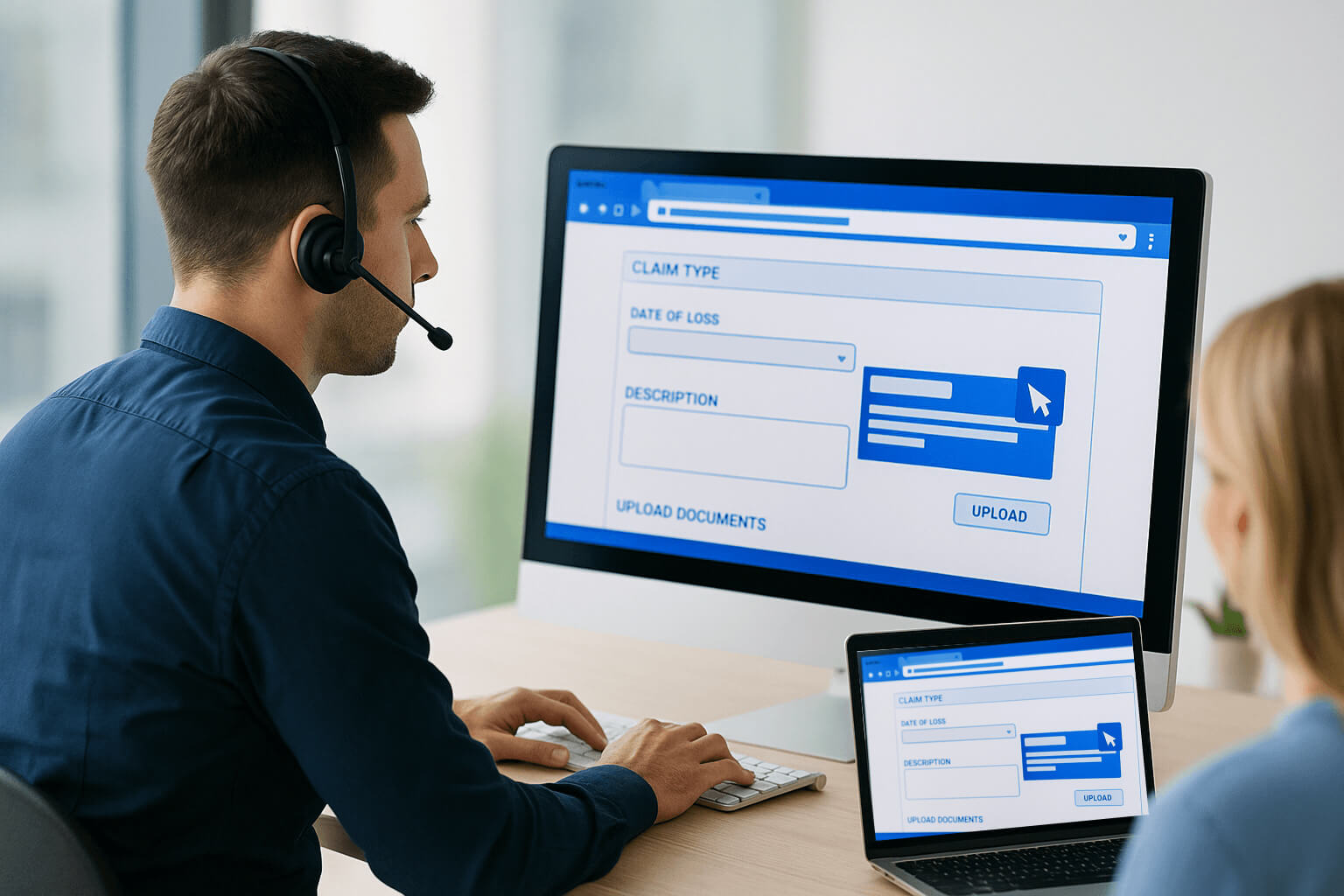
- Co-browsing: Guide policyholders through digital forms in real time to ensure they fill out critical information correctly.
For a complete breakdown of how to leverage these tools, check out our Remote Visual Inspection Complete Guide.
Optimizing Claims Workflows Across Different Inspection Types
Not all insurance lines are created equal. A commercial property risk survey requires a vastly different approach than a minor auto collision claim. The best insurance inspection workflow software adapts to these varying demands while maintaining standard field-to-desk handoffs.
Property Risk Surveys and Loss Control
In property underwriting and loss control, the goal is to identify hazards before they turn into expensive claims. Inspectors need to evaluate commercial and residential properties consistently, mapping critical systems and routing recommendations.
Using standardized, peril-specific digital templates, surveyors can run property and loss-control visits with zero paperwork. For specialized operations, such as fire safety, integrating tools like InspectOps - Fire Protection Inspection Management helps guarantee compliance with strict NFPA standards.
Once a hazard (like an outdated electrical panel) is flagged, the software can automatically route loss-control recommendations to the policyholder, tracking corrective actions with photo verification before renewal pricing is finalized.
To see what the future holds for this segment, read our predictions on Home Inspection Predictions for Insurance Companies: What 2026 and Beyond Will Look Like.
Motor and Specialty Line Inspections
For auto and specialty lines, speed is the name of the game. Minor claims like windshield cracks, bumper scrapes, or simple auto warranty verifications don't justify the cost of dispatching a physical adjuster.
By utilizing remote video inspections, claims handlers can triage auto damage in minutes. A live visual session allows the adjuster to verify the vehicle's VIN, document the odometer reading, and inspect the panels in real time. This rapid triage helps separate minor claims that can be settled immediately from complex losses that require a physical shop inspection.
Learn more about optimizing your automotive workflows with our guide on Smarter Auto Claims Management for Today's Insurers.
Choosing All-in-One Platforms vs. Specialized Insurance Inspection Workflow Software
When modernizing your tech stack, you will face a critical decision: should you adopt an all-in-one platform or build a suite of specialized tools?
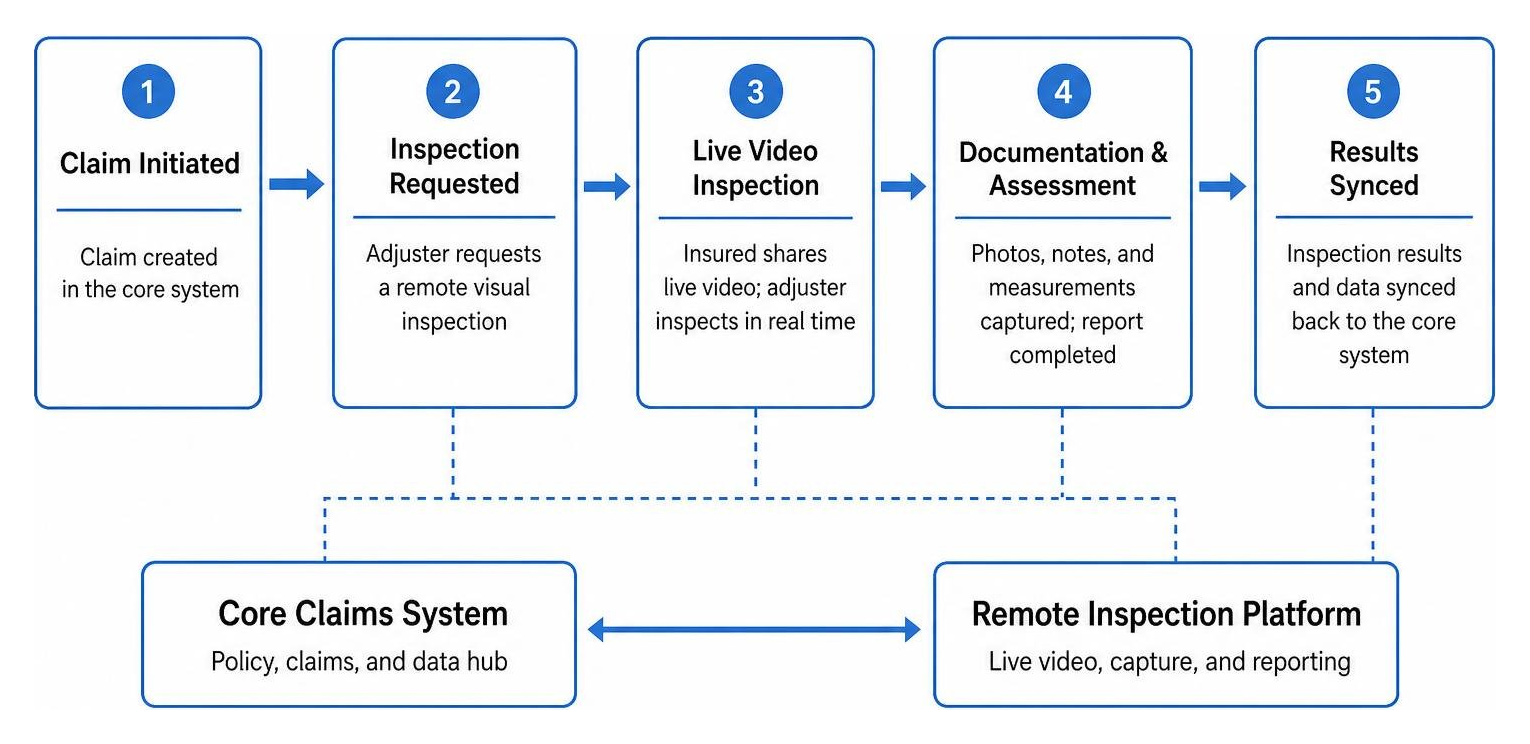
- All-in-One Platforms: These systems attempt to handle everything from scheduling to estimating. While convenient, they can be highly rigid, configuration-heavy, and expensive to customize.
- Specialized, API-First Tools: By choosing best-of-breed specialized tools that connect via APIs, you can build a flexible workflow. For example, you can use your existing Claims Management System (CMS) as your core database, while leveraging our lightweight, browser-based video tool for remote visual support. This prevents data silos and allows you to scale without paying restrictive per-seat licensing fees.
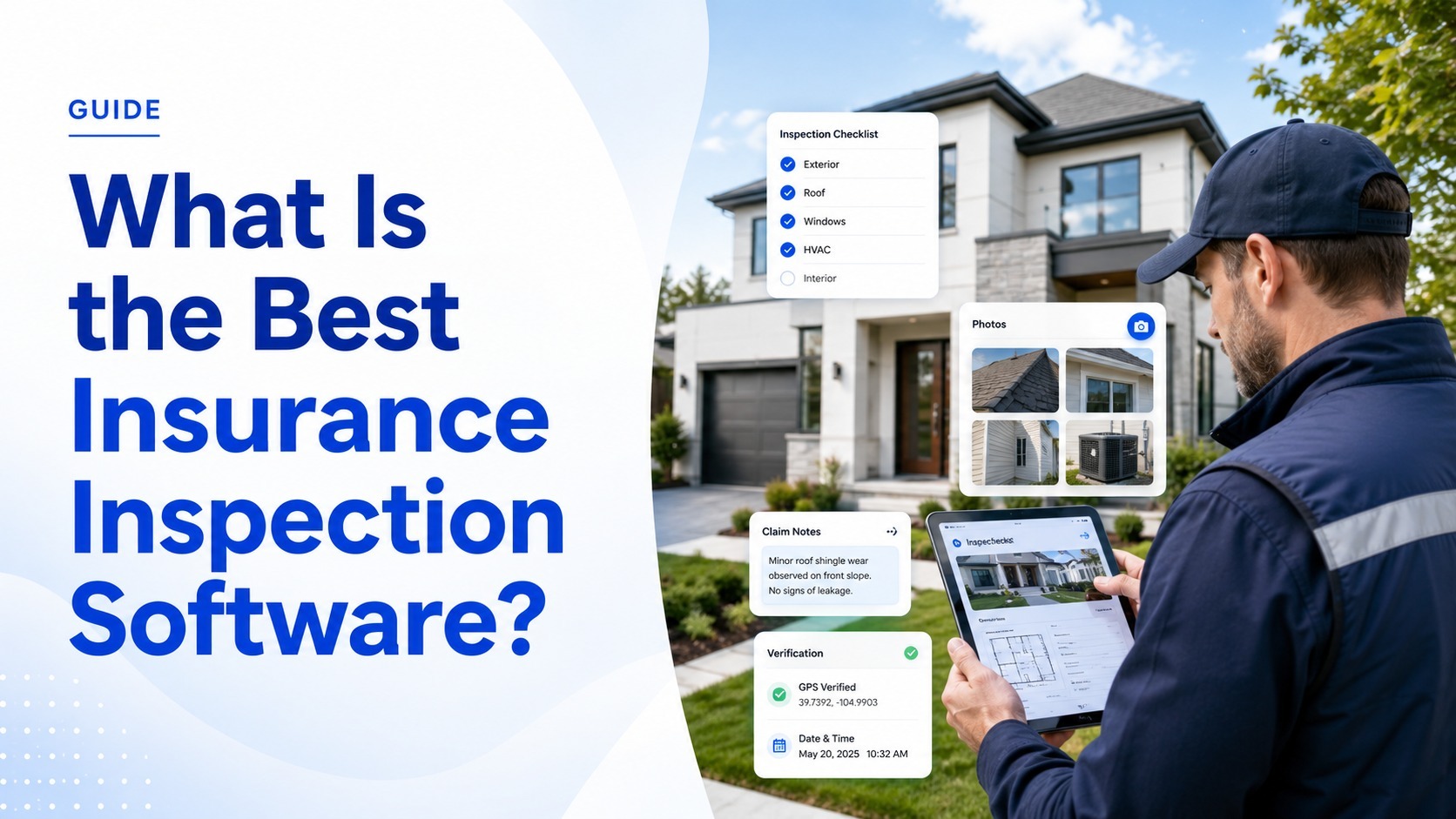
To help evaluate your options, read our analysis: What Is the Best Insurance Inspection Software.
Ensuring Data Integrity: Offline Capture, Evidence Validation, and Fraud Prevention
Securing the integrity of field data is paramount. Approximately 5% to 10% of total claims costs are driven by fraud, making robust evidence validation a critical feature of any insurance inspection workflow software.
Offline Data Capture and Cloud Sync
Field adjusters frequently operate in catastrophe (CAT) zones, basements, or remote rural areas where cellular networks are completely down. Modern mobile inspection apps must support robust offline execution.
Adjusters can fill out checklists, record audio notes, and capture photos offline. The app stores this data locally in a secure cache and automatically syncs it to the cloud the moment an internet connection is re-established, preventing any data loss.
Metadata Validation and Fraud Prevention
Simply accepting emailed photos from claimants is a major security risk. Fraudsters can easily download images from the internet or submit photos of the same damage across multiple claims.
Modern inspection software solves this through automated metadata validation at the exact point of capture:
- Geolocation and Timestamps: Every photo and video captured is embedded with tamper-proof GPS coordinates and exact timestamps, proving the adjuster or policyholder was physically at the risk location when the image was taken.
- Picture-of-Picture Detection: Advanced security algorithms perform checks to detect if a user is trying to photograph another screen or a printed photograph to fake an inspection.
- Data Locking: Once an inspection report is submitted, the data and media are locked. A strict edit history is maintained to ensure compliance and provide audit-ready documentation for regulators.
For a deeper dive into securing your remote inspections, read the Best Remote Inspection Software: The Complete Guide to Inspecting in 2026.
Best Practices for Implementing Remote Visual Inspections (RVIs)
Successfully transitioning to a digital inspection workflow requires more than just buying software. It requires a thoughtful implementation strategy that addresses both technical integration and human adoption.
Integrating RVIs with Existing Claims Systems
To maximize efficiency, remote visual inspections should not exist in a vacuum. They must be integrated directly into your existing core systems, such as Guidewire, Duck Creek, or Salesforce.
- Automated Triggers: When a new claim is filed (FNOL), the core system should evaluate the claim type. If it fits predefined criteria (e.g., minor property damage under $5,000), the system can automatically trigger an SMS invite to the policyholder for a remote visual session.
- Seamless Media Transfer: Any photos, videos, or signed documents captured during the remote session should automatically write back to the claim file, eliminating the need for adjusters to manually download and re-upload files.
See how simple this integration can be by exploring Remote Video Inspections for Insurance.
Overcoming Common Pitfalls in Software Adoption
When implementing new software, companies often run into predictable hurdles. Here is how to avoid them:
- Avoid Configuration-Heavy Tools: Do not choose software that requires months of custom coding to deploy. Start with lightweight, intuitive platforms that your team can learn in an afternoon.
- Manage Employee Resistance: Frontline adjusters may worry that remote tools are designed to replace them. Frame the software as a productivity booster that removes the worst part of their job—spending 5 hours a day stuck in traffic—and allows them to focus on resolving claims.
- Simplify the Customer Experience: If your remote tool requires policyholders to download an app, register an account, and remember a password, adoption rates will plummet. Ensure your tool is entirely browser-based, requiring only a single click to join.
- Enforce Compliance and Security Standards: Ensure your chosen platform meets strict international standards, including SOC 2 Type II, GDPR, and end-to-end encryption, to protect sensitive policyholder data.
For more tips on smoothing the transition, read Insurance Inspections: How Remote Video Support Simplifies the Process.
Frequently Asked Questions about Insurance Inspection Software
How does insurance inspection software reduce claims cycle times?
By replacing in-person travel with remote visual support, desk adjusters can inspect properties instantly over live, browser-based video. Furthermore, features like automated report generation and AI-powered form filling eliminate hours of manual administrative work, allowing claims to be settled in hours rather than days.
Can field inspectors capture data offline in remote areas?
Yes. Leading digital inspection tools support offline data capture. All checklists, photos, and notes are saved securely to the device's local storage and automatically sync to the cloud once a cellular or Wi-Fi connection is restored. This is especially critical for catastrophe response teams working in disaster zones.
How does remote visual support prevent insurance fraud?
Modern platforms use point-of-capture metadata validation, which cryptographically seals the exact time, date, and GPS location to every image and video. Additionally, security protocols like picture-of-picture detection prevent users from submitting fraudulent or recycled photos.
Conclusion
The digital transformation of the insurance industry is no longer a distant goal—it is a current reality. Adopting modern insurance inspection workflow software is the most effective way for carriers, third-party administrators, and adjusters to scale their operations, protect data integrity, and keep claims moving.
By replacing windshield time with real-time visual collaboration, you can resolve claims faster, lower loss adjusting expenses, and deliver the modern, effortless experience that policyholders expect in 2026.
Ready to eliminate the paperwork and see how simple remote inspections can be? Streamline your operations with Blitzz today.