
.png?width=120&height=55&name=Blitzz-Logo-right%20white%20eyes%20-%20not%20transparent%20(3).png)
Why the Video Inspection Utilities Industry Is Reshaping Infrastructure Management
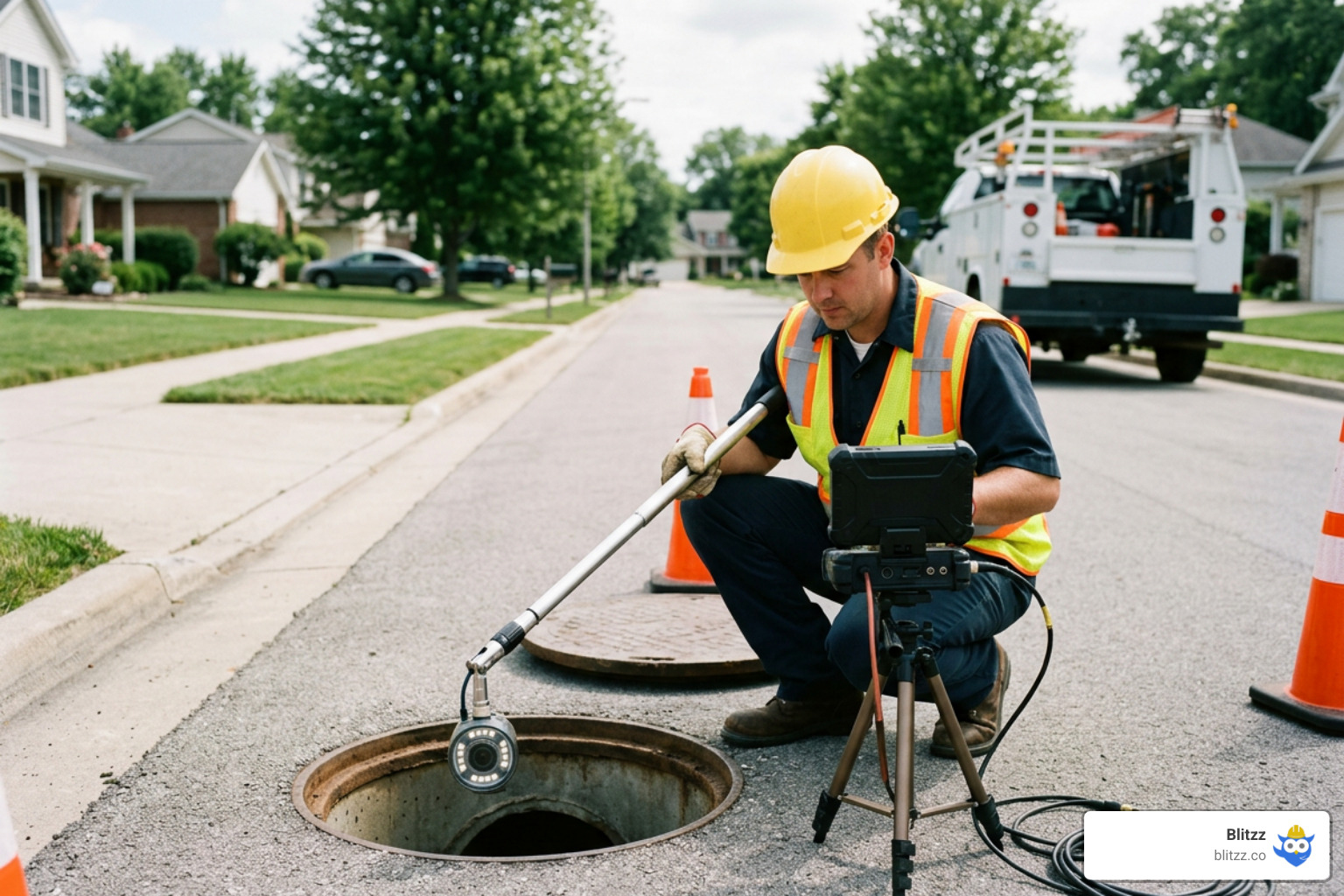
The video inspection utilities industry is at the center of a major shift in how we manage aging underground infrastructure — and if you manage field operations for a telecom or utility company, the stakes have never been higher.
Quick answer: Here's what you need to know at a glance:
| Factor | Key Detail |
|---|---|
| What it is | Using CCTV cameras on robotic crawlers or push rods to inspect pipes without digging |
| Why it matters | 800,000+ miles of public sewers in the US are aging and at risk |
| Top benefit | Avoids costly excavation; pinpoints defects non-invasively |
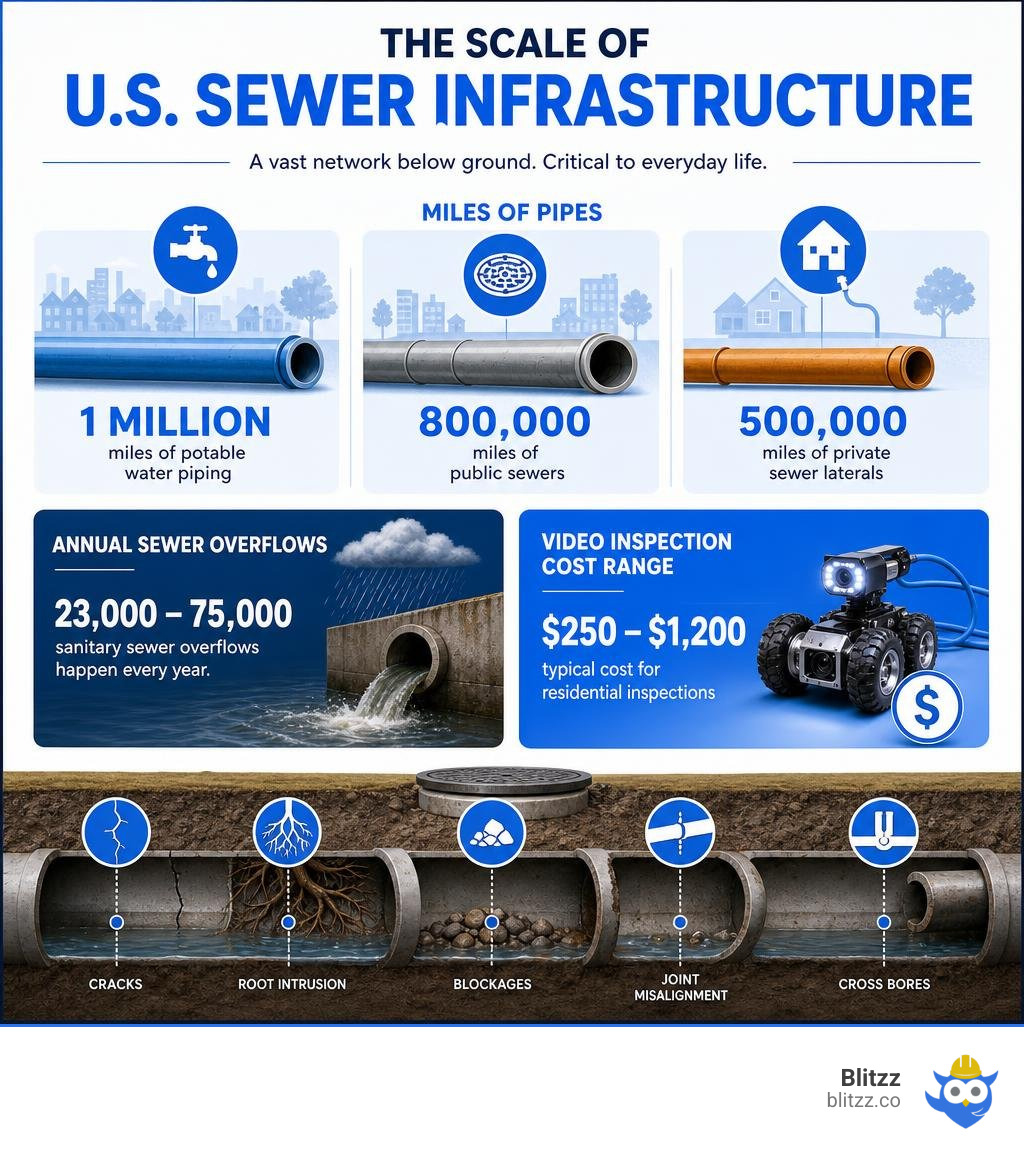
| Common defects found | Cracks, root intrusion, blockages, joint misalignment, cross bores |
| Industry standard | NASSCO PACP/MACP/LACP certification for defect coding |
| Who uses it | Municipalities, telecom firms, utilities, contractors, property managers |
| Cost range | Residential inspections typically run $250–$1,200 |
The numbers tell the story clearly. The US has roughly 1 million miles of potable water piping, 800,000 miles of public sewers, and another 500,000 miles of private sewer laterals. The EPA estimates between 23,000 and 75,000 sanitary sewer overflows happen every single year.
And yet, most of this infrastructure is inspected reactively — only after something breaks.
For field service managers, that means surprise failures, expensive truck rolls, and frustrated customers. Traditional excavation-based diagnosis makes it worse: it's slow, invasive, and costly before you've even started the repair.
High-definition video inspection changes that equation entirely. It lets your team see exactly what's happening inside a pipe — in real time, without breaking ground — and produce a defensible, standardized report the same day.
This guide compares the inspection technologies, standards, and remote support tools available today so you can make smarter decisions for your team and your infrastructure.
Discover more about video inspection utilities industry:
- construction defect video inspection
- AR remote collaboration tools
- Visual Remote Assistance for Zendesk
Understanding Video Pipe Inspection and Core Technologies
At its core, video pipe inspection is a non-destructive testing (NDT) method used to evaluate the internal condition of subterranean pipes, conduits, and vertical structures. Instead of relying on guesswork or destructive digging, crews insert a high-resolution, waterproof camera into an access point — such as a cleanout, manhole, or wet well.
As the camera travels through the line, it transmits real-time video footage to an operator station. This allows technicians to perform live visual assessments, pinpointing the exact location, depth, and material characteristics of the asset.
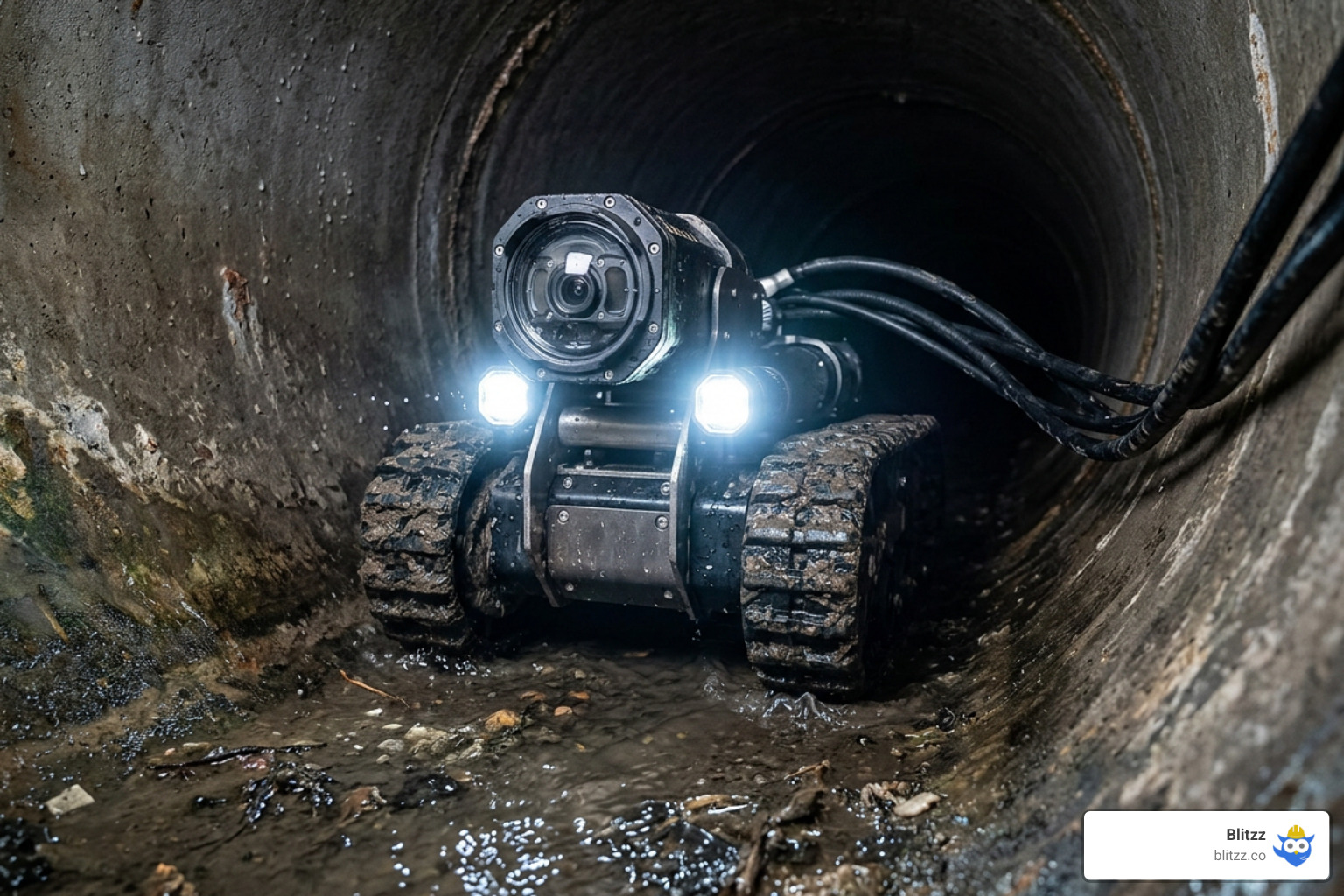
Modern physical inspection systems rely on several primary equipment classes to navigate different pipe sizes, depths, and environmental conditions:
- Robotic Crawlers: These are self-propelled, remote-controlled vehicles designed for larger pipelines, typically ranging from 6 to 24 inches (or larger). They feature pan-and-tilt camera heads, powerful LED lighting, and motorized treads to navigate debris.
- Push Cameras: Used for smaller-diameter lines (generally 2 to 6 inches), these systems feature a camera mounted on a semi-rigid fiberglass push rod. The operator manually feeds the cable through the pipe, making them highly effective for lateral lines and tight bends.
- Lateral Launch Systems: These advanced rigs combine a mainline crawler with a secondary, smaller push camera. The crawler travels down the main sewer line and "launches" the smaller camera into lateral sewer connections, allowing crews to inspect private service lines directly from the public main.
- Vertical Pole Cameras: Designed for rapid, top-down inspections of manholes, wet wells, and vaults, these high-resolution cameras are mounted on telescoping poles, eliminating the need for hazardous confined space entry.
Core Technologies in the Video Inspection Utilities Industry
Choosing the right equipment is critical because physical pipe environments vary wildly. For instance, narrow conduits with tight 90-degree bends require highly flexible push rod systems. Devices operating in these environments, such as those detailed in the AGILIOS XR Push Rod System Brochure, are designed for application ranges from DN50 to DN300, allowing ergonomic handling and modular extensions from the coiler to the control unit.
For smaller-scale or localized diagnostics, portable and self-leveling systems are the standard. Solutions like the Sewer Camera 9-Inch HD Screen with Meter Counter provide field technicians with a built-in 512Hz sonde transmitter, on-screen distance counters, and self-leveling camera heads. These features ensure that the video feed remains upright as the camera navigates winding lines, preventing orientation errors during critical assessments.
However, physical inspection equipment represents a massive capital investment. Outfitting a single inspection truck with high-end crawlers, lateral launch systems, and software can easily cost between $75,000 and $100,000. This high cost of entry is driving many organizations to re-evaluate how they deploy their field assets.
Physical vs. Remote Visual Inspections
While physical CCTV crawlers are indispensable for crawling deep inside underground pipes, they are not always the fastest or most cost-effective way to triage an active utility issue. This is where the distinction between physical and remote visual inspections becomes crucial.
A physical inspection requires mobilizing a heavy truck, highly specialized equipment, and a certified crew to a physical site. This is necessary for formal structural grading and final municipal sign-offs.
By contrast, remote visual inspections leverage software to connect on-site field technicians, subcontractors, or even customers directly with off-site engineering experts. To understand this paradigm shift, it helps to explore What Are Remote Video Inspections?. Instead of waiting days to dispatch a specialized CCTV crew, an on-site technician can use their mobile device to stream live video of a surface asset, a manhole, or a shallow cleanout directly to an office-based engineer.
The Benefits of Remote Video Inspection are immediate:
- Instant Triage: Office-based experts can visually inspect assets, guide field crews using real-time Augmented Reality (AR) annotations, and make instant repair decisions.
- Fewer Truck Rolls: By remotely diagnosing issues before dispatching heavy machinery, utilities can reduce unnecessary travel, saving fuel and labor.
- Operational Scale: A single remote expert can support dozens of field technicians across a wide geographic area in a single day, maximizing resource utilization.
Key Benefits and Critical Defects Detected by the Video Inspection Utilities Industry
Transitioning from traditional "dig-and-find" methods to video-based diagnostics offers profound operational advantages. Historically, finding a pipe leak meant deploying excavators to dig up long stretches of roadway or property. This process was slow, highly destructive, and incredibly expensive.
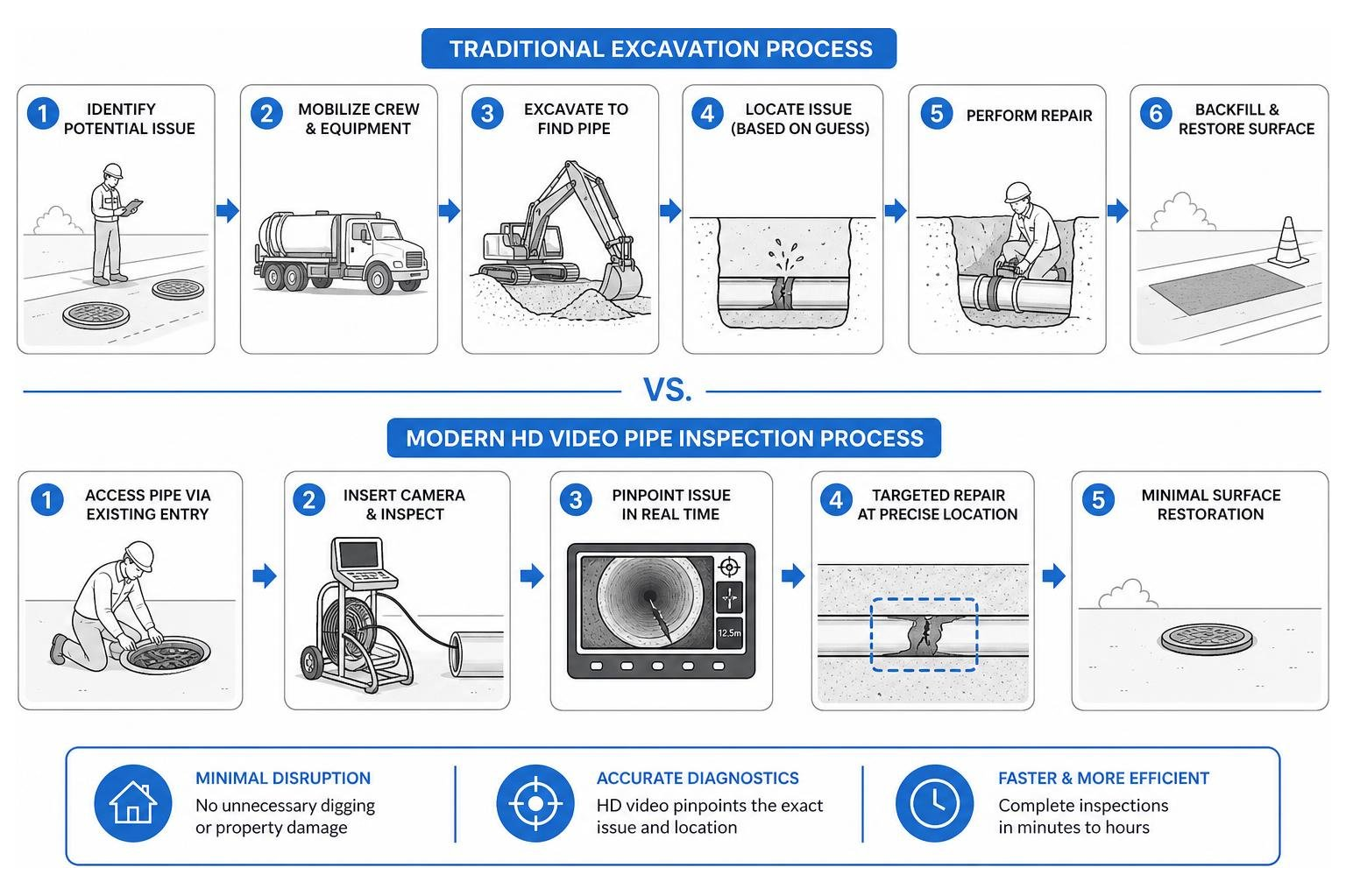
| Feature | Video Pipe Inspection | Traditional Excavation |
|---|---|---|
| Property Damage | None (Non-invasive entry via access points) | Extensive (Trenching through lawns, driveways, roads) |
| Diagnostic Accuracy | High (Real-time HD video and precise sonde locating) | Low (Based on surface indicators and guesswork) |
| Time to Complete | Minutes to hours | Days to weeks |
| Safety Risk | Low (Minimal trenching, reduced confined space entry) | High (Open trenches, heavy machinery hazards) |
| Operational Cost | Low ($250–$1,200 for residential; predictable municipal rates) | High (Excavation, backfilling, and surface restoration costs) |
By deploying high-definition cameras, the video inspection utilities industry can identify a wide range of structural, operational, and electrical defects before they escalate into catastrophic failures:
- Structural Cracks and Fractures: Hairline cracks caused by ground shifting, age, or heavy traffic loads can quickly grow into structural collapses if left unaddressed.
- Corrosion: Chemical reactions from industrial runoff or sewer gases degrade metal and concrete pipes over time, thinning pipe walls and causing structural failure.
- Joint Misalignment: Ground movement can cause pipe segments to shift apart at the joints. This creates gaps where soil can wash in (causing sinkholes) and wastewater can leak out.
- Root Intrusion: Tree roots are drawn to the moisture inside sewer lines. They enter through tiny joint gaps or cracks, growing rapidly until they completely block the pipe and split the structure.
- Blockages and Grease Buildup: Fat, oil, grease, and foreign objects restrict flow capacity, leading to localized flooding and sanitary sewer overflows.
Environmental and Operational Advantages
The environmental benefits of video-based utility management are just as compelling as the financial ones. Traditional excavation disrupts local ecosystems, damages mature trees, and requires heavy diesel machinery that runs for days.
By utilizing targeted video inspections, utilities minimize soil disruption and protect localized water tables from contamination. Standardizing these workflows is essential for modern environmental stewardship, as discussed in Protect Your Pipes: Advancing Small Diameter Sewer Inspection.
Furthermore, reducing physical truck rolls directly lowers a utility's carbon footprint. Every time an issue is diagnosed remotely or resolved on the first visit, fleet mileage drops, contributing directly to municipal sustainability and net-zero goals.
Cross Bore Detection and Mitigation
One of the most critical safety applications of video inspection is cross bore detection. A cross bore occurs when an underground utility line (such as a gas pipe or electrical conduit) is accidentally drilled directly through an existing utility line (typically a sewer lateral or storm drain). This is a common risk associated with trenchless technology, such as Horizontal Directional Drilling (HDD).
If a gas line is cross-bored through a sewer lateral, a future drain-cleaning technician using a mechanical rotating cutter can easily rupture the gas line. This can cause natural gas to leak into the sewer system, leading to catastrophic explosions and loss of life.
To mitigate this risk, municipalities and contractors enforce strict buffer zones (typically 20 feet) and mandate pre- and post-installation video inspections.
- Pre-Installation Scan: Crews run a CCTV camera through all adjacent sewer lines before directional drilling begins to map their exact location and depth.
- Post-Installation Verification: After the drill run is complete, the sewer lines are inspected again to verify that no utility lines have breached the pipe walls, ensuring absolute community safety.
Small-Diameter Pipe Challenges
Small-diameter pipes present a unique challenge for utility managers. Approximately 80 percent of public sewer systems in the United States consist of small-diameter pipes ranging from 8 to 12 inches. Because of their sheer volume and tight physical constraints, these pipes are historically the most difficult to inspect efficiently, making them the primary source of the nation's annual sanitary sewer overflows.
Fortunately, modern hardware and software innovations are making small-diameter inspections faster and safer. Highly portable, rapid-deployment camera systems allow single operators to cover unprecedented ground.
For instance, as highlighted in the use cases for Drain Cleaning - How the RV-Pro 360 Can Help, advanced 360-degree imaging tools allow a single operator to inspect up to 80 drain lines in a single day. This rapid data gathering, combined with automated analysis, allows utilities to transition from reactive crisis management to highly structured, proactive maintenance programs.
Industry Standards, NASSCO Certification, and Reporting
In the early days of pipeline inspection, reporting was highly subjective. One operator might describe a defect as a "medium crack," while another might call it a "minor fracture." This lack of standardization made it impossible for municipal engineers to compare data accurately or prioritize capital improvement projects.
To solve this, the National Association of Sewer Service Companies (NASSCO) established standardized assessment programs:
- PACP (Pipeline Assessment Certification Program): The national standard for coding and grading defects in gravity sewer mainlines.
- MACP (Manhole Assessment Certification Program): Designed specifically for the unique structural elements of vertical manholes and vaults.
- LACP (Lateral Assessment Certification Program): Tailored for the smaller, winding lateral lines that connect homes and businesses to public mains.
Using NASSCO-certified software (such as WinCan), operators assign standardized codes and severity grades (ranging from 1 for minor to 5 for immediate failure) to every defect. This ensures that every report is objective, defensible, and fully compatible with municipal asset management systems.
What is Included in a Standard Video Pipe Inspection Report?
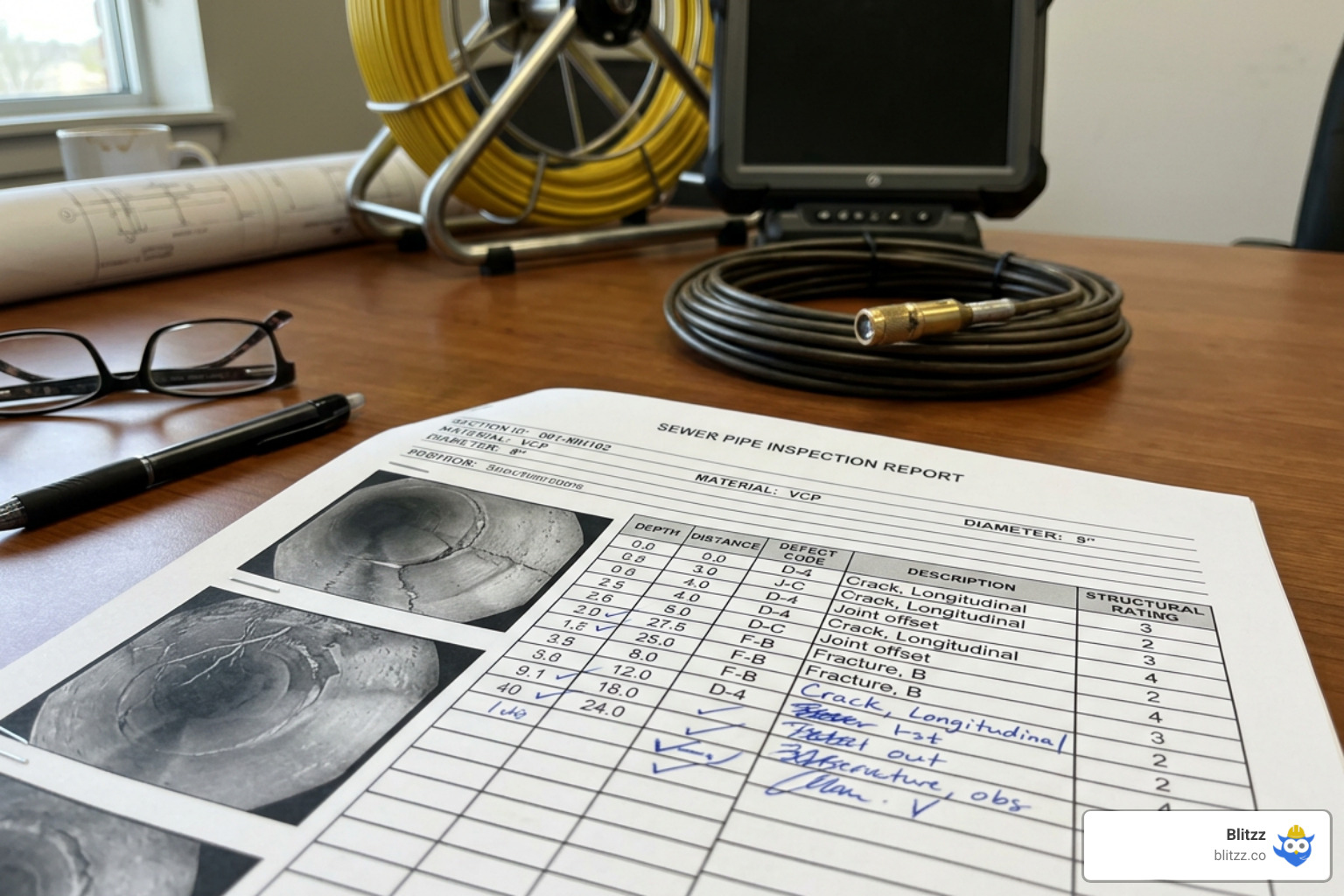
A professional video pipe inspection report is much more than a simple video file. A standard, NASSCO-compliant deliverable package contains:
- Standardized Defect Coding: A chronological log of every structural and operational defect, graded from 1 to 5, referencing its exact distance from the starting manhole.
- Inclination Reports: Continuous slope data that maps the pipeline's grade, identifying "bellies" or sags where standing water and sediment collect.
- High-Definition Video and Photos: Time-stamped, high-resolution video logs with clear photo captures of every flagged defect.
- GPS Coordinates and Mapping: Precise geographic coordinates of access points, allowing the inspection data to be tied directly to real-world maps.
- Sonde/Locator Data: Depth and material records verified on-site, often achieving up to 99.8% utility locating accuracy when paired with electromagnetic locators.
Integrating Video Data with Asset Management
The true value of video inspection data is realized when it is integrated into a larger Geographic Information System (GIS) or 3D Building Information Modeling (BIM) platform. Instead of storing inspection reports on isolated hard drives, modern utilities import NASSCO data directly into cloud-based GIS sewer layers.
This integration allows engineering teams to click on any pipe segment on a digital map and instantly view its historical inspection videos, defect scores, and maintenance history.
This data-driven approach is essential for prioritizing rehabilitation efforts, especially when upgrading legacy systems. As detailed in the industry overview on Bringing High-Definition Clarity to Sewer Inspections, upgrading to high-definition 1080p video capture allows software to render incredibly detailed records of aging systems. This helps municipalities transition from reactive emergency repairs to highly structured, proactive asset management.
Applications, Scheduling, and Remote Support for Utilities
Video pipe inspection is a critical tool across a wide range of municipal and industrial applications:
- Municipal Wastewater and Stormwater: Routine structural assessments, capacity mapping, and regulatory compliance audits.
- Telecommunications: Pre- and post-installation sweeps during fiber-optic rollouts to prevent and detect cross bores.
- Power Transmission and Distribution: Inspecting underground conduits, vaults, and transformer pads for water intrusion or structural decay.
- Construction Quality Control: Post-installation inspections of newly laid pipelines to verify joint integrity and slope compliance before backfilling.
When to Schedule a Video Pipe Inspection
To prevent costly utility emergencies, property owners, contractors, and asset managers should schedule video inspections during these key windows:
- Routine Maintenance (Bi-Annual): Subsurface pipes shift and age constantly. Conducting sewer inspections every two years is highly recommended to keep condition records current and identify minor issues before they become structural failures.
- Pre-Construction and Excavation: Before designing a new structure or excavating a site, a full subsurface scan — including video pipe inspection — is essential to map existing utility lines and avoid costly utility strikes.
- Post-Trenchless Installation: Whenever Horizontal Directional Drilling (HDD) is used within 20 feet of a pipeline, mandatory pre- and post-inspections are required to mitigate cross bore risks.
- Real Estate Transactions: Prior to purchasing a commercial or residential property, a sewer lateral inspection (ranging from $250 to $1,200) protects buyers from inheriting collapsed lines or severe root intrusions.
Applications and Scheduling in the Video Inspection Utilities Industry
While physical crawler crews are essential for formal subterranean inspections, modern utility operations rely heavily on real-time remote support to keep projects moving. When a field crew encounters an unexpected utility conflict or a complex pipe defect, they can leverage Remote Video Inspections for Utilities and Energy to connect with an off-site engineer instantly.
Using advanced visual support platforms, field crews can share their live camera feeds with office-based experts. By implementing Cobrowsing for Utilities, remote engineers can guide on-site personnel through complex diagnostic software interfaces, review NASSCO defect codes in real time, and approve field changes on the spot.
This seamless collaboration is transforming how utility companies support both their field crews and their customers. By deploying Co-Browsing Solutions Transforming Utility Support for Today's Customers, utility providers can walk customers through complex service portals, share visual evidence of lateral pipe damage, and explain repair options interactively. This reduces administrative friction and builds deep trust through absolute transparency.
Frequently Asked Questions about Utility Video Inspections
What is NASSCO PACP and why does it matter?
NASSCO’s Pipeline Assessment Certification Program (PACP) is the industry-standard coding system used across North America to document and grade defects in sewer pipes. It matters because it provides a highly objective, standardized language for pipeline condition assessment.
By grading defects on a standardized scale from 1 (excellent) to 5 (imminent failure), PACP allows municipal engineers to compare asset conditions across their entire network, ensuring that capital budgets are directed to the pipes that need rehabilitation most.
How does high-definition video improve defect detection?
Standard-definition (SD) cameras often produce blurry or grainy images, especially in dark, wet, and steam-filled pipe environments. This makes it easy to mistake a structural fracture for a harmless spiderweb or a grease streak.
High-definition (1080p) cameras bring crystal-clear resolution to underground inspections, allowing operators to identify hairline cracks, early-stage joint separations, and subtle water infiltration points that SD systems miss.
For highly localized or specialized industrial inspections, deploying advanced tools like the Extech HDV700-Series High-Performance Videoscope Kits provides technicians with articulating probes and high-definition clarity. This setup makes it easy to navigate tight, complex utility spaces and document defects with absolute precision.
Can video inspection prevent cross bores?
Yes, video pipe inspection is the single most effective tool for cross bore mitigation. By conducting a pre-installation CCTV scan of all adjacent sewer laterals before horizontal directional drilling (HDD) begins, contractors can map the exact path and depth of existing utilities.
Once the new utility line is installed, a post-installation video inspection verifies that the drill path did not breach any existing pipe walls. This simple, non-destructive step prevents catastrophic utility strikes and protects public safety.
Conclusion
The video inspection utilities industry has evolved from a simple diagnostic tool into a cornerstone of proactive infrastructure management. By combining high-definition physical hardware with standardized NASSCO reporting, utilities and municipalities can protect their underground assets, prevent costly failures, and keep their communities safe.
At Blitzz, we are bridging the gap between physical field operations and remote expert support. Our enterprise visual assistance software delivers instant, browser-based video support equipped with interactive AR annotations, screen sharing, and seamless CRM integrations.
By allowing your field crews to collaborate instantly with off-site engineers, we help you eliminate unnecessary truck rolls, accelerate project timelines, and maximize operational efficiency.
Ready to see how remote visual support can transform your utility operations? Explore Blitzz Features and schedule a demo with our team today!
-1.jpg)