
.png?width=120&height=55&name=Blitzz-Logo-right%20white%20eyes%20-%20not%20transparent%20(3).png)

.jpg?width=1200&height=675&name=content%20(56).jpg)
On this page
.jpg?width=1528&height=1029&name=content%20(56).jpg)
If you're reviewing your remote inspection or visual support stack, you're not alone. The category has consolidated fast — platforms get acquired, repositioned, or absorbed into broader product families, and pricing models shift underneath you. When the tool you adopted no longer fits the way you actually run claims and inspections, switching isn't a failure of planning; it's good operational hygiene. This guide walks through why insurance and inspection teams migrate, what to look for in a replacement, how a move to Blitzz works in practice, and the results other companies have seen after switching.
Why teams evaluate alternatives in the first place
A few patterns come up again and again when organizations start shopping:
App-download friction. If your current tool requires the policyholder or field contact to install an app, your completion rates suffer — especially with stressed claimants. The single biggest predictor of a successful remote session is whether the other person can connect in one tap. Blitzz's app-free, browser-based access exists specifically to remove that barrier.
Vendor consolidation and acquisition risk. When a platform gets acquired and folded into a larger product family, enterprise buyers often find roadmaps, pricing, and support priorities shifting away from their use case. That's a legitimate reason to evaluate a vendor whose entire focus is remote visual inspection.
Wrong-fit positioning. Some tools are excellent at what they do — but what they do isn't insurance claims. A platform built for residential construction warranties or general customer-service troubleshooting may not produce the claims-grade, audit-ready documentation a P&C carrier needs.
Cost and complexity. Heavyweight enterprise deployments that demand dedicated IT resources can be hard to justify, especially for mid-sized teams that need to be live quickly.
If any of these sound familiar, the rest of this guide is for you. For a broader view of how the category is evolving, the complete guide to remote inspection software and the best remote video inspection software roundup are worth a read.
.jpg?width=1448&height=1086&name=content%20(58).jpg)
Migrating from Another Remote Video Inspection Software
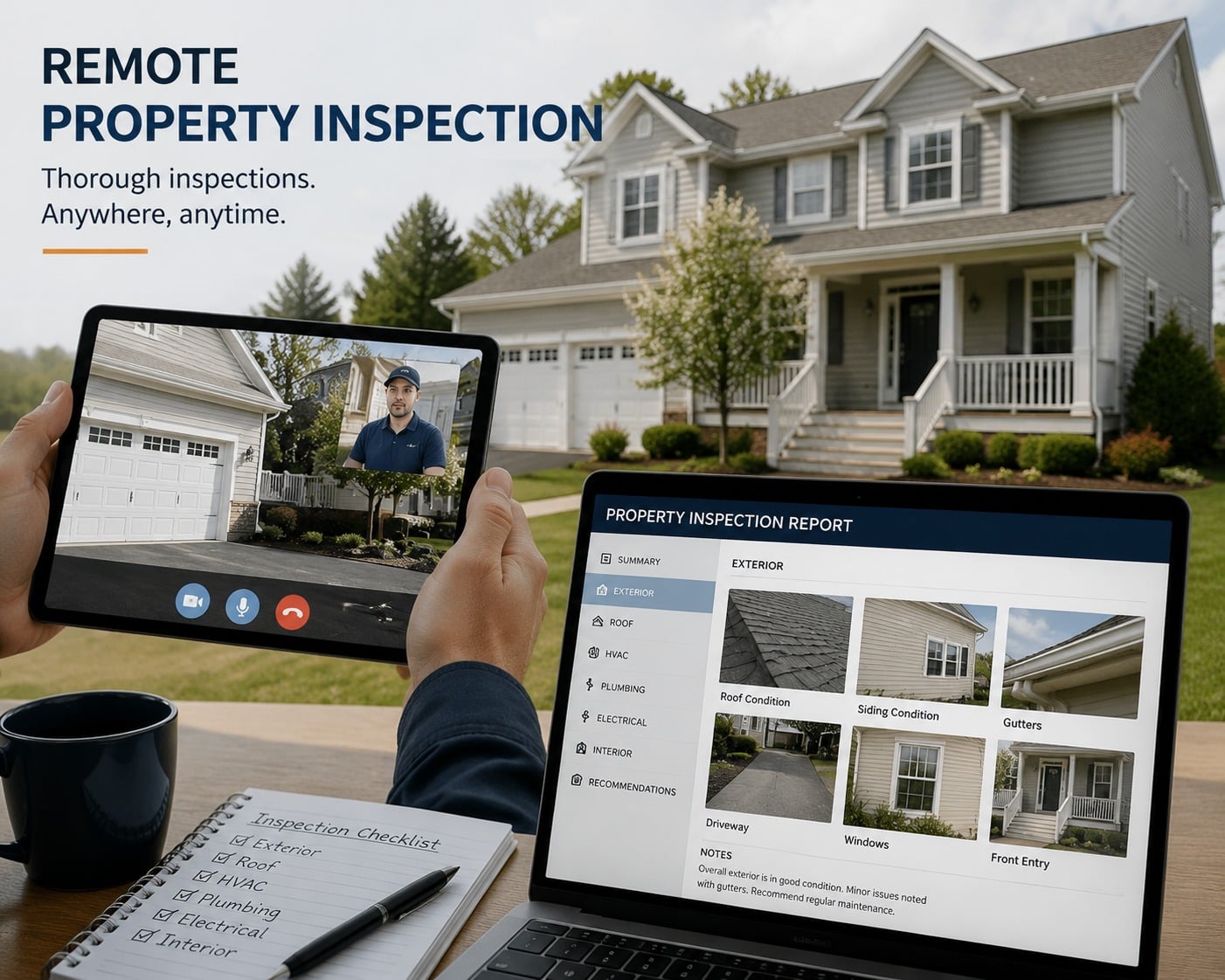
If your team needs to triage claims at first notice of loss, document storm or auto damage for an adjuster, or produce an evidentiary record that satisfies claim and regulatory requirements, you'll want a platform engineered for that specific outcome. Blitzz's remote video inspections for insurance and its Visual Remote Assistant for insurance are designed around exactly those claims and underwriting workflows, with timestamped photos linked directly to the claim file. The difference isn't quality — it's fit. For the property side specifically, the guide to homeowners insurance inspections shows what claims-grade documentation looks like in practice.
If you're weighing AR-based tools, Blitzz's overview of augmented reality CX tools compares the landscape directly. Where Blitzz differs is breadth and insurance fit: alongside AR markup and a collaborative live pointer, you get timestamped capture, AI-generated reports, live location tracking, and enterprise security purpose-built for claims documentation — capabilities laid out on the Blitzz features page. Teams moving from a support-oriented tool to a claims-grade one typically find the documentation and reporting depth is the biggest upgrade. The Visual Remote Assistance hub collects more on this category.
What you get when you move to Blitzz
Whatever you're migrating from, here's what a switch to Blitzz puts in your team's hands:
- App-free, one-click access. Policyholders connect from any smartphone browser via a secure SMS or email link — no downloads, no accounts, no friction. This is the foundation of why Blitzz stands apart.
- Claims-grade documentation. HD video, zoom, freeze-frame, AR annotation, a live pointer, and timestamped photo capture — all auto-saved to the claim file.
- AI-assisted reporting. Blitzz captures images during the session, extracts data with AI, and auto-generates inspection reports, cutting the post-session paperwork that drags down cycle time. See Blitzz Inspect.
- Live location tracking. GPS coordinates captured during the session, with timestamped photos — essential for claims and property verification.
- Enterprise security. End-to-end encryption, SOC 2 Type II compliance, comprehensive audit trails, and SSO/SAML.
- Native integrations. Blitzz plugs into Salesforce, Zendesk, Genesys, and more, so sessions launch from the systems your team already uses — covered in the Genesys + Blitzz overview.
The broader value — fewer truck rolls, faster resolution, and dramatic capacity gains — is unpacked in Blitzz's analysis of how inspection companies use remote video support and across the remote video inspection industry page.
How the migration actually works
Switching platforms sounds daunting, but a remote inspection tool has a small footprint compared with a core claims system. A typical move looks like this:
- Map your use cases. Identify which inspection and claim types you'll route through Blitzz first — usually high-volume, routine work like FNOL documentation, auto damage, and property walkthroughs.
- Configure workflows and integrations. Connect Blitzz to your CRM or claims system so sessions launch in context and documentation flows back automatically.
- Run a structured pilot. Blitzz offers a 30-day Success Challenge where the team configures the platform to your workflows and helps you track measurable results before you commit.
- Roll out and scale. Because there's nothing for policyholders to install and the adjuster-side learning curve is short, adoption tends to be fast.
On budgeting, Blitzz publishes transparent pricing so you can model the move, and the inspector and auditor use-case page shows how different teams structure their deployments. The Remote Video Inspections hub and the industry best practices hub offer additional implementation guidance.
.jpg?width=1447&height=1087&name=content%20(61).jpg)
Three companies seeing results with Blitzz
You can browse the full library of customer case studies, but here are three representative outcomes:
1. Colonnade Insurance — clearer claim documentation. Colonnade Insurance highlighted that Blitzz's annotation and stamped-photo tools made their claim documentation "clearer than ever," giving adjusters a more reliable evidentiary record without site visits. For a carrier, that clarity translates directly into faster, less disputable settlements.
2. A tank inspection business — 75% lower travel costs. By replacing in-person expert visits with guided remote inspections, this Blitzz customer cut travel costs by 75%. The same model — sending an expert's eyes to the field instead of the expert — is exactly what makes remote inspection so cost-effective for insurers managing dispersed risk.
3. A government inspection organization — nearly 2x efficiency. A government body running inspections across roughly 1,500 inspectors nearly doubled its efficiency after adopting Blitzz, clearing backlogs by handling routine inspections virtually. It's a strong proof point that the model scales well beyond a single team.
Making the decision
Migration is ultimately about fit. If your current platform is consolidating into a broader product family, was built for a different job than insurance claims, or simply forces too much friction on the people you're trying to inspect, the cost of staying often outweighs the cost of switching. Blitzz reports that visual claims support resolves claims up to 60% faster, with high-volume operations averaging $22,000 in monthly savings and 320% first-month ROI — and the 30-day Success Challenge lets you validate those numbers against your own book before committing.
Start by reading the remote video inspections for insurance overview, browse the Blitzz blog for sector-specific deep dives, and when you're ready, get started with a pilot built around your workflows. The carriers and inspection teams winning in 2026 aren't the ones with the oldest vendor relationship — they're the ones running the platform that actually fits how they work today.


Blitzz Team
The Blitzz Team writes about remote video support, virtual inspections and field service. Our guides come from working with home builders, property managers, warranty teams, contact centers and field service organizations that use Blitzz to see and solve issues without a truck roll.