
.png?width=120&height=55&name=Blitzz-Logo-right%20white%20eyes%20-%20not%20transparent%20(3).png)
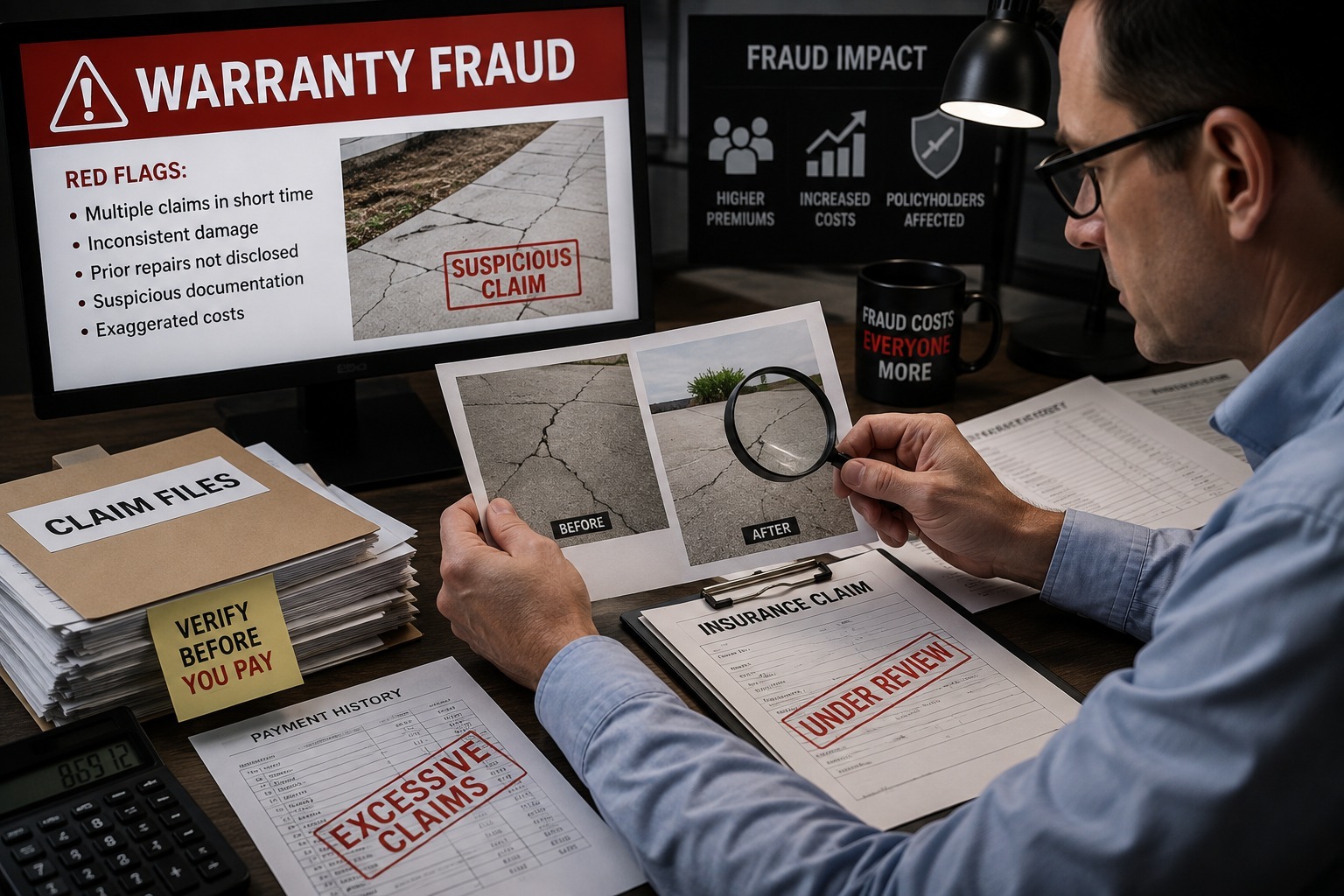
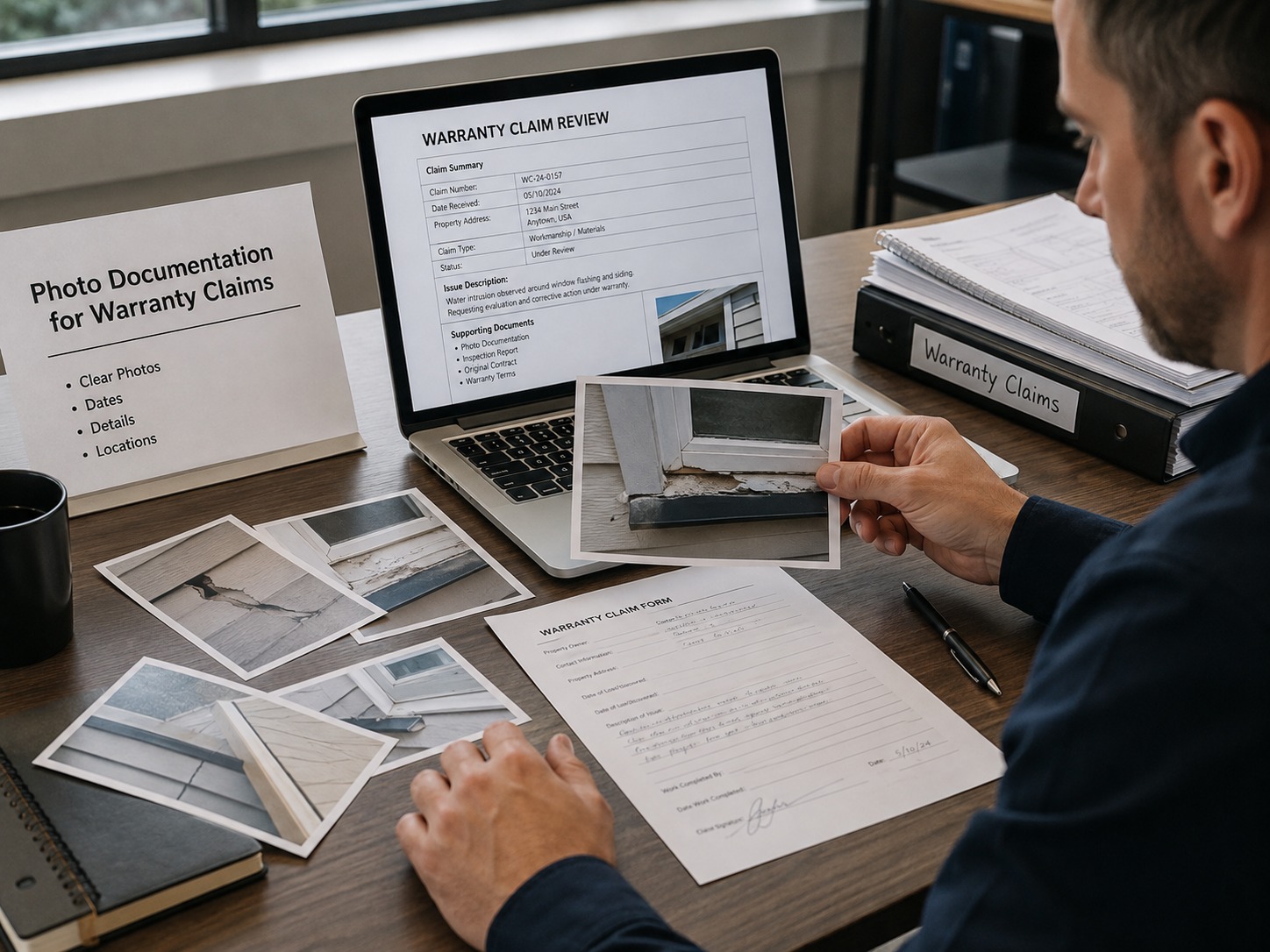
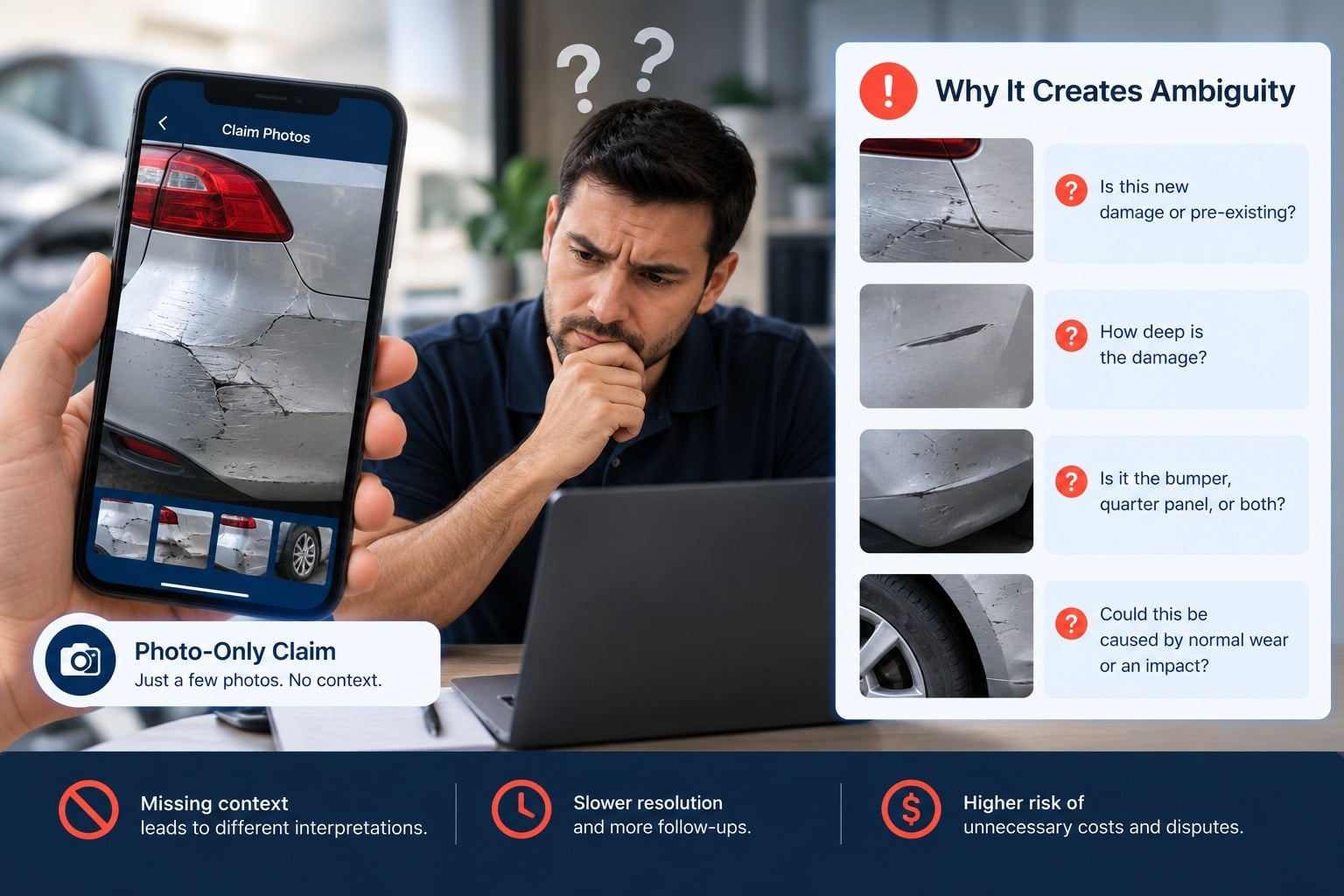
Warranty fraud costs manufacturers, dealers, insurers, and service providers billions of dollars every year, and photos sit at the center of almost every disputed claim. A blurry picture, a missing timestamp, or an image pulled from a stock photo site can turn a legitimate warranty program into an open door for bad actors. The good news is that photo-based fraud is largely preventable once you understand where the weak points are and how to close them with the right documentation standards, verification technology, and workflow.
This guide walks through the most common warranty photo fraud schemes, the verification methods that actually stop them, and how to build a repeatable process your team can trust — whether you're managing automotive claims, HVAC installations, appliance coverage, or construction defect warranties.
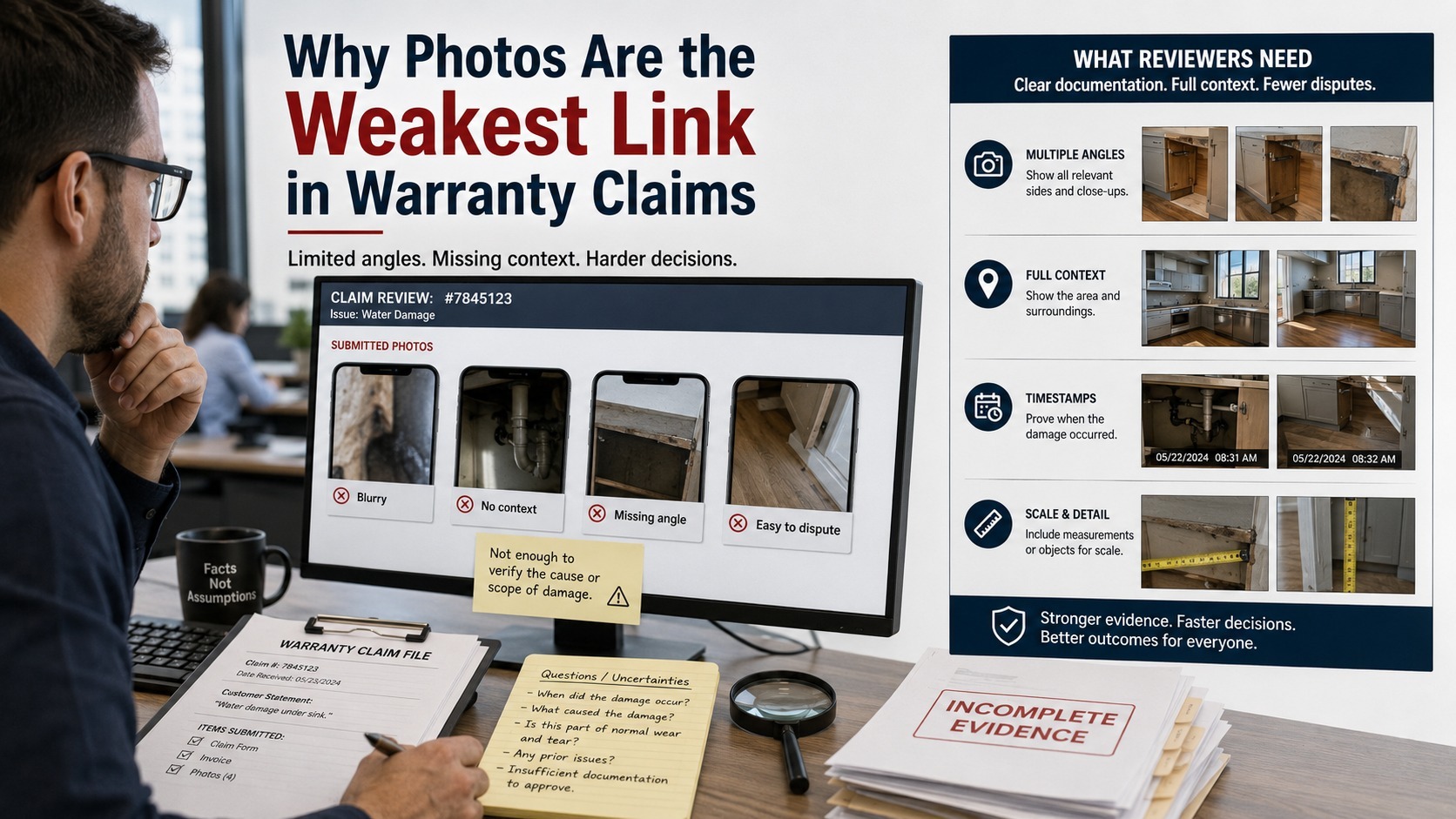
Why Photos Are the Weakest Link in Warranty Claims
Most warranty programs still rely on customers or technicians submitting a handful of photos through email or a basic upload form. That approach was designed for convenience, not verification. A photo by itself proves almost nothing — it doesn't confirm when it was taken, where it was taken, or whether it has been altered. Fraud investigators consistently point to unverified photo submissions as one of the easiest attack surfaces in claims processing, precisely because the barrier to manipulating an image is so low.
This vulnerability isn't limited to insurance. The same gap shows up in automotive service claims, appliance and consumer electronics coverage, and construction warranties, where a single unverifiable photo can trigger an approval worth thousands of dollars. Understanding the insurance damage assessment process makes it clear how much weight photo evidence carries in the approval chain, and why tightening that one input point pays off across an entire claims operation.
The financial exposure adds up quickly at scale. A warranty program processing a few thousand claims a year doesn't need a high fraud rate to lose real money — even a small percentage of successfully falsified claims, multiplied across an entire portfolio, can outweigh the cost of implementing proper verification many times over. That math is exactly why more programs are shifting fraud prevention earlier in the process, treating it as a documentation problem to solve at intake rather than an investigation problem to solve after losses have already piled up.
The Most Common Warranty Photo Fraud Schemes
Before you can prevent fraud, it helps to know what it actually looks like in practice. Recurring patterns include:
- Recycled or stock photos. Claimants submit an image pulled from the internet or reused from a prior claim, hoping reviewers won't cross-check it.
- Pre-existing damage passed off as new. A part that failed months ago gets photographed and submitted as though the failure just occurred, extending coverage past its legitimate window.
- Digitally altered images. Basic photo editing tools can crop out context, adjust lighting to hide wear, or splice in damage that didn't exist.
- Wrong location or wrong unit. A photo taken at a different address, a different vehicle, or a different serial-numbered unit gets submitted to support a claim on equipment that was never actually inspected.
- Backdated timestamps. Device clocks can be manually changed, so a phone's built-in timestamp is trivial to spoof if it's the only proof of when a photo was captured.
Each of these schemes exploits the same underlying weakness: a photo with no independently verifiable metadata is only as trustworthy as the person who submitted it. This is exactly the gap that GPS and timestamp verification is designed to close.
Build Verification Into the Capture Process, Not the Review Process
The single biggest mistake warranty teams make is trying to catch fraud after the photo has already been submitted. By the time a reviewer is squinting at an image trying to decide if it looks "off," the fraud prevention opportunity has largely passed. Verification needs to happen at the moment of capture.
That means using a photo capture tool that automatically embeds GPS coordinates, a cryptographically verified timestamp, and device metadata directly into the image file — not metadata that can be edited after the fact in a standard photo app. When you document job site photos for insurance claims this way, every image arrives with proof of exactly where and when it was taken, which removes the single most common excuse fraudulent claims rely on: ambiguity.
This is the core idea behind BlitzzCam, which locks GPS and timestamp data into the photo at the moment it's taken so it can't be altered or spoofed later. Teams evaluating whether to build this into their own workflow can review how BlitzzCam compares to a standard phone camera to understand exactly what verified capture adds on top of a normal photo.
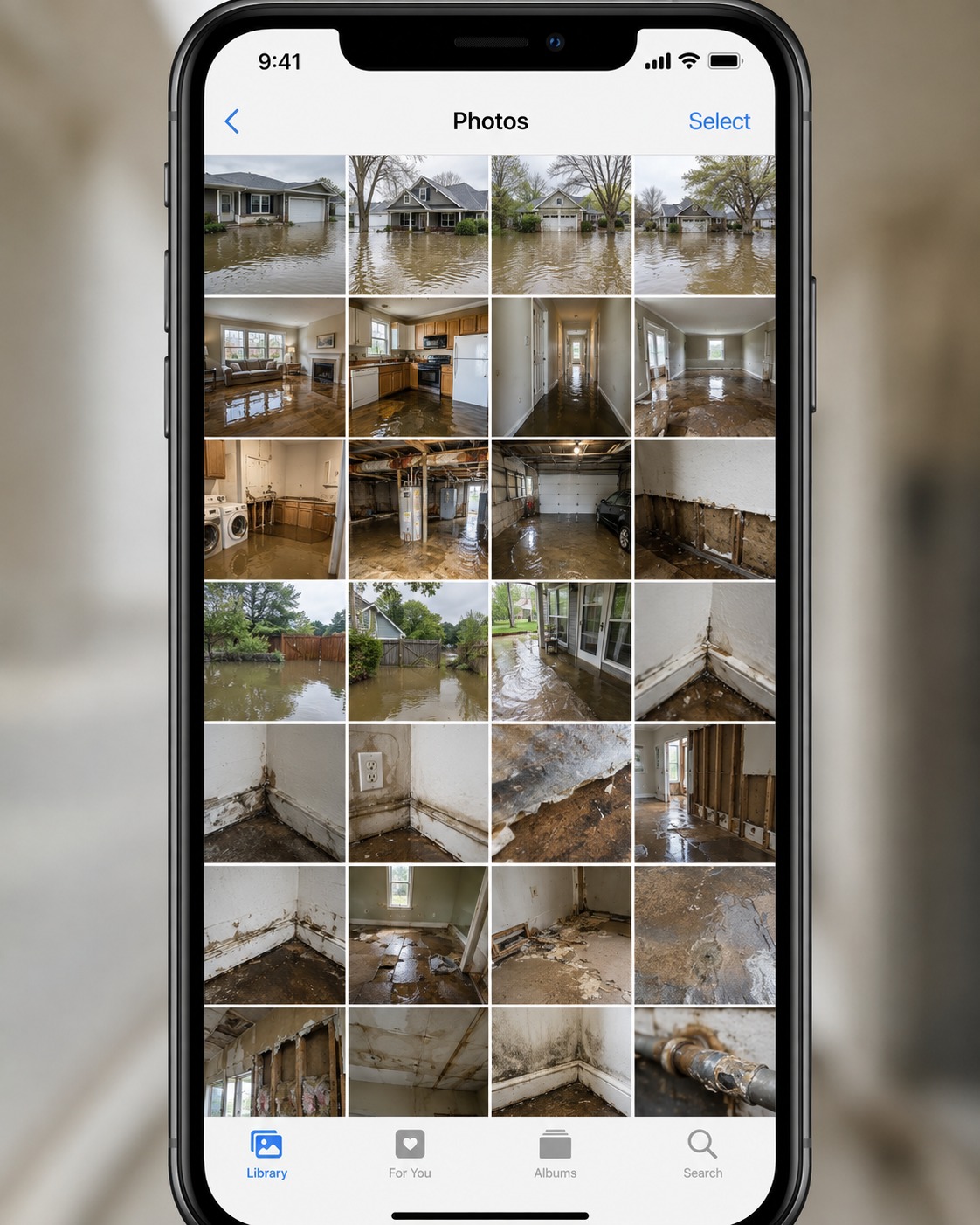
Standardize the Shots You Require for Every Claim
Fraud thrives on inconsistency. If every technician, adjuster, or customer submits a different number of photos from different angles, reviewers have no consistent baseline to compare against, and it becomes much easier for a fraudulent submission to slip through unnoticed. Standardizing your required shot list closes that gap.
At a minimum, most warranty programs should require:
- A wide establishing shot showing the full unit, vehicle, or job site in context.
- A close-up of the serial number, VIN, or model plate.
- A close-up of the specific damage or failure point.
- A shot showing the surrounding area, to confirm the location matches the claim address.
- A final confirmation shot after any repair or replacement.
Programs that adopt a structured shot list report far fewer disputed claims, because reviewers can immediately spot when a required angle is missing or doesn't match the rest of the set. This is the same logic that construction teams apply when they document construction jobsites offline, where a consistent capture routine matters even more because there's no live reviewer available to ask follow-up questions in the moment.
It also helps to put the requirement in writing and share it with everyone who submits claims — customers, field technicians, and third-party contractors alike. When people know in advance exactly which five or six shots are required, they're far less likely to submit an incomplete or ambiguous set, and reviewers gain a much easier way to flag submissions that fall short of the standard before a claim ever reaches a decision stage.
Use Remote Video Inspection Instead of Relying on Static Photos Alone
Static photos will always have a fraud ceiling, because a photo is a single frozen moment that a bad actor can choose carefully. Live remote video inspection removes that control from the claimant. When an adjuster, technician, or inspector can direct a live video session and ask the person on-site to pan, zoom, and show specific angles in real time, it becomes far harder to stage or misrepresent damage.
This is one of the fastest-growing fraud prevention tactics in the industry, and it's covered in detail in verifying warranty claims remotely with remote video inspections, which breaks down how live video lets a reviewer confirm serial numbers, installation dates, and damage context in a single session instead of trading emails back and forth over photos that may or may not tell the full story.
Automotive warranty programs face this challenge constantly, since a vehicle's mileage, VIN, and damage location all need to line up before an approval is issued. The automotive warranty guide covers how remote verification fits into that process, and the broader automotive video diagnostics approach shows how shops are cutting down on disputed authorizations by pairing live video with structured documentation.
Treat Metadata as Evidence, Not an Afterthought
Once you've standardized photo capture and layered in live verification where it matters most, the next step is making sure the metadata behind every image is treated as part of the claim file — not a nice-to-have. Metadata should include GPS coordinates, a tamper-resistant timestamp, device ID, and, ideally, a chain-of-custody log showing who captured the image and when it was uploaded.
This is where how BlitzzCam keeps your photo data secure and audit-ready becomes especially relevant. A photo record that can hold up to an audit, a legal dispute, or a regulator's inquiry needs more than a JPEG — it needs a documented, unbroken history of exactly how that image was created and stored. Programs that skip this step often find themselves unable to defend a claim decision months later, simply because the original photo file lost its metadata somewhere along the way, whether from email compression, a screenshot, or a third-party upload tool that strips EXIF data by default.
For property and construction warranty disputes specifically, this level of documentation can matter well beyond the initial approval decision. The article on documenting construction defects explains how photo and video evidence often becomes central to legal proceedings long after the original claim was filed, which is exactly why a defensible, timestamped record matters from day one.
Give Reviewers a Defensible, Shareable Record
Preventing fraud isn't only about catching bad actors — it's also about protecting your legitimate claimants and your own team from disputes down the line. A defensible photo record works both ways: it stops fraudulent claims from getting approved, and it gives your honest customers, technicians, and adjusters a clear, shareable proof point when a claim decision is questioned.
This is the idea behind giving stakeholders direct access to verified records without requiring them to install an app or create an account. The BlitzzCam client portal lets property owners, dealers, contractors, and adjusters view the same verified photo set instantly, which removes the back-and-forth of emailing files and reduces the chance that an image gets altered, recompressed, or lost in transit between the point of capture and the final reviewer.
Insurance carriers evaluating platforms for this purpose often want a side-by-side comparison before committing to a workflow change. The breakdown in what makes the best insurance inspection software and the broader roundup of 15 best remote insurance inspection software both cover the specific features — including photo verification and audit trails — that separate a fraud-resistant platform from a basic upload form.
Compare Photo-Only Verification Against Purpose-Built Alternatives
Not every photo verification tool is built the same way, and it's worth understanding the tradeoffs before standardizing on one. Some platforms verify a photo after it's uploaded by checking file metadata that a claimant already had the chance to alter. Others, like BlitzzCam, lock verification into the capture process itself so there's no window for manipulation in the first place.
The comparison in Blitzz vs. Truepic: when a photo isn't enough walks through exactly where a photo-only approach hits its limits and why pairing verified capture with live video inspection closes gaps that photo verification alone can't. For teams running high claim volumes across HVAC, construction, or field service, the practical roundup of jobsite photo documentation apps for HVAC and the parallel guide to jobsite photo documentation apps for construction both cover install verification and dispute protection as core buying criteria, not optional add-ons.

Roll Out a New Verification Standard Without Disrupting Your Team
Even the best fraud prevention workflow fails if your team doesn't adopt it. The most successful rollouts start small — usually with a single high-risk claim category, like automotive collision warranties or HVAC install disputes — before expanding company-wide. Getting a team comfortable with a new capture tool typically takes less than a week when the onboarding path is structured well, as outlined in getting started with BlitzzCam, which walks through what the first project setup actually looks like from signup to a team's first verified photo.
Once a verification standard is in place, most programs see a measurable drop in disputed claims within the first quarter, simply because the option to submit an unverifiable photo has been removed from the process entirely. Reviewers spend less time investigating ambiguous submissions, and the claims that do reach a human reviewer come with a documented, defensible history attached.
It's also worth communicating the change clearly to customers and field partners rather than rolling it out silently. Framing the new requirement as a way to speed up their own approvals — not just as a fraud control — tends to get far more buy-in, since honest claimants benefit just as much from a faster, less contested review process as the warranty team does.
Bring It All Together with a Remote Verification Platform
Preventing warranty fraud with photos ultimately comes down to removing the ambiguity that fraud depends on. That means standardizing the shots you require, locking GPS and timestamp data into the capture process itself, layering in live video verification for higher-risk claims, and treating the resulting metadata as a permanent part of the claim file rather than a disposable attachment.
Programs that combine all four elements — through a platform like Blitzz Inspect for insurance, warranty, and claims use cases — consistently report faster approvals for legitimate claims and far fewer successful fraud attempts, because every photo submitted carries proof that simply can't be faked after the fact. The broader shift toward AI and visual inspection in insurance claims is accelerating this trend even further, pairing verified photo capture with automated damage detection to flag inconsistencies before a human reviewer ever opens the file.
If your team is still relying on unverified phone photos and manual review, the fastest way to close the biggest gap in your warranty program is to start with the capture process itself — because no amount of downstream review can fully make up for a photo that was never trustworthy to begin with.