
.png?width=120&height=55&name=Blitzz-Logo-right%20white%20eyes%20-%20not%20transparent%20(3).png)
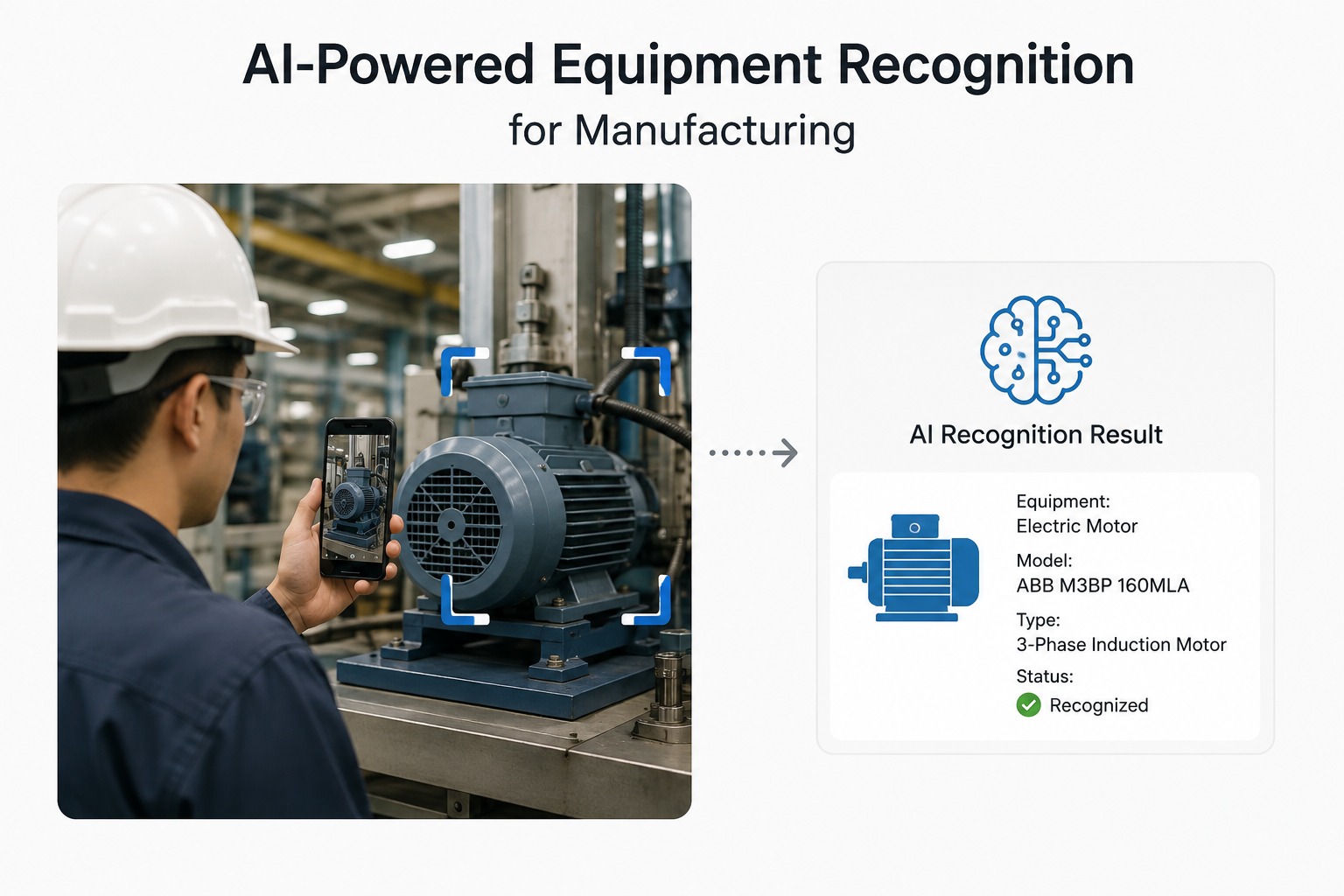
AI-powered equipment recognition helps manufacturing support teams identify specific machinery, components, and part numbers directly from a live video feed, rather than depending on a technician's memory or a customer's description of equipment they may not know how to accurately name. In an industry where a single support team might be responsible for hundreds or thousands of distinct equipment types, this capability directly addresses one of the hardest parts of manufacturing support: knowing exactly what you're looking at before you can figure out what's wrong with it.
This guide explores why equipment recognition is uniquely valuable in manufacturing contexts, how it works in practice, and what to look for when evaluating this kind of capability for a manufacturing support operation.
Why Manufacturing Support Is Different
Manufacturing environments present a specific challenge that many other support contexts don't face to the same degree: sheer equipment diversity. A single facility might run machinery from dozens of different manufacturers, spanning multiple generations of equipment, each with its own quirks, part numbering conventions, and failure patterns. A support technician, however experienced, cannot realistically memorize every model, every part number, and every known failure mode across an entire equipment catalog.
This diversity makes accurate identification a bottleneck in its own right, separate from actually diagnosing or fixing a problem. Before a technician can even begin troubleshooting, they need to know exactly what piece of equipment they're dealing with — its model, its configuration, and any specific components involved. Getting this wrong, or spending significant time figuring it out, delays everything that follows.
How AI Equipment Recognition Addresses This
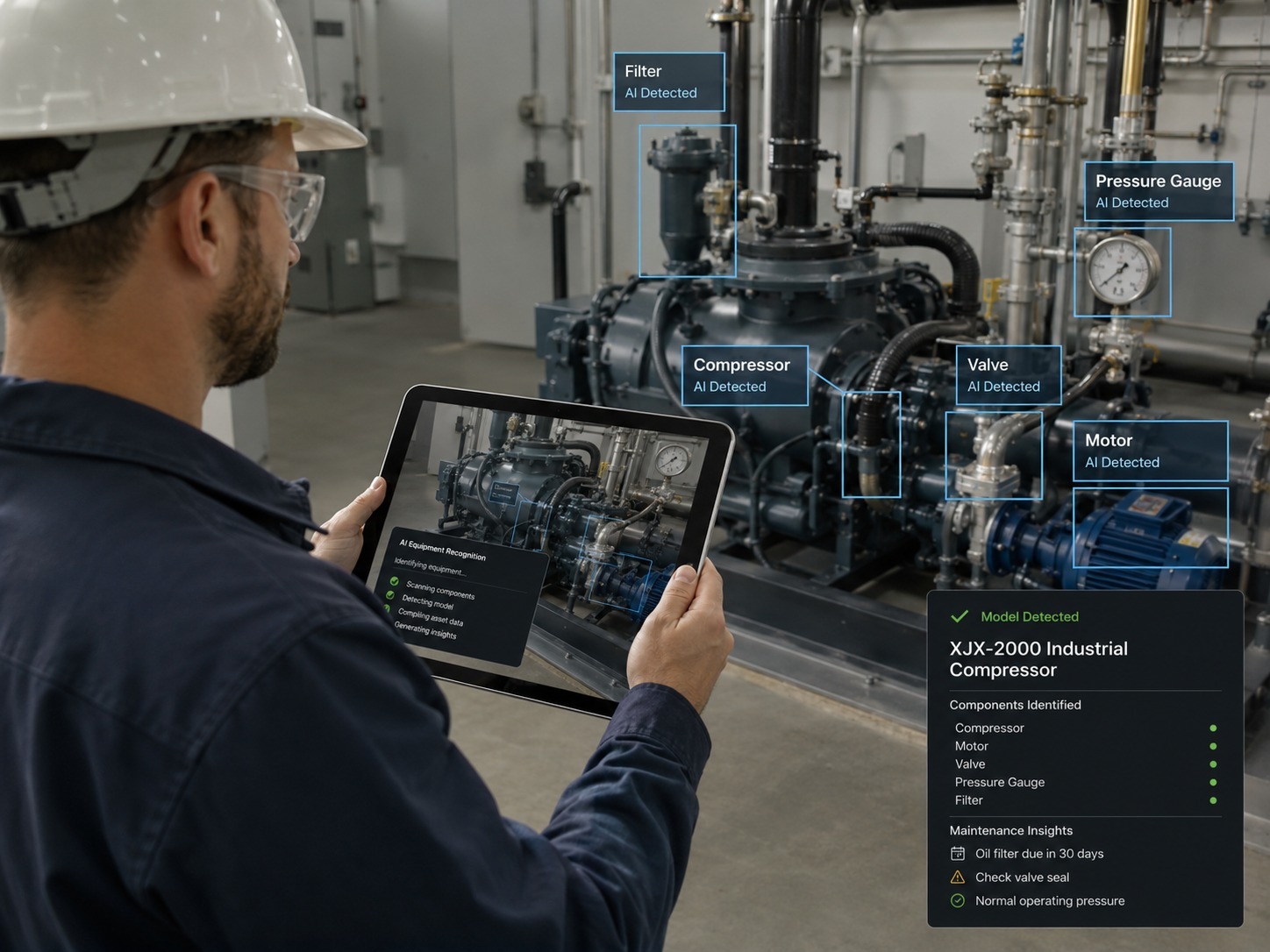
AI-powered equipment recognition tackles this bottleneck directly by using computer vision to identify machinery and components from a live video feed. Rather than asking a field worker or customer to read a nameplate, locate a part number, or describe a component in words, the AI can often identify what's in frame automatically, cross-referencing it against a company's own equipment catalog and documentation.
This capability typically includes a few connected functions:
Model and equipment identification. Recognizing a specific machine or piece of equipment based on its visual appearance, even when nameplates are worn, obscured, or written in small text.
Component-level recognition. Identifying specific parts, connectors, or subsystems within a larger piece of machinery, which matters when a single machine might have dozens of individually serviceable components.
Text and number extraction. Reading part numbers, serial numbers, and model codes directly from the video feed using optical character recognition, removing the need for someone to transcribe them manually or read them aloud.
Symptom and condition detection. Identifying visible signs of wear, damage, or malfunction — a cracked housing, a misaligned component, corrosion, or a warning indicator — alongside the equipment identification itself, using the same reasoning layer that connects a visual symptom to a probable cause.
Why This Matters More in Manufacturing Than Elsewhere
Some industries deal with a relatively contained set of equipment types — a telecom support team might primarily need to recognize a limited range of routers and modems, for instance. Manufacturing support teams typically face a much wider and more varied equipment landscape, which makes generic, off-the-shelf visual recognition tools substantially less useful than a system trained specifically on a company's own equipment catalog.
A system trained on generic industrial equipment might correctly identify a general category — "hydraulic valve," "conveyor motor" — without being able to say anything specific about the exact model, its known failure patterns, or the specific maintenance documentation that applies to it. For manufacturing support to be genuinely useful, the AI needs to be trained on the specific equipment a given facility or company actually uses, including proprietary or custom machinery that a generic system would have no prior exposure to.
How This Plays Out in a Support Interaction
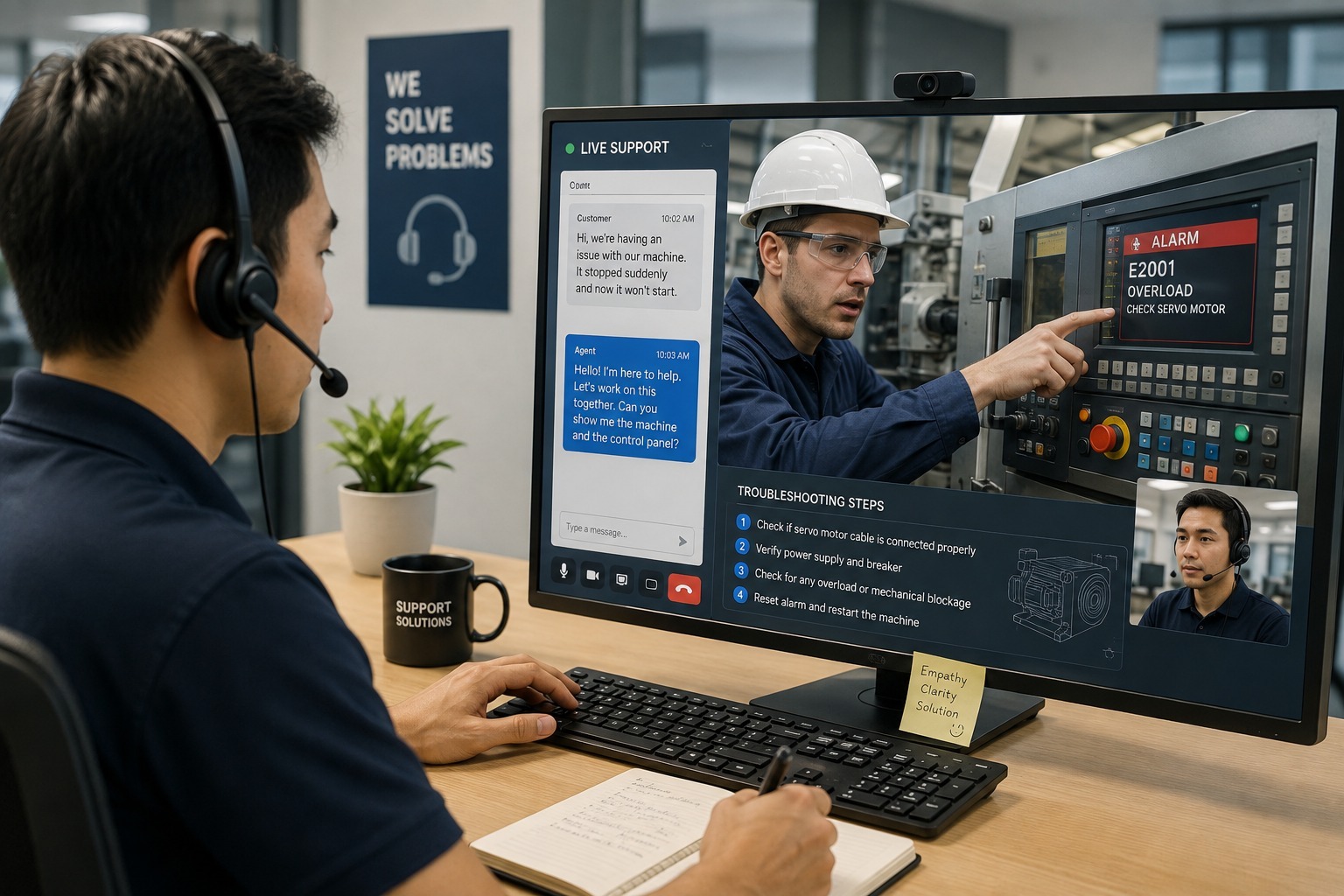
Consider a maintenance technician troubleshooting an unfamiliar piece of equipment on a manufacturing floor, supported remotely by a specialist via video call:
The technician points their camera at the malfunctioning component. They may not recognize the specific model or part number themselves, especially if it's an older or less common piece of equipment.
The AI identifies the equipment and reads relevant markings. Rather than the technician squinting at a worn nameplate or trying to describe the part to the remote specialist, the AI reads the model and part information directly from the video frame.
The AI cross-references the company's own documentation. Once identified, the system searches maintenance manuals, past service records, and technical documentation specific to that equipment, surfacing relevant troubleshooting steps or specifications.
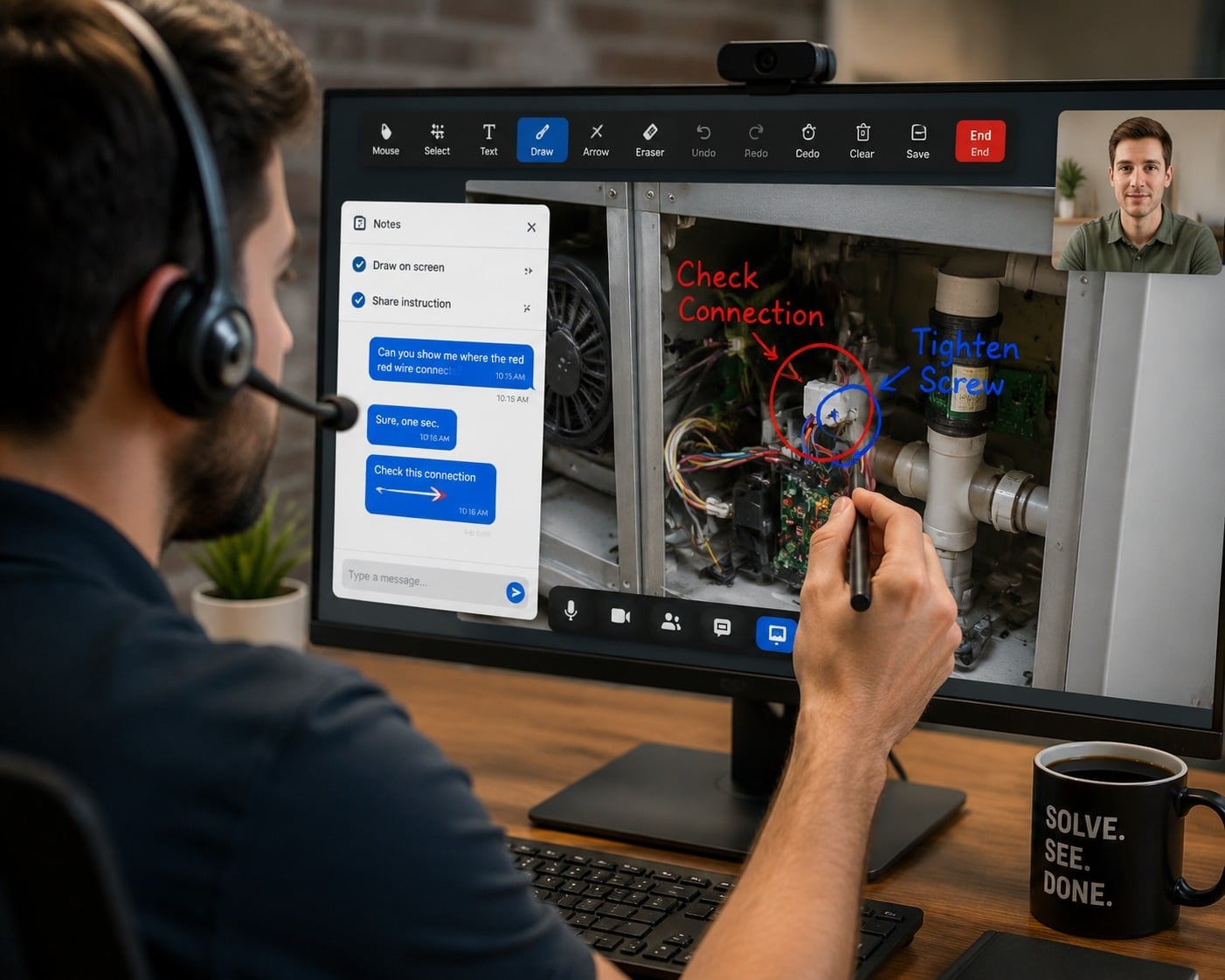
The remote specialist guides the fix with confidence. Rather than working from an uncertain description, the specialist can see exactly what equipment is involved and reference documentation that's actually applicable to it.
This is particularly valuable when the remote specialist may not have hands-on experience with every piece of equipment in a company's inventory — the AI's identification and documentation matching effectively extends the specialist's expertise to equipment they may not have encountered directly themselves.
Where This Reduces Time and Errors
A few specific scenarios illustrate where AI-powered equipment recognition has the most direct impact in manufacturing support:
Onboarding new technicians. New hires haven't yet built up the equipment recognition that experienced technicians rely on. AI recognition effectively gives them that capability from day one, which is part of why it directly improves first-contact resolution rates rather than requiring months or years of hands-on exposure to build up familiarity with a facility's full equipment inventory.
Multi-site operations. Companies operating across multiple facilities, each potentially running different equipment configurations, benefit from a system that can identify equipment consistently regardless of which site a technician is working at — and reduces how often a specialist needs to be physically dispatched to a given site in the first place.
Legacy and mixed-vintage equipment. Facilities running equipment spanning many years or multiple manufacturers face a particularly wide identification challenge, since documentation quality and labeling conventions often vary significantly across older and newer machines.
High-turnover support teams. Where staff turnover is high, institutional knowledge about specific equipment can be lost when experienced technicians leave — a dynamic closely tied to the burnout driving that turnover in the first place. AI-powered recognition, trained on the company's own equipment and documentation, helps preserve that knowledge independent of any individual's tenure.
A Comparison: With and Without AI Equipment Recognition
Without AI recognition: A technician encounters an unfamiliar hydraulic component on the floor. They photograph the nameplate, which is partially worn, and either guess at the model number or call around to more experienced colleagues to confirm what they're looking at. Once identified, they still need to locate the correct maintenance manual, which may be buried in a shared drive or filing system organized inconsistently across years of documentation. The entire identification and documentation lookup process can take anywhere from several minutes to much longer if the component is unusual or the documentation is hard to find.
With AI recognition: The same technician points a camera at the component during a video session with a remote specialist. The AI identifies the exact model within seconds, despite the worn nameplate, by recognizing the component's shape and remaining visible markings. It immediately surfaces the relevant maintenance documentation and any past service records for that exact part. The technician and specialist can move directly to troubleshooting, rather than spending the first several minutes of the interaction simply figuring out what they're looking at.
The time saved in this single step compounds significantly across a support operation handling many calls per day, particularly one with a wide and varied equipment catalog — a difference that shows up directly in average handle time once measured at scale.
What to Look for in a Manufacturing Context
Given how much manufacturing equipment recognition depends on training data quality, a few questions are worth asking when evaluating a system for this specific use case:
Has the system been trained on our specific equipment catalog, or generic industrial equipment? This is the single most important factor determining whether the AI will actually recognize the machinery a facility uses, rather than just general categories.
Can it read worn, damaged, or poorly lit nameplates and labels? Manufacturing environments often involve equipment that's been in use for years, with labels that may be faded, dirty, or partially obscured.
Does it integrate with our existing maintenance documentation and past service records? The value of recognition is limited if it can't connect an identified piece of equipment to genuinely useful, company-specific documentation.
Can it identify components within a larger machine, not just the machine as a whole? For complex machinery, being able to pinpoint a specific subsystem or part is often more useful than a general identification of the overall unit.
Common Questions About AI Equipment Recognition in Manufacturing
Does AI equipment recognition work for older or legacy machinery? It can, provided the system has been trained on that specific equipment or has access to sufficient documentation and reference images to learn from. Very old or highly customized equipment with little available documentation can be more challenging to recognize accurately.
How much training does a system need before it's useful for a specific facility? This depends on how much existing documentation, manuals, and imagery of the company's equipment is available to train on. A facility with well-organized documentation typically sees a system become useful more quickly than one with sparse or disorganized records — the kind of gains reflected in real deployment results across manufacturing and field service teams.
Can this replace the need for experienced maintenance technicians? No. It's designed to extend a technician's effective knowledge to equipment they may not have direct experience with, not to replace the judgment and hands-on skill an experienced technician brings to an actual repair.
Does equipment recognition help with safety compliance? In some cases, yes — accurately identifying equipment and any visible hazard indicators can support safety documentation and ensure the correct safety procedures are being referenced for the specific machinery involved.
Is this technology only useful for large manufacturing operations? While large, multi-site operations often see the clearest benefit given their equipment diversity, smaller facilities with specialized or hard-to-identify equipment can benefit as well, particularly if institutional knowledge is concentrated in a small number of experienced staff. Tracking the right metrics before and after adoption helps clarify whether the investment is paying off regardless of facility size.
The Bottom Line
Manufacturing support teams face an identification challenge that many other industries don't encounter to the same degree: an enormous diversity of equipment, often spanning multiple generations and manufacturers, that no single technician can fully memorize. AI-powered equipment recognition addresses this directly, using computer vision trained on a company's own equipment catalog to identify machinery, read part numbers, and connect what's on screen to the right documentation — turning what used to require years of hands-on familiarity into a capability available to any technician, on any equipment, from their very first day.