


On this page
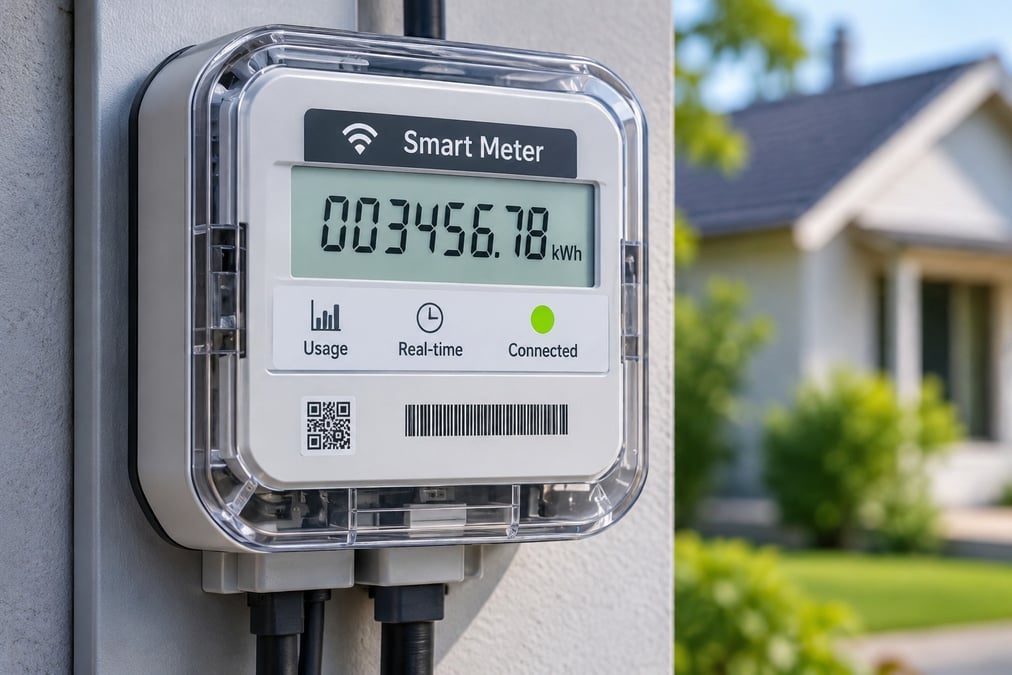
A customer calls their utility because the smart meter display is blank. Another reports a cracked cover. A third has a new installation that still has not connected. Whatever the symptom, the default response in many utilities is the same: schedule a field visit.
Multiply that by thousands of meters and the dispatch bill becomes enormous. Yet many of those visits end with a technician confirming a reading, reseating a connection, or explaining a display message. A crew drove out, spent twenty minutes on site, and drove back.
Live meter maintenance adds a second problem. Work on active electrical panels, gas lines, or water mains under pressure carries real risk, and the most experienced people are rarely the ones standing in front of the equipment. Remote video inspection (RVI) addresses both problems. It separates the expert’s judgment from the danger zone, and it lets utilities decide who needs to go on site before anyone leaves the depot.
This article walks through the pain points in smart meter maintenance, then follows the full process from first customer contact to documented completion, showing how RVI fits at every step.
The Pain Points in Smart Meter Maintenance
Smart meters promised fewer field visits through remote reading and monitoring. In many ways they delivered. But they also created new customer questions and new reasons to dispatch. When the answer is unclear, a visit feels like the safe choice.
Unnecessary dispatches. Common triggers include unfamiliar display symbols, reading disputes, meters that power on but do not report, and new installations that need verification. In each case, the person making the decision cannot see the meter and relies on a customer’s description.
Safety exposure. Live maintenance means working near active panels and pressurized lines. When a second opinion or senior sign-off is needed, experts often have to stand directly in front of exposed infrastructure, which raises the risk of electrical arcs, gas leaks, and other hazards.
Scarce expertise. Specialized knowledge is hard to spread across every residential and commercial panel. Junior technicians and approved contractors often work alone, and a stuck job means a second visit with a specialist.
Weak documentation. Hand-written notes and manual photo uploads are prone to human error. Proving that a serial number matches the asset registry, that readings were calibrated correctly, or that safety seals were applied is harder than it should be.
Blind dispatching. Without a view of the site, dispatchers cannot tell whether the job needs special protective equipment, a line isolation, or a standard visit. Crews arrive unprepared and return later.
What These Problems Cost
A field visit costs far more than fuel and wages. Blitzz’s guide to the true cost of truck rolls breaks down the full picture, and Blitzz’s own analysis puts a single unnecessary truck roll at up to $1,000 once every factor is counted.
For meter maintenance, the hidden costs include:
- Crew capacity. Every unnecessary visit pulls a crew away from outage restoration, infrastructure repair, and new connections.
- Rebooking overhead. Missed or rescheduled appointments create administrative work.
- Repeat visits. If the first crew lacks the right tools or sign-off, a second trip follows.
- Customer frustration. Waiting days over a simple question erodes trust.
- Emissions. Every trip adds to fleet fuel use and carbon output.
The post on the real cost of a truck roll and how to avoid it includes a simple framework to estimate your own monthly exposure by multiplying cost per dispatch by dispatch volume.
How Remote Video Inspection Works, Step by Step
RVI changes the sequence of events. Instead of dispatching first and learning later, utilities see first and dispatch only when needed. Here is how the process follows through from start to finish.
Step 1: Virtual triage before any dispatch
When a customer reports a meter issue, the agent sends a secure link by text message, email, or WhatsApp. The customer taps it and joins live video from their phone browser, with no app download. Blitzz designed its remote video inspection for utilities and energy solution around this, with meter verification, equipment diagnostics, outage assessment, and smart meter installations among the listed use cases.
Through the customer’s camera, the remote operator can read the display, check the meter number, and look at the surrounding area. Many issues end here, with an explanation or a confirmed reading instead of an appointment. The guide on what remote video inspections are covers the basics of how these sessions run.
Step 2: Hazard detection and safety audit
Before a utility team pulls a live meter or cuts power for a change-out, it must know the surrounding infrastructure is safe to touch. During the same video session, the operator can inspect the meter box for structural integrity, broken tamper seals, moisture intrusion, and severe rust or corrosion.
The customer is never asked to touch or open the meter. The agent only looks, and gives clear instructions to stay away if anything appears unsafe. If the audit reveals a hazardous environment, the utility knows to dispatch a specialized crew with the right personal protective equipment, or to plan a full line isolation instead of a standard live maintenance visit.
Step 3: A smarter dispatch decision
Triage turns dispatching from a guess into a decision. The dispatcher now knows whether the job needs a crew at all, what equipment to bring, and what safety conditions apply. Visits that remain are better prepared, which improves first-time fix rates, as described in the post on improving first-time fix rates with fewer truck rolls.
Step 4: Over-the-shoulder expert guidance during the work
When a crew is needed, the video session continues on site. A local junior technician or approved contractor works on the panel while using a mounted smartphone or ruggedized smart glasses such as RealWear or Vuzix. A senior expert at a central operating centre watches the live feed.
With augmented reality annotations, the expert can draw arrows or circles directly onto the technician’s field of view, pointing out terminal connections, wire configurations, and signs of hazardous wear, all without stepping near the high-voltage environment. That means one field technician handles the physical work while remote experts verify at the same time, instead of scheduling a second visit for sign-off.
The remote expert for field technicians use case explains how this works with smartphones, and the guide to hands-free remote video inspection with smart glass shows how the model extends to wearables when a technician needs both hands free.
Step 5: Non-invasive inspection of difficult meters
Some meters are hard to reach or dangerous to open. Complex commercial, industrial, and underground meters, such as deep water pits or gas volume correctors, can make live maintenance physically restrictive. In these cases, technicians can use high-definition videoscopes, pushrod cameras, or small robotic crawlers to look inside meter housings and enclosed pipe corridors, and share that view in the live session.
The remote team can check internal components and valve positions and look for hairline cracks or deposits while the system stays operational and pressurized. That avoids the cost and disruption of a system shutdown. For related thinking on camera-based diagnostics in infrastructure, see Blitzz’s article on video inspection in the utilities industry.
Step 6: Automatic compliance record and close-out
Live electrical and utility work is heavily regulated by bodies such as the CPUC, and proof matters. RVI software captures geo-tagged, time-stamped screenshots and video clips during the session, creating an audit trail that is difficult to alter.
Before the technician closes the panel, the record can confirm that the meter serial number matches the asset registry, that final readings are calibrated correctly, and that physical safety seals were applied. The evidence attaches to the ticket and the asset record, so any later dispute or audit starts with facts instead of recollection.
Traditional Maintenance vs. RVI-Enabled Maintenance
| Area | Traditional Maintenance | RVI-Enabled Maintenance |
|---|---|---|
| Safety risk | High, since experts must stand directly in front of live, exposed infrastructure | Lower, since experts stay remote and personnel exposure to live arcs or gas leaks is minimized |
| Truck rolls | Multiple site visits when a second opinion or senior sign-off is needed | Minimized, since one field technician does the physical work while remote teams verify concurrently |
| Documentation | Hand-written notes or manual photo uploads prone to error | Automated, with GPS-tracked, time-stamped evidence tied to the asset record |
Smart Meter Scenarios Where Video Beats a Dispatch
The blank or unfamiliar display. The agent sees the screen, identifies whether the meter is powered, and explains the message. Often it is a normal status indicator.
Reading disputes and high-bill concerns. The agent confirms the reading on the live feed, captures an image, and compares it with billing data. The dispute closes in minutes and the evidence is saved.
New installation verification. An installer or customer shows the meter, connections, and labeling. A supervisor approves the work live or requests a correction before anyone leaves, which avoids follow-up inspection visits.
Communication faults. A video check rules out obvious physical causes and confirms power. The dispatcher then knows whether a crew is truly needed and what to send.
Damage and safety reports. For a cracked cover or unusual smell, the agent prioritizes safety, assesses the situation if it is safe to look, and passes accurate information to the crew. This is triage that makes urgent visits faster and better prepared.
Benefits Beyond Cost Savings
Faster resolution. Customers get answers in minutes. Issues that do not need a crew are solved in one session.
Safer operations. Experts stay out of the danger zone, and hazardous conditions are identified before anyone arrives.
Better use of expertise. A small team of senior engineers can support many field technicians without travelling.
Stronger documentation. Automated capture replaces manual notes and supports regulatory compliance.
Higher crew productivity. Crews spend their time on repairs, restoration, and installations that need a person on site. The complete guide to remote visual support notes that utilities already use the approach for infrastructure inspections, meter readings, safety checks, and customer self-service installations.
Improved customer experience. Blitzz’s article on co-browsing solutions for utility support shows how agents can walk customers through bills and forms in real time. Cobrowse for account questions plus live video for equipment questions covers the full range of smart meter contacts.
Lower environmental impact. Fewer trips mean fewer emissions. See going green while saving money and 10 ways reducing truck rolls cuts your carbon footprint.
Where Video Cannot Replace a Crew
RVI does not eliminate field visits. Hardware replacement, hazardous conditions, tampering investigations, and live electrical work still need qualified people on site. The goal is smarter dispatching: send a crew when it is needed, with the right information, and skip the visit when it is not.
How to Roll Out RVI for Meter Maintenance
1. Identify top meter contact reasons. Review recent tickets and dispatches to find the issues that generate the most visits.
2. Set clear dispatch and safety rules. Define which findings justify a crew, and put hazard conditions at the top of the list.
3. Make video an early step. Offer a session at the start of a meter contact, not after other steps fail.
4. Equip field crews for expert support. Provide mounted phones or smart glasses so technicians can connect to a remote expert on live panel work.
5. Train agents and operators. Cover how to guide customers safely, read common display states, capture evidence, and escalate.
6. Integrate and measure. Launch sessions from the ticketing system and track dispatch rate, share of sessions resolved without a visit, first-time fix rate, handling time, and satisfaction.
Similar models already work in other inspection-heavy fields, as shown in how smart cities leverage remote video inspections and in the guide to remote video inspection for commercial and residential buildings. For a look at how telecom providers apply the same approach, read how telcos leverage remote video support.
See the Meter, Skip the Trip
Smart meters were meant to simplify utility operations. When maintenance still depends on sending a crew to check a display, confirm a reading, or get a second opinion, much of that promise is lost. Remote video inspection closes the gap. It gives utilities a clear view of the problem before dispatch, expert guidance during the work, and a verified record afterward.
Agents diagnose faster, customers get answers sooner, experts stay safe, and crews focus on work that truly needs them.
To see how this could work for your team, explore Blitzz Concierge, review the remote video inspections for utilities and energy page, browse the customer stories, or check the core features. More guides are on the Blitzz blog.

Blitzz Team
The Blitzz Team writes about remote video support, virtual inspections and field service. Our guides come from working with home builders, property managers, warranty teams, contact centers and field service organizations that use Blitzz to see and solve issues without a truck roll.