

.png?width=120&height=55&name=Blitzz-Logo-right%20white%20eyes%20-%20not%20transparent%20(3).png)
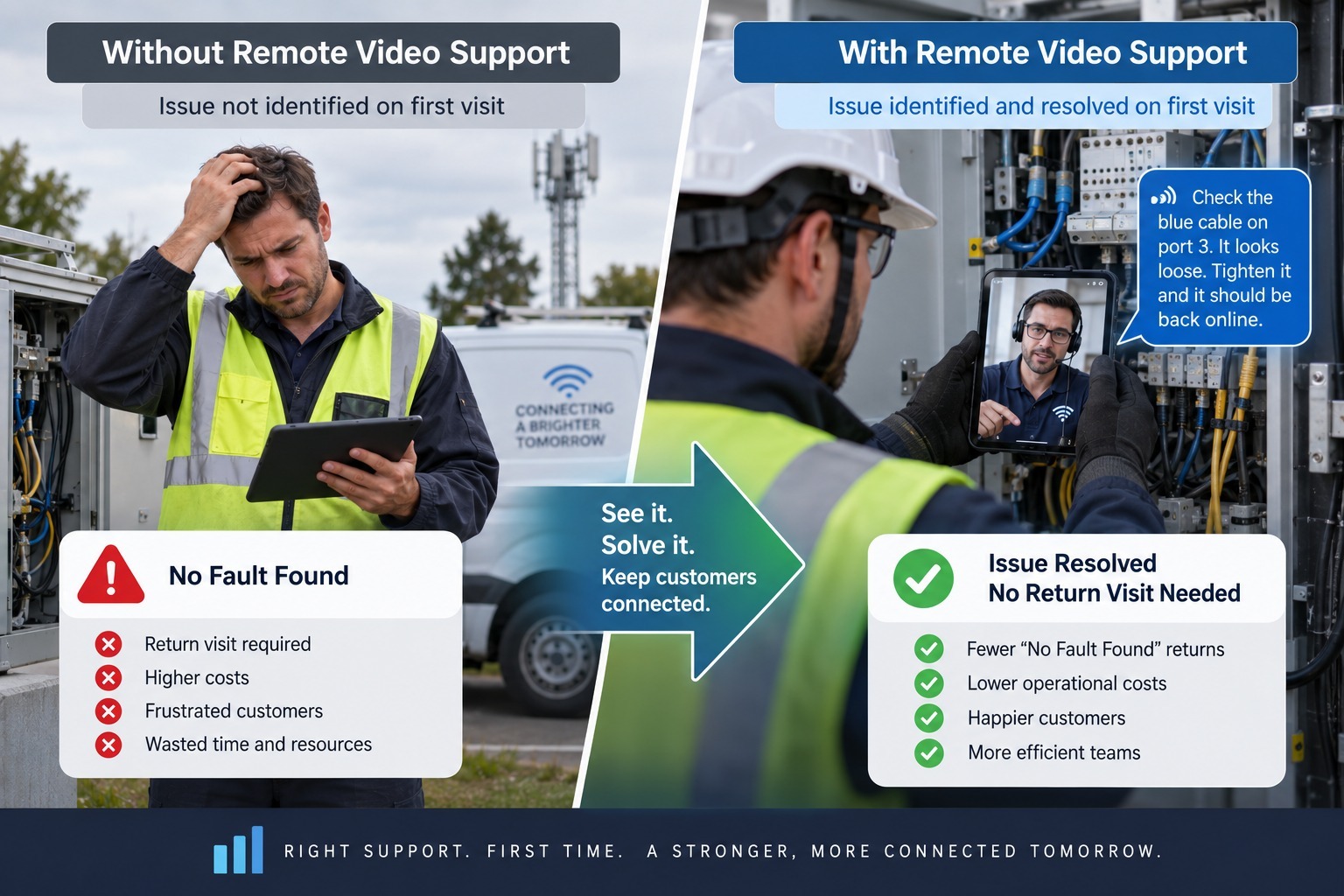
Few metrics frustrate consumer electronics and retail operations teams quite like the "no fault found" return — a product shipped back as defective, tested by the manufacturer or retailer, and found to work perfectly. These returns cost money at every stage: return shipping, restocking or refurbishment labor, lost resale value once a product has been opened and returned, and the original replacement or refund the customer already received. Industry estimates on electronics returns consistently show that a large share of "defective" returns test fine once they're actually inspected, which means a meaningful percentage of return-related costs are, in a very real sense, avoidable.
Remote video support attacks this problem at its source: instead of accepting a customer's self-diagnosis that a product is broken, an agent can see the product in use, in real time, before a return or replacement is ever approved.
Why No Fault Found Rates Stay Stubbornly High
Most "no fault found" returns don't happen because customers are being dishonest — they happen because customers genuinely believe something is broken when the actual issue is a setup error, a misunderstood feature, or a setting that needs adjustment. A customer who can't get a smart TV to connect to Wi-Fi might reasonably conclude the unit is defective, when the actual problem is a router setting or an outdated firmware version. Without a way to actually see the product in use, a support agent has no reliable way to distinguish "this unit has failed" from "this customer needs help completing setup," and the safer, faster path for both sides has historically been to just approve the return.
This dynamic is closely related to why misdiagnosis happens on video calls generally — even skilled agents, working from an incomplete picture, default to the conclusion that requires the least investigation, which in a phone-only environment is usually "process the return."
Seeing the Problem Instead of Guessing at It
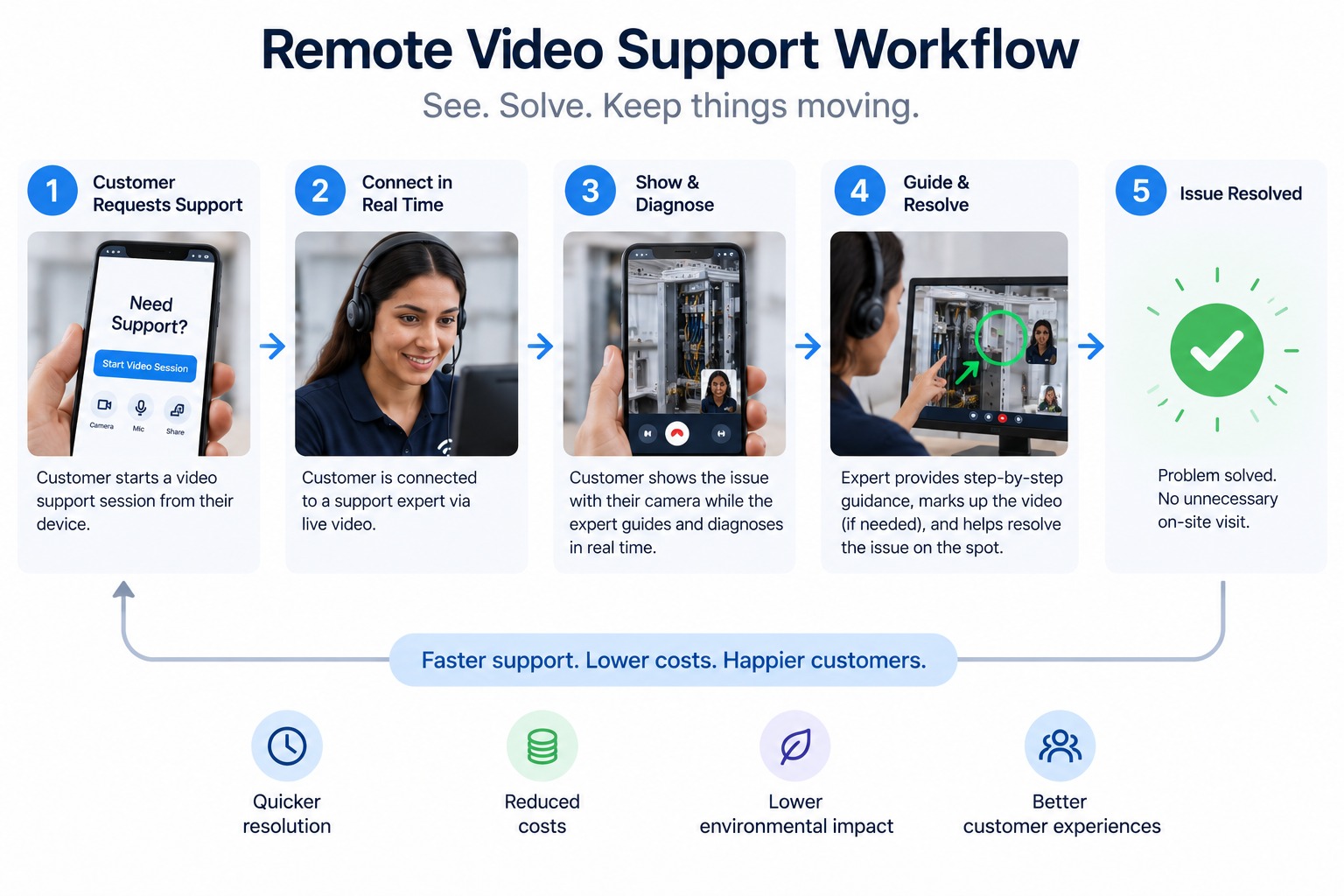
The fix is conceptually simple: give the agent visual access to the product before a return decision gets made. Using a platform like Blitzz Concierge, a customer reporting a defective product can open a live video session from their phone browser, show the agent the actual behavior they're seeing, and the agent can walk them through troubleshooting in real time — the same way telecom support teams diagnose router issues remotely by reading equipment status instead of relying on a customer's description of it.
Visual context resolves ambiguity that voice-only support structurally cannot. An agent watching a live feed can immediately identify a loose cable, an incorrect setting, or a firmware update prompt the customer dismissed without reading — issues that would otherwise result in an unnecessary return.
AI-Assisted Diagnosis at Scale
Visual AI makes this consistent across an entire support floor rather than dependent on individual agent expertise. Owlbert AI can recognize the product on screen, pull up known troubleshooting steps for that specific model, and flag settings issues automatically — reducing how much of the outcome depends on whether the specific agent on the call happens to be familiar with that product line. This mirrors how AI-powered equipment recognition helps manufacturing support teams identify machinery and part numbers instantly, applied to consumer electronics support instead of industrial field service.
AI Agent Assist plays a direct role here, watching the live call and surfacing likely fixes in real time — often before the agent has even finished asking their diagnostic questions, based on what the AI recognizes in the video feed itself.
Guided Assembly and Setup Prevents Returns Before They Happen
A significant share of "no fault found" returns trace back to setup problems rather than genuine defects, which means the most effective intervention often happens before a return is even requested. How Owlbert AI helps support teams guide customers through product assembly and setup remotely covers this directly — a customer who gets live, visual help assembling furniture, setting up a smart TV, or configuring a new appliance is far less likely to conclude the product is defective simply because they got stuck partway through.
This preventive framing matters for how return policies are structured. Rather than treating support as something that only kicks in once a customer has already decided to return a product, offering a live video setup-assistance option at first contact — before frustration escalates to a return request — catches a large share of would-be no-fault-found returns before they ever enter the returns pipeline.
Why This Matters More for Retailers Than Manufacturers Alone
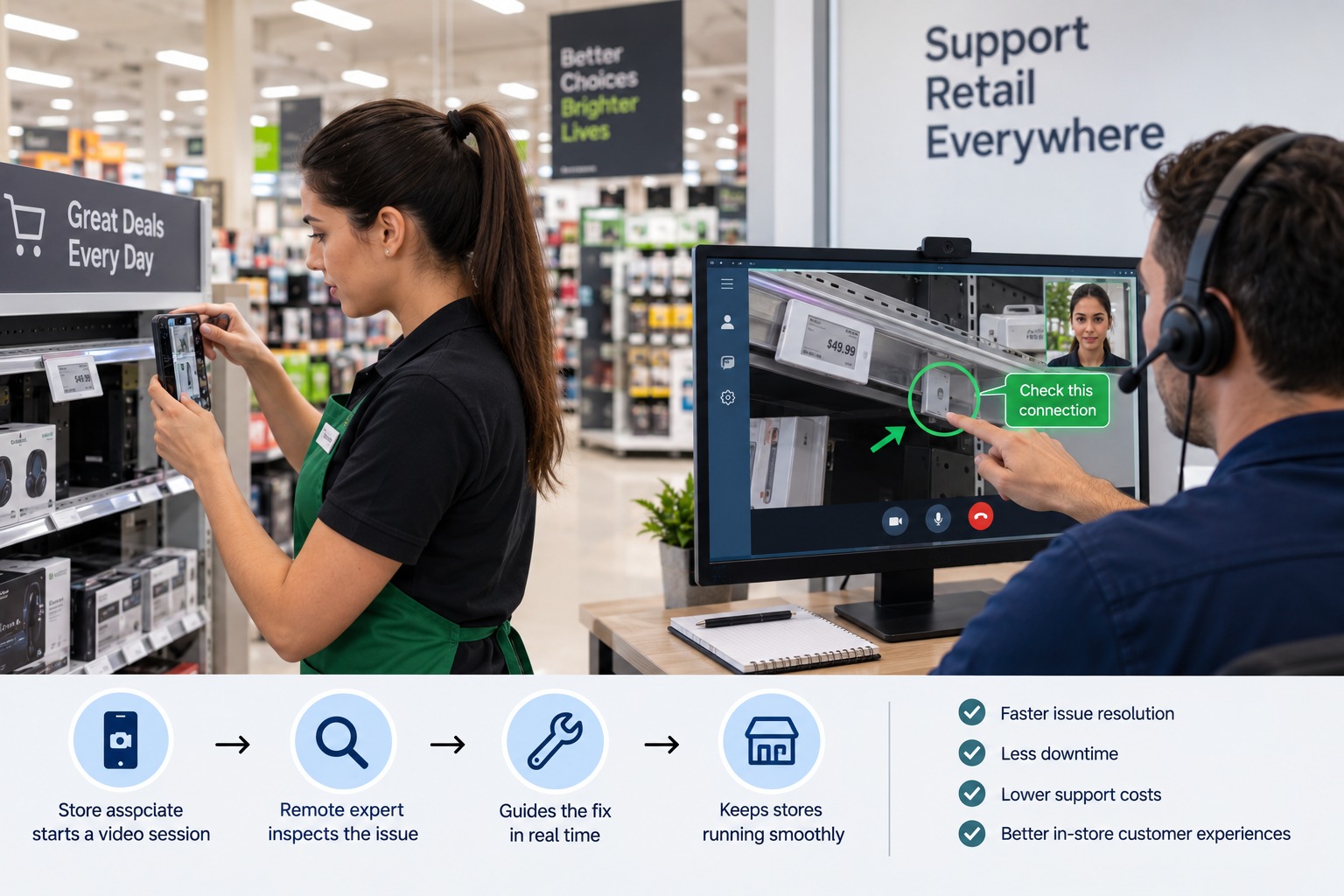
While manufacturers absorb some of the cost of no-fault-found returns through warranty programs, retailers often bear the brunt directly, since a returned product frequently can't be resold at full price even if it's confirmed to work perfectly. How retailers use remote live video support to cut product return rates covers this dynamic specifically — retail return policies are often generous by design to protect customer trust, which makes prevention, not stricter policy, the only realistic lever for reducing the associated cost.
Visual remote assistance for retail and e-commerce is increasingly treated as a standard part of the post-purchase experience for exactly this reason — it protects the generous return policy customers expect while reducing how often that policy gets invoked for products that were never actually broken.
The AR Annotation Advantage for Physical Setup Issues
Some fixes are easier to show than to describe verbally — reseating a cable, pressing a specific combination of buttons, or adjusting a physical dial. AR annotation lets an agent draw directly on the customer's live video feed, circling the exact port or button in question instead of describing it verbally over a call where miscommunication is easy. This kind of precise visual guidance resolves small physical fixes considerably faster than voice-only troubleshooting, and it removes a common source of customer frustration — being told to do something they don't fully understand how to locate on their own device.
Reducing Downtime-Driven Returns in Higher-Value Products
For higher-value electronics and appliances, "no fault found" returns often stem from perceived downtime rather than an actual hardware failure — a customer assumes a unit has failed when it's actually mid-cycle, in a power-saving mode, or waiting on a firmware update. How remote video support eliminates equipment downtime in industrial contexts applies the same underlying principle to consumer products: a live visual check frequently resolves the perceived issue in minutes, without any hardware ever needing to be evaluated for a return.
Measuring the Right Outcome
It's worth being precise about what "reducing no fault found returns" actually means in practice, since a return policy that becomes stricter can lower the reported rate without actually improving the underlying experience — it just shifts frustrated customers into repeat contacts or lost future purchases instead. The goal isn't to make returns harder to get; it's to resolve the underlying confusion or setup issue before a return becomes the only path a frustrated customer sees available. The metrics that actually matter in AI customer support is a useful frame for building a scorecard that tracks resolution quality alongside return rate, rather than treating a lower return rate as automatically good news on its own.
The Cost Case
Reducing customer support costs by 40% with AI is achievable in electronics and retail support specifically because unnecessary returns represent one of the largest avoidable cost categories in the business — larger, in many cases, than the direct cost of running the support operation itself. A modest reduction in no-fault-found returns, applied across a large product catalog, typically pays for a video support platform within a matter of months rather than years, especially for product categories with high per-unit shipping and restocking costs.
Building a Consistent Pre-Return Troubleshooting Standard
A recurring risk when rolling out video-based return prevention is inconsistency between agents — one agent runs a thorough diagnostic session before approving a return, while another approves it after a cursory question or two, and the reported no-fault-found rate ends up reflecting agent behavior more than actual product performance. A written troubleshooting standard for each major product category, specifying which checks an agent needs to walk through on camera before a return can be approved, keeps outcomes consistent regardless of who happens to answer the call. This standard also becomes useful training material for newer agents who haven't yet built up the pattern recognition that comes with handling hundreds of similar tickets. This kind of consistency is exactly what AI Agent Assist is designed to reinforce, surfacing the same checklist regardless of which agent happens to take the call.
Handling Genuinely Frustrated Customers
Some customers requesting a return have already spent considerable time troubleshooting on their own before calling in, and asking them to repeat steps they've already tried can come across as dismissive rather than helpful. Framing the video session as a way to speed up their return, not delay it, tends to land better — "let's take a quick look together so I can either fix this right now or get your return moving immediately" respects the customer's time while still opening the door to a live diagnosis. For customers who've clearly already exhausted reasonable troubleshooting on their own, a video session should confirm the issue quickly rather than repeat a full script from scratch, since forcing an already-frustrated customer through a redundant process does more harm to the relationship than a slightly higher return rate would. This is closely tied to why your first contact resolution rate is low in the first place — a rigid script applied regardless of context tends to frustrate exactly the customers most worth retaining.
What Happens When the Product Really Is Defective
Not every video session ends in a resolved issue, and that's an important part of building trust in the process. When a live check confirms a genuine hardware failure, approving the return or replacement immediately — rather than requiring additional steps once the defect has been visually confirmed — reinforces that the video session exists to speed up legitimate cases, not just to filter out illegitimate ones. Teams that use video assistance purely as a gatekeeping mechanism, making the process harder regardless of outcome, tend to see customer satisfaction drop even as the reported return rate improves, which defeats much of the purpose of the initiative in the first place. Blitzz Inspect and structured verification tools generally work best when framed to customers as speeding up a fair outcome, not as an obstacle standing between them and a resolution.
Applying This Beyond Electronics
While consumer electronics are the most visible category for no-fault-found returns, the same dynamic shows up anywhere a customer's self-diagnosis drives a return decision without visual confirmation — appliances, fitness equipment, and even some furniture categories with electronic or mechanical components. The underlying principle scales across categories: wherever a customer might mistake a setup or usage issue for a hardware defect, a brief live video check tends to resolve a meaningful share of cases that would otherwise become an unnecessary return. Fast remote visual support for hardware manufacturing illustrates how the same principle applies further upstream, well before a product ever reaches a retail return counter.
Comparing Video Triage to Automated Diagnostics
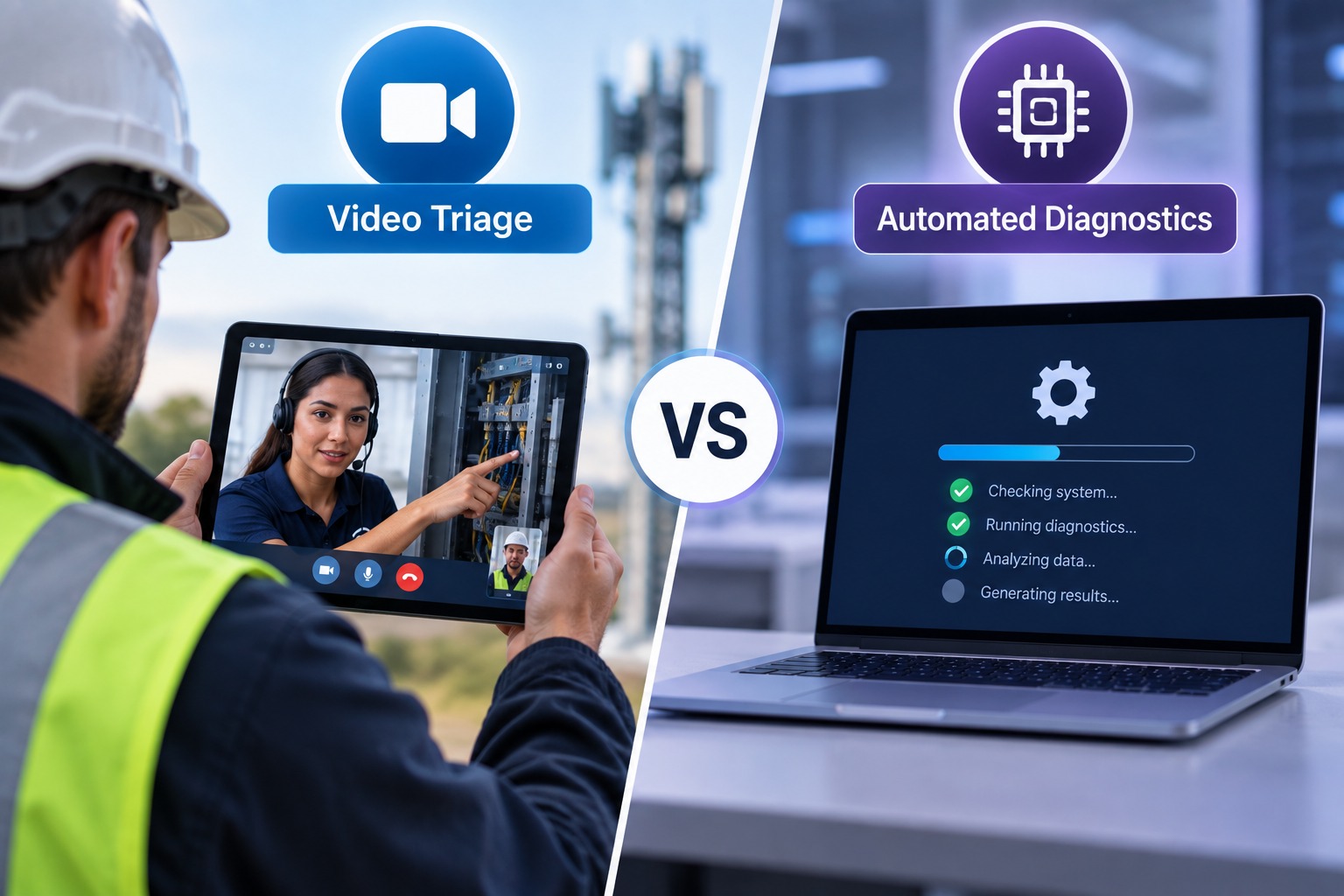
Some manufacturers have tried to solve no-fault-found returns purely through automated remote diagnostics — software that reports back a device's internal health status without any human review. These tools genuinely help for products that support them, but they only ever cover a narrow slice of the actual defect categories customers report, since most consumer complaints involve something the device itself has no way to self-report, like a scratch, a rattle, or a physical fit issue with an accessory. Remote support tools compared: when to use video, AR, and AI is a useful reference for thinking through which tool actually fits a given return scenario, since video, automated diagnostics, and AR guidance each solve a different piece of the puzzle rather than one universally replacing the others.
Why This Deserves Executive Attention
No-fault-found return rate rarely gets the same executive visibility as headline metrics like average handle time or customer satisfaction scores, largely because it sits at the intersection of support, logistics, and product teams rather than belonging cleanly to any single department. That organizational gap is often exactly why it persists unaddressed for years — nobody owns the full picture end to end. Making the case for remote video triage as a return-prevention initiative, rather than purely a support-efficiency tool, tends to secure executive attention faster, since the cost of unnecessary returns is usually large enough to show up clearly once someone actually calculates it across a full product catalog and reporting year.
Building This Into Your Support Workflow
Implementing video-based return prevention doesn't require replacing your existing support stack. Blitzz Concierge is built to integrate directly into the ticketing and CRM tools support teams already use through available integrations, so agents can offer a video troubleshooting session directly from an incoming return request rather than adopting a separate standalone tool.
A practical starting point is flagging your highest-volume "defective" return categories — smart home devices and streaming hardware are common offenders — for mandatory video troubleshooting before a return is approved. Measuring the change in confirmed-defect rate for that category over several weeks typically builds a clear enough case to expand the requirement across the rest of the catalog, since the categories with the highest perceived defect rates are usually the same ones where setup confusion, not hardware failure, is the actual root cause.