


On this page
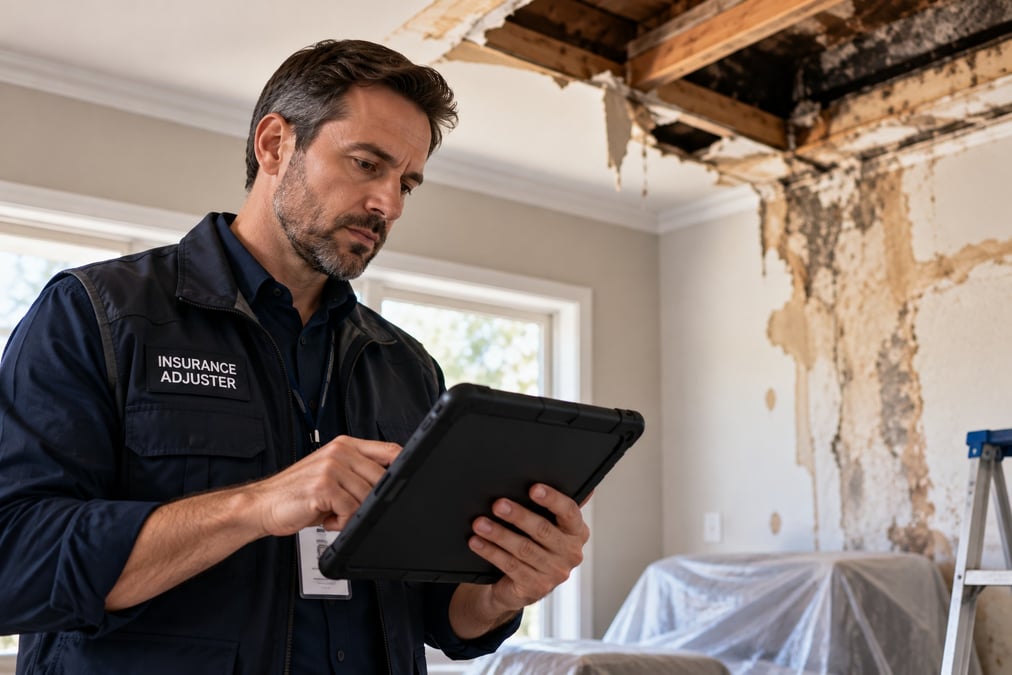
When a policyholder files a property claim, the first question is no longer just “when can an adjuster visit?” It is “how will we see the damage?” Carriers now have two main remote options. In a self-guided inspection, the customer follows prompts to capture photos or video on their own and uploads them. In an adjuster-led video inspection, the adjuster joins a live session and directs the camera in real time.
Both models can reduce cycle time, travel costs and field dispatches. Both also have blind spots. The best choice depends on the claim, the customer and the carrier’s capacity at that moment. This guide compares the two approaches, shows where each one works best, and explains how to combine them into a triage model that improves speed without sacrificing evidence quality.
What each model means
Customer self-guided inspection. The policyholder receives a link or opens an app, follows on-screen instructions to photograph or film the damage, and submits the files. The process is asynchronous, so no adjuster needs to be present. Some carriers add AI to check image quality, identify damage or generate an estimate.
Adjuster-led video inspection. The policyholder joins a live session by smartphone, and a claims professional guides them through the walkthrough. The adjuster asks for specific angles, zooms in, marks up the screen, captures still images and asks questions as they go. With Blitzz, for example, the policyholder joins from a link with no app download.
Hybrid approaches. Many carriers combine the two. A customer might start with a guided self-capture, then be routed to a live session if the adjuster needs more detail. Or a live session might end with a short list of additional photos for the customer to submit later.
The case for self-guided inspections
Scale. Self-guided capture does not consume adjuster time while the customer is shooting. During catastrophe events, when thousands of claims arrive at once, that capacity matters.
Convenience. Customers can capture damage at any hour, without waiting for a call or appointment. For small losses, many people prefer to handle it themselves and move on.
Lower cost per claim. If the photos are sufficient, the carrier avoids the cost of scheduling, driving and sitting through a live session.
Customer comfort with digital tools. Policyholders are used to submitting photos. JD Power’s 2026 U.S. Property Claims Satisfaction Study found that digital capabilities used throughout the claims process improved satisfaction, and that about half of customers used digital photo submission to support an estimate or payout. Satisfaction was higher among customers who used digital tools for each step than among those who did the same step offline.
Speed on simple claims. In an earlier J.D. Power study reported by Carrier Management, homeowners who went fully digital and accepted the insurer’s estimate received payment in about 9.7 days on average.
The limits of self-guided inspections
Incomplete evidence. A customer does not know which angles matter. Photos often miss context, scale, the full roofline, the source of a leak or the label on a damaged appliance. Adjusters then have to request more photos, which adds days.
Breaks in the digital chain. The same J.D. Power data shows that speed depends on a smooth process. When customers submitted photos but did not accept the insurer’s estimate, the initial payment took about 15.2 days on average, compared with about 11 days when the customer accepted. Self-service is fast only when the evidence is good enough and the customer agrees with the result.
Perceived inadequacy. J.D. Power has also reported that customers sometimes view photo estimating tools as inadequate, and that digital claims tools have not always met satisfaction benchmarks.
No real-time questions. Customers cannot ask whether a stain is covered or whether to move a damaged item. Adjusters cannot ask follow-up questions on the spot.
Authenticity risk. It is harder to verify when and where a photo was taken, whether it shows the insured property or whether it has been altered. Metadata, GPS and timestamps help, but they do not replace a live interaction.
Accessibility and stress. Elderly customers, people with disabilities and those in the middle of a stressful loss may struggle with a self-guided flow. J.D. Power has found generational differences in how customers use digital claims tools.
The case for adjuster-led video
Better evidence on the first try. Blitzz describes the difference on its insurance inspections page: photo submissions are passive and often incomplete, while adjuster-guided video is interactive, with real-time direction to capture specific damage areas and documentation.
Clarity in the moment. The adjuster can use remote zoom to look closely at shingles, plumbing connections or cracks, live pointer tools to direct attention and markup to flag areas. OCR can capture serial numbers from appliance labels so they do not have to be typed in by hand.
Fewer follow-ups. When the adjuster confirms each angle, the need to request more photos drops. That helps cycle time and reduces back-and-forth.
Stronger verification. A live session, combined with GPS location data and timestamped HD photos, gives the carrier a stronger basis for confirming the property and the loss.
Human reassurance. Claims are stressful. A calm adjuster who explains next steps while looking at the damage can build trust that a form cannot.
A defensible record. Sessions can be recorded with consent, summarized with an AI call summary and compiled into an inspection report, which supports audit and dispute resolution.
The limits of adjuster-led video
Adjuster time. Every live session uses adjuster capacity. It is more efficient than driving, but it is not free, and it may not scale for very small claims or sudden volume spikes.
Scheduling. Customers and adjusters must connect at the same time. For many people, that is easier than a field visit, but it is harder than shooting photos at midnight.
Connectivity. After storms, networks can be unreliable. Features like offline mode, which lets participants capture images and data without a signal and upload later, help but do not eliminate the problem.
Camera operator skill. The quality of video depends on the person holding the phone. A good adjuster compensates with clear, step-by-step instructions.
Safety limits. Some damage is too hazardous to show on camera, and some policyholders should not be walking around the property at all.
Head-to-head comparison
| Factor | Customer self-guided | Adjuster-led video |
|---|---|---|
| Adjuster time required | Low upfront, more if rework is needed | Moderate during the session |
| Customer convenience | High, any time | Good, but needs a shared time slot |
| Evidence quality | Variable | Consistently higher |
| Rework and follow-ups | More likely | Less likely |
| Real-time questions | No | Yes |
| Fraud and authenticity checks | Depends on metadata and review | Stronger, with live observation |
| Scalability in a surge | High | Limited by adjuster capacity |
| Customer reassurance | Low | High |
| Best for | Simple, low-severity claims | Moderate or ambiguous claims |
| Cost per claim | Lowest when evidence is sufficient | Higher than self-guided, lower than a field visit |
Choosing the right model for each claim
The goal is not to pick a winner. It is to match the model to the claim. A simple framework uses four questions.
1. How severe or complex is the loss? Minor damage with a clear cause, such as a broken fence panel or a few missing shingles, suits self-guided capture. Water losses with unclear sources, roof damage with interior leaks or claims with multiple rooms affected benefit from live guidance.
2. How much uncertainty is there? If the cause, scope or coverage question is unclear, a conversation helps. If the loss is straightforward, a prompt-driven upload may be enough.
3. What is the fraud or leakage risk? High-value claims, unusual patterns and prior claim history justify a live session or a field visit. Low-risk, low-dollar claims may be better handled by a self-guided flow with automated checks.
4. What does the customer need? Some policyholders want speed and independence. Others want reassurance and help. Offering a choice can improve satisfaction, as long as the carrier can still get the evidence it needs.
A practical triage model might look like this:
- Self-guided first: low-severity property claims, contents-only claims, small auto glass or cosmetic damage, and routine follow-ups.
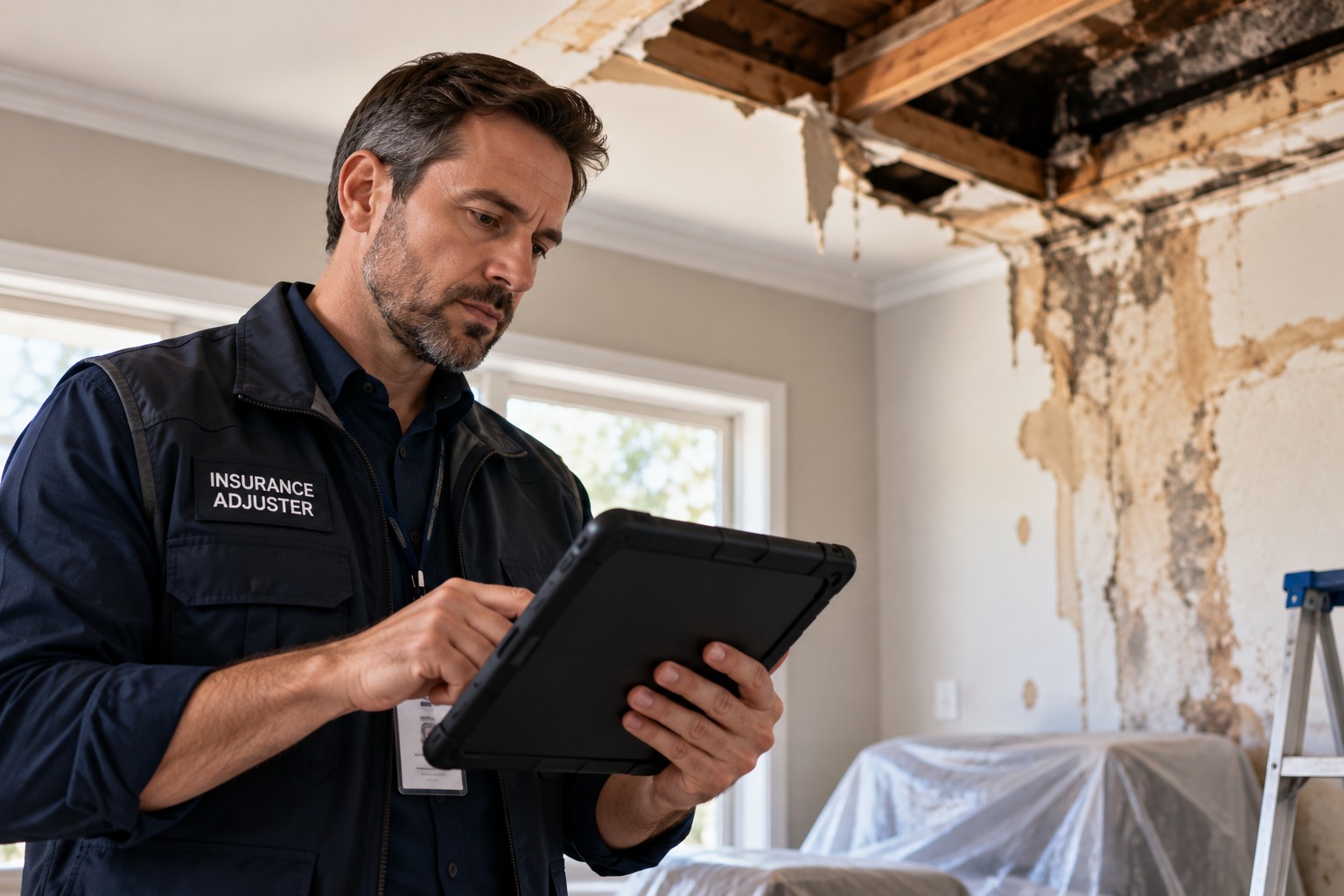
- Adjuster-led video first: moderate roof, water and wind claims, claims with unclear scope, and any claim a customer struggles to document.
- Field visit: major structural damage, fire, large flood losses, safety hazards and complex or litigated claims.
- Escalation path: if a self-guided submission is incomplete, offer a short live session instead of repeated requests for more photos.
Building a hybrid workflow
The strongest programs treat self-guided and adjuster-led video as parts of one workflow.
Start with guided capture, escalate when needed. Customers submit initial photos. An adjuster or an automated check reviews them within a defined window. If the images are clear and the claim is simple, the carrier proceeds. If not, the customer receives a link to a live session instead of a long list of retakes.
Use live video to teach the capture. In a live session, the adjuster can show the policyholder how to photograph a roof from the ground or how to record a ceiling stain. Those images can then be uploaded to the claim file.
Follow up asynchronously. After a live inspection, the customer might submit before-and-after photos of mitigation work or repair progress. This keeps the claim moving without another call.
Let contractors document their own work. Restoration companies and roofers often have crews on site. BlitzzCam field photo documentation stamps each photo with a GPS location and timestamp and organizes it by job and phase, which gives adjusters a consistent record of conditions and repairs. BlitzzCam is listed as early access, so check availability with Blitzz.
Keep the data in one place. Whatever the model, evidence should flow into the claim file without manual re-entry. Look at integration options for your claims, contact center and CRM systems.
Getting better results from either approach
For self-guided flows
- Give clear, visual instructions, such as a short example of each required angle.
- Require wide, medium and close-up shots for each damaged area.
- Ask for context, such as the room, the roof elevation or the exterior corner.
- Capture timestamps and location data automatically.
- Provide a simple way to reach a human if the customer gets stuck.
For adjuster-led sessions
- Send an invitation that explains how long the session will take and what to have ready.
- Start with safety. Tell customers never to climb onto roofs or enter unsafe areas.
- Work from the outside in, one instruction at a time.
- Capture photos during the session and recap the next steps at the end.
- Use silent observer mode so supervisors can review live sessions for quality and training.
For both
- Protect privacy. Claim images and videos show the inside of people’s homes, so choose a platform with strong security controls such as encryption and audit trails.
- Record why you chose a particular model for each claim so you can review outcomes later.
Metrics that show which model works
Do not rely on assumptions. Compare the following by claim type and by model:
- Time to first contact and time to first usable evidence
- Total cycle time
- Percentage of claims needing rework, retakes or reinspection
- Supplement rate and average supplement size
- Field dispatch rate
- Leakage findings from file audits
- Customer satisfaction scores
- Escalation rate from self-guided to live or field inspection
A high escalation rate from self-guided flows means your prompts, triage rules or claim selection need adjustment. A low supplement rate and high satisfaction in adjuster-led sessions may justify using live video for more claim types.
The bottom line
Self-guided inspection and adjuster-led video are not competitors so much as tools for different jobs. Self-guided capture offers scale and convenience for simple claims. Adjuster-led video offers clarity, verification and reassurance when the loss is more complicated or the stakes are higher.
Carriers that get the best results usually do three things: they triage claims by severity and uncertainty, they escalate quickly when self-guided evidence falls short, and they keep every piece of evidence tied to a single claim record.
To see how Blitzz supports adjuster-led video inspection, read the guide on how remote video support simplifies insurance inspections, explore the case studies or schedule a demo to see Blitzz Inspect and BlitzzCam field photo documentation in action.

Blitzz Team
The Blitzz Team writes about remote video support, virtual inspections and field service. Our guides come from working with home builders, property managers, warranty teams, contact centers and field service organizations that use Blitzz to see and solve issues without a truck roll.