

.png?width=120&height=55&name=Blitzz-Logo-right%20white%20eyes%20-%20not%20transparent%20(3).png)
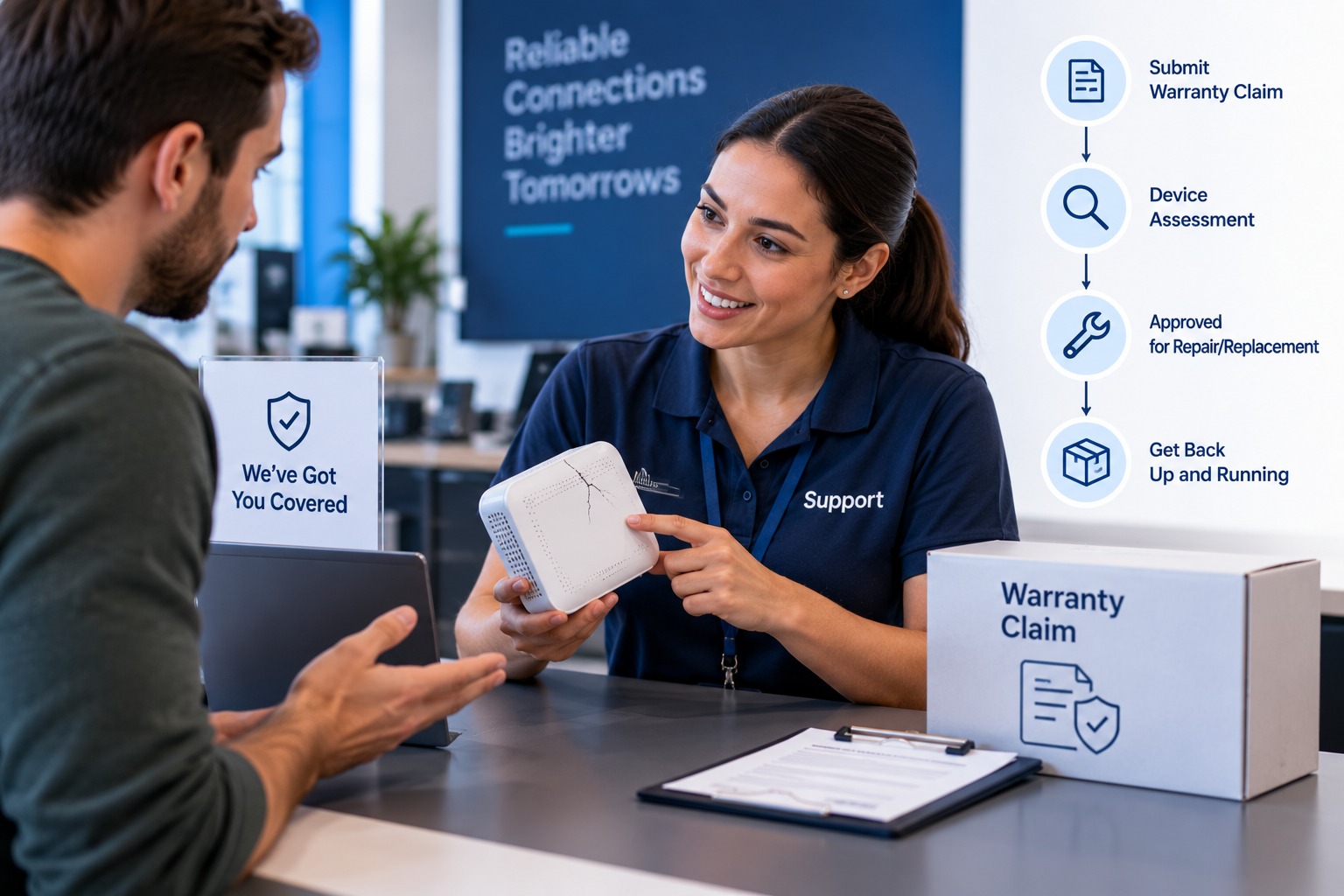
Every warranty program runs on an unspoken bet: that the cost of shipping a small number of unnecessary replacements is cheaper than the cost of verifying every single claim in person. For years, that bet made sense — a phone call and a customer's word were the only practical options, and a certain amount of leakage was simply the cost of doing business. But that math changes the moment verification stops requiring an in-person visit. When a claims team can actually see the damaged product before approving a replacement, the calculation shifts from "how much leakage can we tolerate" to "how much leakage can we eliminate without adding friction for legitimate claims."
Remote visual inspection gives warranty and claims teams that visibility. Instead of approving a replacement based on a customer's written description or a handful of unclear photos, an agent can open a live video session, see the actual damage or defect, and make an informed approval decision in minutes.
The Hidden Cost of Unverified Claims
Warranty leakage — claims that get approved without adequate verification — is one of the least visible cost centers in consumer electronics and hardware businesses, precisely because it doesn't show up as a single large line item. It shows up as a steady, distributed cost across thousands of individual replacement shipments, some of which cover genuine defects and some of which cover damage that occurred after purchase, user error not covered under warranty terms, or in a smaller number of cases, outright fraud. How to prevent warranty fraud with photos covers the mechanics of this problem in more depth, but the underlying issue is straightforward: static photos submitted by a customer can be selectively framed, and a claims agent working from a handful of images has limited ability to ask follow-up questions the way they could on a live call.
The importance of photo documentation for warranty claims has long been understood in the industry, but photo documentation on its own only solves part of the problem — it proves something existed at a point in time, but it doesn't let a reviewer probe further, ask the customer to rotate the item, or check for a secondary issue the initial photos didn't capture.
Why Live Video Outperforms Static Photos for Verification
The core limitation of photo-based warranty verification is that it's a one-way submission. The customer decides what to photograph, the agent reviews what was sent, and if something's unclear or missing, the entire process has to restart with a request for additional photos — often adding days to a claim that could otherwise be resolved in a single interaction.
A live video session removes that back-and-forth entirely. If an agent needs to see the underside of a device, a specific component, or a serial number that wasn't visible in the customer's initial description, they simply ask the customer to move the camera. This single capability — the ability to direct what's being shown, not just receive whatever was captured — is why live video consistently outperforms static photos for any verification task where the reviewer needs specific, sometimes unpredictable information.
What a Remote Warranty Verification Session Looks Like
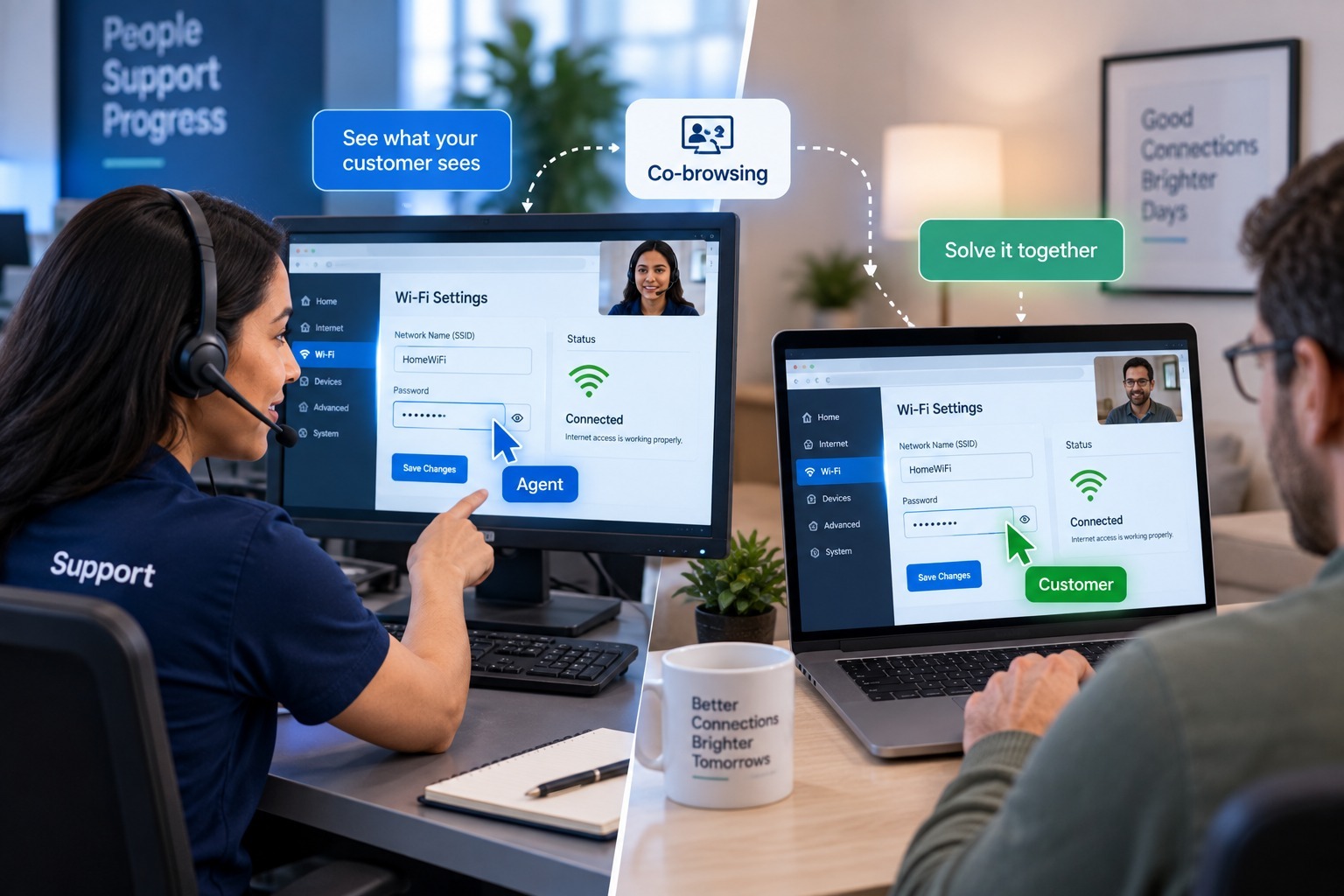
Using a platform like Blitzz Concierge, the process typically runs like this: the customer receives a link by text or email after filing a claim, taps it to open a live video session directly in their phone's browser, and shows the claims agent the product in question. The agent can ask the customer to demonstrate the reported issue live — a device that won't power on, a component that's visibly cracked, a seal that's failed — and confirm the damage matches what's described in the claim before approving a replacement.
For teams handling high claim volumes, this process is often faster than reviewing a batch of submitted photos and following up on unclear ones. The quickest ways to complete a remote warranty verification covers the practical mechanics of setting this workflow up, and the time savings compound quickly once a claims team is running dozens of verification sessions a day rather than reviewing static photo submissions asynchronously.
AI-Assisted Damage Recognition
Visual AI adds a further layer of consistency to warranty verification. Owlbert AI can recognize product models on screen, confirm serial numbers automatically, and flag damage patterns that match — or don't match — the claim description, without requiring the agent to have memorized every product variant in the catalog. This is directly related to how AI-powered equipment recognition helps manufacturing support teams identify machinery and part numbers instantly, applied here to consumer products instead of industrial equipment.
AI Agent Assist is increasingly built for exactly this kind of live visual verification — watching the call, cross-referencing what's on screen against known defect patterns, and surfacing a recommendation the agent can act on immediately rather than researching after the call ends.
Verifying Damage Before It Ships, Not After It's Received
One of the most valuable applications of remote visual inspection in warranty claims is verifying the damage before a replacement unit ships at all — rather than the more common pattern of shipping first and reconciling later if the original claim turns out to have been overstated. This single sequencing change closes most of the gap that photo-only claims leave open, because the verification happens at the point of decision instead of as an after-the-fact audit that rarely results in a unit actually being recovered.
This mirrors the broader shift happening across consumer electronics support generally, where remote video support is being used specifically to cut returns and repair costs by resolving issues — or confirming genuine ones — before a physical unit moves in either direction.
Handling Ambiguous Claims
Not every claim is clear-cut, and this is where a live verification session earns its value most clearly. A device with a cracked screen might be a manufacturing defect or impact damage from a drop — something a static photo often can't distinguish reliably, but a live conversation can often clarify through a few direct questions and a closer look at the fracture pattern. Mastering the insurance damage assessment process covers similar principles from the insurance side of claims verification, where the same tension between speed and thoroughness applies.
Handling these ambiguous cases well matters for customer trust as much as for cost control. A customer with a legitimate claim who feels interrogated by an overly skeptical process will remember that experience regardless of the outcome, while a customer whose claim is denied after a fair, visual, two-way conversation is far more likely to accept the decision than one denied based on a form letter referencing unclear photos.
Building a Defensible Claims Record
Every verification session, when recorded, becomes part of a defensible record for that claim — useful not just for the immediate approval decision but for any later dispute or audit. This is the same principle behind BlitzzCam's approach to defensible photo records for insurance adjusters: a documented, timestamped verification session removes ambiguity about what was actually reviewed and when, which matters if a claim decision is ever challenged.
For manufacturers dealing with regulatory reporting requirements around product defects, this kind of documented verification also creates a cleaner audit trail than a folder of customer-submitted photos with no accompanying context about how the verification decision was made.
Reducing Repeat Claims
A subtler benefit of live verification is its effect on repeat claims for the same underlying issue. When an agent can see the actual defect during the original claim, they're better positioned to identify whether it's a known issue affecting a broader product batch — information that can get escalated to product or quality teams before the same defect generates dozens more individual claims. This kind of pattern recognition is much harder to achieve from disconnected photo submissions reviewed by different agents with no shared visual context.
What This Looks Like for Consumer Goods and Electronics Specifically
Virtual inspection software for consumer goods and electronics is increasingly treated as standard infrastructure rather than a novelty, precisely because the category carries such high replacement volumes relative to unit cost. A single percentage-point reduction in unverified claim approvals, applied across a large product line, tends to translate into meaningful savings quickly — often enough to justify the platform investment within the first year of use.
Setting Clear Verification Standards Across the Team
A common failure mode when rolling out remote verification is inconsistency — one agent approves a claim based on a quick glance, while another puts a similar claim through a much more rigorous review, and customers who compare notes online eventually notice the discrepancy. Building a written verification standard for each major product category — what constitutes clear evidence of a manufacturing defect versus impact or misuse damage, what angles and close-ups a reviewer should request before approving — keeps outcomes consistent regardless of which agent happens to be on the call. This matters as much for customer trust as it does for cost control: a claims process that feels arbitrary erodes goodwill even among customers whose claims are ultimately approved.
Handling Claims From Less Tech-Comfortable Customers
Not every customer filing a warranty claim will be comfortable navigating a live video session on their own, particularly for older or less technical demographics who may already feel frustrated by a broken product. Keeping the technical bar low matters here — a link that opens directly in a phone's browser without an app download removes one of the largest sources of friction, and giving the agent patience and a few extra minutes for these calls tends to produce far better outcomes than rushing a customer who's already anxious about whether their claim will be approved. Framing the ask clearly — "I just need you to show me the device for a minute so I can get this approved for you" — helps reluctant customers understand the session is working in their favor, not against them.
What Happens When a Claim Doesn't Verify
A live session inevitably surfaces some claims that don't hold up under closer inspection — damage that's clearly the result of a drop rather than a defect, for instance. Handling these conversations well matters as much as handling the approvals well. Agents benefit from a clear, non-accusatory script for these moments: explaining specifically what the review found, what the warranty terms cover, and what paid repair or replacement options remain available, rather than a blunt denial that leaves the customer feeling blindsided. A claims team that handles denials transparently, with the customer able to see exactly what the reviewer is looking at in real time, tends to generate far fewer escalations and complaints than one that denies claims based on an opaque, after-the-fact photo review the customer never got to participate in.
Scaling Across Product Lines and Regions
Larger consumer electronics brands often run warranty programs across dozens of product lines and multiple regions with different consumer protection requirements. A remote verification workflow needs to accommodate that variation — a claims standard appropriate for a low-cost accessory shouldn't be applied identically to a premium appliance with a much higher replacement cost, and regional consumer rights rules sometimes dictate minimum claim-handling timelines or evidence standards that a global program needs to respect. Building the verification checklist at the product-category level, rather than as a single one-size-fits-all script, makes it easier to scale a remote verification program across a broad catalog without creating friction in markets with stricter requirements.

Learning From Insurance Claims Verification
Consumer electronics warranty teams aren't the only ones solving this problem — insurance claims processes have run into an almost identical challenge for years, and many of the verification practices that work well for warranty claims were first proven out in that context. AI Agent Assist for insurance claims speeds up documentation and damage assessment the same way it does for consumer electronics, and the future of insurance claims combining AI and visual inspection points toward the same direction warranty verification is already heading — faster, more consistent, and less dependent on any single reviewer's judgment call.
Purpose-built inspection tools also matter here. Blitzz Inspect is designed specifically for structured verification workflows like this, and photo-based documentation tools like BlitzzCam extend the same principle to asynchronous evidence capture when a live session isn't practical — for instance, when a customer needs to document a defect that only appears intermittently. BlitzzCam vs. cloud photo apps covers why verified, timestamped documentation matters more for claims evidence than an ordinary photo upload, and how BlitzzCam keeps photo data secure and audit-ready is worth reviewing for any team building a defensible claims record at scale. For claims teams looking to keep evidence organized across a high volume of cases, a simple system for organizing inspection photos by job offers a practical structure that adapts well to warranty claim volumes too.
For consumer electronics brands specifically, Blitzz Concierge for consumer electronics and photo documentation software built for adjusters both illustrate the same underlying pattern applied to different industries: verified, structured evidence beats an unverified submission every time a claim decision needs to hold up to later scrutiny.
Getting Started
Rolling out remote visual verification for warranty claims doesn't require a wholesale change to your existing claims intake process. Blitzz Concierge is designed to plug into the claims workflow you already have through available integrations, letting agents launch a video verification session directly from the claim ticket rather than adopting an entirely separate system.
A sensible starting point is to flag your highest-cost or highest-volume claim category for mandatory video verification first — high-value electronics or frequently disputed component failures are common candidates — and measure the change in approval accuracy and average claim resolution time over a few weeks before expanding the requirement further. Because the cost of verification is small relative to the cost of an unnecessary replacement shipment, most teams find the return on even a partial rollout becomes clear quickly, well before a full-scale deployment is complete.