
.png?width=120&height=55&name=Blitzz-Logo-right%20white%20eyes%20-%20not%20transparent%20(3).png)

On this page
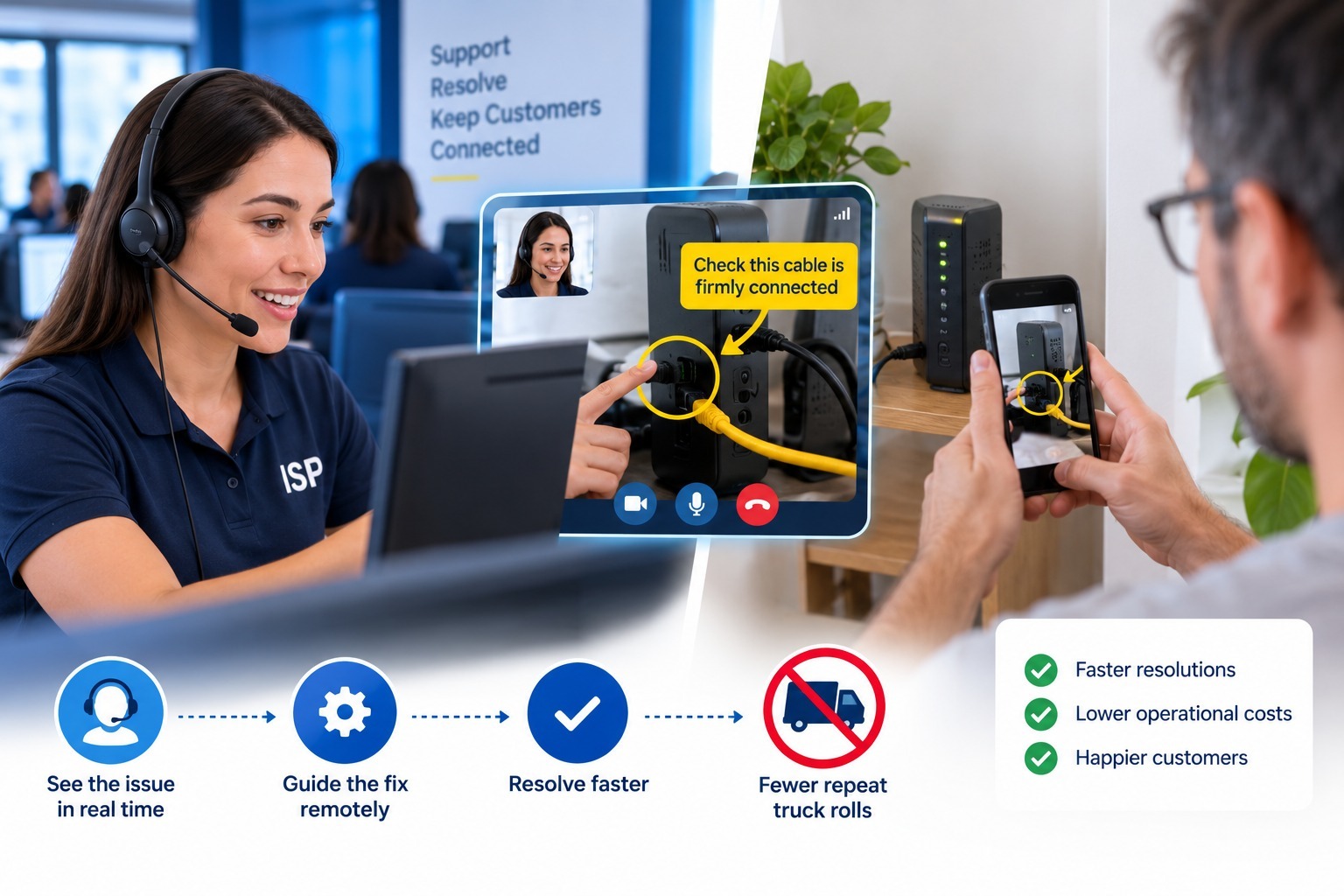
Repeat truck rolls are the metric that quietly undermines every other efficiency initiative in a telecom call center. A team can hit its average handle time targets, keep hold times low, and still bleed money if a meaningful share of dispatched technicians are going out to fix the same household's problem for the second or third time. Repeat visits don't just cost the price of the second truck roll — they compound scheduling delays for every other customer waiting on that day's dispatch queue, and they tell the customer, loudly, that the first visit didn't actually solve anything.
Remote visual support gives call centers a way to interrupt that cycle before the first dispatch decision is even made — and, just as importantly, before a technician leaves a site the second time without confirming the fix actually worked.
Why Repeat Truck Rolls Happen in the First Place
Repeat dispatches usually trace back to one of three root causes: the original diagnosis was wrong, the fix addressed a symptom rather than the underlying cause, or nobody verified the fix actually worked before closing the ticket. Phone-only triage is especially prone to the first problem, since an agent working from a customer's verbal description has no reliable way to distinguish a genuinely failed piece of hardware from a cabling issue, a configuration problem, or environmental interference. The real cost of a truck roll becomes a multiple of that cost the moment a second visit gets scheduled for a problem the first visit should have caught.
The second and third causes are harder to see in reporting, because they look like a resolved ticket until the customer calls back. A technician might replace a component that wasn't actually the problem, or fix an issue without confirming the underlying root cause won't recur under different conditions — a splice that passes a quick test but degrades again once the segment carries real traffic, for instance.
Video as the First Triage Layer
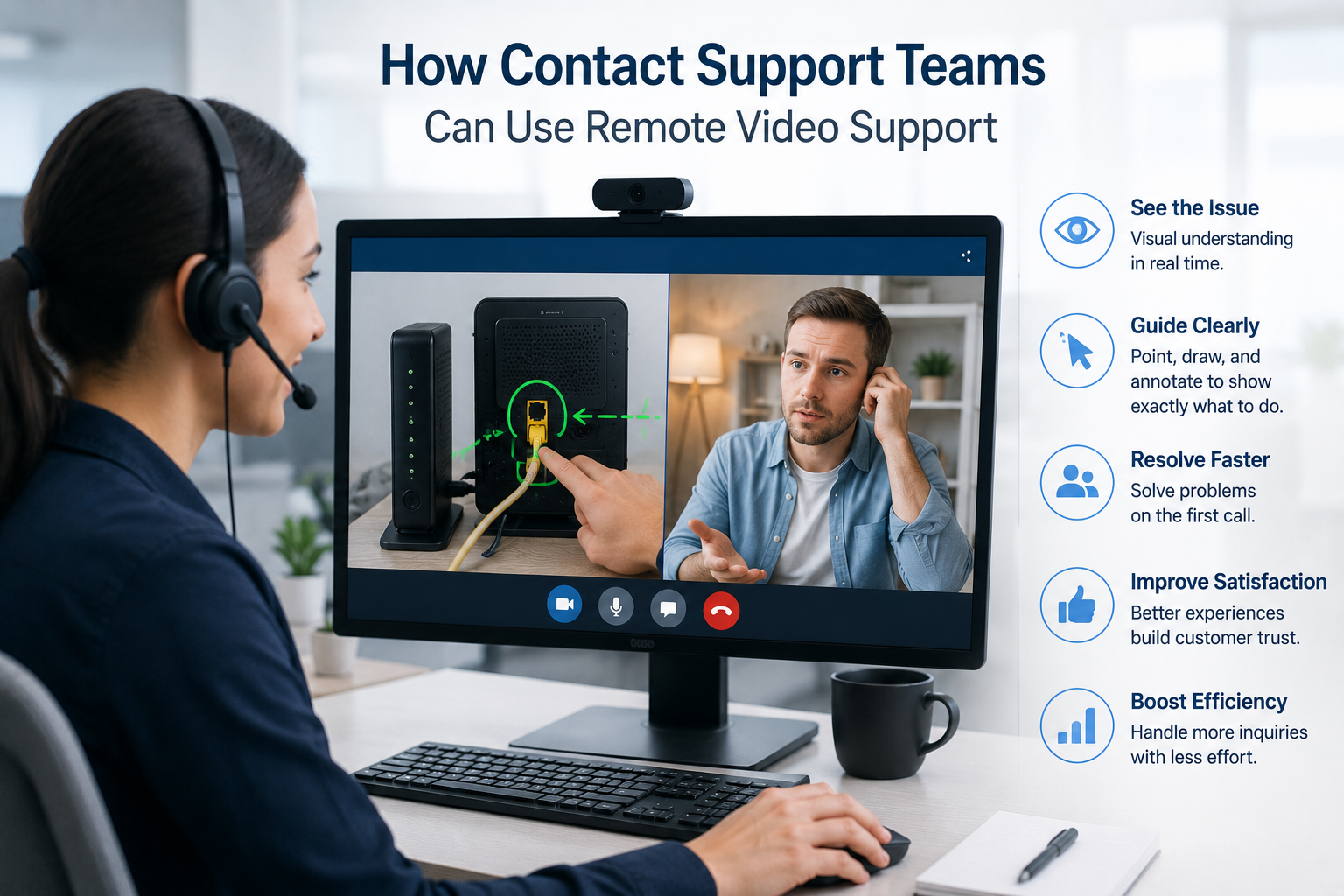
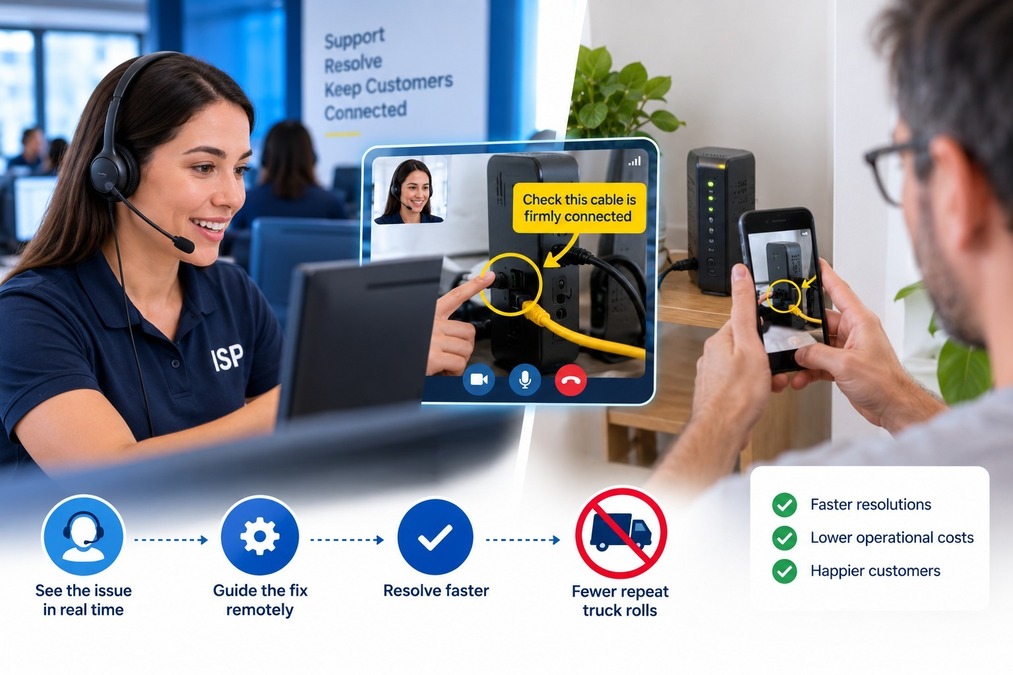
The most direct way call centers reduce repeat visits is by adding a video triage step before any dispatch decision gets made. With a platform like Blitzz Concierge, an agent can send a customer a one-time video link by text, have them show the equipment in question, and confirm — visually — whether the problem matches a known hardware fault, a configuration issue, or something environmental. This single step catches a significant share of the false-positive dispatches that would otherwise result in a technician driving out to find nothing wrong, or worse, replacing the wrong component.
This is the same underlying capability that lets telecom support teams diagnose router issues remotely by reading status lights and model numbers on camera instead of relying on a customer's secondhand description. Visual context removes the single biggest source of ambiguity in phone-only triage, and ambiguity is what drives most first-visit misdiagnoses.
Confirming the Fix Before Closing the Ticket
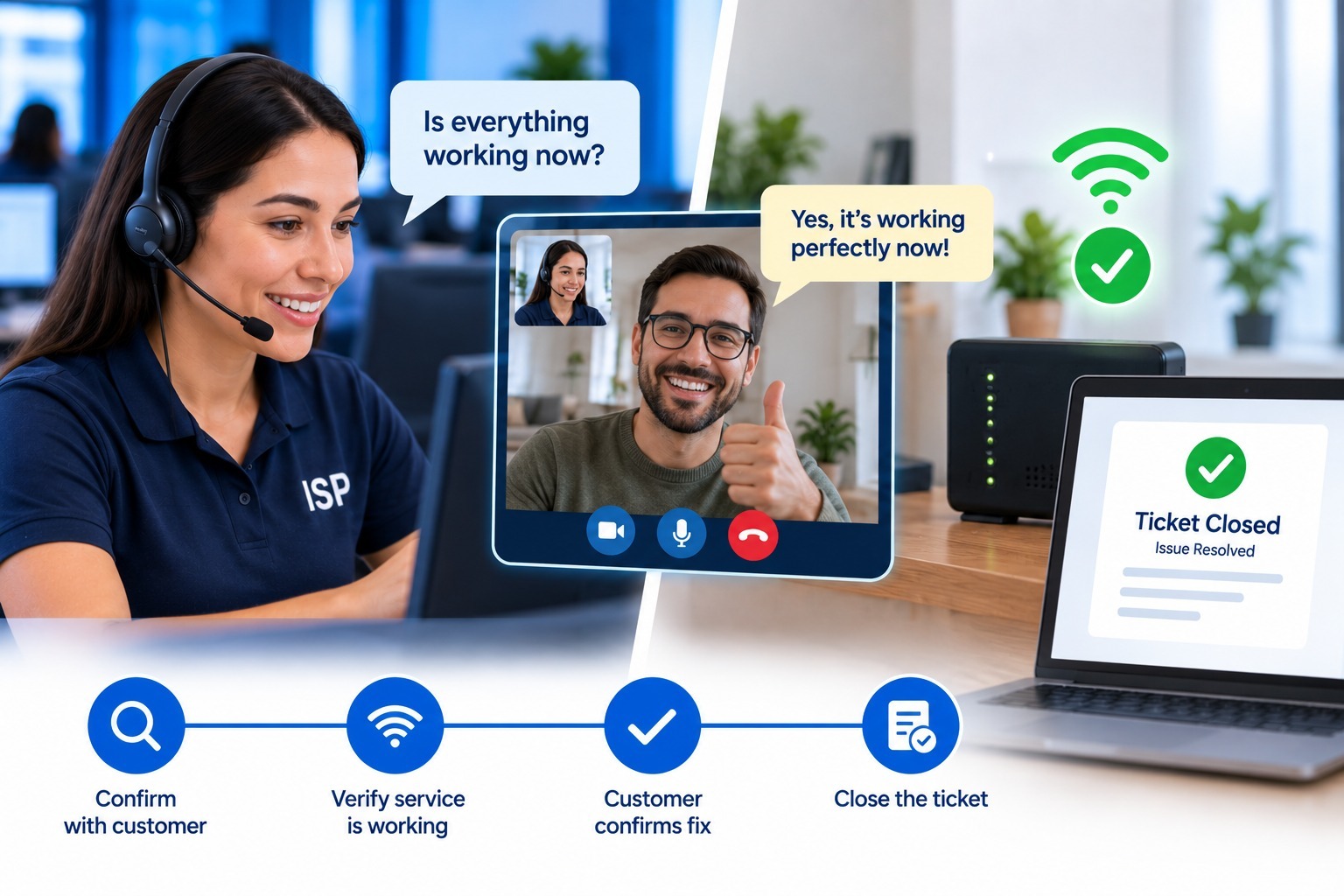
Triage is only half the problem. The other half is verifying that a fix actually worked before the ticket gets closed — whether that fix happened over video or during a technician visit. Many repeat truck rolls trace back to a closed ticket where nobody actually confirmed the underlying issue was resolved; the technician did the standard fix, packed up, and left, and the problem resurfaced days later under slightly different conditions.
A brief video follow-up call after a fix — even a two-minute session confirming signal strength, equipment status lights, or a live speed test on camera — catches a meaningful share of these premature closures before they turn into a second dispatch. This mirrors how remote video inspection is used for QA verification in other infrastructure contexts: catching a problem while the technician (or the fix) is still fresh is dramatically cheaper than discovering it after the fact.
Why Voice-Only Verification Falls Short
It's tempting to think a phone call can serve the same verification function as a video check-in, but the data doesn't support that. 73% of customers prefer video support over voice-only calls, largely because voice-only verification asks the customer to describe whether something looks fixed — a task most customers aren't equipped to do accurately, especially for technical equipment they don't fully understand. A quick video glance at a status light or a live speed test screen removes that translation layer entirely.
Reducing Misdiagnosis at the Root
Misdiagnosis is the single largest driver of repeat visits, and it happens more often than most call centers realize — not because agents aren't skilled, but because misdiagnosis on video calls is a structural problem tied to memory, time pressure, and the sheer volume of similar-sounding tickets an agent handles in a shift. Even with a video feed available, an agent working quickly under call-volume pressure can miss a detail a slower, more deliberate review would catch.
This is where AI-assisted diagnosis earns its keep. Owlbert AI can recognize equipment on screen, read model numbers and status codes automatically, and cross-reference known fault patterns in real time — reducing how much of the diagnosis depends on any single agent's memory of every device and failure mode in the field. AI Agent Assist is built specifically for this kind of live, high-stakes diagnostic support, watching the call and surfacing the likely root cause instead of leaving pattern recognition entirely to human recall.
The BPO Angle
Many telecom call centers run partially or fully through outsourced BPO partners, which adds another layer to the repeat-truck-roll problem: agent tenure at BPOs tends to be shorter, and newer agents are statistically more likely to misdiagnose an issue simply because they haven't seen every fault pattern yet. How BPOs use AI Agent Assist to cut average handle time is directly relevant here — the same tool that shortens calls also improves first-visit accuracy, because it gives less experienced agents access to pattern recognition they haven't built up personally yet.
This matters enough that it belongs in any enterprise buyer's checklist for remote support tools in BPO environments — a platform that only works well with your most tenured agents isn't solving the actual problem, since BPO turnover means a meaningful share of calls will always be handled by someone relatively new.
Measuring What Actually Matters
Repeat truck roll rate is a lagging indicator — by the time it shows up in your dashboard, the customer has already had a bad experience twice. Call centers that get ahead of it track a fuller set of leading indicators alongside it: video-session usage rate at first contact, first-call resolution, and average handle time together, since these interact in ways a single metric can hide. The metrics that actually matter in AI customer support is worth reviewing here, because chasing average handle time alone can actually increase repeat visits if agents start rushing diagnoses to hit a time target.
How to improve first-call resolution and repeat-truck-roll reduction are, in practice, the same initiative viewed from two different angles — a ticket that's truly resolved on the first contact, by definition, doesn't generate a second visit. Teams that have specifically boosted first-call resolution through remote visual support consistently report the repeat-dispatch numbers moving in tandem.
AR Annotation for Field Confirmation
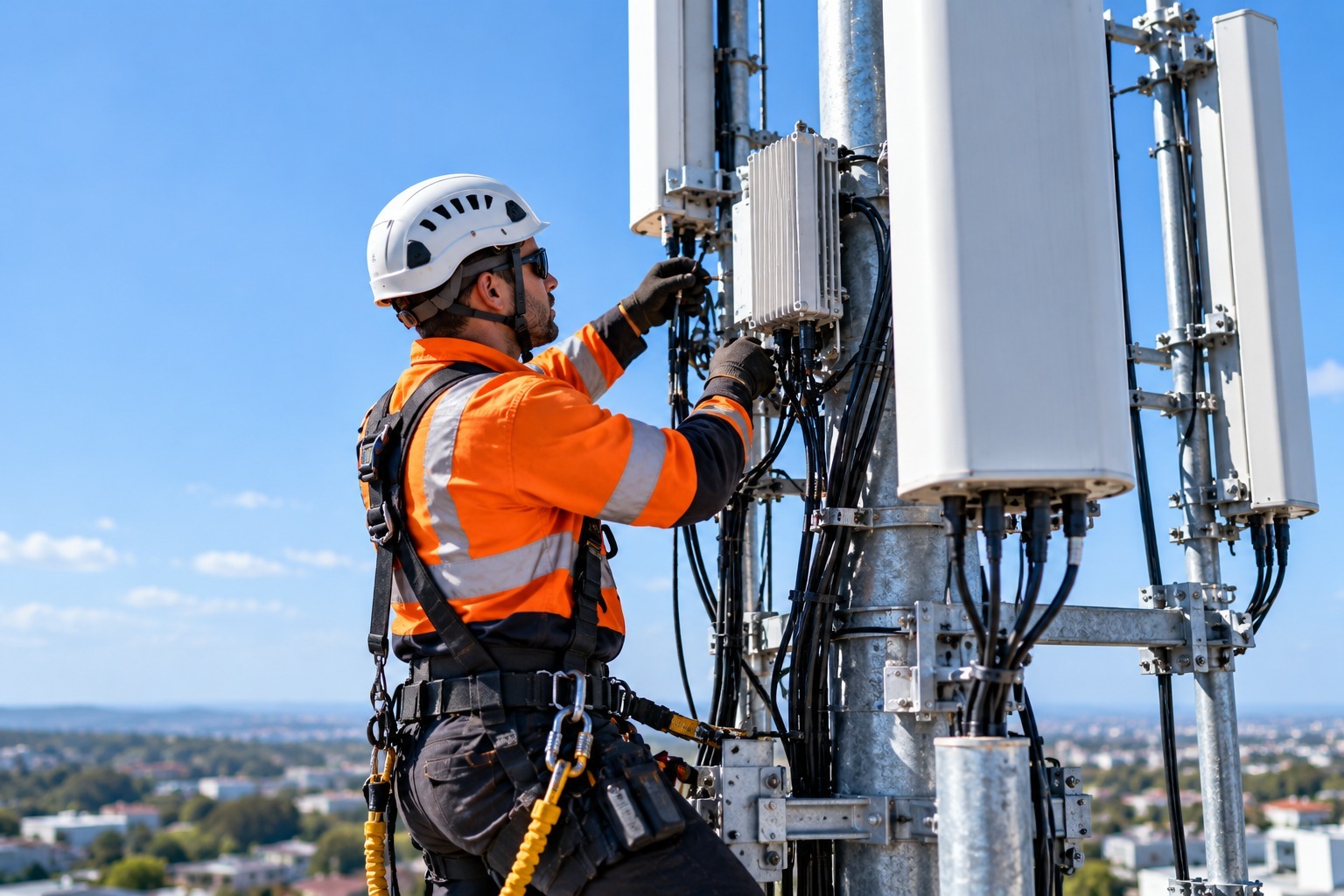
When a technician is already on-site and a call center supervisor wants to confirm a fix meets standard before the technician leaves, AR annotation lets a remote reviewer draw directly on the technician's live feed — circling a connection point that needs re-checking, or confirming a specific splice or cable run looks correct — instead of relying on a verbal description over a radio or phone call. This kind of live, precise guidance is a meaningful part of why AR-guided field operations have become standard practice across infrastructure-heavy field service, not just telecom specifically.
Building the Business Case for Your Call Center
The financial case for reducing repeat truck rolls tends to be more persuasive to leadership than the case for reducing average handle time alone, because repeat visits carry a compounding cost: the original dispatch, the second dispatch, the extra support contacts in between, and the customer satisfaction hit that shows up later in churn data. Reducing customer support costs by 40% with AI is achievable in large part because better first-contact diagnosis prevents the second and third contacts from ever needing to happen, not just because any individual call gets shorter.
It's also worth accounting for the effect on staff. Customer support burnout is real, and agents who spend their day fielding angry callbacks about unresolved issues burn out faster than agents who consistently resolve problems on the first attempt. Reducing repeat contacts isn't only a cost-savings initiative — it changes the day-to-day experience of the job for the people answering the phones.
Handling the Agent Who's Skeptical of Video
Not every agent adopts video triage enthusiastically at first. Some worry it slows down a call that's already under handle-time pressure, or feel uncertain interpreting what they're seeing without the structured prompts a phone script provides. In practice, the opposite tends to hold once the workflow settles in: a two-minute video glance at a router's status lights resolves ambiguity that would otherwise require several rounds of clarifying questions over the phone, and it tends to shorten calls overall rather than lengthen them. Pairing the rollout with a simple, visual checklist — what to look for, what each status light pattern means, when to escalate to dispatch versus continue troubleshooting — gives hesitant agents a concrete starting point rather than asking them to improvise interpretation on the fly.
The Supervisor's View
For team leads and QA supervisors, recorded video sessions create a coaching resource that voice-only calls never could. A supervisor reviewing a recorded triage session can see exactly what the agent saw, not just hear how the agent described it afterward — making it far easier to identify where a misdiagnosis actually happened and to coach specifically on that moment rather than on a vague sense that "the call could have gone better." Building a small library of well-handled and poorly-handled sessions, tagged by issue type, becomes valuable onboarding material as video triage scales across a larger team.
Setting Realistic Expectations for the Rollout
It's worth being upfront internally that repeat-truck-roll reduction is a lagging outcome — the leading indicators (video-session adoption rate, first-call resolution, agent comfort with the new workflow) will move first, and the repeat-visit metric itself typically takes a full billing or reporting cycle to show a clear trend. Call centers that expect an immediate drop in the headline number sometimes abandon a rollout prematurely, before the underlying behavior change has had time to work through the full dispatch and follow-up cycle. Setting a realistic six-to-eight week measurement window from the start avoids that mismatch between expectation and actual timeline.
Integrating Without Disrupting Existing Tools
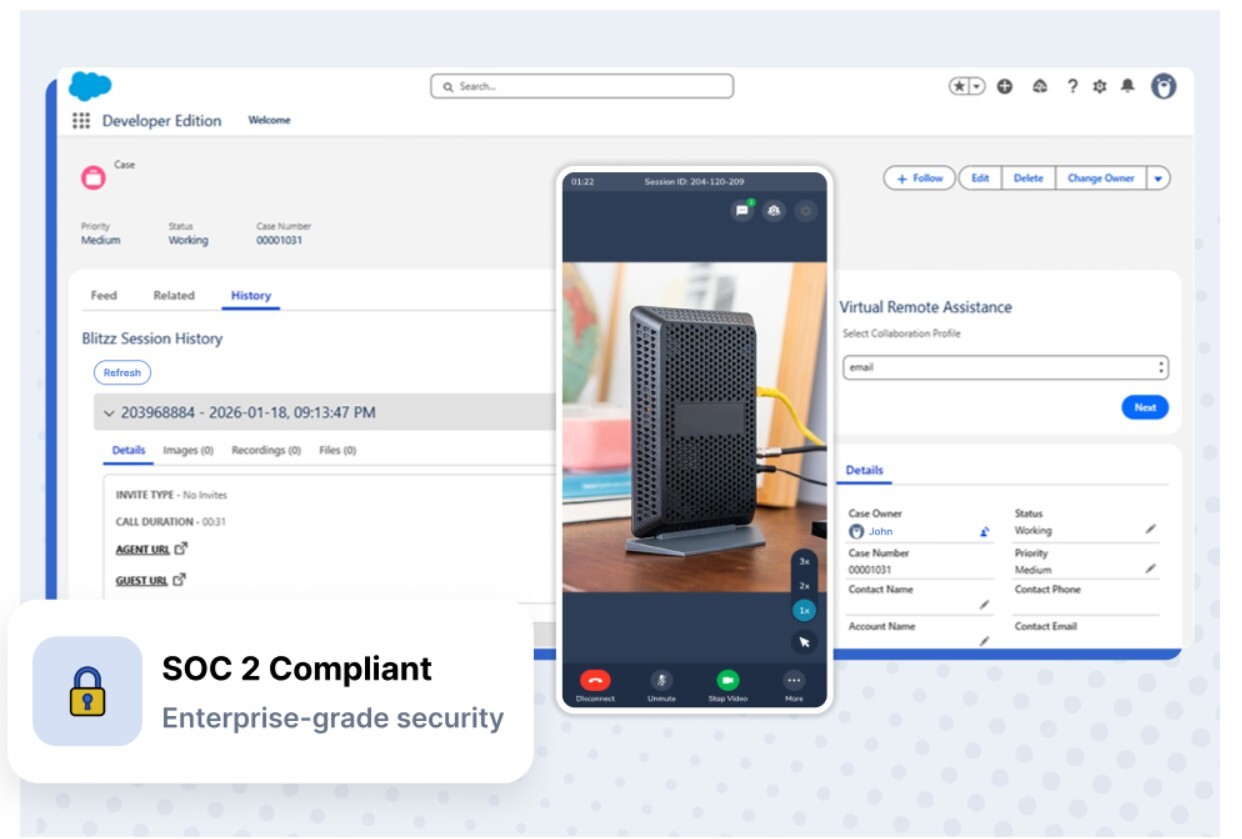
Call centers running on established platforms like Genesys, Zendesk, or Salesforce don't need to rip out their existing stack to add video triage. Blitzz's Genesys integration guide, Zendesk guide, and Salesforce guide all cover how video sessions plug directly into the ticket an agent is already working, rather than requiring a separate system agents have to context-switch into. For call centers already running automation elsewhere in their stack, automating remote video support with Zapier is a common next step, triggering a video-eligible ticket flag automatically based on issue category.
Rolling out remote visual support doesn't require a wholesale change to your existing call center stack. It's built to layer onto your current tools through available integrations, so agents can launch a triage session directly from the ticket they're already working.
What a Rollout Looks Like in Practice
Most call centers see the best results starting narrow: identify the two or three ticket categories responsible for the largest share of repeat dispatches — router and modem issues are common candidates — and mandate video triage specifically for those categories before expanding further. Track repeat-visit rate for that category specifically over four to six weeks, compare it against a control group of tickets still handled by voice only, and use that data to build the case for a wider rollout.
This staged approach also gives supervisors time to build a training library of good and bad diagnostic sessions — recorded calls that show what a thorough triage looks like versus a rushed one — which becomes valuable onboarding material as the video option scales to the rest of the floor. Screen sharing and cobrowsing tools for help desks can play a complementary role here too, particularly for account or software-side issues that don't require seeing physical hardware but still benefit from the agent seeing exactly what the customer sees on their screen.
The Long-Term Payoff
Cutting repeat truck rolls compounds in a way few other call center initiatives do. Fewer repeat dispatches means faster scheduling for genuinely new issues, lower field service costs, and — over time — a customer base that starts to trust that a call to support actually resolves things the first time. That trust shows up eventually in reduced call volume overall, since customers who've had good first-contact experiences are less likely to call back preemptively "just to check" the next time something seems slightly off. Building that trust starts with the same simple change: giving agents the ability to actually see the problem before deciding what to do about it, rather than dispatching based on a guess.
What to Expect in the First Quarter
Teams rolling this out for the first time should expect an adjustment period rather than an immediate transformation. The first few weeks typically surface gaps in the video-triage checklist that weren't obvious on paper — edge cases the script doesn't cover, or ticket categories that seemed like good candidates for video but turn out to need a technician regardless. Treating these early weeks as a refinement period, with regular check-ins between supervisors and the agents actually running the sessions, produces a much stronger process by the time the initiative reaches its first full reporting cycle than trying to design a perfect checklist upfront and rolling it out unchanged.
It's also common for early adoption to be uneven across a team — some agents embrace video triage immediately, while others need more encouragement and hands-on coaching before it becomes second nature. Pairing newer or more hesitant agents with a colleague who's already comfortable with the workflow, even informally, tends to close that gap faster than relying on written documentation alone.
Frequently Asked Questions
1. What counts as a "repeat truck roll," and why does it matter more than a single dispatch?
A repeat truck roll is a second (or third) technician visit to fix an issue that a previous visit was supposed to resolve. It matters more than a single dispatch because the cost isn't just the extra trip — it's the delayed fix, the extra support contacts in between, and the hit to customer trust when the same problem keeps coming back.
2. How does remote visual support actually prevent a repeat visit before it happens?
It adds a video triage step before a dispatch decision is made, so an agent can see the actual equipment, cabling, or environment instead of guessing from a phone description. This catches false-positive dispatches and misdiagnoses at the point of first contact, which is where most repeat visits originate.
3. Does remote video support replace the need for technicians entirely?
No. It filters which tickets genuinely need a technician and gives the ones that do a clearer starting diagnosis, so the technician who is dispatched arrives with the right information and equipment instead of re-diagnosing from scratch.
4. Can remote visual support also confirm a fix worked before a ticket is closed?
Yes. A short video follow-up — checking status lights, cabling, or a live speed test on camera — verifies the fix actually held before the ticket closes, which catches the premature closures that often turn into a second dispatch days later.
5. Do customers need to download an app to join a video support session?
No. Most platforms send a one-time link by text that opens directly in the customer's phone browser, which keeps adoption friction low and makes it practical to offer on nearly every call.
6. How does this work for BPO-run call centers with high agent turnover?
AI-assisted visual recognition helps newer or less experienced agents identify equipment and fault patterns they haven't personally encountered yet, which reduces how much diagnostic accuracy depends on individual agent tenure.
7. How long does it take to see a measurable drop in repeat truck rolls after rollout?
Because repeat-visit rate is a lagging metric, most call centers need a full six-to-eight week reporting cycle before the trend is clear, even though leading indicators like video-session adoption and first-call resolution typically move within the first few weeks.

Blitzz Team
The Blitzz Team writes about remote video support, virtual inspections and field service. Our guides come from working with home builders, property managers, warranty teams, contact centers and field service organizations that use Blitzz to see and solve issues without a truck roll.